Christopher Markiewicz is a Senior Research Scholar in the Department of Psychology at Stanford University. His work focuses on neuroimaging standards, particularly the Brain Imaging Data Structure (BIDS), and advancing reproducible research practices in neuroscience. He contributes to large-scale initiatives like the Accelerating Medicines Partnership for Schizophrenia (AMP SCZ), developing neuroimaging protocols and multi-site data standards. His research integrates computational methods, open science frameworks, and collaborative projects to improve the reliability and interoperability of neuroimaging data. Position: Sr Research Scholar, Department of Psychology, Stanford University Key Projects: BIDS extensions (NIRS-BIDS, Motion-BIDS), fMRIPrep, AMP SCZ neuroimaging protocols Research interests include: Standardization of neuroimaging data (BIDS) fMRI preprocessing pipelines (fMRIPrep) Schizophrenia neuroimaging and clinical high-risk cohorts Open science practices and reproducible workflows Publications highlight contributions to neuroimaging protocols, data standardization, and computational tools for reproducibility. His work bridges technical innovations with clinical applications in mental health research.
Bahamin Bazooyar is a part-time lecturer in Mechanical Engineering at Staffordshire University's School of Digital, Tech, Innovation & Business. He holds a Ph.D. from a dual program between Iran University of Science and Technology and Petroleum University of Technology (2017). His research focuses on combustion science, renewable energy systems, and carbon capture technologies. He has led industry-collaborative projects including FEED studies for decarbonizing sugar refineries and oxyfuel combustion systems. Notable awards include Iran’s Best Researcher of the Year (2016) and Best Reviewer accolades from APPLIED ENERGY (2020) and ACS (2023). He teaches modules like Power Plants and Clean Technology, Turbulent Flows, and Low-Carbon Energy Systems. His recent work includes hydrogen combustion design and membrane-based CO₂ separation technologies. Education: Master of Science (Petroleum University of Technology, 2012), Ph.D. (Dual Program, 2017). Postdoctoral fellowships at Staffordshire/Cranfield Universities (2017–2019) and Cranfield/Origen Power (2021–2022). Professional memberships include The Combustion Institute and American Society of Mechanical Engineering. Research Interests: Combustion modeling, renewable fuels (hydrogen, ammonia), fluid mechanics, and process simulation. Over 40 peer-reviewed publications and 100+ article reviews. Collaborations with industries like Bladon Microturine, Addfield Environmental Systems, and sugar refineries. Active in grant writing and consultancy for reactor design, fluid-solid interaction analysis, and low-carbon technology feasibility studies. Grants and Projects: Innovate UK-funded microturbine combustor project (2017–2019), sugar refinery decarbonization FEED study (2021–2022), and syngas processing design for Powerhouse PLC. Consultancies include pyrolysis reactor feasibility and reciprocating pump optimization.
Peter Poole is a Professor in the Department of Physics at St. Francis Xavier University. His research focuses on the physics of supercooled liquids, crystallization, and the glass transition, utilizing molecular dynamics and Monte Carlo simulations to explore phase transitions in water, amorphous ice, and molten silica. He is actively involved in high-performance computing (HPC) through collaborations with Canadian consortia SHARCNET and ACEnet. Poole's work emphasizes the thermodynamics and relaxation behavior of deeply supercooled water and amorphous ice, as well as polyamorphism in silica and Lennard-Jones systems. His simulations leverage advanced computational resources to test theories of crystal and glass formation, addressing longstanding gaps in predictive capabilities of condensed matter physics. His research trends include exploring liquid-liquid phase transitions in supercooled water nanodroplets, the role of surface tension and Laplace pressure in nanoscale systems, and the interplay between thermodynamic anomalies and phase stability. Collaborations with HPC networks have enabled large-scale ensemble simulations, such as 'swarm relaxation' techniques to equilibrate complex systems. Poole has contributed to foundational studies on the liquid-liquid critical point hypothesis, nucleation mechanisms, and the dynamic crossover in supercooled liquids. His recent work includes experimental observations of liquid-liquid transitions under high pressure and theoretical advancements in free energy landscapes of two-step nucleation processes. Notable contributions also include tributes to pioneers like C. Austen Angell, underscoring his role in advancing the field of amorphous solids and glass transition physics. His research bridges computational simulations with experimental insights, driving advancements in understanding fundamental condensed matter phenomena.
Prof. Ilka Weikusat is a Professor of Glaciology at the Alfred Wegener Institute for Polar and Marine Research in Bremerhaven, Germany. She serves as Deputy Section Head for Glaciology and chairs the PoF IV Subtopic 2.4. Her research focuses on glaciological processes, ice core analysis, deformation mechanisms in polar ice, and multi-scale flow structures in ice sheets. She leads projects such as the Beyond EPICA and EastGRIP initiatives, investigating ice stream dynamics, crystallographic preferred orientations, and paleoclimatic records through ice cores. Her work bridges microstructural analysis with large-scale glacial processes, contributing to understanding polar ice sheet stability and climate change. Research Interests: Glaciology and ice core drilling techniques Deformation mechanisms and microstructures in ice Cryosphere dynamics and ice sheet stability Climate history reconstruction via ice cores Recent Articles: Focus on ice stream formation, deformation anisotropy, and ice core microstructure (e.g., EastGRIP and Beyond EPICA projects) Analysis of air clathrates, shear margins, and crystallographic fabrics in polar ice Awards: None explicitly listed in provided materials. Advising & Grants: No student advisees listed, but her research involves collaborative projects funded by polar research programs. Labs/Teams: Active in the Glaciology Section at AWI, contributing to international ice core collaborations (e.g., EastGRIP, Beyond EPICA).
Robert R. Caldwell is a Professor of Physics and Astronomy at Dartmouth College, where he has been on faculty since 2000. His research focuses on cosmology, gravitation, and dark energy, addressing fundamental questions about the universe's structure, composition, and evolution. He holds fellowships from prestigious organizations including the American Association for the Advancement of Science and the American Physical Society. Education: A.B. in Physics from Washington University in St. Louis (1984), M.Sc. from University of Wisconsin-Madison (1986), and Ph.D. in Physics from University of Wisconsin-Milwaukee (1992). Prior to Dartmouth, he held research positions at Fermilab, Cambridge University, and Princeton University. Research Interests: His work explores dark energy, dark matter, gravitational waves, cosmic microwave background radiation, and the universe's fate. He collaborates on projects like the Laser Interferometer Space Antenna (LISA) and contributes to understanding inflationary cosmology and fundamental physics. Key Contributions: Notable publications include studies on cosmology with LISA, dark energy models, and gravitational wave memory effects. His Erdős number is 4, and Bacon number is 3, showcasing interdisciplinary reach. Grants & Awards: Recognized for contributions to theoretical physics and cosmology, including fellowships highlighting his impact on advancing cosmological research.
Dr. Vanessa Moss is an Adjunct Professor at the School of Electrical Engineering & Computer Science, University of Queensland. Her research focuses on radio astronomy, astrophysics, and collaborative science practices. She is actively involved in large observational projects like ASKAP and Apertif, contributing to surveys of galactic structures, transient phenomena, and HI absorption studies. Key research interests include radio surveys (e.g., RACS), fast radio bursts (FRBs), and advancing accessible conference formats. Her work bridges observational astronomy with data analysis, emphasizing sustainability and inclusivity in global scientific collaboration. Publications highlight her contributions to radio galaxy studies, interstellar medium dynamics, and technological advancements in radio telescopes. She has co-authored over 80 peer-reviewed articles, focusing on cosmological surveys, HI absorption in AGN, and multi-wavelength astronomy. Dr. Moss has pioneered efforts to digitize conferences, such as the virtual ICWIP 2021, and contributed to initiatives like Astronomers for Planet Earth to reduce the carbon footprint of astronomy. She collaborates internationally with institutions like the Westerbork Synthesis Radio Telescope (WSRT) and the Australian Square Kilometre Array Pathfinder (ASKAP).
Dr Sven Buder is a Research Fellow at the Research School of Astronomy & Astrophysics, Australian National University (ANU). He holds a PhD in Astrophysics from the University of Heidelberg. His expertise spans Galactic Archaeology and Stellar Spectroscopy, focusing on understanding the formation and evolution of the Milky Way through chemical abundance analysis and stellar dynamics. His research leverages large-scale surveys like GALAH (GALactic Archaeology with HERMES) to study stellar populations, accretion events, and the chemical evolution of the Galaxy. Key projects include tracing the Milky Way’s history via RR Lyrae stars and investigating neutron-capture elements’ roles in galactic disc evolution. Buder’s work has produced over 90 peer-reviewed publications, with notable contributions to understanding lithium abundance patterns, stellar companions of exoplanet hosts, and the impact of mergers like Gaia-Sausage-Enceladus on the Milky Way’s structure. He advises two PhD students and collaborates on instrumental projects through the Australian National University’s Astronomy and Astrophysics facilities. His research integrates observational data with advanced simulations, contributing to interdisciplinary efforts in galactic dynamics and stellar astrophysics.
Karl Kadler is a Professor of Biochemistry at the University of Manchester in the UK, serving as Director of both the Wellcome Trust Centre for Cell-Matrix Research and the Cellular & Developmental Systems Domain within the Faculty of Biology, Medicine and Health. He holds a PhD in Medical Biophysics from the University of Manchester (1984) and a BSc (Hons) in Biochemistry from the University of Salford (1980). His research focuses on collagen fibril assembly mechanisms, extracellular matrix biology, and the role of circadian rhythms in tissue maintenance. Kadler pioneered the use of serial block face-scanning electron microscopy (SBF-SEM) in the UK and discovered fibripositors—actin-based plasma membrane structures critical for collagen fibril formation and mechanosensing. His work bridges molecular biology, biochemistry, and advanced imaging to study diseases like osteogenesis imperfecta and Ehlers-Danlos syndrome. Research interests include circadian regulation of collagen homeostasis, extracellular matrix turnover dynamics, and the interplay between mechanical forces and cellular processes. Recent studies highlight circadian-driven protective mechanisms for collagen and macrophage-fibroblast interactions in fibrosis. Kadler’s expertise aligns with UN Sustainable Development Goals related to health and innovation. He has received the prestigious 2016 Fell-Muir Prize for contributions to extracellular matrix research and manages large-scale interdisciplinary projects including the NIHR Manchester Biomedical Research Centre and the Centre for Biological Timing. His work has produced over 124 publications and 3 notable datasets, demonstrating methodological innovations in collagen imaging and circadian biology.
Cong Wei is an Assistant Professor in the Department of Mechanical & Aerospace Engineering at Old Dominion University (ODU). He holds a Ph.D. in Mechanical Engineering from the University of Delaware (2021) and conducted postdoctoral research at the Maryland Robotics Center (2021–2023). His expertise includes control algorithms for multi-agent systems, nonlinear systems, robotic navigation, and adaptive sampling using autonomous systems, with a focus on marine applications and environments influenced by ambient conditions. Education: Ph.D., Mechanical Engineering, University of Delaware, 2021 M.S., Ocean Engineering, Harbin Engineering University, 2014 B.S., Marine Engineering, Ningbo University, 2012 Research Interests: Design and control of autonomous underwater vehicles Multi-agent coordination in dynamic environments Nonlinear control strategies for marine robotics Adaptive sampling techniques using autonomous systems Large-scale ocean monitoring via robotic networks His work emphasizes practical applications in marine robotics, leveraging geophysical flow dynamics and cooperative systems. Lab and Collaborations: Director of the Multi-Agent Control Lab at ODU, focusing on robotics and autonomous systems research.
Dr. Samantha Penny is a Senior Lecturer in the Faculty of Technology at the University of Portsmouth, affiliated with the Institute of Cosmology and Gravitation. Her research focuses on observational astrophysics, particularly galaxy evolution, low-mass galaxy formation, and the role of active galactic nuclei (AGN) in shaping galactic environments. She holds an MPhys from Cardiff University and a PhD from the University of Nottingham, followed by postdoctoral fellowships in Australia. Her teaching responsibilities include modules in mathematical physics and observational astronomy. Key research interests include analyzing dwarf galaxies' evolution using spectroscopy, exploring AGN feedback mechanisms, and investigating isolated galaxy dynamics. Her work often leverages large-scale surveys like SDSS-IV MaNGA and APOGEE. Recent publications emphasize cosmological simulations (e.g., IllustrisTNG), AGN-environment interactions, and morphological studies of barred galaxies. She collaborates extensively on data releases from major sky surveys, contributing to the understanding of galaxy populations and stellar properties. Dr. Penny supervises undergraduate research projects and contributes to academic teams focused on galactic structure and formation processes.
Alex Szalay is a Bloomberg Distinguished Professor in the Departments of Physics and Astronomy and Computer Science at Johns Hopkins University, USA, and directs the Institute for Data Intensive Engineering and Science. He holds a PhD in astrophysics from Eötvös Loránd University (Budapest, 1975), followed by postdoctoral roles at Berkeley and Fermilab. His research focuses on cosmology, dark matter, and large-scale data-driven astronomy, notably through the Sloan Digital Sky Survey and Galaxy Zoo projects. He has been recognized with prestigious awards including the Jim Gray eScience Award (2007) and Sydney Fernbach Award (2015). His work bridges astrophysics and computational science, emphasizing big data methodologies. Key contributions include advancing structure formation theories and pioneering data-intensive tools for astronomical surveys. As part of the HITS Scientific Advisory Board since 2014, he advises on interdisciplinary science. Szalay’s career spans academic roles in Hungary and the U.S., culminating in his current leadership at Johns Hopkins.
Emma Ryan-Weber is a Professor at Swinburne University's School of Science, Computing and Emerging Technologies, leading the intergalactic medium research group. She was the Director of the Australian Research Council Centre of Excellence for All Sky Astrophysics in 3 Dimensions (ASTRO 3D) until 2024. Her research focuses on detecting elements in the early Universe using quasar absorption spectroscopy, particularly studying the intergalactic medium, reionization, and high-redshift galaxy evolution. Ryan-Weber holds a PhD from the University of Melbourne (2004) and has held postdoctoral positions at the University of Cambridge. She mentors PhD students and postdoctoral researchers, emphasizing careers in both academia and industry. Education: PhD in Astrophysics, University of Melbourne (2004) Postdoctoral Fellow, University of Cambridge (2004–2008) Research Interests: Ryan-Weber’s work explores cosmic reionization, intergalactic medium chemistry, and galaxy evolution. Her team uses large telescopes like Keck and VLT to analyze metal absorption systems in quasar spectra. Key topics include Lyman-continuum leakage, neutral hydrogen distribution, and Pop III star signatures. Grants & Collaborations: She led ARC grants including the $30M ASTRO 3D program and studies on PanSTARRS imaging and intergalactic medium evolution. Notable collaborations involve XQR-30 quasar spectroscopy and MOSEL surveys. Awards: Recipient of the Australian Research Council Queen Elizabeth II Fellowship (2009–present). Labs/Teams: Leads the ASTRO 3D collaboration and the intergalactic medium group at Swinburne, fostering international partnerships in observational cosmology.
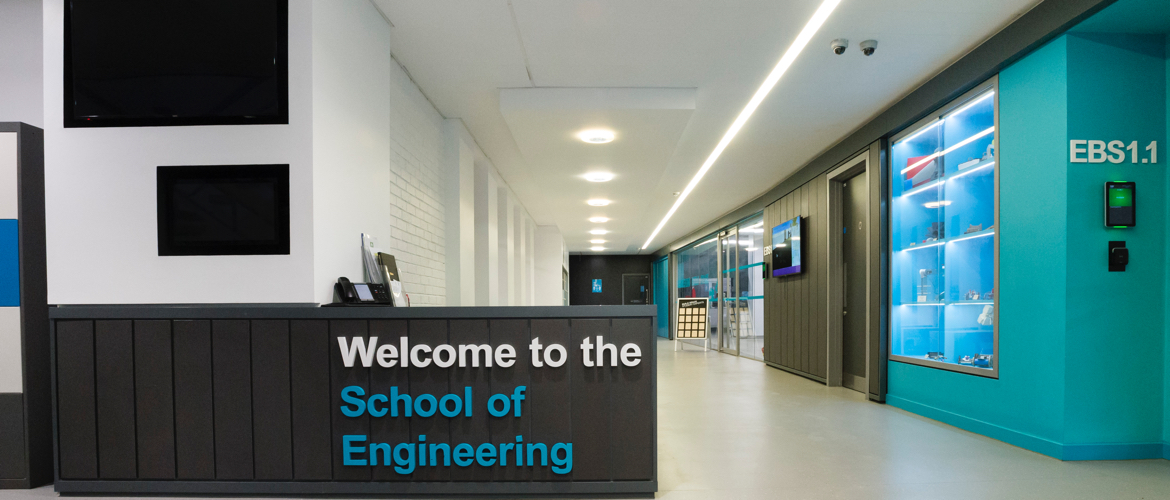
Yongmann Chung is an Associate Professor at the School of Engineering, University of Warwick. His research focuses on Computational Fluid Dynamics (CFD), turbulence modeling, and flow control with applications in aerospace engineering and electrochemistry. He specializes in Large Eddy Simulation (LES) and Direct Numerical Simulation (DNS) of complex flows, including micro-fluid dynamics in electrochemical systems and drag reduction strategies. His work spans unsteady turbulent flows, heat transfer, and aerodynamic phenomena in systems like flying cars and quadcopters. Teaching interests include fluid mechanics (ES2A7), computational fluid dynamics (ES440), and scientific computing (MA5P9). Recent publications explore battery health prediction using graph neural networks, vortex ring state analysis, and computational models for droplet dispersion in public spaces. Chung’s research also addresses industrial challenges such as cavitation erosion monitoring and turbulent flow control via Lorentz force actuation. Office hours are Fridays 10 am–12 pm during term time. He advises projects and grants in fluid dynamics and thermal engineering, with a focus on both fundamental turbulence research and applied energy systems. His work extends to bio-inspired design, exemplified by studies on dolphin kick swimmers, and environmental health modeling for airborne disease transmission.
Anne Myers serves as Associate Professor in the College of Arts and Science at the University of Missouri, specializing in Renaissance English literature with concentrated expertise in seventeenth-century intersections of literature, architecture, history, and religion. Her influential monograph Literature and Architecture in Early Modern England (2013) established foundational frameworks for analyzing built environments in texts by Camden, Jonson, Herbert, and Clifford, while her ongoing book project investigates "monument" as dual concept encompassing physical structures and textual artifacts. Her academic formation includes: B.A. from Pomona College (1994) Ph.D. from University of California, Los Angeles (2005) Myers' research interrogates post-Reformation ecclesiology, antiquarian practices, and local history through architectural metaphors and spatial theory. She examines how religious texts engage with physical spaces, how diaries document construction projects, and how country house writings negotiate power through architectural patronage—revealing literature's capacity to shape historical memory through monumental forms. Her publications demonstrate consistent interdisciplinary engagement across seven scholarly articles since 2006, evolving from foundational analyses of Anne Clifford's diaries toward broader explorations of ecclesiology in Browne's works and Shakespearean spatial dynamics. This trajectory highlights increasing methodological sophistication in connecting textual analysis with architectural history, religious studies, and material culture. Her scholarly excellence has earned significant recognition: Winner of ELR's Best Article award (2010) for Restoring 'The Church-porch': George Herbert's Architectural Style Honorable Mention from Society for Study of Early Modern Women (2006) for Construction Sites: The Architecture of Anne Clifford's Diaries Supported by the College of Arts and Science Mid-Career Writing Group and Provost's Mid-Career Research Fellows Program, Myers mentors graduate students in Renaissance literature while maintaining active research collaborations with architectural historians. Her teaching portfolio spans Shakespeare, Milton, and seventeenth-century religious poetry, reflecting deep integration of research and pedagogy. No dedicated research laboratories or large-scale collaborative teams are documented in her current scholarly profile, though her work inherently bridges literary studies, architectural history, and religious studies through cross-disciplinary methodologies.
Dr. Allison Roth is an Assistant Professor of Biological Sciences at the University of Missouri. Her research focuses on understanding the patterns and consequences of animal sociality, integrating behavioral, ecological, and evolutionary perspectives. She investigates how individual and group-level social behaviors influence fitness, ecological dynamics, and evolutionary outcomes. Her work spans diverse study systems, including California quail and three-spined stickleback, employing techniques like RFID tracking and large-scale transplant experiments. Dr. Roth holds a Ph.D. in Zoology from the University of Oxford, an M.A. in Conservation Biology from Columbia University, and a B.S. in Marine Biology from the University of California, Santa Cruz. Her research explores topics such as disease ecology, sexual selection, and animal personality, with recent publications addressing parasite impacts on host behavior, social network dynamics, and mating strategies in insects and birds. Key honors include the 2022 Quebec Centre for Biodiversity Science Excellence Award and the 2022 Groupe de Recherche Interuniversitaire en Limnologie Award. Her interdisciplinary approach bridges lab and fieldwork, emphasizing the interplay between individual behavior and population-level processes. Current research themes include the evolutionary implications of sociality in animals and the role of behavioral traits in speciation.