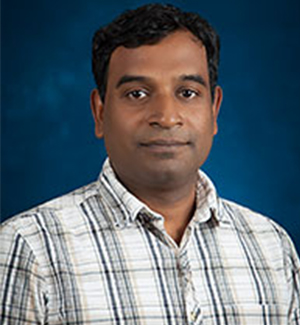
Junhong Leeمشاهده پروفایل
پژوهشگر ارشد
Junhong Lee is a Research Fellow at the Max Planck Institute for Meteorology (MPI-M) in Hamburg, Germany, specializing in land-atmosphere interactions within storm-resolving Earth System Models. His work investigates how soil moisture conditions influence precipitation triggering and carbon cycle dynamics in high-resolution climate simulations. His academic background includes: Ph.D. and M.S. in Atmospheric Sciences from Yonsei University, Korea (2012-2019), with thesis on "The Representations of Vegetation for Surface Wind in the WRF Model" B.S. in Atmospheric Sciences and B.S. in Earth Science Education from Kongju National University, Korea (2008-2012), with thesis on "Analysis of Arctic and Antarctic Sea-Ice Concentration Variation Retrieved from Aqua/AMSER-E" Lee's research centers on improving boundary-layer processes and land-surface representations in climate models. He has implemented critical model components including the 3D Smagorinsky turbulence scheme in ICON's Sapphire configuration and the roughness sublayer scheme in WRF. His work bridges observational data with high-resolution modeling to advance understanding of land-atmosphere feedback mechanisms, particularly in storm-resolving frameworks where traditional parameterizations break down. Analysis of his 12 publications (2015-2023) reveals consistent focus on boundary-layer meteorology, model development, and land-surface interactions. His recent work emphasizes kilometer-scale Earth System Modeling (ICON-Sapphire), vegetation-atmosphere coupling, and innovative parameterizations for surface-layer processes. Key trends include integration of observational data into models, evaluation of model physics across scales, and exploration of land-surface feedbacks in extreme weather contexts. Lee actively contributes to MPI-M's modeling infrastructure including the ICON Earth System Model and participates in collaborative projects like nextGEMS and WarmWorld. His research leverages the institute's observational assets such as the Barbados Cloud Observatory and HALO research aircraft, though no specific lab leadership or student advising is documented. The institute's structure—particularly the Climate Physics and Climate Dynamics departments—provides the framework for his storm-resolving model development work.