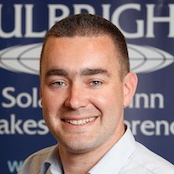
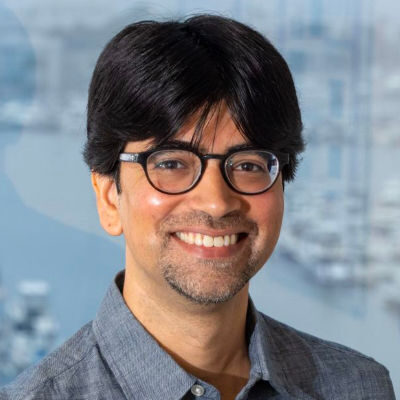
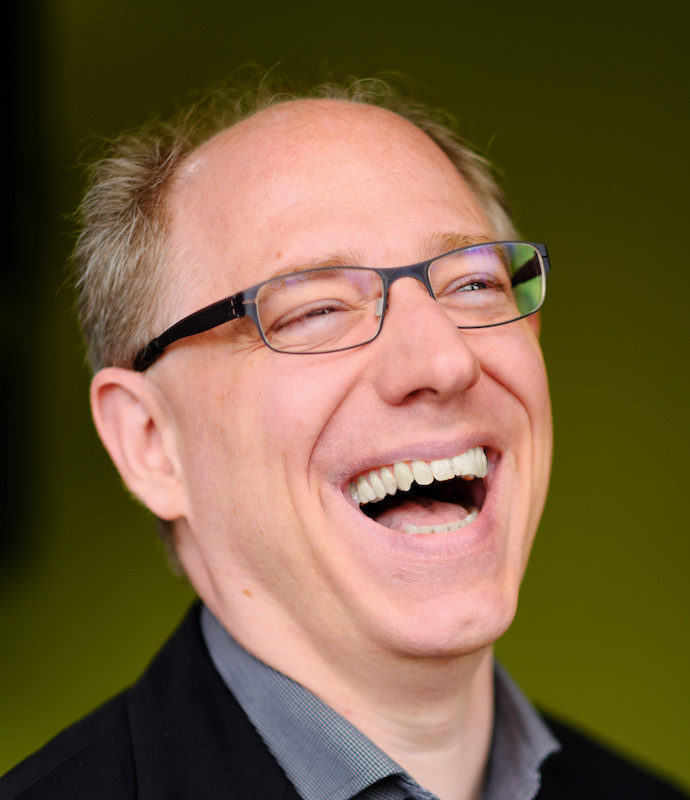
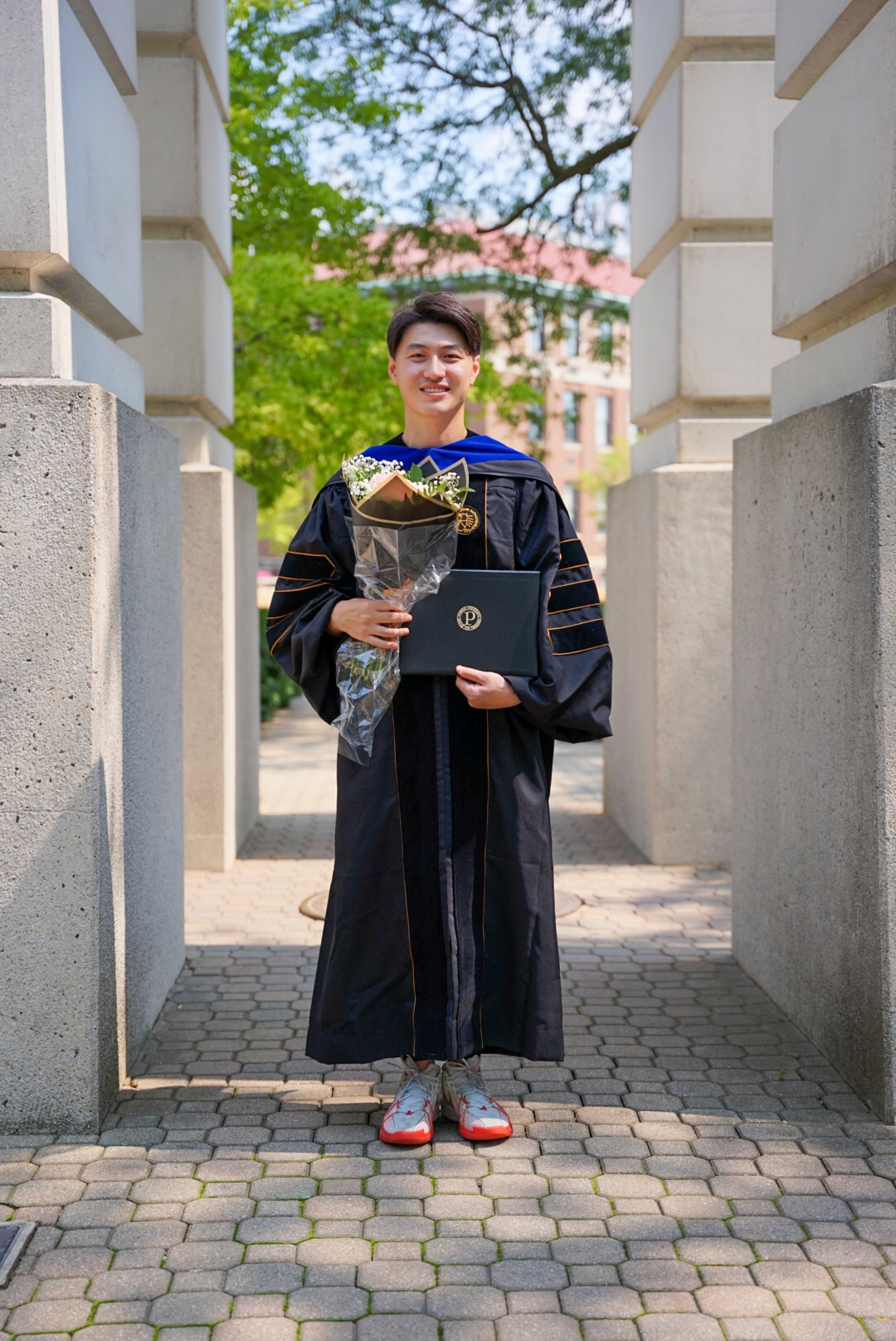
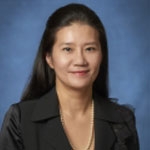
Noman Mohammed is an Associate Professor of Computer Science at the University of Manitoba’s Faculty of Science, leading the Data Security & Privacy (DSP) laboratory. He specializes in privacy-preserving techniques for data sharing, addressing challenges in healthcare, genomic, and financial data. In 2020, he received the Terry G. Falconer Memorial Rh Institute Foundation Emerging Researcher Award for his contributions to bridging privacy and data utility gaps. His research focuses on balancing data accessibility and individual privacy through technical solutions like federated learning, differential privacy, and secure genomic data processing. He emphasizes integrating policy guidelines with advanced technologies to mitigate privacy risks from interconnected data sources. Notable achievements include developing toolkits for data anonymization and federated learning frameworks, as well as advancing methods to secure cloud-based data storage and analysis. His work aligns with societal needs for robust privacy mechanisms in an era of expanding personal data collection. Future objectives involve addressing privacy challenges in emerging technologies, such as heterogeneous data integration and scalable systems for personal data management. Despite his research focus, he notably avoids social media platforms.
Professor Thomas Lukasiewicz is a Full Professor and Head of the Artificial Intelligence Techniques research group at the Faculty of Informatics, Vienna University of Technology (TU Wien). His research focuses on enabling machines to mimic human-like intelligence through techniques spanning deep learning, symbolic reasoning, and predictive coding. Key areas include explainable AI, hybrid neurosymbolic systems, and applications in healthcare and law. He teaches courses such as Deep Learning for Natural Language Processing, Scientific Research and Writing, and multiple seminars in artificial intelligence and knowledge representation. His research projects include Explainable AI in Healthcare (2023–2027) and foundational work on predictive coding networks. His publications (15+ recent articles) address medical image segmentation, neurosymbolic frameworks, and language model evaluation in mathematics. Notable work includes neurosymbolic hybrid models (CCN⁺), reinforcement learning for medical report generation, and theoretical foundations of predictive coding networks.
Hanbyul Joo is an Assistant Professor in the Department of Computer Science and Engineering at Seoul National University (SNU). Prior to joining SNU, he was a Research Scientist at Facebook AI Research (FAIR) in Menlo Park. He completed his Ph.D. in the Robotics Institute at Carnegie Mellon University, working with Yaser Sheikh, and received his M.S. in Electrical Engineering and B.S. in Computer Science from KAIST, Korea. Dr. Joo's educational journey began at KAIST, where he earned both his Bachelor's and Master's degrees. He then pursued his Ph.D. at Carnegie Mellon University's Robotics Institute, completing his dissertation titled "Sensing, Measuring, and Modeling Social Signals in Nonverbal Communication." His doctoral work focused on developing the Panoptic Studio, a unique sensing system with over 500 synchronized cameras for capturing social interactions. Dr. Joo's research primarily focuses on endowing machines and robots with the ability to perceive and understand human behaviors in 3D . His goal is to build "social Artificial Intelligence" that can interact with humans using social signals (body languages). He pursues this direction using data-driven methods where data is collected by measuring the wide spectrum of social signals transmitted during interpersonal social interaction. His research spans computer vision, machine learning, computer graphics, and robotics , with particular emphasis on 3D human pose estimation, human-object interaction, and social signal processing. His recent publications demonstrate a clear trend toward leveraging diffusion models for 3D reconstruction and generation tasks, with a focus on human-centric applications. His work bridges the gap between 2D image understanding and 3D scene reconstruction, often utilizing pre-trained models to overcome data limitations. The research consistently addresses fundamental challenges in understanding human behavior, interaction with objects, and social dynamics in 3D space. Dr. Joo is a recipient of several prestigious awards including the Samsung Scholarship and the CVPR Best Student Paper Award in 2018 . His paper "Total Capture: A 3D Deformation Model for Tracking Faces, Hands, and Bodies" received this honor at CVPR 2018. His research has been widely recognized in top computer vision and AI conferences, with multiple oral presentations at venues like CVPR, ICCV, and ECCV. Dr. Joo actively mentors a large group of students, with approximately 15 current students working toward MS/PhD degrees under his supervision. His lab, the SNU VCLab, focuses on cutting-edge research in computer vision and graphics. He has secured significant research funding through his work, though specific grant details aren't provided on his website. Dr. Joo frequently serves as an area chair for major conferences including CVPR, ICCV, and NeurIPS, demonstrating his standing in the academic community. Dr. Joo leads the SNU VCLab, which has developed several notable datasets and tools including SNU ParaHome, FrankMocap, and the CMU Panoptic Studio Dataset. His lab maintains strong industry connections, with students interning at leading companies like Meta. The lab's research focuses on building the infrastructure and algorithms needed for social AI, with an emphasis on practical applications that can be deployed in real-world settings.
Chantal Pellegrini is a Lecturer and PhD student at the Chair of Computer Aided Medical Procedures (Prof. Navab) at Technical University of Munich (TUM). Her research focuses on Deep Learning applications in medical imaging, including explainable AI for radiology report generation and Vision-Language Models for clinical decision support. She actively contributes to the DHM, NARVIS Lab, and RobUSt research groups. Teaching responsibilities include courses such as 'Computer Aided Medical Procedures', 'Medical Augmented Reality', and 'Surgical Robotics'. She supervises student projects in medical AI and healthcare innovation, with recent projects involving multimodal report generation and graph pretraining for medical applications. Education: BSc/MSc Computer Science (TUM), current PhD student since 2022 Labs: DHM (German Heart Center), NARVIS Lab, RobUSt Robotics & Ultrasound Research Keywords: Medical Image Understanding, Radiology Reports, LLMs in Healthcare Her publications span surgical OR dataset development, reinforcement learning for clinical decisions, and explainable X-ray diagnosis systems. She mentors MA/BA students in medical AI and project management for healthcare applications.
David Lillis is an Associate Professor in the School of Computer Science at University College Dublin (UCD). His research focuses on Natural Language Processing (NLP), Artificial Intelligence (AI), and their applications in legal and forensic contexts. He leads projects like CeADAR (Ireland’s Applied AI Center) and the Transpire project, collaborating with organizations such as Corlytics and the Department of Enterprise, Trade and Employment. He holds adjunct roles as a Guest Professor at Beijing University of Technology’s Data Mining and Security Lab and has been a Fulbright Scholar at the University of New Haven’s Cyber Forensics Research and Education Group. Education: B.A. (Hons) in Law and Accounting, University of Limerick Higher Diploma in Computer Science, UCD M.Sc., Ph.D. in Computer Science, UCD Professional Certificate in University Teaching & Learning, UCD Research Interests: Legal AI, digital forensics, machine learning, multi-agent systems, and information retrieval. Recent work includes NLP for regulatory analysis, crop yield prediction via neural networks, and AR-driven decision support systems. Grants & Projects: Principal Investigator: Transpire (AI Platform for Regulation) SFI Funded Investigator: CONSUS (Crop Optimization) PI: CeADAR Technology Centre Teaching roles include Deputy Programme Director for Software Engineering at Beijing-Dublin International College (BDIC) since 2014. Labs & Groups: UCD Forensics and Security Research Group, ML-Labs (SFI Centre for ML Training), and the Data Mining and Security Lab (BJUT).
Dr. Jay Pujara is a Research Associate Professor of Computer Science at the University of Southern California (USC) and Director of the Center on Knowledge Graphs. He is also a Principal Scientist at the Information Sciences Institute (ISI) and leads research teams in data science and AI. Ph.D., University of Maryland, College Park (2016) M.S. and B.S. in Computer Science, Carnegie Mellon University Research Interests include artificial intelligence, probabilistic models, knowledge graph construction, statistical relational learning, NLP, and streaming inference. His work focuses on scalable algorithms for big data and uncertainty modeling in dynamic environments. Recent Publications highlight advancements in knowledge graphs, LLM reasoning, and table understanding. Notable topics include non-verbal abstract reasoning , faithful conversational datasets , and KGQA re-ranking . Scientific Awards : SWSA Ten-Year Award (2023), Outstanding Paper (IUI 2019), Top Reviewer (NeurIPS 2018), Best Paper (SRL Workshop 2016) Advising & Grants : Mentored 12+ graduate students, including Ph.D. advisees on topics like causal modeling and neuro-symbolic tasks. Secured NSF funding for table understanding in paleoclimate studies.
Yiming Yang is a Professor at the Language Technologies Institute and Machine Learning Department within the School of Computer Science at Carnegie Mellon University , where he has held faculty positions since 2003. His research spans foundational and applied aspects of machine learning , artificial intelligence , and scientific computing . Professor, Carnegie Mellon University (2003–Present) Associate Professor, Carnegie Mellon University (1996–2003) Yang's research focuses on LLM-based problem-solving agents , combinatorial optimization , and scalable oversight frameworks . His work explores diffusion models, Langevin dynamics, and Fourier neural operators for NP-hard problems, while advancing reinforcement learning techniques for self-play supervision and principle-driven fine-tuning of large language models. Recent publications highlight his contributions to code synthesis , PDE solving , and multi-agent reinforcement learning . Key methodologies include demonstration-guided control, retrieval-augmented reasoning, and test-time scaling laws. His team has developed frameworks like FEEDER for efficient in-context learning and μTransfer-FNO for zero-shot hyperparameter transfer in PDE solvers. Notable scientific achievements include: Best Student Paper Runner Up (2013) Best Theoretical Paper Award (1994) Best Theoretical Paper Award (1993) Yang has mentored over 20 PhD students and postdocs, including Shengyu Feng , Zhiqing Sun , and Aman Madaan , across domains like graph learning , extreme multi-label classification , and language model alignment .
Professor Alexander Koller is a leading academic in Computational Linguistics at Saarland University's Department of Language Science and Technology. He holds a courtesy appointment in Computer Science and contributes to the Saarland Informatics Campus - one of Europe's premier computer science research centers. He leads the Computational Linguistics group and serves as speaker for the DFG-funded Research Training Group 'Neuroexplicit Models of Language, Vision, and Action'. PhD in Computer Science (Saarland University) Former positions: University of Potsdam, Columbia University, University of Edinburgh Sabbatical experiences: Meta AI (Paris), Allen Institute for AI (Seattle) His research focuses on computational modeling of meaning and reasoning in NLP, combining neural and symbolic approaches. Key contributions include semantic parsing systems like the AM parser and Alto, neurosymbolic models, and the GIVE Challenge for NLG evaluation. His recent work explores LLMs' limitations in problem-solving and compositional generalization. Recent publications highlight diverse applications across semantic parsing, dialogue systems, and LLM evaluation. Awards include ACL 2020 Best Theme Paper and multiple Outstanding Paper recognitions at ACL conferences. 2025 - AI Action Summit keynote speaker 2023 - ACL Outstanding Paper Awards 2022 - ELLIS Faculty appointment He maintains the DialogOS system for spoken dialogue development and teaches advanced computational linguistics topics. His group includes multiple postdocs and PhD students working across LLMs, dialogue systems, and semantic modeling.
HaoYu Wang is an Assistant Professor of Computer Science at SUNY Albany. His research focuses on parameter-efficient and data-efficient deep learning, particularly in natural language processing and machine learning, aiming to democratize AI access. He holds a Ph.D. from Purdue University's School of Electrical and Computer Engineering, a B.Eng. from the University of Electronic Science and Technology of China, and an MS from SUNY Buffalo. His work includes innovations like RoseLoRA (sparse low-rank adaptation for knowledge editing), LightLT (lightweight quantization for long-tail data), and FedKC (federated knowledge composition for multilingual NLU). He has received awards such as the Future Leaders in Data Science (2024) and Bilsland Dissertation Fellowship. Key research areas include parameter efficiency, cross-lingual NLU, and model fairness. Recent publications span topics like federated learning optimization, robust retrieval-augmented generation, and mitigating token overfitting in LLMs. He advises students on Ph.D. and intern roles, emphasizing CVs and research interests in applications.
ChanMin Kim is a Professor in the Learning and Performance Systems department at Penn State College of Education. With over 80 publications and 2553 citations, their work focuses on integrating artificial intelligence , robotics , and educational technology into science and computer science education. Research interests: Science writing, AI-human partnerships, robotics in education, equity-focused technology design Key methodologies: Natural Language Processing, learning analytics, scaffolding strategies Recent work explores large language models in education, debugging processes in pre-service teacher training, and automated assessment systems for science explanations. While the provided data doesn't show specific scientific awards or student advisees, their publications in venues like British Journal of Educational Technology and Journal of Science Education and Technology demonstrate significant contributions to learning sciences. Kim collaborates extensively with researchers in AI, educational technology, and equity-focused domains.
Golnoosh Farnadi is an Associate Professor at the Department of Computer Science and Operational Research at the University of Montreal and an Assistant Professor at the School of Computer Science at McGill University. She holds a Canada-CIFAR Chair in Artificial Intelligence and serves as a Senior Academic Member at Mila - Quebec Institute for Artificial Intelligence. Her interdisciplinary work bridges computer science, operations research, and ethical AI considerations. Her educational background includes a Ph.D. in Computer Science from KU Leuven and Ghent University (2017), followed by postdoctoral positions at the University of Montreal/MILA (2018-2020) and the University of California, Santa Cruz (2017-2018). Her research focuses on algorithmic fairness, responsible AI, deep learning, and probabilistic models, with applications spanning healthcare, recommender systems, and public policy. Farnadi's recent publications demonstrate a strong emphasis on addressing fairness in machine learning systems, with particular attention to cultural diversity in recommender systems, fairness in healthcare optimization (particularly kidney exchange programs), and mitigating hallucinations in large language models. Her work consistently combines theoretical rigor with practical applications, often employing novel mathematical frameworks to tackle complex ethical challenges in AI. Among her notable recognitions are the Google Scholar Award (2021), Facebook Research Award (2021), Google Award for Inclusion Research (2023), and being named one of the 100 Brilliant Women in AI Ethics (2023). She was also recognized as a Rising Star in AI Ethics in 2021. Farnadi supervises numerous graduate students through her EQUAL Lab (EQuity & EQuality Using AI and Learning algorithms), which focuses on developing AI systems that promote fairness and equity. Her teaching includes courses on Responsible AI, Machine Learning, and Trustworthy Machine Learning at both McGill University and HEC Montreal.
Masayuki Goto is a Professor in the Department of Industrial Systems Engineering, School of Creative Science and Engineering at Waseda University, Japan, where he has served since 2011. He earned his Doctor of Engineering from Waseda University and leads research integrating statistical science, machine learning, information theory and management engineering to solve business-analytics, marketing, AI ethics and industrial optimisation problems. Education: Doctor of Engineering, Waseda University Research Interests: His work spans data science, machine learning, business analytics, statistical learning theory, generative AI, deep neural networks, natural language processing, network analysis and information theory, with recent emphasis on trustworthy AI and synthetic data generation. Publication Trends: Over 2024-2025 his group has published extensively on deep learning for tabular data, vision-language models, recommender systems, causal inference and ethical AI, demonstrating a shift toward generative-AI-driven business analytics and interpretable models. Scientific Awards: Best Paper Award, CIE51 2024 Outstanding Paper Award, APIEMS 2023 Best Paper Award, APIEMS 2022 Best Paper Award, 20th ANQ Congress 2022 2022 PC Conference Best Paper Award Best Paper Award, JASMIN 2021 Best Paper Award, 19th ANQ Congress 2021 Encouragement Award, AAMSA 2021 IDR User Forum 2020 Enterprise & DBSJ Special Awards Best Paper Award, APIEMS 2019 Best Paper Award, ANQ Congress 2018 World CIST'18 Best Paper Award Best Paper Award, ANQ Congress 2017 JSPS Grant Review Commendation 2016 JIMA Distinguished Research Award 2015 Best Paper Award, Journal of JIMA 2015 IPSJ National Convention Best Paper Awards (2015 & 2012) Advising & Grants: He has mentored a large cohort of graduate students evidenced by co-authorship on over 100 recent papers. He has served as PI on numerous JSPS KAKENHI grants and industry projects focused on data-driven management, AI marketing and ethical AI frameworks. Labs & Teams: He heads the Goto Laboratory within the Waseda Institute for Advanced Study, leading interdisciplinary projects on business AI, data-ethics education and industrial optimisation.
Mikko Kurimo is a Full Professor at Aalto University's Department of Information and Communications Engineering, School of Electrical Engineering. He earned his M.Sc., Lic.Tech., and D.Sc.(Tech.) from Helsinki University of Technology (1992, 1994, 1997) and pioneered neural networks for automatic speech recognition (ASR) in his PhD thesis. After research roles at IDIAP (Swiss AI center) and visiting positions at University of Colorado, Edinburgh, SRI, ICSI, and Nitech, he leads Aalto's ASR group since 2000. His work focuses on unsupervised subword modeling for morphologically complex languages (Finnish, Estonian, Turkish, Arabic) and large speech foundation models. PhD in Neural ASR (Helsinki University of Technology, 1997) Research Scientist at IDIAP (Switzerland) Visiting Fellow at University of Colorado, Edinburgh, SRI, ICSI, Nitech Head of Aalto ASR Group (2000-present) His research spans deep learning for ASR, spoken language modeling , and low-resource language solutions . Recent work explores continued pre-training of self-supervised models, multimodal emotion recognition, and pronunciation assessment using LLMs. He led the winning team in the 2017 Multi-Genre Broadcast challenge and secured competitive funding in Tekes Challenge Finland and EC's H2020-ICT-2017. Key article trends include: Advancements in children's speech recognition and dysarthric speech processing Integration of generative AI for language learning feedback Specialization in low-resource Uralic languages (Finnish, Northern Sámi) Development of robust ASR systems for complex phonetic environments Scientific Awards ACM Multimedia 2023 Computational Paralinguistics Challenge Prize First place in MGB3 2017 Arabic ASR Challenge ISCA Best Student Paper Award (2011) Professeur Invité at Université de Saint-Etienne (2005-2006) Royal Society International Short Visit Fellowship (2004) Professor Kurimo leads the Speech Recognition Group at Aalto, collaborating with COIN (Centre of Excellence in Computational Inference) and AIRC (Adaptive Informatics Research Centre). His projects like CaptainA mobile app demonstrate practical applications of ASR in language education. He has supervised numerous publications with co-authors in domains spanning bandwidth extension, stuttering detection, and speech sound disorder assessment.
Iro Laina is a Departmental Lecturer in Computer Vision at the University of Oxford's Visual Geometry Group. She holds a PhD (Dr. rer. nat.) from the Technical University of Munich (TUM), where her dissertation earned the ECVA PhD Award. Her research focuses on unsupervised and language-supervised learning for 3D scene understanding, image/video perception systems, and geometric reconstruction. Education: PhD in Computer Science (TUM), MSc in Biomedical Computing (TUM), Diploma in Electrical & Computer Engineering (NTUA). Research Interests: 3D Reconstruction and Generation Unsupervised Learning Multi-View and Video Analysis Generative Diffusion Models Geometry-Aware Networks Her recent work emphasizes scalable 3D scene synthesis, training-free methods, and cross-modal fusion with LLMs. Over 15+ publications since 2021 reflect her leadership in geometric deep learning. Awards: ECVA PhD Award (2020), Recognized in multiple international conferences. Advising: Mentors DPhil students in creative AI applications (e.g., gameplay design). Active in Oxford's Robotics and Biomedical Engineering networks. Labs/Tech: Core member of the Visual Geometry Group, collaborating on projects like IMAD2025 with the ZERO Institute.
Christopher G. Brinton is the Elmore Associate Professor of Electrical and Computer Engineering at Purdue University, where he leads the ION research lab. He is affiliated with the Department of Electrical and Computer Engineering in the College of Engineering at Purdue University's West Lafayette campus. Dr. Brinton received his PhD from Princeton University, where he was previously the Associate Director of the EDGE Lab and a Lecturer of Electrical Engineering. His research focuses on the intersection of networking, communications, and machine learning, with particular emphasis on Fog computing systems, the Internet of Things (IoT), NextG Wireless, and social learning networks. His research integrates foundational techniques including convex and non-convex optimization, machine learning, and signal processing to address challenges in networked intelligent systems. The ION lab under his leadership develops both theoretical frameworks and practical implementations for next-generation networking solutions, with strong industry collaborations including Qualcomm, Nokia, Intel, Cisco, Dell, and Ericsson. Recent publications reveal a strong trend toward federated learning, decentralized algorithms, and edge intelligence, with significant contributions to model partitioning, communication-efficient learning, and robust network architectures. His work increasingly bridges traditional communication theory with modern machine learning techniques to solve emerging challenges in distributed networked systems. NSF CAREER Award ONR Young Investigator Program (YIP) Award DARPA Young Faculty Award (YFA) AFOSR Young Investigator Program (YIP) Award Intel Rising Star Faculty Award (RSA) Dr. Brinton teaches several courses including ECE 647: Performance Modeling of Computer Communication Networks, ECE 301: Signals and Systems, and ECE 547: Introduction to Computer Communication Networks. He has co-authored the book 'The Power of Networks: Six Principles That Connect Our Lives' and taught three Massive Open Online Courses (MOOCs) with over 400,000 cumulative students. While not currently actively recruiting students, he remains open to connecting with highly motivated individuals. Dr. Brinton leads the ION (Intelligent Optimization and Networking) research lab, which focuses on creating theoretical foundations and practical implementations for next-generation networked systems. The lab has recently published significant work on 6G taxonomy in collaboration with major industry partners and continues to push boundaries in distributed learning and network optimization.