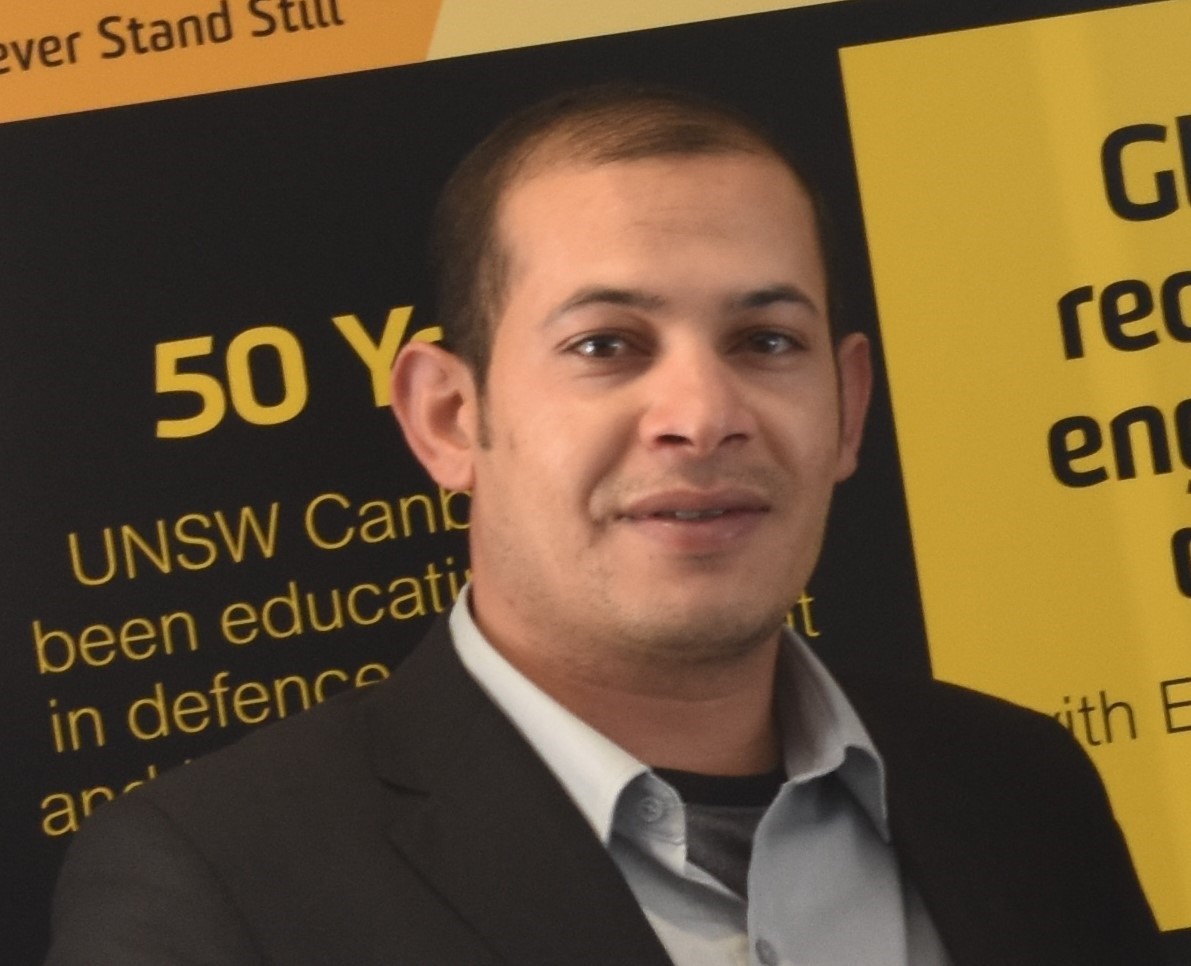
Dr. Nour Moustafa is an Associate Professor and ARC DECRA Fellow at the School of Systems & Computing (SysCom) , University of New South Wales (UNSW) Canberra , Australia. He leads the Intelligent Security Group and focuses on developing AI/ML-driven cybersecurity frameworks for smart systems. Educated at Helwan University (BSc/MSc in Information Systems) and UNSW (PhD in Cybersecurity). Research Interests include intrusion detection, threat intelligence, privacy preservation, digital forensics, and cyber resilience, with methodologies spanning statistical analysis , machine learning , and deep learning applied to IoT , Edge/Cloud , and Industrial IoT environments. His work emphasizes federated learning for privacy preservation, blockchain for secure AI, and digital twins for network self-healing. Notable contributions include the TON-IoT , Bot-IoT , and UNSW-NB15 datasets for cybersecurity evaluation. Scientific Awards : 2020 Spitfire Memorial Defence Fellowship ACM Distinguished Speaker IEEE Senior Member He has served as guest associate editor for IEEE Transactions journals and held leadership roles in conferences like IEEE TrustCom . His research bridges academia and industry, with over 75 publications in top-tier venues.
Xihui Liu is an Assistant Professor at the Department of Electrical and Electronic Engineering (EEE) and Institute of Data Science (IDS), The University of Hong Kong, with a courtesy appointment in the Department of Computer Science. She holds a PhD from the Chinese University of Hong Kong and a bachelor’s from Tsinghua University. Her research focuses on generative models, multimodal AI, computer vision, and their applications in embodied AI and AI for Science. Education: PhD in Multimedia Lab (MMLab), Chinese University of Hong Kong (2017–2021) Bachelor’s in Electronic Engineering, Tsinghua University (2013–2017) Research Interests: Generative models for 3D content and multimodal systems Embodied AI and vision-language integration Applications in scientific domains Awards: Adobe Research Fellowship (2020) Rising Stars in EECS (2021) WAIC Rising Stars Award (2022) Her work emphasizes interactive generative systems and benchmarks like T2I-CompBench. She co-organized workshops on multimodal foundation models and embodied AI, and currently serves as Area Chair for CVPR, NeurIPS, and ICLR.
Dr. Difan Zou is an Assistant Professor in the Department of Computer Science at the University of Hong Kong's School of Computing and Data Science. He holds a PhD in Computer Science from UCLA and degrees in Applied Physics and Electrical Engineering from the University of Science and Technology of China (USTC). His research focuses on machine learning theory, optimization, and learning structured data such as time-series and graph data, with an emphasis on understanding deep learning's theoretical underpinnings like optimization trajectories and generalization properties. Dr. Zou's academic background includes a B.S. from USTC's School of Gifted Young (Applied Physics) and a M.S. in Electrical Engineering from the same institution. His work bridges theoretical foundations and practical applications, addressing challenges in adversarial robustness, algorithm design for deep neural networks, and explainable machine learning systems in healthcare and finance. His research projects aim to establish rigorous frameworks for deep learning optimization, develop efficient training algorithms, and integrate conventional statistical models with machine learning for improved interpretability. He has received the Bloomberg Data Science Ph.D. Fellowship and has contributed to top-tier conferences like ICML, NeurIPS, and ICLR.
Howard Forman is a Professor of Radiology and Biomedical Imaging at Yale School of Medicine, with secondary appointments in Public Health (Health Policy), Management, and Economics. He is fully joint in the School of Management and holds affiliations with the Institute for Social and Policy Studies. He serves as Director of the MD/MBA Program, the Executive MBA Healthcare Focus Area, and the Health Care Management Program at the Yale School of Public Health. He is also the Faculty Director of Finance in the Department of Radiology and an active clinician at Yale New Haven Hospital’s Emergency Department, where he serves as deputy operational chief for Radiology. Professor, Radiology & Biomedical Imaging, Yale School of Medicine Professor, School of Management Professor, Economics Professor, Health Policy & Management Director, MD/MBA Program Director, Health Care Management Program (YSPH) Faculty Director of Finance, Radiology Department Dr. Forman’s research centers on health economics, healthcare policy, quality improvement, and radiology administration. His interests include healthcare financing, cost analysis, health systems reform, and the application of AI and large language models in radiology reporting. He has extensively studied patient access to imaging reports, clinician staffing, and end-of-life cancer care. His recent work explores how AI can improve reporting accuracy while addressing ethical concerns like racial bias. His recent publications reflect a strong trend in leveraging artificial intelligence to enhance radiology workflows and patient engagement, while maintaining a focus on equity and policy implications. Articles in Radiology , JAMA Network Open , and Clinical Imaging demonstrate his leadership at the intersection of medicine, technology, and policy. Healthcare Track Teaching Award – 2025, 2023, 2017 Regent's Award – 2019 Leah Lowenstein Award – 2019 Distinguished Student Mentoring Award – 2013 Fellow, Society for Advanced Body Imaging – 2003 Dr. Forman is a dedicated educator and mentor, having founded and led multiple interdisciplinary programs. He has been instrumental in shaping health policy curricula and promoting evidence-based public health communication. He co-hosts the popular Health & Veritas podcast with Harlan Krumholz, contributing to public discourse on healthcare. He has served on editorial boards for journals including American Journal of Roentgenology and Clinical Imaging , and is actively involved in professional societies such as the Radiologic Society of North America.
Professor Alasdair McDonald holds the Chair in Renewable Energy Technology at the School of Engineering, University of Edinburgh . His work focuses on the integrated electrical-magnetic-mechanical modeling and design of large electrical machines for offshore renewable energy systems , particularly wind turbine powertrains . He previously served as a Lecturer, Senior Lecturer, and Reader in Wind Turbine Technology at the University of Strathclyde. Education: PhD in Structural Analysis of Low-Speed, High-Torque Generators (University of Edinburgh, 2008) MEng (Hons) in Integrated Electrical & Mechanical Engineering (University of Durham, 2004) Research Interests: Design of permanent magnet electrical machines for wind and marine energy Lightweight generator structures and advanced manufacturing methodologies Condition monitoring using SCADA and vibration data Cost of energy optimization for offshore renewables Projects: STREAM 1: Innovations in Forth/Tay Offshore Wind Clusters (EPSRC, 2025-2029) Wind2DC: Medium Voltage DC Power Take-Off Systems (EPSRC, 2023-2026) PV054: Modular Generators for Floating VAWTs (EPSRC & SeaTwirl AB, 2023) Media Contributions: Quoted in research media about floating hydrogen production systems (2025)
Jiaoyan Chen is a Senior Lecturer (Associate Professor) in the Department of Computer Science at The University of Manchester. She previously held roles as a Lecturer at Manchester, a Senior Researcher at the University of Oxford, and a Postdoctoral Fellow at Heidelberg University. Education: PhD and Bachelor's in Computer Science and Technology from Zhejiang University (2016 and 2011), with a visiting PhD stint at Zurich University's Department of Informatics. Research Interests: Integrating knowledge graphs and ontologies with machine learning and large language models (LLMs), focusing on semantic embeddings, knowledge curation, and explainable AI systems. Publication Trends show emphasis on ontology embeddings (e.g., OWL2Vec*), LLM evaluation with knowledge graphs, and hybrid neural-symbolic reasoning. Her work bridges structured knowledge and modern AI through projects like OntoEm and ConCur . Current Research Team includes postdoctoral researchers, PhD students, and externally co-supervised associates. She actively recruits PhD candidates in areas like Retrieval-Augmented Generation and LLM Explainability , with projects funded by EPSRC and international consortia. Grants & Leadership: EPSRC New Investigator Award (2023-2026) Manchester-Melbourne-Toronto Research Fund (2024-2026) EPSRC ConCur Project (2021-2025) Professional Service: Associate Editor, Transactions on Graph Data and Knowledge EPSRC Peer Review College member OAEI Track Co-organizer at ISWC
Yuan Zhong is an Associate Professor of Operations Management at the University of Chicago Booth School of Business . He previously held positions as an Assistant Professor at Columbia University’s Department of Industrial Engineering and Operations Research and was a Postdoctoral Scholar at UC Berkeley’s Computer Science Department. Education: PhD in Operations Research, MIT (2012) MA in Mathematics, Caltech (2008) BA in Mathematics, University of Cambridge (2006) His research focuses on applied probability and stochastic system design , with applications in cloud computing , supply chain management , and e-commerce logistics . Recent work explores multi-period production systems and dynamic resource allocation in data centers and healthcare operations . Recent publications analyze cloud value chains , sparse graph design for delivery networks, and process flexibility in manufacturing. He has contributed to journals like Operations Research , Annals of Applied Probability , and Stochastic Systems . Scientific Awards: 2012 Kenneth C. Sevcik Outstanding Student Paper Award Best Student Paper Award at ACM Sigmetrics (2012) He teaches courses in business process fundamentals and queueing theory , with a future schedule including Operations Management: Business Process Fundamentals (2025–2026). No explicit student advising list was provided.
Jeff Zhang is an Assistant Professor in the School of Electrical, Computer and Energy Engineering at Arizona State University. He joined ASU in January 2023 after completing a postdoctoral fellowship at Harvard University. His research spans deep learning, computer architecture, embedded systems, and EDA, with particular emphasis on energy-efficient and fault-tolerant design for AI/ML systems and hardware accelerators. Education: Ph.D., New York University M.Eng., B.Eng., Hunan University Dr. Zhang's research bridges theoretical machine learning with practical hardware implementation, developing novel architectures that optimize performance, power consumption, and reliability. He has pioneered approaches for hardware acceleration of large language models, efficient sparse matrix operations, and novel memory technologies for AI workloads. His work has received multiple awards including IEEE Top Picks in Test and Reliability (2023) and IEEE Micro Best Paper Award (2022). His recent publications demonstrate a strong trend toward heterogeneous computing, with significant work in chiplet-based AI accelerators, photonic computing for AI, and 2.5D/3D integration techniques. The research spans from high-level compiler frameworks to circuit-level innovations, with a consistent theme of co-designing algorithms and hardware for optimal AI performance. His work on the SODA toolchain has been particularly influential in bridging Python to silicon. Scientific Awards: IEEE Top Picks in Test and Reliability, IEEE ITC, 2023 Best Paper Award, IEEE Micro, 2022 Best Paper Award Candidate, IEEE DATE, 2022 Best Presentation Award Nomination, ACM SIGDA DATE PhD Forum, 2020 Best Paper Award Nomination, IEEE VLSI Test Symposium, 2018 Ernst Weber Ph.D. Fellowship, New York University, 2015, 2016 Dr. Zhang actively mentors a diverse group of graduate and undergraduate students, with several alumni now working at leading technology companies including Apple, TSMC, and Ansys. His research is supported by prestigious grants from NSF, Sandia National Labs, and industry partners. He serves on technical program committees of numerous top conferences and has organized special sessions on emerging topics like Gen AI for Chip Design and LLM-Aided Design. Dr. Zhang leads a vibrant research group that collaborates extensively with industry partners and national laboratories. Current projects focus on next-generation AI hardware, including chiplet-based systems, photonic accelerators, and novel memory technologies for large language models. His group has developed several open-source tools and frameworks, including the SODA toolchain for bridging Python to silicon.
Yuzhe Yang is an Assistant Professor of Computational Medicine and Computer Science at UCLA, with a visiting research scientist role at Google Health. He holds a PhD in Computer Science from MIT (2024), advised by Dina Katabi, and a B.S. with honors from Peking University. Research Focus: Machine learning for healthcare, medical AI fairness, and AI-driven biomedical discovery Key Contributions: Ten Notable Advances (Nature Medicine) and Ten Crucial Advances (The Lancet Neurology) His lab develops Trustworthy Learning Algorithms and Generalist Health Models that integrate Multimodal Data for personalized health coaching. Notable projects include AI-based Parkinson's Disease Biomarkers via nocturnal breathing and Foundation Models for Equitable Medicine . Recent publications at ICLR 2025 (wearable foundation models), Nature Medicine 2024 (medical AI fairness), and Science Advances 2025 (vision-language medical bias) highlight his interdisciplinary work. He serves on ML4H workshops and reviews for top conferences like NeurIPS and ICML. Awards include Forbes 30 Under 30 , Takeda Fellowship , and Baidu PhD Fellowship . Advising opportunities: Recruiting PhD students (CS/CompMed) and postdocs in AI for health. Lab: Health Intelligence Lab (HAIL)
Abolfazl Asudeh is an Associate Professor in the Department of Computer Science at the University of Illinois Chicago and director of the Innovative Data Exploration Laboratory (InDeX Lab) . He is a Senior Member of ACM and IEEE , serving as Associate Editor for IEEE Transactions on Knowledge and Data Engineering , VLDB Ambassador , and VLDB Endowment Liaison to NSF . His research focuses on Algorithm Design for Data and AI problems , emphasizing efficient, accurate, and responsible solutions through Approximation Algorithms , Randomized Methods , and Computational Geometry . Recent work explores LLM optimization ( Needle ), fair data structures ( FairHash ), and responsible AI frameworks ( Chameleon ). Scientific awards include Communications of the ACM Research Highlight Google Research Scholar Award SIGMOD 2019 Research Highlight Best of VLDB 2020 SIGMOD 2017 Reproducibility Award Grants: NSF IIS-2348919 (2024-2027): Fairness-aware Data Structures NSF IIS-2107290 (2021-2024): Collaborative Fairness Research The InDeX Lab develops systems like Needle (image retrieval) and RSR (matrix multiplication). His work integrates fairness , reliability , and computational efficiency across data structures , LLMs , and responsible AI implementations.
Qi Long is a Professor at the University of Pennsylvania, holding joint appointments in the Department of Biostatistics, Epidemiology and Informatics (Perelman School of Medicine), Department of Computer and Information Science (School of Engineering and Applied Science), and Department of Statistics and Data Science (The Wharton School). He serves as Founding Director of the Center for Cancer Data Science, Associate Director of the Penn Institute for Biomedical Informatics, and Associate Director for Quantitative Data Science at the Abramson Cancer Center. His research bridges statistical and machine learning (ML/AI) method development with biomedical applications, focusing on precision medicine and population health. Education : Ph.D. (2005) and M.S. (2003) in Biostatistics from University of Michigan; B.S. (1998) in Computer Science from University of Science and Technology of China. Research interests include: Robust statistical and ML/AI methods for big health data (-omics, EHRs, imaging, mHealth) Multimodal data integration and subgroup heterogeneity analysis Missing data, causal inference, Bayesian methods, and clinical trials Data privacy, algorithmic fairness, and responsible AI in healthcare Foundation models and agentic AI for biomedicine His publications focus on privacy-preserving AI, fairness-aware ML, and integrative models for multi-omics and EHRs. Recent work explores LLMs and watermark detection in hybrid human-AI settings. Scientific Awards : Elected fellow: AAAS, ASA, IMS, ISI, AMIA He leads large NIH- and ARPA-H-funded initiatives, directing statistical coordinating centers for national clinical trials. His lab trains numerous PhD/Master’s students and postdocs, many of whom hold prestigious academic or industry positions.
Lisa Wu Wills is an Assistant Professor in the Department of Computer Science and Electrical and Computer Engineering at Duke University, leading the APEX Lab (Application-driven Programmable Efficient Accelerated Systems Lab). Her research focuses on hardware acceleration for big data analytics in genomics, graphs, and databases to advance healthcare and natural sciences. Education: Ph.D. in Computer Science, Columbia University, 2014 Research Interests: Dr. Wills pioneers computer architecture and hardware-software co-design to create efficient accelerators for emerging applications. Her work targets genomics , graph analytics , and database systems , emphasizing simplified hardware deployment and energy efficiency for scientific breakthroughs in healthcare and AI. Publication Trends: Her 2022-2025 publications reveal a strong focus on open-source frameworks (Beethoven, PyTFHE) for accelerator development, hardware acceleration in privacy-preserving computing, and optimization for large language models. Key themes include transfer learning for EDA, domain-specific architectures for genomics, and energy-efficient image processing. Scientific Awards: Google ML and Systems Junior Faculty Award (2025) Advising and Grants: Dr. Wills mentors three PhD students: Chris Kjellqvist (Beethoven framework architect), Mason Ma (PyTFHE lead for FHE applications), and Mansi Choudhary (COCOSSim simulator creator). Her 2025 Google award funds research on accelerating vector databases and retrieval-augmented generation for LLMs. Labs and Teams: She directs the APEX Lab at Duke, developing tools like Beethoven (open-source accelerator composer) and PyTFHE for hardware-software integration, enabling domain scientists to leverage custom acceleration with minimal hardware expertise.
Kilian Q. Weinberger is a Professor of Computer Science at Cornell University's College of Engineering, focusing on Machine Learning, Deep Learning, and AI applications. He has held previous roles as Associate Professor at Washington University in St. Louis and Research Scientist at Yahoo! Research. His research spans metric learning, resource-constrained learning, Gaussian Processes, and advancements in 3D perception for autonomous systems. Education : Ph.D. in Machine Learning (University of Pennsylvania), BA in Mathematics and Computing (University of Oxford) Key Research Areas : AI in Science, Computer Vision, Autonomous Vehicles, and Neural Network Efficiency His recent work emphasizes interpretable machine learning, large language models, and multimodal applications. Awards include NSF CAREER (2012) Daniel M Lazar '29 Teaching Award (2016) Ann S. Bowers Excellence Award (2024) ACM and AAAI Fellow (2024) He teaches advanced courses like CS6784 (Cornell) and has mentored numerous PhD students across institutions. Current affiliations include the Sloan Research Fellowships Selection Committee since 2024.
Ankush Agarwal is an Associate Professor in the Department of Statistical and Actuarial Sciences at the University of Western Ontario. His research focuses on mathematical finance, financial statistics, and Monte Carlo methods, with applications to risk management and derivatives pricing. He supervises PhD students in quantitative finance and has taught courses on Monte Carlo methods and advanced financial modeling at Western University. Education: PhD in Mathematics from Tata Institute of Fundamental Research (2015) Research interests span regime-switching models, longevity risk hedging, stochastic differential equations, and rare event simulation. His work combines theoretical probability with computational techniques for financial applications. Recent publications include studies on McKean-Vlasov SDEs, implied Sharpe ratio estimation, and optimal portfolio strategies under stochastic volatility. These works demonstrate his expertise in stochastic processes and financial engineering. Supervision: Current PhD advisees include Ying Liao, Buchun Wang, and Shuya Zhang at the University of Glasgow. Former advisees include Yongjie Wang and Yihan Zou.
Ronny Scherer is Center Director and Professor at CEMO (Center for Educational Measurement) and Deputy Director at CREATE (Center for Research on Equality in Education) at the University of Oslo's Faculty of Educational Sciences. His work bridges educational measurement, assessment, and evaluation with a focus on research syntheses and complex sampling surveys. Dr. Scherer's research spans two interconnected domains: substantive areas including digital divides, equity and equality in education, and measurement of complex cognitive skills (such as complex problem solving, adaptability, computational thinking, and executive functioning); and methodological areas focusing on advanced meta-analytic techniques, multilevel structural equation modeling, and spatial analysis of complex survey data. His work frequently utilizes international large-scale assessment data from PISA, ICILS, TIMSS, PIRLS, PIAAC, and TALIS. His publication record demonstrates a clear trajectory toward increasingly sophisticated meta-analytic approaches, with recent work focusing on second-order meta-analyses, AI-assisted screening methods, and advanced techniques for handling complex survey data. His research consistently addresses critical educational challenges related to equity, digital literacy, and measurement of 21st century skills. Dr. Scherer has secured significant research funding for projects including ARISE (Academic resilience in mathematics and science among vulnerable students), DiDiRes (Digital inequalities in education), and ADAPT21 (Educational assessments of the 21st century: Measuring and understanding students' adaptability in complex problem solving situations). Co-director of CREATE (Centre for Research on Equality in Education) since 2023 Professor of Educational Assessment and Measurement at CEMO since 2019 Extensive experience with international large-scale assessments including ICILS, TALIS, and PIAAC As an educator, Dr. Scherer teaches advanced courses in measurement models, multilevel models, meta-analysis, and equity in education. He actively supervises graduate students interested in his research areas and has developed numerous workshops on structural equation modeling and meta-analytic methods for international audiences.