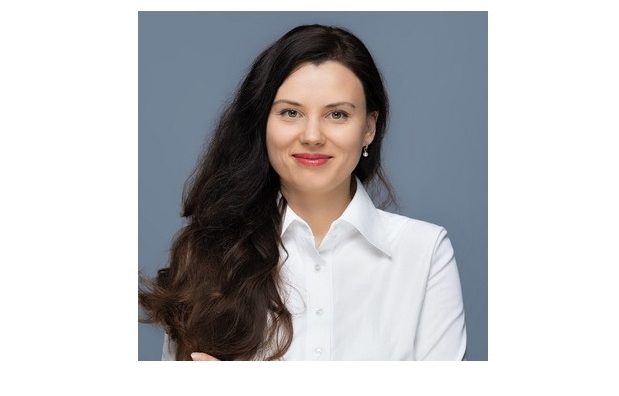
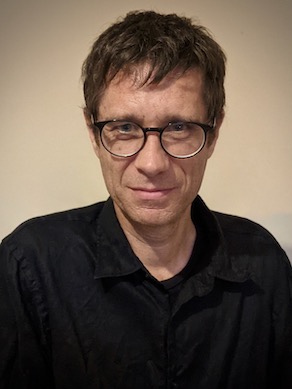
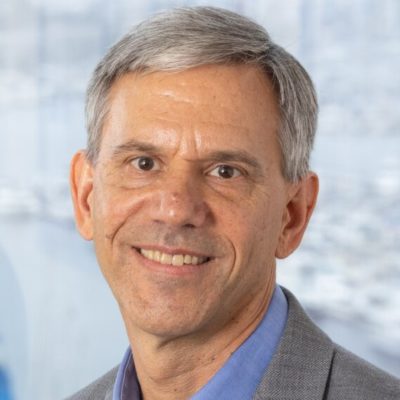
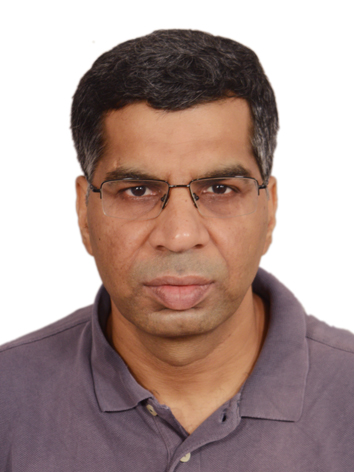
Katažyna Bogdzevič is a Professor at Mykolas Romeris University (MRU) Law School, specializing in Private International Law , European Law , Human Rights , and Environmental Law . She leads the MRU Human Rights LAB and contributes to the Environmental Management Research LAB, focusing on legal frameworks for ecosystem services, climate change mitigation, and stakeholder engagement. Key Research Themes: Integration of Private International Law with Environmental Law , analysis of legal conflicts in nature-based solutions, and name rights under international human rights conventions. Policy Engagement: Serves as advisor to Lithuania's Minister of Justice Ewelina Dobrowolska , emphasizing knowledge transfer to legislative and judicial practices. Email: roffice@mruni.eu
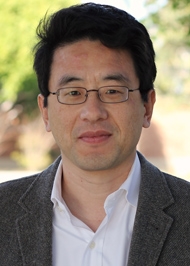
Li Min is an Associate Professor at the University of California, Los Angeles (UCLA), affiliated with the Department of Anthropology. His research focuses on Chinese prehistoric and Bronze Age archaeology, emphasizing state formation, social memory, and climatic responses. He also studies maritime archaeology of the Asiatic Trade in the Early Modern Era, using ceramic analysis to trace global trade impacts. Li teaches graduate seminars in archaeology theories and undergraduate courses on Chinese civilizations, collaborating across Anthropology, Asian Languages and Cultures, and the Interdepartmental Program of Archaeology. He co-directs the Wen-Si River Basin archaeological project with Chinese institutions. His 2018 book, Social Memory and State Formation in Early China , is a key contribution to the field. His education includes a Ph.D. from the University of Michigan (2008). Research interests further encompass landscape archaeology, integrating ceramics analysis with remote sensing and historical records. Subfield expertise includes social archaeology, material culture studies, and historical anthropology. Recent publications (2023–2025) concentrate on neuro-oncology imaging innovations, including MRI techniques for glioma characterization, adaptive clinical trials (e.g., GBM AGILE), and biomarker development. These studies highlight advanced applications of AI in medical imaging and molecular targeting therapies for brain tumors. Despite no listed awards, his work on imaging biomarkers and tumor response assessment has advanced clinical neuro-oncology standards. He advises on interdisciplinary collaborations, such as the Wen-Si project, and participates in global clinical trials for glioblastoma therapies.
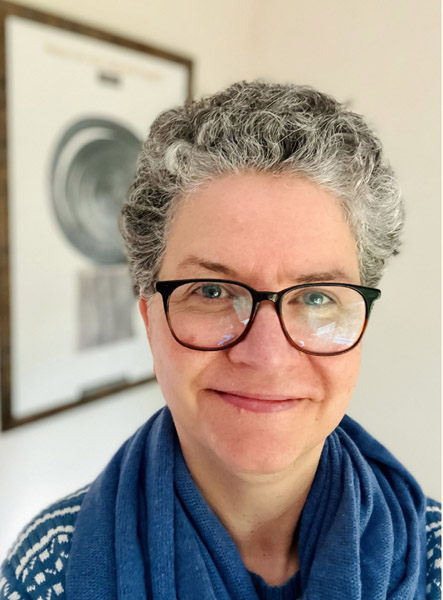
Nina Schwarz is Assistant Professor of human-environment interactions in cities at the Department of Urban and Regional Planning and Geo-Information Management, ITC—University of Twente. Holding a Diploma in Environmental Sciences (University of Lüneburg, 2003) and a PhD in Social and Economic Sciences (University of Kassel, 2007), she spent a decade as senior scientist at the Helmholtz Centre for Environmental Research – UFZ before joining ITC. Her interdisciplinary research integrates urban land-use science, ecosystem-service evaluation and advanced modelling techniques—especially agent-based models—to explore sustainable urban development under global change. Research interests revolve around three interconnected themes: (i) urban land-use change —understanding how residential, commercial and green-space dynamics co-evolve; (ii) urban ecosystem services —quantifying both supply and demand of services such as local climate regulation, recreation and biodiversity; and (iii) behavioural modelling —formalising human decision-making to simulate policy scenarios ranging from slum-upgrading to vineyard management. She actively links these themes to UN Sustainable Development Goals, notably SDG 11 (Sustainable Cities) and SDG 15 (Life on Land). Recent publications (2022-2025) reveal a methodological breadth spanning citizen-science impact assessment in Suriname, cooling effects of urban water bodies in Chinese mega-cities, European wine-growers’ adaptive behaviour, and methodological advances in upscaling and validating agent-based land-use models. Across these studies, Schwarz consistently combines empirical field data, geospatial analytics and participatory approaches to produce policy-relevant insights for cities in both the Global North and South. She has (co-)authored >80 peer-reviewed works, accumulating c. 5 900 citations and an h-index of 28 (Scopus). While specific honours are not itemised in the supplied text, her sustained citation impact and invited contributions to major conferences (e.g., iEMSs 2020, IAHR 2025) underscore scientific recognition. Schwarz frequently engages with societal stakeholders: her projects have generated open datasets on urban green-space monitoring in Paramaribo, e-learning modules for Latin-American universities, and interactive dashboards for sustainable water management. Within ITC she contributes to capacity-building programmes for emerging economies, supervises graduate researchers and maintains active collaborations across Europe, Latin America, Africa and Asia. No explicit lists of PhD students or personal grants are provided in the current corpus, but her leadership of externally funded projects (e.g., citizen-science evaluation, vineyard decision-making database) indicates ongoing acquisition of research funding.
Catherine Grant is an Honorary Professor at Aarhus University, Denmark, and Visiting Senior Research Fellow at the University of Reading, UK. She previously served as Professor of Digital Media and Screen Studies at Birkbeck, University of London (2017–2020), and held academic roles at institutions including the University of Sussex and University of Kent. Her research focuses on videographic criticism, essay filmmaking, Latin American cinemas, and screen studies methodologies. Grant earned a PhD in Mexican literature and feminist theory from the University of Leeds (1991) and a First Class B.A. in Modern Languages (1986). She pioneered the use of audiovisual essays in film studies, co-founding and editing the award-winning [in]Transition: Journal of Videographic Film and Moving Image Studies until 2024. Her work explores film authorship, found-footage techniques, and digital media practices. Her research interests span essay filmmaking, world cinema, and the intersection of theory and practice in film studies. Over 200 of her video essays have been showcased globally, emphasizing experimental methodologies and critical engagement with cinematic form. Grant has received the Society for Cinema and Media Studies Award of Distinction (2014–2015). She co-edited significant volumes on world cinema, Latin American cinema, and videographic criticism, and maintains influential platforms like Audiovisualcy and Film Studies For Free .
Eleanor Dickey is a Professor of Classics at the University of Reading. She has held academic positions at Columbia University, the University of Exeter, and the University of Ottawa. Her research focuses on Greek and Latin linguistics, classical literature, and ancient language use, with a particular emphasis on papyrology and historical pragmatics. She holds a D.Phil. in Literae Humaniores from the University of Oxford and has held fellowships at institutions including the Institute for Advanced Study in Princeton and All Souls College, Oxford. Education: BA (summa cum laude) and MA from Bryn Mawr College; M.Phil. and D.Phil. from Oxford University. Her research interests include the study of ancient language pedagogy, sociolinguistics in antiquity, and the analysis of Greek and Latin texts in papyri. She has authored several influential books, including Ancient Greek Scholarship and Latin Forms of Address . Her work explores the intersection of language, culture, and social dynamics in the ancient world. Key awards include the 2014 Fellowship of the British Academy and the 1996 Hellenic Foundation Prize. Her contributions to classical scholarship have been recognized through teaching accolades and research fellowships worldwide.
Thomas Poell is Senior Lecturer in the Department of Media Studies at the Faculty of Humanities, University of Amsterdam. His scholarly work sits at the intersection of digital media studies, platform studies, and political communication, with a focus on how digital platforms reshape public communication and cultural production. Poell's research interests primarily center on platformization processes and their societal implications. His influential work examines how digital platforms mediate public communication, with particular attention to protest movements, multilingual communication, and the transformation of cultural industries. He has made significant contributions to understanding the political economy of platforms, platform power dynamics, and the evolving relationship between platforms and public values. His methodological approach combines qualitative analysis of platform architectures with empirical studies of user practices across different cultural and linguistic contexts. Analysis of Poell's recent publications reveals a clear trajectory from studying social media's role in political movements to examining broader platformization processes. His work increasingly focuses on platform power across specialized domains including medical imaging, advertising ecosystems, and news industries. A consistent thread throughout his scholarship is examining how platform architectures shape communication practices and power relations, with growing attention to issues of visibility, governance, and equity in platformized environments. Poell has made significant contributions to the field through his co-authored book The Platform Society (2018), which established foundational concepts for understanding how digital platforms transform various sectors of society. He has also co-edited Global Cultures of Contestation (2017) and The Sage Handbook of Social Media (2018), demonstrating his leadership in synthesizing scholarly knowledge about digital media and platform dynamics. His influential article "Twitter as a multilingual space: The articulation of the Tunisian revolution" exemplifies his approach to studying platform-mediated communication during political upheavals. This work demonstrated how Twitter functioned as a global communication space during the Tunisian revolution, with different language communities articulating distinct accounts of the revolution while remaining interconnected through strategic language use by key activists.
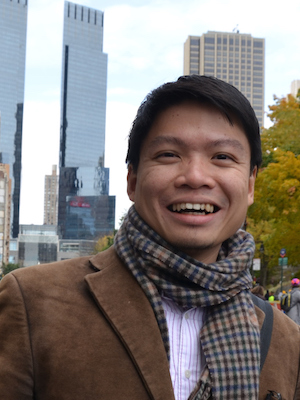
Novi Quadrianto is a Professor of Machine Learning at the School of Engineering and Informatics, University of Sussex, where he joined as a Lecturer in February 2014. He is currently a Principal Investigator on three active EU grants: BayesianGDPR (ERC), TANGO (EU Horizon RIA), and Act.AI (ERC Proof of Concept). He also holds an Adjunct Professor position in Data Science at Monash University, Indonesia, and serves as Strategic Lab co-Leader of the BCAM Severo Ochoa Strategic Lab on Trustworthy Machine Learning in Bilbao, Spain. His educational background includes a PhD in Machine Learning from the Australian National University (2012) and a BEng in Electrical and Electronics Engineering from Nanyang Technological University, Singapore. During his PhD, he conducted research at multiple international institutions including HIIT-Finland, Yahoo! Research-US, University of Alberta-Canada, Fraunhofer IAIS-Germany, and IST Austria. From 2012-2014, he was a Newton International Fellow of the Royal Society at the University of Cambridge. Professor Quadrianto directs the Predictive Analytics Lab (PAL) since 2017, which focuses on "Responsible AI" research developing AI models that embed fairness, accountability, transparency, and trustworthiness. His research spans algorithmic fairness, federated learning, and computer vision, with applications in sustainable development, healthcare, and finance. His work has been funded by prestigious organizations including the European Research Council, EPSRC, and HM Treasury. His publications reveal a strong focus on addressing challenges in AI fairness, robustness, and privacy, particularly in dynamic environments and heterogeneous data settings. Recent work explores performative prediction, diversity-driven learning, and efficient vision transformer inference, demonstrating his leadership in cutting-edge machine learning research. European Research Council ERC Proof of Concept Grant (2023) Guarantor Researcher for BCAM Severo Ochoa Excellence Accreditation (2023) European Lab for Learning and Intelligent Systems (ELLIS) Scholar/Fellow (2020) European Research Council ERC Starting Grant (2019) Newton International Fellowship (2012) Microsoft Research Asia Fellowship (2009) Professor Quadrianto currently supervises six PhD students and five postdoctoral researchers. He has served as Action Editor for Transactions on Machine Learning Research since 2022 and as Associate Editor for IEEE Transactions on Pattern Analysis and Machine Intelligence since 2016. He has also been an Area Chair for major conferences including NeurIPS, ICML, and AAAI. His PAL laboratory hosts a team of 15 members focused on inter-disciplinary AI research with domain experts across various sectors. The PAL Lab operates three innovation strands: AI for Sustainable Development (supporting UN SDGs), AI for Healthcare (transforming health outcomes), and AI for Finance (personalized loan decision-making). The lab also leads initiatives in Diversity & Inclusion in AI and offers Pro-Bono Office Hours to organizations seeking guidance on machine learning aspects.
Maria Gendron is an Assistant Professor in the Department of Psychology at Yale University, where she directs the Affective Science and Culture Lab. Her research examines how emotions emerge through dynamic interactions between social, cognitive, and cultural systems, challenging universalist perspectives on emotion. She employs multidisciplinary methodologies including neuroimaging meta-analyses, cross-cultural fieldwork with indigenous communities, and ambulatory physiological assessments. Research Focus : Dr. Gendron investigates: The role of conceptual/semantic systems in constructing emotional experiences Cultural variation in emotion perception across diverse societies Bio-behavioral synchrony in emotion development Linguistic influences on affective processing Her work integrates frameworks from affective neuroscience and cultural psychology to understand emotion diversity. Publication Trends : Her 15 most recent articles (2010-2025) focus on deconstructing emotion universality through cross-cultural comparisons, with recurring themes of: Cultural relativity in facial/vocal emotion interpretation Language as a contextual framework for emotion Conceptual and semantic mechanisms underlying affect Methodological innovations for studying emotion diversity Lab Leadership : She directs the Affective Science and Culture Lab at Yale, advancing research on emotion perception using multimodal approaches including behavioral experiments, physiological monitoring, and fieldwork.
Kai R. Larsen is a Professor at the Organizational Leadership and Information Analytics division within the Leeds School of Business , University of Colorado Boulder . He holds courtesy faculty appointments in the Department of Information Science at the College of Media, Communication and Information , serves as a Research Advisor to Gallup , and is a Fellow of the Institute of Behavioral Science . Education: Ph.D., Information Science, University at Albany, SUNY Candidatus Magisterii (Software Engineering), The National College for Teachers of Commerce, Norway Adjunkt (Education), The National College for Teachers of Commerce, Norway Diplomkandidat, NHI College of Computer Science, Norway His research focuses on Information Systems , particularly addressing the Jingle Fallacy and developing the Semantic Theory of Survey Response . He leads the Federally Supported Human Behavior Project , creating transdisciplinary frameworks using Large Language Models and Natural Language Processing to predict human behaviors across technology utilization, investor decisions, voter behaviors, and cancer prevention. His scientific awards include INFORMS ISS Design Science Award (2019) Best Prototype Award at WITS (2019) Herbert A. Simon Award (2020) David B. Balkin Innovative Teaching Award (2023) Kolb Teaching Award (2022) National Institutes of Health $355,000 Grant (2022-2023) Larsen's grant funding and mentorship achievements include NIH grant for stress ontology research Outstanding Faculty Mentor Award (2021-2022) Technology Challenge Award (2016) He also maintains the Theories Used in IS Wiki and developed the TheoryOn award-winning ontology-based search engine used by thousands.
Dr. Emmanuel Letier is an Associate Professor in Software Engineering at University College London (UCL), specializing in requirements engineering and software architecture. His research focuses on stakeholder goal analysis, formal reasoning techniques, and uncertainty management in software development. University College London, Department of Computer Science Research areas: Requirements Engineering, Software Architecture, Formal Methods, Uncertainty Analysis His work explores how to bridge stakeholder goals with software requirements using natural language, formal logic, and mathematical models. Key contributions include model checking, synthesis tools, and Bayesian analysis applications for managing technical debt and software evolution. Recent publications span AI-based systems requirements, app review mining for requirements elicitation, and uncertainty handling in self-adaptive systems. Notable awards include Best Paper Award (ACM SIGSOFT 2004) Best Paper Award (IEE 2003) Distinguished Paper Award (RE'11)
Craig Knoblock serves as Keston Executive Director of the Information Sciences Institute (ISI) at the University of Southern California (USC), Vice Dean of the USC Viterbi School of Engineering, and Research Professor of Computer Science and Spatial Sciences. He also directs the Data Science Program and the Center on Knowledge Graphs at USC. His educational background includes a Ph.D. and M.S. in Computer Science from Carnegie Mellon University (1991, 1988) and a B.S. with honors in Computer Science from Syracuse University (1984). Knoblock's research focuses on data semantics , specializing in source modeling, schema and ontology alignment, entity and record linkage, data cleaning, Web data extraction, and knowledge graph construction. His work bridges computer science, geospatial analysis, and artificial intelligence to solve complex data integration challenges. Recent projects emphasize historical map digitization, geospatial knowledge graphs, and smart city applications. His 300+ publications demonstrate consistent contributions to knowledge graphs and geospatial data integration, with a growing emphasis on historical map analysis and urban applications. The research trajectory shows increasing interdisciplinary collaboration across computer vision, geoinformatics, and domain-specific applications. IEEE Fellow (2020) ACM Fellow (2017) AAAI Fellow (2004) Robert S. Engelmore Memorial Lecture Award (2014) Donald E. Walker Distinguished Service Award (IJCAI, 2018) Use-Inspired Research Award (USC Viterbi, 2018) As Executive Director of ISI, Knoblock oversees one of USC's premier research centers with significant federal funding. His leadership extends to directing the Center on Knowledge Graphs and the Data Science Program. While specific grant details aren't provided, his extensive publication record and leadership roles indicate substantial research funding across data integration, knowledge representation, and geospatial applications. His work bridges theoretical computer science with practical applications in historical preservation, urban planning, and resource management through collaborative projects with government agencies and industry partners. Knoblock leads the Center on Knowledge Graphs at USC, focusing on developing techniques for building and utilizing knowledge graphs across diverse domains. His team combines expertise in artificial intelligence, geospatial analysis, and data integration to tackle challenges in historical map digitization, urban applications, and resource discovery. The research group maintains strong connections with both academic and government partners through the Information Sciences Institute's extensive network.
Erik Kwakkel is a Professor at the University of British Columbia, School of Information , specializing in the History of the Book , Codicology , and Digital Humanities . His research examines premodern communication systems, focusing on manuscript design, marginalia, and knowledge dissemination before print culture. Director, UBC iSchool (2020–present) Member, Comité International de Paléographie Latine (CIPL) Active in digitization projects and outreach through medievalbooks.nl blog and social media His research bridges material culture with digital innovation, analyzing medieval parchment reuse, manuscript fragments in early-modern bindings, and collaborative book production networks in Paris. He pioneered framed fragment storage at UBC for safer pedagogical use of delicate materials. Selected Publications include Books Before Print (2018), Medicine at Monte Cassino (2019), and The European Book in the Twelfth Century (2018). His media impact spans BBC World Service , CNN , and Smithsonian Magazine . Awards & Recognition : International expert on medieval manuscripts Buzzfeed's '8 Book Historians Killing It Online' (2014) CIPL Membership
Maria Virvou serves as Professor and Chair of the Department of Informatics at the University of Piraeus, where she also directs the Graduate Program in Informatics and leads the Research Laboratory 'Software Technology'. She holds significant institutional leadership roles including membership in the University Senate and has chaired the Department of Informatics for multiple terms. As Editor-in-Chief of Springer book series 'Learning and Analytics in Intelligent Systems' and 'Artificial Intelligence-Enhanced Software and Systems Engineering', she maintains substantial academic influence across international scholarly platforms. Dr. Virvou earned her PhD in Computer Science and Artificial Intelligence from the University of Sussex with a scholarship from the State Scholarships Foundation, a Master of Science in Computer Science from University College London, and her undergraduate degree from the Department of Mathematics at the National and Kapodistrian University of Athens. Her educational background in both mathematics and computer science has provided a strong foundation for her interdisciplinary research approach. Professor Virvou's research spans Software Technology, Artificial Intelligence, Educational Software and Games, User Modeling, and Human-Computer Interaction. She has pioneered work in personalized interactive software systems, applying fuzzy logic and machine learning techniques to create adaptive educational environments. Her recent work demonstrates a strategic expansion into AI applications for healthcare, with significant contributions to medical diagnostics using large language models and multimodal AI systems. She has also made notable advances in smart tourism applications through personalization techniques. With over 400 publications to her name, Professor Virvou's scholarly output shows a clear progression from foundational work in user modeling toward increasingly sophisticated AI applications across multiple domains. Her publication trends reveal a strategic focus on explainable AI, multimodal systems, and practical implementations that bridge theoretical advances with real-world applications, particularly in healthcare and education sectors. Ranked #1 worldwide in 'User Modelling' publications (147,450 total publications) according to Scopus Ranked #1 worldwide in 'Educational Software' publications according to both Scopus and Microsoft Academic Search Recognized among the top 2% of most influential Artificial Intelligence scientists worldwide by Stanford University General Co-Chair at the 14th IISA Conference 2023 Invited Keynote Speaker at the 35th IEEE International Conference on Software Engineering Education and Training (CSEE&T 2023) As Director of the Research Laboratory 'Software Technology', Professor Virvou has built a robust research team focused on AI applications across multiple domains. She co-founded and co-chairs the IEEE Intelligent Information Systems and Applications international conference series, creating a significant platform for scholarly exchange. Her leadership extends to editorial roles with major academic publishers and active participation in international research collaborations that have secured substantial funding for innovative projects in AI and software engineering.
Om P. Damani is a Professor in the Department of Computer Science and Engineering at Indian Institute of Technology Bombay. He serves as Faculty In-Charge of the Sustainable Development unit of the Center for Policy Studies and is also associated with the Centre for Technology Alternatives for Rural Areas (CTARA). His work bridges computer science with social development challenges, focusing on practical applications for rural communities. Dr. Damani's research interests span Technology for Development of the bottom 80%, System Dynamics: Modeling and Simulation for Social Development, System Architecture, and Data Science. His work demonstrates how computational approaches can address complex development challenges through projects like GramDrishti (for detecting rural infrastructure in satellite images), JalTantra (for optimizing water distribution networks), and FAI (Farm Assessment Index for holistic farming practice evaluation). His publications reveal a consistent focus on applying computer science to solve real-world problems in water management, agricultural systems, and rural infrastructure. His research has been recognized with significant awards including the IIT Bombay Industrial Impact Award 2010, IIT Bombay Impactful Research Award 2019, and Best Poster Award at Agriculture Science Congress 2017. Dr. Damani has successfully translated theoretical research into practical tools that address development challenges, particularly in water resource management and agricultural systems. As an educator, he has mentored numerous PhD students including Chintan Tundia, Shreenivas Kunte, Nikhil Hooda, Sivamuthu Prakash Murugan, Dipak L. Chaudhari, Prateek Kapadia, and Manoj K. Chinnakotla. His teaching portfolio includes courses on System Dynamics: Modeling and Simulation for Development (CS 752), Program Derivation (CS 420), and ICT for Development. Dr. Damani's educational background includes a Ph.D. in Computer Sciences from the University of Texas at Austin (1994-1999), B.Tech. in Computer Science and Engineering from IIT Kanpur (1990-1994), and prior professional experience at IBM T J Watson Research Lab and Akamai Technologies.
Timothy Williamson is a prominent Professor of Philosophy at the University of Oxford, holding the prestigious Wykeham Professorship of Logic. His academic career spans several decades with continuous contributions to analytic philosophy, particularly in epistemology, metaphysics, and philosophical logic. His work has positioned him as one of the leading philosophers of his generation. Williamson's research interests concentrate on epistemology (particularly his influential knowledge-first approach), metaphysics, philosophy of language, and philosophical logic. His work on vagueness champions epistemicism—the view that vague predicates have sharp boundaries that we cannot know. His book Knowledge and its Limits revolutionized epistemological thinking by placing knowledge rather than belief at the center of epistemological theory. Williamson has also made significant contributions to modal metaphysics, higher-order thought, and the philosophy of logic. His publication record reveals consistent engagement with foundational philosophical problems across several decades. His most recent work continues his exploration of knowledge-first epistemology while expanding into moral epistemology and methodological questions in philosophy. Williamson's articles demonstrate a distinctive blend of logical precision and philosophical depth, often using formal methods to address traditional philosophical problems. His work frequently intersects with debates in philosophy of language, metaphysics, and philosophical methodology. Williamson has been actively engaged in scholarly debate through numerous replies to critics, demonstrating his commitment to rigorous philosophical dialogue. His publications span major philosophy journals including Synthese , Canadian Journal of Philosophy , Analysis , and Philosophy and Phenomenological Research . Throughout his career, Williamson has mentored numerous graduate students and collaborated with leading philosophers across the globe. His methodological approach emphasizes the value of formal modeling in philosophical inquiry, arguing that philosophy can benefit from the model-building approaches common in natural sciences.