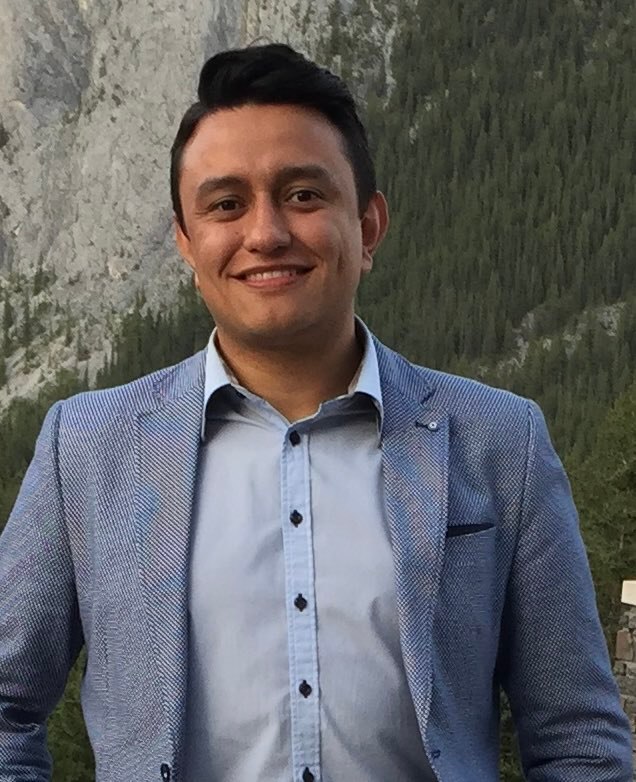
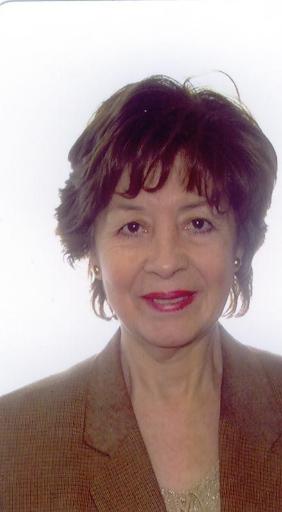
José Eduardo Villalobos Graillet is an Assistant Professor of Spanish at Idaho State University , specializing in Modern Peninsular Literature and Culture with a focus on visual culture (film and television) . He previously held a position as Spanish Instructor at Wilfrid Laurier University in the Department of Languages and Literatures. Research Areas : Spanish Film Studies, Spanish Medieval Literature, Latin American and Caribbean Studies, Teaching Spanish as a Foreign Language, Visual Culture, and Critical Pedagogy. His scholarly work examines film and television adaptations of 'La Celestina' , analyzing censorship dynamics across Francoist Spain, the Democratic Transition, and contemporary Spain. He also contributes to Spanish pedagogy , developing technological tools like Lang-8 for written expression and culturally immersive teaching units on topics such as winter festivals and Caribbean music. His publications span both critical academic analysis and methodological innovations for language instruction. Key Themes in Publications : Adaptation fidelity, political censorship, intercultural pedagogy, and the role of digital platforms in language learning.
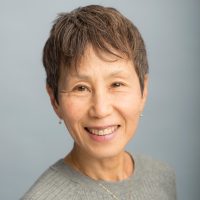
Bliss Cua Lim is a Professor at the Cinema Studies Institute, University of Toronto, specializing in Philippine cinema, film archiving, and queer theory. She is the author of The Archival Afterlives of Philippine Cinema (2024) and Translating Time: Cinema, the Fantastic, and Temporal Critique (2009), which was a John Hope Franklin Book Prize recipient. Education: PhD in Cinema Studies, New York University; BA in English, University of the Philippines, Diliman Her research explores intersections of cinema, folklore, and political histories, with a focus on archival fragility, transnational horror genres, and camp aesthetics in Southeast Asian media. Recent work analyzes the crisis of state-run film archives and the role of folklore in queer transmedia storytelling. Key trends in her publications include: Queering the Filipinx Zombie Movie (2025) and Cosmopolitan Animisms (2022), which examine genre hybridity and postcolonial spectralities. Her 2013 writings on Philippine archival advocacy and 2015 essays on queer aswang narratives highlight institutional and cultural challenges in media preservation. Scientific Awards: Selected John Hope Franklin Book Prize (2009) Lim serves on the Editorial Collective of Camera Obscura and the Advisory Board of Plaridel: A Philippine Journal of Communication . Her teaching includes courses on Queer Asian Cinemas, Sound and Animation, and Film Cultures II.
Darren Dahl is a Professor at the University of British Columbia (UBC) Sauder School of Business , holding the RBC Financial Group Professor of Entrepreneurship chair. His research focuses on new product development , creativity , consumer emotions , social influence , and social marketing . Education: BCom from the University of Alberta, PhD from UBC Leadership: Dean of the Sauder School of Business Research Trends: Recent work emphasizes innovation strategies , consumer identity dynamics , ethical marketing , and social impact . He explores how organizational structures influence perceptions, the role of identity in consumption, and the psychological drivers of prosocial behavior. Contact: Office HA 769, Tel: 604-822-8556, Email: darren.dahl@sauder.ubc.ca
Ryuko Kubota is a Professor in the Department of Language and Literacy Education at the University of British Columbia (UBC), Faculty of Education, since 2009. Her research spans critical applied linguistics , race and language education , and decolonial pedagogies . She has contributed extensively to understanding language ideologies , multicultural education , and critical literacies . Education: BA in English Linguistics, Rikkyo University (1980) MAT in TESOL, School for International Training (1987) PhD in Education, OISE/University of Toronto (1992) Her research interests focus on the intersection of race, language policies, and critical pedagogies. She examines neoliberal paradoxes in language learning, translingual practices , and antiracist engagement in global contexts. Her work addresses systemic inequities in English language education and immersion programs . Recent publications highlight critical approaches to World Englishes , AI-assisted writing , and raciolinguistic hegemony . These studies span interdisciplinary sub-fields including critical race theory , decolonial education , and language teacher identity . Scientific awards include the DSSA Award 2020 . She supervises graduate students like Charu Gupta (PhD) and collaborates with institutions such as the Language Sciences Institute at UBC. Her teaching includes courses on critical multicultural education and language politics .
Alfred Hermida is a Professor at the University of British Columbia (UBC), holding a joint appointment in the School of Journalism, Writing, and Media. He is renowned for his contributions to digital journalism, media innovation, and the societal impact of social media and artificial intelligence. Hermida was honored as a Fellow of the International Communication Association (ICA) in 2024, recognizing his transformative scholarly work in communication studies. His career spans academic research, teaching, and leadership. Before joining UBC in 2006, he spent 16 years as a BBC journalist, including foundational roles in the BBC News website. As Director of UBC’s Graduate School of Journalism from 2015 to 2020, he secured major SSHRC grants, including two $2.5M Partnership Grants. He co-founded The Conversation Canada in 2017, a platform bridging academic research with public discourse. Research focuses on journalism’s evolution amid technological shifts, including the Global Journalism Innovation Lab, a SSHRC-funded initiative examining innovation practices and policy frameworks shaping journalism’s future. His publications, such as Data Journalism and the Regeneration of News (2019) and Tell Everyone (2014), explore digital media’s role in information sharing and verification. Hermida’s teaching spans media innovation, visual journalism, and research methods. Colleagues praise his triple threat: exceptional scholarship, pedagogy, and administrative leadership. His work consistently bridges theory and practice, emphasizing journalism’s societal relevance in an algorithm-driven world.
Dr. Hyunjung Shin is an Associate Professor in the Department of Curriculum Studies at the University of Saskatchewan's College of Education. Her work focuses on applied linguistics, EAL education, and critical pedagogy. She holds a Ph.D. from the University of Toronto (2010) in Curriculum, Teaching and Learning, with a specialization in Second Language Education. Her research explores topics such as transnational student experiences, neoliberalism in education, refugee language policies, and identity formation. Notable awards include the Government of Canada Post-doctoral Research Fellowship (2010-2011) and the BAAL International Scholarship (2010). Shin's publications challenge dominant narratives in language education, emphasizing critical perspectives on multilingualism and globalization. She has presented widely, including a TEDx talk on diversity in 2019. Her work integrates participatory action research and ethnographic methods to address systemic inequities.
Dr. Jennifer Jenson serves as Professor of Digital Languages, Literacies, and Cultures within the Department of Language and Literacy Education at the University of British Columbia's Faculty of Education. She joined UBC in January 2019 after 18 years at York University, where she directed the Institute for Research on Digital Learning. Her academic leadership extends to co-editing Loading: The Journal of the Canadian Game Studies Association and past presidency of the Canadian Game Studies Association. Dr. Jenson holds a Ph.D. from Simon Fraser University. Her research program critically examines digital games, literacies, and pedagogical practices through lenses of gender, equity, and decolonization. She has conducted longitudinal studies on gender and digital gameplay, developed educational games through the Play:CES lab, and authored influential reports for the Ontario Ministry of Education including “21st Century Skills, Technologies and Learning”. Her publication trajectory (2015-2023) reveals consistent focus on regendering game cultures, multimodal learning frameworks, and computational literacy in youth media engagement. Work spans critical analysis of “The Entrepreneurial Gamer” concept to contemporary digital literacies in multimodal contexts, emphasizing how game-based learning can disrupt exclusionary practices while advancing inclusive education. No scientific awards were explicitly documented in the source materials. Dr. Jenson maintains active graduate supervision, currently advising doctoral candidates like Laura Brass researching immigrant women language teachers’ identities. Her sustained research funding includes leadership of the international SSHRC Partnership Grant “Re-Figuring Innovation in Games” (2015-2021) and SSHRC Insight Grant “Think, Design, Play” (2014-2020), with collaborations spanning school boards, technology companies, and global institutions like SRI International and Nottingham University. She co-founded the CFI-funded Play:CES lab where teams developed educational games including “Contagion” and “Epidemic: Self-Care for Crisis”, and currently leads the Re-Figuring Innovation in Games (ReFiG) collective – an international consortium of scholars, community organizers, and industry partners dedicated to transforming game culture through equity-centered innovation.
Bruce Rusk is an Associate Professor in the Department of Asian Studies at the University of British Columbia (Faculty of Arts) and serves as the Graduate Advisor. He previously taught at Cornell University for six years before joining UBC in 2012. During the 2012–13 academic year, he was on leave at the Institute for Advanced Study in Princeton and the National Humanities Center in North Carolina. Additionally, he is the webmaster and past president of the Society for Ming Studies, a scholarly organization focused on Ming history and culture. Bruce holds a Ph.D. from the University of California, Los Angeles (UCLA), where his dissertation, The Rogue Classicist: Feng Fang (1493–1566) and his Forgeries , examined sixteenth-century classical text forgeries. Following his Ph.D., he was a postdoctoral fellow at Stanford University from 2004 to 2006. He also earned his B.A. (History Honours) from UBC, which inspired his return to Vancouver to join the scholarly community here. His research focuses on the cultural history of pre-modern and early modern China, particularly the Ming and Qing dynasties. Key interests include authenticity and forgery in textual and material culture, transmission of knowledge, history of philology, writing systems in East Asia, and digital humanities. He collaborates globally on the SSHRC-funded FROGBEAR project, developing an open access repository for East Asian religious studies. Current work explores authentication practices surrounding artifacts like Xuande incense burners and silver ingots, reflecting his broader study of how authenticity and deception were negotiated in late imperial China. Recent publications address intersections between forgery, material culture, and digital methodologies, including co-editing Literary Information in China: A History (2021) and analyzing Ming-Qing literary practices. His work highlights the cultural significance of textual preservation and the sociocultural dynamics of early modern Chinese scholarship. As a leader in academic organizations, Bruce has contributed to the Society for Ming Studies, advancing research in Ming culture through his roles as webmaster and past president. His advising and grants include mentoring UBC graduate students and contributing to the FROGBEAR initiative. His career bridges historical research with digital innovation, emphasizing interdisciplinary approaches to Asian studies.
Younghoon Kim serves as a Visiting Professor in the Department of Asian Studies within the Faculty of Arts at the University of British Columbia (UBC), where he contributes to research and teaching in Korean studies, translation, and contemporary media. His work bridges cultural analysis with critical examinations of television and film across Korean and American contexts. Educational Background: Ph.D. from University of Alberta (2011) M.A. from University of Alberta (2006) M.A. from Sogang University (2004) B.A. from Myong Ji University (2002) Dr. Kim's research centers on Korean popular culture and national identity formation, with particular focus on entrepreneurship narratives and self-help culture in contemporary Korea. He investigates contemporary American television dramas as cultural artifacts reflecting societal shifts, while also exploring translation practices and fashion as expressions of cultural identity. His interdisciplinary approach connects media studies with sociological and philosophical frameworks. His recent publications reveal consistent thematic threads examining neoliberal subjectivity through television analysis (including Breaking Bad and Mad Men), Korean youth cultural expressions, and cross-cultural literary adaptations. The scholarly output spans musicology, television studies, and translation theory, with significant contributions to understanding how media shapes identity in both Korean and global contexts. Journal publications demonstrate strong engagement with A&HCI-indexed and Korean Citation Index venues.
Ian Condry is a Professor of Japanese Culture and Media Studies at MIT, affiliated with the Department of Anthropology. He holds a BA in Government from Harvard (1987) and a PhD in Anthropology from Yale (1999). His research focuses on Japanese popular culture, media globalization, and creative industries. He is best known for his seminal work on hip-hop in Japan and anime production, emphasizing collaborative creativity and cultural hybridity. Condry leads the MIT Spatial Sound Lab, exploring immersive audio technologies, and co-founded the music discovery platform Hearby.com. He hosts the 'Near and Far' Japanese hip-hop radio show on WMBR 88.1FM since 2018 and releases music as Leftroman. Condry’s academic roles include former Head of Global Studies and Languages at MIT and Executive Committee member of the Technology Broadcasting Corporation. His work bridges academic research with creative practice, including organizing the Dissolve Music conference and curating multimedia projects. He has pioneered open-access publishing, making his books available under Creative Commons licenses. His research spans media anthropology, youth culture, and digital media’s societal impact. Key projects include the MIT/Harvard 'Cool Japan' research initiative and studies on post-3/11 cultural recovery. Condry’s interdisciplinary approach integrates ethnographic methods with technological innovation, addressing themes of global cultural flows and participatory media production.
Lady Rojas Benavente is an Associate Professor in the Department of Classics, Modern Languages and Linguistics at Concordia University, where she has been teaching since her appointment as Assistant Professor in 1996, with promotion to Associate Professor in May 2003. Prior to joining Concordia, she served as an Assistant Professor at the University of Ottawa and as a lecturer at the Faculty of Education at The University of Western Ontario, where she taught second language methodology, French and Spanish. Dr. Rojas Benavente received her PhD in Hispanic Literature from the University Laval in 1991, following an MA in Spanish Literatures (Cum Laude, 1985) and BA in History and Spanish (1983), both from the University of Ottawa. She also holds a Diploma qualifying as a Secondary School teacher specializing in Spanish Language and Literature, Psychology and Philosophy from the National Pedagogic University of Women in Lima, Peru (Cum Laude, 1968). Her research focuses on Critical Feminism in Peruvian & Latin-American Women Writers, with special emphasis on contemporary Peruvian and Mexican narrative, drama, poetry and essay. Her work encompasses Cultural Studies and Literary and Critical Theories, Latin American History, Post-colonialism, Human Rights, Women Studies, Feminist Theories, Gender Issues, Latin America Black History, Indigenous and Minorities Studies, and Comparative Studies in Education. She has published nine books (two poetry collections and seven critical interpretations) and over 50 refereed papers in Latin American Women's literary work, particularly focusing on Peruvian and Mexican authors. Dr. Rojas Benavente's scholarly output demonstrates consistent engagement with themes of gender, ethnicity, and power structures in Latin American literature. Her recent publications explore the works of contemporary Peruvian women writers, examining how they address issues of violence, racism, and gender in post-independence national contexts. Her research trajectory reveals a deepening focus on decolonial perspectives, indigenous resistance, and the intersection of gender with other social categories. Hispanic Literary and Cultural Institute's Honor Diploma (2010) Publication Award from the University of New Brunswick for the Anthology, Constructing Memory: Latino-Canadian Women Writers in the New Millennium Recognition by Mouvement Desjardins in celebration of International Women's Day (2008) As president of the Society for Literary Criticism of Spanish American Women Writers' work (CCLEH), Dr. Rojas Benavente has facilitated connections between Concordia colleagues, local artists, international writers, and the Latino-Montreal community. She serves on the editorial boards of Alba de America, a literary magazine from the United States, and Voces, a Peruvian cultural magazine. Her leadership extends to organizing numerous conferences on Latin American women writers across Canada, Latin America, and Montreal, including multiple meetings of Hispano-Canadian Women Writers and events commemorating significant figures in Latin American literature.
Julian Weideman is a SSHRC Postdoctoral Fellow in the Department of History at the University of Toronto , focusing on the modern Middle East and North Africa . His research intersects themes of universities, political economy, Islamic thought , and colonialism . He holds a Ph.D. in History from Princeton University , an M.Phil. in Modern Middle Eastern Studies from the University of Oxford (Distinction), and a B.A. Honours in History with International Relations from the University of British Columbia . His scholarly work analyzes the interplay between colonialism and Islamic institutions in Tunisia, particularly through studies of student housing reforms , gender politics , and intellectual memory . Recent articles explore the French Empire's limits , Zaytuna University politics, and Tahar Haddad's legacy under post-independence regimes. Scientific Awards: SSHRC Postdoctoral Fellowship Julian's publications reveal consistent engagement with colonial frameworks , Islamic modernity , and political reform discourses in North Africa. His work bridges micro-histories of institutions with macro-historical analysis of empire-building and decolonization.
Maureen Kendrick is a Professor and Deputy Department Head in the Department of Language & Literacy Education at the University of British Columbia's Faculty of Education. Her research examines literacy and multimodality as integrated communicative practices, addressing social and cultural issues in diverse contexts with particular emphasis on visual communication and refugee/migrant education. Her research interests span digital literacies, multiliteracy and multimodality, and international perspectives on literacy education. She investigates how youth from refugee backgrounds use multimodal approaches to construct identities and engage with learning, often through digital storytelling and visual methodologies. Her work extends to health literacy in Ugandan contexts and the role of play in early childhood literacy development across Canada, Kenya, and Uganda. Analysis of her recent publications reveals consistent focus on refugee/migrant education, digital storytelling, and multimodal literacy. She examines how digital tools empower marginalized youth to express identities while addressing challenges in language learning and cultural integration. Her research also explores HIV/AIDS education through makerspaces and the intersection of arts-based practices with science literacy. Dr. Kendrick's scientific recognition includes: Canadian Committee for Graduate Students in Education (CCGSE) Mentorship Award (2024) Killam Teaching Prize (2012-13) Alan C. Purves Award (2013) She actively supervises graduate students across doctoral and master's programs, with current research focusing on refugee education and multilingual learners. Her SSHRC-funded projects include the 2025-2029 grant 'Digital Multimodal Composing-To-Learn' and the 'Language and Literacy Learning Among Refugee and Migrant Background Children' initiative, involving collaborators from UBC, York, and Western universities. Dr. Kendrick leads international research teams across Canada, Uganda, and Kenya, developing community-engaged approaches to literacy education that bridge academic research and classroom practice.
Roxane de la Sablonnière is a Full Professor in the Department of Psychology at the University of Montreal, affiliated with the Faculty of Arts and Sciences. She directs the CSI—Laboratory on Social Change and Identity and is a member of the CÉCD—Centre for the Study of Democratic Citizenship and the CIRCA—Interdisciplinary Research Centre on the Brain and Learning. Her research focuses on social change, cultural identities, intercultural relations, and the psychological impacts of crises like the COVID-19 pandemic. She has advised over 20 graduate students and led numerous research projects funded by agencies such as the Fonds de recherche du Québec (FRQ) and the Social Sciences and Humanities Research Council (SSHRC). Education & Research Focus : Her work examines how rapid societal changes affect individuals, particularly in contexts of immigration, policy shifts (e.g., multiculturalism, secularism), and Indigenous communities. Recent studies include longitudinal analyses of pandemic-related behaviors, identity integration processes, and the role of cognitive strategies in managing conflicting identities. Grants & Collaborations : She leads projects like "S'engager pour mieux aller!" (FRQS-funded) and contributes to strategic networks such as the Centre pour l'Étude de la Citoyenneté Démocratique (CÉCD). Her research integrates psychology with sociology, leveraging mixed methods (e.g., text mining, longitudinal tracking) to address societal challenges. Labs & Teams : As CSI director, she oversees projects on social change dynamics and identity reconstruction. Her work bridges academic and applied domains, influencing policy debates on integration, public health, and community resilience.
Yigal S. Nizri is an Associate Professor, Teaching Stream at the University of Toronto, cross-appointed between the Department for the Study of Religion and the Anne Tanenbaum Centre for Jewish Studies (ATCJS), where he serves as Undergraduate Director. His research focuses on Jewish-Moroccan history, diaspora studies, and Mizrahi cultural identity in Israel. Nizri holds a PhD from New York University and specializes in the emergence of Jewish Moroccan scribal culture within trans-Mediterranean diasporic networks. His work examines Maghribi halakhic traditions, Jewish-Muslim cultural intersections, and Mizrahi identity formation. His publications demonstrate consistent focus on Jewish textual traditions in North Africa, cultural memory in diaspora communities, and the representation of Mizrahi identity in Israeli society. Recent works explore themes of return migration, disaster narratives in Jewish book culture, and the evolution of Moroccan rabbinic print traditions. Nizri teaches courses including History of the Jewish People The Arab Jew: A History of a Concept Mizrahim in Israel: History, Politics, and Culture focusing on Jewish historiography and identity formation across diverse cultural contexts.