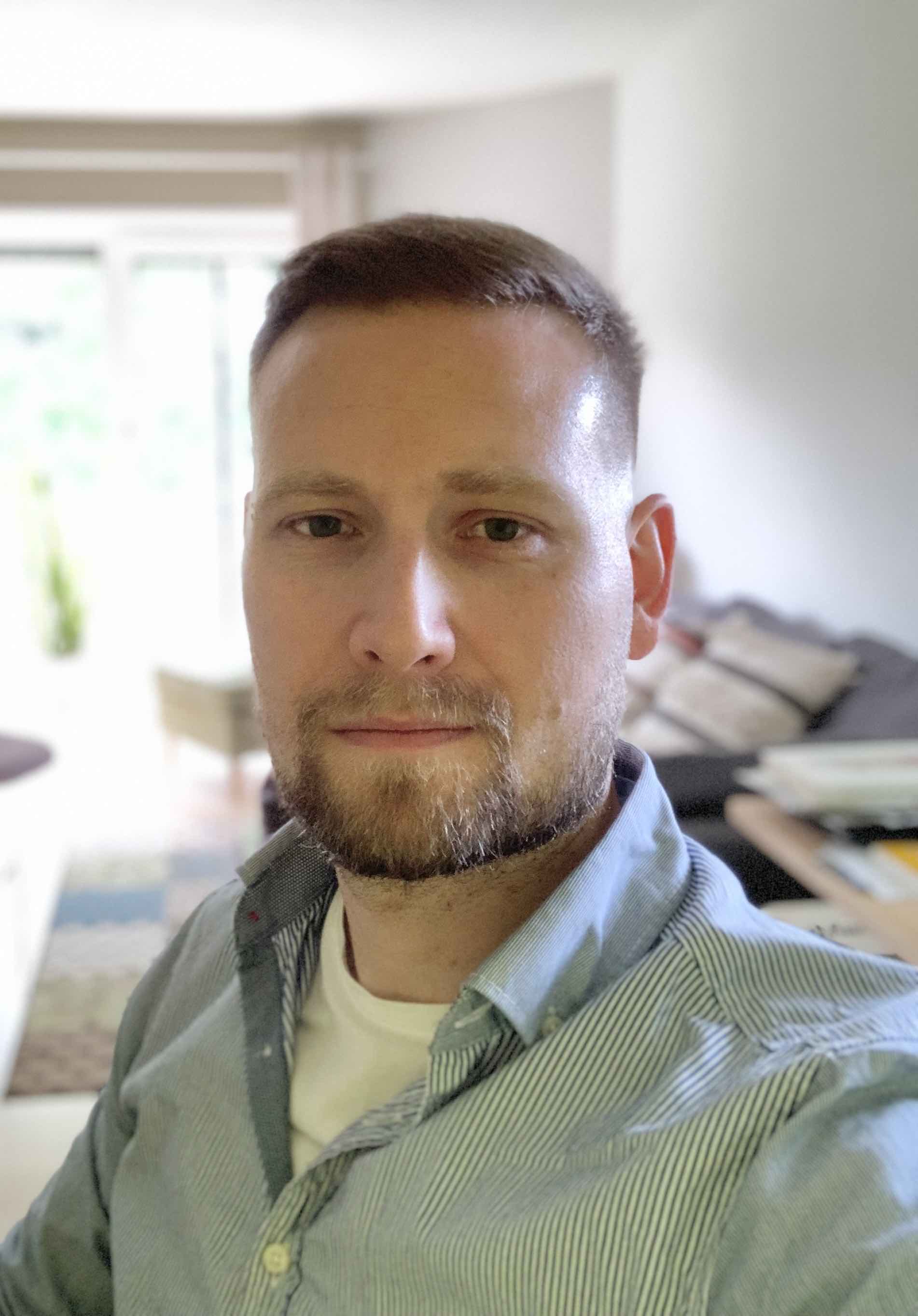
Dr. Philipp Rauth is a Researcher and Assistant to the Management at the Department of German Studies, Saarland University, where he has been employed since 2021. He previously served as a Lecturer for Special Duties (2016–2021) and Research Assistant (2013–2016) at the same institution, focusing on German linguistics and dialectology. His educational background includes studies in German Studies, History, and Political Science at Goethe University Frankfurt and the Université Paris-Sorbonne. Dr. Rauth's research examines linguistic variation in German dialects, with emphasis on syntactic phenomena in Rhenish and Moselle Franconian dialects. Key interests include: Historical development of dialectal features from Old High German to modern variants Discourse particles, pronoun usage, and verb periphrases in non-standard German Socio-linguistic aspects of gender-neutral language implementation In the Winter Semester 2025/26, he teaches courses on introductory linguistics, Saarland dialects, auxiliarization, and exam preparation workshops.
Stefan Pfänder is a full Professor of Romance and General Linguistics at the University of Freiburg , specializing in multimodal interaction, Romance languages, and language variation/change. He leads interdisciplinary research groups and projects bridging linguistics, cultural anthropology, and psychiatry. Key Research Areas: multimodal interaction in everyday and clinical settings, language contact (e.g., Spanish-Guaraní/Quechua, French-Arabic/Wolof), and the interplay of voice, body, and social identity. Grants & Projects: DFG-SNF-Weave collaborative project 'Emergent Remembering II' (2024–2027), DFG's Embodiment Research Network (2024–2026), Humboldt Foundation's Feodor Lynen Fellowship (2024–2026), and leadership roles in DFG GRK1624/1+2 'Frequency Effects in Language' and GRK1767/1+2 'Factual & Fictional Narrative'. Teaching: Courses on French/Spanish linguistics, multimodal communication, conversation analysis, and workshops on qualitative methods. Classes often integrate practical data analysis, transcription tools like Praat, and cross-linguistic comparison. Networks: Co-founder of the espanoldelosandes.org research network, spokesperson for DFG's 'Synchronization in Embodied Interaction' and 'CIEL_F' projects. Scientific Awards: Feodor Lynen Research Fellowship Program for Experienced Researchers, Humboldt Foundation (2024–2026)
Jovana Jović, MA, is a doctoral researcher at the University of Regensburg's Institute of Slavic Studies under Prof. Dr. Björn Hansen. She specializes in lexical semantics, corpus linguistics, and corruption studies, with a focus on Serbian and Croatian press texts. Doctoral dissertation: 'Framing Corruption – A lexical-semantic analysis of the thematic use of words based on Serbian and Croatian press texts from 1919 to the present day' Key projects: DFG-funded 'From Informality to Corruption (1817-2018): Serbia and Croatia in Comparison' Research Interests: Her work bridges lexical variation/change, cognitive semantics (frame theory), and corpus-based approaches to analyze corruption discourse. She explores sociosemantic networks and historical semantics in Southeast European contexts. Conference Participation: Presented at the 14th German Slavic Studies Day, Interdisciplinary Corruption Workshops in Cres/Belgrade, and international student conferences in Wrocław/Kiel. Collaborated with historian Miloš Lecić on cross-disciplinary informal practices research. Publications: Contributed to Tokovi Istorije and Junge Slavistik im Dialog with analyses of corruption framing and Slovenian relativpronouns.
Hannah Schlimpen is a Researcher at Universität Trier affiliated with the Trier Center for Digital Humanities (TCDH) and the Chair of Romance Literary Studies. Her academic trajectory includes roles as Coordinator for the research network 'Transkulturalität und ihre Grenzen' (2022-2023), lecturer at Università degli studi di Bergamo (2021-2022), and multiple DFG-funded research positions focusing on Russian poetry transitions and early modern divination practices. Her research explores Romance literary studies through interdisciplinary lenses: digital humanities (Linked Open Data applications), early modern literature (Spanish/French), and poetic analysis , with emphasis on: Geomancy and divination in historical texts Bilingual/exile poetry Urban representation in Golden Age literature Lexicography of Caribbean Spanish Publications reflect sustained interest in cultural symbolism, linguistic hybridity, and spatial narratives across 15th-18th century European and Latin American contexts, often employing comparative frameworks. Awards and fellowships recognize her scholarly contributions: Dissertation Prize, Freundeskreis Trierer Universität (2021) Herzog-Ernst Fellowship, Fritz Thyssen Stiftung (2019) Research stipends from Universidad de Salamanca (2017) and Rheinland-Pfalz (2016) She co-leads the DFG network 'An den Rändern der Moderne' (2023-2025) and is active in the Trierer Kolleg für Mittelalter und Neuzeit, enhancing cross-institutional humanities research.
Professor Sarah Brommer is a Professor of Applied Linguistics with a focus on text production research at the University of Bremen, Department of Language and Literature Studies. She serves as co-chair of the Institute for General and Applied Linguistics (IAAS) and is a founding member of the Institute for Writing Science (ISW). Professor Brommer leads the Virtual Competence Center for Artificial Intelligence and Scientific Work and the "AI tools in academic writing" think tank. Her career spans academic research, teaching, and practical applications in writing pedagogy across multiple institutions including the University of Zurich, Leuphana University Lüneburg, and international engagements in Belgium and Iran. Professor Brommer's research focuses on the intersection of linguistic patterns, writing processes, and digital technologies. She employs corpus linguistics methods to analyze scientific and popular science texts, examining how linguistic conventions shape writing competence and communication effectiveness. Her recent work has increasingly focused on the impact of artificial intelligence on academic writing practices, exploring both the challenges and opportunities presented by AI writing tools. She investigates questions such as: How do AI systems handle genre conventions? What linguistic patterns characterize effective scientific communication? How can writing instruction adapt to the changing technological landscape? Her publication record shows a clear evolution from foundational work on writing competence and new media (2007-2014) through corpus-based analyses of scientific texts (leading to her 2018 monograph) to her current focus on AI and writing (2022-2025). The most recent publications demonstrate her leadership in addressing timely questions about human-AI interaction in writing processes, the status of orthographic competence in the AI age, and innovative methods for integrating writing instruction across university curricula. Professor Brommer actively supervises student theses and involves students directly in her research, as evidenced by multiple co-authored publications. She has secured funding for several collaborative projects addressing writing competence development and the integration of AI tools in academic contexts. Her work bridges theoretical linguistics with practical applications in education, making significant contributions to both academic discourse and teaching practices. She leads the Institute for Writing Science, which serves as a hub for interdisciplinary research on writing processes, writing instruction, and the evolving nature of written communication in digital environments. The institute fosters collaboration between linguists, educators, and technologists to develop evidence-based approaches to writing pedagogy.
Prof. Eli Geffen is a Professor at the School of Zoology, Tel Aviv University, and serves as the Curator of Terrestrial Vertebrates at the Steinhardt Museum of Natural History. He received his PhD from the University of Oxford in 1990 and has authored more than 100 scientific papers throughout his distinguished career in behavioral ecology and population genetics. Prof. Geffen's research focuses on behavioral ecology as expressed in the social dynamics and vocalization of the rock hyrax, visual communication in chameleons, and evolution of sociality in canids and other carnivores. His work also encompasses population genetics, examining behavioral and environmental factors that influence dispersal decisions in carnivores and other vertebrates, as well as comparative studies on various behavioral aspects of birds and mammals. He utilizes samples from the Museum collections in his study of population genetics of wolves and jackals, dog and cat domestication, and the interaction between the changing environment and genetics in other carnivores. Prof. Geffen's recent publications demonstrate a strong focus on rock hyrax vocal communication and social behavior, carnivore ecology and conservation, and amphibian and reptile population genetics. His work often involves interdisciplinary approaches, combining behavioral observations with genetic analyses to understand evolutionary processes and ecological adaptations. Many of his studies examine the impact of environmental factors, including climate change and human activity, on animal behavior and population dynamics. Prof. Geffen has made significant contributions to understanding the behavioral ecology of rock hyraxes, particularly their complex vocal communication systems and social structures. His research on carnivores, including foxes, wolves, and leopards, has provided valuable insights for conservation efforts. Additionally, his work on amphibians, particularly the rediscovered Hula painted frog, has contributed to conservation biology in the region.
Dr. Frank Savelsberg serves as a Research Associate at the Seminar for Romance Philology and the Center for Medieval and Early Modern Research at Georg-August-Universität Göttingen. His office is located in SRP 1.221 at Humboldtallee 19, D-37073 Göttingen, with office hours scheduled for Wednesdays 9:00-10:00 a.m. during the winter semester 2025/26 by prior registration. Dr. Savelsberg's research focuses on the linguistic history of Sephardic Jews, specializing in Judeo-Spanish language development from the Middle Ages to contemporary usage. His work examines language contact phenomena, historical lexicography, and sociolinguistic variation within Sephardic communities across different historical periods and geographical locations. He investigates how historical experiences of Sephardic speakers have shaped linguistic structures, with particular attention to medical glossaries, inquisition archives, rabbinic responsa, and recordings of contemporary speakers. His recent publications demonstrate a strong trend toward collaborative, interdisciplinary scholarship at the intersection of Jewish studies and linguistic research. The 2024 edited volume explores synchronic and diachronic studies of Sephardic languages, while the 2023 manual provides comprehensive reference work on Judaeo-Romance linguistics. His research addresses crucial issues including language contact effects on linguistic structures, norm possibilities for polycentric languages, and the relationship between lexicon and speech community vitality. Dr. Savelsberg has established significant scholarly collaborations, particularly with Laura Minervini and Guido Mensching, resulting in major reference works in the field of Judaeo-Romance linguistics. His editorial work has facilitated important contributions from international scholars examining diverse aspects of Sephardic linguistic heritage.
Dr. Markus Tönjes is a Researcher at the Department of German Philology, University of Göttingen, where he has served as Head of Department Administration since 2020. His career spans roles as an Analyst/Linguist in IT, Research Assistant in psycholinguistics, and contributor to DFG-funded projects on language acquisition in hearing-impaired children and language in dementia. PhD (2012) in German Linguistics, focusing on reference in dementia patients. Magister Artium (2006) in German Language and Literature, Communications Research, and Phonetics. His research integrates Linguistics with Artificial Intelligence , emphasizing formal semantics and NLP . He explores phonology , morphology , and syntax in hearing-impaired children, language and dementia , and empirical methods . His publications and lectures highlight interdisciplinary work with Star Trek linguistics and forensic authorship analysis . Recent publications and presentations focus on phonological processes , orthographic norms , language in aging , and cross-linguistic syntax . He supervises BA and MA theses on topics like Kiezdeutsch , orthographic competence , and aphasia , reflecting his broad methodology in empirical linguistics. Key supervised works: Lara Meyer (2023): "Prototypical Sprecher des Kurzdeutschen?" Laura Gleixner (2023): "Bilingualism and Cognitive Reserve" Anna Katharina Baumgartl (2024): "Aphasie: Schweigen oder Leben"
Prof. Dr. Malte Zimmermann is a Full Professor of Semantics and Theory of Grammar at the Department of Linguistics, University of Potsdam. He is also a faculty and board member of the African Linguistics School (ALS), which biannually convenes in West African countries to advance formal linguistics knowledge among African scholars. His editorial roles include Associate Editor for Natural Language and Linguistic Theory and former Associate Editor for Linguistics and Philosophy . His educational background includes: Ph.D. in General Linguistics, Universiteit van Amsterdam (2002) M.A. in German Language and Linguistics/English/Anglistic/Philosophy, Universität zu Köln (1998) Abitur, Gymnasium Athenaeum, Stade/Niedersachsen (1989) Zimmermann's research centers on the interface between linguistic form and meaning, with specialization in formal semantics and grammar theory. His work spans quantification, tense, question semantics, discourse particles, and information structure, with particular emphasis on semantically under-researched West African languages (Chadic, Kwa, Grassfield Bantu). His research combines theoretical analysis with experimental methods, notably through projects like 'ExQ' examining embedded question interpretation across European and Non-European languages. He has led field research in Ghana, Cameroon, and Nigeria, challenging assumptions about language universals through empirical investigation of linguistic diversity. His publication trajectory reveals consistent focus on cross-linguistic semantic variation, particularly in focus interpretation, quantifier scope, and information structure phenomena. Recent work demonstrates growing integration of experimental methodologies with traditional formal approaches, with frequent comparisons between German, English, and diverse African languages. His investigations into serial verb constructions have been especially influential, uncovering hidden syntactic variability beneath surface similarities across languages like Akan and Igbo. As a supervisor, Zimmermann has guided numerous doctoral students to completion, with recent graduates including Giuliano Armenante (2024), Eva Shipova (2024), and Mareike Philipp (2023). His research has been supported by substantial funding including: SFB1287 Limits of Variability in Language, 'Limits of variability in interpretation' (2017-2021) SPP 1727 XPRAG.de, 'Exhaustiveness in embedded questions across languages' (2017-2020) SPP 1727 XPRAG.de, 'Exhaustivity in it-clefts' (2014-2017) DFG-Network 'Questions in Discourse' (2012-2016) SFB632 Information Structure projects (2007-2015) He leads the Potsdam semantics group (including Peter Sutton, Giuliano Armenante, Jeanne Lecavelier, Anna Struck, and Carla Bombi) which conducts fieldwork in West Africa. Currently, he co-directs the SFB-project on the 'Limits of Variability in Interpretation,' examining scope ambiguities, reconstruction, and bare NP interpretation across German, English, Akan, Igbo, and Medumba. His collaborative work with Edgar Onea (Graz) and Tatjana Scheffler exemplifies his commitment to bridging theoretical linguistics with empirical fieldwork and experimental validation.
Cécile Vigouroux serves as Assistant Professor at Simon Fraser University in Vancouver, Canada, holding a Ph.D. in Linguistics from University Paris X-Nanterre. Education Ph.D. in Linguistics, University Paris X-Nanterre Research Focus Her work centers on sociolinguistic diversity through ethnographic and anthropological lenses, with concentrated studies on African contexts, Francophone communities, and transnational migrant populations. She investigates how globalization processes and language ideologies shape linguistic practices and social identities across cultural boundaries. Scientific Recognition No awards or fellowships specified in source material Academic Contributions Actively participates in collaborative research through membership in the working group on socio-linguistic diversity, though specific advising roles or grant funding details remain unreported in the provided text. Research Infrastructure Contributes to the working group on socio-linguistic diversity, indicating structured collaborative research efforts in language variation studies.
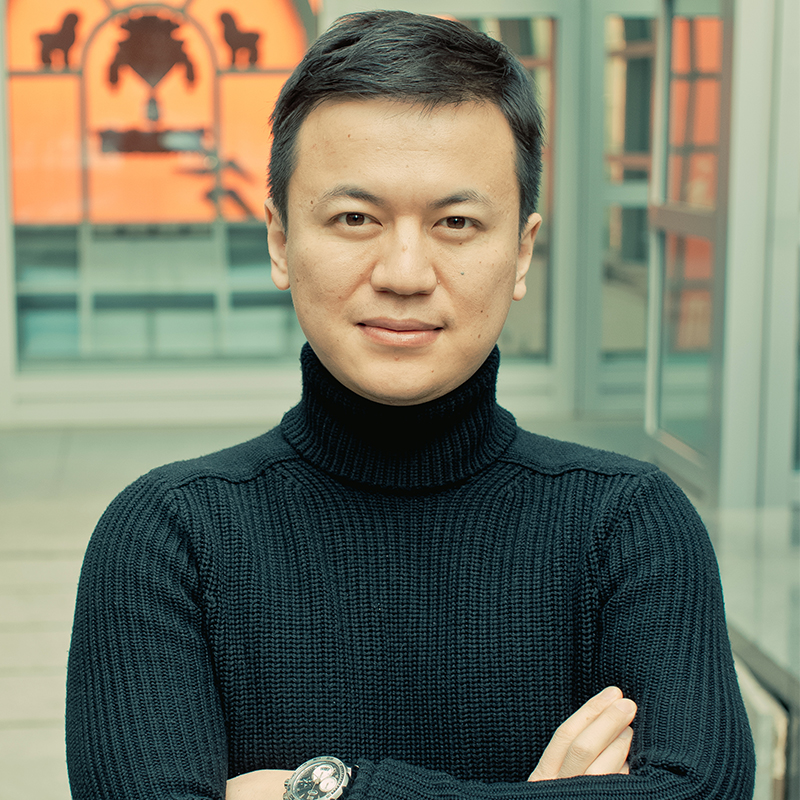
Yang Li serves as Associate Professor of Marketing and Associate Dean for the MBA Program at Cheung Kong Graduate School of Business (CKGSB). Holding a PhD in Marketing from Columbia Business School alongside dual master's and bachelor's degrees from Columbia and Peking University respectively, he bridges advanced statistical methodologies with practical business applications. His research centers on statistical machine learning and Bayesian nonparametrics applied to consumer behavior analysis, with specialization in online personalization, text mining, and choice modeling. Recent work demonstrates significant focus on fragmented attention economies, ethical AI frameworks, and NFT network dynamics, reflecting contemporary digital market challenges. Management Science Marketing Science Journal of Marketing Research Journal of Consumer Research Harvard Business Review Professor Li's publications reveal evolving expertise from foundational pricing elasticity studies toward cutting-edge AI applications in consumer contexts. His work increasingly integrates generative models and graph neural networks to decode complex consumer collection behaviors and digital ecosystem dynamics. Scientific recognition includes being a Finalist for the 2021 Paul E. Green Best Paper Award. Industry impact is demonstrated through executive education programs and strategic consultancies with Tencent, Haier, and Tmall. As Associate Dean for MBA Programs, he oversees curriculum development while maintaining active corporate governance roles on boards of publicly traded companies across China and Hong Kong, directly applying his research insights to strategic decision-making in digital transformation initiatives.
Sabine Arndt-Lappe is a Professor of English Linguistics at the University of Trier , Germany. She previously held research positions at the Universities of Marburg, Siegen, and Düsseldorf. As a structural linguist, her work bridges empirical and theoretical approaches to morphology and phonology. Research Focus : Variation and productivity in English lexicon, formal and semantic aspects of word-formation, prosodic morphology, analogy-based and usage-based grammatical models, computational analogical modeling, and Optimality Theory. Projects : Leads the DFG-funded AdvAnTheMorph project (2025–2028) and co-leads the DFG-ANR ERSaF project (2022–2025). Spokesperson for the Trier Center for Language and Communication research group on Patterns/Musterhaftigkeit (2020–2023). Publications span topics like name blending, stress assignment in English verbs, clipping mechanisms, affix rivalry, and cross-linguistic morphological analysis. Her work employs computational models (e.g., Naive Discriminative Learning) and corpus-based methodologies. Editorial Contributions : Editor-in-Chief of Morphology (2022–present), former Editor of Journal of Linguistics (2017–2021), and editorial board member for multiple journals including English Language and Linguistics and Journal of Linguistics . Teaching includes courses like LING 101: Introduction to Linguistic Studies , LING 801: Words in the Mind , and LING 804: Statistics for Linguists . She also mentors doctoral candidates and supervises software development for morphological research (e.g., M2E - Morph2Excel ).
Sebastian Hoffmann is a distinguished academic affiliated with the University of Trier , where he served as Dean of the Faculty of Languages, Literatures and Media Studies from 2017 to 2023. He has held significant roles, including Visiting Professor at the University of Tampere (2014–2017) and Lecturer in English Linguistics at Lancaster University (2006–2009). His expertise lies in Corpus Linguistics , with a focus on World Englishes , Syntactic Change , and Corpus Methodology . He co-developed BNCweb , a widely used web interface for the British National Corpus. PhD from the University of Zurich His research explores usage-based approaches to language study, including syntactic evolution , phonological patterns (e.g., intrusive /r/), tag questions , and verb complementation . Recent work highlights the role of Internet-derived data in corpus linguistics and the fixedness of collocations . His publications span Corpus Methodology , Historical Linguistics , and Phraseology , with key works such as Corpora and Lexis (2018) and Grammaticalization and English Complex Prepositions (2005). He has contributed extensively to journals like the International Journal of Corpus Linguistics and Journal of English Linguistics . Hoffmann has been recognized for leadership in professional organizations, including Chair of ICAME (2017–2023) and Vice-President for the Profession of the International Society for the Linguistics of English (2018–2023). He teaches courses such as The History of the English Language and Transcribing and Analyzing Spoken Language .
Laura Guadagnano is a doctoral researcher affiliated with the University of Bayreuth, focusing on interdisciplinary studies in linguistics, sociolinguistics, and health communication. Her work bridges theoretical and applied perspectives, particularly in African contexts. Geographical Focus: Côte d'Ivoire Current Project: Analysis of moral communication in sexual and reproductive health discourse among Ivorian youth Her research employs conversation analysis and pragmatic-discursive methods to explore how morality is co-constructed in healthcare interactions, addressing critical gaps in women's healthcare access and early pregnancy challenges in developing countries.
Prof. Dr. Marion Schulte serves as Professor of Linguistics at the Department of English and American Studies within the Faculty of Philosophy at the University of Rostock, where she holds the Chair of Linguistics at the Institute of English and American Studies (IAA). Her academic credentials include: PhD in English Linguistics from Bielefeld University (2014) for research on "The Semantics of Derivational Morphology: A Synchronic and Diachronic Investigation of the Suffixes –age and –ery in English" Habilitation at Bielefeld University (2020) titled "Sociophonetics of Dublin English: Phonetic Realisation and Sociopragmatic Variation" 1. Staatsexamen (Gymnasiallehramt) in English and Music from the University of Siegen (2010) Her research integrates sociolinguistic frameworks with phonetic analysis , specializing in dialectal variation in Dublin English and diachronic morphosemantic evolution. She examines how social identity shapes phonetic realization through empirical fieldwork, while her historical morphology studies bridge synchronic usage patterns with etymological development. This dual focus positions her work at the intersection of theoretical linguistics and community-based language variation studies. Professional appointments include postdoctoral research at Bielefeld University (2014-2021) and a Visiting Scholar position at University College Dublin (2016), establishing her expertise in Irish English varieties and morphological theory.