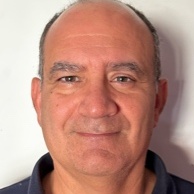
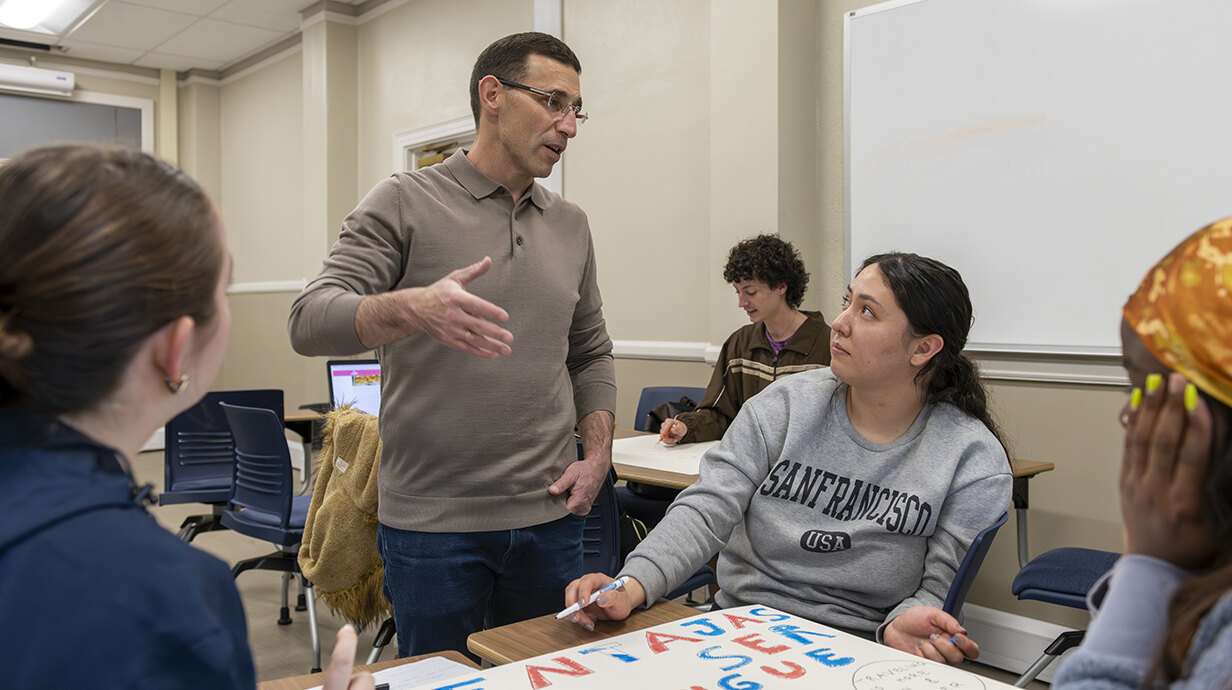
D. Eric Holt is an Associate Professor of Spanish and Linguistics at the University of South Carolina, affiliated with the Department of Languages, Literatures, and Cultures and the College of Arts and Sciences. He has held academic appointments since 1994, including visiting roles at Georgetown University and lecturing positions in Ecuador and Spain. His expertise spans Hispanic linguistics, historical linguistics, second language acquisition, and phonological theory, with a focus on Optimality Theory and its applications to Spanish and Portuguese. Educated at Occidental College (BA), Georgetown University (MS, PhD), and with extensive summer programs in linguistics, Holt's research explores sound change, dialectology, and L2 pronunciation acquisition. He has supervised numerous graduate theses and dissertations, including notable works on connected speech perception and language contact phenomena. His teaching portfolio includes advanced courses on Spanish linguistics, phonetics, and historical language evolution. Holt has led international study programs in Spain, Costa Rica, and Ecuador, and contributes to academic service as an associate editor of Studies in Hispanic and Lusophone Linguistics and through professional organizations like Phi Beta Kappa. Holt's grants include funding for research on L2 speech perception and技术创新 in pronunciation teaching. He has presented globally at conferences such as NWAV and LSA, and his work appears in top journals like Probus and Georgetown University Round Table . His current projects include books on Optimality Theory in Spanish linguistics and debunking language myths.
Nicholas Henriksen is an Arthur F. Thurnau Professor and Professor of Spanish & Linguistics at the University of Michigan, where he has held faculty positions since 2012. His research focuses on laboratory phonology, experimental phonetics, sociophonetics, and intonational grammar in Spanish and other Romance languages. Notable projects include studies on sound change in Andalusian and Patagonian Spanish, bilingualism (Afrikaans-Spanish), and second language speech learning. He directs the Michigan Speech Production Lab and co-leads initiatives integrating gender-diverse language into Romance curricula. Henriksen earned a PhD in Linguistics from Indiana University (2010), MA in Hispanic Linguistics (2006), and BA in Spanish/Mathematics from Rutgers (2003). His teaching spans undergraduate and graduate courses in Spanish linguistics, sociolinguistics, and phonetics, emphasizing applied research and pedagogical innovation. He has received prestigious awards, including the LSA Early Career Award (2021) and the Class of 1923 Teaching Award (2018). His research has been funded by grants from the University of Michigan ADVANCE Program and the Humanities Collaboratory, supporting projects like From Africa to Patagonia: Voices of Displacement . Collaborations include work with scholars in Argentina, South Africa, and Spain, examining language contact, heritage language maintenance, and sociolinguistic identity. Publications span over 30 peer-reviewed articles and book chapters, with a focus on phonetic variation, intonation, and bilingualism. He mentors graduate students in experimental phonetics and sociolinguistics, with advisees contributing to studies on Andalusian Spanish, heritage language acquisition, and voice quality.
Dr Melanie Cooke is a Senior Lecturer in ESOL and Applied Linguistics at King's College London, working within the School of Education, Communication and Society and the Centre for Language, Discourse and Communication. She has been with King's since 2003, following prior teaching experience teaching EFL in Spain and ESOL to adult migrants in London. Cooke serves as convenor of the Hub for Education and Language Diversity (HELD), a collaboration between the Centre for LDC and English for Action, and co-organized the ESRC-funded 'Queering ESOL' seminar series. Her research focuses on teaching and learning in adult ESOL classrooms in the UK, particularly examining the social and political contexts of migrant language education. Cooke's work explores linguistic citizenship, participatory pedagogy in ESOL, and the relationship between language education and citizenship policies. She has made significant contributions to understanding how language is used as a political tool in immigration policy and integration debates. Her recent publications demonstrate a consistent focus on linguistic citizenship, with major works including 'Localising linguistic citizenship in England' (2024), 'Working papers for a more open academy' (2023), and 'Brokering Britain, Educating Citizens' (2019) with Rob Peutrell. These works explore the intersection of language education, migration policy, and citizenship frameworks. Elsevier Outstanding PhD Thesis Prize for Exceptional Doctoral Work (2016) Cooke teaches across multiple programs including BA English Language & Linguistics, MA Applied Linguistics and ELT, MA Language and Cultural Diversity, and MA TESOL. Her courses cover sociolinguistics, qualitative research methods, language and migration, and communicative language teaching. She also actively supervises PhD students in areas related to ESOL teaching and learning, language and citizenship, and language and migration. Notably, Cooke maintains active engagement with ESOL practice, regularly teaching in an ESOL class in East London that uses the participatory ESOL approach, creating a valuable connection between her research and practice.
Gemma Boleda is an ICREA Research Professor at Universitat Pompeu Fabra in Barcelona, Spain, where she co-directs the Computational Linguistics and Linguistic Theory (COLT) research group. Her research focuses on understanding how humans convey meaning through language, investigating the formal properties that support communication, and exploring how languages are shaped by cognitive and communicative factors. Her primary interests include lexical semantics, cross-linguistic variation, and the integration of linguistic theory with computational methods. She employs interdisciplinary approaches combining linguistics, artificial intelligence, and cognitive science, utilizing large-scale data analysis to study universal patterns and variations across languages. Boleda's publications demonstrate a consistent focus on computational semantics, lexical variation, and language evolution. Her recent work explores the intersection of symbolic and neural approaches to language processing, lexical creativity across development and evolution, and computational models of semantic phenomena like colexification and polysemy. She teaches Computational Semantics in the Master's in Theoretical and Applied Linguistics program and has secured significant research funding including ERC Starting Grants. Her work has contributed valuable linguistic resources such as the ManyNames dataset and Database of Catalan Adjectives.
Novi Quadrianto is a Professor of Machine Learning at the School of Engineering and Informatics, University of Sussex, where he joined as a Lecturer in February 2014. He is currently a Principal Investigator on three active EU grants: BayesianGDPR (ERC), TANGO (EU Horizon RIA), and Act.AI (ERC Proof of Concept). He also holds an Adjunct Professor position in Data Science at Monash University, Indonesia, and serves as Strategic Lab co-Leader of the BCAM Severo Ochoa Strategic Lab on Trustworthy Machine Learning in Bilbao, Spain. His educational background includes a PhD in Machine Learning from the Australian National University (2012) and a BEng in Electrical and Electronics Engineering from Nanyang Technological University, Singapore. During his PhD, he conducted research at multiple international institutions including HIIT-Finland, Yahoo! Research-US, University of Alberta-Canada, Fraunhofer IAIS-Germany, and IST Austria. From 2012-2014, he was a Newton International Fellow of the Royal Society at the University of Cambridge. Professor Quadrianto directs the Predictive Analytics Lab (PAL) since 2017, which focuses on "Responsible AI" research developing AI models that embed fairness, accountability, transparency, and trustworthiness. His research spans algorithmic fairness, federated learning, and computer vision, with applications in sustainable development, healthcare, and finance. His work has been funded by prestigious organizations including the European Research Council, EPSRC, and HM Treasury. His publications reveal a strong focus on addressing challenges in AI fairness, robustness, and privacy, particularly in dynamic environments and heterogeneous data settings. Recent work explores performative prediction, diversity-driven learning, and efficient vision transformer inference, demonstrating his leadership in cutting-edge machine learning research. European Research Council ERC Proof of Concept Grant (2023) Guarantor Researcher for BCAM Severo Ochoa Excellence Accreditation (2023) European Lab for Learning and Intelligent Systems (ELLIS) Scholar/Fellow (2020) European Research Council ERC Starting Grant (2019) Newton International Fellowship (2012) Microsoft Research Asia Fellowship (2009) Professor Quadrianto currently supervises six PhD students and five postdoctoral researchers. He has served as Action Editor for Transactions on Machine Learning Research since 2022 and as Associate Editor for IEEE Transactions on Pattern Analysis and Machine Intelligence since 2016. He has also been an Area Chair for major conferences including NeurIPS, ICML, and AAAI. His PAL laboratory hosts a team of 15 members focused on inter-disciplinary AI research with domain experts across various sectors. The PAL Lab operates three innovation strands: AI for Sustainable Development (supporting UN SDGs), AI for Healthcare (transforming health outcomes), and AI for Finance (personalized loan decision-making). The lab also leads initiatives in Diversity & Inclusion in AI and offers Pro-Bono Office Hours to organizations seeking guidance on machine learning aspects.
Richard J. Senghas is a Professor of Anthropology at Sonoma State University . His work bridges linguistic anthropology and Deaf studies , focusing on the evolution of Nicaraguan Sign Language (ISN) and sociocultural dynamics in intentional communities. Education BA, University of Massachusetts (Amherst), 1978 MA, University of Rochester, 1994 PhD, University of Rochester, 1997 His research examines how language emergence intersects with identity formation , community development , and political factors . He has published extensively on ISN’s development, sociolinguistic variation in sign languages, and cybernetic models of language change. Key publications include works in The Routledge Handbook of Linguistic Anthropology (2017), Annual Review of Anthropology (2002), and edited volumes on Deaf communities. His 2017 chapter explores communicative practices in sign languages, while older works analyze ISN’s birth and sociolinguistic diversity in ASL. Scientific Awards Edward Sapir Book Prize, Society for Linguistic Anthropology (2001) As a California State University Academic Senate representative, he advocates for academic governance. Collaboratively, he works with his sister Ann Senghas (Barnard College) and other scholars like Judy Pyers and Lorraine Monaghan .
Maria Sanchez-Ortiz is a Senior Lecturer in Translation and Interpreting Studies at the School of Language, Literature, Music and Visual Culture (LLMVC), University of Aberdeen, where she has been actively contributing since 2016. She serves as Programme Director for both the on-campus and distance learning MSc in Translation Studies and co-directs the Centre for Multilingual Research. She previously directed the Centre for Translation and Interpreting Studies from 2020 to 2023 and coordinated the undergraduate programme in Modern Languages and Translation from 2017 to 2020. Her educational background is extensive and interdisciplinary: PhD in Translation Studies, University of Bradford (2006) MSc in Dubbing, Subtitling & Localization, Instituto Superior de Estudios Lingüísticos y Traducción, Spain (2019) Postgraduate Certificate in Academic Practice, University of Salford (2015) Diploma in Audiovisual Translation, Universidad de Educación a Distancia, Spain (2014) Diploma in Public Service Interpreting, CIoL (2007) MA in European Studies, University of Bradford (1994) Diploma in Spanish with Translation and Interpreting, CIoL (1992) BA in English Language and Literature, University of Granada, Spain (1989) Maria's research focuses on Translation and Interpreting Studies, with particular emphasis on literary translation, audiovisual translation, translator training, sociolinguistics, dialect translation, and the impact of AI on translation professions. She has supervised multiple PhD students to completion and actively welcomes new doctoral candidates in Spanish and Latin American Studies. Her work consistently bridges theory and practice, with a strong pedagogical orientation. Her 15 most recent publications span from 1996 to 2024, reflecting a sustained engagement with core issues in translation. The articles reveal a deep interest in the pragmatics, ethics, and cultural dimensions of translation, particularly in literary and dialectal contexts. A recurring theme is the translator's agency and the challenges of preserving stylistic and sociolinguistic nuances. More recently, her work has addressed gender, multiculturalism, and the evolving role of technology in translation. She has received numerous teaching accolades, including: Awarded 'Best Undergraduate Lecturer', University of Aberdeen (2024–2025) Awarded 'Funniest Lecturer', University of Aberdeen (2023–2024) Awarded 'Best Taught Postgraduate Lecturer', University of Aberdeen (2018–2019) Nominated for 'The Most Inspiring Lecturer' (2019–2020) and Excellence in Teaching awards Maria Sanchez-Ortiz is an active supervisor, mentor, and curriculum developer. She has served as an external examiner for MA and BA programmes at several UK universities, including Manchester, Open University, Portsmouth, Durham, and Bath. She is a Fellow of the UK Higher Education Academy (since 2015) and a member of key professional bodies such as the Institute of Translation and Interpreting (ITI) and the International Association for Translation and Intercultural Studies. She also contributes to academic journals as a member of editorial and advisory boards. She leads and co-directs major research centres at Aberdeen, fostering interdisciplinary collaboration and innovation in multilingual research. Her leadership in the European Graduate Placement Scheme and membership in the PACTE Research Group highlight her commitment to international cooperation and empirical research in translation competence.
Dr. Matthew Pollock is an Assistant Professor of Linguistics and Spanish at Louisiana State University in Shreveport (LSUS), serving as Interim Chair of the Department of English and Foreign Languages. He holds dual PhDs in Hispanic Linguistics and Linguistics from Indiana University (2023), with prior teaching experience in Germany via a Fulbright Scholarship and Spain through the IU Honors Program. His research focuses on sociolinguistics, phonetics/phonology, bilingualism, second language acquisition, and usage-based approaches. Education: PhD in Spanish/Hispanic Linguistics (Indiana University, 2023) PhD in Linguistics (Indiana University, 2023) MA in Hispanic Linguistics (Indiana University, 2018) BA in Spanish and English Literature (Auburn University, 2015) Research Interests: Dr. Pollock examines political speech, sociophonetic variation (e.g., Andalusian/Caribbean Spanish), bilingual acquisition, and corpus-based methodologies. His work bridges theoretical linguistics with applied sociolinguistics, emphasizing style-shifting in political contexts and perceptual sociolinguistics. Teaching: At LSUS, he instructs courses in Linguistics, Spanish language, and Hispanic linguistics. He has extensive experience teaching across multiple levels, including high school abroad and university-level courses in the U.S. and Spain. Professional Contributions: He serves as an editor for major linguistic handbooks (e.g., The Oxford Handbook of the Spanish Language ), reviews for journals like Hispania , and actively participates in academic conferences globally. His research has been funded through grants and presented at institutions such as the Linguistic Society of America and NWAV.
Yulia Rodina is a Professor of Linguistics and Language Acquisition at UiT The Arctic University of Norway, affiliated with the Department of Language and Culture. She leads the AcqVA-Nor research group and directs the Flere språk til flere initiative. As Deputy Chair of the HSL Faculty Research Ethics Committee, she oversees ethical standards in research. Her research focuses on multilingualism, second/third language acquisition, and language attrition using experimental psycholinguistic methods. Key themes include grammatical gender, morphosyntax, and cross-linguistic influence in languages like Russian, Norwegian, Bosnian, and Serbian. She investigates heritage language development in children across Norway, Germany, and the UK, and explores language variation and change in Norwegian dialects. Rodina teaches courses in Second Language Acquisition, Multilingualism, and Varieties of English. She supervises MA theses on topics such as gaming's role in vocabulary acquisition and syntactic development in bilingual children. Her work is supported by projects funded through the Arctic MSCA, RCN, and EU initiatives like AcqVA Aurora and MultiGender. She collaborates with international teams on studies like the MAP project (Heritage Russian in Spain) and CLIMAD (cross-linguistic influence in multilingualism). Her labs include AcqVA, PoLaR, and C-LaBL, focusing on acquisition, variation, and attrition processes.
Mariana Gonzalez Boluda is a Lecturer in Spanish Language at the Department of Languages and Cultures, School of Literature and Languages, University of Reading, UK. She brings over two decades of international teaching experience from France, Jamaica, the USA, and the UK, and is actively engaged in pedagogical innovation and research in applied linguistics. Educational Background: PhD in Applied Linguistics, University of Las Palmas de Gran Canaria, Spain MEd in Open and Distance Education Learning, UNED, Spain DEA in Development of Multimedia and New Methodologies in Foreign Language Teaching, UNED, Spain BA in Hispanic Philology, University of Murcia, Spain Her research centers on enhancing language education through critical and multimodal approaches. She investigates how digital tools, film, and hybrid learning environments can develop intercultural competence, writing skills, and student autonomy. Her work emphasizes sustainability, inclusivity, and social justice in Spanish language teaching, particularly through decolonizing curricula and integrating gender-inclusive language. She actively promotes learner engagement via collaborative and project-based methods. Her recent publications and conference presentations reveal a strong thematic trend toward digital innovation, critical pedagogy, and social inclusion in language education. She frequently explores the use of blogs, wikis, social media, and virtual platforms to support language acquisition and autonomy, especially in multilingual and international contexts. Her scholarship bridges theory and practice, aiming to transform traditional language classrooms into dynamic, equitable, and socially aware learning spaces. Professional Affiliations and Networks: Member, ELE UK Member, ASELE Member, FILTA Special Interest Group (SIG) Member: SIG ELE UK on 'Decolonisation of Spanish Language Teaching' SIG AULC on 'Pedagogical Approaches to Language Variation' ReN Learner Autonomy, AILA DIM-EDU Pedagogies, Innovation y Multimedia Mariana Gonzalez Boluda is a Fellow of the Higher Education Academy, affirming her commitment to excellence in teaching. She teaches advanced Spanish language modules (SP2L3/4, SP3L3/4) and integrates her research directly into her pedagogy. She has no listed grants or advisees in the provided text, but her leadership in educational research networks and conference contributions highlights her active role in shaping contemporary language teaching practices. Labs and Teams: She contributes to collaborative academic initiatives through her involvement in international research networks and special interest groups focused on learner autonomy, multimedia pedagogy, and inclusive language teaching. These networks function as distributed research teams advancing innovation in language education across borders.
Professor Peter Anderson is a British academic specializing in Twentieth-Century Spanish History at the University of Leeds , where he has worked since 2012. He served as Deputy Head of School (2021-2022) and co-directs the Centre for the History of Ibero-America . His research spans topics such as the Spanish Civil War , Francoist child removal policies , and post-war humanitarian crises . His academic journey includes a PhD in Modern History from Royal Holloway, University of London and a British Academy Postdoctoral Fellowship at the London School of Economics . He has been recognized as a Royal Historical Society member and a British Academy Mid-Career Fellow . Anderson’s publications, such as The Age of Mass Child Removal in Spain (2021) and Franco’s Famine (2021), analyze state violence, child removal, and famine policies. His work often challenges dominant historical narratives by highlighting grassroots complicity and marginalized voices. Key themes include the intersection of state authority , human rights , and international responses to Francoist policies. He has co-edited volumes like Mass Killings and Violence in Spain, 1936–1952 (2017), which re-examines the scale and social dynamics of Francoist repression, and Post-Imperial Perspectives on Indigenous Education (2022), focusing on educational equity in Japan and Australia. Scientific awards: British Academy Postdoctoral Fellowship British Academy Mid-Career Fellow He supervises PhD students including Joshua Newmark , Sophie Turbutt , and Ali Bassam Zahid . Anderson collaborates with organizations like the Instituto Cervantes and the Basque Children of ‘37 Association UK , contributing to public history initiatives and educational resources on anti-fascist movements.
Juan Antonio Albaladejo Martínez is a Full Professor at the University of Alicante's Department of Translation and Interpretation, within the Faculty of Philosophy and Letters. He holds a PhD in Translation and Interpreting (Summa Cum Laude, 2009) and has directed numerous doctoral theses. His academic roles include Subdirector of the Department (2010–2013) and Secretary of the Department (2007–2009). Education: PhD in Translation (2009), Master's in Translation (2006), and Bachelor's in German Philology (2002, Extraordinary Award). Research focuses on translation history, cultural transfer, and literary translation challenges. Notable projects include studies on Austrian theater reception in Spain and the translation of culturemas. He has published extensively, including books like El monasterio de Sendomir (2022) and contributed to interdisciplinary conferences on translation science. Awards: Summa Cum Laude PhD, 2002 Extraordinary Award. Teaching includes courses on translation for international organizations, text editing, and theoretical history of translation. He has advised 29 master’s and degree theses in recent years. Current projects include Historia de la Traducción en Iberoamérica (HISTRAD) .
Eldad Davidov is a Professor of Methods of Comparative Cross-National Social Research at the Institute of Sociology and Social Psychology, University of Cologne. He previously held professorships at the University of Zurich (2009-2016) and served as President of the European Survey Research Association (ESRA, 2015-2017). His research focuses on quantitative methods, cross-cultural comparisons, structural equation modeling, and attitudes/values analysis. Davidov has held visiting professorships at Mannheim and Cologne, and his work emphasizes methodological rigor in social research. PhD: Social Sciences, University of Giessen (2004) MA: Economics, Tel Aviv University (1996) BA: Economics, Tel Aviv University (1995) His research interests include: Measurement equivalence in cross-national surveys Value orientations and their societal implications Immigration attitudes and prejudice mechanisms Longitudinal survey data analysis Key publication themes involve analyzing immigration opposition, human values measurement, and methodological advancements in cross-cultural research. His work bridges theory and practice, contributing to the European Social Survey and policy-relevant studies on integration policies. Davidov is affiliated with the Center for Social and Economic Behavior (C-SEB) and contributes to the ECONtribute Cluster of Excellence. His research addresses societal challenges through interdisciplinary collaboration, emphasizing evidence-based approaches to public policy.
Juan Manuel Hernández-Campoy is a Full Professor in Sociolinguistics at the Department of English Philology, Faculty of Arts and Humanities, University of Murcia, Spain. He teaches courses on English Sociolinguistics, Varieties of English, and the History of the English Language, as well as research methods at the postgraduate level. He has held numerous academic leadership roles, including Head of Department (2005–2008) and currently serves as Director of the International Doctoral School of the University of Murcia (EIDUM). Education: PhD in English Philology, University of Murcia, 1996 (Extraordinary Doctorate Prize, 1997) Bachelor’s in Philosophy and Literature (Modern Philology, English), University of Murcia, 1991 Erasmus Studies, University of Essex, UK His research centers on sociolinguistics, dialectology, and the historical development of the English language. He explores stylistic variation, language change, and sociolinguistic methodology, with a strong emphasis on both synchronic and diachronic analysis. His work bridges theoretical and applied perspectives, often using corpus-based and geolinguistic approaches. The 15 most recent publications reflect a consistent trajectory in historical sociolinguistics, stylistic variation, and dialectology, with major reference works such as encyclopedias, handbooks, and dictionaries published by Wiley-Blackwell, John Benjamins, and Gredos. These works synthesize broad disciplinary knowledge and are widely used in academic settings. Scientific Awards: Extraordinary Doctorate Prize in Letters, University of Murcia, 1997 He has secured significant research funding as Principal Investigator on projects like Sociolinguistic Models of Stylistic Variation (FFI2014-56084-P) and Speaker Design as a Model of Stylistic Variation (Fundación Séneca). He has advised numerous postgraduate students and coordinated multiple master's and doctoral programs. He has also served as editor for major journals including International Journal of English Studies and Cuadernos de Filología Inglesa . He leads the research group Linguistic Variation: Phonetics, Lexicon and Styles and has been instrumental in organizing international conferences such as the Sociolinguistics Symposium 21 and HiSoN-2022. He maintains active Erasmus partnerships with the University of Essex and University of Bern, promoting academic exchange and collaboration.
Dr. Stephen Fafulas is Associate Professor of Spanish and Linguistics in the Department of Modern Languages at the University of Mississippi. He serves as Director of the Study of Communities, Involvement & Outreach and Linguistics (SoCIOLing) Lab, which collaborates with scholars, trains students, and raises awareness about cultural and linguistic diversity across bilingual zones of the Americas. Dr. Fafulas holds a PhD in Hispanic Linguistics from Indiana University with a specialization in the intersection of Second Language Acquisition and Sociolinguistics. His educational background has prepared him for extensive research in language variation, contact linguistics, and bilingual communities. Dr. Fafulas's research incorporates current theories and methodologies in Sociolinguistics and Second Language Acquisition to examine morpho-syntactic and phonetic variation in native, learner, and contact varieties of language. He employs quantitative methods to uncover the social, linguistic, and cognitive factors that shape languages at individual and societal levels. His fieldwork spans various speech communities throughout the Americas and Europe, with particular focus on language shift and bilingualism in distinct settings, including investigations of the ethnolinguistic vitality of minority languages in the Amazon (Bora, Yagua and Ocaina) as well as Spanish in the USA. Dr. Fafulas's scholarly work demonstrates a consistent focus on language variation in contact situations, with particular attention to Amazonian Spanish varieties, Southern US Spanish dialects, and second language acquisition phenomena. His research bridges theoretical linguistics with community engagement, documenting emerging language varieties while addressing practical needs of bilingual communities. Dr. Fafulas has received notable recognition for his work, including: University of Mississippi's inaugural Faculty Laureate program Fulbright award to Spain (2022) Graduation from the Engagement and Outreach Scholars Academy at East Carolina University Dr. Fafulas is dedicated to cross-disciplinary scholarship that integrates community stakeholders in project design. He has secured funding from prestigious agencies including the National Science Foundation, Fulbright, and the National Endowment for the Humanities. As Director of the SoCIOLing Lab, he mentors undergraduate and graduate students, leading research initiatives with bilingual communities globally. He also co-founded the SEC Spanish Consortium, which promotes cross-disciplinary scholarship and cross-institutional collaborations aimed at documenting diversity among Latinx communities in the U.S. South. Through the SoCIOLing Lab, Dr. Fafulas collaborates with scholars across disciplines and institutions to document linguistic diversity in bilingual communities. His lab provides research opportunities for students and serves as a hub for community engagement, particularly focused on Latinx populations in the U.S. South. Current initiatives include documenting Latinx populations in Mississippi through oral histories, student mentoring, and bilingual education initiatives.