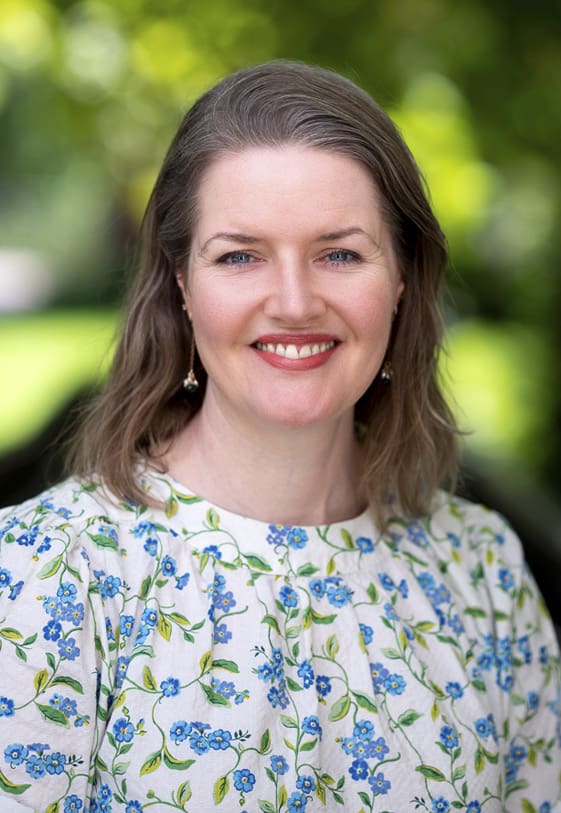
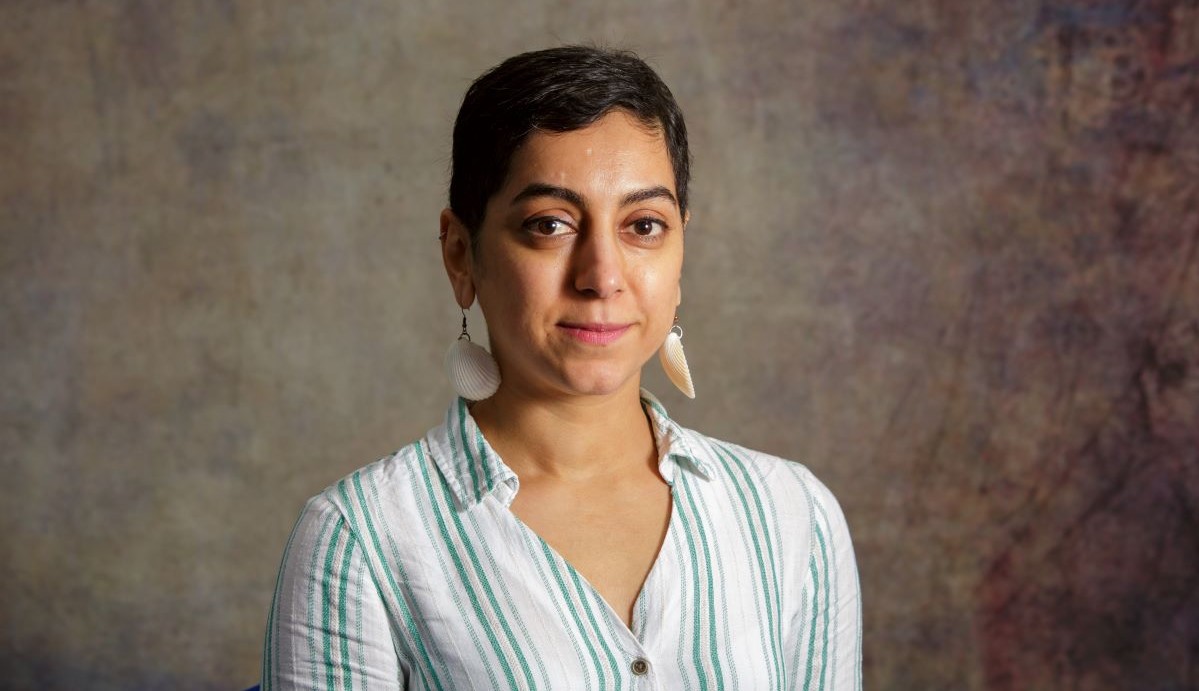
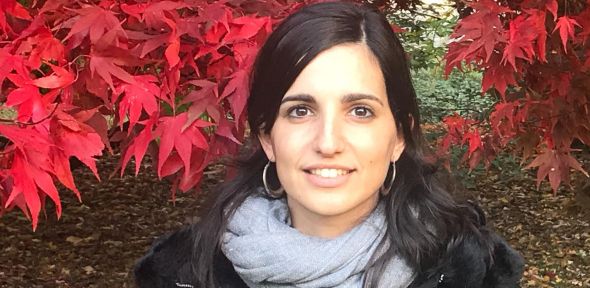
Dr Melanie Cooke is a Senior Lecturer in ESOL and Applied Linguistics at King's College London, working within the School of Education, Communication and Society and the Centre for Language, Discourse and Communication. She has been with King's since 2003, following prior teaching experience teaching EFL in Spain and ESOL to adult migrants in London. Cooke serves as convenor of the Hub for Education and Language Diversity (HELD), a collaboration between the Centre for LDC and English for Action, and co-organized the ESRC-funded 'Queering ESOL' seminar series. Her research focuses on teaching and learning in adult ESOL classrooms in the UK, particularly examining the social and political contexts of migrant language education. Cooke's work explores linguistic citizenship, participatory pedagogy in ESOL, and the relationship between language education and citizenship policies. She has made significant contributions to understanding how language is used as a political tool in immigration policy and integration debates. Her recent publications demonstrate a consistent focus on linguistic citizenship, with major works including 'Localising linguistic citizenship in England' (2024), 'Working papers for a more open academy' (2023), and 'Brokering Britain, Educating Citizens' (2019) with Rob Peutrell. These works explore the intersection of language education, migration policy, and citizenship frameworks. Elsevier Outstanding PhD Thesis Prize for Exceptional Doctoral Work (2016) Cooke teaches across multiple programs including BA English Language & Linguistics, MA Applied Linguistics and ELT, MA Language and Cultural Diversity, and MA TESOL. Her courses cover sociolinguistics, qualitative research methods, language and migration, and communicative language teaching. She also actively supervises PhD students in areas related to ESOL teaching and learning, language and citizenship, and language and migration. Notably, Cooke maintains active engagement with ESOL practice, regularly teaching in an ESOL class in East London that uses the participatory ESOL approach, creating a valuable connection between her research and practice.
Margaret E. L. Renwick serves as Associate Research Professor and Director of Undergraduate Studies in the Department of Cognitive Science at Johns Hopkins University's Krieger School of Arts and Sciences. Previously holding a tenured position in Linguistics at the University of Georgia, she brings extensive expertise in speech variation and phonological systems to her current role. Her academic journey includes affiliation with the Phonetics Laboratory at the University of Oxford. Dr. Renwick's research focuses on sociophonetics and laboratory phonology, examining how speakers manipulate phonetic detail in patterned ways while listeners extract linguistic and social meaning from speech. Her work investigates phonological contrast, regional accents of US English (particularly Southern accents), and linguistic change across generations. A significant portion of her research explores African American vowel systems in Georgia and Italian mid-vowel systems, bridging theoretical linguistics with empirical acoustic analysis. Analysis of her recent publications reveals a strong trend toward computational approaches in phonetics, with increasing use of machine learning techniques like the Phonet library for vowel variation analysis. Her work consistently bridges theoretical phonology with empirical acoustic data, showing particular strength in regional variation studies across multiple language systems including English and Romance languages. Dr. Renwick actively mentors students through the Renwick Lab, welcoming advisees at all levels including PhD and MA candidates in Cognitive Science at JHU. Her teaching portfolio includes courses in Acoustic Phonetics, Sociophonetics, and her First-Year Seminar 'Who Has an Accent?' examines sociolinguistic perceptions of speech variation. The Renwick Lab functions as a comprehensive research environment focused on spoken language analysis, providing resources for phonetic research including tools for IPA transcription, acoustic analysis with Praat, and computational approaches to speech data. The lab supports both theoretical investigations of phonological systems and practical applications of speech technology.
Yoshiko Matsumoto is the Yamato Ichihashi Professor in Japanese History and Civilization and Professor of East Asian Languages and Cultures at Stanford University, with a courtesy appointment in Linguistics. She has been a faculty member at Stanford since 1992, progressing from Assistant Professor to her current distinguished position. Matsumoto also serves as coordinator of the Japanese Language Program and has held significant administrative roles including Chair of the Department of Asian Languages (2003-2005) and Interim Chair of the Department of East Asian Languages and Cultures (2016). Matsumoto earned her Ph.D. in Linguistics from the University of California, Berkeley (1989), following M.A. degrees in Linguistics from UC Berkeley and General and Applied Linguistics from the University of Tsukuba, an M.I.A. in American Studies from the University of Tsukuba, and a B.A. in English Language & Literature from Japan Women's University. Professor Matsumoto's research focuses on linguistic pragmatics from cross-linguistic perspectives, with particular expertise in Japanese language. Her work spans structural and sociocultural aspects of language in use, including noun-modifying clause constructions, honorifics, discourse markers, and the intersection of language with gender and aging. She has pioneered research on conversational narratives of older adults, examining how ordinary framing strategies help individuals navigate difficult experiences. Her current projects explore intergenerational communication through haiku, communicative abilities of people with dementia, and noun-modifying constructions across Eurasian languages. Matsumoto's scholarship consistently bridges theoretical linguistics with practical applications for understanding human communication in diverse social contexts. Matsumoto's recent publications reveal a growing focus on practical applications of linguistic research for social benefit, particularly in intergenerational communication and dementia care. Her work increasingly integrates arts-based approaches, especially haiku poetry, to bridge generational divides and enhance communication with elderly populations. The research shows a consistent trajectory from theoretical linguistic frameworks toward applied, human-centered language studies that address real-world challenges in aging societies, with particular attention to how ordinary language practices help individuals navigate life transitions and difficult experiences. Dean's Award for Distinguished Teaching, School of Humanities and Sciences, Stanford University (2000) Richard E. Guggenhime Faculty Scholar, Stanford University (2000-2003) Violet Andrews Whittier Fellow, Stanford Humanities Center (2019-2020) Faculty Research Fellow, Michelle R. Clayman Institute for Gender Research (2014-2015) Research Fellow, Japan Foundation (2002) Internal Fellow, Stanford Humanities Center (2005-2006) Presidential Fund for Innovation in the Humanities, Stanford University (2009-2011) Professor Matsumoto has mentored numerous students through her teaching in Japanese language and linguistics courses, including specialized offerings on language and aging, points in Japanese grammar, and haiku-based communication. Her research has been supported by prestigious grants from the National Endowment for the Humanities, the Japan Foundation, and Stanford's Presidential Fund for Innovation in the Humanities. She has served on multiple editorial boards including the Journal of Pragmatics since 1992, demonstrating long-standing leadership in her field. Matsumoto has also advised students through individual studies and thesis projects in East Asian Languages and Cultures. Matsumoto leads several collaborative research initiatives including the 'Sharing Conversations' project which examines intergenerational communication through haiku, and research on communicative abilities of people with dementia. Her work often involves interdisciplinary teams spanning linguistics, gerontology, and creative arts, with fieldwork conducted in both Japan and the United States. The 'Noun-Modifying Constructions in Languages of Eurasia' project represents a major international collaboration examining linguistic structures across cultural boundaries. She also directs the 'Language, Old Age and Gender in Japan' project supported by the Stanford University/Japan Foundation, and the 'Difficult Conversations Continue: Memories of the 3.11 Disaster and Bereavement Narratives' project focused on post-disaster communication.
Amy Scott Metcalfe is a Professor in the Department of Educational Studies at the University of British Columbia (UBC), affiliated with the Faculty of Education. She holds dual appointments with the Institute for Gender, Race, Sexuality and Social Justice, emphasizing interdisciplinary approaches to higher education studies. Her research focuses on international comparative higher education systems, academic governance, and sociological analysis of university policies. She critiques managerialism trends and explores gender disparities in academic productivity. Metcalfe employs visual methodologies, including photo-ethnography and extended photo essays to document institutional change. Teaching responsibilities are managed through the Department of Educational Studies, with course details available via UBC’s official portal. Her scholarship spans Canadian and global contexts, addressing issues like faculty internationalization, research ethics frameworks, and the impact of pandemic disruptions on academic collaboration. Key contributions include longitudinal studies on Canadian professors’ perceptions of work-life balance, comparative analyses of gender gaps in research output across North America, and critical examinations of university-industry-government networks. She advocates for equity-centered pedagogies and anti-colonial approaches in higher education policy.
Dr. Sara Schmitt is the Bricker-Squires Faculty Chair in Early Intervention and an Associate Professor in the Department of Special Education and Clinical Sciences at the University of Oregon's College of Education. She holds affiliations with the Prevention Science Institute and the Prevention Sciences Graduate Program. Her research focuses on early childhood self-regulation, social-emotional development, and school readiness, particularly for underserved populations. Dr. Schmitt designs evidence-based interventions, such as the Early Learning Matters curriculum implemented in military child development centers. She has received accolades including the 2021 Society for the Study of Human Development Early Career Award and the 2021 Purdue University Trailblazer Award. Education: Ph.D., 2013, Human Development and Family Sciences, Oregon State University M.A., 2009, Developmental Psychology, San Diego State University B.A., 2003, Psychology, University of Wisconsin-Madison Research Interests: Dr. Schmitt investigates contextual and individual predictors of self-regulation, designs interventions to strengthen skills in disadvantaged children, and examines factors impacting school readiness. Her work emphasizes low-cost, scalable strategies and policy implications for educational equity. Publications: Her recent work includes studies on preschool program efficacy, block play’s impact on math skills, and the role of classroom quality in social-emotional development. These contributions underscore her focus on translational research bridging theory and practice. Awards & Grants: Funded by federal agencies and foundations, her research addresses socioeconomic disparities in early learning. She leads training initiatives for educators and has authored over 30 peer-reviewed articles. Labs/Teams: Active in the Prevention Science Institute and the Ballmer Institute Leadership Council, she collaborates on multidisciplinary teams advancing early childhood policy and practice.
Fatemeh Mollaei is a Lecturer in Clinical Language Sciences at the University of Reading, affiliated with the School of Psychology and Clinical Language Sciences. She is a core member of the Centre for Integrative Neuroscience and Neurodynamics (CINN), focusing on neurophysiological mechanisms of speech disorders. Her work integrates behavioral, electrophysiological, and neuroimaging techniques to study Parkinson’s disease (PD) and develops neuro-rehabilitation methods using non-invasive brain stimulation (e.g., TMS, tDCS). Her research explores how sensory and motor systems interact during speech production in PD, employing tools like EEG, fMRI, and MEG. She investigates microstructural white matter changes and auditory processing deficits linked to speech impairments, aiming to translate findings into clinical interventions. Her studies also address broader topics like sensorimotor adaptation and stuttering, emphasizing translational neuroscience. Publications highlight trends in neuroimaging of speech disorders, auditory feedback mechanisms, and neuroplasticity in PD. While no formal awards are listed, her contributions to understanding speech motor control and rehabilitation practices are significant. Advising and grant details are not explicitly provided, but her involvement in interdisciplinary CINN projects suggests active collaborative research. Labs/Teams: Active contributor to the Centre for Integrative Neuroscience and Neurodynamics (CINN) at the University of Reading, collaborating on translational neuroscience projects.
Dr Ares Llop Naya serves as an Affiliated Catalan Lecturer in the Department of Spanish and Portuguese within the Faculty of Modern and Medieval Languages and Linguistics at the University of Cambridge, while holding the Batista i Roca Fellowship at Fitzwilliam College. Her academic profile bridges theoretical linguistics with practical language pedagogy, focusing on Romance language structures and their educational applications. Her research centers on microsyntactic variation in Romance languages, particularly examining negation systems and syntactic phenomena in Catalan and Pyrenean varieties through both diachronic and synchronic lenses. She actively integrates theoretical insights into language teaching methodology, specializing in Catalan and Spanish pedagogy for both native and foreign language contexts. This dual focus manifests in her publications spanning syntactic theory, dialectology, and innovative language teaching approaches that address contemporary classroom challenges. Analysis of her publication trajectory reveals consistent thematic concentration on Romance microvariation, with recent work expanding into pedagogical applications. Her scholarship demonstrates methodological diversity—combining linguistic atlas data, corpus analysis, and classroom research—while maintaining core focus on Catalan syntax and its implications for language acquisition theory. The Pyrenean linguistic corridor remains a persistent geographical anchor across her diachronic and synchronic investigations. Dr Llop Naya's scholarly contributions have been recognized through prestigious awards: Joan Solà International Prize in Catalan Philology for her monograph on Romance negation systems Her teaching portfolio encompasses advanced courses in Romance linguistics, historical syntax, and sociolinguistics, with particular emphasis on translating theoretical frameworks into practical classroom resources. While specific grant funding details aren't publicly documented, her work consistently addresses real-world language education challenges through collaborative projects like the Microvariació.cat initiative. She contributes to the Microvariació.cat project—a digital repository documenting syntactic variation across Catalan dialects—which serves as both research infrastructure and pedagogical resource. This initiative exemplifies her commitment to creating practical applications from theoretical linguistic research while preserving endangered dialectal features of the Romance continuum.
Professor Richard Dance serves as Professor of Early English in the Department of Anglo-Saxon, Norse & Celtic (ASNC) at the University of Cambridge's Faculty of English, and is a Fellow of St Catharine's College where he holds positions as Director of Studies in ASNC, Praelector, and Clerk to the Governors of the Skerne Exhibition Foundation. He joined the university in 1997 after completing his studies at Oxford and has established himself as Cambridge's principal teacher of Old English, lecturing and supervising extensively in Old English language and literature and Germanic Philology for the ASNC Tripos. His research focuses on Old and Middle English language and literature with particular emphasis on Germanic Philology, English etymology, and the profound influence of Old Norse on early English vocabulary and poetic style. His work spans critical editions of texts like 'Ancrene Wisse' and 'Sir Gawain and the Green Knight', extensive etymological surveys of Scandinavian loanwords, and investigations into medieval multilingualism. His publications reveal consistent engagement with historical semantics, dialectology, and the linguistic interface between Norse and English during critical transition periods. Dance's scholarly impact is evidenced by major awards including the British Academy's 2021 Sir Israel Gollancz Prize for 'The Gersum Project' and the University of Cambridge Pilkington Prize for Excellence in Teaching (2023). His editorial roles include Secretary of the Early English Text Society, Council membership in The Philological Society, and etymological consultancy for the Oxford English Dictionary. As Principal Investigator for The Gersum Project (2016-2020), he led significant research into Scandinavian influence on English vocabulary, securing substantial academic recognition. British Academy's 2021 Sir Israel Gollancz Prize University of Cambridge Pilkington Prize for Excellence in Teaching (2023) Editorial Secretary, Early English Text Society Consultant for Oxford English Dictionary (etymology) International Advisory Committee member, Dictionary of Old English Dance maintains active leadership in academic communities through roles on the British Academy/Royal Historical Society Joint Committee on Anglo-Saxon Charters and as Series Editor for Exeter Medieval Texts and Studies (2008-24). His supervisory work encompasses graduate students in Old English language and literature, while his departmental responsibilities include Director of Studies for multiple Cambridge colleges. Current projects indicate ongoing research into medieval multilingualism, with several forthcoming publications addressing etymological methodology and lexical evolution in the medieval period.
James Urquhart Allingham is a Research Scientist at Google DeepMind , working on the Gemini project. He completed his PhD in the Machine Learning Group at the University of Cambridge under the supervision of José Miguel Hernández-Lobato, with funding from EPSRC, the Michael E. Fisher Studentship in Machine Learning, and the Qualcomm Innovation Fellowship. He was also part of the ELLIS PhD program, advised by Eric Nalisnick at AMLab UvA. Current affiliation: Google DeepMind (Research Scientist) PhD: University of Cambridge (Machine Learning Group) Academic networks: ELLIS PhD program, Darwin College His research focuses on the intersection of Bayesian deep learning and probabilistic methods in deep learning. Key areas include deep generative models , zero-shot classification , prompt engineering , Monte Carlo gradient estimation , and applications to sustainability and climate change . His work has explored energy-based models , neural architecture search , and equivariance in convolutional networks . Selected scientific awards and grants include the Michael E. Fisher Studentship , Qualcomm Innovation Fellowship , and MPhil in Advanced Computer Science with Distinction . He has collaborated with institutions such as the Amsterdam Machine Learning Group (AMLAB) and University of the Witwatersrand .
Dr. Brigitta Mittmann is a Senior Lecturer at the Department of English and American Studies, Friedrich-Alexander University Erlangen-Nuremberg (FAU), holding the Alexander von Humboldt Professorship for Language and Cognition. Her work focuses on lexicography, phraseology, and comparative analysis of spoken English varieties.
Unn Røyneland is a Professor of Scandinavian Linguistics and Multilingualism at the University of Oslo 's Faculty of Humanities . She is affiliated with the Center for Multilingualism in Society Across the Lifespan (MultiLing) and has been a key figure in Norwegian language policy and standardization efforts, including the Nynorsk 2011 orthographic revision . Current Research Focus: Multilingual and multilectal practices on social media Dialect acquisition among migrants Dialect levelling and language attitudes Language and embodiment Multiethnolectal speech styles Language policy and planning Ongoing Projects: Multilectal Literacy in Education (2020-2025) (RCN-funded, Co-PI) Multilectal Practices on Social Media (2020) (with Øystein A. Vangsnes) Urban Talk and Text (MultiLing Core-group project, 2021) AquaAurora (2021, UiT The Arctic University of Norway) Her scholarly work spans 15+ years of research output, with recent publications analyzing: Language activism and social justice (2024) Multilingualism across the lifespan (2022) Migration-induced dialect acquisition (2020) Youth multilingual practices in digital spaces (2018) Nynorsk standardization processes (2016) Multiethnolectal speech patterns (2008-2010) As Co-Chief Editor of the LME Linguistic Minorities in Europe Online series at De Gruyter, she continues shaping academic discourse in multilingualism studies.
María Sol Sansiñena Pascual serves as Assistant Professor (tenure track) at KU Leuven across Leuven, Kortrijk, and Brussels campuses while also holding a guest professorship at Ghent University. Her primary academic affiliation lies within the Faculty of Arts at KU Leuven where she actively contributes to the Functional and Cognitive Linguistics: Grammar and Typology (FunC) research group. Education PhD in Spanish Linguistics, KU Leuven (2015) Research Focus Her scholarly work centers on semantic-pragmatic interpretation mechanisms, with special emphasis on modality and TAM (Tense, Aspect, Mood) categories, discourse phenomena including insubordination, language variation/change dynamics, and translation pattern analysis. She employs interactional-constructional frameworks to examine Spanish grammatical structures across synchronic and diachronic dimensions, particularly investigating evolutionary pathways from Latin to contemporary Spanish varieties. Publication Trends Analysis of her recent scholarly output reveals concentrated research trajectories in diachronic syntax (especially insubordinate clause evolution), modal-evidential semantics in Spanish conditional/future forms, grammaticalization processes of verbal periphrases, and indexicality mechanisms. Her methodological approach consistently integrates functional, cognitive, and construction grammar perspectives to address complex language change phenomena. Research Leadership Current promotor of "Pathways to insubordination: diachronic evolution of non-subordinate structures" (2025-2026) Principal investigator for "Speech-act orientation and intersubjective alignment" project (2020-2025) Academic Contributions She actively participates in the FunC research collective while teaching specialized courses including Spanish Linguistics I/III, Discourse Analysis, and Master's thesis support seminars. Her scholarly service includes editorial contributions such as co-editing the 2024 volume "Indexicality: The Role of Indexing in Language Structure and Language Change".
Professor Tony McEnery is a Distinguished Professor of English Language and Linguistics at Lancaster University, where he has held various senior roles, including Dean of the Faculty of Arts and Social Sciences (2008–2014) and Head of the Department of Linguistics and English Language (2000–2005). His research focuses on corpus linguistics, applied linguistics, and sociolinguistics, with notable contributions to corpus-based analyses of historical medical discourse, media representation of Islam, and swearing in English. He has led major research projects, including the ESRC Centre for Corpus Approaches to Social Science (CASS) and the Trinity Lancaster Corpus. McEnery has secured over £10 million in research funding and holds visiting professorships at institutions worldwide, including Zhejiang University of Media and Communications and Shanghai International Studies University. He is a Fellow of the Academy of Social Sciences, Trinity College London, and the Royal Society for the Arts. Education: No explicit details provided, but his career trajectory implies advanced degrees in linguistics. Research Interests: Corpus linguistics applications in theoretical and applied linguistics, historical language analysis, and language as a socially situated phenomenon. McEnery’s work extends to interdisciplinary collaborations, including projects with the Environment Agency and the Home Office. His teaching includes summer schools in corpus linguistics and a Futurelearn MOOC, reaching tens of thousands globally. He advises on research funding for international bodies like the Irish Research Council and the Qatar National Research Foundation. Grants and Awards: Queen’s Anniversary Prize (2015), Changjiang Chair (2021), and multiple fellowships. Current grants include the Lancaster-Northern Arizona corpus and the Trinity Lancaster Corpus projects. Advising and Labs: Supervises postgraduate students in linguistics and collaborates with teams like the ESRC CASS Centre and UCREL (University Centre for Computer Corpus Research on Language).
Chet C. Sherwood is a Professor of Anthropology at George Washington University (GW) and a core faculty member of the Center for the Advanced Study of Human Paleobiology (CASHP). He also directs the National Chimpanzee Brain Resource and is affiliated with the GW Mind-Brain Institute. His research focuses on evolutionary neuroscience, particularly brain evolution in primates and other mammals, emphasizing how brain structure relates to behavior, development, and genetics. Education: Ph.D. (2003), M.A. (1998, 1996), and B.A. (1995) from Columbia University, with an additional M.A. from New York University (1996). Teaches courses such as ANTH 1001: Biological Anthropology and ANTH 3413: Evolution of the Human Brain. Research interests include comparative neuroanatomy of the cerebral cortex, human brain evolution relative to other primates, and the molecular and cellular mechanisms underlying cognitive evolution. He explores how brain differences across species correlate with ecological and behavioral traits, leveraging neuroimaging, transcriptomics, and fossil reconstruction techniques. Recent work investigates aging-related brain changes in primates and elephants. Notable achievements include membership in the National Academy of Sciences (2021) and the AAAS Fellowship (2022). His lab’s studies on chimpanzee brain plasticity and the genetic basis of primate cognition have advanced understanding of human uniqueness and shared evolutionary traits. Chet’s interdisciplinary collaborations span paleontology, genomics, and neuroscience, with a focus on bridging evolutionary and medical insights. His leadership in the National Chimpanzee Brain Resource underscores his commitment to advancing comparative neurobiology through resource development and ethical research practices.
Priv.-Doz. Dr. Julia Landmann is an Acting Professor of English Linguistics at the Institute for Anglistik and Amerikanistik, University of Greifswald since 2025. She previously held positions at Heidelberg University (2021-2022), University of Basel (2022-2025), and research/lecturing roles at Heidelberg (2012-2021) and Mannheim/Stuttgart (2012-2014). Her academic journey includes a Habilitation (2022), Doctorate (2006-2011), and studies at Sorbonne Nouvelle (2002-2003), Aberystwyth (2001-2002), and Heidelberg (1999-2005). Research Focus: Cognitive Contact Linguistics, Language of Love/Hate, Migrant Discourse Analysis Publications: Monographs on socio-cognitive lexicon evolution, articles on loanwords from Yiddish/Turkish/Japanese, and cross-cultural discourse studies Projects: Integrates cognitive science with language contact research, examines emotion concept evolution (love/hate), and analyzes migrant identity construction through linguistic strategies. Her work combines Critical Discourse Analysis with Cognitive Science to study contact-induced linguistic changes.