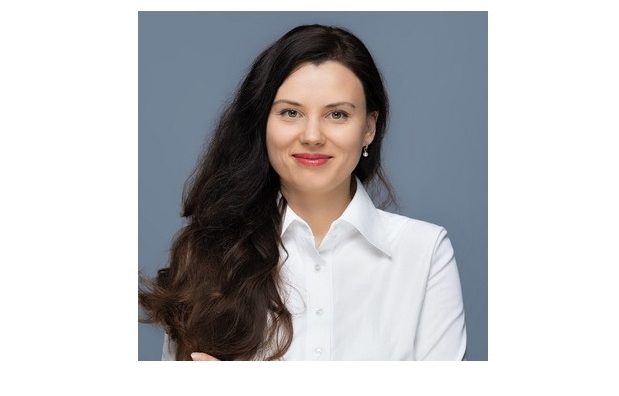
Katažyna Bogdzevič is a Professor at Mykolas Romeris University (MRU) Law School, specializing in Private International Law , European Law , Human Rights , and Environmental Law . She leads the MRU Human Rights LAB and contributes to the Environmental Management Research LAB, focusing on legal frameworks for ecosystem services, climate change mitigation, and stakeholder engagement. Key Research Themes: Integration of Private International Law with Environmental Law , analysis of legal conflicts in nature-based solutions, and name rights under international human rights conventions. Policy Engagement: Serves as advisor to Lithuania's Minister of Justice Ewelina Dobrowolska , emphasizing knowledge transfer to legislative and judicial practices. Email: roffice@mruni.eu
Alice Turk is a Professor of Linguistic Phonetics at the University of Edinburgh's School of Philosophy, Psychology and Language Sciences. She holds a PhD from Cornell University and serves as Principal Investigator for the ERC Advanced Grant 'PLANART: Planning the Articulation of Spoken Utterances' and collaborates on the project 'Prosodic Structure at the Interface Between Language and Speech'. Her research focuses on speech production, perception, prosodic structure, and timing. Education: PhD, Cornell University Her research interests span speech articulation, optimal control theory, motor control, and cross-linguistic phonetic patterns. She has led over 14 research projects, including studies on speech timing, ultrasound tongue imaging resources, and prosodic interfaces. Currently supervising PhD students Candice Mathers and William Peralta, she teaches courses such as 'Phonetics & Laboratory Phonology' and 'Speech Production & Perception'. Past grants include AHRC-funded work on prosodic structures and EPSRC support for an Edinburgh speech production facility. Her ERC grant (2022-2026) explores articulatory planning using optimal control models and biomechanical simulations.
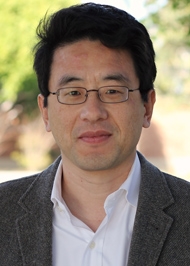
Li Min is an Associate Professor at the University of California, Los Angeles (UCLA), affiliated with the Department of Anthropology. His research focuses on Chinese prehistoric and Bronze Age archaeology, emphasizing state formation, social memory, and climatic responses. He also studies maritime archaeology of the Asiatic Trade in the Early Modern Era, using ceramic analysis to trace global trade impacts. Li teaches graduate seminars in archaeology theories and undergraduate courses on Chinese civilizations, collaborating across Anthropology, Asian Languages and Cultures, and the Interdepartmental Program of Archaeology. He co-directs the Wen-Si River Basin archaeological project with Chinese institutions. His 2018 book, Social Memory and State Formation in Early China , is a key contribution to the field. His education includes a Ph.D. from the University of Michigan (2008). Research interests further encompass landscape archaeology, integrating ceramics analysis with remote sensing and historical records. Subfield expertise includes social archaeology, material culture studies, and historical anthropology. Recent publications (2023–2025) concentrate on neuro-oncology imaging innovations, including MRI techniques for glioma characterization, adaptive clinical trials (e.g., GBM AGILE), and biomarker development. These studies highlight advanced applications of AI in medical imaging and molecular targeting therapies for brain tumors. Despite no listed awards, his work on imaging biomarkers and tumor response assessment has advanced clinical neuro-oncology standards. He advises on interdisciplinary collaborations, such as the Wen-Si project, and participates in global clinical trials for glioblastoma therapies.
Nina Schwarz is Assistant Professor of human-environment interactions in cities at the Department of Urban and Regional Planning and Geo-Information Management, ITC—University of Twente. Holding a Diploma in Environmental Sciences (University of Lüneburg, 2003) and a PhD in Social and Economic Sciences (University of Kassel, 2007), she spent a decade as senior scientist at the Helmholtz Centre for Environmental Research – UFZ before joining ITC. Her interdisciplinary research integrates urban land-use science, ecosystem-service evaluation and advanced modelling techniques—especially agent-based models—to explore sustainable urban development under global change. Research interests revolve around three interconnected themes: (i) urban land-use change —understanding how residential, commercial and green-space dynamics co-evolve; (ii) urban ecosystem services —quantifying both supply and demand of services such as local climate regulation, recreation and biodiversity; and (iii) behavioural modelling —formalising human decision-making to simulate policy scenarios ranging from slum-upgrading to vineyard management. She actively links these themes to UN Sustainable Development Goals, notably SDG 11 (Sustainable Cities) and SDG 15 (Life on Land). Recent publications (2022-2025) reveal a methodological breadth spanning citizen-science impact assessment in Suriname, cooling effects of urban water bodies in Chinese mega-cities, European wine-growers’ adaptive behaviour, and methodological advances in upscaling and validating agent-based land-use models. Across these studies, Schwarz consistently combines empirical field data, geospatial analytics and participatory approaches to produce policy-relevant insights for cities in both the Global North and South. She has (co-)authored >80 peer-reviewed works, accumulating c. 5 900 citations and an h-index of 28 (Scopus). While specific honours are not itemised in the supplied text, her sustained citation impact and invited contributions to major conferences (e.g., iEMSs 2020, IAHR 2025) underscore scientific recognition. Schwarz frequently engages with societal stakeholders: her projects have generated open datasets on urban green-space monitoring in Paramaribo, e-learning modules for Latin-American universities, and interactive dashboards for sustainable water management. Within ITC she contributes to capacity-building programmes for emerging economies, supervises graduate researchers and maintains active collaborations across Europe, Latin America, Africa and Asia. No explicit lists of PhD students or personal grants are provided in the current corpus, but her leadership of externally funded projects (e.g., citizen-science evaluation, vineyard decision-making database) indicates ongoing acquisition of research funding.
Catherine Grant is an Honorary Professor at Aarhus University, Denmark, and Visiting Senior Research Fellow at the University of Reading, UK. She previously served as Professor of Digital Media and Screen Studies at Birkbeck, University of London (2017–2020), and held academic roles at institutions including the University of Sussex and University of Kent. Her research focuses on videographic criticism, essay filmmaking, Latin American cinemas, and screen studies methodologies. Grant earned a PhD in Mexican literature and feminist theory from the University of Leeds (1991) and a First Class B.A. in Modern Languages (1986). She pioneered the use of audiovisual essays in film studies, co-founding and editing the award-winning [in]Transition: Journal of Videographic Film and Moving Image Studies until 2024. Her work explores film authorship, found-footage techniques, and digital media practices. Her research interests span essay filmmaking, world cinema, and the intersection of theory and practice in film studies. Over 200 of her video essays have been showcased globally, emphasizing experimental methodologies and critical engagement with cinematic form. Grant has received the Society for Cinema and Media Studies Award of Distinction (2014–2015). She co-edited significant volumes on world cinema, Latin American cinema, and videographic criticism, and maintains influential platforms like Audiovisualcy and Film Studies For Free .
Eleanor Dickey is a Professor of Classics at the University of Reading. She has held academic positions at Columbia University, the University of Exeter, and the University of Ottawa. Her research focuses on Greek and Latin linguistics, classical literature, and ancient language use, with a particular emphasis on papyrology and historical pragmatics. She holds a D.Phil. in Literae Humaniores from the University of Oxford and has held fellowships at institutions including the Institute for Advanced Study in Princeton and All Souls College, Oxford. Education: BA (summa cum laude) and MA from Bryn Mawr College; M.Phil. and D.Phil. from Oxford University. Her research interests include the study of ancient language pedagogy, sociolinguistics in antiquity, and the analysis of Greek and Latin texts in papyri. She has authored several influential books, including Ancient Greek Scholarship and Latin Forms of Address . Her work explores the intersection of language, culture, and social dynamics in the ancient world. Key awards include the 2014 Fellowship of the British Academy and the 1996 Hellenic Foundation Prize. Her contributions to classical scholarship have been recognized through teaching accolades and research fellowships worldwide.
Patrick J. Curran is a Professor in the Department of Psychology at the University of North Carolina, affiliated with the L.L. Thurstone Psychometric Laboratory and the Quantitude initiative. His research focuses on quantitative methodologies, particularly longitudinal data analysis and structural equation modeling, applied to developmental psychopathology and adolescent substance use. He collaborates on statistical education through YouTube tutorials, a blog (Help Desk), and workshops, alongside a podcast with Greg Hancock. His work bridges methodological innovation with substantive research in psychology and public health. Key contributions include advancing latent curve models with structured residuals, integrative data analysis techniques, and the dissemination of statistical tools. His research spans disciplines such as developmental psychology, clinical psychology, and epidemiology, addressing topics like alcohol use trajectories, chronic depression mechanisms, and pandemic-related disparities in healthcare workers’ mental health. Lab Affiliations: L.L. Thurstone Psychometric Lab, Quantitude Collaborations: Dan Bauer (statistical education), Greg Hancock (podcast), and interdisciplinary teams in public health and clinical research His publications emphasize methodological rigor and practical application, often addressing gaps in longitudinal data analysis and measurement equivalence. Notable work includes the latent curve model with structured residuals (LCM-SR) and integrative data harmonization strategies for prevention science.
Dr. Guy Westwood is an Associate Professor in Greek Language and Literature at the University of Oxford, affiliated with Lady Margaret Hall as a Fellow and Tutor in Classics. He holds an MA, MSt, and DPhil from Oxford, with academic roles spanning Balliol, Merton, and Birmingham. His research focuses on classical Greek and Roman rhetorical prose, particularly Athenian democratic oratory, exploring how historical narratives shaped political persuasion. He has authored a monograph on Demosthenes and Aeschines and published widely on topics such as Athenian lawcourt rhetoric, intertextuality in poetry, and ancient historiography. Teaching encompasses Greek language, literature, and history at both undergraduate and graduate levels, with supervision in ancient rhetoric and related fields. He encourages graduate applications in Greek rhetoric and comedy. His work bridges rhetoric with drama and historiography, reflecting a broad engagement with fifth and fourth-century Greek studies. Publications highlight themes like legal oratory's performative aspects, intertextual poetic analysis, and the role of memory in persuasion. His career includes fellowships at Merton and teaching roles at Birmingham, showcasing a trajectory of academic leadership in classical studies.
Professor Garg Vikas holds the position of Assistant Professor in the Department of Computer Science at the School of Science. His research spans quantum computing, artificial intelligence, and machine learning with applications in computational biology, healthcare, and drug design. He leads the HEALED/Garg project focused on human-steered machine learning for drug discovery and collaborates with institutions like MIT and industry partners. He co-founded YaiYai Oy, providing AI/ML solutions to global sectors. Education: PhD from MIT CSAIL under Tommi Jaakkola, with postdoctoral and industry experience at Amazon, Microsoft, and IBM. His work aligns with UN SDGs, particularly in healthcare and sustainable energy. Research interests include graph neural networks, generative models, and quantum AI. Recent projects involve climate modeling via physics-informed neural ODEs and optimizing quantum circuits using graph autoencoders. Key collaborations include MIT’s MLPDS Consortium and the Finnish Center for Artificial Intelligence. He supervises doctoral researchers like Yogesh Verma and postdocs such as Kogkalidis.
Zachary McDowell is an Assistant Professor of Communication at the University of Illinois Chicago (UIC), affiliated with the College of Liberal Arts and Sciences and the Department of Communication. His research focuses on access, advocacy, and equity in digital spaces, particularly regarding knowledge production in platforms like Wikipedia and the ethical implications of AI. He holds a PhD in Communication from the University of Massachusetts, Amherst. Dr. McDowell’s research explores how technology shapes cultural production, digital literacy, and equity. Key areas include AI’s impact on knowledge systems, ethics of data commons (e.g., Wikidata), and participatory media’s role in marginalized communities. He co-founded the open-access journal communication +1 , emphasizing innovation in communication scholarship. His teaching philosophy integrates critical engagement with technology and equity, using embodied practice to bridge theory and application. He volunteers in Chicago’s McKinley Park neighborhood and advocates for systemic equity in education and knowledge systems. Notable collaborations include work with the Wiki Education Foundation on student learning outcomes through Wikipedia editing. Education: PhD in Communication, University of Massachusetts Amherst Key Roles: Co-founder, communication +1 Journal; Research Fellow, Wiki Education Foundation Awards: None explicitly listed in provided texts
Vincent Joos is an Associate Professor in the Department of Modern Languages and Linguistics at Florida State University, affiliated with the College of Arts and Sciences. He holds a Ph.D. from the University of North Carolina Chapel Hill and specializes in cultural anthropology with a focus on post-disaster reconstruction, Haitian citizenship dynamics, and migration studies. His research examines the intersections of state policies, international aid, and grassroots resilience in the Caribbean, particularly in Haiti and France. Joos’ work critically engages with disaster capitalism, documenting how marginalized communities creatively transform urban spaces despite exclusion from formal aid systems. His book *Urban Dwellings, Haitian Citizenships* (2021) analyzes vernacular architectures in post-earthquake Port-au-Prince, while his co-edited volume *Migrants Shaping Europe* (2022) explores historical and contemporary migration impacts. He also researches Calais’ border infrastructure and the literary intersections of ethnography. Teaching includes advanced courses like *Caribbean Music and Politics* and *Graduate Seminar in Cultural Anthropology*, emphasizing interdisciplinary approaches. His scholarship spans articles in *Vibrant: Virtual Brazilian Anthropology*, *The Conversation*, and *Southern Quarterly*, addressing topics from Haitian political crises to African American cultural memory in Mississippi. Vincent Joos actively contributes to public discourse through op-eds in *World Politics Review* and *The Globe Post*, critiquing foreign intervention in Haiti and analyzing systemic governance failures. His research bridges academic rigor with urgent social commentary on migration, disaster, and postcolonial identity.
Tancredi Caruso is an Associate Professor at the School of Biology and Environmental Science, University College Dublin. He holds a PhD in Ecology from the University of Siena (2006) and a Postgraduate Certificate in Higher Education Teaching (2015). His career includes roles as Reader and Lecturer at Queen's University Belfast, and research fellowships at Freie Universität Berlin and the University of Siena. Research Interests : Caruso's work focuses on biodiversity processes, aboveground-belowground linkages, ecological networks, and ecosystem responses to perturbations. His research has led to over 100 peer-reviewed publications and grants from the Alexander von Humboldt Foundation, NERC, EU Marie Sklodowska-Curie program, and others. Teaching & Professional Activities : Coordinates modules on environmental science, soil ecology, and conservation. Active in professional committees, including the IEA Committee. Languages: Italian, English, German (fluent), and French (reading). Grants & Collaborations : Leads projects like the ReEcoNet initiative. Recent grants include funding for wheat genetic diversity (EU), soil-microbe interactions (Leverhulme Trust), and climate-land use impacts (NERC). Key Contributions : Pioneered studies on mycorrhizal networks, soil microbial responses to drought, and the ecological role of oribatid mites. His work bridges theoretical ecology and applied conservation, emphasizing stochastic processes and biodiversity resilience.
Professor Zanna Clay is a leading comparative and developmental psychologist at Durham University, specializing in primate behavior and human evolutionary origins. She holds a joint appointment as an Associate Fellow in the Institute of Advanced Study. Her work bridges primatology, developmental psychology, and conservation, focusing on empathy, communication, and social learning in great apes and humans. Clay completed her doctoral work at the University of St Andrews, followed by postdoctoral research at Emory University and the University of Neuchatel. She has extensive field experience studying bonobos in the wild and captivity, including roles at the Lola ya Bonobo Sanctuary. Her research explores the evolutionary roots of human social cognition through comparative studies of bonobos, chimpanzees, and human infants. Key research interests include empathy development, language evolution, primate vocal communication, and the role of gesture in early human communication. She leads projects on cross-cultural empathy in infants (UK and Uganda) and has pioneered studies on emotion contagion using thermal imaging. Her work also addresses conservation challenges for bonobos through behavioral insights. Clay supervises PhD students investigating primate behavior, socio-emotional development, and conservation. She collaborates globally, including with the MPI-EVA in Congo and Birmingham University. Notable publications include studies on bonobo empathy, primate vocal flexibility, and the evolutionary origins of imitation.
Liam Cross is a Lecturer in Psychology at the School of Psychology, University of Bath. His research focuses on social psychology, particularly how synchronized movement (e.g., dancing, drumming) fosters prosocial behavior, affiliation, and group cohesion. He also investigates autism, theory of mind, deception, media effects on prejudice, and the therapeutic potential of games. His research interests span Social Psychology, Prosocial Behavior, Synchronization, Theory of Mind, Autism, Nonverbal Communication, Media Effects, and Gamification . He explores how rhythmic coordination influences social bonding and identity, and how digital and tabletop games can support individuals with autism. His work integrates experimental, virtual reality, and qualitative methods to understand complex social dynamics. The recent articles highlight a strong trend in using technology—especially virtual reality and games—to study and enhance empathy, reduce prejudice, and improve social interaction. Key themes include the Proteus Effect, synchronized movement in VR, video games for refugee empathy, and board games for understanding autistic experiences . These works reflect interdisciplinary approaches bridging psychology, human-computer interaction, and social intervention. Liam Cross has no explicitly listed scientific awards in the provided text. While no direct mention of student advising or grants is made, his collaborative publications suggest active mentorship and research leadership. He is affiliated with the NeuroPlay Lab , indicating involvement in a dedicated research team focused on play, technology, and social cognition. His work contributes to UN Sustainable Development Goals related to well-being and reduced inequalities. He is actively involved in research and teaching in Social Psychology, Research Methods, and Statistics , and leads innovative projects using immersive technologies and games to address social challenges. The NeuroPlay Lab serves as a hub for experimental and applied research in prosocial technology and autism interventions.
Dewei Yi is a Senior Lecturer (Associate Professor) in the Department of Computing Science, School of Natural and Computing Sciences at the University of Aberdeen, UK. He holds a PhD from Loughborough University and is an active researcher in AI, computer vision, and intelligent systems. He serves as Director of the MSc AI and MSc Robotics and AI programmes. Research Interests: His research spans AI-enabled healthcare, medical image processing, intelligent vehicles, robotics, precision agriculture, remote sensing, and applied machine learning. He focuses on hybrid intelligent systems, personalised AI, federated learning, fairness, and explainability. Recent Publication Trends: His latest work includes medical image quality evaluation using contrastive learning, federated learning for diabetic retinopathy, UAV-based solar panel inspection, vascular image analysis, and emotion recognition from ECG data, reflecting a strong trend toward healthcare and intelligent systems with real-world impact. Scientific Awards: Fellow of the Higher Education Academy (FHEA) Outstanding Reviewer, Transportation Research Part C (TRC) Advising and Grants: Dr Yi supervises multiple PhD students in AI, computer vision, and machine learning. His graduated PhDs include Debinal Bakyavathi Rajan, Sami Hamid Al Sulaimani, and Adinath Abhimanyu Ghadage. He has secured significant funding as PI and Co-PI, including a £408K Smartawl 5.0 project and a £794K Cancer Research UK grant (Co-PI). Labs and Teams: He leads research in AI for healthcare and intelligent vehicles, collaborating with institutions like University of Warwick, Loughborough University, and industry partners such as AVL Powertrain Ltd. His work is supported by interdisciplinary teams focusing on embedded AI, medical applications, and sustainable technologies.