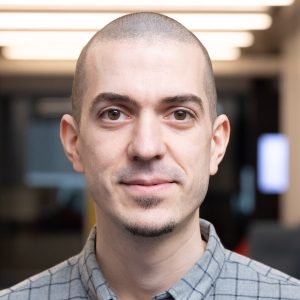
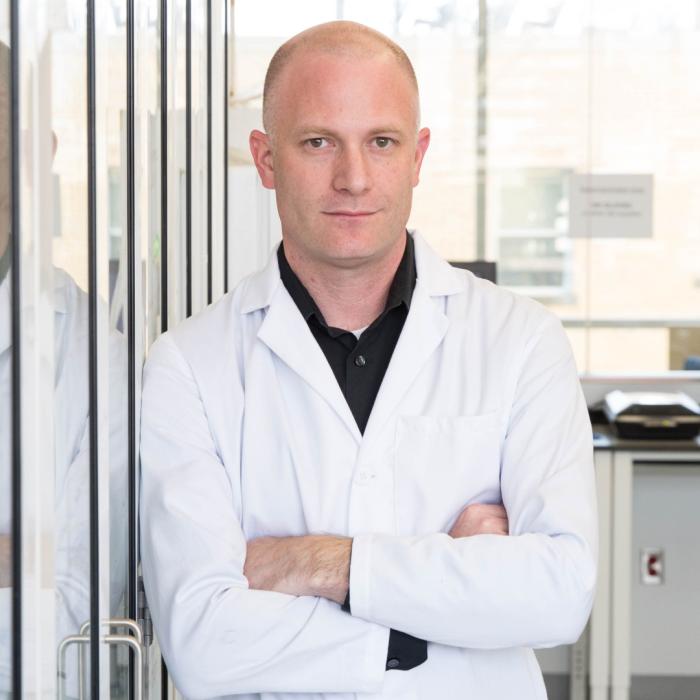
Serge Belongie is a Professor at the Department of Computer Science (DIKU) at the University of Copenhagen, where he holds dual affiliations with the Pioneer AI research section and the Image Analysis, Computational Modelling, and Geometry section. His academic position places him at the forefront of interdisciplinary research connecting computer vision with language models, geospatial analysis, and cultural understanding. Professor Belongie's research program encompasses several critical domains in modern artificial intelligence: Advanced computer vision and image analysis techniques Vision-language model integration and multimodal systems 3D point cloud processing and semantic segmentation Geospatial representation learning for environmental applications Fine-grained object recognition and detection Cultural context understanding in AI systems His recent publication record reveals a sophisticated trajectory toward developing precise control mechanisms for vision-language models, with applications spanning forensic analysis, cultural heritage preservation, and social media understanding. The research demonstrates increasing sophistication in handling cultural context and enabling fine-grained manipulation of visual content through natural language interfaces. Professor Belongie maintains an active research group producing significant scholarly output, with over 280 research publications documented in his academic profile. His work is supported by research funding that enables cutting-edge exploration in multimodal AI systems with practical societal impact. He plays a key role in the Pioneer AI center at the University of Copenhagen, which focuses on advancing artificial intelligence through interdisciplinary collaboration and innovative research approaches that bridge theoretical computer science with real-world applications.
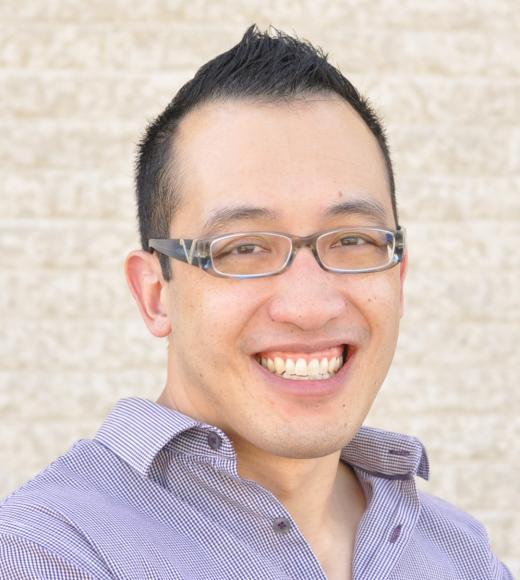
Professor Yun-Nung Chen works at the Department of Computer Science and Information Engineering , National Taiwan University , focusing on Natural Language Processing and Dialogue Systems . With a Ph.D. from Carnegie Mellon University , their research bridges Machine Learning and Language Understanding in conversational AI. Education Ph.D. in Language Technologies, Carnegie Mellon University (2015) M.S. in Computer Science, National Taiwan University (2011) B.S. in Computer Science, National Taiwan University (2009) Research Trends Recent work emphasizes Retrieval-Augmented Generation , Knowledge Editing in LLMs , and Temporal Modeling for dialogue systems. Key themes include cross-modal understanding , semantics-driven dialogue , and robust language modeling across domains. Scientific Recognition Best Student Paper, IEEE ASRU 2013 Best Student Paper, IEEE SLT 2010 Distinguished Master Thesis, ACLCLP 2011 Best Paper Finalist, ISCA INTERSPEECH 2012 Current projects involve StreamBench for continuous agent improvement and Taiwan LLM for culturally aligned language models.
Raul Castro Fernandez is an Assistant Professor of Computer Science at the University of Chicago, where he researches data ecology, a concept he created to study how data shapes our world and how we can shape it back. He is the faculty co-lead of the Data Science Institute's Data Ecology Research Initiative and a member of ChiData, the data systems research group at the University of Chicago. He is also co-founder and Chief Research Officer at invocate and co-runs Chicago Data Night, a forum connecting industry and academia in Chicago. Castro Fernandez's research focuses on data ecology, data discovery, data markets, and data integration. He develops both theory and systems that help people and organizations find, evaluate, and use data effectively. His work often uses techniques from data management, statistics, and machine learning. He has pioneered concepts in data market design, understanding the economics of data, and building platforms to support markets of data. His research on data ecology frames how data moves through and transforms technological, economic, and social systems—and how to design interventions to make those ecosystems more valuable, equitable, and resilient. His publications reveal a strong focus on data markets, data discovery, and LLM applications for data management. Recent work includes Pneuma (leveraging LLMs for tabular data), Solo (data discovery using natural language), and Nexus (correlation discovery for spatio-temporal data). His research spans theoretical foundations of data value to practical systems for data sharing and discovery. SIGMOD Test of Time Award (2023) NSF CAREER Award (2024) Sloan Research Fellowship (2025) Castro Fernandez has advised numerous PhD, Master's, and undergraduate students who have gone on to pursue PhDs at institutions like University of Washington and Stony Brook, joined companies like Google, Anthropic, and Citadel, or founded startups. His teaching includes courses on The Value of Data, Ethics in Data Science, and Introduction to Databases. He serves on program committees for major conferences including SIGMOD, VLDB, and CIDR, and has been recognized as a Distinguished Reviewer by multiple venues.
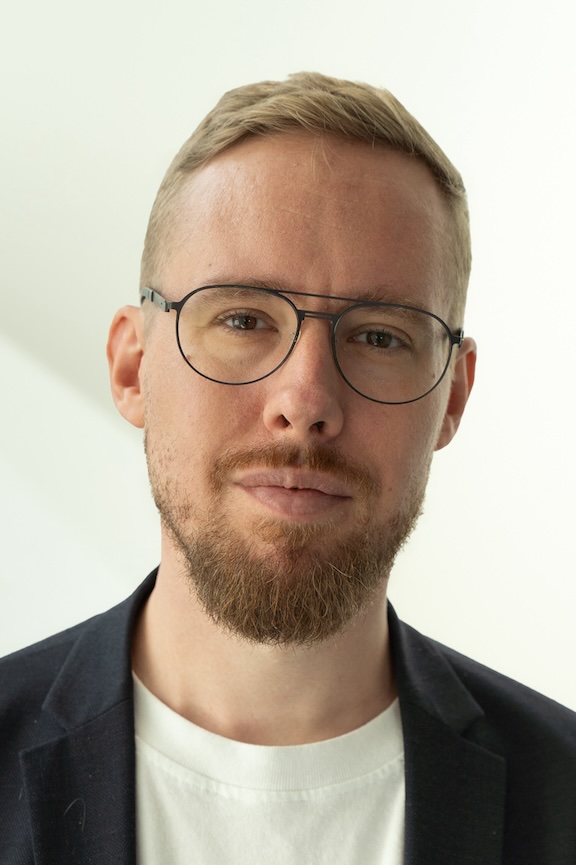
Gerald Quon is an Associate Professor in the Department of Molecular and Cellular Biology at the University of California, Davis. He is affiliated with the Genome Center and participates in multiple graduate programs, including Integrative Genetics and Genomics, Neuroscience, Computer Science, Biostatistics, and Biomedical Engineering. Education: PhD in Computer Science from the University of Toronto (2012) MSc in Biochemistry from the University of Toronto (2006) Research Interests: Dr. Quon applies computational approaches to genetics and genomics problems, focusing on the genetics of human disease , models of cell population dynamics , and neurogenomics . His lab builds neural network models to understand how genetic variation affects disease risk through molecular and cellular phenotypes, with applications to obesity, Alzheimer’s disease, psychiatric disorders, and Rett syndrome. Recent Research Trends: Recent publications highlight work in neuroplasticity , single-cell multimodal analysis , brain evolution , morphological variation modeling , and microbiome-based classification . His team combines sequencing and imaging technologies to model cellular interactions and gene expression dynamics. Scientific Awards: NIH New Innovator Award (2021) Grants & Collaborations: He received NSF funding (2019) for computational tools in single-cell analysis and collaborates across disciplines, including neuroscience, biomedical engineering, and computational biology. His lab develops software like scProjection , siVAE , and scAlign .
Ken Wong is an Associate Professor in the Department of Computing Science at the University of Alberta's Faculty of Science. He also serves as Associate Chair within the same department. Holding a PhD in Computer Science from the University of Victoria (1999), his research focuses on software engineering challenges such as reverse engineering, program understanding, and software visualization. He emphasizes improving software evolution through tools like architecture recovery and root cause analysis, with applications in web/mobile platforms and diverse system understanding. Teaching highlights include developing Massive Open Online Courses (MOOCs) via Coursera, including the 'Software Product Management Specialization' and courses on Agile practices, client needs analysis, and software metrics. His recent publications (2023–2025) span AI-driven healthcare innovations (e.g., medical imaging, photoacoustic tomography) and advanced computer vision techniques (e.g., diffusion models, video inpainting). Notable collaborations include EVAREST studies on heart failure management and lung transplantation outcomes. His work bridges software engineering theory and practical applications in healthcare technology, with contributions to federated learning frameworks (e.g., FedLPPA) and AI-augmented clinical decision support systems. Research also extends to autonomous driving (DriveGPT4-V2) and 3D human avatar generation (DreamAvatar), showcasing interdisciplinary impact.
Professor Pamela Davidson is a distinguished scholar of Russian Literature at University College London's School of Slavonic and East European Studies (SSEES). With over four decades of academic experience, she has held various leadership positions including Head of the Russian Department (2003-2006), Head of Teaching and Graduate Tutor (2012-2014), and currently serves as Admissions Tutor for Languages & Cultures programmes. Her scholarly work has significantly shaped the field of Russian literary studies, particularly in areas of Russian Symbolism, literary prophecy, and the interaction between religion and culture. Doctor of Philosophy, University of Oxford, 1984 Undergraduate studies in Russian, French and Italian, Newnham College, Cambridge Professor Davidson's research spans several interconnected areas within Russian and comparative literature. Her work on the "construction and dynamics of literary tradition" examines how Russian writers positioned themselves within broader cultural and historical contexts. She has made significant contributions to understanding "the interaction of religion and culture," particularly through her edited volume "Russian Literature and Its Demons," which opened up new interdisciplinary research avenues. Her long-standing interest in "Silver Age poetry" has focused extensively on Viacheslav Ivanov, whose work she has studied through multiple lenses including his engagement with Dante and classical antiquity. Most notably, she has developed an extensive body of work on "the representation of the writer as prophet in Russia," tracing this tradition from its biblical and classical roots through to the Soviet period. Professor Davidson's recent publications reveal a consistent focus on the prophetic dimension of Russian literature, with particular attention to Viacheslav Ivanov and Fedor Glinka. Her scholarship demonstrates a sophisticated interweaving of literary analysis, religious studies, and cultural history. Over the past decade, her work has increasingly examined how Russian writers engaged with biblical and classical traditions, often reinterpreting them within specifically Russian contexts. The recurring themes across her publications include the tension between Athens and Jerusalem in Russian thought, the role of the writer as moral authority, and the complex relationship between religious tradition and literary innovation. Her comparative approach frequently bridges Russian literature with Western European intellectual traditions, revealing unexpected connections and influences. Travelling Junior Research Fellowship at Queen's College Leverhulme Research Fellowship (2019-2021) Director of the CEELBAS Centre for Doctoral Training (2020-2021) Member of the AHRC Peer Review College of Assessors (2003-2007) As an academic mentor, Professor Davidson has supervised numerous doctoral students in Russian literature and thought, with particular expertise in 19th and early 20th century literature, Silver Age poetry, and comparative literature. Her leadership roles have included serving as Graduate Tutor and Chair of BA and MA Examination Boards at SSEES. In terms of research funding, she has successfully secured competitive grants including the Leverhulme Research Fellowship that supported her recent work on literary prophecy. Her collaborative projects have often involved international partnerships, particularly with Russian academic institutions including the Institute of Russian Literature (IRLI) in St Petersburg. Professor Davidson has also contributed to major scholarly initiatives such as the 12-volume academic edition of Ivanov's collected works. While Professor Davidson's work is primarily in humanities rather than laboratory-based research, she has been instrumental in building academic networks and collaborative projects. She served as Director of the CEELBAS Centre for Doctoral Training, liaising with the Arts and Humanities Research Council (AHRC) and consortium members at Cambridge, Manchester and Oxford. Her long-standing collaboration with the St Petersburg Institute of Russian Literature has been particularly significant, resulting in the completion of the first comprehensive bibliography of Viacheslav Ivanov's works. Professor Davidson has also been active in the international scholarly community through her membership on the Board of Directors of the Foundation "Centro Studi e Ricerche Vjacheslav Ivanov" in Rome.
Massachusetts Institute of TechnologyUnited States
Anand Natarajan is an Assistant Professor at the Massachusetts Institute of Technology (MIT), affiliated with the Theory of Computation research group. His work focuses on quantum computing, complexity theory, and theoretical computer science, particularly exploring quantum verification, nonlocal games, and the intersection of quantum information with computational complexity. He is a key contributor to foundational results like the MIP*=RE theorem, which resolved longstanding questions in quantum complexity theory. Research Interests: Quantum Verification and Cryptography Quantum Complexity Classes (QMA, MIP*) Nonlocal Games and Tsirelson's Theorem Quantum Error-Correcting Codes Oracle Separations in Complexity Theory Recent Work Trends: His publications from 2020-2024 emphasize advancing our understanding of quantum advantage, noise resilience in quantum protocols, and bridging quantum computing with classical complexity theory. Notable contributions include resolving the quantum PCP conjecture via game-theoretic frameworks and analyzing the computational limits of interactive proof systems involving entangled provers. Lab/Team Affiliation: Core member of MIT's Theory of Computation group under Vinod Vaikuntanathan, collaborating on algorithms, security, and programming languages research.
Kevin Baum is a computer scientist currently serving as the deputy head of the Neuro-Mechanistic Modelling (NMM) department at the German Research Center for Artificial Intelligence (DFKI) since January 2023, and head of the Centre for European Research in Trusted AI (CERTAIN) at DFKI since December 2023. Based at the Saarland Informatics Campus in Saarbrücken, Germany, he completed his doctorate in philosophy in March 2024, combining technical expertise with philosophical depth. His work bridges computer science with ethics, focusing on making AI systems transparent and accountable to human users. Dr. Baum's research program centers on interdisciplinary questions concerning the explainability and transparency of AI systems. His work spans multiple significant projects including the Explainable Intelligent System (EIS) initiative and project E7 of the Transregional Collaborative Research Centre 248 "Foundations of Perspicuous Software Systems" (CPEC). He has developed frameworks for understanding stakeholder perspectives on explainable AI and investigated how different information types about automated systems affect user perceptions of fairness and justice. His approach consistently combines theoretical foundations with practical implementations across diverse contexts. Analysis of his publication trends reveals a clear trajectory from theoretical foundations in machine ethics toward practical implementations of explainability requirements in real-world contexts. His work demonstrates increasing focus on human oversight effectiveness, fairness monitoring, and ethical considerations across various AI applications. He has made significant contributions to both academic discourse and practical AI development guidelines, with publications spanning computer science, philosophy, psychology, and human-computer interaction venues. Award for Ethics for Nerds lecture series As a research leader, Dr. Baum contributes to shaping AI development practices through his departmental leadership and interdisciplinary collaborations. His current work with CERTAIN focuses on establishing European research standards for trusted AI development and deployment, emphasizing the practical implementation of ethical requirements in AI systems. He maintains active collaborations across multiple institutions and disciplines, reflecting his commitment to bridging technical and philosophical considerations in AI development. At DFKI, he leads research that combines neuroscientific insights with AI development to create more interpretable systems. The NMM department focuses on both theoretical research on explainable AI foundations and practical applications in various domains, with particular attention to how different stakeholders understand and require explanations from AI systems.
Asad Abdi is a Lecturer in Computer Science at the College of Science and Engineering. His research focuses on deep learning, data mining, and artificial intelligence , with applications in traffic analysis, educational technology, and maritime logistics. He has published extensively on topics like social media-based traffic forecasting, fake news detection, and vessel arrival prediction. Abdi’s work bridges theoretical advancements in machine learning with practical challenges in domains such as transportation systems and education. He has explored hybrid approaches combining deep learning models with linguistic knowledge and knowledge graphs to address real-world problems. Notable contributions include frameworks for feedback analysis in hybrid classrooms and fusion-based prediction models for vessel arrival times. His recent articles highlight trends in leveraging large language models and multi-feature fusion techniques for tasks like opinion summarization and aspect extraction. Abdi’s research often emphasizes interdisciplinary collaboration, integrating insights from computer science, transportation engineering, and educational psychology. While no formal awards or grants are explicitly listed, his publication record demonstrates sustained contributions to applied AI and data-driven solutions across multiple sectors.
Professor Heather Wardle is a distinguished social scientist at the University of Glasgow's School of Social and Political Sciences, holding dual appointments in Urban Studies & Social Policy and the School of Health & Wellbeing. With nearly twenty years of experience, she specializes in gambling research, policy, and practice, serving as co-director of Gambling Research Glasgow and leading the prestigious Lancet Public Health Commission on Gambling. Her work is supported by major funding bodies including the ESRC, Wellcome Trust, and NIHR. Professor Wardle's research explores the evolving relationship between gambling and gaming behaviors, particularly how technological changes create new risks and opportunities. She investigates how policy evidence is framed and developed, with a strong emphasis on incorporating lived experience into decision-making processes. Her work bridges academic research, public health policy, and practical interventions, focusing on understanding gambling's impact on individuals' lives and developing effective solutions. Her extensive publication record demonstrates significant contributions to understanding gambling consumption patterns, gambling harms, sports betting culture, and the intersection between gaming and gambling. Recent work shows increasing attention to mental health impacts, policy development, and evidence-based interventions, particularly regarding vulnerable populations and specific contexts like football fan culture. Professor Wardle has played leadership roles in major research initiatives including the Health Survey for England and the British Gambling Prevalence Survey. She has developed innovative approaches to measuring gambling harms and has contributed significantly to shaping gambling policy through her evidence-based recommendations. Her work extends to developing practical tools like the 'Words Matter' language guide for respectful reporting on gambling. She leads Gambling Research Glasgow and has established significant collaborations across academic, policy, and practice domains. Her research team has conducted important studies on gambling harms in social care settings, esports betting, and the relationship between gambling marketing and unplanned gambling spend. Current projects include longitudinal studies of gambling careers during the pandemic and interventions targeting at-risk male sports bettors.
Swiss Federal Institute of Technology in LausanneSwitzerland
Yuval Noah Harari is a historian, philosopher, and lecturer at the Department of History at the Hebrew University of Jerusalem. Born in Haifa, Israel in 1976, he received his PhD from the University of Oxford in 2002. He is best known as the author of the internationally acclaimed books Sapiens: A Brief History of Humankind (2014), Homo Deus: A Brief History of Tomorrow (2016), 21 Lessons for the 21st Century (2018), Nexus: A Brief History of Information Networks from the Stone Age to Artificial Intelligence , and the Unstoppable Us children's series. Harari's research focuses on macro-historical questions including the relationship between history and biology, the essential difference between Homo sapiens and other animals, justice in history, historical directionality, human happiness throughout history, and the ethical questions raised by science and technology in the 21st century. His work bridges history, biology, philosophy, and economics, taking both macro and micro perspectives to understand not only what happened and why, but also how it felt for individuals. His books have sold over 45 million copies in 65 languages, with Sapiens alone selling 25 million copies since its publication. He is considered one of the world's most influential public intellectuals today. Harari has given keynote speeches at major international forums including the World Economic Forum in Davos and has presented as a digital avatar in a TED talk. Sapiens spent 96 consecutive weeks in the top 3 of the Sunday Times bestseller list Co-founded Sapienship, an international social impact company focused on education and storytelling, with his husband Itzik Yahav Regularly speaks at major international events on topics of technology, history, and the future of humanity Harari's recent work focuses on the challenges of the information age, particularly the crisis of truth and trust in an era of disinformation and artificial intelligence. He explores how humans can navigate the complex ethical questions raised by emerging technologies while maintaining democratic values and human dignity.
Larissa Samuelson is a Professor in the School of Psychology at the University of East Anglia, specializing in developmental cognitive science with a focus on early word and category learning. She holds administrative roles including Director of Research (2018–present). Her research integrates neural network models with empirical studies to understand how children process information and learn language. Education: BS (Honors) in Psychology, Indiana University (1993) PhD in Psychology & Cognitive Science, Indiana University (2000) Research Interests: Cognitive development in early childhood Word learning mechanisms and neural models Executive function development Cross-cultural language processing Awards: American Psychological Association Distinguished Scientific Award (2010) European Research Council Grant (2025–2031) Recipient of Leverhulme Trust funding (2025–2029) Projects: System of shape representations in cognition Neural process theory of vocabulary variability Language processing in deaf individuals Lab & Teams: Leads the Developmental Dynamics Laboratory , focusing on precision science of word learning and ensuring equitable early language potential for toddlers.
Yuntian Deng is an Assistant Professor at the University of Waterloo and a Visiting Professor at NVIDIA. He holds affiliations with Harvard SEAS as an Associate and the Vector Institute as a Faculty Affiliate. He completed his PhD in Computer Science at Harvard under Professors Alexander Rush and Stuart Shieber, followed by a postdoc under Yejin Choi. His research focuses on Natural Language Processing and Machine Learning, with notable contributions in chatbot interaction analysis (WildChat), implicit reasoning models, and markup-to-image generation. He has developed influential tools like OpenNMT and WildVis, and his work has been featured in outlets like the Washington Post and used by OpenAI and Anthropic. Education: PhD in CS (Harvard), Postdoctoral Research (University of Washington). Key achievements include the ACM Gordon Bell Prize for GenSLMs, Best Demo Runner-up at ACL 2017, and Best Paper at DAC 2020. His research emphasizes scalable datasets, efficient reasoning techniques, and real-world applications of AI models. Research interests span NLP, machine learning algorithms, and their applications in areas like dialogue systems, generative models, and ethical AI evaluation. Notable projects include WildChat (1M ChatGPT interactions), implicit chain-of-thought reasoning, and neural steganography for text-based information hiding. His articles explore topics ranging from knowledge distillation to diffusion models, with a focus on bridging theoretical advancements and practical implementations. He actively collaborates with industry partners like NVIDIA and maintains open-source tools to advance AI research accessibility.
Chet C. Sherwood is a Professor of Anthropology at George Washington University (GW) and a core faculty member of the Center for the Advanced Study of Human Paleobiology (CASHP). He also directs the National Chimpanzee Brain Resource and is affiliated with the GW Mind-Brain Institute. His research focuses on evolutionary neuroscience, particularly brain evolution in primates and other mammals, emphasizing how brain structure relates to behavior, development, and genetics. Education: Ph.D. (2003), M.A. (1998, 1996), and B.A. (1995) from Columbia University, with an additional M.A. from New York University (1996). Teaches courses such as ANTH 1001: Biological Anthropology and ANTH 3413: Evolution of the Human Brain. Research interests include comparative neuroanatomy of the cerebral cortex, human brain evolution relative to other primates, and the molecular and cellular mechanisms underlying cognitive evolution. He explores how brain differences across species correlate with ecological and behavioral traits, leveraging neuroimaging, transcriptomics, and fossil reconstruction techniques. Recent work investigates aging-related brain changes in primates and elephants. Notable achievements include membership in the National Academy of Sciences (2021) and the AAAS Fellowship (2022). His lab’s studies on chimpanzee brain plasticity and the genetic basis of primate cognition have advanced understanding of human uniqueness and shared evolutionary traits. Chet’s interdisciplinary collaborations span paleontology, genomics, and neuroscience, with a focus on bridging evolutionary and medical insights. His leadership in the National Chimpanzee Brain Resource underscores his commitment to advancing comparative neurobiology through resource development and ethical research practices.
Professor Karin Verspoor is the Dean of the School of Computing Technologies at RMIT University in Melbourne, Australia. She previously held roles as Director of Health Technologies and Deputy Head of the School of Computing and Information Systems at the University of Melbourne, and as Scientific Director of Health and Life Sciences at NICTA's Victoria Research Laboratory. Her research focuses on applying artificial intelligence methods to biomedical discovery and clinical decision support, particularly through natural language processing of clinical texts and biomedical literature. Affiliations: RMIT University (STEM College), Australian Alliance for Artificial Intelligence in Health (Victorian Node Lead) Industry Experience: Intelligenesis/Webmind Corp., Applied Semantics, Los Alamos National Laboratory, National ICT Australia Research Interests: Artificial Intelligence in Medicine Biomedical Natural Language Processing Health Informatics Computational Biology Cheminformatics Her work emphasizes cross-modal data integration, EHR analytics, and AI-driven clinical tools to address challenges in healthcare outcomes, musculoskeletal disorders, and infectious disease surveillance. Advising & Grants: Supervises research on AI-based decision-making frameworks, EHR data quality, and chemical knowledge extraction. Leads projects funded by initiatives like CANAIRI (Collaboration for Translational AI in Healthcare). Labs & Collaborations: Co-founder of the Australian Alliance for AI in Health, advancing national AI healthcare policy and translational research.