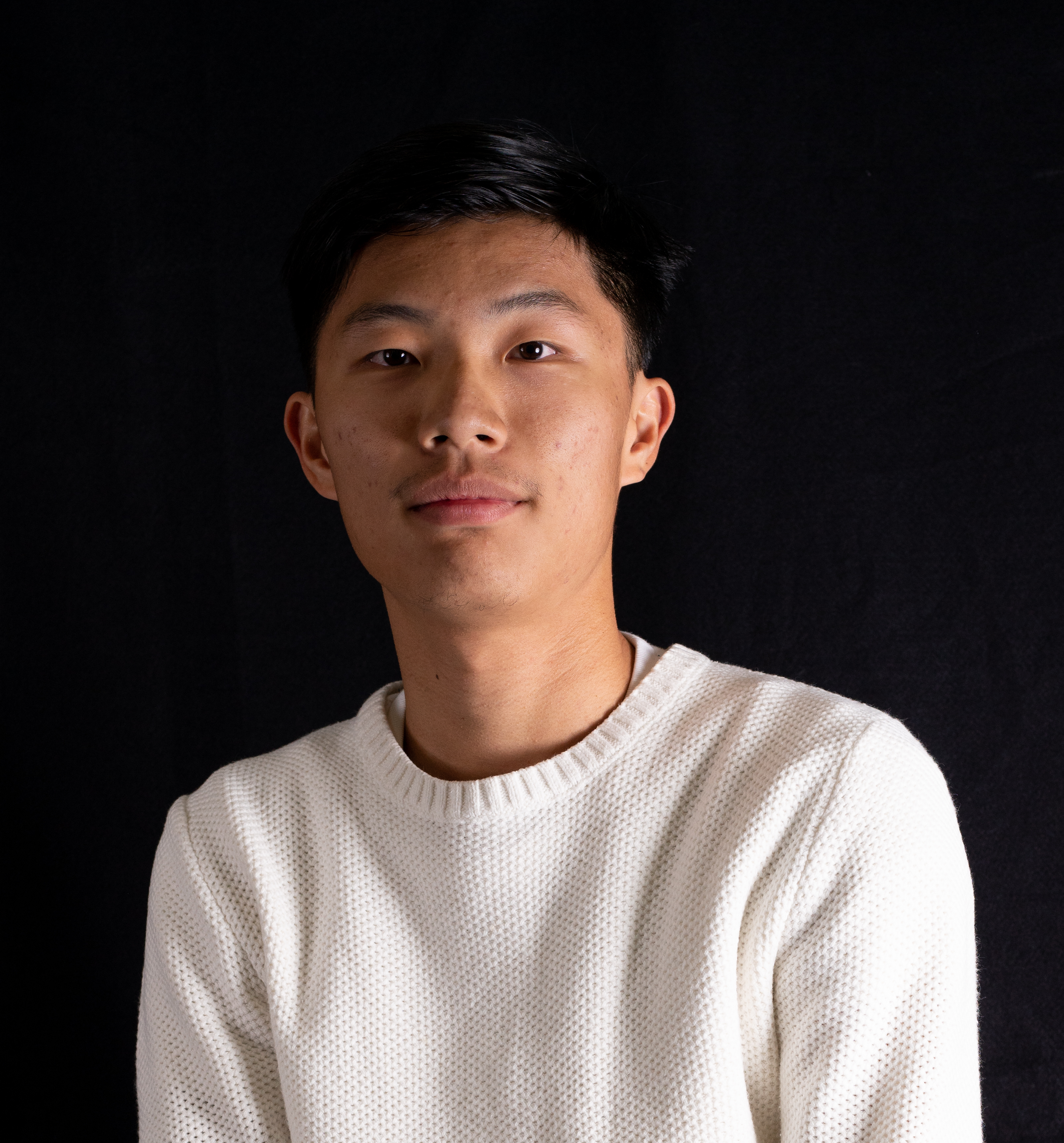
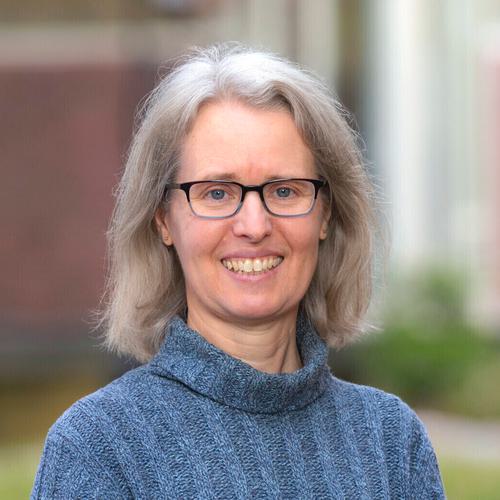
Douglas K. Hartman is a Professor in the Department of Teacher Education at Michigan State University (MSU) , with a joint appointment in Educational Psychology and Educational Technology. He holds a Ph.D. from the University of Illinois Urbana-Champaign. His research focuses on the application of technologies to enhance human learning across diverse contexts, including schools, communities, workplaces, and sports. Hartman’s work bridges educational theory and practice, emphasizing innovation in teaching methodologies and digital literacy. His research interests span educational technology , new literacies , and technology integration in learning environments. He has contributed to understanding how digital tools impact early childhood education, teacher professional development, and global educational policies. His recent studies explore AI applications in literacy assessment and generative AI’s role in artistic disciplines. Key themes in his publications include cross-cultural educational collaboration (e.g., CLIL approaches in EMI contexts), early literacy development, and teacher roles in online learning. While no awards are explicitly noted, his extensive scholarly output reflects sustained contributions to educational innovation. Hartman’s affiliation with MSU’s College of Education positions him at the forefront of interdisciplinary research, though specific grants or labs are not detailed in the provided texts. He maintains an active research agenda addressing 21st-century challenges in education through technology-driven solutions.
Piotr Przybyła is a tenure-track Assistant Professor at Universitat Pompeu Fabra in Barcelona, Spain, where he researches in the TALN (Natural Language Processing) Research Group. He maintains a significant affiliation with the Linguistic Engineering Group at the Institute of Computer Science, Polish Academy of Sciences (ICS PAS) in Warsaw, Poland, where he completed his PhD in Computer Science. Previously, he worked as a research fellow at the National Centre for Text Mining (NaCTeM) at the University of Manchester. Przybyła's research focuses primarily on Natural Language Processing with particular emphasis on misinformation detection, adversarial attacks on text classifiers, text simplification, and Polish language processing. His work bridges theoretical NLP with practical applications for credibility assessment and language understanding. He has developed innovative approaches for testing the robustness of text classifiers against adversarial examples and has made significant contributions to Polish language resources and processing tools. His recent publications demonstrate a strong trajectory in examining the robustness of NLP systems, particularly in the context of misinformation detection and credibility assessment. His work spans from foundational research on language model behavior to practical applications in Polish language processing and text simplification. The ERINIA project, funded by a prestigious Marie Skłodowska-Curie Postdoctoral Fellowship, represents a significant contribution to understanding how misinformation detection systems can be made more robust against adversarial attacks. Marie Skłodowska-Curie Postdoctoral Fellowship for the ERINIA project Computing grant of 10,000 hours on the Athena supercomputer for accelerating work in the ERINIA project Przybyła actively contributes to the NLP community through conference organization, shared tasks (such as coordinating the InCrediblAE shared task for CheckThat! 2024), and developing open-source tools like Plainifier for multi-word lexical simplification. His work demonstrates a commitment to both advancing NLP research methodology and addressing practical challenges in misinformation detection and language understanding across multiple languages, with special attention to Polish language processing.
Liang-Yuan 'Leo' Wu is a Researcher at the University of Michigan's Computer Science and Engineering department, working with Prof. Dhruv 'DJ' Jain in the Soundability Lab at the AI Laboratory. He recently completed his Master's degree in Computer Science & Engineering at the University of Michigan. His educational background includes: Master of Science in Computer Science & Engineering, University of Michigan (2022-Present) University of Edinburgh (2021) Bachelor's degree, National Taiwan University (2017-2021) Wu's research centers on human-centered AI solutions for auditory accessibility, with deep collaboration with the Deaf and Hard of Hearing (DHH) community. He develops technologies that leverage multimodal AI and large language models to interpret soundscapes, generate personalized audio descriptions, and enhance captioning systems—particularly in challenging environments like clinical settings where communication accuracy is critical. His work bridges technical innovation with real-world user needs through mixed-methods UX research. His publication trajectory reveals a strategic focus on applying cutting-edge AI models to solve accessibility gaps in sound interpretation and captioning, with increasing emphasis on healthcare applications and community-driven design principles. This represents a significant shift toward context-aware, deployable accessibility tools rather than theoretical frameworks. Wu's research impact is recognized through: BEST POSTER AWARD at ASSETS 2024 for CARTGPT Google Academic Research Award for 'Audio Scene Understanding' proposal While not yet mentoring formal advisees, Wu secures competitive research funding through awards like Google's Academic Research Award and actively collaborates with interdisciplinary teams across HCI, AI, and accessibility domains. His work in the Soundability Lab emphasizes community co-creation with DHH individuals to ensure technologies address authentic user needs rather than theoretical scenarios. The Soundability Lab serves as Wu's primary research environment, focusing on making sound universally accessible through AI-driven innovation. The lab maintains direct partnerships with the DHH community throughout the research lifecycle—from problem identification to solution validation—ensuring technologies are both technically robust and socially impactful.
Jordan Boyd-Graber is a Professor in the Department of Computer Science at the University of Maryland's College of Computer, Mathematical, and Natural Sciences. He serves as a leading researcher in Natural Language Processing with significant contributions across multiple NLP subfields. His work bridges theoretical advances with practical applications requiring human-AI collaboration. His research interests span Natural Language Processing , Question Answering systems , Human-AI collaboration , Machine Translation , and Topic Modeling . He focuses on developing systems that work effectively with humans rather than replacing them, emphasizing interpretability and user-centered design. His work often involves creating evaluation frameworks that better capture real-world utility rather than just technical metrics. His publication record shows consistent leadership in the field, with numerous papers at top venues including ACL, EMNLP, and NAACL. Recent work (2023-2024) demonstrates strong engagement with LLMs, human evaluation methodologies, and practical applications in health and translation domains. His research often involves student collaborators, indicating active mentorship. ACL Fellow (2021) Program Chair for ACL 2023 Organizer of prompt hacking competition Leader in human-centered NLP evaluation Boyd-Graber has secured substantial funding for his research, particularly in projects involving human-AI collaboration and question answering systems. His work often involves interdisciplinary teams spanning computer science, linguistics, and domain-specific applications. He has mentored numerous graduate students who have gone on to successful careers in academia and industry. He leads research groups focused on developing interpretable NLP systems that work effectively with humans, particularly in high-stakes domains like healthcare and education. His lab frequently develops novel evaluation methodologies that better capture real-world utility rather than just technical metrics.
Snigdha Chaturvedi is an Associate Professor in the Department of Computer Science at the University of North Carolina at Chapel Hill. She previously held faculty positions at the University of California, Santa Cruz, and has conducted postdoctoral research at the University of Pennsylvania and University of Illinois, Urbana-Champaign. PhD in Computer Science from University of Maryland, College Park Bachelor's degree in Computer Science and Engineering from Indian Institute of Technology (IIT) Kanpur Her research spans Natural Language Processing with emphasis on Narrative Understanding , Text Summarization , and Socially Aware Language Generation . She advances Fairness in AI through ethical NLP applications in Mental Health and Educational Technology . Recent work focuses on 2025 publications in ACL and NAACL journals, alongside 2024 contributions to EMNLP Findings and ICLR . Earlier projects include the NarraSum dataset (2022) and MOOC forum analysis (2020). Scientific recognitions include: ACM Student Research Competition First Place (2014) IBM PhD Fellowship (2014-2015, renewed in 2015) Kulkarni Summer Research Fellowship (2015) WPI STEM Faculty Launch Program Participant (2015) Her team has advised 13 PhD and Master's students with notable placements at Bloomberg, AI2, and University of Southern California. Research integrates Accessibility challenges through collaborations with Google and IBM labs.
Mahdi Soltanolkotabi is a Professor in the Departments of Electrical and Computer Engineering, Computer Science, and Industrial and Systems Engineering at the University of Southern California's Viterbi School of Engineering. He serves as the inaugural Director of the USC Center on AI Foundations for Science (AIF4S). His academic journey includes a Ph.D. in Electrical Engineering from Stanford University (2014) under Emmanuel Candes, followed by a postdoctoral position at UC Berkeley's AMPLAB mentored by Ben Recht and Martin Wainwright. Dr. Soltanolkotabi's research spans both theoretical and applied dimensions of data science. On the theoretical side, he develops mathematical foundations for modern data science, focusing on generative AI, deep learning, machine learning, signal processing, and computational imaging. His work draws upon nonconvex optimization, high-dimensional probability, statistical estimation, empirical processes, and learning theory. On the applied side, he develops reliable AI systems for healthcare and scientific applications, collaborating with physicians and domain scientists to enhance AI reliability, develop new architectures, and create rigorous evaluation frameworks. His recent publications demonstrate strong focus on medical AI applications, image reconstruction, and theoretical foundations of deep learning. His work bridges the gap between theoretical guarantees and practical implementations, particularly in medical imaging where reliability is critical. His research group has made significant contributions to understanding the behavior of nonconvex optimization algorithms in high-dimensional settings. David and Lucile Packard Fellow Information Theory Society Best Paper Award NIH Director's new innovator award Sloan Research Fellowship NSF Career award Airforce Office of Research Young Investigator award (AFOSR-YIP) Viterbi school of engineering junior faculty research award Faculty awards from Google and Amazon Dr. Soltanolkotabi has received multiple research grants including Amazon Research Awards for projects on "Artificial intelligence for fast and portable medical imaging" and "Reliable AI for Generation of Medical Reports from MRI Scans." He actively collaborates with medical professionals and leads educational outreach initiatives with local schools through USC's Viterbi Adopt-a-School program. His work demonstrates a strong commitment to translating theoretical advances into practical healthcare solutions while maintaining rigorous mathematical foundations.
Dr. Zhenghao Chen is a Lecturer in Data Science at the University of Newcastle, affiliated with the School of Information and Physical Sciences. He earned his Ph.D. from the University of Sydney in 2022, following a B.Eng. H1 degree from the same institution in 2017. Prior to his current position, Dr. Chen served as a Postdoctoral Research Fellow at the University of Sydney (2022-2024), a Research Engineer at TikTok (2024), and as a Visiting Research Scientist at Microsoft Research and Disney Research (2022-2023). Dr. Chen's educational background includes: Doctor of Philosophy, University of Sydney (2022) Bachelor of Information Technology (B.Eng. H1), University of Sydney (2017) Dr. Chen's research spans multiple domains within artificial intelligence, with particular expertise in Computer Vision, Natural Language Processing, and Machine Learning. His work in Generative AI has garnered significant recognition, with applications in both academic and industrial settings. His research interests are reflected in his Fields of Research percentages: Deep Learning (30%), Computer Vision (30%), Natural Language Processing (20%), and Multimodal Analysis and Synthesis (20%). His publications in top-tier venues like CVPR, ICCV, ECCV, and journals like IEEE TPAMI demonstrate the breadth and impact of his work. Analysis of Dr. Chen's recent publications (2022-2025) reveals a consistent focus on neural compression techniques, 3D perception, and multimodal AI systems. His work spans medical imaging (CXR bone suppression), video compression, point cloud processing, and neural surface reconstruction. A notable trend is his exploration of efficient AI systems that work well under resource constraints, as evidenced by his involvement in the EMCLR workshop. His research often bridges theoretical advances with practical applications across multiple domains. Dr. Chen has received several prestigious awards: Microsoft Research Asia StarTrack Fellowship (2025) ACM SIGMM Award for Outstanding PhD Thesis in Multimedia Computing (2024) Australia Government Research Training Program (RTP) Fellowship (2019) Google Australia Prize for Excellence in Computer Science (2017) Dr. Chen is actively involved in the academic community, serving on the Program Committee for major AI conferences including CVPR, ICCV, ECCV, SIGGRAPH, AAAI, and others. He also organizes workshops in Multimedia and ICCV conferences, and serves as a reviewer for prestigious journals. His teaching responsibilities include courses on Intelligent Visual Signal Understanding, Video Intelligence and Compression, Database and Information Management, and Computing Fundamentals at both the University of Sydney and University of Newcastle.
Catherine Wearing is an Associate Professor of Philosophy at Wellesley College, with dual affiliation in the Department of Philosophy and Cognitive & Linguistic Sciences. Her research bridges philosophy of language and cognitive science, focusing on figurative language comprehension and its implications for understanding cognition. Education B.A., McGill University Ph.D., Harvard University Research Interests Dr. Wearing investigates how humans interpret metaphorical and figurative language, challenging the pretense theory of metaphor and exploring its relationship to literal utterances. Her work examines metaphor processing in neurotypical populations and individuals with autism, and she collaborates with linguists at University College London on a dual-process model of metaphor comprehension. This research is funded by the Leverhulme Trust. Teaching She teaches courses in philosophy of mind and language (PHIL 215), epistemology and philosophy of science from feminist perspectives, and logic. She also offers a first-year seminar on friendship. Academic Affiliations Member, Workshop on Gender and Philosophy (WOGAP) at MIT Member, Wellesley Cognitive Science Reading Group
Arnab Nandi is a Professor of Computer Science and Engineering at The Ohio State University, with a courtesy appointment in Biomedical Informatics. He holds leadership roles including Steering Committee Member for the Human-in-the-Loop Data Analytics (HILDA) Workshop and has served as Workshops co-chair for SIGMOD 2025-26 and Demonstrations co-chair for SIGMOD 2024. His research focuses on bridging human interaction and data infrastructure, spanning database systems, human-in-the-loop data analytics, and next-generation query interfaces. Nandi's work emphasizes interactive data exploration through projects like DICE (Distributed Interactive Cube Exploration), GestureDB (Querying Beyond Keyboards), and Omni (Multimodal Data Exploration). His recent research explores integrating LLMs into database education, augmented reality interfaces for data analytics, and multimodal approaches to video querying. Nandi has received numerous honors including the NSF CAREER Award, Google Faculty Research Award, IEEE TCDE Early Career Award, and the University's Alumni Award for Distinguished Teaching. He was also named to Columbus Business First's '40 under 40' and became an ACM Distinguished Member in 2024. As an educator, he teaches courses including CSE 3241 (Introduction to Database Systems), CSE 5242 (Advanced Database Systems), and CSE 5251 (Introduction to Software Startups). His educational innovations include DBTutor, which integrates LLMs into database systems education. At Ohio State, Nandi co-founded the OHI/O Program, which fosters tech culture through hackathons, and The STEAM Factory, an interdisciplinary research collaboration network. Prior to academia, he was founder and CEO of Mobikit, a connected vehicles data analytics startup acquired by Azuga Inc. (a Bridgestone company). His research has been supported by the NSF and industry partnerships, with applications spanning precision agriculture (CropFusion), clinical data pipelines (ICARUS), and interactive visualization systems (Perceptvis).
Kohei Nakajima is an Associate Professor at the Department of Intelligent Mechano-Informatics, Graduate School of Information Science and Technology, The University of Tokyo. He holds concurrent positions at the Department of Creative Informatics and the Next Generation Artificial Intelligence Research Center (AI Center). As an Endowed Chair in Advanced Artificial Intelligence Education, he leads the Physical Intelligence Lab, which focuses on the intersection of soft robotics, nonlinear dynamics, and physical computing. His research interests center on Physical Reservoir Computing (PRC), a paradigm that exploits the natural dynamics of physical systems for computation, with applications in soft robotics, spintronics, and quantum machine learning. Nakajima's work demonstrates how physical systems can inherently process information without traditional digital computation, leveraging phenomena like chaos, bifurcations, and embodied intelligence. Nakajima's publications reveal a strong focus on understanding how physical systems can perform computational tasks. His recent work spans from biological applications (jellyfish cyborgs, ostrich-inspired robotics) to fundamental theoretical advances in reservoir computing. The research demonstrates how physical phenomena can be harnessed for information processing, with implications for energy-efficient computing and novel robotic control paradigms. As the organizer of the Reservoir Computing Seminar, Nakajima has built a vibrant research community exploring the nature of information processing across disciplines. His lab actively recruits graduate students and postdocs, indicating strong research momentum and institutional support for his work in physical intelligence.
Christian Unkelbach is Professor of Social Psychology at the Department of Psychology, Faculty of Humanities, University of Cologne, where he leads the Unkelbach Group. His research spans multiple domains of social and cognitive psychology with significant contributions to understanding evaluative processes. His primary research interests include Social Cognition, Evaluative Judgments, Information Ecologies, Stereotypes and Prejudice, Evaluative Learning, Fluency Effects, and Sport Psychology. Unkelbach's work examines how humans process evaluative information in social contexts, with particular focus on the truth-by-repetition effect , evaluative conditioning , and cognitive ecological frameworks that explain why certain information patterns dominate social cognition. His research demonstrates how repetition increases belief in information , how attributes become associated through mere pairings , and why positive information is processed more efficiently than negative information. Analysis of his recent publications reveals a consistent trajectory examining the relativity of social cognition , truth effects across contexts , and metacognitive awareness of cognitive biases . His work increasingly integrates cross-linguistic perspectives and examines real-world applications in media consumption and social judgment. Honorary Doctorate from UCLouvain (2025) ISCON Best Paper Award 2020 Speaker of DFG Research Unit FOR2150 'Relativity in Social Cognition' (2017-2021) Emmy Noether Research Grant (DFG, 2009-2013) Feodor Lynen Research Scholarship (Alexander von Humboldt Foundation) Fulbright Scholarship Unkelbach has advised numerous doctoral researchers including Andreas Miculka, Anne Irena Weitzel, Felix Speckmann, Lea Sperlich, and Tabea Zorn. His research group has secured multiple C-SEB grants for projects examining social cognition phenomena. The Unkelbach Group maintains active collaborations with international researchers across Europe and North America, with recent work funded through the DFG Research Unit on Relativity in Social Cognition. The Unkelbach Group laboratory at Richard-Strauss-Str. 2 in Cologne comprises postdoctoral researchers, doctoral candidates, and student assistants working on experimental paradigms examining evaluative learning, truth effects, and social judgment processes. Current projects investigate cross-linguistic truth effects, metacognitive monitoring of repetition effects, and ecological validity in social cognition frameworks.
Corina Pasareanu is an ACM Fellow and IEEE ASE Fellow serving as a Principal Scientist at Carnegie Mellon University's CyLab Security and Privacy Institute and Technical Professional Leader for Data Science at NASA Ames Research Center through KBR. Her work bridges formal methods, software verification, and artificial intelligence to ensure the safety and security of complex systems, particularly autonomous systems and machine learning applications. Dr. Pasareanu received her academic training at: Ph.D. in Computer Science, Kansas State University (2001) M.S. in Computer Science, University Politehcnica of Bucharest (1995) B.S. in Computer Science, University Politehcnica of Bucharest (1994) Her research focuses on developing formal verification techniques that can provide mathematical guarantees about the behavior of complex software systems. She specializes in applying model checking, symbolic execution, and compositional verification methods to challenges in autonomy, security, and AI safety. Her recent work addresses the verification of systems incorporating machine learning components, particularly neural networks used in safety-critical applications like autonomous vehicles. She investigates how to ensure these systems behave correctly even when their perception components have uncertainties or are subject to adversarial attacks. Analysis of her recent publications shows a strong trend toward verifying AI and machine learning systems, particularly focusing on neural networks in autonomous systems. Her work increasingly addresses the challenges of Large Language Models, examining both their vulnerabilities to attacks and methods to defend against them. She also continues to advance traditional software verification techniques while adapting them to modern programming languages and paradigms. Dr. Pasareanu has received numerous prestigious awards recognizing her contributions to the field: ACM Fellow IEEE ASE Fellow ETAPS Test of Time Award (2021) ASE Most Influential Paper Award (2018) ESEC/FSE Test of Time Award (2018) ISSTA Retrospective Impact Paper Award (2018) ACM Impact Paper Award (2010) ICSE 2010 Most Influential Paper Award (2010) As an advisor, Dr. Pasareanu mentors several PhD students and postdoctoral researchers, often in collaboration with other faculty members at CMU. Her students focus on cutting-edge research at the intersection of formal methods and AI safety. Her research is supported by substantial funding from diverse sources including NSF, DARPA, NASA, AWS, and industry partnerships. She leads multiple projects focused on AI security, formal verification of neural networks, and software analysis techniques. Dr. Pasareanu also plays a significant role in the broader research community, serving as Program/General Chair for major conferences including ICSE 2025, and as an associate editor for IEEE TSE and STTT. Dr. Pasareanu leads research teams working on projects like "Trinity: Neurosymbolic Learning and Reasoning" (DARPA) and "HUGS: Human-Guided Software Testing and Analysis" (NSF). Her work often involves interdisciplinary collaboration between computer scientists, formal methods experts, and domain specialists to address complex safety challenges in autonomous systems.
Fabrizio Falchi is a researcher at the Artificial Intelligence for Media and Humanities (AIMH) Lab of the Institute of Information Science and Technologies (ISTI) within Italy's National Research Council (CNR). He also maintains an associate position at the Biorobotics Institute of Scuola Superiore Sant'Anna. His work focuses on developing advanced multimedia retrieval systems, with the VISIONE platform being his most notable contribution, which has won international competitions including the Video Browser Showdown in 2024 and placed second in 2023. Falchi's educational background includes: Ph.D. in Information Engineering from University of Pisa (Italy) Ph.D. in Informatics from Faculty of Informatics of Masaryk University of Brno (Czech Republic) M.B.A. from Scuola Superiore Sant'Anna in Pisa His research spans deep learning, convolutional neural networks, deep features extraction, similarity search algorithms, distributed indexing systems, multimedia information retrieval, computer vision applications, and peer-to-peer systems. Falchi has made significant contributions to fine-grained visual understanding, cross-modal retrieval (particularly image-text matching), and robustness of deep learning systems against adversarial attacks. His work demonstrates a strong focus on practical applications of these technologies, particularly in video retrieval systems and safety monitoring solutions. Analysis of Falchi's recent publications reveals a strong focus on video and image retrieval systems, with the VISIONE platform being central to his work. His research shows increasing emphasis on fine-grained understanding in computer vision, cross-modal retrieval, and addressing practical challenges like cross-resolution face recognition. Recent work demonstrates innovation in making these systems more efficient through techniques like knowledge distillation (ALADIN) and leveraging virtual worlds for training data. His publications consistently bridge theoretical advances with practical applications in surveillance, safety monitoring, and multimedia search. Falchi's work has received significant recognition: Best paper award at CBMI 2024 for 'Is ClLIP the main roadblock for fine-grained open-world perception?' VISIONE 2024 won the Video Browser Showdown competition in Amsterdam VISIONE obtained second place at Video Browser Showdown 2023 in Bergen Best Paper Award for 'Learning Safety Equipment Detection using Virtual Worlds' at CBMI 2019 Falchi collaborates extensively with researchers at ISTI-CNR, particularly within the AIMH Lab. His work on VISIONE involves collaboration with Giuseppe Amato, Paolo Bolettieri, Fabio Carrara, Claudio Gennaro, Nicola Messina, Lucia Vadicamo, and Claudio Vairo. As co-chair of Ital-IA 2023, the 3rd National Conference on Artificial Intelligence, he plays an active role in the academic community. He is a member of ACM (since 2012), the Computer Vision Foundation, the Italian Association for Computer Vision Pattern Recognition and Machine Learning (CVPL), and the CINI Lab on Artificial Intelligence and Intelligent Systems. Falchi is a key member of the Artificial Intelligence for Media and Humanities (AIMH) Lab at ISTI-CNR, where he leads research on video retrieval systems. The lab has developed the award-winning VISIONE platform, which combines multiple scientific results in content-based video retrieval. His team focuses on developing systems that enable users to search for target videos using textual prompts, drawing objects and colors, or images as query examples. The lab's work demonstrates strong interdisciplinary collaboration, bridging computer science with practical applications in media, safety monitoring, and urban environments.
Dr. Hua Xu is the Robert T. McCluskey Professor of Biomedical Informatics and Data Science at Yale School of Medicine. He serves as Vice Chair for Research and Development in the Department of Biomedical Informatics and Data Science and as Assistant Dean for Biomedical Informatics at Yale School of Medicine. Dr. Xu leads the Clinical NLP Lab and is Chair of the NLP working group at the Observational Health Data Sciences and Informatics (OHDSI) program. Dr. Xu received his PhD in Biomedical Informatics from Columbia University, an MS in Computer Science from New Jersey Institute of Technology, and a BS in Biochemistry from Nanjing University. Dr. Xu is a renowned researcher in clinical natural language processing (NLP), having developed novel algorithms for important clinical NLP tasks such as entity recognition and relation extraction. His work has been top-ranked in over a dozen international biomedical NLP challenges. He has developed CLAMP, a comprehensive clinical NLP toolkit that has been successfully commercialized and adopted by hundreds of healthcare organizations worldwide. His research focuses on applying NLP technologies to diverse clinical and translational studies to accelerate clinical evidence generation using electronic health records data. Recently, he has been utilizing NLP to harmonize metadata of biomedical digital objects to promote FAIR principles in biomedicine, and his lab is actively working on developing large language models (LLMs) for diverse biomedical applications. Dr. Xu's recent publications demonstrate a clear trend toward leveraging large language models for biomedical applications. His work spans from benchmarking LLMs for clinical NLP tasks to developing specialized architectures like BiomedRAG (retrieval augmented LLMs for biomedicine). His research addresses critical healthcare challenges including adverse event extraction, oncology clinical trial analysis, and EHR-based association studies, showing how NLP can bridge the gap between unstructured clinical text and actionable medical insights. Dr. Xu's lab has achieved top rankings in numerous NLP challenges, including multiple #1 positions in i2b2 Temporal information extraction, SemEval Disease-modifier extraction, BioCREATIVE Chemical-induced disease extraction, and other prestigious competitions. His contributions to clinical NLP have significantly advanced the field's ability to extract meaningful information from complex medical texts. As the leader of the Clinical NLP Lab at Yale, Dr. Xu oversees research that forms a complete ecosystem: developing novel NLP methods, building robust software tools, and applying these technologies to clinical and translational research. His lab's work closes the loop between methodological innovation and practical healthcare applications, ensuring that advances in NLP directly benefit patient care and medical research.
Shuhao Fu is a Program Postdoctoral Fellow at the Santa Fe Institute (SFI) researching the intersection of machine learning and cognitive science. He completed his Ph.D. in Psychology at UCLA under advisors Hongjing Lu and Ying Nian Wu, following a B.S. in Computer Science and Mathematics from Hong Kong University of Science and Technology. His research examines human-like relational reasoning in AI systems through cognitive modeling and computational approaches. Research focuses on: Bridging human-machine reasoning gaps via analogical mapping Developing explicit relational representations in vision models Structural cognitive modeling for compositional understanding Multimodal reasoning and scene interpretation Relational knowledge representation in biological and artificial systems Publication trends show concentrated work in computational cognitive science (2021-2025), with evolving focus from visual analogy fundamentals to applications in 3D recognition, social interaction modeling, and mental health diagnostics. Recent work demonstrates increased emphasis on transformer architectures, multimodal integration, and human-AI comparative studies. Professional experience includes research internships at Google X and Mineral.ai, with prior affiliation at Johns Hopkins University's CCVL lab under Alan Yuille. Currently serves as reviewer for ICML, ICCV, and Cognitive Science Society conferences.