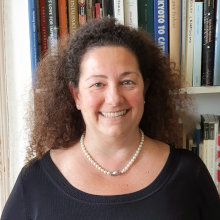
Jacob Eyferth is an Associate Professor at the University of Chicago, jointly appointed in the Department of East Asian Languages and Civilizations, the Department of History, and the College. His research focuses on the social and cultural history of twentieth-century China, particularly rural communities, gender dynamics, and the intersection of technology and everyday life. Key research themes include the impact of industrialization, collectivization, and revolution on non-elite populations, with an emphasis on rural women's labor and cultural resistance. His current project explores cotton production, clothing, and gender during China's socialist era. Eating Rice from Bamboo Roots (2009) How China Works (2006) Rural Development in Transitional China (2004) He received the 2011 Joseph Levenson Prize for his first book. Eyferth has taught courses on topics such as class inequality, everyday life under socialism, and revolutionary China, and has held postdoctoral fellowships at Oxford, Harvard, and Rutgers.
Mark Liberman is a Trustee Professor at the University of Pennsylvania , holding appointments in the Department of Linguistics and Department of Computer and Information Science . He serves as Director of the Linguistic Data Consortium and Faculty Director of Ware College House . His career spans linguistics, speech technology, and computational methods. Education: Harvard University (1965-1969), MIT (M.S. 1972, Ph.D. 1975) Professional Experience: AT&T Bell Laboratories (1975-1990), University of Pennsylvania (1990-present) His research interests include: Corpus-based Phonetics : Analyzing speech patterns via large-scale datasets. Clinical Applications : Developing speech biomarkers for neurodegenerative diseases. Tonal Phonology : Studying lexical tone and intonation in languages like Yoruba and Mandarin. Formal Annotation Models : Creating frameworks for linguistic data standardization. Recent publications highlight automated speech analysis, cross-linguistic prosody, and digital biomarkers for conditions like ALS-FTD and Alzheimer’s. His collaborations span computational linguistics , neurology , and cognitive science . Scientific awards include the IEEE James L. Flanagan Award (2017), Antonio Zampolli Prize (2010), and fellowships from the AAAS and Linguistic Society of America . He advises PhD students May Chan and Jonathan Him Nok Lee and contributes to editorial boards for journals like Cognition and Annual Review of Linguistics . His work bridges speech science , language technology , and neurocognitive research .
Andrew Lynch serves as Professor and Associate Dean for Program Development in the Department of Modern Languages & Literatures within the College of Arts and Sciences at the University of Miami. His academic leadership extends beyond teaching responsibilities to include significant administrative contributions to program development across the institution. Lynch's research interests center on sociolinguistics with particular focus on Spanish language dynamics in Miami, heritage language socialization, bilingualism, and language ideology. His work examines how language functions within specific social contexts, especially in workplace environments where Spanish heritage speakers navigate linguistic demands. He investigates the complex interplay between language, identity, and social structures in postmodern urban settings, with special attention to the Cuban diaspora experience in South Florida. His publication record reveals consistent scholarly engagement with heritage language education, Spanish language variation, and the sociolinguistic landscape of global cities. Lynch's research demonstrates how language practices in Miami reflect broader patterns of linguistic adaptation and resistance within diasporic communities. His work often addresses the tension between linguistic heritage and social integration, examining how language ideologies shape educational practices and community identity. Lynch's scholarly contributions span multiple formats, including single-authored books, co-authored publications, handbook chapters, and journal articles in both English and Spanish. His work frequently appears in high-impact sociolinguistics and language education journals, reflecting his interdisciplinary approach that bridges theoretical linguistics with practical educational implications.
Claire Bowern is Professor of Linguistics at Yale University specializing in historical linguistics, language documentation, and Australian Indigenous languages. Her research employs computational phylogenetics to study language evolution and supports language revitalization through digital archives and fieldwork methodologies. Recent publications address: Phylogenetic signal in lexical evolution across language families Digital infrastructure for endangered language documentation (FLEx software analysis) Decolonizing linguistics pedagogy and research practices Her work consistently integrates linguistic, anthropological, and computational approaches to analyze language diversity and change. She contributes to global databases including Grambank and D-PLACE, examining links between linguistic, cultural, and environmental patterns.
Deva Kannan Ramanan is a Professor at the Robotics Institute of Carnegie Mellon University , focusing on computer vision , machine learning , and human-centered robotics . His work bridges neurorobotics and visual perception , with applications in autonomous driving and 4D reconstruction . Research Topics Computer Vision 3-D Vision and Recognition Visual Servoing Neurorobotics Human-Centered Robotics Graphics & Creative Tools His recent publications in CVPR , ICRA , and ICCV emphasize 4D human reconstruction , neural rendering , and vision-language models for autonomous systems. He serves as General Chair of CVPR 2027 and Program Chair of CVPR 2018 , with IARPA funding for aerial-ground rendering (2023-2027). Current students include PhD candidates Sally Chen, Kangle Deng, and Zhiqiu Lin, while past advisees like Arun Vasudevan and Olga Russakovsky now hold positions at Amazon and Meta respectively.
Pieter d'Hoine serves as Professor and Vice Dean of Education at KU Leuven's Higher Institute for Philosophy. He is affiliated with the Wulf Mansion Centre for Ancient, Medieval and Renaissance Philosophy and LECTIO – KU Leuven Institute for the Study of Textual Transmission. Additional institutional roles include membership on the Board of the Institute for Living Languages, HIW Faculty Council, and Philosophy Program Oversight Committees. His research centers on Ancient Philosophy with emphasis on Neoplatonism, particularly Proclean metaphysics, logical structures in Platonic/Aristotelian commentaries, and mechanisms of philosophical canon formation. He investigates knowledge transmission from Greek-Roman antiquity through medieval and Renaissance scholarship, integrating digital humanities methodologies to analyze textual evolution and conceptual continuity across historical periods. Recent publications (2024) exhibit concentrated focus on Proclus' metaphysical frameworks, including predication theory, modes of being, and theological elements within Platonic exegesis. His work bridges textual criticism with systematic philosophy, examining how ancient commentators shaped enduring philosophical paradigms through citation practices and logical innovation in works like the Elements of Theology . No major scientific awards are documented in the provided materials. He actively supervises doctoral research, including G.J. Ruz Troncoso's analysis of Proclus' argumentative structures and S-H. Yang's study of Aristotelian metaphysics. Current funding supports eight major projects: "Een nieuw model voor de editie van antieke filosofische fragmenten" (2025-2031) as Co-promotor "De filosofische canon en de citaties van Plato en Aristoteles" (2024-2028) as Promotor "Rechtvaardigheid voor dieren" (Justice for Animals, 2024-2028) as Promotor "De mechanica van Canonvorming" (Canon Formation Mechanics, 2024-2028) as Promotor His research ecosystem operates through the Wulf Mansion Centre and LECTIO institute, which coordinate international collaborations on premodern textual transmission, utilizing digital tools to map philosophical concept evolution across millennia.
Jessica Brown is a Professor at the University of St Andrews within the School of Philosophical, Anthropological & Film Studies . Her work bridges epistemology, moral responsibility, and philosophical methodology, with a focus on both individual and collective epistemic practices. Institution: University of St Andrews School: Philosophical, Anthropological & Film Studies Research Outputs: 52 Research Overview Prof Brown's research spans three core domains: (1) Epistemology – examining evidence, knowledge transmission, fallibilism vs. infallibilism, contextualism, and norms of assertion; (2) Moral/Epicemic Responsibility – analyzing blame attribution for beliefs and actions at individual and group levels; (3) Philosophical Methodology – critiquing the role of intuitions, thought experiments, and ordinary language in philosophical inquiry, while addressing scepticism about the discipline's validity. Publication Trends Her articles reflect evolving focus from foundational epistemological concepts (2013-2018) to collective epistemic responsibility (2020-2023). Topics include group motivation, epistemic blame, and fallibilist frameworks, often intersecting with social philosophy and philosophical psychology. Scientific Recognition Fellow, Royal Society of Edinburgh (2018) Mentorship & Funding Supervised: 14 postgraduate students/researchers Major Grants: Leverhulme Trust Fellowship, Royal Society of Edinburgh Workshop Award, AHRC Standard Projects
Prof. Dr. Claudine Moulin is a Full Professor of Historical Linguistics at the Department of German Studies, University of Trier. She co-directs the Trier Center for Digital Humanities and serves as Vertrauensdozentin der Deutschen Forschungsgemeinschaft. With academic roots in Brussels and Bamberg, she completed her PhD in 1990 and Habilitation in 1999 at the University of Bamberg. Her research spans medieval and early modern languages, manuscript studies, digital humanities, and Luxembourgish linguistics. As a leading scholar in historical linguistics, Moulin's work explores urban language history, phraseology, and cultural knowledge transmission through manuscripts. She has directed major digital humanities projects like LexicoLux and Cartul@rium, while pioneering digital codicology methods for medieval texts. Her research combines traditional philology with computational approaches. Her academic accolades include the Akademiepreis Rheinland-Pfalz (2010), Landesverdienstorden (2014), and the Verdienstkreuz am Bande (2025). She has held visiting professorships at Sorbonne, EHESS Paris, and EPHE, and received fellowships from the Humboldt Foundation and European Science Foundation. Notable Academic Roles: Co-founder and Chair of DHd (Digital Humanities in German-speaking countries) Founding member of Trier Center for Language and Communication Member of German Historical Institute Paris scientific board Advisory positions at Austrian Center for Digital Humanities and Herzog August Bibliothek Her editorial leadership includes chief editorship of Sprachwissenschaft journal and co-editorship of Germanistische Bibliothek monograph series. She has mentored over 40 graduate students in topics ranging from medieval marginalia to urban language studies.
Andrew Stephen is the L’Oréal Professor of Marketing and Deputy Dean for Faculty and Research at Saïd Business School, University of Oxford. He leads the Marketing faculty and directs the Oxford Future of Marketing Initiative, focusing on emerging technologies like AI and data-driven strategies in marketing, media, and advertising. His research explores digital marketing, consumer behavior, and the impact of new technologies, earning him recognition as a top global marketing scholar. His academic contributions span leading journals such as the Journal of Consumer Research and Harvard Business Review. He serves as editor of the Journal of Consumer Research, co-editor of the International Journal of Research in Marketing, and actively engages with industry through councils like the Mobile Marketing Association’s Brand Safety Council. Teaching responsibilities include marketing curriculum oversight and courses across MBA, Executive MBA, and DPhil programs, focusing on digital transformation, marketing analytics, and the future of marketing. His work bridges academic rigor with industry relevance, addressing challenges in tech-enabled marketing and global brand strategies. Awards: Top marketing academic in the UK (AMA), featured in Poets & Quants’ top 40 under 40, multiple research excellence awards. Labs/Initiatives: Oxford Future of Marketing Initiative, fostering collaborations with leading companies to tackle industry challenges. Grants/Advising: Extensive industry partnerships and academic grants not explicitly detailed in the text.
Andrew Connor is a Senior Lecturer in Archaeology and Ancient History at Monash University. He specializes in Ptolemaic and Roman Egypt, papyrology, and the social and religious history of ancient Egyptian communities. His research focuses on Egyptian temples during the Roman period, ancient economic practices, and the editing and publication of documentary papyri. Connor has particular expertise in the Fayum depression and Dakhleh Oasis regions. Connor's publications demonstrate a consistent focus on Egyptian religious institutions, economic systems, and textual evidence from archaeological sites. His recent work includes publications on temple administration, Greek papyri, and digital archaeology. He has received multiple teaching awards including the Faculty Citation for Outstanding Contribution to Student Learning (2017), Faculty Citation for Overseas Programs (2018), and Vice Chancellor's Citation for Outstanding Contribution to Student Learning (2018). Connor teaches courses on Greek and Roman history, archaeology, and ancient languages at both undergraduate and postgraduate levels. He serves as Honours Coordinator for the School of Philosophical, Historical, and International Studies.
Bernard (Ben) Arps is Professor of Indonesian and Javanese Language and Culture at Leiden University's Institute for Area Studies within the Faculty of Humanities. His research focuses on the interface of humanities and humanistic social sciences, particularly examining how language, performance, texts, and media contribute to 'worldmaking' - the processes through which people and institutions shape realities for themselves and others. Geographically centered on Southeast Asia with a core focus on Indonesia and the Malay world, Arps specializes in Java and its diasporas. His scholarly interests include religious encounters (particularly between Islam and local vernacular traditions), philological theory as applied to performance and new media, narrativity in song and audio media, and the theoretical foundations of area studies. Arps has conducted extensive fieldwork in Indonesia since 1979, totaling over four years, primarily in Central and Eastern Java regions including Surakarta, Yogyakarta, Banyuwangi, and Cilacap. His current book projects explore the Quest narrative pattern across religious traditions (focusing on Dewa Ruci), the sociopolitical formation of languages through media and performance (using Osing in Banyuwangi as a case study), and the Asian Muslim epic of Amir Hamza. Arps teaches primarily in Leiden's BA programme in South and Southeast Asian Studies, BA in International Studies, and MA programme in Asian Studies. Former chair of the Department of Languages and Cultures of Southeast Asia and Oceania (1995, 1999/2000, 2003-2006, 2008) Previously taught at School of Oriental and African Studies, University of London (1988-1993) Held visiting positions at NIAS (2001/02), ANU (2005), University of Michigan (2006/07), NUS/ARI (2011/12), UNS (2017), and IIAS (2018/19) Arps has supervised doctoral, Master's, and Bachelor's dissertations across Indonesian, Malay, Singapore, Cambodian, and Thai studies, with particular expertise in Javanese, Sundanese, Betawi, Balinese, Sasak, Mentawai, and Minangkabau cultures and languages. His work spans religion, performance, media, literature, sociolinguistics, lexicography, and education.
Michael Kinski serves as Professor of Japanese History of Thought and Japanology at Goethe University Frankfurt within the Faculty of Languages and Cultural Studies, concurrently leading the Institute for East Asian Philologies as Acting Director since 2013. His academic trajectory spans prestigious German institutions including Humboldt University Berlin (1998-2009) and Tuebingen University (1991-1998), with prior research engagement at Japanese universities including Tokyo University and Ritsumeikan. He completed his doctoral studies at Tuebingen University in 1991 following an M.A. at Bochum University (1987), with formative research periods in Japan at Nagoya University, Tokyo University, and Ritsumeikan University. His scholarly foundation centers on Japanese intellectual history, particularly the Edo period. Kinski's research program systematically examines Japanese societal structures through interconnected domains: Historical conceptions of childhood and developmental frameworks Formalized etiquette systems as cultural expression Material culture studies focusing on food practices and consumption Scientific knowledge transmission via Rangaku (Dutch Studies) Social value systems reflected in travel literature Intellectual history of Early Modern Japan No scientific awards were documented in source materials. Information regarding student supervision, research grants, laboratory facilities, or collaborative teams was not provided in the available texts.
Professor Todd Squires is a distinguished faculty member in the Department of Chemical Engineering at the University of California, Santa Barbara, within the Robert Mehrabian College of Engineering. His research focuses on the fundamental principles of transport phenomena as applied to interfaces, membranes, and complex fluids, employing theoretical, computational, and experimental approaches to address significant challenges in micro-scale fluid mechanics. Dr. Squires' educational background includes: BS in Physics, UCLA (1995) BA in Russian Language and Literature, UCLA (1995) PhD in Physics, Harvard University (2002) His research interests span microfluidics and electrokinetics, active and nonlinear microrheology of complex materials, polymer dynamics and sensors, with particular emphasis on non-linear electrokinetic flows, interfacial rheology, and the self-assembly of nanostructured materials. His work bridges fundamental fluid mechanics with practical applications in microfluidic devices, energy storage, and biomedical systems, demonstrating the versatility of this fascinating field. Analysis of Professor Squires' recent publications reveals a consistent focus on interfacial phenomena, with particular attention to the rheological properties of fluid interfaces, particle dynamics in complex fluids, and novel microfluidic techniques for measuring and manipulating these systems. His research demonstrates strong interdisciplinary connections between chemical engineering, physics, and materials science, with applications spanning energy storage, biomedical engineering, and environmental systems. Professor Squires has received numerous prestigious awards and honors: 2018 Robert W. Vaughan Lecture in Chemical Engineering, Caltech 2015 Elected Fellow of the American Physical Society 2013 Mid-Career Award, American Electrophoresis Society 2012 The Dudley Saville Memorial Lecture at Princeton 2010 Pierre Gilles de Gennes Prize 2010 Allan P. Colburn Memorial Lectureship, University of Delaware 2009 Francois Frenkiel Award for Fluid Mechanics 2009 Camille Dreyfus Teacher-Scholar Award 2008 Beckman Young Investigator 2007 NSF CAREER Award 2005 'Rising Star' - Chronicle of Higher Education As principal investigator of the Squires Group, Professor Squires leads a dynamic research team that combines experimental, theoretical, and computational approaches to investigate transport phenomena at interfaces. His work has been supported by major funding agencies including the National Science Foundation, with his CAREER award indicating early recognition of his potential as both researcher and educator. While specific grant details aren't provided in the source material, his extensive publication record and prestigious awards suggest robust and sustained research funding. The Squires Group maintains state-of-the-art laboratory facilities for studying micro-scale fluid mechanics, including specialized equipment for microrheology measurements, microfluidic device fabrication, and interfacial characterization. Their research environment fosters collaboration across disciplines, with connections to materials science, physics, and biomedical engineering researchers at UCSB and beyond.
Dr. Silvia VESCO is an Associate Professor in the Department of Asian and North African Studies at Ca' Foscari University of Venice, where she specializes in Japanese art history, particularly Edo-period visual culture, ukiyo-e prints, illustrated books, and the works of Katsushika Hokusai. She is actively involved in research, teaching, and cultural curation, with a strong focus on Italian collections of Japanese art and cross-cultural artistic dialogues between Japan and the West. Education: PhD in History of Indian and East Asian Art, Ca' Foscari University of Venice (1999) Master in Art & Archaeology, SOAS, University of London (1995) Degree in Oriental Languages and Literatures, University of Venice (1993, with honors) Her research interests encompass Japanese aesthetics, museum studies, and the global reception of Japanese art. She has led major digitization projects for the Museum of Oriental Art in Venice and contributed to the development of its new museological framework. Her scholarly work reveals a consistent focus on Hokusai, Edo-period print culture, and the philosophical dimensions of Japanese visual forms. The recent publications highlight a deep engagement with Hokusai’s pedagogical works, the aesthetics of emptiness, and contemporary reflections on nature in post-Fukushima Japan. Her interdisciplinary approach bridges art history, cultural studies, and museum practice. Scientific Recognition: Finalist, Premio Nazionale per la divulgazione scientifica 'Giancarlo Dosi' (2020) Japan Foundation Fellowship (1997) Postgraduate scholarship from the University of Venice (1994) She has supervised numerous MA theses, served on PhD committees, and mentored students in Japanese art history. Her research has been supported by grants from the Japan Foundation and institutional collaborations with museums and cultural centers. She is a referee for VQR, Edizioni Ca' Foscari, and international journals, and serves on the scientific committees of several academic and museum publications. Labs and Teams: Scientific Committee, Museum of Oriental Art, Ca' Pesaro, Venice Scientific Committee, Edizioni Ca' Foscari Coordinator, Scientific Committee for Ca' Foscari Japanese Studies, Arts and Literature Member of the editorial board of 'Venezia Arti' and 'Quaderni del Polo museale del Veneto'
Mohsen Goudarzi is an Associate Professor of Islamic Studies at Harvard Divinity School (HDS), part of Harvard University. He joined the faculty in 2021 after teaching at the University of Minnesota. His academic background includes a PhD from Harvard University and an MA from Stanford University. His research focuses on the Qur’an and early Islamic history, employing literary, linguistic, comparative, and historical approaches. Key interests include the Qur’an’s role in Late Antique religious developments, Islamic exegetical traditions (tafsīr), and theological frameworks (kalām). His current projects explore the Qur’anic worldview’s interpretation and the significance of Meccan cultic rituals to early Islamic identity. He has received teaching excellence awards, including a certificate from the University of Minnesota’s Center for Educational Innovation and three teaching distinctions from Harvard’s Office of Undergraduate Education. Research outputs include groundbreaking articles on Qur’anic exegesis, cultic practices, and interreligious dynamics. Notable works analyze the Qur’an’s engagement with Abrahamic traditions, ritual practices in Mecca, and the textual history of early Islamic manuscripts. His collaborative work on the Ṣan‘ā’1 codex redefined understandings of early Qur’anic canonization. Teaching spans HDS and Harvard’s Faculty of Arts and Sciences (FAS), covering Islamic studies, Qur’anic studies, and religious history. He advises students in HDS programs and contributes to interdisciplinary initiatives at the intersection of theology, history, and textual criticism.