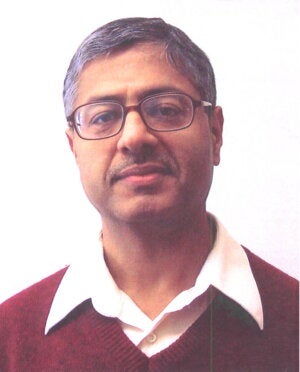
Jamie Callan is a Professor at Carnegie Mellon University's Language Technologies Institute (School of Computer Science), where he leads research in Information Retrieval and Neural Search Architectures . He teaches advanced courses on search engine design and mentors students in multiple programs. Research Focus: Federated retrieval, knowledge graph integration in search, ClueWeb dataset development, and neural approaches to document ranking Leadership: Past SIGIR Treasurer/Chair, Co-founding Editor of Foundations and Trends in IR, former TOIS Editor-in-Chief His recent work explores: Neural Retrieval: Latent vocabulary for sparse systems, hypothetical documents for dense vector retrieval Dataset Innovation: Maintenance and distribution of ClueWeb09, ClueWeb12, and ClueWeb22 datasets Search Efficiency: Selective search architectures with 90% reduced computational costs Scientific Recognition: International ACM SIGIR Conference Leadership Co-founding Editor-in-Chief, Foundations and Trends in IR Former Editor-in-Chief of ACM TOIS Dr. Callan's Lemur Project has produced Indri/Galago search engines and supported TREC evaluations through dataset contributions.
Prof. Dr. Alexander Meyer-Gohde is a Professor of Financial Markets and Macroeconomics at Goethe University Frankfurt’s Faculty of Economics and Business, and a key figure at the Institute for Monetary and Financial Stability (IMFS). His research spans macroeconomic theory, macro-finance, numerical methods, and econometrics, focusing on DSGE models, nonlinear dynamics, and the impact of risk and uncertainty on monetary policy. Education : PhD in Economics (Technische Universität Berlin), MA in Economics and Management (Humboldt-Universität zu Berlin), BA in Language, Literature & Culture (Colorado State University). Research Interests : Macroeconomics, macro-finance, numerical methods, recursive preferences, stochastic volatility, and model uncertainty. Grants : DFG Individual Research Grant (2021-2024) and MatlabMakro DigiTeLL Grant (2022-2023). Publications : Focus on DSGE model solution methods, numerical stability, term premia, and nonlinear dynamics in macroeconomics. Students : Supervises job market candidates Johanna Saecker and Mary Tzaawa-Krenzler. Leadership : Chair of Financial Markets and Macroeconomics at Goethe University (2018–present) and coimplementation of the IMFS “Project Monetary and Financial Stability”.
Zachary Tatlock is an Associate Professor at the Paul G. Allen School of Computer Science & Engineering at the University of Washington, where he leads the Programming Languages & Software Engineering Group (PLSE) and the SAMPL Group. His research spans programming languages, formal verification, compilers, and computational fabrication. He is also an Amazon Scholar with AWS's Automated Reasoning Group and previously advised OctoML. Tatlock's work bridges theoretical foundations with practical systems, focusing on making it easier to write tricky code while ensuring correctness through rigorous proofs and measurements. PhD in Computer Science & Engineering, University of California, San Diego (2014) Thesis: Reducing the Costs of Proof Assistant Based Formal Verification Advisor: Sorin Lerner BS in Computer Science (Honors) and Mathematics, Purdue University (2007) Professor Tatlock's research focuses on the intersection of programming languages, formal methods, and systems. His work in compilers and formal verification aims to make it easier to write tricky code while ensuring correctness through rigorous proofs. He explores computational fabrication techniques that bridge digital design with physical manufacturing. His recent work on equality saturation (via the egg framework) has transformed program optimization and synthesis. Tatlock also investigates floating-point numerics, distributed systems verification, and hardware/software co-design, always seeking to balance theoretical rigor with practical implementation. Tatlock's recent publications demonstrate a strong focus on equality saturation techniques (egg framework), computational fabrication, and verified systems. His work increasingly integrates machine learning with program analysis and synthesis. There's a clear trajectory toward more practical applications of formal methods in real-world systems, particularly in numerical computing and fabrication. His research group has made significant contributions to e-graph technology, floating-point accuracy, and the verification of distributed systems. Distinguished Paper Award for Rewrite Rule Inference Using Equality Saturation (OOPSLA 2021) Spotlight Paper Award for Dynamic Tensor Rematerialization (ICLR 2021) Distinguished Paper Award for egg: Fast and Extensible Equality Saturation (POPL 2021) Faculty Appreciation for Career Education & Training (FACET) Award (2020) NSF CAREER Award: Verifying Distributed System Implementations (2017) Distinguished Paper Award for Automatically Improving Accuracy for Floating Point Expressions (PLDI 2015) Distinguished Teaching Award Nomination (2015) Professor Tatlock has advised numerous doctoral, master's, and undergraduate students who have gone on to prominent positions in academia and industry, including faculty positions at the University of Utah and Brown University, and leadership roles at companies like OctoML and Certora. His research is supported by significant funding from NSF, DARPA, DOE, and industry partners, totaling millions of dollars. Current grants include projects on computer-aided reasoning, formal verification, computational fabrication, and machine learning systems. He has served on numerous program committees and organized workshops including FPTalks, EGRAPHS, and PNW PLSE. As co-leader of the Programming Languages & Software Engineering (PLSE) research group and affiliate of the SAMPL Group at the University of Washington, Tatlock has developed influential tools including egg (an equality saturation toolkit), Carpentry Compiler, and Odyssey. His group actively collaborates with industry partners including Amazon Web Services, where he serves as an Amazon Scholar. The group has made significant contributions to equality saturation, floating-point accuracy, program synthesis, and computational fabrication, with applications ranging from compiler optimization to 3D printing.
Piotr Bilos is a Professor at INALCO - National Institute of Oriental Languages and Cultures in Paris. He specializes in Polish literature (ancient, modern, and contemporary), literary theory, the history of the novel, and intermediality. His research focuses on exile literature, critical theory, and cultural exchanges between Poland and France. Head of the Polish Section at INALCO Organizer of international colloquia on Polish literature and exile His scholarly work examines the intersection of fiction and reality, the role of exile in literary modernity, and comparative studies of Polish and European writers such as Gombrowicz, Herling, and Myśliwski. His publications span peer-reviewed journals, book chapters, and co-edited volumes. Recent research includes analyzing 21st-century Polish novels and their challenge to traditional genre boundaries, as well as the concept of 'coexistence' in cultural mediation. He has presented at conferences in Krakow, Turin, Vilnius, and Białystok, and contributed to documentaries and radio programs on Polish cultural themes.
Ana Sokolova is a Professor in the Department of Computer Science at the University of Salzburg. She is affiliated with the Faculty of Digital and Analytical Sciences and actively contributes to research in theoretical computer science. University: University of Salzburg Faculty: Faculty of Digital and Analytical Sciences Department: Computer Science Email: ana.sokolova@plus.ac.at Her research focuses on probabilistic systems , concurrency theory , convex algebras , and formal verification . This work bridges theoretical foundations with practical applications in distributed computing and programming semantics. Recent publications highlight advancements in trace semantics , determinization , probabilistic anonymity , and coalgebraic modeling . Key trends include the integration of Markov chains , nondeterministic systems , and algebraic structures for formal verification.
Neil Lawrence is the inaugural DeepMind Professor of Machine Learning at the University of Cambridge's Department of Computer Science and Technology. He also holds positions as a Senior AI Fellow at The Alan Turing Institute and a Visiting Professor of Machine Learning at the University of Sheffield. After three years as Director of Machine Learning at Amazon, Lawrence recently returned to academia, bringing extensive industry experience to his academic work. Lawrence's research focuses on the intersection of machine learning with the physical world, particularly in uncertainty quantification and end-to-end solutions for real-world applications. His work was initially inspired by deploying machine learning systems in African contexts, where comprehensive solutions are often required. His technical expertise spans over two decades in machine learning methods, with a growing interest in public understanding of machine learning, policy decisions, and data governance implications. His recent publications reveal a diverse research portfolio spanning climate science, healthcare applications, systems engineering for AI deployment, data governance, and theoretical machine learning. Lawrence's work demonstrates a consistent theme of bridging theoretical machine learning with practical applications across multiple domains, with particular attention to uncertainty quantification and the societal implications of AI systems. Lawrence serves on the board of the AISTATS conference and the ELLIS Foundation, and acts as the founding and series editor for the Proceedings of Machine Learning Research. He is also the co-host of the Talking Machines podcast, demonstrating his commitment to public engagement with machine learning concepts. At Cambridge, Lawrence teaches Advanced Data Science (Part II) and Machine Learning and the Physical World (MPhil ACS, Part III), contributing to both undergraduate and postgraduate education in computer science. His work with the Accelerate Programme for Scientific Discovery and the Data Trusts Initiative positions him at the forefront of developing frameworks for responsible and effective AI deployment in scientific and societal contexts.
Bogusława Whyatt is a Professor at the Faculty of English, Adam Mickiewicz University, Poznań. She holds a D.Litt. in linguistics (2014), Ph.D. in English (2000), and MA in English (1992) from Poznań institutions. Her academic profile spans psycholinguistics, translation studies, and cognitive approaches to translation processes. Key research themes include: Translation process dynamics and directionality effects Eye-tracking applications in translation reception studies Development of translation competence and pedagogy Psycholinguistic analysis of language processing Metacognitive skill transfer between translation and paraphrasing Recent publications focus on cognitive effort metrics, directionality impacts, and empirical methodologies combining eye-tracking and key-logging data. She leads major projects like Read Me (2021-2025) and EDiT (2016-2019), examining translated text reception and translation directionality respectively. Scientific honors include three consecutive Adam Mickiewicz University Rector's Awards for Organizational Excellence (2018, 2023, 2024). She supervises PhD research in translation cognition and has mentored four doctoral candidates to completion. Active in professional networks like the MC2 Lab and TREC consortium, she contributes to cognitive translation studies through methodological innovations and international conference organization. Her methodological expertise includes psychometrics, EEG research, and ATLAS.ti data analysis tools.
Troy McDaniel is an Assistant Professor at Arizona State University's School of Manufacturing Systems and Networks, specializing in haptic interfaces and assistive technologies for people with disabilities. With over 50 peer-reviewed publications and two authored books, his work bridges engineering, computer science, and healthcare to develop innovative rehabilitation solutions. Ph.D. from Arizona State University His research focuses on haptic perception and human augmentation through wearable technologies, with emphasis on assistive devices for motor and cognitive rehabilitation. Key areas include vibrotactile communication systems, social robotics for elderly care, and machine learning applications for activity recognition. His work prioritizes user-centered design for real-world disability challenges. Recent publications (2023-2025) demonstrate strong trends in haptic neuro-spatial rehabilitation, executive function therapy apps, and social robot companionship systems. His research increasingly integrates privacy-preserving AI for smart city health applications while maintaining clinical validity through partnerships with institutions like Mayo Clinic. Multiple Top 5% teaching awards for faculty at the Ira A. Fulton Schools of Engineering Dr. McDaniel advises graduate students in manufacturing systems and robotics through dissertation committees (MFG 799, CSE 799), with recent projects spanning haptic training simulations to PERACTIV activity monitoring systems. His research funding includes significant NSF grants like the IGERT program on person-centered technologies for disabilities and collaborations with Intel Corp on smart stadium applications. He contributes to ASU's Smart Living Research initiative, developing haptic neuro-spatial rehabilitation devices and social robotics frameworks within interdisciplinary teams focused on translating lab innovations to community health solutions.
Rianne Conijn is an assistant professor in the Human-Technology Interaction group at Eindhoven University of Technology (TU/e), Netherlands. Her research bridges data-driven methodologies (machine learning, statistical modeling) with human-centered design to enhance learning analytics, explainable AI, and writing process analysis. She holds a joint PhD (cum laude) from Antwerp University and Tilburg University, and an MSc (cum laude) in Human-Technology Interaction from TU/e. Academic Background: MSc (2015, TU/e, cum laude), PhD (2020, Antwerp University & Tilburg University, cum laude). Research Focus: Learning analytics, keystroke logging, explainable AI for education, data dashboards, and self-regulated learning dynamics. Teaching: Courses in Advanced Research Methods, Human-AI Interaction, Behavioral Research Methods, and AI ethics in education. Her recent publications explore parallel language planning in writing, longitudinal self-regulated learning strategies, and generalizability of academic performance prediction models. She leads an NWO Veni project on Human-Centered AI in education, emphasizing tailored explanations for student-AI collaboration. Scientific awards include cum laude distinctions for her MSc and PhD, and the NWO Veni grant. Collaborative work spans institutions in the Netherlands, Norway, and the U.S., with applications in intelligent tutoring systems and ethical AI deployment in exams. Key trends across her work: integration of machine learning with educational theory, leveraging keystroke data for cognitive process insights, and prioritizing actionable, explainable AI systems for student support. Publications span journals like the Journal of Experimental Psychology: General , Computers and Education , and IEEE Transactions on Learning Technologies . Scientific Awards: NWO Veni grant for Human-Centered AI in education Cum laude for MSc and PhD Grants & Collaborations: National Science Foundation grants (2016868, 2302644) for biometric feedback in writing UK Research and Innovation grant (ES/W011832/1) for real-time AI scaffolding TU/e Boost! Program grant for self-regulated learning analysis Labs & Teams: EAISI Foundational (Eindhoven AI Systems Institute) Human Technology Interaction group at TU/e Collaboration with Norwegian Reading National Center (University of Stavanger) Project teams for Waterproof ITS and ProWrite grants
Alipaşa Ayas is a Professor and Dean of the Faculty of Education at Bilkent University, where he also serves as Chair of the Department of Educational Sciences. His research focuses on science education, teacher training, conceptual understanding, and inclusive education. He has led numerous national and international projects, including UNICEF- and EU-supported initiatives. Ph.D., University of Southampton M.A., University of New Brunswick MSc., Karadeniz Technical University BSc., Karadeniz Technical University His research interests span teacher education, science education (particularly chemistry), concept development, curriculum design, and assessment strategies. He employs both qualitative and quantitative methods to explore these areas. His publications emphasize inquiry-based learning, conceptual change strategies, and the effectiveness of interventions such as the 5Es model, constructivist activities, and analogies in enhancing science learning. These works often address misconceptions in chemistry and methods to improve scientific process skills. He has contributed to projects supported by the World Bank, EU, and UNICEF, including initiatives on lifelong learning, education development, and inclusive teacher training. His administrative roles include a 6-year deanship at Karadeniz Technical University and leadership of Bilkent University’s Graduate School of Education since 2017.
Anil N. Hirani is a Professor in the Department of Mathematics at the University of Illinois at Urbana-Champaign (UIUC), affiliated with the College of Liberal Arts & Sciences. He holds a PhD from the California Institute of Technology (2003) in Computer Science with minors in Mathematics and Control and Dynamical Systems. His academic journey includes roles as Assistant Professor (Computer Science, UIUC, 2005–2013) and Associate Professor (Mathematics, UIUC, 2013–2022) before becoming a full Professor in 2022. His research focuses on the interplay between geometry/topology and algorithms, with emphasis on structure-preserving discretizations of exterior calculus and differential geometry. Key areas include Discrete Exterior Calculus (DEC), numerical methods for PDEs, computational topology, and machine learning applications. He has organized workshops, such as the 2025 Discrete Exterior Calculus workshop at IMSI, and contributed to software like PyDEC. Education: PhD, Caltech (2003); MS in Computer Science (Stanford); Undergraduate degree in Computer Science (BITS Pilani, India). Awards include the NSF CAREER Award (2007–2012). Teaching includes courses on Differential Geometry (MATH 423), Vector and Tensor Analysis (MATH 481), and Computational Mathematics (MATH 490). He has advised numerous PhD students, notable among them Kaushik Kalyanaraman and Vaibhav Karve. Articles span DEC applications in fluid dynamics, cohomology computations, and machine learning. His work bridges theoretical foundations with practical applications in engineering and computer science.
Zhiyu (Frank) Quan is an Assistant Professor at the University of Illinois at Urbana-Champaign (UIUC), holding positions in the Department of Mathematics, Department of Statistics, and National Center for Supercomputing Applications (NCSA). He is also an affiliate faculty member at Discovery Partners Institute as InsurTech Lead and serves as an ORMI Faculty Fellow in Finance. His research focuses on data science applications in actuarial science, including tree-based models, natural language processing, and deep learning for insurance risk modeling, predictive analytics, and InsurTech innovation. Education: Ph.D. in Actuarial Science (University of Connecticut, 2019), MS in Applied Statistics (Michigan State University, 2014), and BS in Mathematics and Applied Mathematics (Xiamen University, 2012). Research interests include computational statistics, insurance analytics, and leveraging machine learning for actuarial challenges such as claim prediction, rate-making, and cyber risk modeling. He leads the Illinois Risk Lab, bridging academic research with industry needs, and has pioneered hybrid tree-based models to address imbalanced data in insurance. Notable achievements include the Arnold O. Beckman Research Award and Society of Actuaries Research Institute recognition. He advises two doctoral students and teaches advanced predictive analytics courses, emphasizing practical applications in actuarial science and data ethics. Key collaborations involve InsurTech companies and NCSA, focusing on NLP-driven academic paper repositories (CyLit) and federated learning for privacy-preserving insurance data sharing. His work addresses real-world challenges in cyber insurance and automated machine learning systems.
Becky Huang is a Professor in the Department of Teaching and Learning at The Ohio State University, housed within the College of Arts and Sciences. She holds affiliations with the Center for Languages, Literatures and Cultures and serves on multiple editorial boards, including Language Assessment Quarterly and Language Testing. Additionally, she co-founded the International Language Testing Association’s (ILTA) Language Assessment for Young Learners special interest group and participates in award committees for the American Educational Research Association (AERA). Dr. Huang earned a PhD and MA in Educational Psychology from UCLA (2009 and 2006), an MEd from Harvard University (2002), followed by postdoctoral fellowships at Educational Testing Service (2010–2012) and Harvard University (2009–2010). Her research focuses on promoting language and literacy outcomes for multilingual students, spanning applied linguistics, psychology, and education. Key areas include assessing multilingual learners’ language proficiency, examining socioeconomic factors influencing language development, and designing equitable educational interventions. Her grants include leadership roles in projects such as the NIH-funded study on pandemic impacts on young dual language learners (2021–2022) and the Institute of Education Sciences-supported inquiry-based reading intervention (2020–2024). Notably, she contributed to the U.S. Department of Education Title VI grant for Chinese immersion teacher training (2022–2026) and co-led the ILTA’s Language Assessment for Young Learners initiative. She also advocates for education equity through collaborations with non-profit organizations. Her work emphasizes bridging theory and practice, particularly in creating assessments that fairly evaluate multilingual students’ abilities and addressing disparities faced by minoritized learners. She explores how language skills influence content-area learning (e.g., math, science) and the role of teachers in bilingual students’ outcomes.
Javier Villa-Flores is an Associate Professor and Associate Director of the Graduate Division of Religion at Emory University. He holds a PhD in Latin American History from UC San Diego (2001), an MA (1998) from the same institution, and a BA in Sociology from the University of Guadalajara (1990). His research focuses on religion, colonialism, and social history in colonial Mexico, particularly examining the intersections of power, language, and legal systems. His major works include *Dangerous Speech: A Social History of Blasphemy in Colonial Mexico* (2006) and his current project on trust and risk in Bourbon New Spain through analysis of 'crimes of falsity.' He has contributed to journals like *Colonial Latin American Review* and co-edited volumes on archives, emotions, and colonial libraries. Teaching specialties include millenarian movements and religious martyrdom in Latin America. Villa-Flores has held fellowships from institutions including the NEH, Huntington Library, and Max Planck Institute. His work explores how colonial authorities used legal frameworks to enforce social control through concepts like blasphemy, forgery, and perjury, revealing how marginalized groups navigated these systems. Recent publications highlight the role of trust and its betrayal in shaping colonial governance and identity formation. Collaborative projects include special journal issues on archives and edited volumes on emotional history and library destruction. His research bridges historiography with interdisciplinary methods, emphasizing archival material and performative aspects of colonial power.
Richard Nielsen is an Associate Professor in the Department of Political Science at MIT, affiliated with the Institute for Data, Systems, and Society (IDSS), the Security Studies Program (SSP), and the Center for International Studies (CIS). His research integrates quantitative methods with ethnographic insights to study Middle East politics, religion, political violence, and gender dynamics. He holds a PhD in Government and AM in Statistics from Harvard University, and a BA in Political Science from Brigham Young University. His first book, *Deadly Clerics* (2017), examines clerical radicalization in Sunni Islam, while current work explores female religious authority in digital spaces. Education: PhD in Government (Harvard, 2013), AM in Statistics (Harvard, 2010), BA in Political Science (BYU, 2007). Research focuses on: Islamic authority dynamics, online religious preaching (especially by women), counterterrorism, and methodological innovations in text analysis. He develops tools for Arabic text analysis and advises on computational social science methodologies. His work bridges political science, computer science, and Islamic studies. Teaching includes courses on international relations, political methodology, and Middle East politics. He has mentored over 20 PhD students, many now in academic and policy roles. Grants and collaborations include Carnegie Fellowship research and MIT's interdisciplinary initiatives. Labs/Teams: Political Methodology Lab (MIT), affiliated with IDSS and SSP. His work emphasizes computational tools for social science, such as the *arabicStemR* package for text analysis.