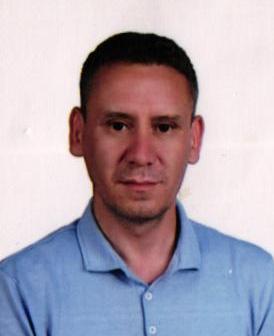
Associate Professor Mustafa GulTekin serves at Gaziantep University in the Faculty of Arts and Sciences , affiliated with both the Department of Turkish Language and Literature and the Department of Turkish Folklore . He holds a Doctorate in Turkish Folklorics (2010) from Ege University and has been teaching since 2004. Education: PhD in Turkish Folklorics, Ege University (2004-2010) MA in Turkish Language and Literature, Gaziantep University (2002-2004) Bachelor in Turkish Language and Literature, Balikesir University (1997-2001) Research Focus: Specializes in Turkic world fairy tales, oral literature analysis, minstrelsy traditions, and intangible cultural heritage. His work intersects folklore methodology with performance studies and cultural anthropology. Projects: Led/managed national projects including TUBITAK-funded research on Diyarbakir Alevi ocaks (2013-2016), Uzbek cultural studies in Gaziantep (2012-2015), and applied Karagöz education programs (2009-2010). Administrative Roles: Head of Department (2014-2017, 2012-present) Deputy Head of Department (2017-present, 2011-2012) Director of Research and Application Center (2012-2016)
Burak Sunguralp Tekin is an Assistant Professor in the Department of Translation and Interpretation at the Faculty of Humanities and Social Sciences, Ankara Yıldırım Beyazıt University. His academic career includes positions as both Lecturer (2021-2022) and Assistant Professor (2022-present) at the same institution. Dr. Tekin's research primarily focuses on human sociality and the interplay of language, bodies, and technology, with particular emphasis on embodied interaction, social practices, and multimodal communication. Dr. Tekin's educational background includes: Doctorate (2014-2019) from University of Basel, Switzerland, with dissertation "Bodies at play: Exploring participation, spectatorship, and morality in videogaming activities" Postgraduate studies (2012-2013) from University of Newcastle Upon Tyne, United Kingdom, with thesis "Smiles and affective alignment in naturally occurring dyadic academic supervisions" Undergraduate degree (2006-2010) from Hacettepe University, Turkey Dr. Tekin's research interests center on social interaction, multimodal communication, and embodied practices. His work examines how people coordinate their actions, bodies, and language in various contexts including gaming, photography, public spaces, and pandemic-related social adaptations. He employs conversation analysis and multimodal interaction analysis to investigate the micro-details of human sociality, with particular attention to how technology mediates social practices. His research bridges sociology, linguistics, and human-computer interaction to understand the embodied nature of social organization. Analysis of Dr. Tekin's recent publications reveals a consistent focus on embodied social interaction across diverse contexts. His work demonstrates sophisticated methodological approaches to studying how people coordinate their movements, manage social spaces, and create meaning through multimodal resources. A notable trend is his examination of how social practices adapt during extraordinary circumstances like the COVID-19 pandemic, as well as his sustained interest in gaming activities and their social organization. His collaborative work with Lorenza Mondada is particularly prominent in the field of conversation analysis. Dr. Tekin has taught various courses including Multimodal Communication, Introduction to Applied Linguistics, Language and Communication, Language Acquisition, Consecutive Interpreting, Intercultural Communication, World Englishes, Applied Linguistics, Turkish Grammar, Language Culture and Society, and Discourse Analysis at both undergraduate and postgraduate levels. His teaching reflects his research expertise in communication, language, and social interaction.
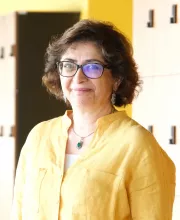
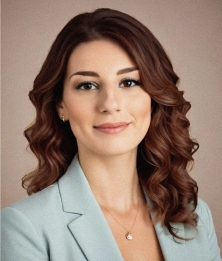
Tuğba Dalyan is an Associate Professor in the Department of Computer Engineering at Istanbul Bilgi University, Faculty of Engineering and Natural Sciences. She holds a Ph.D. in Computer Engineering from Yıldız Technical University (2014), an MSc from Kocaeli University (2007), and dual BSc degrees in Mathematics and Computer Science and Business Administration (Minor) from Istanbul Bilgi University (2003). She has been a faculty member since 2016 and previously served as a Teaching Staff member and Research Assistant at the same institution. Her research focuses on Natural Language Processing , Machine Learning , Deep Learning , Text Mining , Data Science , and Big Data Analytics . Her work spans computational linguistics, sentiment analysis, author profiling, machine translation, and smart systems. She has led and contributed to numerous research projects, particularly in AI-driven urban solutions and health technologies. The most recent publications show a strong trend in Turkish NLP, zero-shot classification, multimodal AI (image captioning), emotional robotics, and decision support systems using fuzzy logic. Her work combines theoretical rigor with practical applications in smart cities, education, and healthcare. Best Paper Award , CICLing 2012 TÜBİTAK 2209-A student project awards (2022–2024) Horizon2020 Eşik Üstü Ödülü , MIMOSCSA 2024 TÜBİTAK 2242 competition: 2nd and 3rd place (2016, 2018) She has advised numerous student research projects, many of which have received national recognition. She has directed multiple TÜBİTAK and institutional research grants, including projects on smart homes, blockchain crowdfunding, mental health, and AI for social polarization. Her leadership roles include Head of Department, Vice Dean, and Director of Graduate Programs. Tuğba Dalyan leads research in AI and NLP with a strong emphasis on Turkish language technologies. She is involved in interdisciplinary teams working on emotional robots, smart city platforms, and citizen science ecosystems. Her lab activities focus on neural networks, text analysis, and intelligent systems development.
Assoc. Prof. USAME İHTİYAR holds the position of Associate Professor at Bingöl Üniversitesi's Fen Edebiyat Fakültesi, specifically in the Arapça Mütercim ve Tercümanlık Anabilim Dalı. He previously held roles at Damascus University and Bilad Al Sham Üniversitesi, transitioning to Bingöl Üniversitesi in 2013. His academic journey includes a PhD from Damascus University (2004) focusing on Sicilian Arabic poetry and a career spanning over three decades in academic administration and editorial roles. Education: B.A. (1987-1991), M.A. (1998), and Ph.D. (2004) in Arabic Language and Literature from Damascus University. Academic titles include Doktor Öğretim Üyesi (2006-2011), Doçent (2006–present), and multiple international editorial board memberships. Research interests center on classical Arabic poetry, Islamic literary criticism, Andalusian literature, and Arabic language pedagogy. He has advised over 30 graduate students and authored/co-authored books on topics like Sicilian Arabic poetry, tasavvuf (Sufi) literature, and translation studies. His work appears in journals such as Şarkiyat Mecmuası and Fırat Üniversitesi İlahiyat Fakültesi Dergisi, with a focus on Quranic linguistics and medieval Arabic texts. Professional activities include editorial roles for Diyanet Arapça İlmi Dergisi (2019–2022) and membership in international academic committees like the Katar Üniversitesi's Postgraduate Academic Board. His contributions span editorial leadership, conference participations, and authoring textbooks on Arabic grammar and rhetoric. Notable works include Siciliya Şiirleri Antolojisi (2016) and Modern Tasavvuf Şiirinde Manevi Değerler (2022). His research bridges classical Arabic literary traditions with contemporary pedagogical challenges in teaching Arabic as a second language.
Prof. Dr. Mehmet TAŞDEMİR is a faculty member at Kirsehir Ahi Evran University's Faculty of Education, Department of Educational Sciences, specializing in Curriculum and Instruction. He has been a Full-Time Professor since 2016, following roles as Associate Professor (2011-2016) and Doctor Lecturer (2006-2011). His academic career spans over three decades, including administrative roles such as Department Head and Scientific Projects Coordinator. Education: PhD in Primary Education Curriculum and Instruction from Hacettepe University (1995); Master's in Educational Sciences from Gazi University (1988); Bachelor's in Educational Sciences from Gazi University (1985); Associate Degree in Classroom Teaching from Gazi University (1983). Research Interests: His work focuses on curriculum development, instructional design, educational assessment, and values education. He has extensively studied foreign language teaching, mathematics education, and inclusive practices in primary and secondary schools. Recent Publications: His 2025-2024 articles analyze community-centered curricula, problem-based learning models, and mind games in education. Trends include foreign language motivation, mathematics teaching methods, and values integration in school programs. Scientific Awards: TÜBİTAK Yayın Teşvik Awards (2010-2012) Advising: Mentored 23 theses (Master's and Doctoral) and collaborated with researchers like Figen Taşdemir and Cem Şahin on topics spanning educational psychology, curriculum theory, and instructional practices.
Tülin Haşlaman is an Associate Professor at the Department of Elementary Education - Primary Education, TED University. She holds roles as a Coordinator and Vice Head of Department. Her teaching portfolio includes courses such as Instructional Technologies, Technology-Enhanced Language Learning, and Micro Teaching, reflecting her expertise in educational technology and pedagogical innovation. Her research focuses on ICT integration in education, self-regulated learning strategies, and teacher development. Notable areas of interest include the use of digital storytelling for computational thinking, infographics in supporting student autonomy, and smartphone addiction among university students. She has also studied the impact of social media platforms like Facebook on teacher training and the integration of ICT into teaching processes. Dr. Haşlaman’s work emphasizes bridging technology with educational practices, particularly in primary education contexts. Her articles highlight themes such as pre-service teacher digital competency, disabled teachers’ technology integration challenges, and peer assessment in online environments. Despite her extensive academic contributions, she has no explicitly listed awards or grants in the provided materials. Her courses over the years span foundational education topics like Learning Environments, Observation in Schools, and Research Methods, demonstrating a commitment to both theoretical and applied aspects of education. While she has not specified any affiliated labs or teams, her teaching and research activities suggest active engagement in educational technology initiatives and teacher professional development programs.
Osman Kabadayı is an Associate Professor at Kırşehir Ahi Evran University's Faculty of Arts and Sciences, Department of Turkish Language and Literature. Born in 1981, he completed his education at Kırıkkale University (BA, 2003), Erciyes University (MA non-thesis, 2004), Kırıkkale University (MA thesis, 2007), and earned his PhD from Gazi University in 2020. His international experience includes a five-year position at Abay Kazakh National Pedagogical University and research at the Kazakh Academy of Sciences. His research focuses on North-Western (Kipchak) Turkish Dialects and Literatures , with emphasis on historical linguistics, Kazakh language evolution, manuscript studies, and Turkic cultural heritage. He employs comparative methods to analyze linguistic features across Turkic languages, particularly examining lexical development and grammatical structures in historical contexts. Secondary interests include folklore documentation, orthographic reforms, and digital preservation of Turkic manuscripts. Publications demonstrate strong focus on Kazakh philology (45% of recent works), historical linguistics (30%), and manuscript studies (25%), with recurring examination of equestrian terminology, funerary inscriptions, and Islamic texts. Research consistently bridges ancient Turkic traditions with contemporary linguistic phenomena. Awards & Recognition: Science Encouragement Award (Kırşehir Ahi Evran University, 2023) Certificate of Appreciation from Kazakh Embassy (2021) Plaque for academic service (Ahi Evran University, 2010) Academic Leadership: Advises six PhD students on topics including Kazakh philology and linguistic anthropology. Secured multiple grants: Archaeographic Research in Kazakhstan (2025) Turkic Renaissance intellectual history project (2021-2022) National Library of Kazakhstan manuscript cataloging (2018-2019) Co-authored 6-volume Common Turkic History (2018-2019)
Alipaşa Ayas is a Professor and Dean of the Faculty of Education at Bilkent University, where he also serves as Chair of the Department of Educational Sciences. His research focuses on science education, teacher training, conceptual understanding, and inclusive education. He has led numerous national and international projects, including UNICEF- and EU-supported initiatives. Ph.D., University of Southampton M.A., University of New Brunswick MSc., Karadeniz Technical University BSc., Karadeniz Technical University His research interests span teacher education, science education (particularly chemistry), concept development, curriculum design, and assessment strategies. He employs both qualitative and quantitative methods to explore these areas. His publications emphasize inquiry-based learning, conceptual change strategies, and the effectiveness of interventions such as the 5Es model, constructivist activities, and analogies in enhancing science learning. These works often address misconceptions in chemistry and methods to improve scientific process skills. He has contributed to projects supported by the World Bank, EU, and UNICEF, including initiatives on lifelong learning, education development, and inclusive teacher training. His administrative roles include a 6-year deanship at Karadeniz Technical University and leadership of Bilkent University’s Graduate School of Education since 2017.
Zabitgil Gülseren, Özlem is an academic at Istanbul Sabahattin Zaim University specializing in English Language Teaching (ELT) and Second Language Acquisition . Her work focuses on integrating technology into language instruction, analyzing learner anxiety, and evaluating pedagogical methods. Research Themes : Technology-enhanced learning, vocabulary acquisition, formative assessment. Key Collaborations : Co-authored studies with Sıla Selver Akar, Enes Atay, and others. Article Trends : Recent works (2024) examine authentic video-based vocabulary instruction, while 2022–2020 studies explore online collaborative writing, digital storytelling, and formative assessment practices. Earlier works (2015–2019) analyze anxiety, gender factors in strategy use, and classical teaching methods. Advising and Grants : Supervised research on topics like digital tools in ELT and L1 usage in classrooms. No specific grant details provided in the text.
Prof. Dr. Nuri Dogan is a Professor at Hacettepe University, Faculty of Education, Department of Educational Sciences, where he serves as Head of the Department of Educational Sciences since 2021 and previously as Head of the Department of Measurement and Evaluation in Education since 2019. He earned his BA (1996), MA (1999), and PhD (2002) from Hacettepe University's Department of Educational Measurement and Evaluation. After working as a research assistant (1998-2002) and lecturer (2003-2010), he became an Associate Professor in 2011 and a full Professor in 2016. He conducted post-doctoral research at University of Massachusetts-AMHERST under Ronald K. Hambleton in 2014-2015 with a TÜBİTAK scholarship. His research focuses on educational measurement and evaluation, psychometrics, test development, classical test theory, item response theory, and computerized adaptive testing. He teaches courses on measurement and evaluation in education, test development, scaling techniques, classical test theory, psychological foundations of measurement, research techniques, computerized measurement applications, and various other topics related to educational assessment. His extensive body of work demonstrates strong expertise in educational assessment methodologies, with particular emphasis on the technical aspects of measurement and evaluation. Dogan's publication record shows a clear progression from foundational work in classical test theory to more sophisticated applications in computerized adaptive testing and multistage testing. His recent work (2023-2024) reveals a strong focus on practical applications of measurement theory in large-scale assessments like PISA, with increasing integration of data mining and machine learning approaches. His research spans both theoretical psychometrics and practical applications across various educational contexts. Scientific Awards: TÜBİTAK scientist support program (BİDEP) scholarship for post-doctoral research at University of Massachusetts-AMHERST Prof. Dogan has supervised 55 graduate students (28 master's and 27 PhD candidates) whose research spans educational measurement, psychometrics, test development, and various applications of assessment methodology. His research projects include significant work on computerized adaptive testing, multistage testing, measurement invariance, and large-scale international assessments like PISA. He has received multiple research grants from TÜBİTAK and other national and international funding bodies. Prof. Dogan also chairs the Board of Directors of the Association for Measurement and Evaluation in Education and Psychology (EPODDER) and has been actively involved in numerous national and international research projects related to educational assessment and measurement.
Bekir Taner Dincer is a Professor at Muğla Sıtkı Koçman University, Faculty of Engineering, Department of Computer Engineering. He has been actively teaching courses including Web Development and Programming, Artificial Intelligence, Data Mining, Natural Language Processing, and Senior Design Projects for multiple academic years including the upcoming 2025-2026 term. Dr. Dincer earned his Bachelor's degree in Statistics from Middle East Technical University (1988-1993), followed by a Master's degree in Statistics and Computer Science from Muğla Sıtkı Koçman University (1996-1998), and completed his Doctorate in Computer Science from Ege University's International Computer Institute (1998-2004). His research focuses on Information Retrieval, Natural Language Processing (particularly for Turkish language), and related computational linguistics areas. His work addresses challenges in Turkish language processing including morphological analysis, constituent chunking, information retrieval systems, and term weighting methods. He has made significant contributions to adapting information retrieval techniques for agglutinative languages like Turkish, which presents unique challenges compared to Indo-European languages. His publication record shows a consistent research trajectory with recent work (2013-2018) focusing on risk-sensitive evaluation methods, learning to rank, entity recognition in big data, and specialized approaches for Turkish language processing. His research often bridges theoretical information retrieval concepts with practical applications for Turkish text processing. Dr. Dincer has served as editor for prestigious publications including the International ACM SIGIR Conference proceedings and ACM Transactions on Information Systems journal, demonstrating recognition of his expertise by the international research community. He has supervised numerous graduate students, guiding PhD and Master's theses on topics including unsupervised syntactic disambiguation for Turkish, statistical analysis of word roots and affixes, and information retrieval system design. His research has been supported by TÜBİTAK projects including the Design of a Statistics-Driven Selective Information Retrieval System (2015-2018) and the Design of a Statistical Information Access System (2011-2014).
Prof. Dr. ABDULBAKİ ÇETİN is a Professor of Turkish Language and Literature at Bingöl University's Faculty of Arts and Sciences. He holds a PhD from Atatürk University (2002) and has taught extensively since 2002. His current courses include Ottoman Turkish III/IV, Old Anatolian Turkish, and Chagatai Text Studies. He has supervised three doctoral theses focusing on medieval manuscripts and literary works. Licentiate: Atatürk University (1991-1995) Master's: Atatürk University (1996-1998) Doctorate: Atatürk University (1998-2002) His research focuses on pre-modern Turkic texts, Ottoman Turkish linguistics, and medieval Islamic manuscripts. He has published widely on topics like Persian grammar in Anatolia, Ottoman translations of classical texts, and Sufi literary traditions. Recent work includes analyses of 15th-17th century manuscripts and lexicographical studies. Prof. Çetin has authored/co-authored three books and contributed chapters on medieval Turkic scholars and literary works. His published articles span over two decades, with significant contributions to journals like Atatürk Üniversitesi Türkiyat Araştırmaları Enstitüsü Dergisi and Selçuk Üniversitesi Türkiyat Araştırmaları Dergisi.
Prof. Tayfun Doğan is a Professor at Üsküdar Üniversitesi's Department of Psychological Services in Education. He holds a BSc from Ondokuz Mayıs Üniversitesi (2003), MSc and PhD from Sakarya Üniversitesi (2006, 2010). His academic titles include Associate Professor (2015) and Professor (2021). Research focuses on Positive Psychology, Psychological Well-being, and Resilience. Key areas include happiness-resilience relationships, life purpose, and childhood experiences' impact on adult well-being. Currently serves as Co-editor for Ü.Ü. publications and chairs the Başarı Ölçme ve Değerlendirme Komisyonu. Teaches courses like Emotional Psychology, Positive Psychology, and Teacher Training. Supervised 1 Master's thesis: "Yetişkinlerde mutluluğun merhamet ve saldırganlıkla ilişkisinin incelenmesi" (2017). Editorial roles include THE JOURNAL OF HAPPINESS & WELL-BEING (2013) and multiple national journals. Active in psychometric scale adaptations (e.g., Turkish versions of resilience and happiness scales).
Eylul Ceren Demir serves as an Assistant Professor in the Department of Psychology at Adiyaman University's Faculty of Arts and Sciences, where she also holds the position of Vice Chair of Department since November 2023. She concurrently serves as a Visiting Professor at Middle East Technical University (METU) teaching Qualitative Research in Clinical Psychology (Fall 2023-Spring 2025) and taught Psychological Assessment at Ufuk University in Fall 2023. Her educational background includes an Integrated Doctorate in Clinical Psychology from Middle East Technical University (2018-2023) with a dissertation titled 'When the boundaries exceed: Thematic Analysis of Anorexia Nervosa in Lacanian Psychoanalysis,' a Master's degree in Psychology from Dokuz Eylul University (2016-2018), and a Bachelor's degree in Psychology from Çankaya University with 3.91/4.00 CGPA (2013-2016). Dr. Demir's research focuses primarily on Lacanian psychoanalysis, clinical psychology, and psychopathology, with particular expertise in eating disorders, trauma, suicide prevention, and qualitative research methods. Her work bridges theoretical psychoanalytic concepts with clinical applications, especially in understanding anorexia nervosa, post-disaster psychological trauma, and the therapeutic process. She has developed specialized knowledge in analyzing cinematic characters through psychoanalytic frameworks and examining cultural aspects of mourning and loss. Her publication record demonstrates a clear trajectory from foundational psychoanalytic concepts (2020-2021) toward increasingly specialized clinical applications (2022-2025), with recent work focusing on earthquake trauma, anorexia nervosa from Lacanian perspectives, and therapist development. Her articles consistently integrate psychoanalytic theory with empirical clinical observations, creating a distinctive methodological approach that combines qualitative analysis with Lacanian conceptual frameworks. As an academic leader, Dr. Demir serves as Editor for AYNA Clinical Psychology Journal (since 2022) and Field Editor for Adiyaman Social Sciences Journal (since 2024). She has supervised numerous graduate theses at METU and currently co-advises multiple doctoral students working on topics including neurodivergence in creative industries, OCD experiences, non-suicidal self-injury, and martyr letter analysis. Her clinical work through the AYNA Clinical Psychology Support Unit at METU (2020-2023) involved providing psychotherapy supervision to graduate students and coordinating clinical training processes. She has conducted nearly 1000 hours of therapy sessions with children, adolescents, and adults using psychoanalytic approaches. Dr. Demir remains active in the Freud-Lacan Psychoanalytic Association (since 2018) and serves on Turkey's Science Academy Psychology Terminology Working Group (since 2023).
Beyza Eken serves as Assistant Professor in the Department of Software Engineering at Sakarya University's Faculty of Computer and Information Sciences, teaching core courses including Software Project Management, Natural Language Processing, and Graduation Projects while maintaining active research in software engineering and AI applications. Her academic credentials include: Doctorate in Computer Engineering from Istanbul Technical University (2015), thesis: "Software Defect Prediction" Master's in Computer Engineering from Istanbul Technical University (2011-2015), thesis: "Entity Name Recognition in Short Texts" Bachelor's in Computer Engineering from Sakarya University (2007-2011) Dr. Eken's research integrates machine learning with software engineering, specializing in defect prediction models that incorporate personalized developer factors and industrial deployment challenges. Her work bridges natural language processing for Turkish social media analysis with software quality assurance, demonstrating expertise in both theoretical modeling and practical implementation in industrial settings. Recent expansions include neuro-symbolic AI for test oracle generation and MLOps frameworks. Publication trends reveal consistent focus on empirical software engineering from 2018-2021 (defect prediction, community smells, industrial deployment), evolving into cutting-edge domains by 2023-2025 (neuro-symbolic testing, employee feedback analysis, MLOps). Her work shows strong industry-academia collaboration patterns with increasing methodological sophistication. Dr. Eken actively contributes to academic service as reviewer for ACM Transactions on Software Engineering and Methodology (2024) and IEEE Transactions on Software Engineering (2023). She leads research projects including "Developer-specific error prediction modeling" (2020) and the Mevlana exchange project with Ryerson University on data mining for defect prediction (2018), while supervising graduation projects and research area courses that develop student expertise in software engineering practices. Her international research engagement includes participation in the ASTERIx project at Università della Svizzera Italiana's Software Testing and Analysis Research Group (2023), demonstrating ongoing commitment to global collaboration in software engineering advancements.