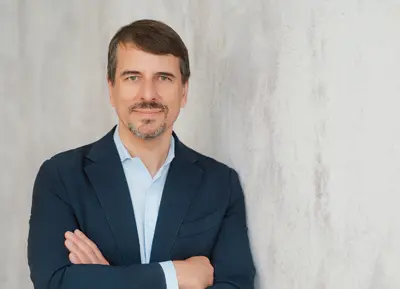
Frauke Albersmeier is a Lecturer at the University of Cologne's Faculty of Philosophy. Formerly a Research and Teaching Fellow at Heinrich Heine University Düsseldorf (HHU), she specializes in ethics, animal rights theory, and conceptual analysis. She holds a PhD in Philosophy from HHU (2020) with a dissertation on 'The Concept of Moral Progress.' Her work bridges metaphilosophy, moral theory, and applied ethics, particularly focusing on speciesism, animal rights, and conceptual engineering. Education: PhD in Philosophy, Heinrich Heine University Düsseldorf (2020) Master of Arts in Philosophy, HHU (2013) Bachelor of Arts in Cultural Sciences, FernUniversität Hagen (2011) Research Interests: Her work emphasizes ethical frameworks for nonhuman animals, the nature of moral progress, and the role of language in shaping moral concepts. Key areas include speciesism critiques, solidarity theories, and the methodology of conceptual analysis in philosophy. Recent Work Trends: Recent publications explore animal rights within human rights frameworks, science denialism, and ethical challenges in animal-free research. She frequently addresses interdisciplinary questions at the intersection of ethics and scientific practice. Awards and Grants: Recipient of DFG-funded research projects, including the Collaborative Research Center 991 (2016–2020) and a current project on 'Presuppositions of Frame Theory in the History of Philosophy.' Teaching and Outreach: Leads courses on animal ethics, moral progress, and conceptual theories. Active in popularizing philosophy through workshops and podcasts (e.g., Knowing Animals Podcast, 2022). Key Collaborations: Co-edited special issues on conceptual explication and analysis. Collaborates with institutions like the Centre de recherche en éthique (Montréal) and the University of Pennsylvania.
Toby Jia-Jun Li is an Assistant Professor in the Department of Computer Science and Engineering at the University of Notre Dame, where he leads the SaNDwich Lab. He also serves as the Director of the Human-Centered Responsible AI Lab in the Lucy Family Institute for Data & Society and is a Faculty Fellow at the Institute for Educational Initiatives (IEI). Previously, he was affiliated with Carnegie Mellon University's Human-Computer Interaction Institute (HCII) and GroupLens Research. Dr. Li's research spans the intersection of Human-Computer Interaction (HCI), End-User Software Engineering, Machine Learning (ML), and Natural Language Processing (NLP), with recent work focusing on addressing societal challenges in the future of work through human-AI collaborative approaches. His work has resulted in over 40 publications at premier venues including CHI, UIST, CSCW, ACL, and ICSE, with 8 papers winning Best Paper or Honorable Mention awards. His recent publications demonstrate a strong focus on human-AI collaboration across various domains, including code understanding, privacy, accessibility, and creative tools. The work shows a trajectory toward increasingly sophisticated integration of human-centered design with AI capabilities, particularly using large language models to enhance human productivity and address societal challenges. Google Research Scholar Award recipient Recipient of Yahoo! Fellowship ($100,000/year) Best Paper Award at UIST 2020 Best Paper Honorable Mention Award at CHI 2021 Best Paper Award at CSCW 2024 Best Paper Award at CHI 2025 Dr. Li actively mentors Ph.D. students and has established collaborations with Google, Microsoft Research, IBM Research, Adobe, Verizon, and J.P. Morgan. His research has been supported by NSF, Google Research Scholar Program, AnalytiXIN Initiative, Yahoo! InMind project, and J.P. Morgan. He is currently recruiting Ph.D. students and undergraduate researchers for his SaNDwich Lab, which focuses on developing interactive systems to empower individuals to create, configure, and extend AI-powered computing systems.
Matthias Feurer is a Thomas Bayes Fellow and interim professor at the Chair of Statistical Learning and Data Science, funded by the Munich Center for Machine Learning (MCML) at Ludwig Maximilian University of Munich. He is a member of the Department of Statistics at LMU Munich, working under Prof. Dr. Bernd Bischl. His academic background includes: PhD in Computer Science from Albert-Ludwigs-Universität Freiburg, supervised by Prof. Dr. Frank Hutter M.Sc. in Computer Science from the University of Freiburg B.Sc. in Computer Science and Media from the Media University Stuttgart Feurer's research focuses on simplifying machine learning usage through Automated Machine Learning (AutoML). His work encompasses hyperparameter optimization, meta-learning, and model selection, with increasing emphasis on multi-objective AutoML that considers factors beyond predictive performance such as interpretability, deployability, and fairness. He actively develops open-source tools to advance the field. His recent publications demonstrate a strong trajectory in practical AutoML systems, with growing attention to tabular machine learning, foundation models integration, and addressing real-world constraints in optimization. His work consistently bridges theoretical advances with practical implementations through several widely-used open-source projects. Notable achievements include: 1st place in the warmstarting-friendly leaderboard of the BBO NeurIPS challenge Winner of the 2nd AutoML challenge Winner of the kdnuggets blog contest on AutoML Feurer is actively mentoring and teaching, having advertised PhD positions focused on AutoML, optimization, and benchmarking. He co-founded the Open Machine Learning Foundation supporting OpenML.org. His upcoming move to TU Dortmund as an assistant professor in AutoML and Optimization signals continued growth in his academic career while maintaining his research focus on making machine learning more accessible and rigorous.
Bistra Andreeva is a full Professor of Phonetics and Phonology at Saarland University, Department of Language Science and Technology. She is also a principal investigator of the DFG-funded project “Judeo-Spanish in Bulgaria: a contact language between archaism and innovation” (2022-2025) and leads or co-leads several other externally funded projects on prosody, information structure, and language contact. She teaches and has taught at Saarland University, Sofia University “St. Kliment Ohridski”, and other European universities. Education & Academic Background Habilitation (kumulative Habilitationsschrift): “Contrastive Prosody: Bulgarian vs. German”, Saarland University, 2016. PhD (Dr. phil.): “Zur Phonetik und Phonologie der Intonation der Sofioter-Varietät des Bulgarischen”, Saarland University, 2007. Research Interests Andreeva’s research focuses on the phonetics and phonology of intonation and rhythm, cross-language and individual differences in the production and perception of syllabic prominence, the relation between intonation and information structure, minority languages (especially Judeo-Spanish in Bulgaria), and the interaction between information density and prosodic structure. Her methodological expertise includes experimental phonetics, corpus-based studies, and acoustic analysis. Major Projects SFB 1102 C1: “Information Density and the Predictability of Phonetic Structure” (DFG, 2014-2026) JuSpa: “Judeo-Spanish in Bulgaria: a contact language between archaism and innovation” (DFG, 2022-2025) Prosodic aspects of Bulgarian compared to other languages with lexical stress (Bulgarian National Science Fund, 2019-2024) Prosodic manifestations of focus in French and English from a Bulgarian point of view (DAAD & Sofia University, 2021-2023) Scientific Awards & Recognition While no major named prizes are listed, Andreeva’s work has been continuously supported by competitive grants from the German Research Foundation (DFG), DAAD, and Bulgarian National Science Fund. Her publications appear in top-tier journals and conference proceedings (Journal of the Acoustical Society of America, Interspeech, Speech Prosody, International Congress of Phonetic Sciences). Teaching & Supervision She offers a broad spectrum of courses including Experimental Phonetics, Prosody, Phonetics & Phonology of Slavic Languages, Introduction to Instrumental Phonetics, and seminars on language contact. She has supervised numerous BA, MA, and PhD theses and regularly teaches at the PhD School of Sofia University. Labs & Teams She is affiliated with the Phonetics Laboratory at Saarland University and collaborates closely with the Institute for Bulgarian Language (Bulgarian Academy of Sciences), working in interdisciplinary teams involving phoneticians, computational linguists, and field linguists.
Dr. Jan Delcker is a Post-Doc Researcher at the University of Mannheim's Chair for Economic and Business Education, specializing in Learning, Design & Technology. With a background in social work and media education, his research examines digitalization in educational contexts. Key research areas include: AI competence assessment in teachers and students Digital curriculum development in vocational schools Mobile learning applications for language assessment Impact of COVID-19 on school development He teaches courses on educational systems management and research methodology while supervising graduate theses. Recent publications explore AI tool adoption predictors and text mining analysis of vocational curricula.
Hakan Özkan is a Privatdozent and Research Associate at the Institute of Arabic and Islamic Studies, Department of Middle Eastern Studies, University of Münster, where he has been working since 2007 in various capacities. He was awarded his Venia Legendi (Habilitation) in November 2019 for Arabic and Islamic Studies with his thesis 'History of Eastern Zajal – Dialectal Arabic Verse Poetry from the East of the Arab World.' His academic background includes a Franco-German doctorate completed in 2006 from Université de Provence and University of Cologne, supervised by Claude Audebert and Monika Gronke, with external reviewers including Wolfhart P. Heinrichs from Harvard University. His educational background includes: 2019: Venia Legendi for Arabic and Islamic Studies, University of Münster 2002-2006: Franco-German Doctorate in Arabic Studies and Narratology (Université de Provence and University of Cologne) 1995-2000: Master of Arts in Islamic Studies, Oriental Languages and Literatures (University of Cologne) 2000-2001: Course program in Modern Standard Arabic and Syrian-Lebanese dialect at Institut Français d'Etudes Arabes de Damas Özkan's research focuses on premodern Arabic dialect poetry, particularly zajal and muwashshaḥ forms, narratology, prosimeter literature, socio-literary history, and diachronic dialectology. His interdisciplinary approach bridges linguistic analysis with literary criticism, examining how dialectal forms evolved within Arabic literary traditions across different historical periods and geographical regions. He has conducted extensive field research in Arab countries including Syria, Egypt, Lebanon, Tunisia, and Morocco, with particular emphasis on the historical development of poetic forms from the Mamluk through Ottoman periods. His publication history demonstrates consistent scholarly contributions to Arabic literary studies, with his 2020 monograph 'History of Eastern Zajal' representing a landmark study in the field. His recent work has expanded to include analyses of religious poetry praising the Prophet Muhammad in zajal form, wine poetry in Arabic literary traditions, and the integration of dialects into Arabic language teaching methodologies. His scholarly output spans monographs, critical editions, encyclopedia entries, journal articles, and book chapters across multiple languages including German, English, French, and Turkish. Among his academic recognitions: 2018: Second place on shortlist for W2 Professorship for Arabic Language and Translation Science, University of Leipzig 2008: Offered Junior Professorship at American University in Cairo (declined) 2007: Second place on shortlist for maître de conférence position at University of Nancy 2007: Official Qualification from National University Council (CNU) for positions as maître de conférence at French universities Özkan has served on numerous academic committees, including appointment committees for professorships in Sinology and Arabic and Islamic Studies at the University of Münster. He has been a juror for the Sheikh Hamad Award for Translation and International Understanding in Doha and has served on the steering committee for the 'Translation for Dialogue' program of the Anna Lindh Foundation. His editorial work includes reviewing for Mamluk Studies Review, Die Welt des Islams, and Middle Eastern Literatures since 2012. His scholarly activities extend to linguistic fieldwork on Pontic Greek dialects in Turkey and organizing significant academic conferences including 'The Race Course of Literature – An-Nawāǧī and His Contemporaries' in 2018 at the University of Münster. His multilingual capabilities (Arabic, Turkish, German, French, English, Persian, Ottoman Turkish, and knowledge of Modern Greek) enable his comparative work across multiple linguistic and cultural traditions in the Mediterranean region.
Katrin Bromber is a German Researcher at the Centre for Modern Oriental Studies in Berlin, where she has led the research group "Progress and its Discontents: Ideas, Practices, Materiality" since 2014. Her career spans senior research roles at ZMO and academic teaching positions at the University of Vienna. Nationality: German. Language skills: Native German, fluent English/Swahili, moderate Amharic, good reading knowledge in French/Russian, basic Tigrinya. Habilitation (2009–): African Studies, University of Vienna PhD (1993): African Linguistics, University of Leipzig MA (1988): Swahili Studies, University of Leipzig Katrin Bromber's research interrogates intersections of body politics , sports history , Swahili linguistics , and Ethiopian modernity . Her work traces how physical culture, media representation, and colonial/imperial narratives shape national identities across Africa and Asia. Current focus: "Progress" as contested concept in Ethiopian and Gulf urbanism. Key article trends reflect her translocal methodology: 2017 studies on Ethiopian stadiums and fitness culture ; 2014-2013 publications analyzing East African military press , sports branding in the Gulf , and Swahili poetry ; 2007-2000 works on colonial linguistic politics , Indian Ocean slavery , and German colonial Swahili promotion . Recurring sub-fields: body as political text, translocal modernity, media historiography. Scientific Awards: Research Grant of the Berlin City Council (1999-2000): Gendered Slavery study Service to the Scientific Community: Chairwoman, Academic Association for Horn of Africa Studies (2012–) Editorial Advisory Board - Stichproben. Vienna Journal of African Studies (2015–) Editorial Advisory Board - Studies of Department of African Languages and Cultures (2015–) Teaching Experience: Textlinguistics, Mediacommunication, African Linguistics, Swahili (elementary/advanced), Swahili Literature, Swahili in Arabic Script at Leipzig, Humboldt-Berlin, Free Berlin, and Vienna universities Anthropology of the Body at Mekelle University Summer School Field Research: Tanzania (1993-2003): Swahili Poetry, Intellectual History Kenya (2005): Indian Ocean WW2 UAE/Bahrain (2009): Sports and Body Cultures Ethiopia (2009-2015): Sports, Body Politics
Prof. Dr. Frank T. Piller is a University Professor and Co-Leader of the Institute for Technology and Innovation Management (TIM) at RWTH Aachen University, where he also serves as Academic Director of the Executive MBA program at RWTH Business School. He leads a research team of approximately 30 doctoral students, 5 postdocs, and over 20 student researchers within the TIME Research Area of the School of Business and Economics. His educational background includes a doctoral degree in Operations Management from the University of Würzburg (1999) and a Habilitation degree from TUM Business School (2004) on "Innovation and Value Co-Creation." Prior to joining RWTH Aachen in 2007, he was a Research Fellow at MIT Sloan School of Management and faculty at TUM Business School. Prof. Piller is recognized as one of the world's leading experts in customer-centered value creation, specializing in mass customization, personalization, and customer co-creation. His current research focuses on how established companies can transform in response to disruptive business model innovations, with particular emphasis on digital transformation (Industry 4.0), AI-augmented innovation, and sustainable business models. He is particularly known for his work on innovation ecosystems, platform-based business models, and stakeholder-oriented technology development. His recent publications demonstrate a clear trajectory toward integrating artificial intelligence with traditional innovation management frameworks, exploring how AI transforms manufacturing systems, innovation processes, and business models. His work increasingly addresses the challenges of digital transformation in established industries while maintaining focus on customer co-creation and mass customization principles. His scientific achievements have been recognized with numerous awards: Co-Creation Award of the PDMA Nomination for "Innovating Innovation" Prize by Harvard Business Review and McKinsey "Lecturer of the Year" by Executive MBA students at TU Munich RWTH Aachen Rector's Prize for Excellent Teaching (since 2010) Grant for innovative "Flipping the Classroom" teaching concept ERC Synergy Grant for SAFER Grid project (2025-2031) Prof. Piller maintains an extensive research network spanning academia and industry. He collaborates with numerous corporations including 3M, Adidas, BASF, EON, J&J, P&G, Siemens, and Vodafone, as well as many technology startups across Europe and North America. As a co-founder, supervisory board member, and investor in innovative startups, he actively transfers research into practice. His research has received significant funding, most notably the prestigious ERC Synergy Grant for the SAFER Grid project. He leads the Technology and Innovation Management Group (TIM) within the TIME Research Area at RWTH Aachen, which comprises over 100 senior and junior researchers working at the intersection of innovation, technology management, marketing, and entrepreneurship. The institute is a leading European research institution for strategic, behavioral, and computer-supported technology and innovation management.
Professor Alexander Koller is a leading academic in Computational Linguistics at Saarland University's Department of Language Science and Technology. He holds a courtesy appointment in Computer Science and contributes to the Saarland Informatics Campus - one of Europe's premier computer science research centers. He leads the Computational Linguistics group and serves as speaker for the DFG-funded Research Training Group 'Neuroexplicit Models of Language, Vision, and Action'. PhD in Computer Science (Saarland University) Former positions: University of Potsdam, Columbia University, University of Edinburgh Sabbatical experiences: Meta AI (Paris), Allen Institute for AI (Seattle) His research focuses on computational modeling of meaning and reasoning in NLP, combining neural and symbolic approaches. Key contributions include semantic parsing systems like the AM parser and Alto, neurosymbolic models, and the GIVE Challenge for NLG evaluation. His recent work explores LLMs' limitations in problem-solving and compositional generalization. Recent publications highlight diverse applications across semantic parsing, dialogue systems, and LLM evaluation. Awards include ACL 2020 Best Theme Paper and multiple Outstanding Paper recognitions at ACL conferences. 2025 - AI Action Summit keynote speaker 2023 - ACL Outstanding Paper Awards 2022 - ELLIS Faculty appointment He maintains the DialogOS system for spoken dialogue development and teaches advanced computational linguistics topics. His group includes multiple postdocs and PhD students working across LLMs, dialogue systems, and semantic modeling.
Corinna May Lhoir is a Lecturer of Yoga History and a doctoral researcher in Indology at the University of Hamburg's Faculty of Humanities, specifically within the Culture and History of India and Tibet department. She is affiliated with the Centre for the Study of Manuscript Cultures (Cluster of Excellence "Understanding Written Artefacts") and serves as Program Coordinator for the Yoga Studies research focus. Her educational background includes an M.A. in Oriental Languages and Cultures: India (Summa Cum Laude) from Ghent University (2023), an M.A. in Traditions of Yoga and Meditation (Distinction) from SOAS, University of London (2020), a B.A. in Languages and Cultures of India and Tibet from Universität Hamburg (2021), and an earlier M.A. in American, English and Slavonic Studies from Ruhr Universität Bochum (1997). Dr. Lhoir's research centers on Jain Yoga, medieval Indian philosophy, and manuscript cultures across multiple linguistic traditions. Her current doctoral project explores the Yogapradīpa, a 15th-century Jain Yoga compendium, analyzing its reception through multilingual manuscript commentaries (ṭabos and bālāvabodhas). She investigates textual transmission, philosophical adaptation, and the vernacularization of Yoga knowledge in Jain traditions through extensive philological work and field experience in India and Europe. Her publication record shows a clear progression from foundational studies on Yoga to increasingly specialized work on Jain Yoga texts. The recent articles (2024-2025) demonstrate deep engagement with specific Jain Yoga texts like the Yogapradīpa, Tattvārthasūtra, and works by Haribhadra and Hemacandra, while her upcoming 2026-2027 publications promise to make significant contributions to understanding Jain concepts of self and philosophical approaches to Yoga. Dr. Lhoir has been actively involved in teaching and knowledge dissemination, designing courses on Introduction to Jain Philosophy and Jain Yoga, Indian Intellectual History, and Origins of Yoga at both undergraduate and continuing education levels. Her teaching often combines hybrid formats with close textual analysis and broader cultural framing. She has taught master classes at Ghent University and SOAS, and developed the blended-learning course "Light on the Dark Age of Jain Yoga" for the Arihanta Institute. She maintains a strong public engagement presence through media interviews, expert commentary in national outlets like Deutschlandfunk, and participation in roundtables on topics including "Alternative Career Paths in Religious Studies" and "Social Responsibility as Yoga Teachers." Her Arihanta Institute blog series has been particularly influential in making academic research on Jain Yoga accessible to broader audiences.
Viktoriya Olari is a researcher at the Didactics of Computer Science department, Freie Universität Berlin. Her work focuses on artificial intelligence literacy, data literacy, and digital education frameworks for K-12 and teacher training programs. She contributes to projects like ENKIS, DigiProMIN, and TrainDL, emphasizing interdisciplinary approaches to computer science education. Key Projects: ENKIS, AMI, Digi4All, siMINT, AI@IT2School Her recent publications address pedagogical methods for AI/data literacy integration, teacher professional development, and physical computing in education. She holds weekly consultation hours for students and maintains research partnerships across Germany. Research Themes: AI education in schools, data-driven pedagogy, digital transformation of teacher training
Eliese-Sophia Lincke is a Junior Professor at the Department of History and Cultural Studies, Freie Universität Berlin, since May 2022. Her work bridges computational methods with Egyptology, focusing on digital tools for studying ancient texts. Bachelor's and Master's in Egyptology, Humboldt-Universität zu Berlin (2007) PhD in "The Conception of Spaces in Language" (TOPOI Cluster, 2012) Research interests include: Digital Humanities : Developing machine learning models for Hieroglyphic, Demotic, and Coptic text processing Linguistic Typology : Analyzing classifier systems in Ancient Egyptian and Sign Languages Spatial Linguistics : Investigating prepositions and spatial adverbs in Egyptian-Coptic Recent publications focus on Neural Lemmatization , OCR for Coptic , and Classifier Semantics , demonstrating her commitment to computational Egyptology. Scientific awards include the Humboldt-Preis 2008 for best Master's thesis and the Prize for Good Teaching 2014 . She has co-organized workshops like "Wege zum Ägyptischen" and served as Co-Editor for Lingua Aegyptia . Her teaching contributes to the Digital Studies of Ancient Texts Master's program.
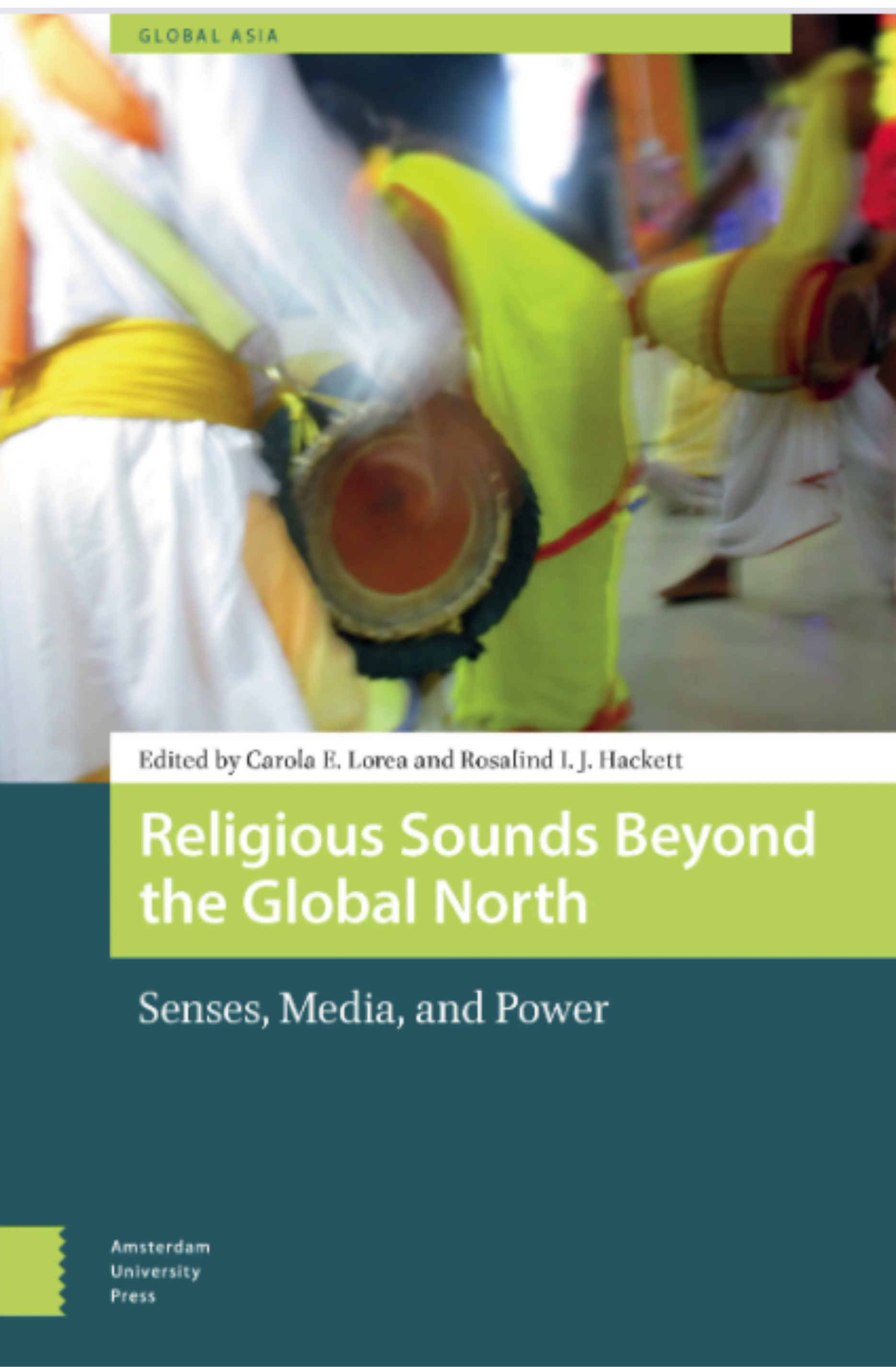
Dr. Carola Lorea is a Junior Professor at the Institute for Religious Studies, Faculty of Philosophy, University of Tübingen (since 2023) and former Senior Research Fellow at NUS's Asia Research Institute (2022-2023). Her work bridges religious studies, cultural anthropology, and digital humanities with a focus on South/Southeast Asian borderlands. PhD in South Asian Studies (2015, La Sapienza University of Rome) 2023 Habilitation Venia Legendi in religious studies and cultural anthropology Research centers on Matua traditions , Baul oral cultures , religion and pandemics , and sensory scholarship . She pioneered the CoronAsur research blog (2020) and leads the MANTRAMS project with ERC Synergy Grant (2023). Key contributions include: Digital Archive of Baul Songs (EAP1247 PI) Theoretical work on bricolage thinking in borderland communities Critical analysis of caste dynamics in post-Partition Andaman settlers Sonic approaches to religious studies Teaching includes courses on Religious Sounds (Tübingen 2024), Religion and South Asian Society , and Bengali language instruction. She founded the Digital Archive 'Songs of the Old Madmen' and co-edits volumes on global religious sound studies.
Viktor Golinets is a Professor of Hebrew Linguistics at the Heidelberg University of Jewish Studies , where he has held the Chair of Hebrew Linguistics since 2018. Previously, he served as a Junior Professor at the same institution from 2012 to 2018. His academic journey includes a PhD in Ancient Near Eastern Studies from the University of Munich (2010) and a Magister degree in Semitics from Ludwig-Maximilians-Universität München (2004). Education: PhD (Altorientalistik, LMU Munich, 2010), Magister (Semitics, LMU Munich, 1997-2004) Professional Roles: Professor (Heidelberg University of Jewish Studies, since 2018), Junior Professor (Heidelberg University of Jewish Studies, 2012-2018), Scientific Assistant (University of Basel, 2007-2012) Golinets’ research focuses on the linguistic and textual history of the Hebrew Bible , ancient Bible translations , and historical grammar of Hebrew . He specializes in Masoretic studies, Semitic epigraphy, and comparative analysis of Northwest Semitic languages like Amorite, Aramaic, and Ugaritic. His work addresses textual criticism, biblical hermeneutics, and the evolution of Hebrew from Masoretic to modern usage. His publications and articles reveal a strong emphasis on Hebrew onomastics , epigraphic analysis , and the role of language in Jewish cultural identity . He has contributed to international colloquia on textual criticism and Semitic philology. Memberships: German Oriental Society, European Association of Biblical Studies, International Association for Comparative Semitics, Association of Judaists in Germany, and others Golinets serves as Deputy Rector at Heidelberg University of Jewish Studies and has collaborated on projects like the Hebrew-Greek Text-Critical Synopsis of the Book of Jeremiah and the Biblia Hebraica Transkripta. His expertise in Hebrew manuscripts and Semitic languages informs both his teaching and research.
Prof. Dr. Pascal Fischer is a Professor for English and American Cultural Studies at the Faculty of Humanities and Cultural Studies, Otto-Friedrich-University Bamberg. He serves as Head of the Examination Board for the B.A. English and American Studies program and has held various academic roles since 2014, including interim professorships at multiple German universities earlier in his career. Education: PhD (summa cum laude) in English Literature (2003), Habilitation in English Philology (2009), both from University of Würzburg. His research spans interdisciplinary intersections of British Romanticism with medical humanities , urban studies , and Jewish-American literature . Key themes include: Political and religious discourse in historical contexts Urban space as a site of resistance and identity negotiation Cognitive approaches to literature and political thought Language as a marker of cultural identity in diasporic communities Prominent publications include monographs on literary conservatism and Jewish identity , co-edited volumes on poetry pedagogy and urban politics, and articles analyzing: Edmund Burke’s legacy in Brexit discourse Biblical texts in early modern political theory Cognitive contrasts between human and AI: literature as a bridge Scientific contributions: PhD with highest honors (2003) Keynote addresses at conferences (e.g., Anglistentag 2011 ) Teaching initiatives focus on integrating lyrical texts into language education and fostering interdisciplinary seminars for pre-service English teachers.