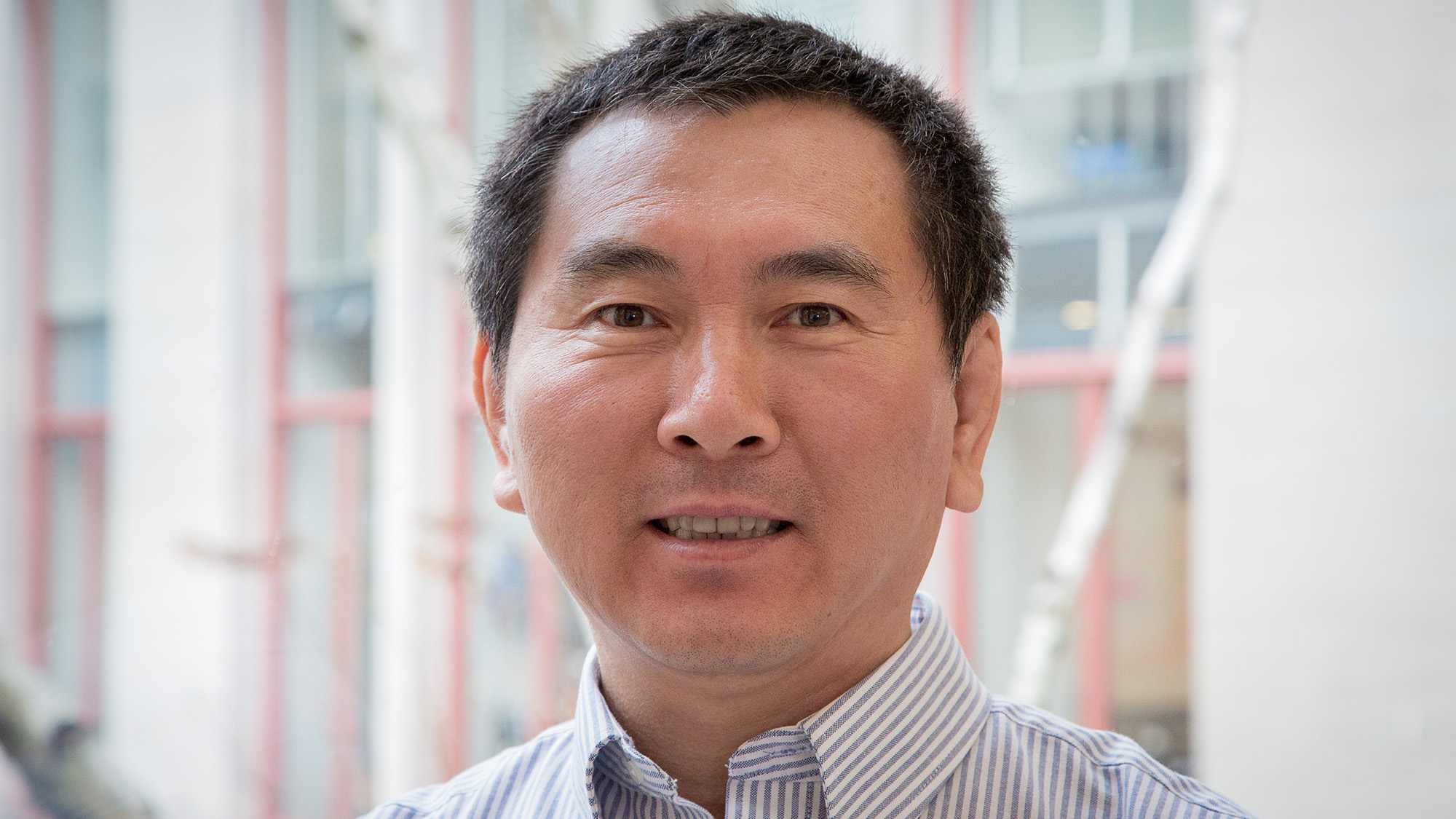
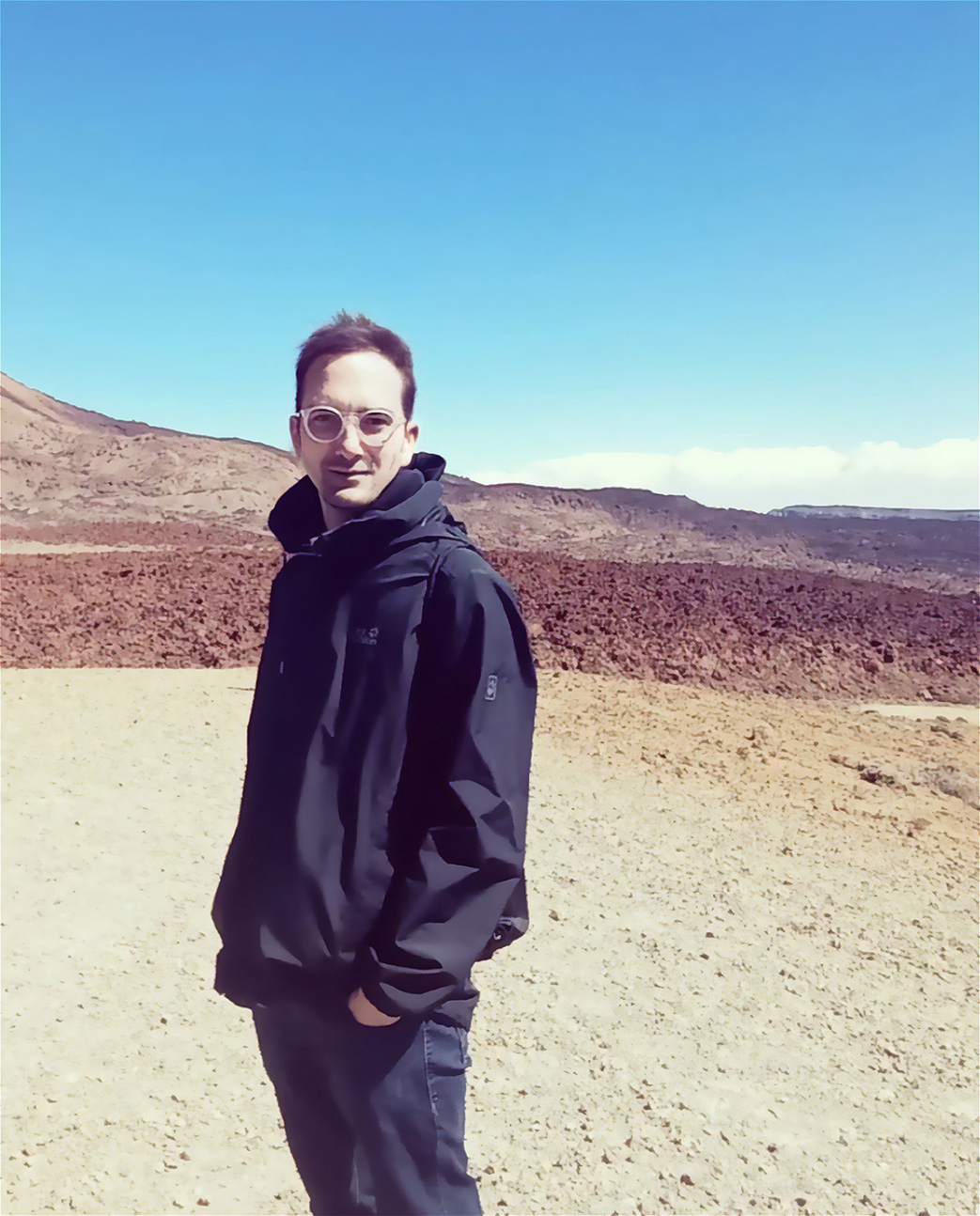
Charles Ivan Armstrong is a Professor at the University of Agder, Department of Foreign Languages and Translation. His research focuses on W.B. Yeats, Irish literature, Romantic to contemporary English poetry, literary theory, and trauma studies. He holds leadership roles such as President of EFACIS (European Federation of Irish Studies) and the International Yeats Society. Armstrong is a member of prestigious academies including the Norwegian Academy of Science and Letters. He has authored monographs like Reframing Yeats and edited volumes including Suffering in Anglophone Literatures . His work bridges literary analysis with cultural memory, exploring themes of trauma, translation, and political conflict. Notable contributions include studies on Yeats’s archives, David Bowie’s cultural impact, and Derek Mahon’s poetry. Armstrong frequently lectures internationally and chairs key research networks in Nordic and Irish studies.
Prof. Gregor Schöner is a Professor and Director of the Institute of Neuroinformatics (INI) at Ruhr-Universität Bochum, Germany. His work bridges theoretical neuroscience, robotics, and cognitive science, focusing on embodied cognition and neural dynamics. He leads the Theory of Cognitive Systems group, developing the Dynamical Field Theory (DFT) to explain action, perception, and cognition in biological and artificial systems. Research Interests : Schöner’s research explores how embodied nervous systems develop cognition through DFT, emphasizing multi-degree-of-freedom movements, motor skill learning, working memory, sensory-motor decision-making, and early motor behavior. His second research line applies these principles to service robotics, creating autonomous systems that interact with humans. Recent work includes the ROBOVERINE robotic model for naturalistic visual search and the Cedar framework for embodied cognitive systems. Teaching : Schöner teaches advanced topics in neural dynamics, computational neuroscience, and autonomous robotics, including courses like *Computational Neuroscience: Neural Dynamics* and *Autonomous Robotics: Action, Perception, and Cognition*. He also supervises doctoral students and runs the INI Colloquium series. Advising & Labs : He has advised over 15 doctoral students, including works on spatial language grounding (Lins), neural architectures (Richter), and robotic scene representation (Zibner). The INI lab integrates experimental psychology, neurophysiology, machine learning, and robotics to study embodied cognition and develop novel AI solutions.
Ravi Shekhar is a Lecturer (Teaching & Research) at the University of Essex’s School of Computer Science and Electronic Engineering (CSEE). Previously, he was a Post-Doctoral Researcher at Queen Mary University of London (2019–2023), working on projects like EMBEDDIA and SoDeStream. He holds a Ph.D. from the University of Trento (2015–2019), focusing on language and vision models, and an M.S. from IIIT Hyderabad. His research spans Conversational AI, Cross-Lingual NLP, and Social Media Analysis, with a focus on ethical AI and low-resource language challenges. Education Ph.D., Language, Interaction and Computation Laboratory, University of Trento (2015–2019) M.S. (Research), Computer Science, IIIT Hyderabad (2010–2013) B.Sc. (Hons) Computer Science, Delhi University (2001–2005) Research Interests : Dr. Shekhar’s work addresses challenges in NLP and multi-modal systems, including abusive language detection, cross-lingual models, and conversational AI. He emphasizes practical applications in social media moderation and ethical AI, with contributions to datasets like CoRAL and LEDA. Key Contributions : His 2024 work on ‘Power and Vulnerability in Organisational Communication’ explores language dynamics in hierarchies, while ‘Denoising Labeled Data for Comment Moderation’ advances active learning techniques. He leads grants from Innovate UK and the EU, focusing on dialogue systems for safety-critical applications. Awards Outstanding Reviewer (EMNLP 2019) Graduate Research Assistantship (University of Trento) Institute Fellowship (IIIT Hyderabad) Advising & Grants : Supervised 8 graduate students (Master’s/PhD) and secured grants totaling £1.2M, including Innovate UK projects on commodities trading AI and harm mitigation in data systems. Active in mentoring underrepresented groups and promoting collaborative research networks. Labs & Teams : Leads the NLP research group at Essex, collaborating with institutions like UvA Amsterdam and Queen Mary. Engages in open-source projects and dataset development, emphasizing reproducibility and code sharing.
Anna Gadd is a Lecturer at the University of Western Australia (UWA), based in the School of Humanities' Discipline of European Languages and Cultures. She currently serves as Director of Graduate Translation Studies and Spanish Studies Major Coordinator. Her work spans academic leadership, innovative teaching methodologies, and professional translation practice. Key roles include designing and coordinating UWA's Spanish language programs and Master of Translation Studies, which offers courses in 10 languages including Spanish, Mandarin Chinese, and Arabic. Education and Professional Background: While formal educational qualifications are not detailed, her career includes over a decade at UWA since 2011, with extensive experience in translation, language pedagogy, and interdisciplinary collaboration. She holds NAATI certification and participates in national/international committees like the NAATI Regional Advising Committee and the Spanish Embassy's scientific committee for language promotion. Research Focus: Translation Studies, Second Language Acquisition, and multilingual education. Her work emphasizes technology's role in translation (e.g., AI integration), cultural adaptation in literary translation, and wellbeing-centric language teaching (FL2 method). Current projects include a Masterclass on opera translation, bilingual children's book publication, and collaborations with universities like Flinders and Sydney. Awards and Grants: Recipient of Excellence in Teaching Awards (2019, 2022), a Higher Education Academy Fellowship (2023), and grants such as the Flipped Classroom Grant (2018) and Flourish in a Second Language grant (2020). Her work is supported by institutions like the Institute of Advanced Studies and LCNAU. Advising and Professional Engagement: Leads curriculum reviews, supervises translation projects, and collaborates with international partners. External roles include involvement with AUSIT (Australian Translators & Interpreters Society) and Translation and Interpreting Cultures and Languages Cluster (TICL). Future projects include publishing a Spanish grammar textbook and researching Gen Z language learning strategies. Labs/Teams: Active member of the Translating Indigenous Australian Literature into Italian Cluster (2024–), LCNAU TICL (2023–), and NAATI committees. She organizes professional development events like the Translation of Opera Masterclass (2023/24) and academic conferences such as IATED 2023.
Kristen Gehrman is a Lecturer in the Faculty of Social Sciences and Humanities at Vrije Universiteit Amsterdam. She specializes in translation studies, academic writing, and language education. Her roles include teaching in the BA Language and Media track and the MA Schrijven en Vertalen (Writing and Translation) program. She currently teaches courses such as Advanced English Language Skills, Digital Translation, and Dutch-English Translation. Academically, Gehrman holds dual Master's degrees from Université de Lausanne: one in Language Science and Communication (2015) and another in Literary Translation (2015). Her research focuses on applied linguistics, language acquisition, and translation methodologies. She is also a practicing literary translator, converting Dutch literature into English. Notable translations include works by Lize Spit, Dola de Jong, and Annejet van der Zijl. In ancillary activities, she operates as Director/Owner of Language Services in The Hague since September 2022. Her professional expertise bridges academic instruction and practical translation work, emphasizing multilingual communication and cultural adaptation.
Paula Levin is a Teaching Professor Emerita at the University of California, San Diego (UCSD), affiliated with the Department of Education Studies. She also held appointments in the Program in Human Development, the Department of Anthropology, and the Joint Ph.D. Program in Math and Science Education. Levin's career includes serving as Associate Faculty Director and Acting Faculty Director of UCSD's Programs Abroad Office (2008–2014). Recognized for her teaching excellence, she received UCSD’s Distinguished Teaching Award from the Academic Senate. Her research focuses on language, schooling, and cultural dynamics in diverse contexts, including the U.S., French Polynesia, and Papua New Guinea. Key themes include science learning, early literacy, teacher preparation, and home-school relationships. Levin led curriculum development projects for Native Hawaiian children (ages 0–5) at the Kamehameha Schools, earning the Kimball Award for Applied Anthropology. She contributed to NSF-funded projects like 'Visualizing Earth' and Ford Foundation initiatives exploring cultural diversity in education. Levin’s work bridges anthropology and education, emphasizing sociocultural contexts of learning. She has consulted for organizations such as Sally Ride Science and Children’s Television Workshop, designing learning activities for young children. Her publications span journals like Anthropology and Education Quarterly and Computers & Geosciences , reflecting her interdisciplinary approach to education and culture. Education: Ph.D. in Anthropology, UCSD (1978) M.A. in Anthropology, UCSD (1973) B.A. in Psychology, Swarthmore College (1971) Awards: UCSD Distinguished Teaching Award (Academic Senate) Kimball Award for Applied and Public Anthropology (AAA) Key Projects: NSF-funded 'Visualizing Earth' (scientific visualization in education) Ford Foundation 'Teaching Diversity and Learning Tolerance' study WASC Substantive Change Committee member (2008–2012)
Professor Hunter researches formal syntax, computational linguistics, and cognitive modeling of language. Key areas include minimalist grammars, mild context-sensitivity, probabilistic models of language processing and acquisition, and the syntax of ellipsis. Recent work explores computational approaches to syntactic variation, noise-tolerant learning models, and integrating grammatical theories into cognitive architectures. Teaches computational linguistics and syntax at undergraduate and graduate levels. Education includes PhD from University of Maryland (2010) focusing on syntactic effects of conjunctivist semantics.
Nadine Mirza is a Researcher at The University of Manchester, affiliated with the Division of Population Health, Health Services Research & Primary Care. She holds an MPhil in Primary Care Mental Health and is completing a PhD focusing on British South Asian dementia diagnosis and access to memory clinics through the DOME Project. She also works with the NIHR Applied Research Collaboration Greater Manchester, co-creating research resources with young people via the Bridge The Gap initiative. Additional roles include Honorary Lead Research Assistant at Salford Royal NHS Foundation Trust's Clinical Neuropsychology Department (IMAN Project) and founder of the SOODI Project raising dementia awareness in Pakistan. Education: BSc (Hons) Psychology (2015), University of Manchester; MPhil in Primary Care Mental Health (2017), University of Manchester. Research focuses on cultural adaptations of cognitive tests, minority healthcare access, and dementia awareness in Pakistan. She has published widely on these topics, including guidelines for translating cognitive assessments and analyzing barriers to neuropsychological service engagement. Teaching includes roles as a Graduate Teaching Assistant and guest lecturer at Lancaster and Manchester Universities on topics like cross-cultural neuropsychology. Awards include the 3MT Winner (2021), BSG Stirling Awards (2018, 2019), and recognition for science writing and presentation excellence. Labs/Teams: Involved in the DOME Project, IMAN Project, and SOODI Project. Active in committees like the BPS Division of Clinical Psychology Minorities Group.
Gabriella Maestrini is a Sessional Lecturer at the Department of Educational Studies within UBC's Faculty of Education. She holds both a PhD (2022) and MEd (2011) from UBC, with a concentration in Educational Studies – General . Her work bridges humor, cultural memory, and pedagogy across diverse contexts. Education : PhD in Educational Studies, University of British Columbia (2022) MEd in Educational Studies, University of British Columbia (2011) Bachelor's in Modern Languages and Anthropology, University of Pisa (Italy) Her research explores: Pedagogical and epistemological dimensions of humor Post-disaster cultural memory through memes and street humor Gendered spatial dynamics in comedy clubs Transnational cultural ambassadorship in ESL education Political humor in social movements (Arab Spring, 9/11 aftermath) Recent publications focus on: Comedic vulnerability in teaching/research 2017 earthquake humor in Mexico Alternative imaginaries in Muslim stand-up comedy Thirdspace gardening metaphors for decolonial learning Scientific Awards : Mitacs Grant (2019/2020) for post-disaster humor research at UNAM, Mexico City She engages with: Visual elicitation methods for multinational classrooms Gender analysis in performance spaces Street photography as artistic practice
Tong Chen is a Lecturer in Chinese at MIT, specializing in language education, with 28 years of teaching experience. He leads the Chinese language track, emphasizing multimedia integration and second language acquisition. His pedagogical work focuses on sociolinguistics, curriculum design, and teacher training. Education: MA, Heidelberg University BA, Tianjin Normal University, China Chen’s research prioritizes innovative teaching methods, including early adoption of Skype and QQ for cross-cultural student exchanges. He authored textbooks such as Teaching Basic Chinese Grammar and Digital Chinese , and co-created the Snapshots series. He previously directed MIT’s Chinese program and served as President of the New England Chinese Language Teachers Association. Professional Contributions: 25-year leadership in Middlebury Languages School summer programs Board Director, Chinese Teachers Association, USA His work bridges traditional and digital pedagogies, emphasizing cultural immersion and teacher professional development.
Nan Li is an Associate Professor and Director of Graduate Studies in the Department of Life Sciences Communication at the University of Wisconsin-Madison. She is affiliated with the Robert F. and Jean E. Holtz Center for Science and Technology Studies, McPherson Eye Research Institute, Office of Sustainability, and Wisconsin Institute for Discovery. Her research focuses on visual communication in science, including media translation of scientific visuals, impacts of AI-generated imagery, and art-based approaches to environmental risk communication. She emphasizes emotional resonance and community knowledge over traditional data-centric norms. Li teaches undergraduate and graduate courses on visual and risk communication, advising students in both master’s and PhD programs. Her interdisciplinary work is funded by USDA, DOE, and NOAA, with outreach featured in Forbes, The Guardian, and PBS. She collaborates with artists to create exhibits and community events highlighting Indigenous ecological knowledge in Wisconsin. She serves on committees for the PCST Network, IECA, and AEJMC’s Visual Division. Her research spans science comics, climate art, and pandemic communication, emphasizing cross-disciplinary methods to bridge public understanding gaps.
Leslie Becker is a Professor in the Graphic Design Program at California College of the Arts (CCA). Her work focuses on design ethics, exploring how graphic images shape societal values. She holds a BFA from The Cooper Union, an MFA and PhD in Architecture (Theory & Methods) from UC Berkeley. A former CCA design director, she is an AIGA Fellow and has lectured globally at institutions like Harvard, Tsinghua University, and Saint Louis University. Her publications include contributions to PRINT , Graphis New Talent Design Annual , and Routledge's Design and Ethics . Becker advocates for ethical design practices through pro bono work with nonprofits and cross-cultural pedagogy initiatives. Education: BFA in Graphic Design, The Cooper Union MFA in Design, UC Berkeley PhD in Architecture (Theory & Methods), UC Berkeley Research emphasizes design's sociocultural impact, particularly in visual communication and ethical frameworks. She has pioneered discussions on design responsibility through international conferences and academic collaborations. Her 2010 lectures in Beijing and 2012 Melbourne conference presentations underscore her commitment to global design discourse. Current work includes advancing ethical curricula and participatory innovation methodologies. Awards & Recognition: AIGA Fellow (2010s) Teaching and advising focus on integrating ethics into design education. She has mentored students through CCA's Graphic Design program and contributed to professional development initiatives. Her pro bono projects highlight community engagement, aligning with CCA's mission to foster socially conscious art and design.
Gerrit Großmann is a researcher and educator at the Universität des Saarlandes, focusing on numerical methods for stochastic dynamical processes on complex networks. His work bridges computational epidemiology, network science, and machine learning, with applications to epidemics, drug discovery, and AI-driven scientific discovery. He has developed tools like the Network Epidemic Playground and contributed to open-source platforms such as TeachOpenCADD. Education includes a PhD in Stochastic Spreading on Complex Networks, a Master's in Lumping the Approximate Master Equation, and a Bachelor's in Markov Model Likelihoods. His research emphasizes the limitations of traditional ODE models in epidemiology and advocates for more nuanced stochastic approaches. Teaching spans advanced topics in diffusion modeling, AI for drug design, and complex network dynamics. Current interests include LLM4Science, exploring how large language models can transform scientific reasoning and collaboration. Key contributions include analyzing the role of network structure in epidemic spread, developing efficient simulation techniques, and critiquing predictive modeling practices in public health. His tools and frameworks are widely used in academic and applied research settings.
Annie Kou-Chow, MD is an Assistant Professor in the Department of Medicine at Drexel University College of Medicine. She practices at Drexel's Partnership Comprehensive Care Practice, specializing in primary and preventative care for people living with HIV, including comorbid conditions like diabetes and hypertension. Education: MD - Universidad de Costa Rica Medical School (2002) Dr. Kou-Chow focuses on culturally sensitive care for vulnerable populations, emphasizing health equity and holistic treatment approaches. She has extensive experience in community medicine, particularly with underserved and uninsured communities in North Philadelphia. She has received awards for her teaching and service, including the Family Medicine Resident Teaching Award (2010) and Outstanding Employee Award (2013). Her clinical work integrates substance abuse treatment, PrEP, and management of chronic diseases like HIV. Certifications: Board Certified in Family Medicine Languages: Spanish (native speaker) Professional Memberships: Pennsylvania Academy of Family Physicians (2010–present); American Academy of Family Physicians (2007–present)
Fatma Batur is an academic and secondary school teacher in Computer Science and Mathematics at the University of Duisburg-Essen and Gymnasium Norf in Neuss. She holds a Master of Education in Mathematics and Computer Science from the University of Münster and has conducted research on computational thinking, game-based learning, and language-sensitive pedagogy in computer science education. Her research focuses on students' conceptions of programming, the integration of digital games in education, and linguistic challenges in computer science classrooms. Notable contributions include studies on gender stereotypes in computing education and the design of adaptive programming tutors. She has been nominated for the Förderpreis der Angewandten Informatik 2012 for her master's thesis on cross-cultural student attitudes toward computer science. Batur is actively involved in teacher training programs and has developed curricula addressing language diversity and inclusive education strategies. She serves as Deputy Equal Opportunities Officer at the Faculty of Computer Science and contributes to interdisciplinary initiatives like the GI's 'Informatics and Social Development' working group.