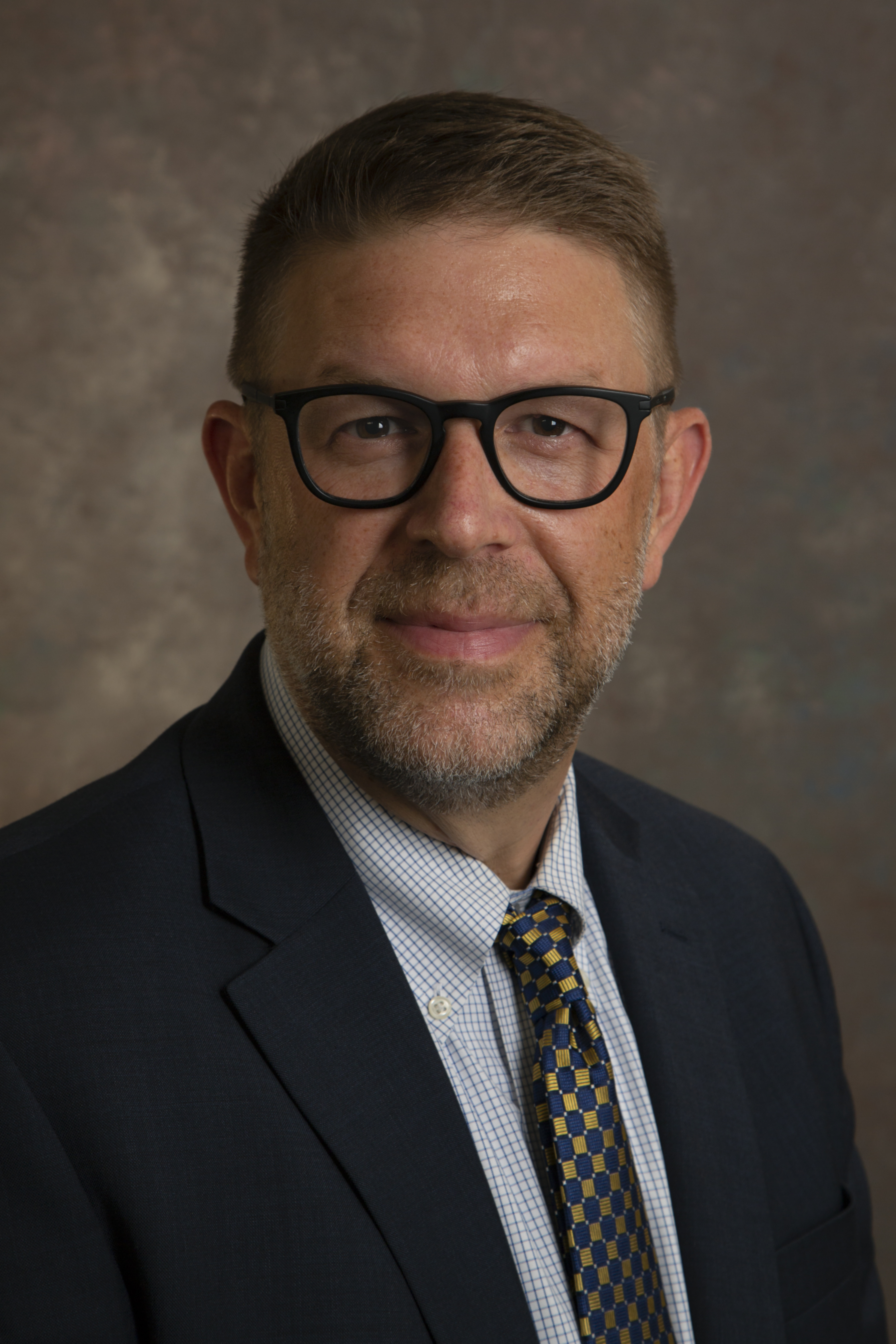
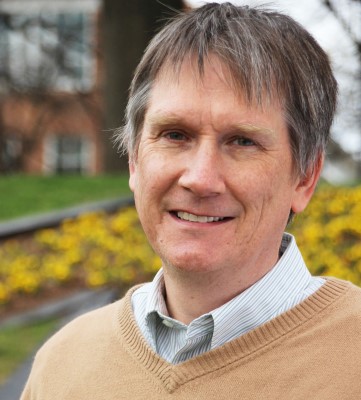
Dr. Prabi Rajbhandari is an Associate Professor of Pediatrics at Northeast Ohio Medical University and serves as Director of the Pediatric Hospital Medicine Fellowship Program at Akron Children’s Hospital. She leads quality improvement initiatives and is certified in Pediatrics and Pediatric Hospital Medicine. Her expertise focuses on high-value care, linguistically diverse patient care, and systems improvement. Research interests include reducing healthcare disparities, optimizing interpreter use, and improving care efficiency. Her work addresses language barriers in preventive care, cost-effective analgesia protocols, and reducing unnecessary diagnostic tests (e.g., blood cultures in pneumonia cases). Key projects include a QI initiative to streamline telecommunications in pediatric emergency departments and studies on procalcitonin use variation in bronchiolitis. She has contributed to national discussions on reducing overutilization in pediatric medicine, as seen in Choosing wisely in pediatric hospital medicine (2021). Her roles span clinical leadership, program development, and translational research. She collaborates with multidisciplinary teams to enhance patient outcomes through evidence-based practices and system-level changes.
Craig S. Wells is a Professor at the University of Massachusetts Amherst, affiliated with the Research and Evaluation Methods Program and serving as Associate Director of the Center for Educational Assessment. He holds a PhD from the University of Wisconsin at Madison (2004) in Quantitative Methods in Educational Psychology. His research focuses on non-parametric item response models, differential item functioning detection, IRT model fit assessment, and the philosophy of science. He teaches statistical methods and structural equation modeling. Dr. Wells has contributed extensively to psychometric methodologies, including software development (e.g., 'irtQ' and 'irtplay' packages) and validation frameworks for educational assessments. His work addresses challenges in cross-cultural testing, accommodations for English learners, and improving measurement invariance in applied research. He has collaborated on projects in Guatemala, Florida, and Massachusetts, emphasizing practical applications of quantitative methods in education. His recent articles explore topics like linguistic adaptations in science testing, student growth percentiles, and curriculum-based assessments. While no scientific awards are explicitly mentioned, his prolific publication record and leadership roles highlight his influential contributions to educational measurement and policy. Wells has advised numerous projects related to educational equity, test design, and policy implementation. His involvement with the Center for Educational Assessment underscores his commitment to advancing valid, equitable assessment practices. He has also developed tools for formative assessment and collaborated on initiatives to improve literacy in marginalized communities.
Dr. Steve Amendum is a Professor and Director of the School of Education at the University of Delaware. He specializes in literacy education, focusing on early reading intervention, multilingual learners, and teacher professional development. He holds a Ph.D. in Literacy Education from the University of North Carolina at Chapel Hill (2008), an M.Ed. in Reading Education (1996), and a B.A. in Psychology (1994). His research emphasizes evidence-based practices to improve literacy outcomes for multilingual learners, particularly through collaborative teacher training programs. Current projects involve scaling professional development programs to enhance ESL and classroom teacher collaboration, leveraging cultural wealth to support Latino learners. Dr. Amendum leads IES-funded grants totaling over $6.8M, including studies on online professional development systems and early reading interventions for K-2 multilingual students. He has published in top journals like Reading Research Quarterly and American Educational Research Journal . Recent awards include the CEHD Dean’s Research Award (2018) and Early Career Achievement Award (2015). His work bridges research and practice, focusing on equity and scalable solutions for high-need student populations.
Martyn Clark is a Lecturer in Second Language Acquisition at the University of Maryland's School of Languages, Literatures, and Cultures, while concurrently serving as a Senior Data Scientist in the Academic Technology Experience group within the Division of Information Technology. His academic background includes a BA in Cultural Area Studies from the College of Wooster, an MA in ESL, and a PhD in Second Language Acquisition from the University of Hawai’i at Mānoa. His research focuses on language testing methodologies, learning analytics applications in education, program evaluation frameworks, and the interplay between instructional strategies and learner outcomes. Previous professional roles include Assessment Director at the University of Oregon’s Center for Second Language Studies (2006–2012) and a five-year tenure as a researcher at the University of Maryland Center for Advanced Study of Language. Clark’s work bridges applied linguistics and institutional technology, emphasizing data-driven approaches to language education. No specific awards or grants are highlighted in the provided text, though his contributions to language assessment and program evaluation are central to his professional profile.
Professor Danijela Trenkic holds a BA from the University of Belgrade, and MPhil/PhD from the University of Cambridge. She has served as Lecturer, Senior Lecturer, and Reader in Education before becoming a full Professor at the University of York. Her primary affiliations include the Department of Education within the Faculty of Social Sciences, and she leads the MA Applied Linguistics for Language Teaching program. She has held roles in academic promotions panels, and served as President of the European Second Language Association (2015–2019). Education: BA (Hons) in English Language & Literature (Belgrade), MPhil/PhD in English & Applied Linguistics (Cambridge) Key Roles: MA Programme Leader, Academic Promotions Panel member Research Groups: Centre for Advanced Studies in Language and Education (CASLE) Her research bridges psycholinguistics and education, focusing on: 1. Cognitive mechanisms of second language learning (e.g., cross-linguistic influences, bilingual cognition) 2. Language-literacy-academics interplay in higher education, particularly for international students 3. Second language segmentation and teaching methodologies Her publications analyze bilingual language control, IELTS testing validity, and vocabulary disparities in higher education. Recent work highlights vocabulary knowledge as a critical factor in academic equity. She has supervised over 10 PhD students and served on editorial boards for journals like JESLA and EUROSLA Yearbook. Awards: Kenneth E. Naylor Prize (2002), VC Anniversary Lectureship (2005) Consultancy: Language policy advice for institutions like the Government of Nunavut Current research explores how language experiences modulate bilingual control and investigates linguistic predictors of academic success. She actively recruits PhD candidates in these areas.
Dan Dewey is a Professor and current Department Chair in the Department of Linguistics & English Language at Brigham Young University’s College of Humanities. He holds a PhD in Second Language Acquisition from Carnegie Mellon University and has been actively contributing to research and teaching in applied linguistics and language education. PhD, Second Language Acquisition, Carnegie Mellon University M.A., Language Acquisition (Japanese), Brigham Young University B.A., Japanese, Brigham Young University His research centers on informal second language acquisition, particularly in study-abroad and immersion contexts. He investigates the interplay of cognitive, emotional, social, and neurological factors in language learning, with a strong focus on motivation, anxiety, self-regulation, and social networks. He has increasingly incorporated neurolinguistic methods, including functional near-infrared spectroscopy (fNIRS), to examine brain responses during language use. His teaching interests include second language acquisition, pragmatics, neurolinguistics, and language teaching methodology. His recent publications reflect a strong trend in affective and social dimensions of SLA, including positive psychology interventions, mental contrasting, and social network development. He frequently publishes on language testing, self-assessment validity, and comparative studies across learning contexts such as study abroad, domestic immersion, and foreign language housing. Dan Dewey has not been explicitly awarded scientific prizes in the provided text, but his extensive publication record and leadership role indicate scholarly recognition. He collaborates with the BYU English Language Center and the Center for Language Studies, advising students and contributing to research on language teaching and assessment. He has been involved in projects examining TESOL job market demands and technology integration in language instruction. His work supports both theoretical understanding and practical applications in language education. He is actively involved in research teams utilizing fNIRS and conducting longitudinal studies on language learners abroad. His lab collaborations focus on social interaction, cognitive load, and emotional dynamics in multilingual environments.
Yu (Joyce) Wu is Associate Professor of Chinese, Chinese Section Head, and Director of the Chinese Flagship Program at the University of Rhode Island’s College of Arts and Sciences, Department of Modern and Classical Languages and Literatures. She also serves as Vice President of the Chinese Language Teachers Association (CLTA-USA), board member of NECLTA, and incoming higher-education Co-Chair for the College Board AP Chinese Development Committee. Education Ed.D. in Development Studies (Language Education), Boston University M.A. in Linguistics and Applied Linguistics, Guangdong University of Foreign Studies B.A. in English & B.S. in Computer Science, Shanxi University Research Interests Dr. Wu’s scholarship centers on classroom-based empirical research in second-language acquisition, with particular emphasis on proficiency-oriented pedagogy and assessment, individual learner factors, technology-enhanced language learning, and the development of intercultural communicative competence in immersion and study-abroad contexts. Recent projects investigate learner self-assessment accuracy, the roles of vocabulary size and metacognitive awareness in listening proficiency, and differential impacts of teacher corrective feedback on Chinese grammatical acquisition. Recent Publication Trends Between 2019 and 2024 her work spans rigorous empirical studies (mixed-methods oral profiling, CALL interventions, corrective-feedback experiments), curriculum-focused case studies (engineering Chinese programs), and pedagogical reflections on mindset and assessment. Collectively these publications advance evidence-based practices for moving learners from intermediate toward advanced and superior proficiency in Chinese. Awards & Honors 2022 Rhode Island Foreign Language Association Mary L. Borra Excellence Award 2020 Cengage Learning Award for Innovative Excellence in the Teaching of Chinese as a Foreign Language (CLTA) 2019 URI College of Arts and Sciences Teaching Excellence Award 2014 CLTA Walton Presentational Award Professional Service & Outreach She routinely presents at national and international conferences and has delivered teacher-training workshops for Middlebury College Chinese Summer School, NECLTA, Western Kentucky University, Beijing Language and Culture University, and Shanxi University. She is currently completing the ACTFL Workshop Facilitator-in-Training program (2023–2024) and will lead ACTFL workshops on foundational proficiency development and World-Readiness Standards. Textbook Development Dr. Wu co-authored the Progressive Chinese: An Intermediate Chinese Textbook series (volumes 1–2, student books and teacher manuals, 2022–2023), designed to bridge learners from intermediate toward advanced proficiency.
Sarah Bridget SCOTT is a Lecturer in the Department of Humanities Studies at the University of Salento, where she teaches English language and literature to undergraduate students. She has been a faculty member at the university since 1999 and serves as a native language instructor, focusing on language proficiency and assessment. Institution: University of Salento Department: Department of Humanities Studies Role: English Language Teacher and Cambridge Speaking Examiner She holds a BA Hons in English Literature and Language from the University of Hull (1996) and a CELTA certification in Teaching English to Adults (1997). Her professional experience includes teaching in Israel, Italy, and the UK before joining UniSalento. Her primary research and teaching interests lie in English language teaching and language assessment . Since 2001, she has worked as an official speaking examiner for the University of Cambridge, contributing to the design, administration, and evaluation of English language tests. She emphasizes formative assessment, remedial instruction (recupero), and oral proficiency in her courses. Although no publications or research articles are listed, her pedagogical work centers on composition, translation, dictation, keyword sentence transformations, and oral presentations—key components of language acquisition and evaluation. She actively supports students through regular office hours (ricevimento), both in person and online. Sarah Bridget SCOTT has no listed scientific awards or formal students under her supervision. She is not described as part-time, retired, or deceased, indicating she is currently active in her role. She contributes significantly to language education within the humanities curriculum at UniSalento.
Dana Scott Bourgerie is a Professor in the Department of Asian and Near Eastern Languages at Brigham Young University's College of Humanities. He holds a Ph.D. in East Asian Languages and Linguistics from The Ohio State University and has been a key figure in Chinese language education and research. He served as Department Chair (2015–2021) and is the founding director of the Chinese Flagship Center at BYU. Education: Ph.D., East Asian Languages and Linguistics, The Ohio State University (1990) M.A., East Asian Languages and Linguistics (Chinese Linguistics), The Ohio State University (1987) B.A., Linguistics, Chinese, French, University of Minnesota (1982) Professor Bourgerie's research centers on Chinese linguistics, with a focus on sociolinguistics, dialectology (especially Yue and Hakka), and language acquisition. He investigates non-standard varieties of Chinese and the language practices of the Chinese diaspora in Southeast Asia. His work also advances the pedagogy and assessment of advanced Chinese learners. His research bridges theoretical linguistics and practical language teaching, contributing significantly to Chinese as a second language education. His recent scholarly output reflects a strong trend in sociolinguistic fieldwork, heritage language dynamics, and innovative assessment methods. The articles span dialect documentation, identity in language use, technology-enhanced evaluation, and curriculum development for advanced learners. His work emphasizes real-world applications in multilingual communities and educational settings. Scientific Awards and Honors: James Barker Lectureship, BYU College of Humanities (2017) College of Humanities Scheuber and Veinz Professorship (2010–2014) Honorary Professor, Nanjing University Overseas Education College (2009–2012) Fulbright-Hayes Fellow, U.S. Department of Education (1988–1989) Professor Bourgerie has played a major role in academic leadership and service. He was president of the Chinese Language Teachers Association and is the founding director of the Chinese Flagship Center at BYU. He currently serves as editor of Chinese as a Second Language and directs the Cambodian Oral History Project. His grant work includes long-term involvement in the National Language Flagship Program (2002–2014). He has advised numerous initiatives in curriculum design, heritage education, and language policy. He leads the Cambodian Oral History Project, which documents linguistic and cultural narratives of Chinese-Cambodian communities. His professional affiliations include the Cantonese Language Association and the Chinese Language Teachers Association, where he has held editorial and leadership roles for decades.
Giuseppe Pappalardo is an Associate Professor in the Department of Asian and North African Studies at Ca' Foscari University of Venice. His research and teaching focus on Japanese and Korean language and literature, with a specialization in Japanese linguistics. He serves as the Director's Delegate for Orientation and Tutoring and is actively engaged in academic leadership and international collaboration. Department: Department of Asian and North African Studies Email: giuseppe.pappalardo@unive.it Office: San Sebastiano Campus, Studio 228D Website: Personal Profile Education: PhD in History of the Japanese Language, Università degli studi di Napoli 'L'Orientale' (2013) Master's in Linguistics of Asia and Africa, Università degli studi di Napoli 'L'Orientale' (2009), 110/110 with honors Bachelor's in Comparative Languages and Cultures (Literary Curriculum), Università degli studi di Napoli 'L'Orientale' (2006), 110/110 with honors Japanese Language Proficiency Test Level 1 (2008) Giuseppe Pappalardo’s primary research interests lie in Japanese linguistics , particularly historical linguistics , dialectology , phonology , and phonetics . He investigates diachronic variations in the Japanese language, including vowel devoicing, pitch accent acquisition by learners, and morphosyntactic changes in historical texts such as kyōgen plays and medieval narratives. His work often employs corpus-based methodologies, including the Corpus of Historical Japanese and the Corpus of Spontaneous Japanese. A significant portion of his research is dedicated to the Ryukyuan languages and their relation to Old Japanese, reflecting a deep engagement with endangered linguistic varieties in Asia. His recent publications reveal a consistent focus on the evolution of Japanese syntax and phonology over time. He examines phenomena such as the decline of kakari-musubi, phonetic realization of /*p/ in early periods, and sociolinguistic variation in kyōgen. His research combines meticulous philological analysis with modern linguistic theory and computational tools, positioning him at the intersection of traditional and contemporary approaches to Japanese studies. The recurring use of corpora underscores his methodological rigor and commitment to empirical evidence. Scientific Awards and Fellowships: Erasmus+ Teaching Staff Mobility Fellowship (2024, 2020, 2017) Best Essay Award, AISTUGIA Conference (2016) Japan Foundation Fellowship (2016) JSPS Fellowship (2011) Monbukagakushō Scholarship (2007) Doctoral Scholarship from 'L'Orientale' (2009) Exchange Scholarship with TUFS (2005) Giuseppe Pappalardo has supervised numerous academic activities and mentored students in linguistics and Japanese language studies. He has secured competitive international grants and fellowships, enabling extended research stays in Japan at institutions such as Waseda University, Tokyo University of Foreign Studies, and the National Institute for Japanese Language and Linguistics. He has been a visiting scholar multiple times under Erasmus+ and JSPS programs, demonstrating strong international collaboration. He is also actively involved in academic service, including organizing conferences and serving as Secretary General of the Italian Association for Japanese Language Teaching (AIDLG). Research Groups and Affiliations: Research Group: Diachronic variations of the Japanese language (with Paolo Calvetti) Member of: AIDLG, AISTUGIA, AJE, EAJS, Phonetic Society of Japan Former Contact Person for Japan Mobility Programs at Ca' Foscari
Sang Suk LEE is a Researcher in the Department of Asian and North African Studies at Ca' Foscari University of Venice, Italy. He holds a PhD in Korean Linguistics from Hanyang University and has been actively teaching Korean language and literature at the university since 2016, progressing from a linguistic expert to a Hired Professor of Korean. His academic focus lies in Korean language education, particularly for non-native speakers including Italian and Chinese learners. PhD in Korean Linguistics (Syntax), Hanyang University, Korea (2008–2021) MA in Education of Korean as a Second Language, Hanyang University, Korea (2002–2005) BA in Korean Language & Literature, Keimyung University, Korea (1997–2002) His research interests center on Korean linguistics and pedagogy, with a focus on syntax, honorifics, and teaching methodologies. He has published on topics such as conjectural expressions, temporal clauses (e.g., '-(eu)l ttae'), and address terms for Italian learners. His work bridges theoretical linguistics with practical classroom applications, particularly in multilingual and comparative contexts. The recent publications reflect a strong trend in adapting Korean language instruction for European learners, especially Italians. His work combines linguistic analysis with pedagogical innovation, focusing on challenging grammatical and sociolinguistic aspects of Korean. Keywords across his articles include Korean syntax, second language acquisition, sociolinguistics, and cross-cultural pragmatics. Best Teacher of 2013 (summer semester), Jungang University International Language Institute, Korea Sang Suk LEE has extensive teaching experience across Korea, China, and Italy, advising curriculum development and teacher training. He has not received external research grants mentioned in the text, but his role involves significant academic leadership in Korean language education at Ca' Foscari. He has presented at international seminars on comparative teaching methods and participated in workshops on TOPIK (Test of Proficiency in Korean) evaluation. He is affiliated with the Department of Asian and North African Studies at Ca' Foscari University, where he contributes to both undergraduate and graduate programs in Korean language and civilization. His teaching spans multiple modules and levels, indicating active involvement in program design and delivery.
Alicia María Aranda Quesada is an Associate Professor and the Coordinator of the Language Center at CEU Cardenal Herrera University, affiliated with the Faculty of Humanities and Communication Sciences and the Department of Humanities. She has been an active member of the university since 2006 and currently teaches in the Master’s program in Bilingual Education. Her research and professional interests focus on language assessment, bilingual teaching methodologies, and foreign language education. She is particularly engaged in the evaluation and certification of language proficiency, serving as an accredited DELE examiner for the Instituto Cervantes across all levels (A1–C2). She holds an MA in Language Testing from Lancaster University (UK) and a degree in English Philology from the University of Jaén. She has also completed doctoral coursework at the University of Valencia. Her educational background underpins her expertise in linguistic evaluation and pedagogy. As a university educator, she has contributed to both CEU-UCH and VIU (Valencian International University), where she served as a consultant for primary education English courses. She has played a leadership role since 2014 as Director of the Language Service, promoting language learning and certification among students and staff. She has extensive professional experience teaching English to adults, preparing candidates for official certifications such as Cambridge ESOL and Spanish Official Language School exams, in the UK, Madrid, and Valencia. Earlier in her career, she worked as a bilingual secretary and translator at COLT Telecom, a British multinational. Accredited DELE Examiner (Instituto Cervantes, A1–C2) She mentors students in the Master’s in Bilingual Education as a tutor for practicum and thesis evaluation, and serves on academic committees including the Internal Follow-up Commission (CSI) and examination boards for final degree and master’s projects. There is no mention of research grants in the provided text. She leads the Language Center at CEU-UCH, overseeing language instruction and certification services. Her team focuses on promoting multilingualism and standardized assessment within the university community.
Dorothea Dornheim , currently Academic Director at the Department of Psychology I - Developmental Psychology (Otto-Friedrich University Bamberg), has dedicated her career to educational psychology and developmental dyscalculia . The department focuses on cognitive development in early childhood, with an emphasis on mathematical competencies and gender differences in mathematics. Academic Background : Diplom in Psychology (2000), PhD in Psychology (2008) with thesis on predicting arithmetic performance. Previous roles include positions at Ludwigsburg University of Education (2000-2002) and Otto-Friedrich University Bamberg (2002-present). Her research interests center on diagnosis and intervention for learning disorders , particularly dyslexia and dyscalculia , with a focus on early childhood and primary school development. She has contributed to longitudinal studies and teacher training interventions to enhance mathematical language and interaction quality in childcare settings. The article trends highlight her work on early numeracy interventions , teacher professional development , and gender disparities in mathematics. Recent publications (2024) analyze the EarlyMath project , Math Talk in preschools, and self-efficacy of educators. As a member of the German Society for Psychology (DGPs), she engages in expert reviews for journals like the Journal for Mathematics Education . Her collaborations include teams at the Chair of Psychology I and the Baby Research (BAMBI) Group at the university.
Professor Parvaneh Tavakoli is a renowned academic at the University of Reading , affiliated with the School of Literature and Languages . As Vice-President of the International Association of Task-based Language Teaching and a Founding Member of the London Second Language Acquisition Research Forum , her work bridges theoretical research and practical applications in language education. Academic Qualifications: PhD in Applied Linguistics, King's College London Senior Fellow of Higher Education Academy PG Cert in Teaching & Learning in Higher Education, London Metropolitan University MA TEFL, Iran University of Science & Technology CELTA, West London College BA English Translation, Tehran Azad University Her research focuses on second language acquisition , task-based language teaching , and speech fluency assessment . Recent projects include a digitally-mediated EMI communication study (2022-25) and a longitudinal TOEFL ITP analysis in Mexico (2021-23) . Publications highlight fluency metrics, task design impacts, and bilingualism dynamics. She supervises PhD students in areas like L2 fluency , collocational knowledge , and task-based pedagogy . Her leadership in the Centre for Literacy and Multilingualism (CeLM) underscores her commitment to advancing multilingual education.
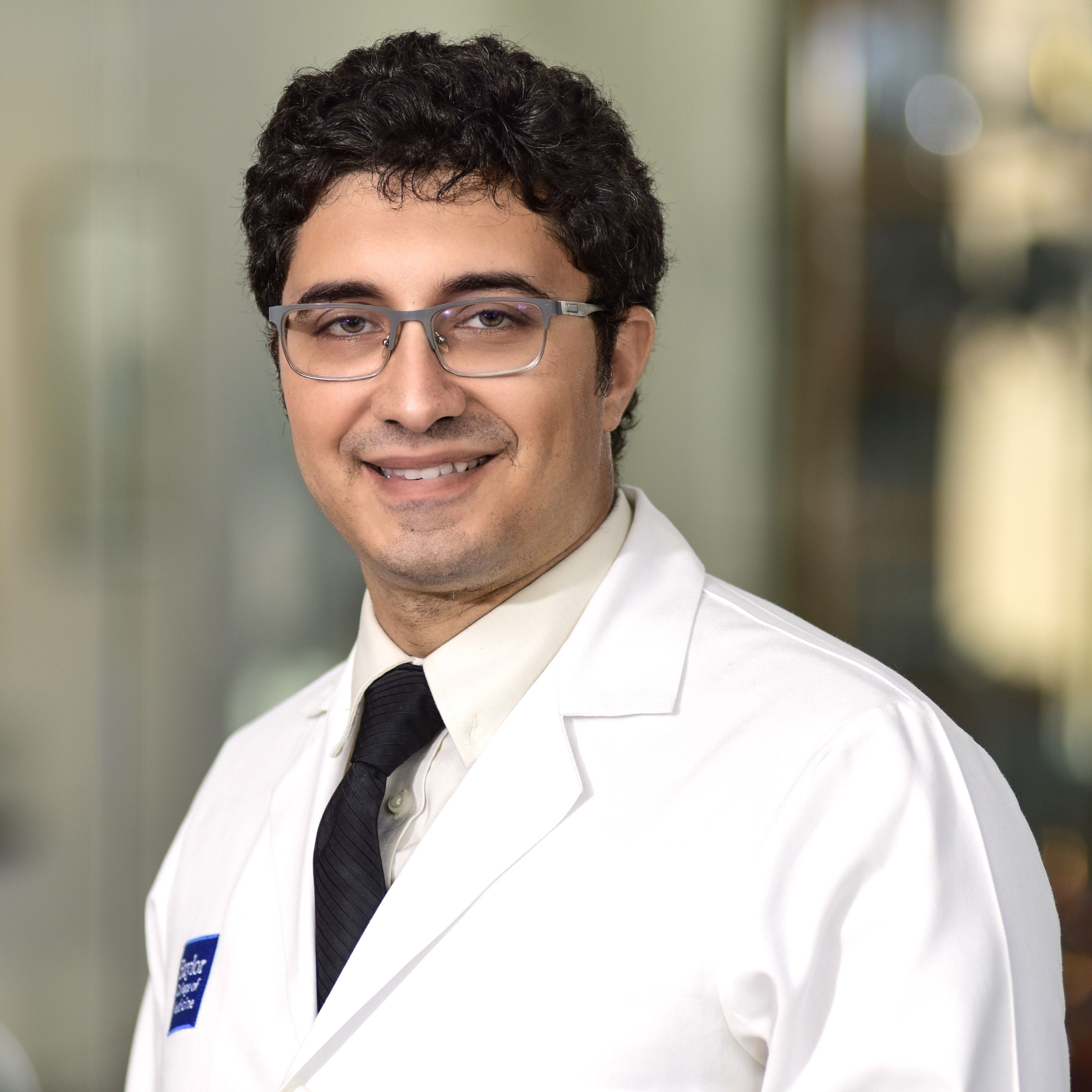
Dr. Ahmed Elkhanany is an Assistant Professor of Medicine at the Lester and Sue Smith Breast Center within Baylor College of Medicine . He is board-certified in internal medicine, hematology, and oncology, with clinical expertise in breast cancer prevention, hereditary risk assessment, and metastatic disease management. MD, Alexandria University School of Medicine (2011) Residency, University of Missouri-Kansas City (2016) Fellowship, Roswell Park Comprehensive Cancer Center (2019) Postdoctoral Fellowship, Mayo Clinic (2013) Triple Negative BC Graduate Certificate, Harvard Business School (2024) His research focuses on translational breast cancer genomics , examining how race and ethnicity influence gene drivers . He develops novel lab-to-clinic treatment combinations and studies health disparities in underserved populations. A 2023 meta-analysis on homologous recombination mutations and 2021 work on CD8+ T-cell exhaustion in Black women highlight his genomic and immunologic expertise. Recent publications include 2024 work on equity in clinical trials (Clin Adv Hematol Oncol) and 2023 studies on ESR1 mutation therapies (Ann Oncol), MSI-H biomarkers (NPJ Breast Cancer), and LOH status in advanced BC (Cancers). His 2018 meta-analysis on breast angiosarcoma and 2019 work on TNBC histopathology further demonstrate his clinical research breadth. Awards include: Arab America 40 Under 40 (2025) Baylor Best Medicine Faculty Research Mentor (2025) University of Alabama Fellow Champion (2023) Best Oncology Teacher at BCM (2024) He serves on ASCO and ESMO, and his skills span hereditary BC genomics, clinical trial design, and Arabic language proficiency.