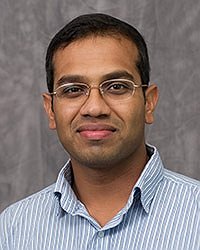
Mayur Naik is the Misra Family Professor in the Department of Computer and Information Science at the University of Pennsylvania’s School of Engineering and Applied Science. His research lies at the intersection of programming languages and artificial intelligence, with a current focus on neurosymbolic programming, trustworthy AI for healthcare, and AI-enabled software engineering tools. Education & Career: Ph.D. in Computer Science, Stanford University (2008) – advisor Alex Aiken M.S. in Computer Science, Purdue University (2003) – advisor Jens Palsberg B.E. in Computer Science, BITS Pilani (1999) Former faculty at Georgia Institute of Technology and researcher at Intel Labs, Berkeley Research Interests: Naik’s group develops languages, algorithms, and compilers for neurosymbolic programming, an emerging paradigm that unites symbolic reasoning with data-driven learning. Their flagship system is the open-source Scallop language and toolchain, applied to computer vision, cybersecurity, medicine, and bioinformatics. He also investigates AI-assisted programming tools that boost productivity and software quality by marrying traditional program analysis with modern machine learning. Recent Highlights: In 2024 he was named Misra Family Professor; his former student Elizabeth Dinella received the 2025 ACM SIGSOFT Outstanding Dissertation Award; his team released IRIS , an LLM-assisted static analysis framework for security vulnerabilities, and published the first comprehensive book on Neurosymbolic Programming in Scallop . Teaching: He regularly teaches CIS 5470 (Software Analysis) every Fall and CIS 5500 (Database Systems) every Spring, both of which are also delivered in Penn’s MCIT Online and Georgia Tech’s OMSCS programs. Advising & Service: Naik has graduated 8 Ph.D. students and mentored numerous postdocs and undergraduates; many alumni now hold faculty or research positions worldwide. He has served on organizing, program, and steering committees for premier venues such as PLDI, POPL, OOPSLA, SPLASH, ESEC/FSE, ISSTA, SAS, and others.