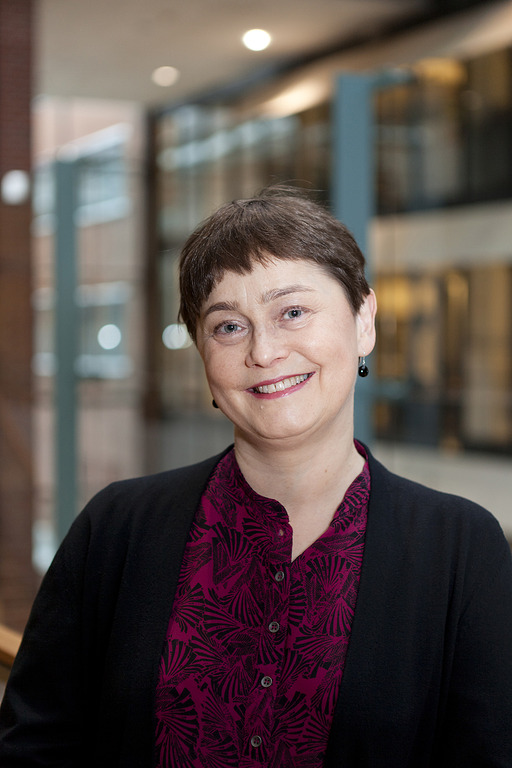
Roger P. Levy is a Professor in the Department of Brain and Cognitive Sciences at MIT, leading the Computational Psycholinguistics Laboratory. He holds a Ph.D. in Linguistics from Stanford University (2005) and has held faculty positions at UC San Diego and the University of Edinburgh. His research focuses on computational models of language processing, integrating psycholinguistic experiments, large datasets, and information-theoretic principles to understand human language comprehension and production. Key research areas include expectation-based processing, uncertainty management, and the interplay between syntax, semantics, and pragmatics. He has pioneered methods to evaluate neural language models against human cognitive processes, emphasizing incremental parsing and real-time comprehension. Levy has received prestigious awards, including the Alfred P. Sloan Fellowship and Guggenheim Fellowship. He is President of the Cognitive Science Society (2024–2025) and Chair of the MIT Faculty (2025–2027). His work bridges theoretical linguistics, cognitive science, and AI, with grants from NSF, NIH, and MIT-IBM collaborations. Notable contributions include the 'noisy-channel model' of sentence comprehension, studies on Mandarin classifier production, and the development of tools like SyntaxGym for evaluating language models. His lab's work has advanced understanding of how humans and machines process language incrementally and under uncertainty.