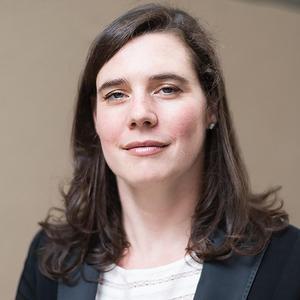
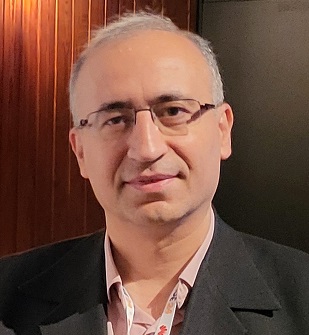
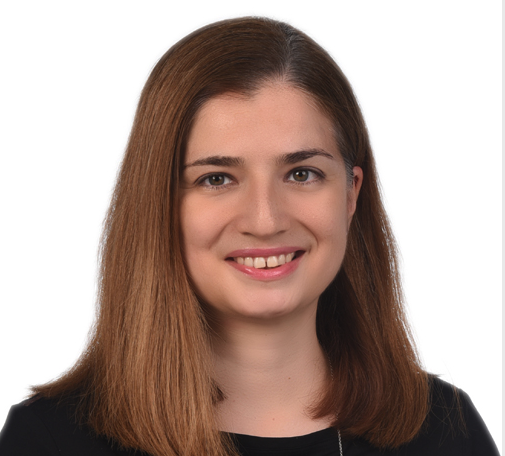
Prof. Dr. rer. nat. Rasha Abdel Rahman is a leading figure in Neurocognitive Psychology at the Institute of Psychology, Humboldt-Universität zu Berlin . Her research bridges the domains of language production , visual perception , and semantic memory organization , with particular emphasis on electrophysiological mechanisms (EEG) and emotional influences on cognitive processing. Habilitation in Psychology (2008), Ph.D. in Psychology (summa cum laude, 2001), and M.S. in Psychology (1997) from Humboldt-Universität Since 2010: Heisenberg Professor of Neurocognitive Psychology 2009: Heisenberg Fellow Her research interests focus on: Language production mechanisms Interface between vision, semantics, and language Functional organization of semantic memory Attentional and emotional modulation of perception Face and object perception dynamics Mental imagery processes The laboratory employs behavioral and electrophysiological (EEG) methods to investigate how knowledge shapes perception and language processing. Recent studies examine: Emotional content's impact on social judgment AI-generated face perception Art perception influenced by artist morality Trustworthiness effects in visual consciousness Selected scientific awards include: Heisenberg-Fellowship (DFG, 2008) Heinz Heckhausen Junior Scientist Award (DGPs, 2002)
Dr. Francesca Delogu is a Scientific Associate at Saarland University's Department of Linguistics and Language Technology. Her research focuses on the cognitive and neural bases of online language understanding, particularly expectation-based mechanisms, event/script knowledge, pragmatic inferences, and reference processes. Specializes in ERP (Event-Related Potentials) and eye tracking methodologies Collaborates extensively with Prof. Matthew W. Crocker and Dr. Herbert Brouwer Her work examines how extra-linguistic knowledge influences semantic integration and lexical retrieval, with applications in computational linguistics and language technology. She has taught courses on experimental methods in psycholinguistic research since 2012. Key research trends include the functional dissociation of ERP components (N400/P600) in language comprehension, rational redundancy in referential expressions, and the role of discourse context in expectation generation. Her publications span journals like Language, Cognition and Neuroscience , Cognitive Science , and Brain Research .
Dr Chris Carignan serves as Programme Director for the Language Science MSc at University College London's Division of Psychology and Language Sciences within the Faculty of Brain Sciences. His research focuses on the intricate mechanisms of human speech production, particularly through cross-linguistic phonetic studies and articulatory dynamics using advanced imaging technologies. PhD in Speech Science Specializes in the intersection of language heritage and phonetic research Develops innovative methodologies for speech data collection and analysis His work spans multiple areas including nasal coarticulation , real-time MRI of vocal tract movements , and cross-linguistic phonetic analysis . He has contributed significantly to understanding how speakers produce complex speech sounds across different languages through comparative studies. Dr Carignan's research has led to the development of open-source tools for speech production analysis and pioneered new approaches for ultrasound articulography . His work on vowel nasalization and sibilant contrasts has been particularly influential in speech science. As Programme Director, he oversees a comprehensive curriculum that provides students with methodological training , statistical expertise , and hands-on research experience while allowing specialization through optional modules. His teaching philosophy emphasizes the importance of curiosity-driven research and interdisciplinary approaches in advancing language sciences.
Becky Huang is a Professor in the Department of Teaching and Learning at The Ohio State University, housed within the College of Arts and Sciences. She holds affiliations with the Center for Languages, Literatures and Cultures and serves on multiple editorial boards, including Language Assessment Quarterly and Language Testing. Additionally, she co-founded the International Language Testing Association’s (ILTA) Language Assessment for Young Learners special interest group and participates in award committees for the American Educational Research Association (AERA). Dr. Huang earned a PhD and MA in Educational Psychology from UCLA (2009 and 2006), an MEd from Harvard University (2002), followed by postdoctoral fellowships at Educational Testing Service (2010–2012) and Harvard University (2009–2010). Her research focuses on promoting language and literacy outcomes for multilingual students, spanning applied linguistics, psychology, and education. Key areas include assessing multilingual learners’ language proficiency, examining socioeconomic factors influencing language development, and designing equitable educational interventions. Her grants include leadership roles in projects such as the NIH-funded study on pandemic impacts on young dual language learners (2021–2022) and the Institute of Education Sciences-supported inquiry-based reading intervention (2020–2024). Notably, she contributed to the U.S. Department of Education Title VI grant for Chinese immersion teacher training (2022–2026) and co-led the ILTA’s Language Assessment for Young Learners initiative. She also advocates for education equity through collaborations with non-profit organizations. Her work emphasizes bridging theory and practice, particularly in creating assessments that fairly evaluate multilingual students’ abilities and addressing disparities faced by minoritized learners. She explores how language skills influence content-area learning (e.g., math, science) and the role of teachers in bilingual students’ outcomes.
Susan E. Brennan is a Distinguished Professor in the Department of Psychology at Stony Brook University, with joint appointments in Computer Science and an affiliation in Linguistics. She holds a Ph.D. from Stanford University (1990) and has been a faculty member since 1990. Her research focuses on the cognitive science of language use, particularly interactive spoken dialogue, eye-tracking as a communication tool, and human-AI interaction. She is also involved in projects exploring how technology interfaces with communication, including speech and language systems. Her academic roles include serving as Director of Graduate Studies and Associate Chair in Psychology. Brennan’s work has been continuously supported by the NSF, totaling over $3.5M in grants. Notable awards include the Chancellor’s Award for Excellence in Scholarship (2003) and the Dean’s Award for Excellence in Service (2012). Research interests span the psychology of language, multimodal communication, and the neural basis of dialogue. She has published extensively on topics like common ground in conversation, coordination signals, and the role of gaze in collaborative tasks. Her lab integrates behavioral experiments, eye-tracking, and computational models to study real-world communication dynamics.
Julie Boland is a Professor at the University of Michigan's College of Literature, Science, and the Arts, affiliated with the Psychology and Linguistics departments. She holds a PhD from the University of Rochester and leads the Psycholinguistics Lab, focusing on interdisciplinary language processing research. Her work explores interfaces between word recognition, syntax, semantics, and sociolinguistic variables, with special attention to bilingual processing and executive function roles. Education: PhD, University of Rochester. She teaches research methods and language psychology, advising numerous PhD candidates. Key research themes include sociolinguistic priming, bilingual ambiguity resolution, and language processing in digital contexts. Her findings highlight how dialect variation, cultural background, and technology impact comprehension and production. Research Interests: Psycholinguistics, sentence processing, lexical access, sociolinguistic influences, bilingualism, and cognitive mechanisms. Labs: Director of the Psycholinguistics Lab, promoting interdisciplinary collaboration across Psychology and Linguistics. Teaching: Courses on language psychology and research methods for Psychology undergraduates/graduates. Recent work addresses conversational dynamics in Zoom interactions, cultural differences in visual attention, and L2 structural priming effects. She emphasizes practical applications of psycholinguistic insights for education and technology design.
Bogusława Whyatt is a Professor at the Faculty of English, Adam Mickiewicz University, Poznań. She holds a D.Litt. in linguistics (2014), Ph.D. in English (2000), and MA in English (1992) from Poznań institutions. Her academic profile spans psycholinguistics, translation studies, and cognitive approaches to translation processes. Key research themes include: Translation process dynamics and directionality effects Eye-tracking applications in translation reception studies Development of translation competence and pedagogy Psycholinguistic analysis of language processing Metacognitive skill transfer between translation and paraphrasing Recent publications focus on cognitive effort metrics, directionality impacts, and empirical methodologies combining eye-tracking and key-logging data. She leads major projects like Read Me (2021-2025) and EDiT (2016-2019), examining translated text reception and translation directionality respectively. Scientific honors include three consecutive Adam Mickiewicz University Rector's Awards for Organizational Excellence (2018, 2023, 2024). She supervises PhD research in translation cognition and has mentored four doctoral candidates to completion. Active in professional networks like the MC2 Lab and TREC consortium, she contributes to cognitive translation studies through methodological innovations and international conference organization. Her methodological expertise includes psychometrics, EEG research, and ATLAS.ti data analysis tools.
Professor Talia Isaacs is a leading academic in Applied Linguistics and TESOL at University College London's Faculty of Education & Society. She serves as Head of Research and Inclusion Co-Lead in the Department of Culture, Communication and Media, with a focus on language assessment, health communication, and educational equity. Previously, she was an Associate Professor at UCL-IOE (2016–2024) and Lecturer/Senior Lecturer at Bristol University (2011–2016), where she founded the EU-funded Second Language Speech Lab. Education: PhD in Second Language Education from McGill University (2011) Appointments: Co-Editor of Language Testing (2023–present), Expert Member of EALTA and TOEFL Committee of Examiners Her research spans language assessment , speech sciences , and health communication , with groundbreaking work on pronunciation assessment and clinical trial inclusivity. Recent articles analyze accent fairness in Duolingo testing, trial monitoring frameworks, and health communication practices. She champions Open Science and was awarded the 2023 UCL Open Science Award. Her research trends show interdisciplinary engagement across educational linguistics , clinical trial methodology , and health equity , often employing mixed methods and evidence synthesis . She has supervised 7 PhD students to completion, including funded projects by ESRC, MRC, and British Council. Scientific Awards: UCL Open Science and Scholarship Award (2023) Fellow of the Royal Society of Arts (2023) Fellow of the Higher Education Academy (2014) She leads the Second Language Speech Lab and collaborates with the MRC-NIHR Trials Methodology Research Partnership. Her work addresses language barriers in academic and healthcare settings, with a focus on under-served communities.
Kathryn Stolee is an Associate Professor in the Department of Computer Science at North Carolina State University. She received her Ph.D. in Computer Science from the University of Nebraska-Lincoln under Sebastian Elbaum after graduating from the Jeffrey S. Raikes School of Computer Science and Management. Her research spans multiple perspectives in software engineering: technical (program analysis), human (human aspects of software engineering, software product management), and educational (comparative comprehension of algorithms). Notable contributions include work on regular expression refactoring for improved comprehension, constraint solvers for code reuse identification, and cross-language code-to-code search to aid developers learning new languages. Dr. Stolee has secured over $2,000,000 in federal grants, including an NSF CAREER award. Her research combines analysis techniques (refactoring, semantic code search, code-to-code search) with human factors (comprehension, reuse, learning). Her scholarly contributions have been recognized with a National Science Foundation Faculty Early CAREER Award (2018) and a Best Paper Award at the International Symposium on Empirical Software Engineering and Measurement (ESEM, 2011). Actively engaged in the software engineering research community, Dr. Stolee serves as an author, reviewer, and organizer at top conferences. She is committed to mentoring the next generation of computer scientists and has developed educational interventions focused on software testing and code comprehension.
Hilary J. Allen is a Professor of Law at American University Washington College of Law, where she teaches Banking Law, Securities Regulation, and Business Associations. She is an internationally recognized expert on financial stability regulation and new financial technologies, regularly sharing her expertise with regulatory bodies across the United States, EU, UK, Canada, and Australia, as well as with international institutions including the IMF, World Bank, and Financial Stability Board. Allen earned her LL.M. from Georgetown University Law Center in 2010 (where she received the Thomas Bradbury Chetwood, S.J. Plaque for graduating first in her class), her Bachelor of Laws from the University of Sydney in 2003, and her Bachelor of Arts from the University of Sydney in 2001. Prior to entering academia, she spent seven years working in financial services groups of prominent law firms in London, Sydney, and New York, and in 2010 worked with the Financial Crisis Inquiry Commission. Professor Allen's research focuses on critical intersections between financial regulation, emerging technologies, and systemic risk. Her work examines how artificial intelligence, blockchain, and cryptocurrency create new challenges for financial stability, while also addressing traditional regulatory concerns through modern lenses. She has published extensively on regulatory sandboxes, precautionary approaches to financial product approval, and the relationship between climate change and financial stability. Her book Driverless Finance: Fintech's Impact on Financial Stability (Oxford University Press, 2022) has become a significant contribution to understanding how emerging financial technologies introduce systemic risks requiring new regulatory tools. Analysis of her recent publications reveals a consistent focus on how technological innovation in finance requires corresponding innovation in regulation. Her work spans from practical regulatory mechanisms like sandboxes to broader conceptual frameworks for understanding financial stability in the digital age. She has particularly emphasized the need for common language in international financial regulation and the importance of addressing emerging threats from crypto, AI, and climate change. Professor Allen has testified before both the House Financial Services Committee and the Senate Banking Committee, demonstrating the practical impact of her scholarship on real-world policy. She is regularly quoted in the popular press and actively participates in scholarly conferences worldwide. Her research has been supported through invitations to present at roundtables with central banks and international regulatory bodies, reflecting her standing in the global financial regulation community. As an educator, Allen brings her deep practical experience from the financial services industry to the classroom, connecting theoretical concepts with real-world applications. Her expertise in both traditional banking law and emerging fintech issues provides students with a comprehensive understanding of the evolving financial regulatory landscape.
Sid Horton is an Associate Professor and Director of Cognitive Psychology in the Department of Psychology at Northwestern University. He holds affiliations with the Northwestern Department of Linguistics and the Center for Technology and Social Behavior. Horton’s research focuses on psycholinguistics and pragmatics, exploring how social and cognitive factors influence language use, particularly in discourse production and comprehension of non-literal language. His work also examines epistemic judgments and theory-of-mind development. Education: B.S. Psychology/German (Duke University, 1991), M.A. and Ph.D. in Cognitive Psychology (University of Chicago, 1994 and 1999). Postdoctoral training at SUNY-Stony Brook and Georgia Institute of Technology. Editorial roles include Associate Editorships at Discourse Processes and Memory & Cognition . Research Interests: Pragmatics, discourse processing, figurative language, common ground, and aging effects on communication. His recent work investigates typing cues in written messages and analogical reasoning’s role in theory of mind. Awards: Fellow, Society for Text and Discourse (2011–2017). Teaching: Cognitive Psychology (PSYCH 228), Research Methods (PSYCH 205), and graduate courses on experimental pragmatics and dialogue. Labs: Cognition and Communication Lab (Swift 217 and Cresap 108), supervising undergraduate and graduate research on topics like bilingualism, emoji usage, and perspective-taking.
Leone Buckle is a Lecturer in Psychology at the University of Manchester, affiliated with the Division of Psychology, Communication and Human Neuroscience. She holds a BSc in Psychology and Philosophy from the University of Liverpool, followed by an MRes and PhD in Psychology from the University of Manchester, funded by the ESRC. Her research focuses on how environmental experiences, such as exposure to linguistic input and real-life events, shape children’s language development. Key interests include syntactic priming, integration of linguistic and social cues during conversation, and diversity representation in children’s literature. Her teaching includes courses like PSYC10421: Introduction to Cognition and PSYC31121: Language and Communicative Development in Educational Settings. Research methods employed include syntactic priming experiments, eye-tracking, corpus analysis, and online questionnaires. She is currently supervising PhD students in areas related to her research. Recent work explores how social contingencies in video/audio interactions influence grammatical learning and examines the relationship between short-term priming effects and long-term language acquisition. Collaborations include projects with the University of Edinburgh and Warwick, focusing on language experience and development. She emphasizes interdisciplinary approaches bridging developmental psychology, psycholinguistics, and linguistic theory.
Zhenchang Xing is a Research Professor at CSIRO's Data61 and holds a Hans Fischer Senior Fellowship at TUM-IAS. With a Ph.D. in Computer Science from the University of Alberta (2008), he previously served as Associate Professor at Australian National University and Assistant Professor at Nanyang Technological University. His research focuses on software engineering for AI systems and human-centered computing. Current projects include: Automated Software-Hardware Co-Design for AI Systems Software Supply Chain Security frameworks Data Bill of Materials (DataBOM) for verifiable data ecosystems Software Testing Knowledge Graph development Professor Xing has received 10 Distinguished Paper Awards from ACM and IEEE, including the 2005 Most Influential Paper Award for UMLDiff. His work combines software engineering with responsible AI development.
Abbas Heydarnoori is an Assistant Professor in the Department of Computer Science at Bowling Green State University (USA) since 2022, and previously held a faculty position at Sharif University of Technology (Iran) from 2012 to 2022. He earned his Ph.D. in Computer Science from the University of Waterloo (Canada, 2009), and M.Sc. and B.Sc. in Software Engineering from Sharif University of Technology (2001 and 1999). His research focuses on AI-driven software engineering (AI4SE/SE4AI), leveraging data science and AI to address challenges like fault localization, bug prediction, and code comprehension. He analyzes software repositories (e.g., GitHub, Stack Overflow) to improve developer productivity and software quality. He has contributed to tools like CrowdSummarizer and ExceptionTracer, and his work spans topics such as microservices architecture, API usage analysis, and code summarization. Teaching includes graduate/undergraduate courses on AI for Software Engineering, Database Systems, and Software Engineering. His service roles include editorial board membership at Science of Computer Programming , and PC membership in conferences like MSR, SANER, and FSE. His research group actively publishes on automated code analysis, documentation generation, and developer productivity tools, with a focus on empirical and data-driven approaches.
Dr. Gül Calikli is a Lecturer in Software Engineering at the University of Glasgow specializing in empirical software engineering and human factors in software development. Her research investigates cognitive biases, code review practices, and human-centered aspects of software quality. Current work focuses on LLM-generated code evaluation, financial incentive design for software experiments, and variability management in software product lines. She develops methodologies to study developer behavior, team dynamics, and decision-making processes in software projects. Recent publications examine the impact of request formats on effort estimation, financial incentive guidelines for experiments, and vulnerability detection during code reviews. Her research bridges software engineering practice with cognitive psychology and organizational behavior. Dr. Calikli teaches software engineering courses and supervises research in human aspects of software development. She contributes to international collaborations on adaptive decision-support systems and privacy dynamics in social software.