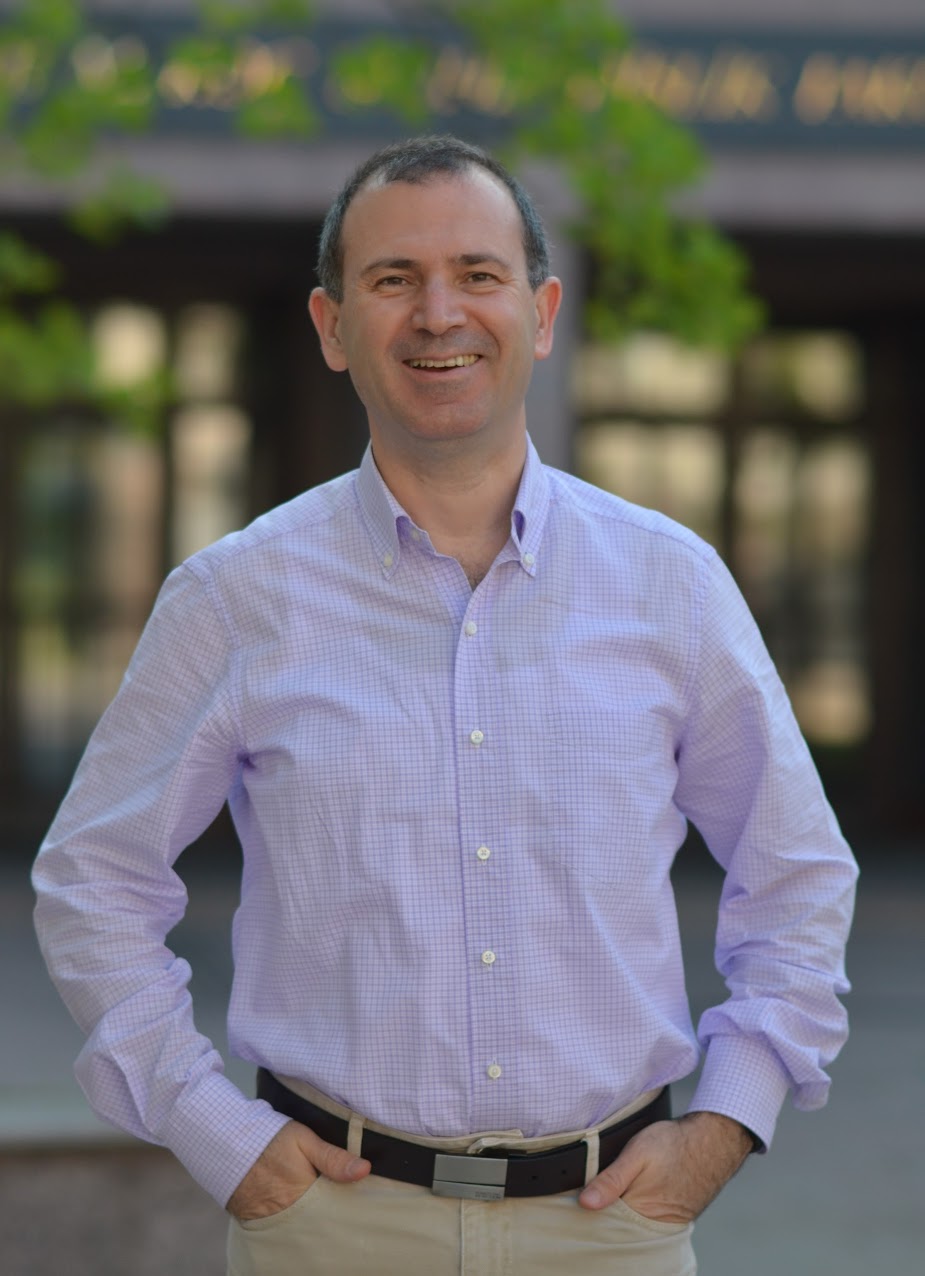
Engin Erzin is a Professor at Koç University's College of Engineering, leading the KUIS AI Lab and Multimedia, Vision and Graphics Lab . His research focuses on AI-driven human-centric systems, affective computing, and multimodal interaction analysis. He has contributed extensively to robotics, speech processing, and human-robot interaction through over 70 peer-reviewed publications since 2008. Research interests include: Affective computing and emotion recognition from speech/gestures Human-robot interaction and socially engaging agents Speech-driven animation and gesture synthesis Multimodal data fusion for interaction analysis Deep learning applications in robotics and biomedical engineering Recent work emphasizes: Developing adaptive pHRI controllers for manufacturing tasks Creating engagement measurement frameworks for human-machine interfaces Advancing Turkish speech recognition through self-supervised learning Designing multimodal databases for interaction studies Labs: KUIS AI Lab : Focuses on AI applications in robotics and human-computer interaction Multimedia Lab : Specializes in vision, graphics, and audiovisual analysis
Zhijing Jin is an Assistant Professor at the University of Toronto and a postdoc at the Max Planck Institute for Intelligent Systems, working with Bernhard Schölkopf. She is also a faculty member at the Vector Institute and an ELLIS advisor. Her research focuses on Causal Reasoning with LLMs , Moral Reasoning in LLMs , and AI Safety , with contributions to AI for Science and NLP for Social Good. She leads the Jinesis AI Lab , which explores causal LLMs, multi-agent systems, and ethical AI applications. Education: PhD in Computer Science from Max Planck Institute (Germany) and ETH Zurich (Switzerland) Bachelor’s degree from University of Hong Kong, with visiting semesters at MIT and National Taiwan University Research Interests: Her work bridges causal inference and NLP, addressing robustness, interpretability, and ethical alignment of LLMs. Key projects include Corr2Cause (causal reasoning), GovSim / MoralSim (multi-agent LLMs), and frameworks like NLP4SG for social impact. She advocates for causal mechanisms to tackle AI safety and societal challenges. Recent Articles: Recent work explores political bias in LLMs, ethical dilemmas in multi-agent systems, and causal foundations for trustworthy AI. These studies emphasize real-world applications, such as healthcare NLP and policy analysis. Awards & Recognition: 3 Rising Star Awards 2 Best Paper Awards at NeurIPS 2024 Workshops Fellowships from Open Philanthropy and Future of Life Institute Grants & Mentorship: Funded by NSERC, Schmidt Sciences, and the Cooperative AI Foundation. She mentors ~20 students globally, including PhD candidates in multi-agent LLMs, causal LLMs, and AI safety. The Jinesis Lab offers remote mentorship across institutions like UofT, ETH Zurich, and University of Michigan. Labs & Collaborations: Active collaborations include MPI-IS, Vector Institute, and ETH Zurich’s AI Center. Her lab emphasizes open science, with tools like MoralLens and RouterAttack released publicly.
Timo Fleischer is an Associate Professor in the Chemistry Didactics Working Group at the University of Salzburg, affiliated with both the Faculty of Natural and Life Sciences and the School of Education. He leads key educational innovation projects including EXBOX-Digital, ChemGerLab-VR, and RECC Salzburg, and plays a significant role in digital science education development. Education: Bachelor of Science in Geography and Chemistry, University of Kiel (2011) Master of Education in Geography and Chemistry, University of Kiel (2013) PhD in Science Education, TUM School of Education (2017) Habilitation in Chemistry Didactics, University of Salzburg (2024) His research focuses on the effectiveness of digital media in teacher education and chemistry classrooms, the development of digital teaching and learning materials, and the integration of experimentation and modeling in science education. He is particularly interested in how digital tools support the learning of chemical language and representations. His work bridges educational theory and practical classroom innovation. His recent publications demonstrate a strong emphasis on digital scaffolding, augmented and virtual reality in chemistry labs, eye-tracking during experiments, and the use of fiction as an anchor in science teaching. These works reflect a trend toward immersive, technology-enhanced, and student-centered learning environments in science education. Scientific Awards: Ehrenurkunde Polytechnik-Preis 2022 – Projekt EXBOX-Digital Kulturfondspreis 2020 für das Projekt MINT:labs Science City Itzling Comenius-EduMedia-Siegel für EXBOX-Digital (2020) Qualitätslabel „Regional Educational Competence Centre“ (RECC) (2018–2021) Junior-Fellowship, Kolleg Didaktik:digital (2016–2017) Timo Fleischer has supervised various research projects and collaborated with numerous colleagues and students, though specific advisees are not listed. He has secured recognition and funding for initiatives such as EXBOX-Digital and MINT:labs, indicating successful grant acquisition. He is actively involved in teacher training, curriculum development, and science communication. He leads several innovative labs and teams, including ChemGerLab-VR (a virtual reality chemistry lab), EdTechAll, and the development of MINT:labs Science City Itzling. These initiatives focus on creating digital, hands-on, and inclusive science learning environments for both students and teachers.
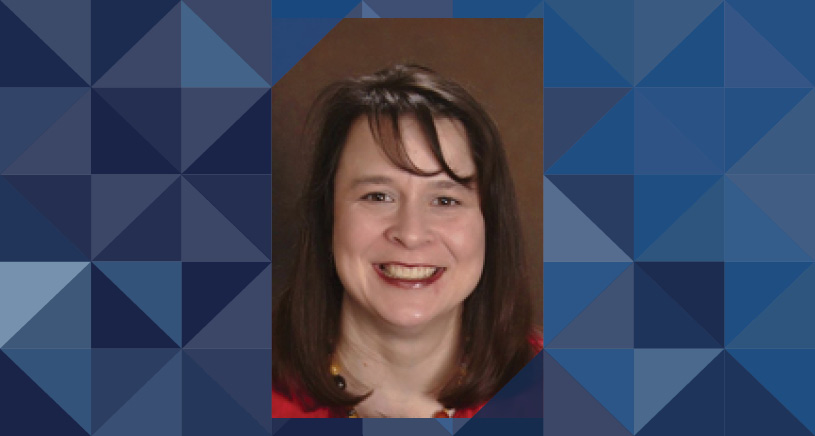
Elisa Krackow is an Associate Professor in the Department of Psychology at West Virginia University, where she directs the Memory and the Law Lab. Her research integrates clinical, developmental, cognitive, and forensic psychology to study eyewitness memory, suggestibility, false memories, and juror perceptions, with a focus on children and legal applications. Dr. Krackow earned her Ph.D. from Binghamton University, State University of New York. She completed a predoctoral internship at the University of Illinois at Chicago and a postdoctoral fellowship at the University of Illinois at Urbana-Champaign. Her research interests lie at the intersection of memory and the legal system, particularly in how children recall events, the impact of suggestive questioning, and the development of interventions like Event Report Training to improve eyewitness accuracy. She also investigates the cognitive mechanisms behind false and recovered memories, the role of emotion in memory, and childhood depression with a focus on cognitive biases and intergenerational transmission. Her work has important implications for forensic interviewing, child protection, and legal policy. The 15 most recent publications reflect a consistent focus on applied memory, child eyewitness testimony, false memory creation, and interventions. The research spans cognitive, clinical, developmental, and forensic domains, often using experimental and narrative methods to explore memory accuracy, suggestibility, and emotional influences. Dr. Krackow's research has been supported by funding from NIH/NICHD, the Society for the Psychological Study of Social Issues (SPSSI), and the American Psychology-Law Society (AP-LS). She mentors graduate students in the Clinical Child doctoral program, including Benjamin Thomas, Victoria DiSciullo, and Emily Deming, who are engaged in research on juror perceptions, juvenile justice, child memory, and traumatic recall. Her lab provides training in high-quality research design across multiple psychological subfields. She teaches courses such as Child and Adolescent Development, Behavior Pathology, Behavioral and Psychological Assessment, and Clinical Child Psychology Practicum. Her lab, the Memory and the Law Lab, focuses on applied research with real-world implications for psychology, law, and child welfare.
Giuseppe Alessandro Veltri is a Full Professor at the University of Trento's Department of Sociology and Social Research. His expertise spans Behavioral Economics, Big Data, Computational Social Science, and Social Psychology. He currently teaches courses such as 'Big Data' and 'Social Dynamics Lab' within the Data Science and Previsione Sociale programs. His research focuses on understanding human behavior through digital methodologies, including studies on vaccine hesitancy, darknet markets, and the psychological aspects of pandemics. Veltri is also actively involved in designing computational tools like TextualLLMap to analyze societal biases in AI systems. His work bridges theoretical frameworks with empirical data, emphasizing interdisciplinary approaches to social science challenges. Research interests include the application of computational methods to study risk perception, online behavior, and policy design. Recent studies explore how behavioral insights can improve public health strategies during crises and how transparency in digital platforms influences consumer decisions. Veltri's contributions also extend to methodological innovations, such as optimizing online experiments and addressing gaps in cognitive sociology.
Bert de Vries is a Professor at the Signal Processing Systems Group at Eindhoven University of Technology (TU/e), where he has been employed since January 2012. He maintains a dual career, also working at GN Hearing in the hearing aids industry since April 1999, where he holds both research and managerial roles. His academic journey began at TU/e, where he earned his MSc in Electrical Engineering in 1986, followed by a PhD from the University of Florida in 1991. Between 1992 and 1999, he worked at Sarnoff Research Center in Princeton, NJ, contributing to diverse signal and image processing projects. Professor de Vries's research centers on Bayesian Machine Learning, with particular focus on the Free Energy Principle and its applications to engineering problems. His work bridges theoretical neuroscience with practical signal processing systems, especially in biomedical applications. He directs the BIASlab research team at TU/e, which develops probabilistic programming tools including RxInfer.jl, ForneyLab.jl, GraphPPL.jl, ReactiveMP.jl, and Rocket.jl. His research spans active inference, variational message passing, probabilistic programming, and Bayesian neural networks, with applications ranging from hearing aids to multi-agent systems. Analysis of his recent publications reveals a strong trend toward practical implementations of Bayesian inference frameworks, particularly through Julia-based probabilistic programming tools. His work shows increasing focus on active inference applications, message passing algorithms, and the intersection of Riemannian geometry with probabilistic modeling. The research demonstrates consistent progression from theoretical foundations toward real-world engineering applications, particularly in biomedical signal processing and autonomous systems. Professor de Vries teaches a graduate-level course on Bayesian Machine Learning at TU/e and actively contributes to open-source software development through his GitHub profile (bertdv), with recent activity as recent as August 2025. His research team has developed several influential probabilistic programming libraries that have gained significant attention in the machine learning community. The BIASlab research group continues to advance the state of the art in Bayesian inference methods with applications in hearing technology, robotics, and signal processing.
Mingyi Hong is an Associate Professor in the Department of Electrical and Computer Engineering at the University of Minnesota , where he leads the OptimAI-Lab . His work bridges optimization theory , machine learning , and signal processing , with a focus on foundation models like LLMs and diffusion models. Education : Not explicitly mentioned in the text Current Projects : NSF grants on bilevel optimization, LLM unlearning, and inverse reinforcement learning Research Themes : Bilevel Optimization : Applications in LLM alignment, unlearning, and wireless systems LLM Safety : Unlearning, alignment with human feedback, robustness Diffusion Models : Inference-time alignment, adversarial training Distributed Optimization : Privacy-preserving algorithms, federated learning Recent Publications highlight trends in LLM unlearning (BLUR, LUME), optimization theory (Barrier Functions, νSAM), and diffusion models (Direct Noise Optimization). His group has secured NSF , AWS , Cisco , and Open Philanthropy grants. Scientific Recognition : IEEE Fellow (2025) SPS Best Paper Award (2022, 2021, 2018) Doctoral Dissertation Fellowship (2024) IBM Pat Goldberg Memorial Award (2022) He mentors PhD students like Siliang Zeng and Xinwei Zhang , and collaborates with institutions including Michigan State University , Amazon , and NIH on projects spanning UHF MRI technology to climate-smart agriculture .
Ajitha Rajan is a Professor (Personal Chair of Software Testing and Verification) at the School of Informatics, University of Edinburgh. Previously, she was a post-doctoral researcher at Oxford University's Computer Science Department and Laboratoire d'Informatique de Grenoble (LIG) in France. She earned her PhD in Computer Science from the University of Minnesota in August 2009 under the supervision of Prof. Mats Heimdahl. Her research spans two main directions: Automated Software Testing Techniques covering test input generation, test oracles, and coverage metrics; and Biomedical Artificial Intelligence focusing on cancer survival models, interpretability for biological sequences, and medical images. Her work bridges software engineering and biomedical applications, particularly in the development of trustworthy AI systems for healthcare. Professor Rajan leads several significant research projects including a Royal Society Industry Fellowship (2022-2025) on AutoTest for autonomous vehicle perception safety, the H2020 European Project KATY (2021-2025) on AI for genomics and personalized medicine where she serves as Edinburgh Lead PI, and an EPSRC Trustworthy Autonomous Systems Node project (2020-2024). Her recent publications demonstrate strong activity across software testing, explainable AI, and biomedical applications, with numerous papers accepted to top conferences in 2025 including ML for Healthcare, IJCAI, and ESEM. Among her scientific recognitions, she received the Best Reviewer Award at ISSTA'25. Her work has been consistently published in leading venues including ICSE, ICASSP, and Communications Biology. Professor Rajan actively mentors PhD students working on diverse topics from automated testing of speech recognition systems to explainable AI for medical image analysis and cancer immunotherapy. She teaches undergraduate courses in Software Testing, Computer Programming, and Embedded Systems, and has been instrumental in establishing several fully funded PhD positions through Centres for Doctoral Training at the University of Edinburgh.
Ludwig Schmidt is an Assistant Professor in the Computer Science Department at Stanford University and a member of Stanford Data Science. He also serves as a member of the technical staff at Anthropic and LAION, contributing to both academic and industrial research in machine learning. Dr. Schmidt completed his PhD at MIT, where he received the prestigious George M. Sprowls Award for best PhD theses in computer science, followed by a postdoctoral position at UC Berkeley. His educational background provides a strong foundation for his research at the intersection of theoretical and applied machine learning. Dr. Schmidt's research focuses on the empirical foundations of machine learning, with particular emphasis on datasets, reliable generalization, multimodality, and language models. His work addresses critical challenges in ensuring machine learning models perform consistently across different domains and data distributions. His research group has made significant contributions to open source machine learning through projects like OpenCLIP, DCLM, and the LAION-5B dataset, which have become important resources for the machine learning community. An analysis of Dr. Schmidt's recent publications reveals a strong focus on dataset quality, multimodal learning, and language model training. His work spans from fundamental research on generalization and robustness to practical applications in vision-language systems and tabular data. A recurring theme is the importance of high-quality, diverse datasets for training robust machine learning models, with several papers addressing dataset curation, evaluation methodologies, and the impact of data quality on model performance. New Horizons Award at EAAMO Best paper awards at ICML & NeurIPS Best paper finalist at CVPR Sprowls dissertation award from MIT (George M. Sprowls Award) Dr. Schmidt actively mentors doctoral students and postdoctoral researchers. His current advisees include doctoral candidates Liangyu Chen, Shiye Su, Elaine Sui, Audrey Xie, John Yang, Yuhui Zhang, and Wanjia Zhao. He serves as Doctoral Dissertation Reader for Kyle Hsu and Aishwarya Mandyam, and as Postdoctoral Faculty Sponsor for Benjamin Feuer and Mike Merrill. His research has attracted significant funding that supports these students and enables his group to contribute to open source projects like OpenCLIP and LAION-5B. Dr. Schmidt leads a research group focused on empirical machine learning foundations. The group actively contributes to open source machine learning through code repositories and datasets, including OpenCLIP, OpenFlamingo, LAION-5B, and the DataComp datasets. Their work bridges theoretical insights with practical applications, developing tools and resources that advance the entire machine learning community.
Susan Murray , ScD, is a Professor in the Department of Biostatistics at the University of Michigan School of Public Health. She has made significant contributions to survival analysis methodology, particularly in lung allocation systems and quality-of-life-adjusted survival models. Education: ScD in Biostatistics (Harvard, 1994), MS in Biostatistics (Harvard, 1992), BA in Statistics and English (Rice, 1990) Roles: Biostatistical Editor for American Journal of Respiratory and Critical Care Medicine , member of Cystic Fibrosis Foundation's Data and Safety Monitoring Board Her research focuses on nonparametric survival analysis with informative censoring, group sequential methods for censored data, and quality-of-life-adjusted survival models. She pioneered Lung Allocation Score development and dependent censoring methodology. Recent collaborative work with pulmonary researchers has advanced CT parametric response mapping for COPD progression, machine learning applications in proteomics, and spatially localized lung disease analysis. Her publications show strong emphasis on survival modeling , censored data handling, and transplantation outcomes . Scientific Awards: University of Michigan School of Public Health Excellence in Teaching Award (2003) On Job/On Campus Master's Program Teacher of the Year (2001) Professor Murray maintains active collaborations with University of Michigan Medical School pulmonary researchers and national institutions. She has served on editorial boards for Biometrics and Lifetime Data Analysis , and currently contributes to the American Journal of Respiratory and Critical Care Medicine as Biostatistical Editor.
Marsha Chechik is a Professor in the Department of Computer Science at the Faculty of Arts and Science, University of Toronto. She previously served as Department Chair from 2019-2022 and as Acting Dean in the Faculty of Information from July-December 2022. Her academic career spans numerous research contributions and leadership roles within the software engineering community. Professor Chechik's primary research interests focus on software engineering with emphasis on formal methods to enhance software quality. Her work encompasses scalable automated verification techniques including model-checking and theorem-proving, formal specification languages, verification of protocols, non-classical logics, and reasoning under inconsistency. She has made significant contributions to model management, software product lines, safety and security assurance, and automotive safety systems. Her research bridges theoretical foundations with practical applications, particularly in managing uncertainty in software models and developing techniques for automotive safety verification. Her recent publications demonstrate a strong focus on model management and transformations, software product lines and variability analysis, safety and security assurance cases, and semantic analysis of software evolution. The integration of formal methods with practical software engineering challenges, especially in safety-critical domains like automotive systems, represents a consistent theme throughout her work. Professor Chechik has been recognized with multiple prestigious awards including a Best Paper Award at RE'12, a SIGSOFT Distinguished Paper Award at ICSE'12, a Best Student Paper Award at CASCON'07, and a Distinguished Paper Award at ICSE'07, highlighting the impact and quality of her research contributions. She actively supervises graduate students and has successfully guided numerous Ph.D. candidates to completion. Her group has produced graduates who predominantly pursue research careers in both academic institutions and industrial research labs. She currently leads several funded projects including the Automotive Safety project (in collaboration with General Motors) and the Software Evolution project, focusing on practical applications of her research interests. Professor Chechik leads the Software Engineering Lab at the University of Toronto, where innovative projects like Matchmakers (a serious game for software engineering) are developed. Her collaborative network extends across institutions, with notable partnerships including Julia Rubin at the University of British Columbia, demonstrating her commitment to interdisciplinary research and academic collaboration.
Sandeep Gupta is a Professor and Director of the School of Computing and Augmented Intelligence at Arizona State University's Ira A. Fulton Schools of Engineering. He also serves as a Senior Global Futures Scientist. His work bridges computer science, engineering, and healthcare applications with a focus on creating reliable cyber-physical systems that interact safely with humans. Education: Ph.D. from The Ohio State University (1995) Research Interests: Professor Gupta's research spans cyber-physical systems, green and sustainable computing, mobile and pervasive computing, and parallel and distributed computing. His work increasingly focuses on human-in-the-loop systems where AI and humans collaborate safely, particularly in healthcare contexts. Recent research integrates large language models with cyber-physical systems to enhance safety and operational effectiveness in critical applications like medical monitoring and industrial automation. Research Trends: Analysis of Professor Gupta's recent publications reveals a strong focus on operational safety in human-AI collaborative systems, particularly in healthcare applications. His work combines physics-guided models with machine learning to detect "unknown-unknowns" in safety-critical systems, develops LLM-based approaches for medical image classification, and creates frameworks for ethical human-AI collaboration. The research increasingly addresses real-world challenges in diabetes management, epilepsy diagnosis, and industrial automation. Professional Service: IEEE Communication Letters Editorial Board, Area Editor (2008-Present) IEEE Journal on Special Areas in Communications - Issue on Body Area Network, Co-editor (2006-Present) Elsevier COMNET - Computer Network Journal, Reviewer (2008-Present) Technical Advisory Committee Chair for Networks (2005-Present) Advising and Grants: Professor Gupta has secured numerous research grants from NSF, NIH, Intel, Raytheon, and other organizations, totaling millions of dollars. His research portfolio includes projects on smart stadiums, mobile ECG sensing, power-aware scheduling, medical device verification, and sustainable data center management. He actively advises PhD and Master's students through thesis courses and research supervision, focusing on cyber-physical systems and healthcare applications. Labs and Research Groups: Professor Gupta leads research in cyber-physical systems with applications in healthcare, sustainable computing, and mobile networks. His work involves interdisciplinary collaboration across engineering, computer science, and medical domains, particularly through ASU's Global Futures initiatives.
Gabriele Bernardini is a Researcher at the Department of Civil, Building and Architectural Engineering within the Faculty of Engineering at Università Politecnica delle Marche (UNIVPM) in Ancona, Italy. His office is located at via brecce bianche 12, Ancona in the DICEA, Construction Section (quota 150), where he holds office hours on Wednesdays from 9-11 AM. His work focuses on the intersection of built environment safety, risk assessment, and innovative technological applications for urban resilience. Dr. Bernardini's research interests center on multi-risk assessment and mitigation in urban built environments, particularly addressing flood risks, terrorist threats, and heatwave vulnerabilities in historical contexts. His work employs innovative methodologies including virtual reality simulations, behavioral design approaches, and data-driven predictive models. He has developed frameworks for measuring user exposure and vulnerability, optimizing evacuation paths, and creating integrated wayfinding systems for emergency situations. His research bridges the gap between theoretical risk assessment and practical implementation in real-world urban settings, with a special focus on preserving historical character while enhancing safety. Analysis of his recent publications (2021-2025) reveals a consistent focus on multi-risk scenarios in urban environments, particularly examining how different hazards interact in historical settings. His work demonstrates increasing sophistication in methodology, moving from basic risk assessment to integrated multi-risk frameworks that consider user behavior, environmental factors, and technological solutions. A significant portion of his research applies virtual reality and extended reality technologies to safety training and evacuation planning, showing the evolution from theoretical models to practical applications with real-world testing. His research has practical applications across multiple domains including urban planning, emergency management, and building maintenance. Through his work on automatic detection systems using maintenance requests and predictive management approaches, he's contributing to more responsive building management practices. His case studies on specific locations like Matera demonstrate the translation of theoretical frameworks into context-specific solutions for historic urban environments.
Denny Yu is an Associate Professor at the Edwardson School of Industrial Engineering, Purdue University. His work bridges human factors, neuroergonomics, and healthcare safety through advanced sensor systems and AI. Primary Affiliation : Edwardson School of Industrial Engineering, Purdue University Research Themes : Surgical ergonomics, autonomous vehicle human factors, cognitive workload assessment, multimodal physiological sensing Dr. Yu's research focuses on neuroergonomics and human-robot interaction , particularly in surgical and transportation contexts. His team develops sensor-based systems for workload monitoring, including: EEG-eye tracking fusion for situation awareness Wearable exoskeletons for surgical posture support Computer vision tools for lifting task risk analysis Smart infusion pump usability frameworks AI-driven surgical coaching systems Recent publications emphasize deep learning applications in soft tissue deformation estimation and real-time adaptive systems for robotic surgery augmentation. His work spans both occupational health (veterinary surgeons, airport workers) and medical device innovation domains.
Tiago Manuel Ribeiro Gomes is an Assistant Professor at the Department of Industrial Electronics within the School of Engineering at the University of Minho, Portugal. He is also a Senior Researcher at Centro ALGORITMI and a member of both the IE R&D Group and the ESRG R&D Lab. Holding a Ph.D. in Electronics and Computers Engineering, his research focuses on embedded real-time systems, computer architectures, and hardware/software co-design for IoT devices. Academic Degree: Ph.D. in Electronics and Computers Engineering Current Position: Assistant Professor, School of Engineering, University of Minho Gomes has led extensive research in IoT systems over 15 years, particularly in hardware acceleration for automotive LiDAR sensors, secure embedded systems, and efficient OS frameworks for low-end devices. His work includes the EU-funded CROSSCON project and spans hardware-assisted security, dynamic binary translation, and wireless sensor networks. Recent publications highlight his expertise in automotive sensor technology, with articles like FOG-Zip for LiDAR compression, SecureQNN for TinyML security, and Hardware-Assisted Range Image Generation for LiDAR processing. His work bridges IoT, embedded systems, and cybersecurity, focusing on real-time performance and hardware-software co-design. Projects include the development of reliable/secure automotive sensor solutions and EU project CROSSCON. He contributes to open-source frameworks like UTango for IoT security and investigates heterogeneous fault tolerance architectures using Arm/RISC-V processors. Labs: IE R&D Group, ESRG R&D Lab Education: Ph.D. in Electronics and Computers Engineering, Master’s in Telecommunications Engineering (both from University of Minho)