

Lindell Bromham is a Professor at the Research School of Biology , Australian National University, focusing on evolutionary biology, cultural evolution, and interdisciplinary research. Their work spans genomic mutation rates to global linguistic diversity, with notable projects on language endangerment and Galton’s problem in cross-cultural studies. Broad research themes: evolutionary biology, cultural evolution, macroecology, linguistics Key contributions: interdisciplinary funding disparities, language evolution models, parasite-culture interactions Recent articles emphasize language endangerment risk factors, methodological innovations in cross-cultural analysis, and population size effects on language evolution. Awards include Eureka Prize Finalist (2021) and media recognition in Nature and New Scientist . Supervises students in evolutionary and linguistic research.
جستجوی استاد راهنمای دانشگاهی
برای مسیر پژوهشیتان، استاد راهنما، استاد دانشگاه و پژوهشگر مناسب را پیدا کنید و با آنها ارتباط بگیرید.
نمایش ۱-۹ از ۹ استاد راهنما
اطلاعات پروفایلها از صفحات عمومی دانشگاهها گرفته شده و ممکن است بهروز نباشد.

Gawura Wanambi is a Yolŋu Elder and Lecturer in Aboriginal Studies at the Faculty of Arts and Society , Charles Darwin University. As a cultural authority from the Marraŋu clan-nation , he specializes in Yolŋu diplomacy, kinship systems, and sacred knowledge (Rom/Maḏayin). His work bridges traditional Indigenous knowledge with modern academic frameworks through the First Nations Sovereignty and Diplomacy Centre . His research focuses on Indigenous language preservation , clan-based knowledge transmission , and cultural sovereignty . He leads projects integrating Yolŋu epistemologies into environmental management and educational resources, including the Yolŋu Languages Taxonomy and Indigenous Land and Sea Management initiatives. Recent publications examine Yolŋu diplomatic practices and kinship-based land relationships . He contributes to Indigenous language revitalization through teaching resources and collaborates on cultural mapping projects. His ceremonial leadership in Dhuwa moiety rituals and authority in sacred Ŋärra ceremonies underscore his cultural responsibilities.
Anatole Dantoمشاهده پروفایل
پژوهشگر ارشد
Anatole Danto is a Research Fellow at the University of Tartu's Faculty of Arts and Humanities, Institute of Cultural Research, with concurrent teaching and research appointments at multiple French institutions including Université de Bretagne Occidentale, Sciences Po Rennes, and Université Paris 1 Panthéon-Sorbonne. Danto's academic work bridges cultural anthropology, environmental studies, and marine science, with research spanning the Baltic region, North Sea, and various European coastal communities. Danto's educational background is exceptionally diverse and specialized: Master's in History and Social Sciences of Coastal Regions and the Sea (2017) from Université de Bretagne Sud Master's in Identities, Heritage, History / Identity Dynamics (2016) from Université de Bretagne Occidentale Master's in Marine and Coastal Sciences / Expertise and Management of the Coastal Environment (2015) from Université de Bretagne Occidentale Bachelor's in Ethnology (2015) from Université de Strasbourg Associate degree in Languages & Foreign Civilizations (2014) from Université de Bretagne Occidentale Bachelor's in Geography (2013) from Université de Nantes Danto's research explores the complex interrelationships between cultural practices, environmental knowledge systems, and ecological sustainability. Their work focuses on human-nature relationships in coastal regions, with particular attention to traditional ecological knowledge, Finnic minority languages, ethno-artistic approaches to environmental understanding, and socio-ecological transitions in post-socialist contexts. A significant portion of their research examines the Baltic Sea region, human-bird relationships on Estonian islands, and the intricate legal-ecological dimensions of migratory species like the European eel. Analysis of Danto's recent publications (2022-2025) reveals a strong interdisciplinary approach that consistently bridges cultural anthropology with marine environmental science. Their work frequently engages with concepts of ecological solidarity, traditional knowledge systems, and the cultural dimensions of environmental governance. Notable research themes include ethno-artistic exploration of northern landscapes, co-design of marine science with stakeholders, and the complex interconnections between linguistic diversity and biodiversity. Danto maintains an active international scholarly presence with visiting scholar positions at institutions across Europe including University of Tartu, Latvijas Kulturas Akademija, and Università Ca' Foscari Venezia. Their research demonstrates a commitment to interdisciplinary scholarship that addresses practical environmental challenges through culturally informed approaches, with particular attention to marginalized communities and minority cultures in coastal regions.
- Cultural Anthropology
- Ethnology
- Social Geography
- +۹ مورد دیگر
Anatole Danto is a Lecturer at Université de Brest (UBO) and Institut d'Études Politiques de Rennes, working as a CNRS PhD student with UMR 6051 CRAPE-Arènes and RTPi ApoliMer (INEE/CNRS). His academic affiliations include multiple research units across French maritime social sciences, particularly focused on environmental social sciences and maritime anthropology. His research interests center on the dynamics of fishing societies facing political, socio-economic, and environmental changes, with fieldwork conducted in Western France (Loire Estuary, Brittany), German coasts and the Baltic Sea (Baltic States, Scandinavia, Poland, Russia), and Saint-Pierre and Miquelon. His work bridges anthropology, geography, and environmental studies with strong emphasis on traditional ecological knowledge (TEK), intangible cultural heritage (ICH), and human-environment relationships in coastal communities. Danto's scholarly output demonstrates consistent focus on maritime social sciences, with recent publications exploring topics from fishing weir technology in the Baltic to linguistic biodiversity in Finnic minority languages. His interdisciplinary approach combines ethnographic methods with environmental science to address contemporary challenges in coastal zone management and marine conservation. He serves as a member of the ICES/CIEM Fisheries History Working Group, the RAMSAR Convention's cultural network, and the GIS for History and Marine Sciences, contributing to international efforts in marine heritage preservation and sustainable resource management. His academic trajectory includes extensive fieldwork and collaboration with researchers across Northern Europe, with particular attention to post-socialist contexts and the adaptation of traditional fishing communities to contemporary environmental changes.
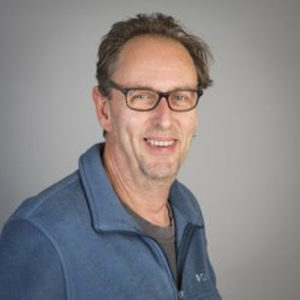
Dr. Tonjes Veenstra is a Researcher and Research Associate at the Leibniz Centre for General Linguistics (ZAS) in Berlin, focusing on linguistic theory and sociolinguistics. He leads the DFG project A02 on speaker choice in creole communities (Bislama/Morisien) within the SFB 1412 'Register' research initiative. As a founding member of SEEPiCLA and President of IACPL, he bridges creole studies with postcolonial linguistics. Roles: Research Associate (ZAS), DFG Project Lead, IACPL President Research Focus: Syntax-morphology interfaces, sociolinguistic modeling of language variation/contact, biocultural diversity in postcolonial societies His work combines fieldwork in creole societies with theoretical insights, emphasizing the role of colonial dynamics in linguistic evolution. Key projects address Bislama (Vanuatu) and Morisien (Mauritius) variation patterns, linking grammatical innovation to social stratification. Publications span creole syntax, language contact, and biodiversity, with recent contributions on multilingualism in creole contexts. He actively engages in global academic networks, presenting at conferences like ICAME and NWAV. Labs/Teams: Involved in SFB 1412 teams and the Leibniz Research Network Biodiversity.

Larry Gorenflo is the Eleanor R. Stuckeman Chair in Design and Professor of Landscape Architecture at the Stuckeman School, College of Arts and Architecture, Pennsylvania State University. His research integrates cultural and natural systems, focusing on biodiversity conservation, human-environment interactions, and sustainable landscape design. He is actively engaged in interdisciplinary research with global applications in conservation policy, cultural ecology, and heritage landscapes. His research interests span biodiversity conservation , cultural and linguistic diversity , settlement patterns , protected areas , and climate change adaptation . He explores how human societies adapt to environmental changes over time, particularly in ancient Mesoamerica and contemporary biodiversity hotspots. His work emphasizes the integration of biocultural perspectives in conservation planning and sustainable development. The recent publications reflect a strong trend in interdisciplinary environmental research, combining geospatial analysis, ecological modeling, and cultural data to assess global conservation priorities. Themes include the co-occurrence of linguistic and biological diversity, human-wildlife conflict, long-term ecosystem services, and sustainable tourism in sensitive environments. His work frequently appears in high-impact journals such as PNAS , Nature Ecology and Evolution , and Conservation Biology . Larry Gorenflo has not been explicitly listed with scientific awards in the provided text, but his extensive publication record and leadership roles indicate significant scholarly recognition. He collaborates on research projects related to climate resilience, human adaptation in reef-proximate communities, and land use modeling in Tanzania. While specific grants are not detailed, his involvement in international conservation research suggests active grant funding. There is no direct mention of student advising, but as a full professor and chair, he likely mentors graduate students in landscape architecture and environmental conservation. His work is closely tied to the Stuckeman School’s mission of integrating design with ecological and cultural sustainability. He contributes to research themes in climate and natural systems, health and the environment, and is affiliated with interdisciplinary initiatives at Penn State focused on global sustainability and conservation science.
Lindell Bromham is a Professor at the Australian National University's Research School of Biology , specializing in macroevolutionary patterns , molecular evolution , and cultural/linguistic evolution . She leads the Macroevolution and Macroecology Group and applies phylogenetic methods to diverse fields, including plant adaptation to environmental stress and language diversification. Research Interests : Molecular evolution rates, phylogenetic analysis, climate change impacts on evolution, language evolution mechanisms, salt tolerance in plants Selected Publications (2021-2025) examine evolutionary mechanisms across biological and cultural domains, including studies on language complexity in isolated populations, plant stress tolerance evolution, and molecular clock reliability. Her work integrates interdisciplinary approaches, particularly linking biology with linguistics and cultural studies. Major Awards : Australian Museum Eureka Prize (2021), Transdisciplinary & Innovation Grant (2016), Australian Awards for University Teaching (2010), Vice Chancellor's Teaching Excellence (2008) Teaching : Instructs BIOL3206 (Evolution of Diversity) and VCUG3001 (Unravelling Complexity) . She has developed active learning strategies for evolutionary biology education and authored two Oxford University Press textbooks.
- Macroevolution
- Molecular Evolution
- Macroecology
- +۴ مورد دیگر
Samantha Rarrickمشاهده پروفایل
مدرس ارشد
Dr. Samantha Rarrick is a Senior Lecturer at Griffith University's School of Humanities, Languages and Social Science, affiliated with the Griffith Centre for Social and Cultural Research. Her research focuses on documenting endangered languages, particularly signed and spoken languages of the Pacific, including Kere and Sinasina Sign Language in Papua New Guinea, and Hawai‘i Sign Language. She emphasizes community-driven approaches to linguistic research, ensuring local stakeholders participate in decision-making. Dr. Rarrick holds a PhD in Linguistics from the University of Hawaii at Mānoa (2017), and has conducted postdoctoral research funded by the National Science Foundation (2017–2019). Her teaching interests include language endangerment, documentation, Pacific languages, and sign languages. She supervises doctoral and master's students on topics ranging from climate-related semantics in Danish dialects to phonological variation in Hawai‘i Sign Language. Dr. Rarrick has received the 2021 Student Experience of Teaching Commendation and actively contributes to professional organizations like the Australian Linguistic Society and the Foundation for Endangered Languages. Her work bridges signed and spoken language documentation, addressing methodological challenges in corpus design and cross-modal linguistic analysis. Key research projects include documenting Sinasina Sign Language, analyzing language ideologies in Papua New Guinea, and developing multimedia resources for Central Queensland Aboriginal languages. Dr. Rarrick's interdisciplinary approach integrates ethnography, typology, and computational methods to preserve linguistic diversity while fostering global awareness of endangered languages.
Aung Siمشاهده پروفایل
پژوهشگر ارشد
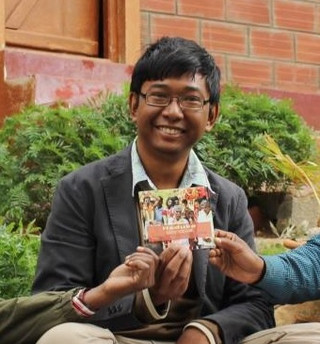
Dr. Aung Si is a DFG Postdoctoral Fellow in the Department of Linguistics at the University of Cologne, Germany, specializing in the intersection of language documentation and ethnobiology. His research focuses on preserving traditional ecological knowledge within endangered language communities across India (Solega/Soliga), Myanmar, and Arnhem Land (Australia), with particular emphasis on plant and animal nomenclature systems. His educational background reflects interdisciplinary expertise: PhD in Linguistics, Australian National University (2008–2012) PhD in Neuroscience, Australian National University (2001–2004) Postgraduate Diploma in Linguistics, University of Melbourne (2007) B.Sc. Honours in Marine Biology, James Cook University (1996–1998) Dr. Si's research investigates how language contact, urbanization, and environmental change impact the transmission of ethnobiological knowledge. His methodology combines rigorous linguistic fieldwork with ethnobiological documentation, examining age/gender variations in naming abilities and cross-linguistic patterns in biological classification. Current projects analyze the relationship between language vitality and knowledge preservation in rapidly changing ecosystems. Analysis of his 2020–2025 publications reveals consistent focus on South/Southeast Asia and Australia, with growing emphasis on quantitative sociolinguistic approaches and climate change impacts. His work bridges theoretical linguistics with urgent conservation needs, demonstrating how language documentation contributes to biodiversity preservation. Dr. Si's scientific recognition includes: DFG Postdoctoral Fellowship (2020–present) Alexander von Humboldt Postdoctoral Fellowship (2017–2018) McKenzie Postdoctoral Fellowship (2013–2016) His current DFG-funded project enables independent research leadership with international collaborations across Australia, India, and Myanmar. Fieldwork partnerships with indigenous communities and organizations like Aboriginal Resource & Development Service facilitate community-driven knowledge preservation. While not leading a formal laboratory, Dr. Si mentors research assistants and contributes to the University of Cologne's Ethnolinguistics research group through collaborative projects and methodological innovation in remote fieldwork. His interdisciplinary approach creates unique opportunities for students interested in language endangerment, ethnobiology, and the practical applications of linguistic research for ecological conservation.