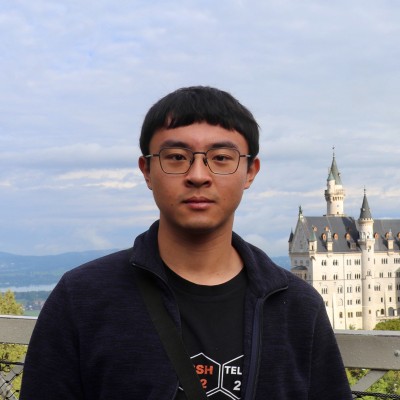
Thomas LaToza is an Associate Professor in the Department of Computer Science at the George Mason University, School of Computing . His research focuses on the intersection of software engineering and human-computer interaction, exploring how developers interact with code and designing novel software development methodologies. He has pioneered crowdsourced programming environments and microtask programming frameworks, with notable projects including RulePad for checkable design rules and Hypothesizer for hypothesis-based debugging. His work emphasizes empirical studies of developer behavior, tool impact analysis, and integration of AI assistants in software development. His recent publications highlight trends in AI-driven development , debugging mental models , and developer information seeking . He has received recognition including the George Mason University Teacher of Distinction award and has served on the editorial board of Empirical Software Engineering . His advising includes PhD students Ruochen Wang, Mainul Hossain, and alumni Abdulaziz Alaboudi, Emad Aghayi, David Samudio, Sahar Mehrpour, and Maryam Arab. He co-founded the OurCode developer tools startup, translating academic research into industry applications.
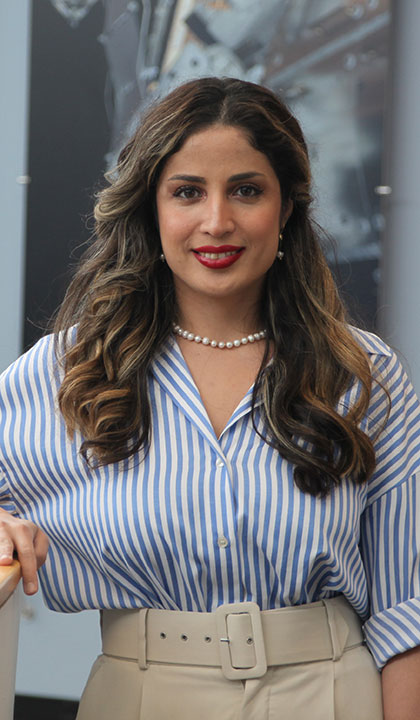
Madi Babaiasl is a Clare Booth Luce Assistant Professor in the Department of Aerospace and Mechanical Engineering at Saint Louis University's School of Science and Engineering. Her research focuses on developing innovative robotic solutions for assistance, rehabilitation, agriculture, and education applications. Education: Ph.D. in Mechanical Engineering (Robotics) from Washington State University M.S. in Mechatronics Engineering from Tabriz University, Iran B.S. in Electrical Engineering from Tabriz University, Iran Dr. Babaiasl's research spans multiple domains at the intersection of robotics, machine learning, control theory, and artificial intelligence. Her primary focus centers on developing safe and efficient human-robot interaction systems, particularly for assistive and rehabilitation applications. She investigates human intention detection, agricultural automation, and novel approaches to robotics education, integrating knowledge from psychology, physical therapy, agriculture, and education to create comprehensive robotic solutions. Her work addresses real-world problems such as developing devices to suppress hand tremors for Parkinson's patients and creating steerable needles for surgical applications. Analysis of her recent publications (2022-2025) reveals a clear evolution from medical robotics (particularly steerable needles) toward more diverse applications including assistive and agricultural robotics. The newer publications increasingly incorporate advanced AI techniques like transformer models, large language models, and multimodal signal processing for human-robot interaction, with strong emphasis on practical implementation using ROS2, edge computing, and real-time control systems for applications where cloud connectivity may be limited. Scientific Recognition: Featured in RSIP Vision Magazine as a Woman in Science (January 2022) Featured in SWE's 'A Day in The Life of Robotics Engineer' blog (April 2022) Multiple features in university publications for steerable needle research (2018-2019) Wanda Munn Scholarship for outstanding academic achievement (2019) Top 0.2% in national university entrance exams in Iran (2006) Recent lab achievements including Midwest Robotics Workshop 2025 Travel Grant (2025) Dr. Babaiasl actively mentors students through her Mecharithm Lab at SLU, seeking those with robotics foundations, programming skills (particularly Python), and familiarity with ROS. She has successfully blended academic and entrepreneurial pursuits by founding Mecharithm in 2021, which generated $73,000 in its first year. Her mentorship philosophy emphasizes project-based learning, self-directed growth, and developing as an independent researcher. Leading the Mecharithm Lab, Dr. Babaiasl oversees research projects including WheelArm (enhancing independence in assistive robotic systems), multi-modal human intent recognition, and deploying large language models for intuitive human-robot interaction. Her lab comprises graduate and undergraduate students primarily from Mechanical Engineering and Computer Science backgrounds, working on meaningful projects that aim to leave a lasting legacy for society through robotics innovation.
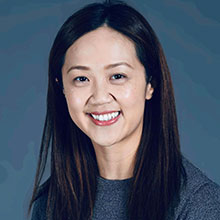
Dr Ivy Wong serves as a Bowland Research Fellow at the Department of Education, University of York, while concurrently holding an Assistant Professor position at Hong Kong Shue Yan University (currently on sabbatical). Her research program centers on second language acquisition, specifically investigating how cognitive linguistics-inspired instruction enhances grammar learning through innovative digital tools and pedagogical frameworks. Her academic credentials include: PhD in Applied English Linguistics, The Chinese University of Hong Kong (2015-2018) MPhil in Applied English Linguistics, The Chinese University of Hong Kong (2013-2015) BA in English, The Chinese University of Hong Kong (2011-2013) Dr Wong's research bridges cognitive theory with practical language pedagogy, specializing in concept-driven grammar instruction for challenging structures like prepositions and conditionals. She pioneers computer-assisted methodologies using animated schematic diagrams and Bayesian statistical modeling to analyze individual learning trajectories. Her work emphasizes open science practices, with research materials publicly accessible via Gorilla platform. Recent publications reveal a methodological evolution toward Bayesian approaches in replication studies and neurocognitive investigations, while maintaining consistent focus on translating theoretical linguistics into classroom applications. Key themes include technology-enhanced grammar instruction, cross-linguistic influences on L2 acquisition, and evidence-based material development. Her scholarly recognition includes: Bowland Research Fellowship (2023-2025) Fulbright Visiting Scholar award (2017-2018) Dr Wong has secured substantial research funding including the SCOLAR Language Fund (£110,203; 2021-2023) for developing the English Preposition Tutor and the Bowland Fellowship for her current conditional acquisition project. Her teaching portfolio spans undergraduate modules in Psycholinguistics and Second Language Acquisition to postgraduate courses in Cognitive Linguistics, demonstrating comprehensive mentorship across academic levels. She actively contributes to the Centre for Advanced Studies in Language and Education (CASLE) at York, collaborating on interdisciplinary projects that integrate computational methods with language education research.
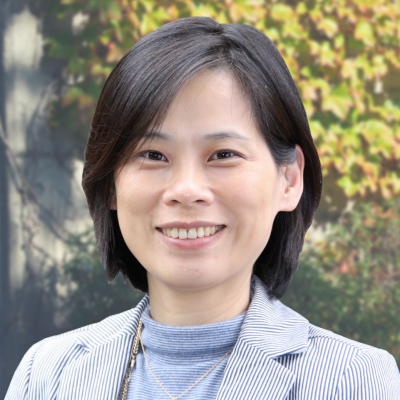
Amery Wu serves as Associate Professor and ECPS Graduate Advisor for Admissions and Scholarship at the University of British Columbia's Faculty of Education, specifically within the Department of Educational and Counselling Psychology, and Special Education. Based in Scarfe Library Block 287, Dr. Wu specializes in advanced quantitative methods for educational and psychological measurement. Dr. Wu's research focuses on applied statistical modeling in educational contexts, with particular expertise in test item performance analysis , globalization of testing through internet platforms , and longitudinal assessment methodologies . Their scholarly work bridges psychometrics with practical educational applications, examining how test design impacts diverse learner populations across international contexts. Key methodological contributions include innovations in mixed-effects modeling, differential item functioning analysis, and validation frameworks for complex assessment systems. Recent publications demonstrate a clear trajectory toward integrating response process data with performance outcomes , particularly through Bayesian modeling and advanced visualization techniques for online assessments. The research consistently addresses measurement challenges in high-stakes contexts including immigration language testing (CELPIP), health literacy instruments, and inclusive classroom models. Dr. Wu's work emphasizes the ecological validity of assessments within their sociocultural contexts. Teaching responsibilities include core methodology courses: EPSE 423 (Assessment of Classroom Learning), EPSE 481 (Introduction to Research in Education), EPSE 482 (Statistics for Educational Research), EPSE 483 (Reading Educational Research), and advanced graduate courses EPSE 592 (Experimental Designs) and EPSE 596 (Correlational Analysis). As Graduate Advisor for Admissions and Scholarship, Dr. Wu shapes the quantitative training of future educational researchers.
Dr Alireza Ahadi is a PartTime Lecturer at the Faculty of Engineering & Information Technology , University of Technology Sydney. He holds a PhD in Data Analytics from UTS (2018) and has previously worked as a postdoctoral researcher at Macquarie University (2019-2022) focusing on skills analytics and educational data mining. Education: PhD in Data Analytics (UTS, 2018), Master of Information Technology Extended (UTS, 2013), Bachelor in Computer Science (UTS, 2010). Current Role: Teaching IT and Science subjects at UTS with expertise in databases, programming languages, and data science. Research Interests center on data-driven educational solutions , including text mining in education, skills gap analysis between academia and job markets, code comprehension studies, and miRNA regulation in cancer research. His work integrates machine learning with curriculum analytics to improve educational outcomes and workforce alignment. Recent publications (15 most) reveal trends in applying NLP to educational data, eye-tracking analysis for programming behavior, and skills analytics engines for curriculum-job market mapping. His 2022 article on skills gap identification using Burning Glass data highlights his focus on real-world educational impact. Teaching Experience includes coordination and lecturing in core subjects like Database Fundamentals, Programming Languages, and Data Structures at UTS. He also explores educational data mining , optimization of analytics engines , and recommendation system design in pedagogical contexts.
Christian Stöhr is a Professor at Chalmers University of Technology's Department of Communication and Learning in Science. His research focuses on technology-enhanced learning in engineering education, including flipped and hybrid teaching methods, AI in education, and Massive Open Online Courses (MOOCs). He also investigates science communication and the role of knowledge in governance contexts. Current projects include Navigating Large Language Models , 4S , and ENHANCE collaborations. He supervises two PhD students and a post-doc, and serves as Director of Studies for the Graduate School 'Communication and Learning in STEM'. Research interests span engineering pedagogy, digital learning environments, interdisciplinary groupwork, and AI integration in education. His work bridges formal and informal learning, emphasizing sustainable educational practices. The 15 most recent articles (2025–2023) reflect trends in hybrid learning, AI chatbot usage, social regulation of learning, and MOOC development. Themes include pedagogical innovation, cross-cultural integration, and ethical implications of AI tools. Teaching includes CLS905 'Supervising Research Students' and leadership in interdisciplinary PBL across Nordic institutions. His projects involve collaborations with European Commission, VINNOVA, and EIT, focusing on mechanical engineering labs, nuclear safety courses, and teacher development in AI/MOOC design.
David Cooper is Professor and Head of Slavic Languages and Literatures at the University of Illinois Urbana-Champaign, with concurrent appointments in the School of Literatures, Cultures and Linguistics, Program in Medieval Studies, European Union Center, Russian, East European and Eurasian Center, and National Center for Supercomputing Applications (NCSA). His institutional leadership spans multiple interdisciplinary centers focused on global Slavic studies. Cooper's research centers on Czech and Russian literary traditions with specialized focus on forgery/mystification, translation history, and literary nationalism. His scholarship examines how 19th-century manuscript forgeries shaped national identities, particularly through analysis of the Kralovedvorsky and Zelenohorsky manuscripts. Teaching portfolio includes Slavic Folklore (SLAV 525), History of Translation (SLAV 430), and Post-communist Fiction (SLAV 477), reflecting his dual expertise in historical and contemporary Slavic cultural production. Recent publications demonstrate consistent engagement with textual authenticity and national myth-making, evolving from early work on Russian criticism (2007-2008) to comprehensive studies of Czech manuscript forgeries (2018-2023). His research trajectory reveals increasing methodological sophistication in connecting translation theory with nationalist discourse across Central and Eastern European contexts. Scientific recognition includes: Faculty Fellow, National Center for Supercomputing Applications (2020) Title VIII National Research Competition Grant, National Council for Eurasian and East European Research As department head, Cooper oversees academic programming while maintaining active research collaborations through NCSA and area studies centers. His grant portfolio indicates sustained funding for Eurasian scholarship, though specific student mentorship details aren't documented in source materials. Institutional affiliations demonstrate deep integration within UIUC's global studies infrastructure.
Petra Magnusson is an Associate Professor at the Faculty of Education , Kristianstad University , specializing in the teaching and learning of Swedish . She is a Merited Teacher and leads projects like SKRUViS and EQUITÉ , focusing on digital technology's impact on education. Research Focus : Digital education, multimodal learning, curriculum development, and fiction's role in schools. Collaboration : Active in networks such as TIMDA (Texts, Information and Multimodality in the Digital Age) and supervises doctoral students Kristian Blomberg Kjellström and Emma Björemark . Awards : Recognized as a Merited Teacher . Teaching : Trains teachers in Swedish language instruction and has extensive experience in secondary and upper secondary schools.
Maria Kuteeva is a Professor at the Department of English, Stockholm University, where she has been working since 2008. She played a significant role in establishing the Centre for Academic English at Stockholm University, where she served as director from 2010 to 2017. Her career includes visiting researcher positions at the University of Wisconsin, Madison (2013) and the University of Helsinki (2018), as well as an Erik Allardt research fellowship at the Helsinki Collegium for Advanced Studies (2021). Maria Kuteeva's research focuses on the use of English in multilingual university settings, including English-medium education (EME/EMI), writing for publication, and the impact of digital technologies on academic discourse. She has made significant contributions to understanding the tensions between English and multilingualism in academic contexts, particularly in Sweden. Her work has been published in top international peer-reviewed journals such as Applied Linguistics, English for Specific Purposes, Journal of English for Academic Purposes, Discourse, Context & Media, Higher Education, and Journal of Multilingual and Multicultural Development. Professor Kuteeva has an impressive record of publications that examine the complex relationship between English and multilingualism in academia. Her book Tension-filled English at the multilingual university: A Bakhtinian perspective (2023, Multilingual Matters) explores the emotional and practical challenges of English use in non-anglophone academic environments. She has also co-edited important publications on language perceptions and practices in multilingual universities. Among her notable achievements, Maria Kuteeva has been recognized in the Stanford/Elsevier World's 2% Most-Cited Scientists ranking in 2022, 2023, and 2024. She serves on editorial boards of leading journals including Applied Linguistics, Journal of English for Academic Purposes, Journal of English for Research Publication Purposes, and the open access peer-reviewed series "Stockholm English Studies." Together with Ruth Breeze, she is co-editor-in-chief of Ibérica: Journal of the European Association of Languages for Specific Purposes. Maria Kuteeva has supervised research projects across multiple domains including discourse analysis, pragmatics, sociolinguistics, language teaching and learning, and other areas of English linguistics. She currently teaches and coordinates the "Dynamics of Multilingualism" course for the Faculty of Humanities Doctoral School at Stockholm University, as well as other courses on Discourse Analysis, English and Multilingualism, Syntax, Language for Specific Purposes, and English for Academic Research.
Jennifer C. Richardson serves as the 150th Anniversary Professor in the Department of Curriculum and Instruction within Purdue University's College of Education, where she has held progressive academic appointments since 2002, advancing from Assistant Professor to full Professor and currently holding this distinguished endowed position recognizing sustained high-impact contributions to teaching and student development. Her educational background demonstrates deep specialization in educational research and design, with a Ph.D. in Curriculum and Instruction from University at Albany/SUNY, complemented by multiple master's degrees including Curriculum Design & Instructional Technology, Teaching English to Speakers of Other Languages, and Educational Administration. Her academic journey reflects interdisciplinary preparation spanning political science, language education, and administrative leadership. Richardson's research centers on the social dimensions of online learning environments, particularly through the Community of Inquiry framework. She investigates social presence dynamics, instructor-student interactions, and evidence-based design strategies that enhance both student learning outcomes and instructional efficiency. Her work bridges theoretical frameworks with practical applications for instructional designers and online educators, emphasizing the preparation of future learning technologists. Analysis of her recent publications reveals a strong focus on Community of Inquiry applications across disciplines, with increasing attention to digital repositories for online teaching resources, social learning analytics, and cross-cultural considerations in virtual education. Her scholarship consistently examines how social, cognitive, and teaching presence interact to create effective online learning experiences. AERA SIG Online Teaching and Learning Best Paper Award (2023) Purdue University’s 150th Anniversary Professor designation (2022+) Mildred B. and Charles A. Wedemeyer Award for Distance Education (2022) Purdue University Faculty Scholar (2019-2024) Multiple AECT and OLC awards for research and practice Graduate Faculty Mentor Award recognizing sustained contributions to graduate education As Project Co-Director for significant federally funded initiatives like the FIPSE Comprehensive Program on peer feedback in online discussions, Richardson has secured substantial external funding while mentoring graduate students through research assistantships. Her leadership extends to program development as former Computer Education Program Convener, where she shaped curricula for aspiring instructional designers. The PoRTAL digital repository project exemplifies her team-based approach to creating sustainable resources for online educators across institutional boundaries. Richardson maintains active leadership in professional organizations including AERA, AECT, and the Online Learning Consortium, contributing to the advancement of educational technology scholarship while directing major research initiatives that bridge theory and practice in online learning environments.
Maria Rasmusson serves as a Senior Lecturer at Uppsala University's Department of Pedagogy, Didactics and Educational Sociology, where she conducts research at the intersection of reading literacy, educational equity, and quantitative analysis of large-scale assessments. Her work bridges theoretical frameworks with policy-relevant investigations into school systems across Nordic and international contexts. Her research program centers on comparative analyses of reading comprehension in digital versus print formats, emergent literacy development in multilingual preschool settings, and sociodemographic determinants of school absenteeism. Methodologically rigorous in quantitative approaches, she leverages PISA and other international datasets to examine equity dimensions across educational systems, with particular attention to how socioeconomic status, immigrant background, and gender influence learning outcomes. Her scholarship consistently connects empirical findings to practical implications for educational policy and classroom practice. Analysis of her 15 most recent publications reveals a sustained focus on school attendance patterns using cross-national PISA data (2023-2024), digital reading literacy trajectories (2018-2023), and early childhood literacy prerequisites (2023). The corpus demonstrates methodological consistency in large-scale quantitative analysis while expanding into emerging areas like online learning platforms and critical digital literacy. Geographic scope spans Sweden, Germany, Japan, the UK, and Nordic regional comparisons, reflecting her commitment to internationally contextualized educational research.
Nicola Meschede is a Professor of Natural Science Elementary and Primary Education at the Institute of General Studies Didactics, Faculty of Educational Sciences, University of Münster, a position she has held since January 2018. Previously, she served as a substitute professor for General Studies Didactics at the same institution from October 2017 to January 2018. Her academic journey includes significant research positions at Goethe-Universität Frankfurt and the Leibniz Institute for Science and Mathematics Education at Kiel University. Her educational background comprises a Doctorate in Natural Sciences (Dr. rer. nat.) from the University of Münster and the Leibniz Institute for Science and Mathematics Education (2009-2013), a Second State Examination for Primary School Teaching from Siegburg Teacher Training College (2013-2015), and a First State Examination for Primary, Secondary, and Comprehensive School Teaching with a focus on primary education from Siegen University and the University of Münster (2004). Professor Meschede's research centers on professional vision development in teachers, particularly how educators perceive and interpret learning-relevant classroom situations in science education. Her work examines the cognitive processes involved in recognizing significant teaching moments, with special attention to classroom management, learning support, and addressing student heterogeneity. She investigates how video-based learning environments can enhance teachers' professional perception skills during both initial and continuing teacher education. Analysis of her recent publications reveals a strong thematic focus on video-based teacher training methodologies, with particular emphasis on developing digital learning modules that foster multi-perspective professional vision. Her work consistently addresses how teachers process classroom situations, with increasing attention to language-sensitive approaches in science education and the relationship between teacher beliefs and professional vision development. The interdisciplinary nature of her research bridges educational psychology, science education, and teacher training methodologies. Professor Meschede leads several significant research projects including ViU:P (Video-based Instructional Analysis, Focus on Performance), which examines the causal chain of professional knowledge, teaching quality, and student achievement. She also directs the ProdiviS project developing digital, video-based self-learning modules for professional classroom perception training, the ComeMINT project focusing on professionalizing primary teachers in digital media use, and the ViFoNet project creating video-based training modules for digitally supported teaching. Her research methodology emphasizes video-based analysis of classroom situations, examining how teachers recognize and interpret learning-relevant events. She has developed specialized video portals like ViU: Early Science and ProVision that serve as both research tools and teacher training resources. Her work demonstrates how structured video analysis, particularly with modeling and prompting techniques, can enhance pre-service and in-service teachers' professional vision capabilities.
Selim Tiryakiol is a Research Fellow at the Department of Language and Culture , UiT The Arctic University of Norway. His work focuses on heritage language acquisition, particularly examining how linguistic and extra-linguistic factors influence language development and maintenance. Research interests include: Heritage language bilingualism Morphosyntactic and prosodic acquisition Community engagement's role in language competence Individual and social variables in language development Notable scientific award: Marie Skłodowska-Curie Fellowship (MSCA) . Current project CODE-V (2023-2025) investigates capacity, opportunity, and desire in heritage language variation. Recent publications emphasize: Heritage language input quality vs. quantity Comparative analysis of Turkish monolingual and heritage speakers Pedagogical grammar frameworks for Turkish Memory systems and cognitive factors in language learning He is affiliated with research groups AcqVA Aurora , C-LaBL , and AcqVA-Nor , focusing on experimental and theoretical approaches to language variation.
Anand Syea has been a full-time faculty member at the University of Westminster since 1991 and previously served as Head of the Linguistics Section (1997–2004). He is a Professor of Linguistics specialising in theoretical syntax, creole linguistics, language acquisition and language impairment, with a particular focus on Down’s Syndrome populations. Education BA in Linguistics – University College of North Wales, Bangor MA in Applied Linguistics – University of Essex PhD in Linguistics (Syntax) – University of Essex Research Interests His research agenda spans four interconnected domains. First, theoretical syntax , where he works within the Minimalist and Principles-and-Parameters frameworks. Second, creole linguistics , exploring the morphosyntax of English- and French-based creoles and their implications for linguistic theory. Third, language acquisition , investigating both first- and second-language development. Finally, language impairment , especially the linguistic characteristics of Down’s Syndrome speakers of creole languages. Current projects include comprehensive grammatical descriptions of English-based creoles, longitudinal studies of Down’s Syndrome creole speakers, and analyses of language mixing between creoles and Bhojpuri in former plantation colonies. Publications & Scholarly Output Across more than three decades, Syea’s scholarship has appeared in leading journals such as Theoretical Linguistics , Journal of Pidgin and Creole Languages , Linguistics and Acta Linguistica Hafniensia . His book-length works include The Syntax of Mauritian Creole (2013) and A Comprehensive and Comparative Grammar of French-based Creoles (2017), with a forthcoming volume on English-based creoles slated for 2024. Doctoral Supervision & Academic Service He welcomes PhD applications in all areas of syntax, especially those focused on creole languages. To date he has supervised or co-supervised multiple doctoral students; the only named example in the provided text is Mr Andrew Booth, whose thesis examined Manx English phonology. Professional Memberships Society of Pidgin and Creole Linguistics Linguistic Association of Great Britain
Anne Ketola is an Adjunct Professor at the University of Tampere specializing in Translation Studies, Legal Design, and Comics and Visual Communication. Her interdisciplinary work bridges language, law, and visual communication to enhance accessibility and user understanding in complex documentation. Her research portfolio includes: Translation and multilingual communication systems Legal document simplification through visual design Comic-based contract frameworks Cognitive linguistics in document comprehension Plain language implementation strategies Multimodal communication theory Document accessibility standards Recent publications (2024-2025) demonstrate a cohesive trend toward integrating comics and visual elements into legal and administrative documents. Her work analyzes cognitive processing of multimodal information, develops practical frameworks for 'comic contracts,' and explores text-image interplay to reduce comprehension barriers in multilingual contexts. Ketola actively mentors doctoral candidates and shapes academic discourse through conference leadership, including chairing TSCL2019: Translation and Interpreting Responding to the Challenges of Contemporary Society. Her invited lectures on translation activism and multilingual communication in reception centers reflect real-world applications of her research.