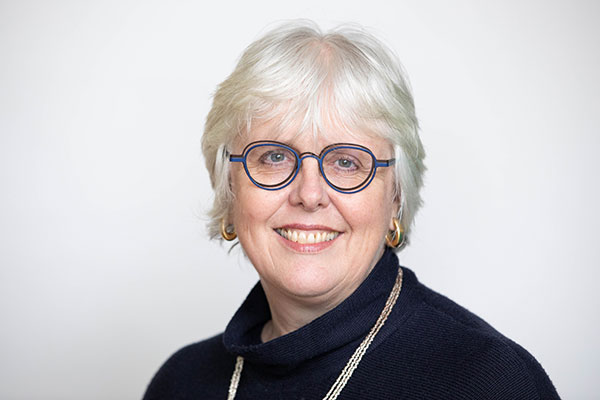
Professor D Graham J Shipley is the Professor of Ancient History at the University of Leicester's School of Archaeology and Ancient History since 2002. His research focuses on Hellenistic and Classical antiquity, particularly on political landscapes, environmental studies, and urban planning. He holds a D.Litt. from the University of Oxford (2020) and is a Senior Fellow of the Higher Education Academy (2014). Education: Graduated in Classics from Oxford University. Academic roles include serving on the Oxford Classical Texts Committee and the UK Education Honours Committee. Previously chaired the Council of University Classical Departments and convened the Dorothy Buchan Memorial lectures. Research interests emphasize ancient geography, socio-political structures, and environmental interactions. His work spans studies of Sparta, Greek urban planning, and the cultural impact of Hellenistic expansion. Recent publications examine Pseudo-Skylax's geographical texts and post-Alexandrian political dynamics. Scientific Awards: Senior Fellow of the Higher Education Academy (2014) D.Litt. (Doctor of Letters) from University of Oxford (2020) Advising and Grants: No specific advisees listed, but supervises research in ancient history and archaeology. Active in collaborative projects such as the Laconia Survey. Grants have supported archaeological fieldwork and publication initiatives. Labs/Teams: Collaborates with the Oxford Classical Texts Committee and has led interdisciplinary teams in regional archaeological surveys.
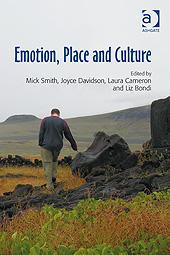
Mick Smith is a Professor and Queen's National Scholar at Queen's University, holding joint appointments in the Department of Philosophy and the School of Environmental Studies within the Faculty of Arts and Science. He earned his Ph.D. in Environmental Values from the University of Stirling (1993), following earlier degrees in Ecology and European Thought. His research integrates environmental ethics, social theory, and phenomenology to explore nature-culture intersections, including emotional geographies, ecological sovereignty, and tourism ethics. Education: Ph.D. (1993): University of Stirling, UK M.Phil (1988): North Staffordshire Polytechnic, UK M.A. (1988): Thames Polytechnic, UK B.Sc. H. (1982): University of York, UK Research Focus: Smith investigates how humans interpret and value environments through hermeneutics, ethics, and emotion. His six key areas include environmental hermeneutics, ethics, social-theoretical frameworks, emotional mediation of environmental responses, political theory, and tourism ethics. Advising & Grants: Supervises graduate students in Philosophy and Environmental Studies. His grants and collaborative projects focus on ecological ethics and sustainability. He co-edits Emotion, Space and Society and contributes to interdisciplinary environmental studies. Affiliations: Founding Editor of Emotion, Space and Society ; contributor to the Center for Humans and Nature.
Kristin Schwain is a Professor in the Department of Art History at the University of Missouri's School of Visual Studies. She holds a PhD in Art History and Humanities from Stanford University and a BA in Art History and Humanities from Valparaiso University. Her interdisciplinary research examines marginalized objects and practices in American art history, emphasizing their cultural significance through lived experience. Her educational background includes: PhD in Art History and Humanities, Stanford University BA in Art History and Humanities, Valparaiso University Dr. Schwain's research centers on American Material and Visual Culture, Art and Religion, Arts of the African Diaspora, and Public Humanities. She investigates overlooked artifacts to reveal their influence on everyday life, challenging assumptions about modernization's impact on religious expression. Her work bridges historical analysis with contemporary relevance through studies of traditional craft, artist books, photojournalism, and mass-produced objects as lenses into social practices. Her recent publications demonstrate consistent focus on art-religion intersections in American cultural history, from Henry Ossawa Tanner's biblical paintings to Afro-Cuban religious themes in Ediciones Vigía artist books. This body of work reveals evolving methodologies for uncovering marginalized narratives through interdisciplinary frameworks spanning visual culture, material studies, and diaspora scholarship. Her scholarly recognition includes: First Biennial National Basketry Association Book Award for Rooted, Revived, Reinvented: Basketry in America Dr. Schwain has secured major grants from the Smithsonian Institution, Luce/American Council of Learned Societies, Center for the Study of Religion and American Culture, and Georgia O’Keeffe Museum Research Center. Her collaborative public humanities projects with the Missouri School of Journalism's Pictures of the Year International and Scruggs-Vandervoort-Barney department store collection demonstrate institutional partnerships that translate academic research into community engagement. She actively collaborates with the Museum of Art and Archaeology at the University of Missouri on exhibitions like Rooted, Revived, Reinvented: Basketry in America and Juan Roberto Diago: Foraged Materials, Assembled Histories , fostering cross-generational dialogues through multi-venue traveling shows and digital initiatives including The iCatalog .
Prita Meier is an Associate Professor of Art History at New York University's College of Arts & Science , affiliated with the Department of Art History & the Institute of Fine Arts. Her work bridges African art history, Indian Ocean world studies, and global modernity frameworks. Education: Ph.D. (2007) in History of Art, Harvard University M.A. (2000) in History of Art, University of Iowa B.A. (1996) in Art History, University of Florida Research Interests focus on the visual and architectural cultures of Africa, particularly Swahili Coast port cities, exploring globalization's cultural dimensions, Islamic art, and photography histories. Her work interrogates spatial-temporal dynamics in African modernity and colonial art frameworks. Scientific Awards include CASVA Senior Fellowship, NEH Implementation Grant (with Allyson Purpura), Mellon Collaborative Grant (with Kenny Cupers), Clark Art Institute Residential Fellowship, and Andrew W. Mellon Postdoctoral Fellowship. Notably, she declined the National Humanities Center Fellowship and Stanford Humanities Fellows Program. Publications highlight Indian Ocean trade networks, Swahili Coast architecture, and photography's global circulation. Recent works (2020-2017) examine infrastructure as identity, oceanic materiality, and itinerant art historiography. Earlier articles (2016-2009) analyze porcelain trade, modernist discontents, and Swahili funerary practices. Contact: spm9@nyu.edu | 100 Washington Square East, New York, NY 10003
Timo Kaartinen serves as Professor of Social and Cultural Anthropology and Vice Dean for Research and Doctoral Education at the University of Helsinki 's Faculty of Political Science . Since 1992, he has conducted extensive research in Southeast Asia with a focus on Indonesia, exploring communicative practices, narratives, and cultural responses to uncertainty. His teaching spans social change in bachelor's, master's, and doctoral programs, covering environmental anthropology, political anthropology, cosmologies, religions, and linguistic anthropology. PhD in Anthropology, University of Chicago (2001) Docent (Adjunct Professor), University of Helsinki (2011) Research interests center on ethical discourse in Indonesian Islamic universities, resource politics in oil palm estates, and linguistic anthropology with emphasis on storytelling, folk poetry, and minority language revitalization. His work combines ethnographic focus on Southeast Asia with theoretical contributions to frontier studies and postcolonial anthropology. Recent publications examine frontier temporalities (2020-2025), Islamic transformations (2019), and oral narrative structures (2017-2013). Key projects include ARCTIC Research Centre (2025-2029), Diversity in Society and Life (DIVSOL) (2025-2030), and Religious Movements in Ethical Life (2019-2023). Grants from the Academy of Finland and University Profiling Funding support these initiatives. Academic activities include keynote speeches at international conferences (e.g., Empowering Local Wisdom 2014, Labor Migration in Asia-Pacific 2013) and editorial roles. He has conducted fieldwork in Indonesia since 1992, focusing on Bandanese cultural heritage and Maluku religious dynamics . His methodological approach combines ethnographic fieldwork with historical document analysis .
Philip Schlesinger is a Professor in Cultural Theory at the University of Glasgow and holds roles at CREATe, a Centre for Regulation of the Creative Economy. He previously held the inaugural Chair in Cultural Policy at Glasgow (2007–present), directed the Centre for Cultural Policy Research (CCPR) until 2013, and led the Stirling Media Research Institute. His research focuses on digital platforms’ regulation, cultural policy, and the interplay between expertise and power in governance. Collaborations span institutions like the London School of Economics, Complutense University of Madrid, and the European University Institute. His work critiques the 'post-public sphere' and explores neo-regulation frameworks for digital platforms, emphasizing UK policy dynamics. Key publications include analyses of generative AI governance, platform power, and the creative economy’s global orthodoxies. He has held fellowships at the Nuffield Foundation, European University Institute, and Maison des Sciences de l’Homme in Paris. As a leader in cultural policy research, Schlesinger has advised on UK film policy, media transitions, and digital challenges. His interdisciplinary approach bridges sociology, media studies, and law, addressing topics like public service media, creative industries, and transnational cultural frameworks. Ongoing projects include policy responses to AI and platform regulation, reflecting his commitment to shaping evidence-based cultural and digital policies.
James Grantham Turner is the James D. Hart Chair and Distinguished Professor of English at the University of California, Berkeley. He specializes in 18th-century British literature, gender and sexuality studies, Renaissance and Early Modern studies, narrative and the novel, poetry, and drama. His research bridges literature and art history, focusing on sexuality, gender, ecology, and classical antiquity. He holds degrees from Oxford University (B.A., 1968; M.A., Cert.Ed.; D.Phil., 1977) and has taught at institutions including Oxford, Sussex, Northwestern, and Michigan before joining Berkeley in 1990. Turner’s recent work includes The Villa Farnesina: Palace of Venus in Renaissance Rome (2022), winner of the PROSE Award in Art History, and Eros Visible: Art, Sexuality and Antiquity in Renaissance Italy (2017). His research explores interdisciplinary histories of sexuality, combining European literature, social history, and art. He has contributed to major exhibitions at the Metropolitan Museum of Art, National Gallery of Victoria, and the Getty Museum. Awarded fellowships from the Guggenheim Foundation, NEH, and ACLS, Turner’s scholarship spans over 100 articles and books. He has served on editorial boards for PMLA , Eighteenth-Century Studies , and others. His recent conference papers include discussions on Milton’s cosmology and Renaissance erotic art. He currently teaches at Berkeley and maintains office hours in Wheeler Hall. Turner’s research also intersects with global sexualities, food studies, and classical mythology. His work emphasizes cross-cultural analysis, from Italian Renaissance palaces to Enlightenment-era libertinism. He continues to explore intersections of art, literature, and sexuality across pre-modern Europe.
Alexandra Walsham is Professor of Modern History at the University of Cambridge and a Fellow of Emmanuel College. She previously held roles as Chair of the Faculty of History (2019-2022) and currently serves as President of the Historical Association. Her academic roots include a PhD from Trinity College, Cambridge, following studies at the University of Melbourne and Exeter University. Her research focuses on religious and cultural history of early modern Britain, particularly the Protestant and Catholic Reformations. Key themes include post-Reformation Catholicism, religious tolerance, providence, miracles, the history of the book, and the relationship between religion and landscape. Her work has been supported by grants from the British Academy, AHRC, and the Leverhulme Trust. Walsham has authored award-winning books like Providence in Early Modern England and The Reformation of the Landscape , and edited volumes on topics such as archives, memory, and confessional history. She has delivered prestigious lectures including the Ford Lectures at Oxford (2018) and the Wiles Lectures at Queen’s University Belfast (2024). Her professional service includes editorial roles for Past and Present and the Cambridge Studies in Early Modern British History series. She led the AHRC-funded 'Remembering the Reformation' project (2016-2019) and chairs the Early Modern Section of the British Academy. Awarded a CBE in 2017 and an honorary doctorate from Melbourne in 2023, Walsham’s work bridges academic rigor and public engagement, influencing both scholarly discourse and historical education.
Surya Ganguli is an Associate Professor in the Department of Applied Physics at Stanford University, with courtesy appointments in Neurobiology and Electrical Engineering. He serves as Senior Fellow at the Stanford Institute for Human-Centered AI and is affiliated with the Stanford Neuroscience Institute , Bio-X , and Wu Tsai Neurosciences Institute . His research spans theoretical neuroscience, machine learning, and statistical mechanics. Ph.D. , UC Berkeley, Theoretical Physics (2004) M.A. , UC Berkeley, Physics (2000) M.A. , UC Berkeley, Mathematics (2004) M.Eng. , MIT, Electrical Engineering and Computer Science (1998) B.S. , MIT, Physics (1998) B.S. , MIT, Mathematics (1998) B.S. , MIT, Electrical Engineering and Computer Science (1998) His lab explores how higher-level cognitive phenomena emerge from neural network dynamics, focusing on perception, memory, attention, and decision-making . Research themes include statistical mechanics of learning , neural representational geometry , and biologically plausible learning rules . Current work examines nonlinear interactions in neural networks through the Schmidt Science Polymath Award (2023). Key article trends reveal expertise in neural coding limits (2022 Nature), synaptic plasticity models (2022 Neural Computation), and deep learning theory (2022 NeurIPS publications). His 2019 Annual Review chapter on statistical mechanics of deep learning established foundational insights into network criticality. Scientific Awards : NSF Career Award (2019) Simons Foundation Investigator (2016) McKnight Scholar Award (2015) James S. McDonnell Foundation Scholar (2014) Sloan Research Fellow (2013) As advisor, he mentors 10+ doctoral students across Applied Physics, Neurosciences, and Computer Science, including Vamshi Balanaga and Mason Kamb. His lab collaborates with experimental teams at Stanford and beyond, supported by grants from NSF , Simons Foundation , and Swartz Foundation . The Neural Dynamics & Computation Lab unites physicists, mathematicians, and neuroscientists to decode cognition through interdisciplinary methods.
Tong Lam is an Associate Professor in the Department of Historical Studies and the Graduate Department of History at the University of Toronto, where he also directs the Dr. David Chu Program in Asia-Pacific Studies at the Asian Institute. His research sits at the intersection of media studies, environmental history, and science and technology studies (STS), focusing on the politics and aesthetics of mobilization in China’s special zones across socialist and postsocialist eras. Employing interdisciplinary methodologies, his work explores themes such as state-precipitated violence, industrial ruination, and the socio-political implications of technology. He is a visual artist whose lens-based projects interrogate military violence, surveillance, and postindustrial landscapes. His recent scholarship analyzes postsocialist urbanism, digital governance, and the temporalities of infrastructure. While the absence of explicit scientific awards or student advisement records in the provided text precludes their inclusion here, his publications and creative practice reflect a sustained engagement with critical historical inquiry and contemporary socio-technological challenges.
Professor Owen Davies is a faculty member at the University of Hertfordshire , affiliated with the History Department at the School of Creative Arts . His research spans witchcraft , magic , supernatural beliefs , and folklore , with a focus on interdisciplinary approaches integrating archaeology, anthropology, and biomedical studies. Key research areas : Witchcraft, Domestic Magic, Medical History, Electrification, Public History. Recent projects : AHRC-funded 'StoryMachine', Leverhulme 'Inner Lives', Wellcome Trust 'Harnessing the Power of the Criminal Corpse', and a new AHRC 3-year study on witch bottles. Selected publications : America Bewitched (2013), The Oxford Illustrated History of Witchcraft and Magic (2017), Troubled by Faith (2023). Awards : Funded by AHRC, Wellcome Trust, and Leverhulme Trust. Collaborates with institutions like Museum of London Archaeology and University of Essex. Leads community engagement via the Heritage Hub and 'Electric Generations' exhibition.
Risto Miikkulainen is a Professor of Computer Science and Neuroscience at the University of Texas at Austin and VP of AI Research at Cognizant AI Lab. He directs the UTCS Neural Networks Research Group and is currently on leave from UT, working on Evolutionary Computation and Deep Learning at Sentient Technologies, Inc. Education: Ph.D. in Computer Science, UCLA, 1990 M.S. in Applied Mathematics, Helsinki University of Technology (now Aalto University), 1986 Risto Miikkulainen's research focuses on biologically-inspired computation such as neural networks and evolutionary computation. His work spans three main areas: (1) Neuroevolution, evolving complex deep learning architectures and recurrent neural networks for sequential decision tasks in robotics, games, and artificial life; (2) Cognitive Science, developing models of natural language processing, memory, and learning that shed light on disorders such as schizophrenia and aphasia; and (3) Computational Neuroscience, studying the development, structure, and function of the visual cortex, episodic memory, and language processing. His research combines theoretical understanding of biological information processing with practical applications for developing intelligent artificial systems. His recent publications (2025) show a strong focus on evolutionary approaches to AI development, particularly in neural architecture search, loss function optimization, and explainable AI. Many papers explore the intersection of evolutionary computation with deep learning, creating more efficient and transparent AI systems. His work spans theoretical foundations and practical applications in areas ranging from environmental control systems to cognitive modeling. Scientific Awards: College of Fellows, International Neural Network Society, 2024 Best Pathway to Impact Award, NeurIPS Climate Change workshop, 2024 AAAI Fellow, 2023 IEEE CIS Evolutionary Computation Pioneer Award, 2020 Gabor Award, International Neural Network Society, 2017 Outstanding Paper of the Decade Award, International Society for Artificial Life, 2017 IEEE Fellow, 2016 Multiple Best Paper Awards at GECCO, CIG, and CEC conferences Deployed Application Award, AAAI/IAAI-2013, AAAI/IAAI-2018 Miikkulainen has extensive experience mentoring students through undergraduate research courses like CS378 Computational Intelligence in Game Design I and II, where students develop independent research projects on the OpenNERO research platform. He has received multiple awards for deployed applications, demonstrating the practical impact of his research. His work has led to the development of the NERO game platform, which serves as both an educational tool and research platform for AI. He directs the UTCS Neural Networks Research Group, which focuses on neuroevolution, cognitive science models, and computational neuroscience. The group has developed the NERO (Neuro-Evolving Robotic Operatives) platform, a machine learning game that allows users to train intelligent agents through evolutionary computation. The group's work spans theoretical research and practical applications in AI, with connections to both academic and industry partners.
Mesha M Maren is an Associate Professor of the Practice of English at Duke University's Trinity College of Arts & Sciences since 2023. She holds an M.F.A. from Queens University of Charlotte (2014). Her academic career includes prior roles as Assistant Professor of the Practice (2019-2023) and extensive teaching in creative writing. Maren’s work focuses on narrative-driven creative writing, particularly exploring themes of rural life, family dynamics, and social issues through fiction and literary essays. Her acclaimed novel Sugar Run (2019) examines the complexities of Appalachian culture. She has received prestigious fellowships including the Fulbright Research Award (2018) and MacDowell Colony residency (2015). Recognition highlights include the Thomas Wolfe Fiction Prize (2015) and multiple short story contest victories. Her teaching portfolio spans introductory creative writing courses to advanced fiction workshops. Maren’s research interests intersect literary arts with sociocultural narratives, evident in publications like West Virginia in Transition (2019) and Milk River (2019). She actively engages in cultural initiatives through Duke's arts programs, co-teaching interdisciplinary courses on New York’s cultural landscape. Awards & Fellowships: Fulbright Research Award (2018) MacDowell Colony Fellowship (2015) Thomas Wolfe Fiction Prize (2015) Multiple short story contest victories (2011–2012) Teaching emphasizes craft development in fiction writing, with courses like Advanced Workshop in Fiction and Writing the City: New York as Subject . No formal lab affiliations are noted, though her creative projects often involve collaborative cultural research initiatives.
Professor Jane Ohlmeyer is the Erasmus Smith’s Professor of Modern History at Trinity College Dublin and Chair of the Irish Research Council. She previously served as Trinity’s first Vice-President for Global Relations (2011-14) and Director of the Trinity Long Room Hub Arts and Humanities Research Institute (2015-20). Her research focuses on New British and Atlantic Histories, early modern Irish and British history, and the intersection of humanities with digital innovation. Key projects include the 1641 Depositions digitization (€22m in grants), SHAPE-ID (EU-funded interdisciplinary collaboration), and Human+ (placing humanity at the center of technology). She has published 13 books, including *The Cambridge History of Ireland* (2018) and edited volumes on Irish colonialism and empire. Her current project explores 'Ireland, Empire and the Early Modern World', slated for the 2021 Ford Lectures at Oxford. Teaching and supervision include courses on early modern war and nobility, with 11 PhD students, 8 postdocs, and 9 Marie Skłodowska-Curie fellows supervised. She has served as external examiner for Oxford, Cambridge, and other institutions. Public engagement includes the 'Behind the Headline' series and commentary on Brexit and democracy crises.
Chia-rong Wu serves as Associate Professor in the Department of Global, Cultural and Language Studies at the University of Canterbury, New Zealand, holding this position since June 2019. His academic work centers on Sinophone literature, film, and video games through postcolonial theories, Indigenous studies, diaspora, and ecocriticism frameworks. Dr. Wu earned his PhD in Comparative Literature from the University of Illinois at Urbana-Champaign. His scholarly contributions include two monographs: Supernatural Sinophone Taiwan and Beyond (Cambria Press, 2016) and Remapping the Contested Sinosphere: The Cross-cultural Landscape and Ethnoscape of Taiwan (Cambria Press, 2020). He has co-edited Taiwan Literature in the 21st Century: A Critical Reader (Springer, 2023) and is preparing The Southern Discourse in Sinophone Literature: Moving Borders (Routledge, forthcoming September 2025). His research examines cultural production across Taiwan and the Sinophone world, with particular focus on how literature, film, and video games engage with historical trauma, identity formation, and cultural politics. Recent projects explore youth narratives in Taiwanese horror video games, Indigenous perspectives on Oceanic Taiwan, and the global South discourse in Sinophone literature, revealing connections between transnational migration, racial dynamics, gender politics, and indigenous awareness. Dr. Wu serves as executive editor and Advisory Board member of Taiwan Lit and the Global Sinosphere (ISSN: 2994-6816), and holds positions on the Board of the American Association for Chinese Studies, the International Advisory Board of Interdisciplinary and Transcultural Approaches to Chinese Literature (Routledge Book Series), and the Cultural History Editorial Advisory Board (Bloomsbury Book Series). Currently supervising PhD students in Sinophone literary and cultural studies, Dr. Wu is developing a new monograph focused on transmedia narratives of youth politics, continuing his exploration of how contemporary media forms engage with political consciousness and historical memory in Taiwan and beyond.