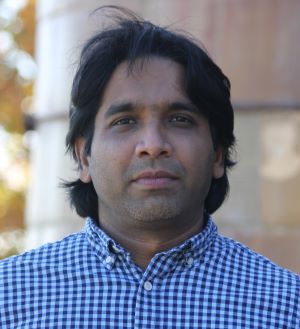
John Rayburn is a Professor in the Department of Geological Sciences at SUNY New Paltz , where he has been affiliated since 2007 (promoted to Professor in 2020). He holds a PhD from Binghamton University , an MSc from the University of Manitoba , and BS and BA degrees from SUNY Plattsburgh and St. Lawrence University, respectively. Research Interests : Glacial Geomorphology – Investigating ice margin retreat, meltwater floods, and post-glacial landscape evolution. Paleoclimatology – Analyzing climate records from sediment cores , tree rings , and varve sequences . Geoarchaeology – Applying Ground Penetrating Radar (GPR) to locate historical and prehistoric structures. Article Trends (15 Most Recent): Spanning 2024–2014, his work focuses on glacial lake dynamics , tree-ring hydrology , and GPR applications . Recent projects include 3D sediment modeling , dendroclimatic drought analysis , and anthropogenic impact studies in New York watersheds. Scientific Awards : 2015 SUNY Chancellor's Award for Excellence in Teaching Advising & Grants : While specific students are not listed, he collaborates extensively with co-authors on NSF-funded projects and REU fieldwork . His grants emphasize Quaternary climate reconstruction and geoarchaeological mapping . Labs & Teams : Affiliated with SUNY New Paltz’s Quaternary Research Group , he works with the Geological Society of America and American Geophysical Union , integrating LiDAR , GPR , and dendrochronology in multidisciplinary studies.
Jason P. Briner is a Professor in the Department of Geology at the State University of New York at Buffalo, affiliated with the College of Arts and Sciences. His research focuses on Quaternary and glacial geology, paleoclimatology, and arctic environmental change. Education Ph.D. in Geological Sciences, University of Colorado (2003) M.S. in Geology, Utah State University (1998) B.S. in Geological Sciences, University of Washington (1996) Briner studies glacial and lacustrine records to understand ice sheet processes, past climate changes, and glacial landscape evolution using cosmogenic exposure dating and paleolimnologic techniques. His work provides insights into Arctic climate change over Pleistocene and Holocene timescales. His recent research involves developing open-source tools through Ghub for ice sheet modeling, NSF-funded projects on climate change, and fieldwork in Alaska, Greenland, and Norway. He teaches courses including Climate Change, Glacial Geology, and Quaternary Dating Methods. Briner leads the Paleoclimate Lab at UB, mentoring graduate students and conducting fieldwork across glacial regions. He is a member of the Geological Society of America, American Quaternary Association, and American Geophysical Union.
Tania Allen is an Interim Department Head and Professor of Media Arts, Design and Technology at North Carolina State University's College of Design. She serves as a Faculty Fellow with the Center for Geospatial Analytics and co-directs the design research group co-lab, which focuses on critical mapping as a participatory design research tool. Her work bridges academic research with practical applications in community engagement and social justice. Her educational background includes: B.A. in History with Minors in Fine Arts/Graphic Design from Washington University Certificate in Visual Communication from the School of the Art Institute of Chicago Master of Graphic Design from North Carolina State University Allen's research centers on critical cartography and critical mapping as tools for design research. Building on theories from anthropology, action research, placemaking, and participatory design, her work seeks to 'thicken' the way data is visualized and the stories at the core of data collection and communication. Her approach emphasizes the reciprocal activity of encoding and decoding, bridging the researcher's perspective with the subject's lived experience. She challenges assumptions embedded in mapping processes while embracing cartography as both an analytic and synthetic research tool. Analysis of her publication trajectory reveals a clear evolution from foundational explorations of critical mapping toward concrete applications addressing social justice issues. Her recent work increasingly focuses on Confederate memorialization, urban development, and oppressive infrastructures, demonstrating her commitment to using design as a catalyst for community engagement and social change. This progression reflects growing sophistication in applying critical cartography to address systemic inequities. As a Faculty Fellow with the Office of Faculty Development, Allen helped create an online certificate program focused on higher-order thinking through critical and creative pedagogy. Her contributions to the TH!NK initiative have transformed campus teaching culture toward student-centered instruction that promotes critical thinking across disciplines. She has also taught Design Thinking, focusing on creative research strategies for beginning design students. Allen co-directs the cross-institutional colloquium 'Oppressive Infrastructures: Examining Systems of (in)Equity In/Through/By Data,' which investigates how data systems perpetuate inequality. Through her professional practice, she has worked with organizations including the Chicago Botanic Garden, Boston Symphony Orchestra, Accenture, MIT, and Harvard University, consistently focusing on design as a participatory process that empowers communities to address social issues and create change from the ground up.
Dr. Richard Becker is a Professor in the Department of Environmental Sciences at the University of Toledo , affiliated with the College of Natural Sciences and Mathematics . He directs the Environmental Remote Sensing Lab , where he employs interdisciplinary methods including remote sensing, geochemistry, hydrologic modeling, and UAV technologies to address geological and environmental challenges. Education: Ph.D. (2008) from Western Michigan University, M.A. and B.A. from Washington University Contact: richard.becker@utoledo.edu | 419.530.4571 | Wolfe Hall, Toledo, OH Research Focus Dr. Becker's work spans three decades, concentrating on: Environmental applications of remote sensing and GIS for geohazard mapping Assessment of land subsidence in arid regions and coastal areas Monitoring toxic algal blooms in the Laurentian Great Lakes Hydrological impacts of engineering projects on wetland systems Climate change effects on groundwater resources in Africa and the Middle East Article Trends His recent publications (2018-2024) demonstrate a consistent focus on: Integration of UAV/drone technologies for high-resolution environmental monitoring Application of remote sensing to track climate change impacts on water systems Development of multi-model ensembles for watershed management Analysis of human-environment interactions through geospatial methods
Luke J Harmon serves as Professor in the Department of Biological Sciences within the College of Science at the University of Idaho, with additional appointments in the Initiative for Bioinformatics and Evolutionary Studies, Institute for Interdisciplinary Data Sciences, and Office of Research and Economic Development. Education: PhD in Evolution, Ecology, and Population Biology (2005) from Washington University in St. Louis BS in Zoology (1998) from Iowa State University Research Focus: Harmon's work integrates phylogenetic comparative methods with computational biology to investigate adaptive radiations , trait evolution , and biogeographic patterns . His research bridges micro-macroevolutionary scales through innovative statistical modeling, particularly in evolutionary medicine applications and speciation dynamics. As developer of key R packages ( rwty , treeducken , SSARP ), he advances methodological frameworks for analyzing evolutionary rates and character correlations. Publication Trends: Recent work (2022-2025) demonstrates increasing emphasis on software tool development for phylogenetic analysis, with significant contributions to evolutionary oncology, fire-adapted trait evolution in conifers, and niche theory applications in adaptive radiations. His publications consistently address methodological challenges in modeling rate heterogeneity, species delimitation, and cross-scale evolutionary processes. Research Infrastructure: Harmon leads the Harmon Lab, which operates within the University of Idaho's Initiative for Bioinformatics and Evolutionary Studies. The lab focuses on computational approaches to evolutionary questions, leveraging high-performance computing resources and interdisciplinary collaborations through the Institute for Interdisciplinary Data Sciences.
Leif Sundberg serves as an Associate Professor (docent) in Informatics at Umeå University and maintains a part-time research position at Mid Sweden University. He is affiliated with the Department of Informatics at Umeå University and the Department of Communication, Quality Technology and Information Systems at Mid Sweden University. Dr. Sundberg holds leadership roles as Deputy Forum Leader for the Forum for Digitalization (FODI) and is an active member of the Risk and Crisis Research Centre (RCR) and the Swedish Center for Digital Innovation (SCDI). His academic background includes BA degrees in Philosophy and Media & Communication Science from Umeå University, an MA in Education from Mid Sweden University, and a PhD in Information Systems completed at Mid Sweden University in 2019. He served as a postdoctoral researcher at Umeå University during 2021-2022, was appointed senior lecturer in January 2023, and received his docent (associate professor) qualification in September 2024. Dr. Sundberg's research program centers on the complex relationship between digital technology and societal structures, particularly examining AI management, digital governance frameworks, and risk society dynamics. His work critically analyzes how digitalization transforms public sector values, decision-making processes, and risk landscapes, often employing philosophical perspectives to explore deeper implications of technological change in governance contexts. His research has made significant contributions to understanding the tensions between technological optimism and practical implementation challenges in government settings. Analysis of his recent publication portfolio reveals several key research trajectories: the application of generative AI in government contexts with attention to resilience implications; critical examinations of government technology narratives and their relationship to uncertainty; investigations into the practical challenges of implementing machine learning in public sector environments; development of frameworks for understanding the digital risk society; exploration of citizen-centric approaches to digital government; and application of public value perspectives to enterprise architecture in government settings. Generative AI applications in government resilience Critical analysis of technology narratives in public administration Machine learning implementation challenges in public sector Digital risk society theoretical frameworks Citizen-centered digital government approaches Public value perspectives on government IT architecture Dr. Sundberg's scholarly work has been published in prestigious journals including Government Information Quarterly, Safety Science, Journal of Strategic Information Systems, and Information Polity. His research has informed academic understanding of digital government strategies, e-participation mechanisms, and the philosophical dimensions of technological change in public administration, while also providing practical insights for policymakers and government practitioners. As an educator, Dr. Sundberg has supervised students in the Industrial Organization and Economics program and has developed innovative approaches to teaching machine learning using no-code AI platforms. He currently serves as an international contact person at the Department of Informatics, facilitating global academic collaborations, and participates actively in the GovTech Challenges graduate school, contributing to the development of next-generation digital government researchers and practitioners.
Lauren Ristvet is the Robert Dyson Professor of Near Eastern Archaeology at the University of Pennsylvania. She specializes in Ancient Mediterranean and Near Eastern history and archaeology, focusing on archaic state formation, landscape archaeology, environmental disasters, and ancient imperialism. Her fieldwork includes long-term excavations at Tell Leilan, Syria (ancient Shehna/Shubat-Enlil) since 1999 and co-directing the Naxcivan Archaeological Project in Azerbaijan. Associate Director of Excavations at Tell Leilan, Syria Co-Director of the Naxcivan Archaeological Project, Azerbaijan Author of In the Beginning: World History from Human Evolution to the First States (2007) Her research explores political complexity, ritual practices, and imperial dynamics through case studies in Mesopotamia, the Caucasus, and the Levant. Recent projects examine cultural imperialism, environmental collapse, and fortified settlements. Key article trends include interdisciplinary approaches to state formation, imperial frontiers, and human-environment interactions during the Bronze and Iron Ages. Current publications focus on political performance, settlement dynamics, and archaeological methodologies. She works extensively with international teams at Oğlanqala (Azerbaijan) and Tell Leilan (Syria), employing technologies like magnetic gradiometry for site mapping.
Anne McIntosh is an Associate Professor and Associate Dean at the Augustana Campus of the University of Alberta, with an adjunct appointment in the Department of Renewable Resources at the Faculty of Agricultural, Life and Environmental Sciences. Her research spans forest ecology, disturbance dynamics, and ecological reclamation, focusing on post-disturbance recovery of biodiversity and ecosystem services. PhD in Biology MSc in Ecology BSc (Honours) in Environmental Science Her research explores: Ecological recovery after natural and anthropogenic disturbances (mountain pine beetle, oil sands, reclamation) Microbial and plant community interactions Functional trait variability in forest ecosystems Conservation in mixed-use landscapes Teaching innovations in ecology and biology Her recent publications emphasize trait-based forest restoration, invasive species impacts, and monitoring reclaimed ecosystems globally. She leads the Ecological Recovery Lab and collaborates on cross-continental studies in Canada, Sweden, and Costa Rica. She teaches advanced courses in: AUBIO 315 - Advanced Biological Analysis (statistical methods) AUBIO 323 - Plant Biology AUBIO 253 - Ecological Interactions AUBIO 411 - Capstone Biology Perspectives AUSTA 215 - Statistical Methods for Natural Sciences Her lab focuses on long-term ecological monitoring, using field surveys and UAV technology to assess recovery trajectories in forest and grassland ecosystems.
Artem Kaznatcheev is an Assistant Professor at Utrecht University in the Department of Mathematics and Department of Information and Computing Sciences within the Science faculty. His research bridges theoretical computer science and evolutionary biology to analyze biological and social systems through an algorithmic lens. Current role since January 2023 Recruiting PhD students and postdocs Previously: James S. McDonnell postdoctoral fellow at University of Pennsylvania His work focuses on: Computational complexity of evolution Evolutionary game theory Algorithmic biology Mathematical modeling of cancer dynamics Cultural evolution of science Selected article trends show: Interdisciplinary integration of computer science and cancer biology Key themes: fitness landscapes, evolutionary games, treatment optimization 2021-2020 publications dominate Mathematical formalisms applied to biological and social phenomena Scientific contributions include: James S. McDonnell Foundation Independent Postdoctoral Fellowship 2019 Genetics paper on computational complexity as evolutionary constraint 2017 Nature Ecology & Evolution study on fibroblast-drug interactions in cancer Collaborative environments: Worked with Theory, Evolution and Games Group Previous affiliations: Oxford University, University of Pennsylvania, Moffitt Cancer Center, McGill University Developed teaching roles at Oriel College (Oxford)
Prof. Dr. Astrid Meier is a Professor of Islamic Studies at the Oriental Institute of Martin Luther University Halle-Wittenberg since April 2018. She previously held a Visiting Professorship at Halle-Wittenberg (2011–2013) and served as Deputy Director of the Orient Institute Beirut (2013–2018). Her work spans social and cultural history of the early modern Middle East, Ottoman legal practices, and waqf dynamics. 2006–2011: Research Assistant at the University of Zurich 2011–2013: Acting Professor at MLU Halle-Wittenberg 2013–2018: Deputy Director at Orient Institute Beirut 2018–Present: Professor at MLU Halle-Wittenberg Her research focuses on Islamic law , early modern Ottoman history , and Arabic literature , with a particular emphasis on waqf as a socio-political tool and ego-documents in Ottoman Syria. She explores food systems and hunger crises in African contexts, especially the Sahel, and contributes to historiography debates through manuscripts and court records. Key projects include Bedouin Syria (collaboration with Johann Büssow), Ottoman waterscapes in Lebanon (with Stephen McPhillips, Souad Slim), and Taha al-Kurdi studies (with Ralf Elger). Her publications in Encyclopaedia of Islam and Levant journals highlight Ottoman legal and environmental dynamics. Meier actively participates in academic governance as a member of the Board of Directors at the Center for Interdisciplinary Regional Studies (ZIRS) and the Doctoral Committee at MLU Halle-Wittenberg. She contributes to Bibliotheca Arabica and Bibliotheca Islamica series as an editorial advisor.
Hanna Ahrenby is an Assistant Professor in the Department of Creative Studies (Teacher Education) at Umeå University, Sweden, specializing in visual arts education policy and teacher professionalism within Swedish compulsory schools. Her work critically examines how educational policies are translated into classroom practice through teacher interpretation and enactment. She earned her Ph.D. in Educational Work in 2021 with the dissertation "Teaching fundamental values in art education: a study on policy enactment in secondary school" and holds formal recognition as a university teacher. Her academic foundation combines rigorous pedagogical training with deep subject expertise in art education. Dr. Ahrenby's research focuses on the tensions between policy mandates and classroom realities in visual arts education. She investigates how teachers navigate new syllabi implementation, maintain professional autonomy, and preserve subject integrity amid evolving educational traditions. Her work highlights the critical role of teacher agency in mediating policy demands with pedagogical needs. Analysis of her 2014-2025 publications reveals a clear evolution from foundational studies on fundamental values to current investigations of syllabus enactment and teaching materials. This trajectory demonstrates growing emphasis on teacher interpretation processes and historical influences on contemporary art education practices within Sweden's unique policy landscape. She currently leads two major research initiatives: a project examining teachers' interpretation of Sweden's new art syllabus in compulsory schools, and a collaborative study analyzing teaching materials through policy and historical perspectives to understand their development and classroom integration.
Ruben Gimenez Garcia is a researcher at the University of Murcia specializing in territorial dynamics and urban geography, affiliated with the COLUMNARIA research group focused on History and Territorial Dynamics of the Iberian Worlds. He completed his PhD in 2022 with a thesis on spatial diffusion of urbanized areas in Murcia's urban agglomeration under supervisors Dr. Ramón García Marín and Dr. José María Serrano Martínez. His research portfolio centers on territorial transformations in southeastern Spain, with three core thematic pillars: (1) urban sprawl dynamics evidenced in longitudinal studies of Murcia's metropolitan expansion (1990-2018); (2) rural depopulation processes examining service accessibility thresholds in regions like Sierra del Segura; and (3) sustainable territorial development through pilgrimage tourism innovation and agropastoral systems. His methodological approach integrates spatial analysis with socio-demographic fieldwork, frequently employing GIS for land cover change detection. Analysis of his 15 most recent publications (2024-2025) reveals a pronounced focus on spatial manifestations of demographic crises - particularly how basic service deficiencies accelerate rural exodus in Spain's southeast quadrant. His work demonstrates increasing interdisciplinary convergence, blending geographical analysis with tourism studies (evident in Caravaca de la Cruz pilgrimage route development) and agricultural economics (Los Pedroches livestock sustainability). Notably, he extends traditional geographical inquiry through cinematic landscape analysis of the Andes and pandemic-era demographic studies. Ruben maintains active collaboration within the University of Murcia's research ecosystem, having previously contributed to the Dinámicas Territoriales group before joining COLUMNARIA. His email contact ruben.gimenez@um.es confirms institutional affiliation, though specific departmental placement remains unreported in available materials.
Dr. Chandi Witharana is an Assistant Professor in the Department of Natural Resources and the Environment at the University of Connecticut's College of Agriculture, Health, and Natural Resources. Previously, they served as Assistant Professor in Residence (2020-2023), Assistant Research Professor (2018-2020), and Visiting Assistant Professor (2016-2018) at UConn. Their academic journey includes a Postdoctoral Research Fellowship at SUNY Stony Brook (2014-2016) and graduate work at UConn where they earned their PhD in Remote Sensing in 2014. Dr. Witharana teaches courses in high-resolution remote sensing, geospatial analysis, and introductory geomatics. Dr. Witharana's educational background includes: PhD in Remote Sensing, University of Connecticut (2014) MS in GIScience, University of Connecticut (2009) BS in Geology, University of Peradeniya, Sri Lanka (2005) Dr. Witharana's research focuses on methodological developments for analyzing large volumes of multi-modal remote sensing data for environmental, industrial, and agricultural applications, with special emphasis on Arctic Permafrost remote sensing. They harness sub-meter resolution satellite imagery, AI, and high-performance computing resources to map permafrost landforms, monitor thaw disturbances, and assess risks to human-built infrastructure in the Arctic. Their work extends beyond research to include innovative applications of remote sensing in K-12 STEM education through imagery-enabled lesson plans. Dr. Witharana aims to use cutting-edge geospatial technologies as transformative learning instruments to help students understand complex human-environment interactions. The recent publications of Dr. Witharana demonstrate a strong focus on applying advanced AI and remote sensing techniques to Arctic permafrost monitoring and infrastructure risk assessment. Their work increasingly incorporates vision transformers and deep learning models for more accurate detection of permafrost features and unhealthy tree crowns. There's a clear trend toward developing scalable geospatial datasets with standardized approaches, particularly for retrogressive thaw slumps. Many publications address practical applications including power outage risk modeling, forest management for storm resistance, and infrastructure monitoring in changing Arctic landscapes. The research shows growing interdisciplinary collaboration across environmental science, computer science, and engineering domains. Dr. Witharana has secured significant research funding as PI or Co-PI on numerous grants totaling over $14 million, including: NSF's Permafrost Discovery Gateway project ($3,000,000) Google-funded research on tracking Arctic permafrost thaw ($5,000,000) NSF's role of capillaries in the Arctic hydrologic system ($2,000,000) USDA projects on drone imaging for nutrient deficiency detection ($200,000) Eversource Energy projects on tree risk modeling ($275,000) As an educator, Dr. Witharana mentors students through research projects funded by these grants and teaches specialized courses in remote sensing and geospatial analysis. They serve as Director of the Remote Sensing & Geospatial Data Analytics Graduate Program and as a Steering Committee Member for UConn's Data Science Masters Program. Dr. Witharana is also an Editorial Advisory Board Member for the ISPRS Journal of Photogrammetry and Remote Sensing and regularly reviews proposals for NSF and other agencies. Their research group leverages high-performance computing resources including Frontera/NSF and XSEDE allocations for large-scale geospatial analysis. Dr. Witharana leads research teams focused on Arctic permafrost monitoring and geospatial AI applications, collaborating with institutions including University of Alaska-Fairbanks, Woodwell Climate Research Center, and UC Santa Barbara. Their work involves developing advanced workflows for processing satellite imagery and implementing machine learning models for environmental monitoring. The research group actively engages in developing educational applications of remote sensing technology, particularly for K-12 STEM education.
Monica Barni is a Full Professor at the Department of Modern Literature and Culture, Sapienza University of Rome, specializing in Educational Linguistics and Multilingualism. She serves as the President of the Degree Course in Communication and Interpreting in Italian Sign Language (LIS and LIST) and directs the Ateneo Linguistic Center. Her research spans language policy, Italian L2 education, and the sociolinguistics of migration. Research Interests: Analysis of linguistic policies in Italy and Europe Assessment of language competencies Plurilingual and intercultural education Linguistic landscapes in multicultural urban contexts Translation theory and practice Recent Article Trends: Her 2025 and 2024 publications focus on urban multilingualism, language transmission in migrant families, and policy intersections in education. Earlier works (2022-2023) examine Italian certifications, museum semiotics during pandemics, and European linguistic frameworks like CEFR. Labs & Teams: She leads the Ateneo Linguistic Center and contributes to the GISCEL research network. Her work intersects with projects like Lingua e cittadinanza (Language and Citizenship) and international collaborations in Italian language education.
Vincenzo Allegrini is a Researcher at the Department of European, American and Intercultural Studies (Sapienza University of Rome). He contributes to the editorial boards of OBLIO (ANVUR band A) and Leopardiana , and participates in the Doctoral College in Italian Studies (Sapienza). His research focuses on Giacomo Leopardi's intertextuality, semantics, and reception in 20th-century Italian poetry, with secondary interests in German-Italian cultural exchange, the art of memory, and intersections between literature and visual arts. Key research areas: Leopardi's philosophical dialogues, classical reception, historical semantics Teaching: Outlines of Contemporary Italian Literature (Sustainable Tourism Sciences, Modern Letters) Selected Publications: Fragments of Memory (2020), The Passing Wave (2022), and forthcoming With Gazettes in Their Hands (2025).