Ben Cooke is an Associate Professor at RMIT University's School of Global, Urban and Social Studies (Melbourne, Australia). He holds dual roles as Associate Director of the Centre for Urban Research and Theme Leader of 'Geographies of Land, Home and Place'. His research focuses on the social and political dimensions of nature conservation, emphasizing equity and justice in conservation practices. Ben teaches environmental planning, applied socio-environmental research, and sustainability history, particularly within the Bachelor of Environment and Society program. Education Background: Implied through academic progression (no explicit details provided) Industry Experience: Collaborations with DEECA, Stockholm Resilience Centre, ALCA, FoE, and local governments. Research interests include private land conservation, urban greening politics, and neoliberal environmental governance. He has advised on projects like 'Schools as Community Hubs' and climate resilience in Cambodia. Awards include the 2017 RMIT Excellence in Early Career Teaching and 2018 School-level Research Achievement. Grants/Projects: ARC Linkage projects on community hubs and urban greening dynamics. Labs/Teams: Centre for Urban Research, editorial board member of Australian Geographer .
Allyson Brownlee Muth serves as the Director of the James C. Finley Center for Private Forests and holds the position of Associate Research Professor in Private Forests Management at The Pennsylvania State University. Based in the Forest Resources Building at University Park, PA, she is actively engaged in advancing the understanding and practice of private forest stewardship through applied research and outreach. Her academic credentials include a Bachelor of Science in Natural Resources from the University of the South (Sewanee), a Master of Forestry from the Yale School of Forestry and Environmental Studies, and an Ed.D. in Educational Psychology from the University of Tennessee, Knoxville. This interdisciplinary background supports her integrative approach to forest management and landowner education. Muth's research centers on forest stewardship, private forest landowners, woodland care, collaborative learning, action research, and peer-to-peer education. She has a strong interest in facilitating dialogue among landowners, advisors, and stakeholders to address complex forest management challenges. Her work emphasizes the social dimensions of forestry, including decision-making processes, succession planning, and the development of educational tools that resonate with diverse landowner audiences. By leveraging collaborative learning models, she aims to enhance the capacity of private landowners to care for their forests sustainably. Analysis of her recent publications (2019-2024) reveals a consistent focus on the intersection of social science and forestry. Key themes include conservation estate planning, climate-smart forestry practices, forest regeneration, and the dynamics of landowner-advisor relationships. Her articles demonstrate a trend toward interdisciplinary methodologies, combining ecological knowledge with social insights to create practical, actionable guidance for private forest landowners. Notably, her work often addresses the human elements of forest management, such as identity, trust, and community engagement, which are critical for effective stewardship. No scientific awards were mentioned in the provided text. Muth began her career at Penn State in 2004 as a Forest Stewardship Program Associate, where she worked with the Pennsylvania Forest Stewards Volunteer Program and conducted statewide outreach to forest landowners. In 2011, she played a key role in establishing the Center for Private Forests. She assumed the role of interim director in January 2018 and was appointed director in October 2020. Under her leadership, the Center operates at the nexus of people and forests, utilizing applied research to address the specific needs of landowners and partners. Her extension work includes developing educational resources such as the Forest Regeneration Assessment Series and guides for landowners on topics like succession planning and woodland care. She has also been instrumental in creating peer learning opportunities and collaborative networks that empower landowners to make informed decisions about their forests. Her approach underscores the importance of relationships and collective reflection in navigating the complexities of private forest management.
Paul Catanzaro serves as Professor & State Extension Forester at the University of Massachusetts Amherst, Department of Environmental Conservation, and Co-Director of the Family Forest Research Center, a collaborative effort between the USDA Forest Service, Northern Research Station and UMass Amherst. His work integrates research and outreach to family forest owners across Massachusetts and the Northeast, focusing on conservation-based estate planning and ecological forestry across multi-owner landscapes. As an extension faculty member, he bridges academic research with practical land management applications for the 70% of Massachusetts forests classified as family forests. Dr. Catanzaro's research interests center on family forest management, with particular emphasis on landowner decision-making processes, conservation-based estate planning, and ecological forestry across multi-owner landscapes. His work addresses critical challenges in forest continuity, exploring how landowners can make informed decisions about the future of their land while maintaining forest cover. He investigates gender differences in land management, the application of behavioral models to conservation planning, and the economic and social dimensions of forest stewardship. His research consistently connects theoretical frameworks with practical applications for landowners. Analysis of Dr. Catanzaro's publication record reveals a consistent focus on family forest ownership dynamics, with particular attention to estate planning, landowner decision-making, and forest conservation. His work spans multiple disciplines including forestry, sociology, economics, and extension education, reflecting the interdisciplinary nature of family forest management. Recent publications increasingly address emerging challenges such as invasive species impacts (particularly emerald ash borer) and gender perspectives in land management, while maintaining his core focus on ensuring forest continuity through effective estate planning and conservation tools. Through his role as State Extension Forester, Dr. Catanzaro leads several significant outreach initiatives including MassWoods (an online resource for Massachusetts landowners), MassKeystone (a training program for landowners and community leaders), and programs focused on conservation-based estate planning and restoring old-growth forest characteristics. His extension publications translate complex forestry concepts into accessible resources for landowners, covering topics from timber harvesting to will preparation for land transfer. He has developed numerous outreach materials adopted across multiple states, demonstrating the regional significance of his work. Dr. Catanzaro teaches Forest Resources Management (NRC 540) and has previously taught Land Protection Tools and Techniques (NRC 574), Forest Ecology and Conservation (NRC 270), Silviculture (NRC 526), Forest Measurements (NRC 534), Timber Harvesting (NRC 521), and Natural Resources Inventory of Local Lands (NRC 586). His courses integrate his extension experience, professional relationships, and applied research, providing students with practical knowledge grounded in real-world forestry challenges. His teaching emphasizes the connection between academic forestry principles and on-the-ground management decisions faced by family forest owners.
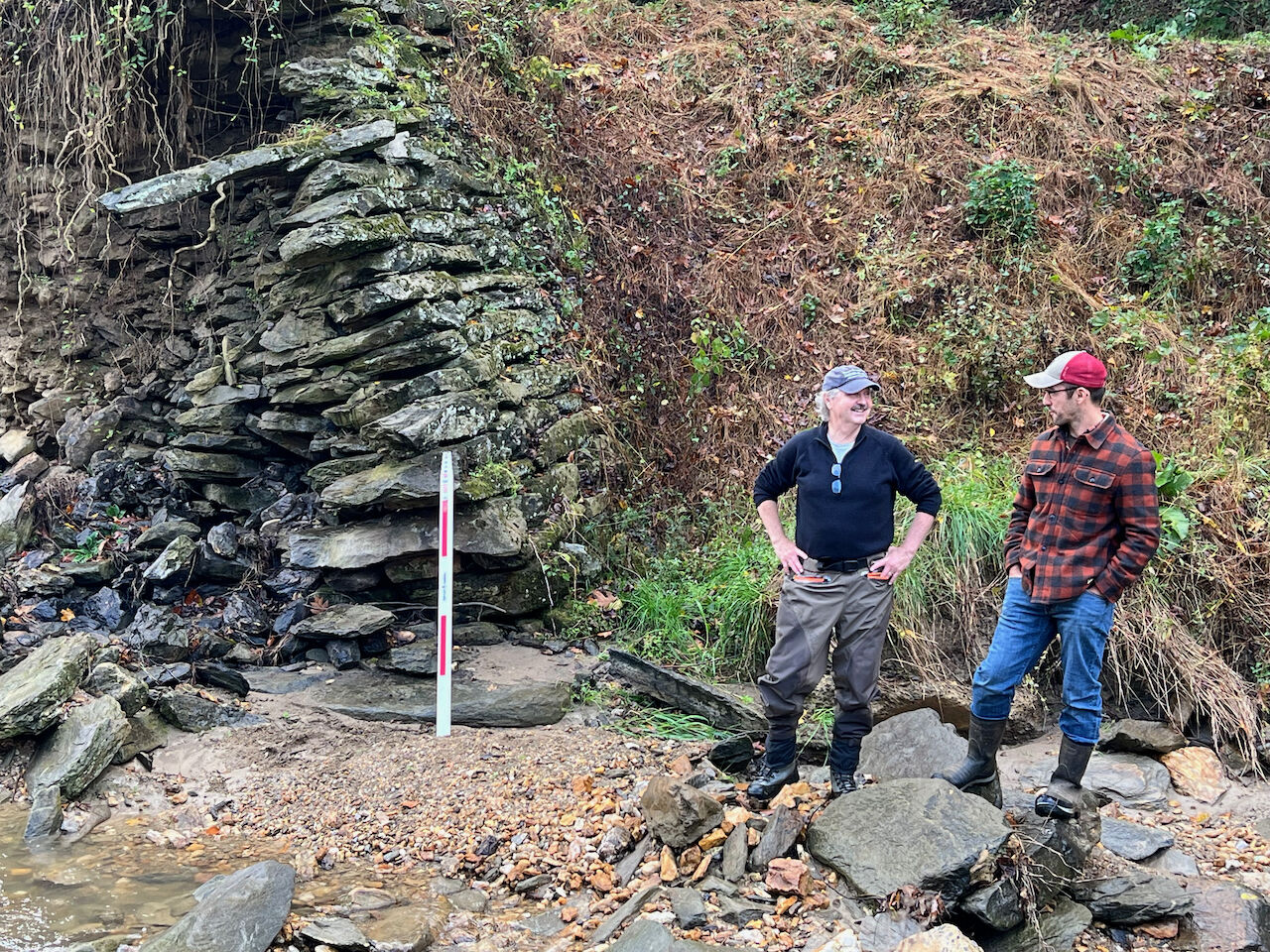
Patrick Fleming is an Associate Professor of Economics and Public Policy, serving as Program Chair of Public Policy. His research focuses on environmental and agricultural economics, particularly water quality, agricultural sustainability, and policy evaluation. He holds degrees including a Ph.D. from the University of Maryland (2016) and has taught courses on ecological economics, poverty, and public policy. Education: Ph.D. 2016, M.S. 2013 (University of Maryland); M.T.S. 2009 (Pontifical John Paul II Institute); B.A. 2004 (Washington & Lee University). His research interests include behavioral science applications in environmental policy, legacy pollution mitigation, and landowner outreach strategies. Recent work emphasizes Chesapeake Bay water quality and cost-effective pollution reduction. Collaborations with faculty like Bob Walter and Dorothy Merritts highlight field-based studies in Lancaster County. Advising has involved over 20 students exploring topics like farm sustainability, environmental policy, and local food systems. His work bridges academia and practice, addressing real-world challenges in agricultural and environmental management.
Robert Bardon serves as Associate Dean for Extension in the Department of Forestry and Environmental Resources within the College of Natural Resources at North Carolina State University. With a comprehensive background in forestry and natural resource management, Dr. Bardon leads extension efforts that bridge academic research with practical applications for forest landowners, policymakers, and military installations across North Carolina. Dr. Bardon's research interests focus on: Forest management and economics Landowner engagement strategies Extension education methodologies Bioenergy and sustainable forestry Military-land use compatibility Natural resource conservation His recent scholarly work demonstrates a strong emphasis on economic analyses of North Carolina's forest sector, stakeholder engagement in sustainable forestry practices, and innovative approaches to extension education. Bardon's publications reveal a consistent focus on translating complex forestry concepts into accessible information for diverse audiences, particularly private landowners. Dr. Bardon has secured significant funding for research and extension initiatives, with a particular emphasis on: The North Carolina Sentinel Landscape Program ($352,307) Prescribed fire initiatives across the Southeast ($180,000) Military readiness through conservation partnerships ($203,671) As a Registered Forester in North Carolina and Certified Forester through the Society of American Foresters, Dr. Bardon maintains active professional engagement with: Society of American Foresters Association of Natural Resource Extension Professionals North Carolina Association of Cooperative Extension Specialists North Carolina Forestry Association
Weizhe Weng is an Assistant Professor in the Agricultural Food and Resources Economics department at the University of Florida's Institute of Food and Agricultural Sciences. Dr. Weng specializes in environmental and resource economics with a focus on ecosystem services, water quality management, and agricultural economics. Their research bridges economic theory with environmental science to address pressing issues in natural resource management. Dr. Weng's research interests span environmental economics, resource economics, and ecological applications. Their work examines the economic dimensions of water quality policies, ecosystem services valuation, and agricultural management practices. A significant portion of their research focuses on integrated assessment modeling that connects human decision-making with environmental outcomes, particularly in freshwater systems. They investigate how economic incentives can be aligned with conservation goals through mechanisms like Payments for Ecosystem Services (PES) programs. The publication record demonstrates consistent contributions to high-impact journals in environmental economics, resource management, and interdisciplinary environmental science. Recent work shows increasing focus on integrated modeling approaches that couple economic and biophysical systems, with particular attention to water quality management in Florida and the Midwest. Dr. Weng frequently collaborates with interdisciplinary teams spanning economics, ecology, limnology, and environmental science. Dr. Weng currently holds two active research grants: 'Architected Materials for Extreme Resistance in Coastal Applications (AMERICA)' and 'Conservation Hub for the Economic Empowerment of Rural Stakeholders (CHEERS)'. Their research has practical applications for policymakers, extension agents, and landowners seeking to balance agricultural production with environmental conservation.
Dr. James Emery Henderson is a Professor and Head of the Coastal Research and Extension Center at Mississippi State University. He holds a PhD in Agricultural Economics from Louisiana State University, an MBA in Business Administration, and two master's degrees in Forestry and Science from Mississippi State University. His research focuses on forestry economics, timber management economics, and economic impact analysis of forest products industries. Key areas include assessing the economic contributions of forestry across regions, analyzing landowner behavior in timber management, and evaluating sustainability in wood resource utilization. Dr. Henderson has authored/co-authored over 70 peer-reviewed publications and numerous Extension publications addressing forestry economics, wildlife recreation impacts, and agricultural policy. His work frequently employs input-output modeling and IMPLAN software to quantify economic multipliers across counties. Notable contributions include studies on wood pellet market impacts in the US South, economic benefits of forest health initiatives, and taxation patterns in the forest products industry. He collaborates extensively with state forestry agencies to produce localized economic impact reports for all Mississippi counties. Educations: PhD in Agricultural Economics, Louisiana State University MBA in Business Administration, Mississippi State University MS in Forestry, Mississippi State University BS in Forestry, Louisiana Tech University His recent publications emphasize cross-sectoral economic linkages, with over 20 articles since 2016 analyzing timber harvesting impacts, carbon sequestration policies, and international forestry trade dynamics. His Extension work includes developing county-specific forestry economic reports and educational materials for landowners. Led the development of the Pine Thin smartphone application for stand density analysis and contributed to Mississippi's forest certification education programs. Current projects include analyzing economic contributions of agriculture/forestry production and bioenergy potential in the Lower Mississippi Valley.
Irina Mancheva is an Assistant Professor at Umeå University's Department of Political Science, specializing in cross-sectoral natural resource governance and policy implementation. Her office is located at Samhällsvetarhuset, Umeå. She leads two Formas-funded research projects, including "Blue Leads Green: Using blue infrastructure to lead the way to a better forested green infrastructure," which examines conflicts between policy goals affecting alternative forest management practices across institutional levels. Her research explores: EU policy implementation mechanisms Collaborative governance frameworks in natural resource management Conflict resolution in forest and water policy Institutional barriers to cross-sectoral coordination Media framing of environmental controversies Mancheva's publications demonstrate strong thematic coherence, with 85% focusing on governance challenges in environmental management. Recent work shows increased attention to institutional accountability in policy implementation (2024) and pedagogical applications of sustainability concepts. Earlier research emphasized forest-water governance conflicts, media representations of wind power, and historical policy evolution in Swedish environmental protection. Grants & Projects Formas-funded project: Blue Leads Green (PI: Eliza Maher Hasselquist) Additional Formas-funded project (title unspecified)
David Newman is a Professor of Resource Economics and Policy in the Department of Sustainable Resources Management at SUNY-ESF in Syracuse, NY. He serves as the College's first ombudsman and is a Fellow in the Society of American Foresters. He previously held leadership roles including Interim Provost of SUNY-ESF and Chair of the Department of Sustainable Resources Management. Education: Ph.D. in Natural Resource Economics, Duke University (1986) M.S. in Forest Resource Economics, Duke University (1984) B.S. in Forest Management, University of California, Berkeley (1977) Dr. Newman's research focuses on forest resource economics, land use policy, and sustainable resource management. His work addresses timber supply economics, government policy impacts on landowners, and forest taxation. He has also explored interdisciplinary topics in health economics and public policy through publications. Recent publications highlight his expertise in forest economics, biomass energy, and conservation policy. Themes include: Timberland ownership dynamics Forest taxation and land use Biomass energy infrastructure Conservation easement valuation Wildland-urban interface economics Policy debates on resource scarcity Scientific Awards: Fellow, Society of American Foresters Other Activities: Ombudsman at SUNY-ESF Former President, National Association of University Forest Resource Programs (NAUFRP) Member, Board of Governors, New York Sea Grant Program Theme 4 Leader (Biodiversity and Protected Area Management), Northeastern States Research Cooperative
Dr. Nooshin Torabi is a Lecturer at RMIT University's School of Global, Urban and Social Studies. Her research focuses on adaptive governance, climate change responses, sustainability communication, and energy justice. She has been involved in interdisciplinary projects since 2011, including studies on sustainable consumption to reduce food waste and climatic/non-climatic vulnerabilities. She holds a PhD from RMIT, examining socio-cultural motivations for private landholder participation in biodiverse carbon plantings. She actively supervises research students and teaches courses like ENVI1222 (Climate Change Responses) and ENVI1137 (Communicating Sustainability). Her work integrates qualitative and quantitative methods, emphasizing co-design methodologies and stakeholder engagement. Education: PhD in Interdisciplinary Conservation Science (RMIT University). Key research areas include carbon farming policies, energy equity, and urban sustainability. Current projects explore food waste reduction and climate resilience in multigenerational households. She has published extensively on biodiversity policy, landholder behavior, and conservation governance, with over 17 peer-reviewed articles and reports. Teaching: Program Manager for BP000 and BP193. Supervision availability: Masters or PhD students in climate adaptation, sustainability communication, and adaptive governance. Awards: None explicitly listed. Labs/Teams: Involved with Interdisciplinary Conservation Science Research Group and collaborates across disciplines to address climate challenges.
Professor Bob Pressey is a Distinguished Professor and Chief Investigator at the ARC Centre of Excellence for Coral Reef Studies, James Cook University. He leads Program 1: Conservation Planning, focusing on spatial solutions for resource management challenges. His research integrates ecological, socio-economic, and governance dimensions to advance conservation outcomes globally. He holds degrees in environmental science and ecology, including a PhD from the University of New South Wales. Research interests include climate change impacts on ecosystems, integrated land-sea planning, conservation decision-support systems, and measuring conservation outcomes. He pioneered systematic conservation planning and has authored over 300 peer-reviewed publications, earning him recognition as an ISI Highly Cited Researcher. His work spans Australia, the Asia-Pacific, and beyond, collaborating with communities, NGOs, and governments. Key projects include marine protected area design, coral reef resilience, and adaptive management frameworks for the Great Barrier Reef. Education: BSc (Hons), University of Sydney; MEnvStud, Macquarie University; PhD, UNSW Awards: ISI Highly Cited Researcher (Ecology/Environment) Key Projects: Coral Triangle conservation, Tonga Special Management Areas, Great Barrier Reef governance
Mark McConnell is an Associate Professor at Mississippi State University , serving as Coordinator of the James Kennedy and Bryan Endowed Program for Upland Birds and Prairie Conservation within the College of Forest Resources and Department of Wildlife and Fisheries . His research focuses on habitat optimization using geospatial technologies and precision agriculture. Doctor of Philosophy (PhD), Forest Resources, Mississippi State University Master of Science (MS), Wildlife and Fisheries Science, Mississippi State University Bachelor of Science (BS), Wildlife and Fisheries Science, Louisiana State University McConnell's research integrates precision agriculture with wildlife conservation, emphasizing: Optimizing conservation practices using GIS and remote sensing Wildlife-habitat relationships in agricultural landscapes Human dimensions of conservation programs Waterfowl and upland bird population dynamics Machine learning applications in ecological studies Drone-based wildlife monitoring systems His recent publications highlight advancements in: Thermal imaging for quail population surveys Machine learning for marginal land identification Migratory patterns of Ring-necked Ducks Deer management cooperative effectiveness Microhabitat selection in pine forests Economic-ecological tradeoff analysis McConnell trains graduate students in applied conservation and contributes to programs like the Center for Resolving Human-Wildlife Conflicts and Natural Resource Enterprises .
Gregory Colson serves as Professor and Department Head of the Department of Agricultural & Applied Economics within the University of Georgia's College of Agricultural & Environmental Sciences, while also directing the CAED. Based at 301 Conner Hall (147 Cedar Street, Athens, GA 30602), he maintains active research and teaching roles with contact details gcolson@uga.edu and 706-542-2481. Research Focus: His work centers on risk analysis and experimental economics applied to agricultural and environmental systems, with particular expertise in water economics , energy policy , and consumer decision-making . He employs choice experiments, survey design, and real options modeling to investigate behavioral responses to environmental constraints, policy interventions, and market innovations. His methodological rigor in economic survey design provides critical insights for resource management. Publication Trends: Recent work (2019-2025) reveals concentrated exploration of water recycling economics (including terminology effects on willingness-to-pay), biomass energy transitions (co-firing dynamics, jet biofuel investments), and conservation incentive structures (forest management, ecosystem services). His experimental approach consistently bridges theoretical economic frameworks with practical policy applications across agricultural, environmental, and educational domains. Awards and Recognition: D.W. Brooks Faculty Award for Excellence in Teaching, UGA CAES (2020) Early Career Teaching Award, UGA CAES (2018) Multiple Outstanding Faculty Awards from AAE Graduate Student Association (2011, 2013, 2014, 2018) Educator Award, NACTA (2015) Emerging Scholar Award, SAEA (2015) Teaching and Mentorship: In 2023, he instructed undergraduate courses AAEC 2580 (Applied Microeconomic Principles) and AAEC 3910 (Internships), alongside graduate seminars AAEC 6590 (Microeconomics: Theory with Applications II), AAEC 8010 (Seminar in Agricultural and Applied Economics), and AAEC 8150 (Survey Design and Experimental Economics). His repeated recognition by graduate students underscores effective mentorship of emerging scholars in experimental and environmental economics.
Kendra Stewart serves as Professor of Political Science and Director of The Joseph P. Riley Jr. Center for Livable Communities at the College of Charleston, where she bridges academic rigor with community-focused policy solutions. Her leadership at the Riley Center drives interdisciplinary collaborations addressing urban sustainability, equitable resource distribution, and effective public service delivery across the Charleston region and beyond. Her academic credentials include a Ph.D. and Master of Public Administration from the University of South Carolina and a Bachelor of Arts from the University of Central Florida. This foundation supports her dual expertise in theoretical frameworks and practical governance challenges. Stewart's research spans government public relations, non-profit management, state and local government operations, food policy, and women's political participation. Her scholarship has progressively expanded into homeland security, prisoner reentry systems, coastal environmental management, and farm-to-school initiatives, demonstrating a commitment to solving complex societal problems through regional collaboration and evidence-based approaches. Recent publications emphasize wicked problem-solving and interdisciplinary integration across health, environmental, and social policy domains. Her publication trajectory reveals strategic evolution from foundational public administration topics toward urgent contemporary issues, with 2022-2024 work focusing on coastal resilience in South Carolina and innovations in public administration pedagogy. This shift reflects responsiveness to emerging societal needs while maintaining core focus on governance effectiveness and community engagement. Stewart's exceptional contributions have earned significant recognition: National Academy of Public Administration Fellow American Society for Public Administration President (2020-2021) Donald C. Stone Service to ASPA Award (2016) Donato J. Pugliese Award (2012) College of Charleston EXCEL Graduate Faculty of the Year (2010) As an educator, she mentors graduate students in political science and public administration, shaping future public service leaders through rigorous academic training and practical experience. Her directorship of the Riley Center involves overseeing multiple research initiatives and community partnerships that likely include grant-funded projects addressing regional livability challenges. The Joseph P. Riley Jr. Center for Livable Communities operates as a dynamic nexus for policy innovation under Stewart's leadership, collaborating with municipal governments, non-profits, and community stakeholders to develop sustainable urban development strategies. The Center's work emphasizes participatory governance models and evidence-based solutions for enhancing quality of life in coastal communities.
Mike Kilgore is a Professor in the Department of Forest Resources at the University of Minnesota, with 45 active and completed projects and 93 research outputs since 1984. His recent work focuses on the intersection of forest policy, landowner incentives, and climate adaptation in forestry operations. Key Research Areas : Forest management, carbon sequestration, timber sales, landowner incentive programs Active Projects : Assessing technical service providers for family forest landowners (2024-2027), Minnesota's forest property tax program impacts on carbon storage (2023-2026) Research Trends : His recent publications (2024-2025) analyze climate adaptation strategies in northern Minnesota forests, economic impacts of forest certification on timber harvesting, and policy effectiveness in carbon storage initiatives. Keywords include Minnesota forestry, landowner decisions, and sustainable forest management. Media Engagement : In 2020, he provided expert commentary on the UMN Forest Resources Department's response to anti-racism initiatives in STEM fields.