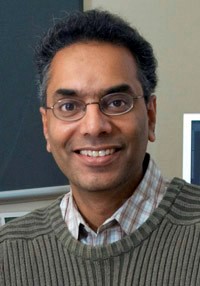
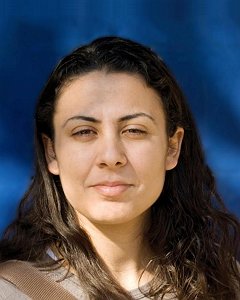
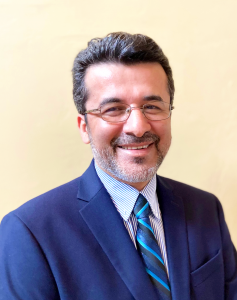
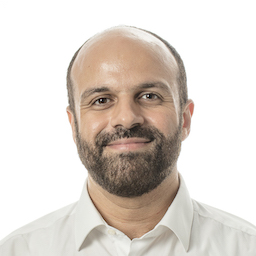
Professor Suresh Jagannathan is a leading researcher in programming languages and formal verification. His work focuses on semantics of high-level languages, type theory, program analysis, and compiler design, with a particular emphasis on concurrent and distributed systems. He explores formal methods for certified compilation, memory model consistency, and verification techniques enabling safe program optimizations. Core research areas: programming language semantics, formal verification, type theory, compiler design Key applications: concurrent/distributed systems, certified compilation, safe neural network verification Recent publications highlight his contributions to automated verification of concurrent data structures, type-guided repair of input generators, and differentiable logic specifications for AI planning systems. His work combines theoretical rigor with practical implementations like ECOOP best papers and tool developments. Professor Jagannathan has received multiple scientific awards (not specified in available data) and maintains active collaborations with researchers in formal methods and systems verification communities.
Hassan Sartaj serves as a Postdoctoral Fellow within the Department of Engineering Complex Software Systems at Simula Research Laboratory. His research bridges advanced software engineering methodologies with critical healthcare applications, focusing on medical device safety and reliability through innovative digital twin frameworks. His research profile centers on AI-driven software engineering for healthcare systems , with core expertise in digital twin creation , uncertainty-aware simulation , and LLM-enhanced testing . Key contributions include developing meta-learning approaches for medical device digital twins (MeDeT) and quantum extreme learning machines for practical software testing. His work consistently addresses real-world challenges in healthcare IoT, particularly in medicine dispensers and cancer registry systems, emphasizing safety-critical validation. Analysis of his 15 most recent publications reveals a dominant trend toward integrating foundation models with cyber-physical systems engineering . Over 70% of his 2024-2025 output explores LLMs for uncertainty identification in self-adaptive robotics, differential testing of medical rule engines, and environment simulation for digital twins. This reflects a strategic pivot toward leveraging generative AI for validating safety-critical healthcare software, with strong emphasis on practical DevOps implementation in evolving healthcare applications.
Luis Ferreira Pires is an Associate Professor affiliated with the Digital Society Institute and Semantics, Cybersecurity & Services. With over 338 research outputs and 1706 citations, his work focuses on ontology engineering, semantic interoperability, and IoT systems. He has supervised 15 research works and received two best paper awards: EDOC 2013 and FOIS 2018. Key Research Areas: Ontology, Semantic Web, Internet of Things, Enterprise Architecture Collaborations: Active in health informatics, smart systems, and FAIR data principles His recent publications demonstrate expertise in applying large language models to ontology development, enhancing application observability, and improving data management practices in healthcare. He has contributed to multiple datasets on agricultural metadata, urban ecology, and health data governance. Scientific Awards: EDOC 2013 Best Paper Award FOIS 2018 Best Paper Award
Karine Even-Mendoza is a Lecturer in Systems & Programming Languages at King's College London, working within the Department of Informatics in the Faculty of Natural, Mathematical & Engineering Sciences. Previously, she was a Research Associate at Imperial College London's Department of Computing, where she worked in the Software Reliability Group and Multicore Programming Group. She completed her PhD at King's College London, where she also spent four years working with the Software Systems (SSY) group. Dr. Even-Mendoza's research focuses on the intersection of software testing, verification, and programming languages, with recent work increasingly incorporating machine learning and quantum computing techniques. Her work addresses critical challenges in compiler testing, system simulation validation, and the application of large language models to software engineering problems. She has developed innovative approaches like ReFuzzer for enhancing the validity of LLM-generated test programs and SearchGEM5 for improving the reliability of system simulators through search-based testing. Her publication record demonstrates a strong trajectory in top-tier software engineering venues, with a notable shift toward incorporating large language models and quantum computing in recent years. She has become particularly active in applying AI techniques to traditional software engineering challenges, bridging the gap between classical software verification methods and modern AI approaches. Her work spans both theoretical foundations and practical applications, with implementations like CsmithEdge and GrayC contributing tangible tools to the software testing community. Dr. Even-Mendoza has been actively involved in the software engineering research community, serving on program committees for major conferences including ASE, ISSTA, ECOOP, and SPLASH. She has also contributed to artifact evaluation processes, demonstrating her commitment to research reproducibility and scientific rigor in software engineering.
Juan Carlos Trujillo Mondejar is a Full Professor in the Department of Languages and Computer Systems at the University of Alicante's Higher Polytechnic School, where he leads the Lucentia Research Group. He has maintained active teaching responsibilities through 2025, instructing courses such as Business Intelligence and Process Management, Project Management of Information Technologies, and Database Technology. His academic credentials include: Doctor of Computer Engineering, Higher Polytechnic School of Alicante, University of Alicante (2001) Doctorate in Recognition, Interpretation and Machine Translation (2001) Computer Engineer, Polytechnic School of Alicante, University of Alicante (1995) Technical Engineer in Management Information Technology (1995) Professor Trujillo's research spans Business Intelligence, Big Data, Data Warehousing, OLAP, data mining, and strategic planning. His work integrates computer science with practical business applications, particularly in healthcare contexts where he applies EEG analysis and deep learning for ADHD diagnosis. He has directed 18 doctoral theses and supervised 35 final degree/master's projects in the last five years, emphasizing internationalization of students. His publication record demonstrates remarkable impact with over 200 conference papers at high-impact venues (ER, UML, DAWAK, CAiSE) and more than 60 JCR-indexed journal articles in top publications like DKE, DSS, IS, and InfSci. His work has earned him recognition as one of the most cited authors in Business Intelligence, with multiple papers ranking among the most downloaded in journals like Data & Knowledge Engineering. Notable achievements include: Co-editing 11 special issues for JCR journals Serving as PC-Chair for major international conferences (ER'18, ER'13, DOLAP'05) Senior Editor of Decision Support Systems (Q1 journal) until 2017 Articles with 152, 128, and 98 citations Multiple papers ranking among top downloaded articles in their respective journals Professor Trujillo has secured substantial research funding as Principal Investigator for national, regional, and Horizon 2020 projects, totaling 33 public research projects in the last five years. His technology transfer activities include 7 Intellectual Property Registrations and co-founding Lucentia LAB, S.L. in 2015, a spin-off company focused on Business Intelligence and Software Engineering technology transfer. He maintains active international collaborations with leading researchers including S. Rizzi, P. Vassiliadis, M. Golfarelli, Il-Yeol Song, and J. Mylopoulos. His current projects include a Smart City initiative with Elda City Council (2025) and an LLM-based data integration project for digital transformation at the University of Alicante (2024-2025).
Mark M. Tehranipoor is the Sachio Semmoto ECE Department Chair and the Intel Charles E. Young Preeminence Endowed Chair Professor in Cybersecurity at the University of Florida's Herbert Wertheim College of Engineering. He leads the Department of Electrical & Computer Engineering and co-founded major initiatives like the IEEE International Symposium on Hardware-Oriented Security and Trust (HOST), IEEE AsianHOST, and IEEE PAINE. His research focuses on hardware security, IoT security, and VLSI design, with over 650 publications and 25 patents. Education: PhD, Electrical Engineering, University of Texas at Dallas (2004) MS, Electrical Engineering, University of Tehran (2000) BS, Electrical Engineering, Tehran Polytechnic University (1997) Research Interests: His work addresses hardware security vulnerabilities, supply chain integrity, and trustworthy microelectronics. Notable contributions include developing methodologies for secure IC design, electromagnetic side-channel analysis, and countermeasures against hardware Trojans. Awards: He is a Fellow of IEEE, ACM, and the National Academy of Inventors (NAI). Honors include the 2023 SRC Aristotle Award, 2018 IEEE HOST Hall of Fame, and multiple best paper awards. His leadership roles include directing the Florida Institute for Cybersecurity Research (2015–2022) and co-directing the AFOSR/AFRL CYAN Center and National Microelectronic Security Training Center (MEST). Grants & Advising: His projects are funded by 50+ organizations, including NSF and industry partners. He advises graduate students and leads interdisciplinary teams in hardware assurance, with a focus on transitioning research to industry through Edaptive Computing Inc. Transition Center (ECI-TC). Labs & Initiatives: Directs centers like MEST and CYAN, advancing secure hardware design practices. He also co-founded the Journal on Hardware and Systems Security (HaSS) and led the development of the NSF-funded Trust-Hub platform for hardware security resources.
Professor Alastair Donaldson is a faculty member in the Department of Computing at Imperial College London. He leads the Multicore Programming research group and teaches Object-Oriented Programming. His work focuses on programming languages, compiler verification, and GPU computing. Research Areas: Compiler fuzzing and testing Formal verification of GPU programs Memory and cache coherence protocols Concurrency and synchronization Language design for parallel computing Software reliability and bug detection Recent Contributions: His publications highlight advancements in fuzzing techniques for compilers, formal analysis of hardware-software interfaces, and GPU concurrency challenges. Key areas include zero-knowledge proofs, LLM code testing, and multi-level compiler verification. Groups & Labs: He directs the Multicore Programming research group, focusing on scalable concurrency solutions and programming language semantics.
Andreas Wortmann is a Professor at the Institute for Control Engineering of Machine Tools and Manufacturing Systems (part of the University of Stuttgart) and an Associate Member of the Cluster of Excellence IntCDC . His research focuses on Digital Twin Technology , Model-Driven Engineering , and Cyber-Physical Production Systems , with applications in Industrial Automation and Domain-Specific Languages . Recent publications highlight his work on systematic mapping studies of digital twin platforms, low-code development for manufacturing systems, and language engineering for heterogeneous environments. He has contributed to standards like the Asset Administration Shell and explored AI integration in timber construction process planning . Key collaborations include projects with researchers in robotics , software architecture , and industrial IoT . His work bridges academic research with practical implementations in the German automotive industry and smart manufacturing domains.
Milos Gligoric is an Associate Professor in the Department of Electrical and Computer Engineering at The University of Texas at Austin. His research focuses on software engineering and formal methods, particularly in software testing (test generation and regression testing), proof engineering, systems-supported software engineering, and software engineering for scientific computing. He holds a Ph.D. from the University of Illinois at Urbana-Champaign (2015) and M.Sc./B.Sc. degrees from the University of Belgrade. Research Interests: Improving software quality and developer productivity through automated testing techniques, compiler optimizations, and formal verification methods. Recent work explores applications of large language models in test generation and code evolution. Publication Trends: Recent articles (2023-2025) show strong emphasis on LLM applications for test generation, JIT compiler testing, Python/C++ performance optimization, parallel computing, and innovative testing tools. Work frequently appears at top venues like ICSE, FSE, ISSTA, and OOPSLA. Scientific Awards: ACM SIGSOFT Outstanding Doctoral Dissertation Award David J. Kuck Outstanding PhD Thesis Award Multiple ACM SIGSOFT Distinguished Paper Awards Best Paper Award nominations (ICST 2012, ICS 2021) New Ideas and Emerging Results Distinguished Paper Award Research Support & Advising: Funded by Army Futures Command, Cisco, DOE, Google, Huawei, NSF, Runtime Verification, and Samsung. Mentors 7 PhD students and has graduated 12 PhD/MS students. Maintains industry collaborations with DBT (part-time contractor), Katana Graph, and Samsung. Labs & Tools: Leads UT Austin's software engineering research group. Developed multiple open-source tools including Ekstazi (regression test selection), mCoq (mutation analysis for Coq), Roosterize (lemma suggestion for Coq), and JAttack (JIT compiler testing).
Liliana Pasquale is an Associate Professor at the School of Computer Science, University College Dublin (UCD), and a funded investigator at Lero – the SFI Research Centre for Software. She holds a PhD in Information and Communication Technology from Politecnico di Milano (2011) and has conducted research at IBM TJ Watson Research Center (2008). Her research focuses on requirements engineering, adaptive security, forensic readiness, and GDPR compliance in cyber-physical systems, with applications in transportation networks, industrial control systems, and smart spaces. **Education**: PhD in Information and Communication Technology (Politecnico di Milano, 2011); Professional Certificates in University Teaching & Learning (UCD). **Research Interests**: She investigates adaptive security mechanisms, forensic readiness for software systems, and runtime models for complex systems. Key areas include vulnerability assessment of transportation networks, stealthy attack detection in industrial systems, and human-centric cybersecurity for smart homes. **Grants & Awards**: Recipient of the Lero Research Award (2024), Runner-Up for IEEE Best Paper Award (2023), and numerous best reviewer recognitions. Active in grant initiatives such as the €1.2M 'Towards Forensic-Ready Software Systems' (2018–2019). **Teaching**: Coordinates UCD's MSc in Cybersecurity, including modules like 'Secure Software Engineering' and 'Leadership in Security'. Develops blended learning strategies for professional learners. **Professional Activities**: Serves on program committees for ICSE, SEAMS, and FSE. Co-chaired the Student Volunteer Committee for ESEC/FSE 2024 and participates in industry collaborations through UCD’s IT Strategy Group. **Lab/Teams**: Leads the SPARE research group, focusing on secure software engineering and adaptive systems. Collaborates with Lero and industry partners on cybersecurity challenges.
Dr. Prasad Calyam is the Greg L. Gilliom Professor of Cybersecurity in the Department of Electrical Engineering and Computer Science at the University of Missouri-Columbia. He also serves as Director of the Center for Cyber Education, Research, and Infrastructure (Mizzou CERI). His research focuses on Cloud Computing, Machine Learning, Artificial Intelligence, Cyber Security, and Advanced Cyberinfrastructure. He has led over $39 million in sponsored projects from NSF, DOE, NSA, and industry partners. Dr. Calyam's work emphasizes interdisciplinary collaboration, particularly in cybersecurity education for neurodivergent populations, drone networking, and blockchain-based systems. He has developed tools like 'Narada Metrics' for network monitoring and contributes to platforms like FlyNet for drone applications. His publications span AI-driven cybersecurity solutions, VR-based learning environments, and edge computing optimization. He holds IEEE Senior Member status and serves as an Associate Editor for IEEE Transactions on Network and Service Management. His recent projects address tactical edge network security, federated learning for drone swarms, and AI-driven anomaly detection. He actively fosters inclusive cybersecurity education through VR curricula and collaborates on medical data governance frameworks.
Essam Mansour is an Associate Professor in the Department of Computer Science and Software Engineering at Concordia University, Montreal, and the head of the Cognitive Data Science (CoDS) Lab. His research focuses on Federated Data Science, knowledge graphs, graph neural networks, large language models, and distributed systems. He has received an NSERC Discovery Grant (2020) and leads projects like the Data Civilizer system for big data management and Lusail for scalable RDF querying. He advises students across PhD, Master’s, and undergraduate levels, with notable alumni working at companies like Huawei, Amazon, and as PhD candidates at McGill. Mansour has contributed to systems such as E-Store, Accordion, and StarDB, and holds a pending patent for data processing. He actively reviews for top journals like ACM TODS and IEEE TKDE, and serves on program committees for SIGMOD, VLDB, and ICDE. His work emphasizes scalable systems for data integration, query optimization, and cybersecurity applications using graph-based techniques. The CoDS lab develops platforms like KGNet and KGLac, advancing federated learning and knowledge graph technologies.
Jukka Nurminen serves as an Adjunct Professor and Visitor within Aalto University's Department of Computer Science, maintaining active affiliation with the Myllymäki Petri research group at the Helsinki Institute for Information Technology (HIIT). His institutional presence bridges theoretical computer science and sustainability applications through cross-disciplinary collaborations. Research focuses span three critical domains: energy-efficient computing systems (data centers, distributed networks), sustainable urban mobility via smartphone data analytics, and AI ethics in educational contexts. His work consistently translates computational frameworks into real-world sustainability solutions, such as developing smartphone-based tools for low-carbon travel optimization and energy-aware data center management. Recent publications (2025) reveal emerging expertise in quantum algorithm measurement techniques and LLM ethics assessment, building on established contributions in sustainable transportation (2020) and green computing (2018-2019). This trajectory demonstrates continuous adaptation to computational frontiers while maintaining core sustainability objectives. No scientific awards are documented in available sources, though his work appears in premier venues including IEEE Quantum Software, ACM Transactions, and Sustainability journals. As an Adjunct Professor, he likely engages in graduate supervision within Aalto's Computer Science department, with research supported by institutional resources at HIIT and Aalto. Collaborative patterns indicate international partnerships, particularly with CERN in green computing initiatives and transportation researchers in sustainable mobility projects. His affiliation with the Myllymäki Petri group provides access to HIIT's machine learning infrastructure and cross-institutional researcher network, facilitating the data-intensive approaches central to his transportation and energy studies.
Mauro Caporuscio is a Professor of Computer Science at Linnaeus University's Department of Computer Science and Media Technology , affiliated with the Faculty of Technology . He holds a PhD from the University of L'Aquila (2006), with prior academic appointments as Assistant Professor at Politecnico di Milano (2010-2014) and Postdoctoral Researcher at INRIA Paris-Rocquencourt (2006-2009). Research Groups : Cyber-Physical Systems (CPS), Engineering Resilient Systems (EReS), Linnaeus University Centre for Data Intensive Sciences and Applications (DISA), Smart Industry Group (SIG) Ongoing Projects : Digital Twin of Organizations (DTO), Smart Industry Education, Aladino (architecture methodologies), SmartDat (industrial digitalization) His research focuses on applying Model-Based Software Engineering to Self-Adaptive Systems , emphasizing decentralization and resilience . Key areas include Digital Twin for organizational modeling, Cyber-Physical Systems , and IoT-enabled platforms with applications in robotics and physical rehabilitation. Publications span IEEE Transactions , Springer series, and top software engineering conferences. He contributes to program committees and has developed educational programs including a Master's in Computer Science with software engineering specialization.
Pedro Alves is an Associate Professor in Computer Engineering at the Lusófona University of Humanities and Technologies, where he previously served as Director of the Computer Engineering undergraduate program (2016-2022). He holds a PhD in Computer Engineering from the University of Lisbon's Instituto Superior Técnico (2014). His research focuses on distributed context-aware systems, mobile computing, automated assessment tools, and educational technology. He leads projects developing practical applications including Drop Project (automatic grading system), App4SHM (structural health monitoring), and mobile solutions for healthcare/education. Recent investigations explore AI integration in programming education, analyzing student interactions with LLMs and developing assessment strategies for AI-augmented coding. Pedro teaches courses in Mobile Computing, Programming Fundamentals, Algorithms, and Programming Languages. He mentors student projects spanning healthcare applications, civil engineering tools, and educational platforms, fostering industry-academia collaboration.