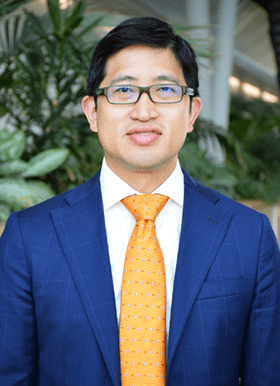
Ye Zhisheng is the Dean’s Chair and Associate Professor in the Department of Industrial Systems Engineering & Management at the National University of Singapore (NUS). His research focuses on reliability engineering, inventory control, emergency response systems, and statistical modeling. He holds a PhD in Industrial and Systems Engineering from NUS, along with a BEng in Material Science and Engineering and a BEco in Economics from Tsinghua University. His work emphasizes practical applications in mission-critical systems, predictive maintenance, and data-driven decision-making. Current research initiatives include optimal maintenance policies for manufacturing systems, degradation analysis of bearings, and federated learning approaches for battery lifecycle prediction. He has pioneered methods for integrating physics-informed neural networks into prognostics and health management (PHM) systems. Key technical contributions span advanced statistical methodologies like sieve estimation for survival data, phase-type distributions modeling, and condition-based maintenance optimization. His interdisciplinary approach bridges operations research, mechanical engineering, and computer science to address complex reliability challenges. Recent projects include resilient consensus-based power grid management and contamination source identification frameworks. Notable collaborations involve developing intelligent cross-domain fault diagnosis systems using transformer networks and advancing the Internet of Federated Things (IoFT) for distributed data analytics. His work has been applied in aerospace, telecommunication infrastructure, and medical emergency response systems.
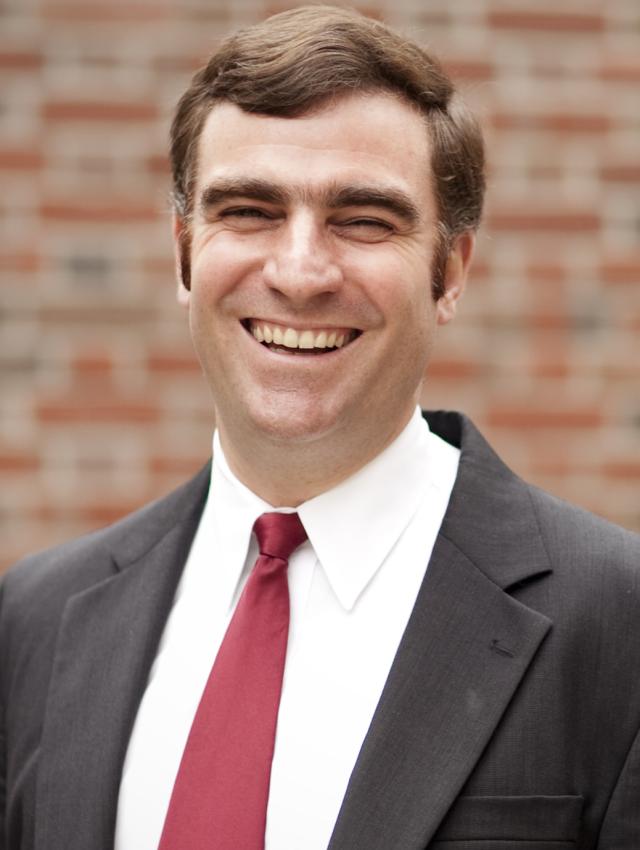
Petteri Nurmi is a Professor of Computer Science at the University of Helsinki, affiliated with the Department of Computer Science and the Helsinki Institute of Sustainability Science (HELSUS). His research focuses on IoT systems, environmental monitoring, AI-driven solutions, and sustainable computing. He leads projects such as the NordForsk-funded initiative (2024-2028) and the Team Finland Knowledge programme (2024-2026), emphasizing large-scale IoT deployments and quantum computing integration. Key research interests include drone-based air quality monitoring, low-cost sensor networks, and AI applications in environmental science. Nurmi has published extensively in top venues like IEEE IoT Journal and ACM workshops. His work bridges technical innovation with societal challenges, such as urban pollution reduction and sustainable resource management. He supervises doctoral students in the Computer Science program and collaborates internationally on projects like underwater plastic detection (SEAGULL) and smart city infrastructure. Nurmi’s contributions to edge computing and pervasive sensing have been recognized through grants totaling over €2M. His lab develops tools for data-intensive systems, including thermal imaging for energy efficiency analysis and AI-driven sensor fusion frameworks.
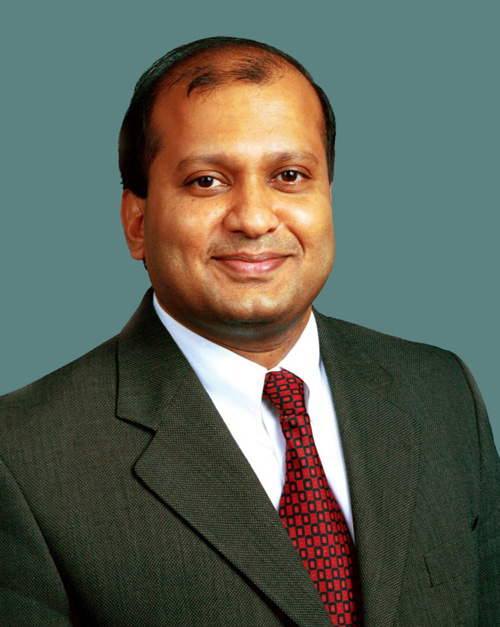
Dorina Siebert is a Researcher at the Chair of Metal Construction within the School of Engineering at the Technical University of Munich. She has been working as a research assistant at the Chair since 2019, contributing to various research projects related to steel and aluminum construction, fracture mechanics, and additive manufacturing in construction. Education: M.Sc. in Civil Engineering from Technical University of Munich (2012-2019) Affiliation: Chair of Metal Construction, School of Engineering, Technical University of Munich Contact: dorina.siebert@tum.de, Room 0101.Z1.038, +49 (89) 289-22527 Dorina's research primarily focuses on the fatigue strength of aluminum structures, fracture mechanics in railway bridges, and the application of additive manufacturing techniques in construction. Her work on powder bed-based laser beam melting of metal has significant implications for modern construction methods. She also investigates safe operating time intervals for historic steel bridges and has contributed to the development of a mobile vehicle barrier, demonstrating the practical applications of her theoretical work. Her publication record shows a strong trend toward computational and experimental analysis of material behavior under stress, particularly in aluminum alloys and steel structures. She has published extensively on fatigue properties, fracture mechanics calculations, and additive manufacturing applications, with a clear progression toward more complex modeling techniques and practical engineering solutions. Her work bridges theoretical computational models with real-world infrastructure challenges. Dorina teaches courses including 'Constructing with aluminum' for the Summer semester 2025 and 'Fracture mechanics and fatigue' for the Winter semester 2024/25. She also leads a seminar on plate buckling and steel bridge construction, sharing her specialized knowledge with engineering students. Her teaching directly reflects her research expertise, creating a strong connection between theoretical knowledge and practical application for her students.
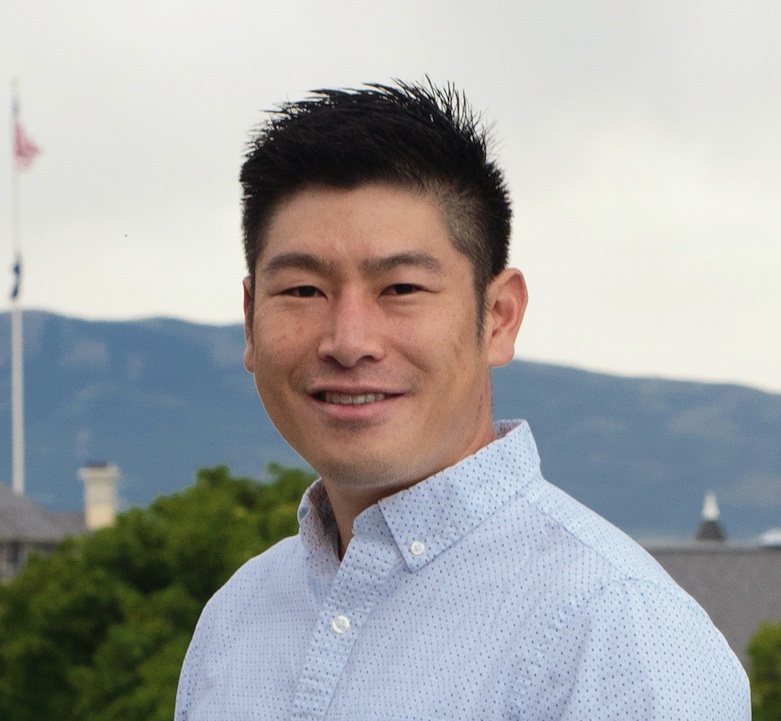
Manuel DeLanda is a New York-based cross-disciplinary theorist and artist. He holds the rank of Professor at The European Graduate School / EGS and serves as a lecturer at Princeton University's School of Architecture and Pratt Institute's Graduate Architecture and Urban Design program. His academic career includes past roles as a Fellow at Princeton's Institute for Advanced Study (2000/01) and teaching positions at the University of Pennsylvania and Columbia University. Education: BFA from the School of Visual Arts (New York), PhD from the European Graduate School (2010). Research interests span philosophy, complexity theory, materialism, science studies, and Deleuzean thought. His work integrates interdisciplinary approaches to topics like assemblage theory, urban capitalism, morphogenesis, and the philosophy of science. Key themes include the application of mathematical concepts (topology, chaos theory) to social and historical analysis, and rethinking materialist frameworks across disciplines. Notable contributions include books such as War in the Age of Intelligent Machines , A Thousand Years of Nonlinear History , and Assemblage Theory . His lectures (e.g., on economic agglomeration, urban capitalism, and Deleuzean philosophy) reflect his commitment to bridging abstract theory with empirical analysis. Labs/Teams: No specific lab affiliations mentioned, but his work is collaborative through academic networks and interdisciplinary projects in architecture, urbanism, and philosophy.
David De Roure is Professor of e-Research at the University of Oxford and Academic Director of both the Digital Scholarship initiative and the Laboratory for AI Security Research. He is also an Honorary Research Professor at the Royal Northern College of Music (RNCM), where he serves as Technical Director of the Centre for Practice & Research in Science & Music (PRiSM). His work bridges computer science, digital humanities, cybersecurity, and music through his distinctive interdisciplinary approach. De Roure received his PhD in 1990 supervised by David W Barron and Peter Henderson, with research in Lisp and distributed systems. Prior to joining Oxford in 2010, he was Professor of Computer Science at the University of Southampton and Director of the Centre for Pervasive Computing in the Environment. His career spans multiple institutions and research domains, reflecting his commitment to interdisciplinary work. De Roure's research focuses on new methods of digital scholarship, innovation in knowledge infrastructure, cybersecurity, and computational approaches to music. His work uniquely combines humanities (digital musicology), social sciences (social machines and web science), engineering (Internet of Things), and computer science (distributed systems, AI). A key theme is empowering human creativity through technology rather than replacing humans with AI. He emphasizes co-creation between humans and machines, particularly in music composition where he explores how algorithms can generate fragments for human assembly. His recent publications reveal a strong focus on AI security in IoT systems, digital scholarship methods, and the intersection of music with computational approaches. There's a clear trajectory from foundational work in social machines and web science toward current applications in cybersecurity and music-AI co-creation. His publications consistently bridge technical domains with humanistic inquiry, demonstrating his commitment to interdisciplinary scholarship that addresses real-world challenges. Fellow of the British Computer Society (FBCS) Fellow of the Institute of Mathematics and its Applications (FIMA) Fellow of the Royal Society of Arts (FRSA) Chartered IT Professional (CITP) Turing Fellow at The Alan Turing Institute (2018-2024) De Roure has co-founded three major interdisciplinary initiatives: PETRAS National Centre of Excellence for IoT Systems Cybersecurity (the world's largest socio-technical research center focused on IoT security), the Software Sustainability Institute (dedicated to improving research software), and PRiSM at RNCM. He was Director of the Oxford e-Research Centre from 2012-17 and has led numerous research projects including SOCIAM (The Theory and Practice of Social Machines), FAST (Fusing Audio and Semantic Technologies), and Transforming Musicology. The Laboratory for AI Security Research, which he directs, took its first PhD students in 2024. At Oxford, De Roure chairs the Digital Research Cluster at Wolfson College and oversees the Laboratory for AI Security Research. The PRiSM team at RNCM has produced numerous musical works and performances, including six premieres in New York in 2024. He has been involved in designing gesture recognition software used in many performances and has collaborated on public engagement projects including the Science Together project which released a Hip Hop album. His current work includes exploring Chladni Plates for new musical instrument design and developing algorithmically enhanced instruments.
Kevin Crowston is a Distinguished Professor of Information Science at Syracuse University's School of Information Studies (iSchool), where he examines how information technology enables new organizational forms through empirical studies, theoretical modeling, and system design. His work focuses on coordination-intensive processes in virtual settings, with significant contributions to citizen science, data science teamwork, and journalism transformation. Education A.B. in Applied Mathematics (Computer Science), Harvard University, 1984 Ph.D. in Information Technologies, MIT Sloan School of Management, 1991 Research Focus : Crowston investigates coordination mechanisms in human-AI collaboration, particularly through projects like Gravity Spy (combining citizen scientists with machine learning for gravitational wave analysis) and journalism innovation (e.g., ReelFramer for AI-assisted news-to-video translation). His framework addresses how intelligent systems reshape work design, knowledge production, and team dynamics in scientific and media contexts. Publication Trends : Recent articles (2024-2025) reveal three dominant threads: (1) Human-AI co-creation in journalism (deskilling/upskilling dynamics, creative tool adoption), (2) Citizen science evolution with AI (co-learning systems, lexical entrainment), and (3) Socio-technical governance of intelligent machines (control-accountability alignment, project archetypes). These reflect his central inquiry into how technology reconfigures work structures. Scientific Recognition ACM Distinguished Speaker Research Leadership : Crowston currently directs two major NSF initiatives: (1) HCC grant 21-06865 on intelligent support for non-expert information navigation, and (2) FW-HTF grant 21-29047 exploring human-technology collaboration in journalism. He spearheaded a Research Coordination Network establishing socio-technical frameworks for work in the age of intelligent machines, culminating in a special issue of Information, Technology & People . Collaborative Infrastructure : He co-leads the Gravity Spy citizen science ecosystem (integrating LIGO physicists, machine learning systems, and volunteers) and serves as co-editor-in-chief of Information, Technology and People , previously editing ACM Transactions on Social Computing . His MIDST platform research advances stigmergic coordination for data science teams.
Yiming Yang is a Professor at the Language Technologies Institute and Machine Learning Department within the School of Computer Science at Carnegie Mellon University , where he has held faculty positions since 2003. His research spans foundational and applied aspects of machine learning , artificial intelligence , and scientific computing . Professor, Carnegie Mellon University (2003–Present) Associate Professor, Carnegie Mellon University (1996–2003) Yang's research focuses on LLM-based problem-solving agents , combinatorial optimization , and scalable oversight frameworks . His work explores diffusion models, Langevin dynamics, and Fourier neural operators for NP-hard problems, while advancing reinforcement learning techniques for self-play supervision and principle-driven fine-tuning of large language models. Recent publications highlight his contributions to code synthesis , PDE solving , and multi-agent reinforcement learning . Key methodologies include demonstration-guided control, retrieval-augmented reasoning, and test-time scaling laws. His team has developed frameworks like FEEDER for efficient in-context learning and μTransfer-FNO for zero-shot hyperparameter transfer in PDE solvers. Notable scientific achievements include: Best Student Paper Runner Up (2013) Best Theoretical Paper Award (1994) Best Theoretical Paper Award (1993) Yang has mentored over 20 PhD students and postdocs, including Shengyu Feng , Zhiqing Sun , and Aman Madaan , across domains like graph learning , extreme multi-label classification , and language model alignment .
Dr. Lucy Hederman is an Associate Professor in Computer Science at Trinity College Dublin (TCD), affiliated with the O'Reilly Institute. Her research focuses on leveraging data and documents to support clinical decision-making, particularly in healthcare knowledge work. She has led interdisciplinary projects addressing data integration for rare diseases (e.g., ANCA-vasculitis, MND) and socio-technical challenges in adopting patient-generated health data (PGHD) into clinical practice. Dr. Hederman has secured over €xxxk in research funding and leads the Heterogeneity and Interoperability (H&I) challenge in the SFI-funded ADAPT 2 Centre. Her educational background includes advanced studies in computer science and healthcare informatics, though specific degree details are not explicitly stated in the text. She has supervised 4 PhDs, 2 research MScs, and co-supervised 6 PhDs, while currently mentoring 8 graduate students. Her career includes founding TCD spinouts PBOC and BIOLOGIT, which align with her research in health informatics and technology. Key research interests include: Interdisciplinary collaboration between clinicians, researchers, and technologists Data harmonization for multi-national clinical studies (e.g., FAIRVASC, Precision-ALS) Development of clinical decision support systems (CDSS) Design of mobile health (mHealth) tools for underserved populations Recent work emphasizes FAIR principles for healthcare data and socio-technical factors influencing PGHD adoption. She has contributed to over 70 peer-reviewed publications and actively participates in initiatives like the EU-funded TRANSFORM project and HRB Primary Care Research Centre. Dr. Hederman’s professional memberships include the Irish Computer Society, ACM, and Healthcare Informatics Society of Ireland. Her research has impacted healthcare practices in Ireland, with many MSc student projects influencing local health services.
Mikko Kurimo is a Full Professor at Aalto University's Department of Information and Communications Engineering, School of Electrical Engineering. He earned his M.Sc., Lic.Tech., and D.Sc.(Tech.) from Helsinki University of Technology (1992, 1994, 1997) and pioneered neural networks for automatic speech recognition (ASR) in his PhD thesis. After research roles at IDIAP (Swiss AI center) and visiting positions at University of Colorado, Edinburgh, SRI, ICSI, and Nitech, he leads Aalto's ASR group since 2000. His work focuses on unsupervised subword modeling for morphologically complex languages (Finnish, Estonian, Turkish, Arabic) and large speech foundation models. PhD in Neural ASR (Helsinki University of Technology, 1997) Research Scientist at IDIAP (Switzerland) Visiting Fellow at University of Colorado, Edinburgh, SRI, ICSI, Nitech Head of Aalto ASR Group (2000-present) His research spans deep learning for ASR, spoken language modeling , and low-resource language solutions . Recent work explores continued pre-training of self-supervised models, multimodal emotion recognition, and pronunciation assessment using LLMs. He led the winning team in the 2017 Multi-Genre Broadcast challenge and secured competitive funding in Tekes Challenge Finland and EC's H2020-ICT-2017. Key article trends include: Advancements in children's speech recognition and dysarthric speech processing Integration of generative AI for language learning feedback Specialization in low-resource Uralic languages (Finnish, Northern Sámi) Development of robust ASR systems for complex phonetic environments Scientific Awards ACM Multimedia 2023 Computational Paralinguistics Challenge Prize First place in MGB3 2017 Arabic ASR Challenge ISCA Best Student Paper Award (2011) Professeur Invité at Université de Saint-Etienne (2005-2006) Royal Society International Short Visit Fellowship (2004) Professor Kurimo leads the Speech Recognition Group at Aalto, collaborating with COIN (Centre of Excellence in Computational Inference) and AIRC (Adaptive Informatics Research Centre). His projects like CaptainA mobile app demonstrate practical applications of ASR in language education. He has supervised numerous publications with co-authors in domains spanning bandwidth extension, stuttering detection, and speech sound disorder assessment.
Ken Forbus is the Walter P. Murphy Professor of Computer Science and Professor of Education at Northwestern University. He earned his Ph.D. in Artificial Intelligence from MIT in 1984, along with S.M. and S.B. degrees in Computer Science from the same institution. Current research focuses on qualitative reasoning , analogical reasoning , spatial reasoning , sketch understanding , and the Companion cognitive architecture . He has made foundational contributions to qualitative physics , compositional modeling , and cognitive simulation through systems like CyclePad and Companions . His work spans AI, cognitive science, and education technology with applications in intelligent tutoring systems , educational software , and interactive entertainment . Awards and Fellowships: Humboldt Research Award AAAI Fellow Cognitive Science Society Fellow ACM Fellow AAAS Fellow Herbert A. Simon Prize recipient Research trends in recent publications include analogical reasoning frameworks, normative modeling, pretense simulation, qualitative spatial representations, and applications in education and cognitive systems. Articles frequently address intersections between AI, cognitive science, and human-computer interaction. Teaching activities include core courses like Cognitive Science 207 , Design of Problem Solvers , and Conversational AI . He co-developed the open-source Freeciv game framework for AI research in strategy games.
Albert M. Lai, PhD, is a Professor of Medicine and Computer Science & Engineering at Washington University in St. Louis, serving as Chief Research Information Officer (CRIO) for the School of Medicine and Deputy Director of the Institute for Informatics, Data Science and Biostatistics (I²DB). He leads WashU Medicine's data warehousing and informatics services, driving innovation in clinical research infrastructure. His expertise spans biomedical informatics, natural language processing (NLP), and telemedicine. Dr. Lai is also Deputy Faculty Lead for WashU’s Digital Transformation initiative, focusing on secure AI integration with sensitive healthcare data. He holds affiliations with the Institute for Public Health, Siteman Cancer Center, and the Center for Applied Health Informatics (CAHI). Research Interests: Dr. Lai develops informatics infrastructure to support clinical trial prescreening, leveraging NLP and machine learning for phenotype extraction from EHR data. He also explores telemedicine, mobile health applications, and EHR-driven cardiovascular health interventions for cancer survivors. His recent work addresses AI ethics in healthcare, including responsible data sharing and bias mitigation in generative AI models. Key Contributions: Over 77 peer-reviewed publications across clinical informatics, AI in healthcare, and pandemic response strategies. His projects include EHR-based cardiovascular health tools, SARS-CoV-2 surveillance in schools, and machine learning models for predicting transplant outcomes. Active mentorship of PhD/MSTP students in translational informatics and data science. Labs/Teams: Leads the Informatics Services Core and collaborates with the CRITICAL consortium for intensive care analytics. Engages in multi-institutional initiatives like the Greater Plains Collaborative for cancer data integration.
Adam M. Kleinbaum is Professor of Leadership and Organizations at the Tuck School of Business, Dartmouth College, where he teaches MBA courses in organizational behavior, social networks, and leads global expeditions to Israel. He also serves as interim faculty chair for Health Care Management Education at Dartmouth, teaching in both the Masters in Healthcare Delivery Science and Masters of Health Administration programs, as well as an organizational behavior class in the Thayer School of Engineering. Dr. Kleinbaum holds a DBA from Harvard University (2008) and an AB from Harvard College (1998). Prior to joining Tuck, he served as a post-doctoral fellow at Harvard Business School. His research examines the antecedents and evolution of social networks in organizations, investigating how formal and informal structures, career history, personality, and even brain structure shape network formation. A second research stream applies network science to study diversity, equity and inclusion practices. His work has been published in top journals including Nature Communications , Administrative Science Quarterly , Organization Science , and Strategic Management Journal . Analysis of his publications reveals consistent focus on network dynamics within organizational contexts, with increasing attention to DEI applications and remote/hybrid work implications in recent years. His work bridges theoretical organizational research with practical business applications. 2018 ASQ Award for Scholarly Contribution for 'Organizational Misfits' Featured in 2018's 'Top Ten Insights from the Science of a Meaningful Life' Third most-read Life and Biological Sciences paper in Nature Communications (2018) Recognized as one of Poets & Quants' Best 40-Under-40 MBA Professors Professor Kleinbaum serves as Deputy Editor at Administrative Science Quarterly , with previous editorial roles at Management Science and Academy of Management Annals . He co-founded the Dartmouth Interdisciplinary Network Research (DINR) Group, which brings together scholars from multiple disciplines to advance network science applications. His research has been featured in major media outlets including the New York Times , Wall Street Journal , Scientific American , and The Atlantic .
Ravi Aron is a Professor of Healthcare Strategy & Technology at the C. T. Bauer College of Business, University of Houston, and Research Director of the Healthcare Business Institute. He holds a joint appointment in the Department of Health Systems & Population Health Sciences at the Tilman J. Fertitta Family College of Medicine. He earned his Ph.D. in Management Information Systems from New York University's Stern School of Business. His research focuses on healthcare IT, emergent technologies in healthcare operations, valuation of healthcare startups, and AI applications in healthcare. He has published widely in top journals like Management Science and Information Systems Research, and his work bridges information systems, operations management, and technology strategy. Dr. Aron has extensive teaching experience at The Wharton School, Johns Hopkins Carey Business School, and NYU Stern, winning multiple teaching awards. He advises Fortune 500 firms, startups, and policymakers on technology strategy, digital transformation, and risk assessment. His executive education programs address AI, machine learning, and digital business models for global executives. Key awards include the Dean's Faculty Excellence Award (2016), multiple teaching accolades from Wharton and Johns Hopkins, and the Herman E. Kross Best Dissertation Award (1999). His current projects explore healthcare supply chains, predictive models using machine learning, and valuing technology-enabled startups. He regularly participates in global forums like the World Economic Forum, advising on healthcare innovation and technology policy.
Victor R. Lee serves as an Associate Professor at Stanford University's Graduate School of Education, with his office located at CERAS Building (520 Galvez Mall, Suite 531) in Stanford, California. He is actively affiliated with the Center for Studies in Education and Technology (CSET), where he conducts interdisciplinary research at the intersection of technology and learning. Dr. Lee holds a Ph.D. in Learning Sciences from Northwestern University and earned dual Bachelor's degrees in Cognitive Science and Mathematics from the University of California, San Diego. His academic trajectory bridges technical disciplines with educational research, establishing a foundation for his work in data-intensive learning environments. His research program centers on two interconnected domains: data literacy development in K-12 contexts and STEM education innovation across diverse learning spaces. He investigates how individuals make meaning from data during inquiry-based learning, with particular emphasis on self-collected student data and the epistemological challenges of data sense-making. Concurrently, his STEM education work spans traditional classrooms, makerspaces, computer labs, and school libraries, examining engaged learning practices and conceptual change in mathematics and science. Current projects focus on identifying the specialized knowledge teachers require to effectively scaffold student interactions with complex real-world datasets. Recent publications (2023-2024) reveal a strategic pivot toward artificial intelligence education, examining both teacher preparation and student understanding of AI systems. His work demonstrates consistent methodological rigor through design-based research, classroom implementations, and analysis of student reasoning patterns, particularly regarding how learners conceptualize algorithmic processes in platforms like YouTube. As a core faculty member within CSET, Dr. Lee collaborates with multidisciplinary teams to develop and evaluate educational interventions that bridge theoretical learning sciences with practical classroom applications, with recent emphasis on AI literacy tools and data-enabled pedagogical approaches.
Malvina Nissim is a leading researcher in computational linguistics and NLP at the University of Groningen's Department of Artificial Intelligence, with a focus on multilingual modeling, bias mitigation, and human evaluation frameworks. Key Contributions : Developed CALAMITA (Italian LLM benchmark), IT5 models for Italian language processing, and ReproHum framework for NLP evaluation reproducibility Research Pillars : Multilingual reasoning consistency, perspective-based text analysis, and figurative language modeling Her work spans activation steering techniques, cross-lingual transfer learning, and the creation of specialized language resources like the EurekaRebus dataset and MAGPIE idiom corpus. She pioneered methods for gender bias measurement in BERT and developed the SocioFillmore tool for perspective visualization. Recent publications explore model uncertainty as MCQ difficulty proxy, Italian headline generation benchmarks, and multilingual multi-figurative language detection. She actively participates in teaching initiatives like the "NLP with Bracelets" workshop for Italian high school students. Scientific Awards : ACL Best Paper Award (2025) EMNLP Outstanding Reviewer (2023) EVALITA Leadership Recognition (2024) She advises PhD students in model bias analysis and has contributed to the development of the Dutch Abusive Language Corpus (DALC) and the ReproNLP reproducibility framework. Her collaborations span institutions in Italy, Netherlands, and international NLP communities.


/prod01/channel_3/media/tcd/scss/headshots/Lucy-Hederman-BW-1.jpg)