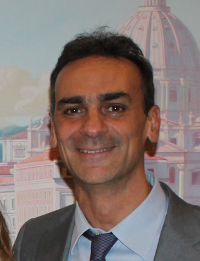
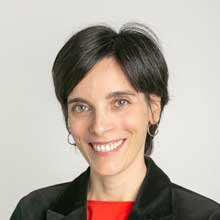
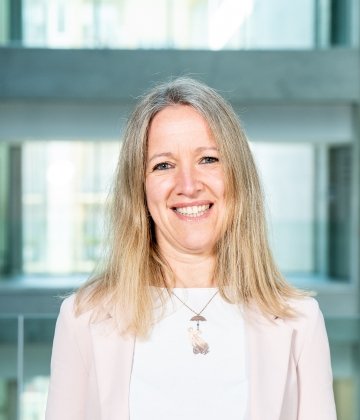
Vittorio Solina is a Researcher at the Department of Mechanical, Energy and Management Engineering (DIMEG) of the University of Calabria, specializing in industrial systems simulation and digital twin technologies. His work spans Industry 4.0/5.0 applications, supply chain optimization, and human-robot collaboration. Affiliation: University of Calabria Academic Role: Researcher (Legge 240/10) Research Focus: Digital twins, simulation modeling, sustainable manufacturing His research emphasizes advanced simulation tools for decision support, including applications in Industry 4.0 , Smart Manufacturing , and Agri-Food Supply Chains . Recent work explores adaptive simulation optimization for Industry 5.0 and 5G-enabled robotics. Key publication trends include: (1) Digital twin integration for supply chain resilience (2024-2025), (2) Simulation automation methodologies (2025), and (3) Human-robot collaboration frameworks (2024).
Luca Iocchi is a Full Professor at Sapienza University of Rome, where he teaches in the Master in Artificial Intelligence and Robotics program. He is affiliated with the Department of Computer, Control, and Management Engineering and the Faculty of Engineering of Information, Computer Science and Statistics. Iocchi serves as an Associate Editor for Artificial Intelligence Journal and has been the scientific coordinator of Spoke of PNRR project FAIR (Future AI Research). His educational background includes: Master in Engineering in Computer Science (Laurea in Ingegneria Informatica) cum Laude, Sapienza Università di Roma, 1995 PhD in Engineering in Computer Science (Dottorato in Ingegneria Informatica), Sapienza Università di Roma, 1999 Professor Iocchi's research focuses on cognitive robotics, task planning, multi-robot coordination, robot perception, robot learning, human-robot interaction, and social robotics. His work has significant applications in security, surveillance, and environmental monitoring. He has published over 200 referred papers with an h-index of 46 (Google Scholar). His research bridges theoretical AI with practical robotic systems operating in real-world environments, with a particular emphasis on developing intelligent systems that can interact effectively with humans. His recent publications show a strong trend toward multi-agent reinforcement learning, trust modeling in human-AI teams, UAV coordination, and planning systems. There's a clear focus on making robotic systems more reliable, efficient, and capable of operating in complex real-world scenarios like healthcare facilities and smart cities. His work increasingly integrates formal planning approaches with machine learning techniques. Professor Iocchi has received numerous scientific awards: 1999 Top Paper Award WebNet'99 2006 Best Paper Award RoboCup 2006 2008 Best Robotics Demo Award AAMAS 2008 2014 Best Paper Award For Engineering Contribution RoboCup 2014 2017 RoboCup@Home SSPL 2017 - 3rd place 2018 Canada-Italy Innovation Award 2019 Best Paper Award For Engineering Contribution RoboCup 2019 As an academic advisor, Iocchi has directed the PhD Program in Engineering in Computer Science from 2020 to 2023. He has been Principal Investigator for numerous research projects including SciRoc (European Robotics League), AI4EU (European AI project), BUBBLES, AIPlan4EU, ROSITA, Trust Your Agents, and FAIR. His research has been supported by EU H2020 programs, national grants, and industry collaborations, demonstrating strong connections between academia and practical applications. Professor Iocchi is actively involved with the Cognitive Cooperating Robots Lab (LabRoCoCo) and is a key member of the RoboCup Federation, having served as Vice-President from 2019 to 2024. He has played a significant role in benchmarking domestic service robots through RoboCup@Home and the European Robotics League Service Robots (ERL-SR), which he helped establish. His leadership in organizing international scientific robot competitions has been instrumental in advancing the field of service robotics.
Dino Pedreschi is a Full Professor of Computer Science at the University of Pisa, affiliated with the Department of Computer Science (DI-UNIPI). He co-leads the Pisa KDD Lab, a joint research initiative between the University of Pisa and the Italian National Research Council’s Institute of Information Science and Technology, one of the earliest labs focused on data mining and knowledge discovery. His research spans Big Data Analytics , Social Network Analysis , Human Mobility Analysis , Privacy-by-Design , Explainable AI (XAI) , and ethical data mining . He is a pioneer in privacy-preserving data mining and has contributed significantly to understanding societal impacts of AI and big data. Recent publications highlight trends in explainable AI , fairness-aware data mining , urban mobility modeling , and socio-economic nowcasting , reflecting a strong interdisciplinary focus combining computer science, social science, and policy. Notable scientific awards include: Google Research Award on Privacy (2009) University of Pisa Ordine del Cherubino (2017) Pedreschi has played leadership roles in major conferences such as ECML/PKDD (Co-Chair 2004), ICDM (Vice-Chair 2005), and ICDE (Vice-Chair 2014). He founded the Business Informatics MSc program at the University of Pisa to train interdisciplinary data scientists. He has been a visiting scientist at the University of Texas at Austin, CWI Amsterdam, UCLA, and the Barabási Lab at Northeastern University. He actively contributes to European research initiatives including SoBigData++, FAIR, and TAILOR, and has advised on AI policy, including testimony before the Italian Parliament on AI and labor markets. He is a key member of the Pisa KDD Lab, a leading research group in data science and AI ethics, fostering collaboration between academia and public institutions.
Dr. Gianluca Demartini is a leading researcher in Human-in-the-loop AI Systems with significant contributions to Crowdsourcing , Information Retrieval , and Generative AI applications. His work bridges Machine Learning and Human-Computer Interaction , focusing on Bias Management , Fact-Checking , and Ethical AI . Major Affiliations : L3S Research Center, ScienceWISE platform, and collaborations with institutions like University of Queensland and University of Padua Over 15 years, his research has explored Crowdsourcing Quality Control (Mechanical Cheat 2012), Entity Ranking (2008-2013), and Semantic Search . Recent work (2024-2026) focuses on Generative AI Impacts in domains like Media Literacy , Data Curation , and Visual Analytics . Scientific Recognition : Best Paper Award (Top 1.4%) at ICTIR 2023 Best Short Paper Award (Top 0.6%) at ECIR 2020 Honorable Mention (Top 2%) at CSCW 2020 Best Demo Award at ISWC 2011 3rd Best Paper at LA-WEB 2008 His 15 most recent publications (2024-2026) demonstrate expertise in LLM-based Content Moderation , Immersive Data Visualization , and Trustworthy AI Systems . He has pioneered methods for Bias Detection in Wikipedia (2013), Entity Ranking (2008-2013), and Human-AI Collaboration frameworks. His work consistently addresses ethical challenges in AI for Social Good and Responsible Data Science .
Caterina Cruciani is an Associate Professor at the Department of Management , Venice School of Management , Ca' Foscari University of Venice. She serves as a member of the University Scientific Instrumentation Service Center (CSA) Management Committee and is affiliated with the Research Institute for Social Innovation . Research Interests Trust dynamics in financial advisory Behavioral finance and investor decision-making Sustainability disclosure and ESG integration Digital transformation in financial services Regional economic development and SME financing Agent-based modeling of cooperative behavior Key Article Trends (2009-2024): Span 15 years of research on financial trust (12 publications), behavioral economics (10), sustainability (6), and digital finance (5). Methodologically combines experimental economics , structural equation modeling , and Supervised Topic Modeling for ESG discourse analysis.
Gabriella Casalino is an Assistant Professor at the University of Bari Aldo Moro, Department of Computer Science, and a key researcher at CILAB - Computational Intelligence Lab. Her work focuses on Computational Intelligence methods for interpretable data analysis, particularly in eHealth, Data Stream Mining, and eXplainable Artificial Intelligence (XAI) within medical and educational domains. She has contributed to innovative approaches in smartphone-based health monitoring, fuzzy logic applications, and remote vital sign detection via photoplethysmography. Education : Ph.D. in Computer Science, with advanced training at institutions like Universitat de Girona and Université de Mons. Research Trends : Recent publications highlight applications of evolving granular computing, neuro-fuzzy systems, and explainable AI in hypertension prediction, bipolar disorder monitoring, and educational data analysis. Key subfields include remote health monitoring, medical data streams, and hybrid AI models. Grants : Research funded by AIRC (Italian Cancer Research Foundation), focusing on computational methods for healthcare challenges. Labs & Collaborations : Active in CILAB, collaborating on projects involving mHealth solutions, cardiovascular risk assessment, and intelligent educational systems.
Andrea Passerini is a Full Professor in the Department of Information Engineering and Computer Science at the University of Trento, Italy, where he also serves as Coordinator of the PhD programme in Information Engineering and Computer Science (Ministerial Decree 45/2013). His academic footprint spans multiple departments including Mathematics, Sociology, Cellular Biology, and Industrial Engineering, reflecting deep interdisciplinary engagement across computational sciences and life sciences. His research centers on Machine Learning and Data Mining with specialized expertise in Neuro-Symbolic AI , Probabilistic Reasoning , and Statistical Relational Learning . He pioneers methods for graph-based learning, medical AI applications, and explainable systems, with significant contributions to bioinformatics (particularly RNA-protein interactions) and healthcare diagnostics. His work bridges theoretical rigor with practical implementations in critical domains. Analysis of his 2025 publications reveals dominant trends in neuro-symbolic integration for graph data, human-AI collaboration in medical decision-making, and robust recommender systems. His research increasingly focuses on interpretable AI for high-stakes applications like surgical planning and physician support, while advancing foundational techniques in graph neural networks and concept-based modeling. As PhD programme Coordinator, Professor Passerini mentors doctoral candidates across AI and computer science disciplines. His collaborative network extends to medical researchers at CIBIO (Cellular, Computational and Integrative Biology department) and industrial partners, though specific lab structures aren't documented in available materials. Current projects emphasize medical AI validation, temporal network modeling, and LLM integration with structured reasoning frameworks.
Salvatore Ruggieri is a Full Professor in the Department of Computer Science at the University of Pisa, where he teaches in the Master Programme in Data Science and Business Informatics. He is affiliated with the KDD LAB, a joint research group of ISTI-CNR and the University of Pisa, and actively contributes to national and European AI initiatives such as XAI, NoBIAS, TAILOR, and SoBigData.eu. His research focuses on data mining and knowledge discovery, with a strong emphasis on ethical AI. Key areas include discrimination discovery and prevention, fairness, privacy, explainable AI (XAI), causal inference, and classification algorithms. He has led significant projects such as ENFORCE, a national FIRB project on legal and computational enforcement of non-discrimination and privacy rights in ICT systems (2010–2014), and has served as program chair for the XIII Italian Symposium on Artificial Intelligence (2014). The recent publications (2018–2023) highlight a consistent trend in interpretable and fair machine learning, including selective classification, stability of interpretable models, and causal reasoning for fairness. His work often involves collaboration with leading researchers like Dino Pedreschi and Riccardo Guidotti, and appears in top venues such as AAAI, IEEE TKDE, and WIREs. His scientific honors include the award for the best Ph.D. thesis in Theoretical Computer Science from the Italian Chapter of EATCS. Best Ph.D. Thesis in Theoretical Computer Science, Italian Chapter of EATCS He advises and collaborates with numerous researchers in the KDD LAB and has contributed to major grants and research initiatives in AI and data science. He is involved in educational programs, including the National Ph.D. in Artificial Intelligence - Society, and promotes interdisciplinary research at the intersection of computer science, law, and ethics. Ruggieri is a member of the KDD LAB, where he leads research in ethical and transparent AI. He is also part of large collaborative networks such as SoBigData.eu and HumanE-AI-Net, which aim to build socially responsible and human-centered AI systems.
Barbara Bigliardi is an Associate Professor at the Department of Engineering and Architecture, University of Parma, with national scientific qualification for full professor in Economic-Management Engineering (SSD ING-IND/35). She serves as President of the Management Engineering Program at University of Parma and Director of Bachelor's/Master's programs at University of San Marino, co-leading double-degree initiatives between the two institutions. Over 100 publications (57 SCOPUS-indexed) with H-index=20 Editorial roles: Cambridge Scholars Publishing (2019), MDPI Sustainability, Sci, European Journal of Innovation Management Key research areas: Open Innovation, Technology Transfer, Food Industry Innovation, Industry 4.0, Supply Chain Sustainability Recent Publications (2024-2025) demonstrate leadership in: Industry 4.0 integration with circular economy AI applications in public administration and healthcare Digitalization of food supply chains Green startup resource orchestration Simulation-based optimization in remanufacturing Sustainable additive manufacturing Scientific Recognition : 2005 Emerald Highly Commended Award 2013 Most Cited Paper in Trends in Food Science & Technology 2019 Highly Cited Paper in Review of Policy Research Research Leadership includes: National Observatory on Start-ups (President since 2021) National Observatory on Reputation (Vice President since 2019) INAIL-funded mobile risk assessment systems (2018-2020) INAF space technology transfer projects (2018-present) Academic Contributions : Supervised over 300 theses Deputy Coordinator of Industrial Engineering Doctoral Program Director of Management Engineering Programs (Parma & San Marino) Founder of academic spin-offs: Sistemi per il marketing di contenuto S.r.l. (2016-present), Univenture SrL (2006-2010)
Alessandro Di Vita is an Associate Professor at the Department of Psychological, Pedagogical, Physical Exercise and Training Sciences, School of Medicine and Surgery, Università degli Studi di Palermo (UNIPA). His work centers on educational psychology, career orientation, and pedagogical methodologies for adolescents and university students. Research Interests: Expressive writing for life planning, self-efficacy development, performance anxiety management, peer tutoring, and intercultural education. Key Projects: «Telemaco» (remote peer tutoring), «FOrCe» (career guidance interventions), and «FOrP» (school-university transition). Collaborations: Worked with international institutions like Universidad Austral (Argentina) and Universidad de Estudios de Palermo (Italy). His publications from 2007–2025 reflect a consistent focus on adolescent relationships, educational reform, and digital pedagogy. He has contributed to validation studies for psychological scales like the Worry Emotionality-Junior (WE-J) and developed methodologies such as «SeCo» for post-diploma decision-making. Alessandro also emphasizes Student Voice in educational processes, promoting active participation and resource utilization. Recent works include international comparative studies on peer tutoring and training programs for secondary school teachers.
Eva Blomqvist serves as an Assistant Professor in the Department of Computer and Information Science (IDA) at Linköping University, Sweden. She is actively affiliated with the MDA laboratory within the Human-Centered Systems (HCS) division, focusing on critical-domain decision support systems. Her research centers on Semantic Web technologies and ontology engineering, with specialized expertise in ontology design patterns for security and crisis management applications. She pioneered the eXtreme Design methodology for agile ontology development and contributed foundational work on ontology testing frameworks, bridging theoretical knowledge representation with real-world operational systems. Analysis of her 2009-2016 publications reveals a progressive research trajectory from foundational pattern formalization to practical engineering methodologies. Her work consistently emphasizes reusable design patterns, validation techniques, and human-centered implementation within semantic technologies, establishing her as a key contributor to ontology engineering standards. No scientific awards were documented in the source material. While student advising and grant details remain unspecified in available records, her collaborative projects indicate active research leadership in ontology development. As a core member of IDA's MDA lab (HCS division), she contributes to human-centered decision analytics research, particularly developing ontology-driven support systems for high-stakes security and crisis scenarios through projects like Networked Ontologies.
Tania Cerquitelli is a Full Professor in the Department of Control and Computer Science (DAUIN) at Politecnico di Torino, where she leads research in data science, concept-drift management, and inclusive AI technologies. She is a member of SmartData@PoliTO, the GEDI Observatory for Gender Equality, and serves in leadership roles related to social affairs and community policies at the university level. She also acts as a scientific advisor for the partnership with Accenture. Her research interests span Data Science , Concept-Drift Management , Database Systems , Conversational Data Science , and Industry 4.0 . She applies AI and machine learning to industrial, societal, and ethical challenges, particularly in promoting inclusive communication and gender equality in research. The most recent publications highlight her work in explainable AI, concept drift detection, multimodal diagnostics, and AI for social good. Her research integrates machine learning, natural language processing, and computer vision to address real-world problems in manufacturing, healthcare, agriculture, and education. She is an Associate Editor for several prestigious journals including Expert Systems with Applications , Computer Networks , Future Generation Computer Systems , and Knowledge and Information Systems . She has served on the program committees of major conferences such as ECML PKDD, EDBT/ICDT, and ACM KDD, and has been a reviewer and selection committee member for ETH Zurich and EMPA. She actively supervises PhD students and teaches a wide range of courses including Data Science and Database Technologies, Business Intelligence for Big Data, and Gender and Diversity in Research. She is involved in multiple national and international research projects such as E-MIMIC, WEBFARE, and EnABLES, focusing on inclusive AI, smart data, and industrial applications. Her lab affiliations include the DBDM - Database and Data Mining Group (DAUIN) and the Interdepartmental Center SmartData@PoliTO - Big Data and Data Science Laboratory , where she contributes to advancing data science methodologies and their societal impact.
Anna Monreale is an Associate Professor in the Department of Computer Science at the University of Pisa and a key member of the Knowledge Discovery and Data Mining Laboratory (KDD-Lab), a joint research group with the Information Science and Technology Institute of the National Research Council (ISTI-CNR) in Pisa. Her academic career is rooted in the University of Pisa, where she completed her Bachelor's, Master's, and Ph.D. in Computer Science. Her research focuses on privacy-preserving data analytics, with core interests in big data analytics, social network analysis, spatio-temporal mining, and explainable AI. She is particularly known for her work on privacy-by-design in data mining and evaluating privacy risks in analytical processes. Her research bridges technical innovation with ethical and legal considerations in data science. Her recent publications reveal a strong trend toward explainable AI, privacy in federated learning, and risk assessment in mobility and health data. She actively contributes to developing methods for explaining black-box models, assessing privacy exposure, and balancing privacy, utility, and fairness in AI systems. Privacy by Design Ambassador (2014) ISTI-CNR Young++ Researcher Award (2014) Monreale has advised and co-chaired several international workshops, including PriSMO, PinSoDa, and MoKMaSD, and serves on editorial boards such as Transactions on Data Privacy. She teaches advanced data mining, big data ethics, and database systems across multiple graduate and undergraduate programs. She is involved in major EU projects like SoBigData, XAI, TAILOR, and HumMingBird, reflecting her leadership in data science and AI ethics. She is affiliated with the KDD-Lab, a prominent research group focused on knowledge discovery, social mining, and big data analytics, contributing to both theoretical advances and real-world applications in privacy-aware data science.
Angelo Corallo is an Associate Professor at the Department of Experimental Medicine, University of Salento, specializing in technologies and methodologies for collaborative processes in industrial systems. His research spans Digital Business Ecosystems , Cybersecurity , and Collaborative Product Design , focusing on the interplay between technology and organizational dynamics. He leads interdisciplinary research divisions in Open Networked Business Management , Learning and Innovation , and Collaborative Product Design . Research Interests : Corallo's work integrates Information and Communication Technologies (ICT) with Business Management, particularly in Digital Twins for healthcare and manufacturing Knowledge Modeling and Ontology Engineering Industry 4.0 and Smart Manufacturing Agri-Food Sustainability through digitalization Scientific Contributions : His recent articles explore trends in Cybersecurity for Industrial IoT Metaverse Applications in business models Traceability Systems in food supply chains Collagen-Based Biomaterials from aquaponics
Nicoletta Corrocher is a Lecturer in Applied Economics at Bocconi University and Research Fellow at ICRIOS (Invernizzi Center for Research on Innovation, Organization, Strategy and Entrepreneurship). She holds a PhD in Economics and Management of Innovation from Sant'Anna School of Advanced Studies and an MSc in Science and Technology Policy from SPRU, University of Sussex. Her research focuses on innovation dynamics, digital transformation, and sustainability, particularly in ICT industries and service sectors. Key areas include eco-innovation, technology diffusion, and policy impacts on innovation adoption. Her teaching portfolio includes courses such as Innovation in Services , Innovation, Growth and Sustainability , and Entrepreneurship Lab , emphasizing critical thinking and real-world application. Recent research explores algorithmic decision-making fairness, unintended effects of environmental policies, and SME digitalization strategies. Corrocher’s work spans empirical analyses of green technology catch-up, mobile commerce adoption, and cluster policy effectiveness. Her contributions appear in journals like Research Policy , Regional Studies , and Industry and Innovation . Ongoing projects address digitalization-sustainability complementarity in SMEs and the role of science in green technologies. Her research highlights include studies on patent growth in environmental technologies, personalized pricing in telecom, and the 'resource curse' in European regions. She advises on innovation policy design, emphasizing evidence-based approaches to bridge theory and practice. Labs and collaborations involve interdisciplinary teams at ICRIOS, focusing on innovation ecosystems, sustainable transitions, and digital economy dynamics. Her work integrates quantitative methods with institutional analysis to address global challenges in innovation and development.