Wei Ding is a Professor in the Department of Computer Science at the University of Massachusetts Boston (UMass Boston). She earned her Ph.D. in Computer Science from the University of Houston in 2008. From 2019 to 2023, she served as a Program Director at the National Science Foundation's Division of Information and Intelligent Systems (IIS), overseeing programs in Information Integration, Smart Health, Deep Learning Foundations, and Scalable Systems. Her research integrates knowledge discovery, data mining, and machine learning with applications spanning health sciences, astronomy, geosciences, and environmental sciences. She employs advanced techniques like spatio-temporal modeling, deep neural networks, and semantic analysis to address complex real-world problems such as disease subtyping, physical activity prediction, and environmental forecasting. Her work emphasizes interdisciplinary collaboration and societal impact. Analysis of her recent publications reveals a focus on AI-driven healthcare solutions (e.g., neuroimaging biomarkers, disorder diagnosis), fundamental ML advancements (e.g., generalization, GAN stability), and cross-domain applications (e.g., climate forecasting, animal behavior analysis). Recurring themes include low-data learning, interpretability, and scalable algorithms. Awards & Honors: IEEE Fellow (2023) NSF Director's Award (2022) WISAY Distinguished Woman in Science Award, Yale University (2019) AI for Earth Award (2018) Best Paper Awards (ICTAI 2011, ICCI 2010) Advising & Grants: She mentors PhD and Master’s students in the Knowledge Discovery Lab (KDLab), with alumni at institutions like Facebook, Google, and McKinsey. Her research is funded by NSF, NIH, NASA, and DOE, including: NIH R01: Predicting youth physical activity (2016) NSF EAGER: Machine learning for cancer subtyping (2017) NIH R01: Accelerometer/gyroscope data for activity estimation (2022) Leadership: She directs the KDLab and co-founded the Women in Sciences Club (WINS). She serves as Associate Editor for ACM TKDD, TIST, and KAIS journals.
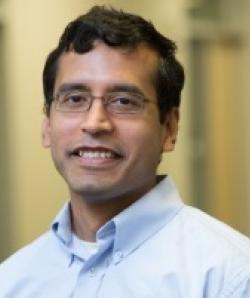
Weiwen Jiang is a tenure-track Assistant Professor in the Department of Electrical and Computer Engineering at George Mason University (GMU), affiliated with the College of Engineering and Computing (CEC). He leads the JQub lab, focusing on hardware/software co-design for computing systems, spanning classical (FPGAs, ASICs) and quantum computing applications in AI-driven fields like medical imaging and geophysics. Prior to GMU, he held a postdoctoral position at the University of Notre Dame and earned his PhD in Computer Science from Chongqing University with a joint PhD in Electrical and Computer Engineering from the University of Pittsburgh. His research emphasizes quantum computing, AI accelerators, and domain-specific computing. Notable achievements include the 2025 NSF CAREER Award, ACM Sigda Meritorious Service Award (2024), and IEEE QuantumWeek Best Paper Award (2023). His work is funded by NSF, DoE, ARO, Meta, and Leidos. He co-chaired IEEE QuantumWeek (2023–2025) and created workshops like StableQ at ESWEEK 2023. Key contributions include developing frameworks like QuPAD for quantum learning and JQub's AI-driven geophysical and medical imaging tools. His lab graduated Dr. Yi Sheng (now at University of South Florida) and Dr. Zhepeng Wang (Amazon Applied Scientist). Current research explores quantum machine learning, noise mitigation, and fairness in AI for edge devices.
Andrew Izsak is a Professor of Mathematics and Chair of the Education Department at Tufts University's School of Arts and Sciences. He holds a PhD in Science and Mathematics Education from UC Berkeley (1999), an MEd from Harvard (1993), an SM in Mathematics from MIT (1992), and a BA in Mathematics from UC Berkeley (1987). His research focuses on the psychology of mathematical thinking, particularly how teachers and students reason about multiplicative concepts like fractions, proportional relationships, and linear equations. He emphasizes the role of inscriptions (e.g., diagrams) in supporting quantitative reasoning. His work integrates psychometric modeling to assess teacher knowledge and student learning. Notably, he co-leads the Teachers’ Multiplicative Reasoning Research Group with Dr. Sybilla Beckmann, exploring how teachers’ reasoning about multiplication and fractions informs their understanding of proportional relationships. This group also investigates the utility of number lines and strip diagrams in teaching these concepts. Their psychometric studies, using diagnostic classification models, reveal distinct profiles of teachers’ fraction arithmetic reasoning skills nationally. Dr. Izsak has developed innovative mathematics courses and contributed to curricula emphasizing conceptual coherence. His research bridges cognitive science and education, addressing how foundational mathematical concepts evolve from elementary to middle school. His grants and collaborations focus on improving teacher education and student learning outcomes through structured pedagogical approaches. Key areas of exploration include the ‘multiple batches’ and ‘variable parts’ perspectives on proportional relationships, aiming to make linear equations and algebraic reasoning more accessible. His interdisciplinary work highlights the interplay between measurement, multiplicative reasoning, and educational assessment design.
Kerri McBee-Black is Assistant Professor and Helen Allen Faculty Fellow in the Department of Textile and Apparel Management at the University of Missouri, affiliated with the College of Arts & Science. She holds a PhD, MS, and BS from Missouri institutions and is a CLO3D Accredited Instructor. Her research focuses on adaptive apparel design addressing needs of people with disabilities. Education includes: PhD, University of Missouri MS, University of Missouri BS, Columbia College McBee-Black's work pioneers inclusive design innovations through user-centered approaches, examining functional challenges like independent dressing mechanisms and wheelchair-adaptive clothing. She investigates industry certification standards and digital commerce accessibility while integrating historical costume features into contemporary adaptive solutions. Her research employs mixed methodologies including systematic reviews, case studies, and participatory design. Recognitions include: Innovative Excellence Award (University of Missouri System) Multiple Langsam Family Faculty Appreciation Awards Over $74,000 in funded research grants She mentors undergraduate/graduate design projects and integrates industry partnerships into curriculum development.
Judith Maxwell is Professor of Anthropology at Tulane University, specializing in linguistic anthropology with primary focus on Mayan languages (Kaqchikel, Chuj, Nahuatl) and discourse analysis. Her work bridges theoretical linguistics and applied language revitalization, particularly through the Tunica-Biloxi language project since 2010. Education PhD in Anthropology, University of Chicago (1982) Research Focus : Maxwell investigates discourse structures in Mayan languages regarding artistry canon, cultural constructs, coherence mechanisms, and societal relationships. Her colonial manuscript analysis explores language change in Kaqchikel/Nahuatl, while contemporary work examines bilingual education, language shift, and gender performance across English and Indigenous varieties. She pioneered the revival of Tunica language through community-academic collaboration. Publication Trends : Recent works (2014-2024) demonstrate consistent focus on Mayan language documentation ( Kaqchikel chronicles , Chuj Narratives ), revitalization pedagogy ( Maja'il Kaqchikel ), and sociopolitical dimensions of language ( Mayan Languages and Guatemala Law ). Key themes include decolonizing methodologies, Indigenous knowledge systems, and practical applications for endangered language communities. Advising & Grants : Maxwell leads the Tunica-Biloxi Language Revitalization Project training Tulane students in documentation techniques. Her collaborative model integrates tribal knowledge with academic research, securing sustained community engagement despite specific grant details being unreported. Research Teams : Directs the Tunica-Biloxi collaborative team comprising Tulane students, tribal scholars, and native speakers, developing e-learning tools like the Q'anil Kaqchikel lessons filmed in Guatemala with native instructors.
Univ.-Prof. Robert Rollinger is a full professor at the University of Innsbruck’s Department of Ancient History and Oriental Studies. He holds academic degrees from the Leopold-Franzens-Universität Innsbruck, including a M.A. (1989), PhD (1993), and Habilitation (1999). His research focuses on the interconnections between the Aegean and Ancient Near East, Achaemenid history, and global historiography. Rollinger has held prestigious positions such as editor of journals like Nikephoros and Ancient History Bulletin , and is a member of institutions including the Academia Europaea and the Austrian Academy of Sciences. Research Interests Contacts between Aegean and Near Eastern worlds Ancient Near Eastern historiography Empire studies (especially Achaemenid Persia) Global and entangled history approaches Awards Dr. Seibert-Preis (1995) Preis des Fürstentums Liechtenstein (1998) Wissenschaftspreis des Österreichischen Olympischen Comités (1999) Ausonius-Preis (2023) He leads major projects like the NAWA Chair on Achaemenid-Roman empire comparisons and chairs the Austrian Academy’s “Transformation Processes and Empire” commission. His work emphasizes cross-cultural connections and imperial legacies in antiquity.
Palash Bera is Professor and Chair of Operations and IT Management at Saint Louis University's Chaifetz School of Business. His research develops analytical methods for conceptual modeling, requirements engineering, and business intelligence systems. Bera employs eye-tracking technology to study how users comprehend models, revealing cognitive patterns that inform better design practices. Bera's recent work bridges conceptual modeling with agile software development, creating tools that automatically generate test cases from behavioral requirements. He has secured funding from SERDP, USDA, and other agencies for projects on supply chain analytics and resource recovery. Bera directs the Business Analytics Practicum, connecting students with industry partners like Nestlé Purina. His research has appeared in MIS Quarterly, Information Systems Research, and other leading journals.
Paul Cohen is a Professor of Computer Science at the University of Pittsburgh's School of Computing and Information (SCI), where he also directs the Modeling and Managing Complicated Systems Institute (MOMACS). Previously, he served as the founding Dean of SCI from 2017 to 2020. Before joining Pitt, he was a Program Manager at DARPA (2013–2017), leading initiatives like Big Mechanism and Communicating with Computers. Earlier roles include founding director of the University of Arizona’s School of Information: Science, Technology and Arts (SISTA), and professor at the University of Southern California’s Information Sciences Institute and the University of Massachusetts. Education: PhD in Computer Science and Psychology (Stanford University), MS in Psychology (UCLA), BS in Psychology (UC San Diego). Research Interests: Focuses on artificial intelligence, machine learning, natural language processing, and modeling complex systems like cell signaling pathways and socio-environmental interactions. His work emphasizes explainable AI, human-computer communication, and interdisciplinary problem-solving. Key Contributions: Authored Empirical Methods for Artificial Intelligence and over 200 peer-reviewed articles. His research spans robotics, education technology (e.g., the AnimalWatch tutoring system), and collaborative analysis tools like COLAB. He has won a Telly Award for his video on systemic challenges and a Best Paper award for spatial language learning frameworks. Awards & Recognition: Elected Fellow of the AAAI, recipient of the Telly Award, and winner of the Best Paper Award at the IEEE Conference on Development and Learning. Leadership & Outreach: Advocates for polymathy in education to address global challenges. His work includes developing curricula for complex systems thinking and promoting diversity in STEM through initiatives like AnimalWatch.
Dr. Dhaneswar Bhoi is a Lecturer in Sociology, Psychology, and Research Methods at London School of Science and Technology (affiliated with University of West London, De Montfort University, and Buckinghamshire New University). He recently completed his Post-Doctorate at the Centre for South Asian Studies, University of Edinburgh, UK, focusing on "Higher Educational Experience and Aspiration of Marginal Community Students in India and United Kingdom". He is currently pursuing a PG Certificate in Learning and Teaching in Higher Education at the University of London. Educational Background: Post-Doctorate in Sociology, University of Edinburgh, UK PhD in Social Science, Tata Institute of Social Sciences, Mumbai M.Phil in Sociology, Dr. B.R. Ambedkar National Institute of Social Sciences, Mhow MA in Sociology, University of Delhi MA in Education, Ravenshaw University, Cuttack Dr. Bhoi's research explores caste-based discrimination in education systems, mental health of marginalized students, educational equity, and public policy impacts on Dalits and tribal communities. His work critically examines neoliberal education policies and their effects on access and inclusion for scheduled castes and tribes. He has published extensively in Scopus-indexed journals and presented over 75 conference papers globally. His academic output demonstrates a consistent focus on the intersection of caste, education, and mental health through sociological and psychological lenses. Key sub-fields include educational policy analysis, psycho-emotional experiences of marginalized students, cultural bias in academia, and social justice frameworks in higher education. Scientific Awards: Dr. Ambedkar International Centre Fellow Award (2020-2023) International Conference Grants (ISS Netherlands, ICSSR India, Roskilde University Denmark, ISA Spain) UGC Study Tour Award (UK/USA, 2015-16) Dr. Bhoi serves as Associate Editor for the Journal of the World Universities Forum and as reviewer for multiple academic publications. He teaches courses on Sociology of Education, Mental Health, Ambedkar's Philosophy, and Educational Policy.
Richard Sparks is a Professor of Criminology at the University of Edinburgh's School of Law and a member of the Global Justice Academy. He holds degrees from the University of Cambridge (BA, MPhil, PhD). His research focuses on penal policies and democratic politics, the sociology of punishment, public responses to crime, and criminological knowledge's role in policy. He co-directed the Scottish Centre for Crime and Justice Research (2006–2016) and was Head of the School of Law (2014–2017). Editorial roles: Editor-in-chief of Punishment & Society (2000–2004) and member of multiple journal boards. Notable works include Public Criminology? (2010), Prisons and the Problem of Order (1996), and Crime and Social Change in Middle England (2000). Awarded an honorary doctorate by KU Leuven (2019) for contributions to criminology and democratic politics. Active in international collaborations, including the Law and Society Association's Punishment and Society research network. Research Interests: Penal policies & democracy, prison sociology, public policy impacts, criminology's societal role. Current projects include studies on security in English towns and global penal dynamics. Recent articles explore 'seeing disorder' in urban contexts, automobility's role in crime perception, and policing's spatial impact. His work emphasizes democratic engagement in criminal justice reform.
Duygu Uygun Tunc is a Collegiate Assistant Professor in the Department of Philosophy at the University of Chicago, where she has been teaching since September 2023. She is also affiliated with the Society of Fellows and holds the position of Harper-Schmidt Fellow. Her academic journey includes a dual PhD from Heidelberg University in Germany and the University of Helsinki in Finland, which she completed in October 2020 with her dissertation titled 'Communication and the Origins of Personhood'. Her research spans multiple dimensions of epistemic value in scientific research, investigating what makes individuals good researchers, groups good scientific collectives, epistemic systems good scientific communities, and research procedures good empirical studies. She works extensively on intellectual virtues in science, scientific communities, experimental methodology (including testability, theory choice, and underdetermination), and applied philosophy of science (addressing the replicability crisis, science policy, and scientific norms). A central question guiding her work is how the social nature of scientific inquiry can best be utilized to advance scientific knowledge. Her publications from 2019-2024 demonstrate a consistent focus on the intersections of philosophy of science, epistemology, and values in science. Her work often examines distributed cognition in scientific communities, the nature of scientific expertise in contemporary research environments, and the relationship between scientific methodology and social values. A notable trend across her publications is the exploration of how scientific knowledge production has become increasingly social and collaborative, requiring new conceptual frameworks to understand epistemic responsibility in team science. Marie Curie Actions Fellowship for 'Extended Scientific Virtue' project Dr. Uygun Tunc currently teaches 'Science and Values' (PHIL 23404/33404) at the University of Chicago, examining debates about the value-free ideal of science and the relationship between scientific objectivity and social values. She is actively working on a series of articles on values in science and her first book manuscript on scientific expertise, which develops a novel conception addressing distributed epistemic labor and technological extension of epistemic processes while maintaining notions of epistemic responsibility. She maintains a blog on the epistemology of science where she explores topics like trust and criticism in scientific communities.
Vinay Lal is Professor of History and Asian American Studies at the University of California, Los Angeles (UCLA), where he has been teaching since Fall 1993. He holds a joint appointment in the Department of History and the Asian American Studies Department. Born in Delhi and raised across multiple countries including India, Indonesia, Japan, and the United States, Lal brings a global perspective to his scholarship and teaching. His educational journey began at Johns Hopkins University, where he earned both his B.A. (1982) and M.A. (1982) from the Humanities Center with concentrations in literature, history, and philosophy. He then studied film in Australia and India on a Thomas J. Watson Fellowship before pursuing his Ph.D. at the University of Chicago's Department of South Asian Languages and Civilizations, which he completed with Distinction in 1992. His dissertation, 'Committees of Inquiry and Discourses of 'Law and Order' in Twentieth-Century British India', received the Marc Galler Award for the best dissertation in the Division of the Humanities at the University of Chicago. Lal's research spans an extraordinary breadth of intellectual interests, with primary focus on Indian history, historiography, public and popular culture in India, the Indian diaspora, colonialism, human rights, American politics, the architecture of nonviolence, Gandhi studies, and the global politics of knowledge systems. His work consistently challenges conventional disciplinary boundaries, engaging with topics ranging from the politics of religion and ethnicity in South Asia to the moral and political thought of Mohandas Gandhi, from the partition of India to the intersection of history and popular cinema. His scholarship reflects a deep commitment to decolonizing knowledge systems and exploring alternative epistemologies from the Global South. His publications reveal a scholar deeply engaged with both historical analysis and contemporary political issues. The 15 most recent articles demonstrate his consistent focus on South Asian politics, historical memory, nonviolence, and the politics of knowledge. His writing spans academic journals, major newspapers, and public intellectual platforms, with a distinctive voice that bridges scholarly rigor and public accessibility. His work on Gandhi, colonialism, and contemporary Indian politics forms a particularly strong thread throughout his recent publications. Fellow of the World Academy of Art and Science (elected February 2000) William R. Kenan Fellow, Society of Fellows in the Humanities, Columbia University (1992-93) Senior Fellowship from the American Institute of Indian Studies National Endowment for the Humanities Fellowship for University Teachers Fellowship from the Society for the Promotion of Science/Japan Area Studies Center Listed among the '101 Most Dangerous Professors in America' in David Horowitz's book Fulbright-Nehru Fellowship for Academic and Professional Excellence Fellow at the Stellenbosch Institute for Advanced Study (STIAS), South Africa (2024) Oxford University Press India Academic (Humanities) Delegate (2022-2028) As a dedicated mentor, Lal has supervised numerous PhD students who have gone on to prominent academic careers at institutions including CSU-Sacramento, UNC-Charlotte, O.P. Jindal University, UC Irvine, and the University of Pittsburgh. His teaching portfolio at UCLA is exceptionally broad, encompassing undergraduate courses on Indian Civilization, British India, contemporary South Asia, and world history, along with graduate seminars on Indian politics and religion, historiography of modern India, nationalism and colonialism, Indian cinema, and postcolonial theory. His lecture courses are available in their entirety on his academic YouTube channel, which has garnered over 3 million views and 36,000 subscribers. Lal has also served as University of California's Director of the Education Abroad Program in India and as Professor of History at the University of Delhi during 2010-11. Lal is a founding member of the Backwaters Collective on Metaphysics and Politics (2010-2020), which met annually in Kerala, and was associated with Multiversity, a group of scholars focused on decolonizing Western knowledge systems. His current work includes a four-book project titled 'The Genocide and Hope Quartet: Studies in the Architecture of Oppression and the Redemptive Possibilities of Nonviolence', examining Dandi, Auschwitz, Hiroshima, and Robben Island. He maintains an active public intellectual presence through his blog 'LAL SALAAM' and his academic YouTube channel, making scholarly content accessible to wider audiences.
Satya S. Sahoo, PhD, is a Professor in the Department of Population & Quantitative Health Sciences at Case Western Reserve University's School of Medicine. He also holds Associate Professor roles in Neurology, Computer and Systems Engineering, and Electrical Engineering across multiple schools. His research focuses on AI-driven analysis of biomedical data, ontology engineering, and reproducibility frameworks like ProvCaRe. He leads the Biomedical & Health Informatics PhD Program and is affiliated with the Cleveland Institute for Computational Biology. Education: PhD in Computer Science and Engineering from Wright State University (2010) Key Research: Integrates knowledge representation and machine learning for brain network dynamics, EHR analysis, and semantic provenance. Major Awards: AMIA Fellow (2020) IEEE Senior Member (2020) Best Paper Awards (IMIA 2015, AMIA 2017) Advising: Mentored 14 Master’s, 11 PhD students, and 1 postdoc. Notable alumni include faculty at University of Texas Health Sciences Center and industry roles at Johnson & Johnson.
Michael Wright is a Senior Lecturer in the Department of Computer Science at the University of Bath. His research focuses on haptic feedback systems, educational technology, and user interaction design. He is affiliated with the Institute of Coding and has collaborated on projects involving mid-air haptics, wearable technology, and inquiry-based learning environments. His work spans interdisciplinary areas such as thermal technology for social interaction (e.g., WarmConnect), perceptual studies in haptics, and educational platforms like nQuire. Recent projects emphasize the integration of visual and tactile feedback systems to enhance user experiences. Wright's publications highlight trends in mid-air haptics research, exploring thresholds of tactile perception and multimodal feedback systems. His educational research addresses challenges in professional development through degree apprenticeships and online learning. He has supervised a doctoral thesis on gesture recognition and contributed to projects like 'Day of the Figurines,' a narrative-driven mobile game. His work bridges computational methods with human-centered design principles.
Dr. Xuhui Fan is a Lecturer in Artificial Intelligence at the School of Computing, Macquarie University. He holds a PhD in Computer Science from the University of Technology Sydney (Australia) and a bachelor's degree in Mathematical Statistics from China. Prior to his current role, he worked as a project engineer at Data61 (formerly NICTA), a postdoc fellow at the University of New South Wales, and a lecturer at the University of Newcastle. His research focuses on Bayesian methods, federated learning, temporal point processes, and neural network architectures. He is affiliated with the Data Horizons Research Centre and the Frontier AI Research Centre at Macquarie University. Key research interests include developing interpretable AI models, advancing federated learning for privacy-sensitive applications, and applying Bayesian techniques to complex data analysis. His work bridges theoretical advancements in machine learning with practical applications in areas such as anomaly detection, generative models, and spatio-temporal data analysis. Dr. Fan’s publications span top-tier conferences like NeurIPS, ICML, and IJCAI, covering topics such as diffusion models, nonstationary processes, and scalable relational models. He has contributed to surveys on Bayesian federated learning and developed novel frameworks for dynamic customer segmentation and network sustainability. His research collaborations span institutions in Australia and internationally, reflecting his expertise in interdisciplinary AI applications. Current projects emphasize ethical AI practices, efficient uncertainty quantification, and scalable inference techniques for large-scale datasets.