Ildikó Király is a Professor at the Institute of Psychology, Eötvös Loránd University, Budapest, currently serving as Head of the Department of Cognitive Psychology and lecturer. Her research focuses on developmental psychology, particularly social cognition, imitation behavior, and theory of mind in early childhood. Key areas: Social Cognition , Developmental Neuroscience , and Cognitive Development Recent work examines preschoolers' exploration tendencies, joint action observation effects, and linguistic group membership's role in perspective taking. She leads the Social Minds Research Group , investigating how cultural knowledge transmission shapes cognitive development. Her 2021-2025 publications reveal trends in: Imitative behavior's sensitivity to social norms and group identity Memory flexibility in adapting to changing contexts Interactions between semantic processing and mentalization in social situations Comparative studies on human and non-human primate cognition
Scott Weinstein is a Professor of Philosophy, Mathematics, and Computer Science at the University of Pennsylvania, where he also serves as Director of the Logic, Information, and Computation Program. His academic appointments span multiple departments within the College of Arts and Sciences, reflecting his interdisciplinary expertise. He holds a Ph.D. from Rockefeller University. Education: Ph.D. in Philosophy, Mathematics, and/or Computer Science from Rockefeller University Research Interests: Dr. Weinstein’s work focuses on foundational aspects of logic, philosophy of mathematics, cognitive science, and formal learning theory. His research bridges theoretical computer science, mathematical logic, and ancient philosophical paradoxes such as Zeno’s. He explores topics like truth detection models, inductive inference systems, complexity in finite structures, and the philosophical implications of theoretical terms in scientific inquiry. Articles Trends: His publications reflect a sustained engagement with formal methods in science and philosophy. Recent work (e.g., 2022) re-examines classical paradoxes through modern mathematical lenses, while earlier contributions (e.g., 1988, 1989) investigate inductive reasoning and computational models of scientific discovery. Key themes include the interplay between logic and empirical inquiry, the structure of scientific knowledge, and foundational questions in mathematics and computing. Awards: No scientific awards are explicitly mentioned in the provided text. Advising & Grants: While no formal advisees or grant details are listed, his role as Director of the Logic, Information, and Computation Program indicates leadership in interdisciplinary academic initiatives. His publications often involve collaborations with colleagues like Daniel Osherson and Michael Stob. Labs/Teams: As Director of the Logic, Information, and Computation Program, he oversees a collaborative research environment at the University of Pennsylvania, integrating philosophical, mathematical, and computational disciplines.
Yongfeng Zhang is an Associate Professor in the Department of Computer Science at Rutgers University. He is also the Director of the AIOS Foundation . His research focuses on Machine Learning, Data Mining, Recommender Systems, and Explainable AI , with notable contributions to fair and personalized AI, AI for science, and social good. Education and Experience: PhD in CS (2011–2016) from Tsinghua University Postdoc at UMass Amherst (2016–2017) Joined Rutgers as Assistant Professor (2018), promoted to Tenured Associate Professor (2024) Research Interests: Machine Learning, Data Mining, Information Retrieval, Recommender Systems, Natural Language Processing, ML Systems, AI Agents, Explainable AI, Fairness, and AI for Science. Recent Achievements: Received the 2024 ACM SIGIR Test of Time Award, 2024 Presidential Teaching Excellence Award, and multiple NSF grants. He has advised over 15 PhD students and led projects on trustworthy AI, generative recommendation, and causal inference. Awards: 2024 ACM SIGIR Test of Time Award 2021 NSF CAREER Award 2015 Microsoft PhD Fellowship Grants & Labs: Led NSF grants on explainable AI, conversational recommendation, and neural-symbolic AI. Active in the AIOS platform development and multiple research labs.
Caroline FAUCHER is a Professor and Deputy Director at the École d'optométrie (School of Optometry) at Université de Montréal. She holds academic leadership roles in optometric education and research. Her research focuses on clinical reasoning, professional expertise development, healthcare communication, and optometry education. She teaches courses like OPM-1051/1052 and OPM-2051/2052, emphasizing professional competencies in optometry. Education: She earned a Doctorat en optométrie (O.D.) from Université de Montréal (1995), a M.Sc. in Physiological Optics (1998), and a Ph.D. in Education from Université de Sherbrooke (2009). Research Interests: Her work addresses clinical decision-making frameworks, optometric education methodologies, and barriers to eye care access. She leads projects funded by the Fonds de fiducie des optométristes canadiens pour l'éducation, including a 2017-2019 initiative on improving history-taking competence in optometry students and a 2013 pilot study on clinical reasoning assessment via the Script Concordance Test. Awards: While no explicit awards are listed, her sustained research grants indicate recognition in optometric education. She is affiliated with the Groupe de recherche en sciences de la vision (GRSV). Advising & Grants: She supervises research projects and has secured funding for studies on ethical dilemmas in optometry practice, clinical reasoning models, and visual disorders in educational settings. Her recent work explores eye care access among homeless populations and ethical challenges in optometric practice. Labs/Teams: Active member of the GRSV research group, focusing on vision science and optometric clinical practices.
Lisa Miracchi Titus is an Assistant Professor of Philosophy at the University of Denver, previously serving as an Associate Professor with tenure at the University of Pennsylvania. She is an IEEE Tech Ethics Ambassador and member of the IEEE SA Working Group on the Ethics of LAWS. Her research focuses on the nature of intelligence, AI ethics, and the integration of ethical considerations into AI development. She holds a Ph.D. in Philosophy (with a Cognitive Science certificate) from Rutgers University and an AB in Philosophy from Harvard. Her work bridges philosophy, cognitive science, robotics, and ethics, addressing questions about intelligent systems, agency, and ethical AI applications. She received an NEH grant for her book project on effective and ethical intelligence research, emphasizing feminist and social justice perspectives. Education: Ph.D. in Philosophy (Rutgers, 2014), A.B. in Philosophy (Harvard, 2009). Previous positions include Bersoff Assistant Professor at NYU and tenure-track roles at Penn. She is committed to academic diversity, having led wellness initiatives for graduate students and participated in LGBTQ+ advocacy. Her research also explores the ethical implications of AI’s feminization and the future of human-AI collaboration. Research Interests: Philosophy of AI, ethics of robotics, embodied cognition, and feminist approaches to technology. She advocates for interdisciplinary collaboration to ensure AI systems align with ethical, social, and cognitive science principles. Her current projects include the integration of ethical frameworks into AI design and the societal impacts of AI labor. Awards and Fellowships: National Endowment for the Humanities Grant (2022), NEH Fellowship (2021). Her work appears in journals like Journal of Philosophy , Philosophical Studies , and Frontiers in Neurorobotics . Labs and Collaborations: Affiliated with the GRASP Lab (Robotics) and MindCORE (Cognitive Science) at Penn, and now contributes to Denver’s interdisciplinary initiatives. She balances academic rigor with personal advocacy for mental health, wellness programs, and LGBTQ+ inclusion in academia.
David D. McManus, MD , is the Chair and Professor of Medicine at UMass Chan Medical School , where he also holds the Richard M. Haidack Professor in Medicine endowed title. He is affiliated with multiple departments across T.H. Chan School of Medicine and Morningside Graduate School of Biomedical Sciences , including Cardiovascular Medicine, Population and Quantitative Health Sciences, and Clinical Investigation. Education: Brown University – BS in Biological Sciences University of Massachusetts Medical School – MD University of Massachusetts Medical School – MS in Clinical Investigation Research Interests: McManus is a leading figure in cardiovascular medicine and digital health innovation . His research spans atrial fibrillation screening and management , wearable device validation , home-based cardiac monitoring , stroke prevention , hypertension , and population health informatics . He leads large-scale trials such as the GUARD-AF and VITAL-AF studies, evaluating the utility of wearable ECG devices in detecting undiagnosed atrial fibrillation. His work also includes COVID-19 diagnostics , digital therapeutics , and AI applications in cardiology . Scientific Awards & Recognition: While specific awards are not listed, McManus's prolific publication record and leadership roles in national and international trials underscore his prominence in cardiovascular and digital health research. Grants & Funding: He has received funding from NIH and other major bodies for trials such as GUARD-AF, VITAL-AF, and digital health interventions for stroke survivors and COPD patients. Labs & Teams: McManus leads interdisciplinary teams across UMass Medical School, collaborating with experts in cardiology, data science, behavioral science, and health informatics. His work integrates clinical research with real-world digital health implementation.
Alfonso Emilio Gerevini is a prominent researcher in artificial intelligence with over 30 years of continuous academic contributions. His work spans theoretical foundations of automated planning to practical healthcare applications, with recent publications demonstrating significant impact in both traditional AI domains and emerging interdisciplinary areas. His research interests focus on automated planning systems , temporal reasoning , and multi-agent coordination , with recent expansion into healthcare applications using machine learning techniques. Gerevini has made fundamental contributions to planning algorithms, particularly in width-based search, case-based planning, and privacy-preserving multi-agent planning. His work on PDDL (Planning Domain Definition Language) has been influential in standardizing planning representations. Analysis of his 15 most recent publications reveals a strategic evolution from core planning research toward impactful healthcare applications, particularly during the COVID-19 pandemic. While maintaining his expertise in planning algorithms, he has successfully integrated machine learning techniques to address real-world medical challenges including radiology report analysis, prognosis prediction, and lab test interpretation. His work demonstrates exceptional versatility across both theoretical and applied domains of artificial intelligence. Gerevini maintains a robust collaborative network, primarily with Italian researchers including Ivan Serina, Alessandro Saetti, and Luca Putelli. His publications appear consistently in top-tier AI venues including Artificial Intelligence journal, Journal of Artificial Intelligence Research, and AAAI/ICAPS conferences. The collaborative patterns suggest he leads a significant research group focused on advancing planning systems while applying them to critical real-world problems.
Prof. Marc Helbling is a Full Professor of Sociology of Migration and Integration at the University of Mannheim and Research Fellow at the WZB Berlin Social Science Center. He is a member of the German Expert Council on Integration and Migration. Previously, he held positions at the University of Bamberg and led the IMPIC research group at WZB. His research focuses on immigration policies, nationalism, xenophobia, and Islam in Europe. He has taught at Princeton, Harvard, and NYU, and was a member of The Young Academy (Berlin-Brandenburg Academy). Education: PhD in Political Science, University of Zurich Studies in Political Science at the University of Lausanne and Sciences Po Paris Research Interests: Dr. Helbling examines immigration and citizenship policies, nationalism, national identities, and the political implications of Muslim integration in Western Europe. His work bridges comparative politics, migration studies, and sociology, with a focus on cultural conflicts, policy effectiveness, and public opinion dynamics. Awards & Fellowships: Young Scholar Research Award (Mayor of Berlin) Fernand Braudel Fellowship (EUI) ARC Distinguished Visiting Fellowship (CUNY) Best Paper Award (Immigration Research Network) Grants & Advising: He leads the IMPIC project on migration policy indices and collaborates on global climate-migration studies. His advising includes projects on political extremism measurement and Muslim integration. Ongoing research explores climate change impacts and ideological polarization. Labs/Teams: Directs the IMPIC database initiative and collaborates with the Mannheim Centre for European Social Research (MZES) on migration policy analysis.
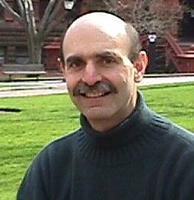
Matthew Reason is a Professor of Theatre and founding Director of the Institute for Social Justice at York St John University. He leads the AHRC-funded 'I’m Me' project, exploring identity and representation in learning disability arts. His research focuses on participatory methodologies, audience experience, and the intersection of performance with social justice issues. His work spans theatre for children, liveness in performance, and creative approaches to documenting live art. He has published widely on topics including audience research, dance spectatorship, and the ethics of inclusive research practices. Key projects include studies on prison and military audiences, and the role of drawing as a research tool. Matthew actively engages with communities through collaborative projects, emphasizing co-productive research that fosters societal change. His leadership at the Institute for Social Justice drives interdisciplinary initiatives to advance equity across multiple sectors.
Marc Toussaint is Full Professor leading the Learning & Intelligent Systems Lab at TU Berlin's EECS Faculty. His research integrates machine learning, optimization, and AI reasoning to solve fundamental robotics problems like physical reasoning and human-robot interaction. He holds a physics diploma from University of Cologne and PhD from Ruhr-Universität Bochum. Key research themes include: Task-motion planning integration Reinforcement learning for robotics Physical simulation and control Probabilistic inference methods Recent publications focus on efficient kinodynamic planning, belief space planning under uncertainty, and neural policy learning. He develops open-source robotic tools like the 'robotic python package' used in academic courses worldwide. Toussaint collaborates with Amazon Robotics and MIT CSAIL, and has held positions at Max Planck Institute and University of Stuttgart.
Dr. Trong Tuan Luu is an Associate Professor of Management at the School of Business, Law and Entrepreneurship, Swinburne University of Technology in Hawthorn, Australia. With a strong academic background including two master's degrees from Australian institutions and a PhD from the Asian Institute of Technology, he has established himself as a prominent researcher in organizational behavior and human resource management. Education Background: PhD in Management from Asian Institute of Technology (AIT), Thailand Master's degree from University of Melbourne, Australia Master's degree from Victoria University, Australia Dr. Luu's research interests span organizational behavior and human resource management in both private and public sectors. His work particularly focuses on leadership styles (ethical leadership, entrepreneurial leadership, authentic leadership), employee behaviors, and organizational performance. He has made significant contributions to understanding how leadership approaches impact employee outcomes such as thriving, service performance, and innovation in various industry contexts including hospitality, public sector, and IT services. His extensive publication record demonstrates a consistent focus on leadership-employee dynamics across multiple contexts. Recent work examines the curvilinear effects of leadership behaviors, the mediating roles of psychological constructs like passion and mindfulness, and the boundary conditions that moderate leadership effectiveness. His research often employs sophisticated multilevel and longitudinal methodologies to capture complex organizational phenomena. Scientific Awards: Swinburne Outstanding Researcher Award (2018) Award for the second best researcher (University of Economics Ho Chi Minh City, 2016) Award for top nine researchers (University of Economics Ho Chi Minh City, 2015) Award for top researchers (University of Economics Ho Chi Minh City, 2014) Dr. Luu is actively engaged in doctoral supervision, with numerous PhD students working on diverse topics related to management, leadership, and organizational behavior. His supervision portfolio reflects his broad research interests, spanning from digital strategy in banking to sustainable tourism development. He serves on editorial boards for journals including Asia Pacific Business Review and International Journal of Public Administration, contributing to the scholarly community beyond his own research.
Prof. Keng Hock, Mark Goh is a Professor at the National University of Singapore (NUS) Business School, holding a joint appointment as Director (Industry Research) at The Logistics Institute-Asia Pacific (TLI-AP). He specializes in logistics, supply chain strategy, and operations research. He earned his PhD from the University of Adelaide on a fully funded scholarship and has held adjunct and visiting roles globally. His research focuses on supply chain risk management, healthcare logistics, and strategic decision-making, with over 400 publications in top journals. Notable contributions include work on multi-criteria supplier selection, supply chain resilience, and AI ethics in e-commerce. He has received the Supply Chain Educator Award and is recognized in global directories like *Who’s Who in Asia and the Pacific Nations*. Prof. Goh advises public and private sector organizations on logistics strategy and sits on industry committees such as the World Economic Forum’s Global Advisory Council on Logistics. His current projects emphasize syncretic value-driven logistics models and sustainable recycling frameworks. He leads collaborative research teams addressing global supply chain challenges through interdisciplinary approaches. His articles reflect cutting-edge advancements in AI-driven decision models, risk networks in construction, and data ownership strategies in digital platforms. These contributions underscore his role as a thought leader in logistics and operations research, blending academic rigor with real-world industry applications.
Camelia D. Brumar is a PhD Candidate in Computer Science at Tufts University and a Visiting PhD Student at Harvard University's Visual Computing Group. She co-founded Boston Vis , a collaborative network for visualization researchers in the Greater Boston Area. Education: B.S. in Theoretical Mathematics from University of Maryland, College Park Research Focus: Systematic visualization design for decision-making processes, bridging gaps between problem spaces and design spaces through qualitative methods Her work intersects Visual Analytics , Human-Computer Interaction , and Machine Learning , with recent publications on decision-making taxonomies, dimensionality reduction explanations, and knowledge graph visualization. Key trends include: Interactive predicate logic for pattern explanation Domain expert challenges in automated data science Anomaly reasoning frameworks Medical AI applications for embryo grading Scientific Achievements: Organizer of Boston Vis (2024) Tutorial presenter on LLMs for research paper interaction (2024) IEEE Visualization 2024 Doctoral Colloquium participant Contributor to Dagstuhl Seminar on provenance in automated data science (2023) Industry experience includes roles at Tableau Research , Alife Health , and Bose Corporation , with collaborations spanning MIT Lincoln Laboratory, National Renewable Energy Laboratory, and Worcester Polytechnic Institute.
Marc Hanheide is a Professor of Intelligent Robotics and Interactive Systems at the University of Lincoln 's School of Computer Science. With a career spanning EU projects like VAMPIRE, COGNIRON, CogX, and STRANDS, his work focuses on long-term robotic behavior, human-robot spatial interaction, and cognitive system architectures. He has secured over 12 major grants from organizations including EPSRC, BBSRC, and the European Commission. Key Research Areas : Autonomous robotics, HRI, AI, cognitive systems, agricultural robotics Current Projects : STRANDS (long-term behavior), AgriFoRwArdS (robotics training), NCNR (nuclear robotics) Major Contributions : Human-aware navigation modules, topology optimization for robot fleets, causal analysis frameworks Scientific Awards: While no specific awards are listed, his numerous EPSRC grants and leadership in multi-institutional projects highlight his impact. He has over 172 publications and collaborates with institutions like CoR-Lab and CITEC.
Rebecca Tuvel is an Associate Professor and Chair of Philosophy at Rhodes College , Memphis, TN. Her work bridges Ethics , Philosophy of Race , and Feminist Philosophy , focusing on topics like transracialism, cultural appropriation, and animal ethics. She earned her PhD from Vanderbilt University (2014) and a BA (Hons) from McGill University (2007). Teaches courses: Philosophy of Sex and Gender, Philosophy of Race and Racism, Medical Ethics, and Black Mirror -inspired Intro to Philosophy Research highlights: Metaphysics/ethics of identity change, feminist critiques of epistemic objectification, and ethical implications of cultural appropriation Her 2017 article In Defense of Transracialism (Hypatia) sparked significant debate, leading to symposia in Philosophy Today and broader discussions about academic discourse norms. She advocates for charitable philosophical engagement and responsible online interaction , emphasizing mental health and inclusivity in academia.



/prod01/yorksjacuk/media/content-assets/staff-profile-images/MATTHEW-REASON-4.jpg)