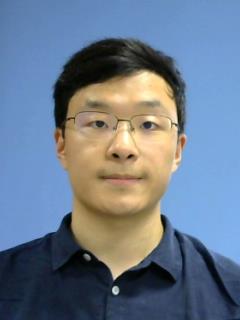
Li Wei is a distinguished academic affiliated with Tsinghua University, with a focus on interdisciplinary research spanning artificial intelligence, machine learning, and computer vision. His work often intersects with medical informatics, remote sensing, and signal processing, demonstrating a commitment to advancing technological solutions in healthcare, environmental monitoring, and engineering systems. Research interests include deep learning applications in clinical diagnostics, satellite data analysis for climate modeling, and optimization of energy storage systems. He has contributed to innovative solutions in areas such as UAV-enabled edge computing, privacy-preserving blockchain protocols, and thermal-based surveillance systems. His collaborative projects often involve multidisciplinary teams across institutions. Publications reflect a strong emphasis on practical applications, such as mobile health tools for tumor recognition, transformer-based super-resolution techniques for oceanography, and AI-driven risk classification models for respiratory diseases. While no specific awards or grants are listed, his prolific output across top-tier journals indicates sustained research impact. Professional activities include contributions to conferences like RecSys, MICCAI, and AAAI, and editorial roles are implied through his extensive publication record. Collaborations with industry partners (e.g., in energy systems and medical imaging) suggest engagement with real-world problem-solving.
Daniel Hernández is a Postdoctoral Researcher at the Institute for Artificial Intelligence (KI) under the Cluster of Excellence IntCDC at the University of Stuttgart. He is part of the Analytic Computing group within the Institute for Parallel and Distributed Systems (IPVS). His work focuses on Semantic Web technologies , particularly SPARQL , RDF , and knowledge graph applications in interdisciplinary design workflows . Research Trends : His publications (2015–2025) emphasize semantic query processing , provenance computation , and interoperability between architectural data and knowledge graphs . Key innovations include the eSPARQL language for epistemic queries, NPCS for native provenance in SPARQL, and BHoM to bhOWL for integrating building data with ontologies. Teaching & Collaborations : He has held teaching roles at the University of Stuttgart ( Human-Computer Interaction with Knowledge Graphs ), University of Aalborg ( Group Supervisor ), and University of Chile ( Lecturer for The Web of Data ). Collaborations span institutions like Buro Happold , TU Wien , and INRIA , with publications in journals like Proceedings of the VLDB Endowment and conferences such as WWW and ISWC .
Dr. Pascal Reuss is a Researcher at the Intelligent Information Systems (IIS) Division within the Institute of Computer Science , University of Hildesheim . His work focuses on Case-Based Reasoning (CBR) systems, Multi-Agent Systems , and Knowledge Management applications. Active in CBR framework development and game-based AI research Teaching Computer Science III (Databases) for winter 2025/26 Participating in university sustainability initiatives like Stadtradeln 2024/25 Reuss contributes to AI education through practical implementations in gaming environments and has developed visualization tools for CBR agent behavior. His research spans multi-agent collaboration , dynamic case bases , and domain-specific language implementations for knowledge maintenance. Notable contributions include: Co-developing the FEATURE-TAK framework for knowledge extraction Designing case factories for distributed CBR systems Implementing finite state machines for tactical game agents Creating CBR-based fitness planning systems His work appears in various CBR and Game Development publications from 2011-2024. The research demonstrates practical applications of CBR in aircraft maintenance diagnostics , training plan generation , and educational technology contexts.
Stefan Decker is a full University Professor (Universitätsprofessor) at RWTH Aachen University, Germany, where he heads the Chair of Information Systems and Databases (Informatik 5) within the Faculty of Mathematics, Computer Science and Natural Sciences. He is actively involved in teaching, research, and the supervision of numerous ongoing and completed doctoral, master’s, and bachelor theses. Education & Academic Background Doctorate (Dr. rer. pol.) – field of Information Systems or related (exact institution/year not stated in text). Appointed as University Professor and Chair of Information Systems and Databases at RWTH Aachen University. Research Interests Prof. Decker’s work lies at the intersection of databases, knowledge graphs, semantic web technologies, data science, and cybersecurity . He investigates architectures and algorithms for large-scale, privacy-preserving, decentralized data analytics , develops ontology-driven information systems , and explores the use of large language models (LLMs) for educational technology, anomaly detection, and incident-response playbooks. Additional focal areas include smart energy systems, mixed-reality learning environments, FAIR data principles, and federated machine learning . Scientific Contributions & Trends His recent publications (2022-2025) demonstrate a clear trend toward explainable AI, LLM-enhanced systems, secure data spaces, and semantic interoperability . Key contributions include novel anomaly-detection frameworks for encrypted power-grid communications, knowledge-graph-driven chatbots for higher-education support, and methodological advances in decentralized analytics and FAIR data sharing. These works are disseminated in top-tier venues such as AAAI, IEEE ISGT Europe, ESWC, IDEAL, and various Springer LNCS and IEEE Transactions. Supervision & Grants Doctoral Theses Advised: A. T. Neumann – “Chatbots as professional companions in large-scale community information systems” (2024) S. M. Welten – “Methods for practical data sharing and decentralized analytics” (2025) Master’s Theses Co-Advised: A. R. Küsters – “Object-centric process constraints using variable bindings” (2025) Additionally supervising more than 30 ongoing bachelor, master, and doctoral projects covering topics such as LLM-driven cybersecurity playbooks, knowledge-graph construction for German law, privacy-preserving analytics in smart grids, and mixed-reality learning agents. Principal investigator or senior researcher in large collaborative projects including NFDI4DS, WestAI, champI4.0ns and several EU/national initiatives on sovereign data spaces and AI services. Labs & Teams Prof. Decker leads the Information Systems & Databases (DBIS) Research Group . The group operates well-equipped laboratories for knowledge-graph engineering, mixed-reality applications, privacy-enhancing technologies, and secure distributed analytics . Current team size exceeds 30 researchers including PhD candidates, postdocs, and scientific programmers, supported by national and EU funding streams.
Simone Ferlin is an Adjunct Senior Lecturer at Karlstad University working with 5G and Internet evolution. She completed her PhD in computer science in 2017 at the Simula Research Lab and Universitetet i Oslo under the supervision of Dr. Ozgu Alay and Prof. Michael Welzl. Her PhD dissertation focused on increasing robustness in multipath transport with MPTCP. Dr. Ferlin's educational background includes a PhD in Computer Science from the Simula Research Lab and Universitetet i Oslo (2017). Her doctoral research centered on enhancing robustness in multipath transport protocols, specifically focusing on MPTCP (Multipath TCP). She also completed undergraduate work that contributed to a book project with Prof. Friedrich Oehme on electronics and circuit technology. Dr. Ferlin's research spans multiple domains at the intersection of networking, systems, and performance engineering. Her primary interests include network and system measurements, performance analysis, security, and congestion control. She investigates how networks like the Internet evolve, examining technology development, adoption patterns, and their impacts on various entities. Additionally, she explores ways to harmonize security and privacy while making them more usable and assessable. Her work particularly focuses on transport layer and multipath transport protocols, examining their performance and security aspects. She also investigates application and transport layer performance, automation, and monitoring. Her research extends to network programming in both Linux kernel and user space, mobile broadband networks from 2G to 5G, and their intersection with the Internet. She is deeply engaged in observability, distributed and system performance monitoring, and automation. Analysis of Dr. Ferlin's recent publications reveals a strong focus on next-generation networking technologies. Her work spans multiple domains including 5G/6G networks, transport protocols (particularly QUIC and MPTCP), network virtualization, container orchestration, and the application of machine learning to networking problems. She has increasingly incorporated large language models into network configuration and automation research. Her publications demonstrate a consistent emphasis on performance measurement, optimization, and security across diverse networking environments from the edge to the cloud. Dr. Ferlin has received notable recognition for her research contributions: Best paper award at IEEE ICIN'21 for 'Learning-based Incast Performance Inference in Software-Defined Data Centers' Applied Networking Research Prize (ANRP)'25 winner for 'NetConfEval: Can LLMs Facilitate Network Configuration?' Dr. Ferlin is actively involved in mentoring the next generation of networking researchers. She has co-supervised numerous Master's and PhD students across multiple institutions including Karlstad University, KTH, TU Berlin, University of Oslo, and universities in Brazil. Her students have worked on diverse topics including NAT64 performance comparison, system tracing visualization, network observability, ML applications to multipath transport, FEC integration with QUIC, high-performance networking for 5G, congestion control, shared bottleneck detection, multipath IoT applications, and container runtime performance. She is also involved in several significant research projects including Vinnova's SEMLA (Securing Enterprises via Machine-Learning-based Automation), Horizon Europe's CODECO (Cognitive Decentralised Edge Cloud Orchestration), and the Knowledge Foundation of Sweden's DRIVE (Data-driven Latency-Sensitive Mobile Services for a Digitized Society). Dr. Ferlin serves as Workshop Chair for ACM SIGCOMM '25, is a member of the ACM/IRTF Applied Networking Research Workshop (ANRW) steering committee, and co-chairs the Internet Congestion Control Research Group (ICCRG) at the IRTF. She previously served as Associate Technical Editor for IEEE Communications Magazine and has been active on numerous program committees for major networking conferences including SIGCOMM, CoNEXT, IMC, and PAM.
Catia Pesquita is an Associate Professor in Computer Science at the Faculty of Sciences of the University of Lisbon , where she is also a Senior Researcher at LASIGE and leads the Health and Biomedical Informatics Research Line . With a multidisciplinary background in Biology and Computer Science, she focuses on Artificial Intelligence and Data Science applications in life and health sciences . Her research spans Semantic Web , Biomedical Ontologies , Knowledge Graphs , and Explainable AI , with significant contributions to ontology matching and semantic similarity . Education: PhD in Computer Science - Bioinformatics (2012) MSc in Bioinformatics (2008) Degree in Cell Biology and Biotechnology (2005) Current Projects: KATY (2021-2024): AI-Empowered Personalized Medicine for cancer treatments. BRAINTEASER (2021-2024): AI for ALS and MS disease progression models. Research Outputs: Developed tools like AgreementMakerLight (AML) , KGsim-benchmark , and the Epidemiology Ontology . Over 133 publications with significant citations (32,909 reads, 3,889 citations). Teaching: Lectures advanced topics in Databases , Data Integration , Bioinformatics , and Big Data . Advocacy: Vice-president of Biodata.pt , promoting biological data valorization in Portugal. Actively involved in initiatives to promote computer science careers to young women .
Christian Tominski serves as an apl. Professor (non-tenured) at the University of Rostock, holding the außerplanmäßige Professur for Human-Data Interaction within the Institute for Visual and Analytic Computing. His academic work spans teaching in Visual Computing and Computer Science programs, with active research contributions in data visualization and visual analytics. His research focuses on multi-variate data visualization, time-series and geo-visualization, graph visualization, and coordinated multiple views. He investigates interaction techniques including interactive lenses, visual comparison, navigation, and guidance mechanisms, alongside computational aspects such as efficient algorithms and asynchronous processing for visualization systems. Recent work emphasizes task-driven approaches and analytic support for interactive exploration. Analysis of his publication trends reveals strong emphasis on visual analytics for complex data structures, particularly in process mining and multivariate graphs. His work consistently explores guidance frameworks, progressive computation models, and novel interaction paradigms for large high-resolution displays, bridging theoretical foundations with practical applications in visual data analysis. Tominski holds professional roles as a member of the Faculty Council of IEF and the System Technical Group of Computer Science Institutes at the University of Rostock. He actively participates in the Informatik-Forum Rostock (INFO.RO), contributing to the regional computer science community through collaborative initiatives and knowledge sharing.
Prof. Dr. Haris Gačanin is a faculty member at RWTH Aachen University, affiliated with the Institute for Distributed Signal Processing under the College of Electrical Engineering. His research focuses on integrating machine learning with wireless communication systems, particularly in industrial IoT, edge computing, and network optimization. Current academic rank: Professor Contact: harisg@dsp.rwth-aachen.de Research Interests: Wireless systems, machine learning, signal processing, and network optimization. Key contributions include: Adaptive resource allocation in IIoT and vehicular networks AI-driven channel estimation and feedback mechanisms Security-oriented emitter identification via metric learning Federated/transfer learning for edge environments Hardware-efficient deep learning models for mmWave and THz communications Methodological Focus: Combines reinforcement learning, attention mechanisms, and robust neural architectures with practical implementations on FPGA and vehicular systems.
Prof. Torsten Hiltmann is a Professor for Digital History at Humboldt University of Berlin (since 2020) and previously held roles such as Professor for Digital Humanities in History and Cultural Studies at the University of Münster (2013–2020). He specializes in Medieval History, Digital Humanities, and Heraldry, with a focus on the cultural and social dimensions of heraldic communication in medieval Europe. His research integrates digital methods, cultural history, and interdisciplinary collaboration. Education: PhD (cotutelle) in Medieval History from TU Dresden and EPHE Paris (2005), studies in Psychology and Philosophy. His research interests include the digital transformation of historical scholarship, medieval heraldic compendia, and the application of AI and semantic technologies to historical data. Key projects include the Digital Heraldry Ontology and contributions to the NFDI4Memory consortium. Publications span monographs like Spätmittelalterliche Heroldskompendien (2011) and numerous articles on digital methods, heraldry, and historical epistemology. Awards include the Dilthey Fellowship from Volkswagen Foundation (2013–2019). He leads initiatives such as the Interdisciplinary Center for Digitality at Humboldt University and serves on editorial boards like the Journal of Digital History . His work bridges traditional historical scholarship with cutting-edge digital methodologies.
Peter Buneman is a prominent academic affiliated with the University of Edinburgh, UK. His research primarily focuses on databases, data provenance, XML, and semistructured data. He has held significant roles in advancing computational models for data citation, provenance tracking, and distributed systems. Key areas of expertise include database systems, graph algorithms, and collaborative data curation platforms. Buneman's work integrates theoretical foundations with practical applications in pharmacology data, digital libraries, and scientific data management. His contributions to data provenance and citation systems have shaped standards in academic and industrial settings. Notable projects include the Database Wiki platform for collaborative data management and the MITra framework for graph traversal. Buneman collaborates extensively with co-authors like Susan Davidson, Wenfei Fan, and Val Tannen. Publications span 1974–2025, emphasizing methodologies for data integration, distributed computing, and computational biology. His work bridges theoretical computer science with real-world applications in biomedicine and information systems.
Shueng-Han Gary Chan is a faculty member in the Department of Computer Science and Engineering at the Hong Kong University of Science and Technology (HKUST), within the College of Engineering. He is actively engaged in research and mentoring, with a strong publication record in mobile computing, indoor localization, and AI for pervasive systems. His research focuses on indoor localization using Wi-Fi, geomagnetic, and inertial signals , sensor fusion , crowd counting with deep learning , domain adaptation , and efficient mobile AI systems . His work bridges theoretical innovation with real-world deployment, as seen in systems for missing person search and indoor navigation. Recent publications (2023–2025) show a consistent trend toward self-supervised and domain-agnostic learning , efficient model design for mobile devices , and robust signal fusion in noisy environments . His team leverages transformer architectures, graph neural networks, and novel optimization techniques to solve real-world challenges in urban and indoor spaces. He has advised numerous graduate students, including Jierun Chen, Zhuoxuan Peng, and Tianlang He, who have contributed as first authors to joint publications. His collaborations span institutions and include work on large-scale system deployments and mobile AI. He leads a research group focused on mobile and pervasive computing , with projects involving IoT-based contact tracing, indoor navigation (e.g., DeepNavi, SiFu), and real-time localization systems. The team emphasizes practical deployment and system robustness.
Marc Hanheide is a Professor of Intelligent Robotics and Interactive Systems at the University of Lincoln 's School of Computer Science. With a career spanning EU projects like VAMPIRE, COGNIRON, CogX, and STRANDS, his work focuses on long-term robotic behavior, human-robot spatial interaction, and cognitive system architectures. He has secured over 12 major grants from organizations including EPSRC, BBSRC, and the European Commission. Key Research Areas : Autonomous robotics, HRI, AI, cognitive systems, agricultural robotics Current Projects : STRANDS (long-term behavior), AgriFoRwArdS (robotics training), NCNR (nuclear robotics) Major Contributions : Human-aware navigation modules, topology optimization for robot fleets, causal analysis frameworks Scientific Awards: While no specific awards are listed, his numerous EPSRC grants and leadership in multi-institutional projects highlight his impact. He has over 172 publications and collaborates with institutions like CoR-Lab and CITEC.
Zhongxin Liu is an Assistant Professor at the College of Computer Science and Technology , Zhejiang University , China. He earned his Ph.D. from the same institution in 2021. His research focuses on Intelligent Software Engineering (AI4SE) , leveraging software "big data" to improve code understanding, generation, and security through machine learning techniques. Published in top-tier venues: TSE, TOSEM, ICSE, FSE, ASE, ISSTA Active in academic service: Reviewer for TSE, TOSEM, ASEJ, etc. Visiting Professor at University of Stuttgart (2024-2025) His recent work explores Large Language Models (LLMs) for code intelligence, security hardening, and vulnerability detection. Papers emphasize cross-domain applications, zero-shot learning, and API/code dependency analysis. Scientific awards include: ACM SIGSOFT Distinguished Paper Awards (ASE 2018, 2019, 2020; ISSTA 2025) Zhejiang University Qizhen Scholar (2021) CCF TCSE Doctoral Dissertation Award (2023) Recruiting undergraduate interns, graduate students (MS/Ph.D.), and postdocs for code intelligence research. Contact: liu_zx@zju.edu.cn .
Christian Winkler is Professor for AI-based UX optimization and general business administration at Nuremberg Institute of Technology since 2022. With over 25 years of experience spanning entrepreneurship, enterprise architecture, and academia, he brings substantial industry expertise to his academic role. His career includes founding multiple technology companies including an internet service provider (WWL Internet AG) that went public in 1999, Querplex GmbH through management buyout in 2003, and datanizing GmbH as an NLP SaaS provider in 2017. Professor Winkler's research focuses on practical applications of artificial intelligence in business contexts, with particular expertise in natural language processing, user experience optimization, and data-driven marketing strategies. His work bridges theoretical AI research with real-world business applications, emphasizing accessibility of complex technologies. He has published extensively on language models (including BERT and LLaMA implementations), text analysis techniques, and social media data analysis for business insights. Recent publications reveal a strong trend toward optimizing large language models for practical deployment, with significant focus on analyzing user-generated content from social platforms like Instagram and WallStreetBets. His work demonstrates how NLP can extract valuable business intelligence from unstructured data sources while making advanced AI techniques accessible to non-technical business professionals. Winkler teaches E-Commerce, International Marketing Tools - Quantitative Methods, Applied User Experience, and Communication Management, reflecting his interdisciplinary approach that combines technical AI knowledge with business administration expertise. He is an active contributor to the data science community through conference presentations at events like m3 Konferenz, MLsummit, and data2day, as well as educational content for Heise Academy on Python and NLP topics.
Oliver Karras is a researcher, data scientist, and lecturer at the Data Science and Digital Libraries research group at TIB – Leibniz Information Centre for Science and Technology. He holds a BSc, MSc, and PhD in Computer Science from Leibniz University Hannover. His research focuses on FAIR scientific knowledge, Open Research Knowledge Graph (ORKG), and national research infrastructure projects like NFDI-4Ing and FAIR-DS. He is a member of the German Informatics Society (GI) and spokesperson of the Requirements Engineering (RE) group, contributing to conferences and journals as a reviewer. Previously, he was a research associate and PhD student in the Software Engineering group at Leibniz University, leading the DFG project ViViReq on video integration in requirements engineering. His research interests include Data Science, AI, Knowledge Representation, Software Engineering, Requirements Engineering, Empirical Research, and Open Science. He has published over 60 papers in these areas, with notable contributions to knowledge graphs, FAIR data, and reproducibility frameworks. His work emphasizes organizing scientific knowledge for accessibility and collaboration across disciplines. He is actively involved in initiatives like the ORKG, promoting sustainable literature reviews and open science practices. His professional contributions extend to tool development, such as OntoAligner for ontology alignment and SciKGTeX for semantic annotation in LaTeX. Oliver Karras collaborates with institutions like Leibniz University, contributing to the NFDI consortium and energy research projects. His expertise bridges technical innovation and academic rigor, addressing challenges in knowledge management and reproducibility. His current roles include advancing TIB’s research infrastructure and fostering interdisciplinary collaboration through knowledge graph applications.