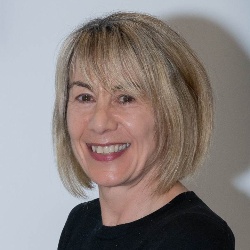
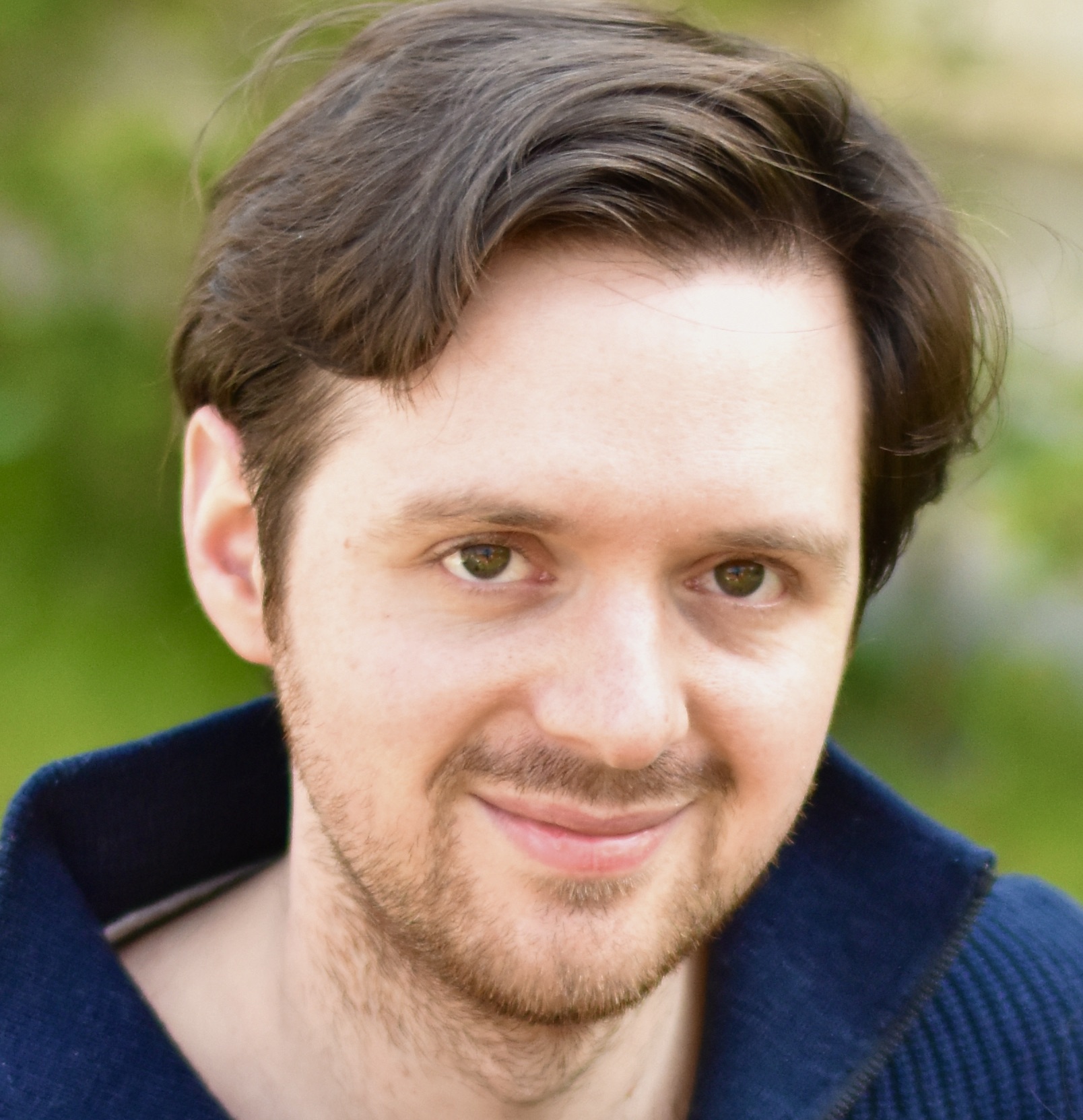
Simon Hayhoe is a Reader in Education at the University of Exeter's School of Education and an Associate of the Scottish Sensory Centre, University of Edinburgh. His work focuses on sensory impairment, ageing, inclusive technologies, and participatory research methodologies. He has held roles at the University of Bath (2016-2023), Canterbury Christ Church University, and Sharjah Women’s College, UAE. His research has been supported by a Horizon 2020 grant and a Fulbright Fellowship, among others. Education: PhD in Education (University of Birmingham, 2006), PGCE in Secondary Technology (University of Bath, 1997), MEd (University of Leicester, 1995), BA in Technical Communication (Coventry Polytechnic, 1993). His research interests include sensory impairment philosophies, accessible museum technologies, and inclusive education policies. Notable projects include the ARCHES initiative on cultural heritage accessibility and the Sound Pad Project, which co-created inclusive technologies with marginalized communities. He has delivered keynotes at institutions like MIT, Harvard, and the Metropolitan Museum of Art, and serves on editorial boards for journals such as British Journal of Visual Impairment and Discover Global Issues . His awards include the Fulbright Scholarship and fellowships from the British Computer Society and Metropolitan Museum of Art.
Sarah Howard is an Honorary Professor at the School of Education, University of Wollongong, and concurrently holds roles such as Visiting Professor at Vrije Universiteit Brussel. Her research focuses on leveraging new technologies and data science to understand classroom practices, teacher change, and technology integration. Key areas include cultural and individual factors influencing teachers' digital technology use, blended learning environments, and automated classroom observation systems. She leads projects like national app use studies in primary schools and data/video mining methods for digital-physical space integration. Her academic roles include supervision of higher-degree research students across multiple institutions. Funding includes ARC grants and internal university schemes exploring rural student potential, generative AI in education, and flexible learning spaces. Her work emphasizes innovative educational technologies, teacher professional development, and systemic educational change. Recent publications span AI in education, blended learning frameworks, and teacher readiness for online instruction. She collaborates internationally, with a focus on integrating theoretical and practical insights to drive educational innovation.
Andrea Santilli is a Research Scientist at Nous Research and holds a PhD in Computer Science from GLADIA at Sapienza University of Rome. His research focuses on large language models (LLMs), robustness, reliability, and multimodal learning. He previously worked at Apple MLR, Hugging Face’s BigScience, and Pi School. He earned his MSc and BSc in Computer Science from Tor Vergata University and Sapienza. Education: PhD in Computer Science, Sapienza University of Rome (2024) MSc in Computer Science, University of Roma Tor Vergata (2020) BSc in Computer Science, University of Roma Tor Vergata (2018) Research Interests: Santilli’s work spans LLM robustness , mechanistic interpretability , multimodal neural databases , and instruction-tuning . He introduced Parallel Jacobi Decoding and contributed to projects like BLOOM, Camoscio, and Fauno. His research bridges syntax-aware NLP, privacy-preserving LLMs, and cross-modal alignment. Publications: His work includes advancements in 3D-text latent space alignment (CVPR 2025), evolutionary merging (ICML 2025), and efficient decoding (ACL 2023). Over 15+ peer-reviewed papers span venues like ACL, CVPR, and ICLR. Awards: Received the Emanuele Pianta Award for his MSc thesis on continual language learning with syntax-based episodic memory. Grants & Projects: Winner of ‘Machine Learning Algorithms for Translation’ grant (2022), developing Parallel Decoding Co-PI for ‘Multimodal AI for 3D Analysis’ (2021) with Ecole Polytechnique Labs & Teams: Active in GLADIA (Sapienza), Apple MLR, and Hugging Face’s BigScience initiative. Core contributor to open-source projects like PromptSource and BLOOM.
Haohan Wang serves as Assistant Professor at the School of Information Sciences, University of Illinois Urbana-Champaign, with additional appointments as Affiliate at the Carl R. Woese Institute for Genomic Biology and Assistant Professor at the National Center for Supercomputing Applications (NCSA). His interdisciplinary work bridges machine learning, genomics, and AI security, focusing on trustworthy systems for biomedical applications and foundational AI research. Wang's research centers on robust and secure artificial intelligence, with emphasis on large language model vulnerabilities (jailbreaking, safety evaluation), federated learning personalization, and genomic data analysis. He develops techniques for privacy-preserving dataset distillation, confounding factor correction in genome-wide studies, and multi-agent frameworks for scientific discovery. His fingerprint highlights expertise in Machine Learning (94%), Linear Mixed Models (87%), and Confounding Factor Correction (41%), reflecting his focus on methodological rigor in complex data environments. Analysis of his 2025 publications reveals dominant trends in AI security (jailbreak evaluation frameworks like GuardVal, adversarial attacks such as InfoFlood), biomedical AI (transcriptomic analysis, wearable data privacy), and foundational methods (federated learning optimization, synthetic data generation). These works consistently address real-world challenges in model trustworthiness while advancing computational techniques for genomics and healthcare. Through NCSA's high-performance computing resources and the Institute for Genomic Biology's collaborative ecosystem, Wang integrates supercomputing capabilities with biological research to tackle data-intensive problems in disease modeling and AI safety testing, as evidenced by media coverage of his team's AI security testing methods.
Ibrahim Sabek is an Assistant Professor in the Thomas Lord Department of Computer Science at the University of Southern California (USC), with a courtesy appointment in the Dornsife Spatial Sciences Institute. He leads the Next-generation Data-Intensive Systems Group (NexDIG) and previously held postdoctoral positions at MIT's Data Systems Group and an NSF/CRA Computing Innovation Fellowship. He earned his PhD in computer science from the University of Minnesota, Twin Cities in 2020, with recognition for his dissertation's excellence. His research focuses on integrating machine learning and quantum computing into data management systems, emphasizing scalable systems design, algorithms, and data structures. Notable awards include the Google Systems and ML Junior Faculty Award (2025), the NSF/CRA Computing Innovation Fellowship, and the Best Demo Award at ACM SIGSPATIAL 2024. His work spans quantum-augmented database engines, learned query optimizers, and causal inference for system debugging. He actively serves on program committees for top conferences like VLDB and SIGMOD, and organizes workshops such as Q-Data. Current courses include CSCI 543 on modern data management, emphasizing prerequisites like CSCI-485/585. Key contributions include frameworks like LIMAO, TurboReg, and Flash, addressing challenges in spatial probabilistic modeling and scalable regression. His research bridges machine learning, quantum computing, and traditional database systems, with applications in spatial data analysis and system optimization.
Dewei Yi is a Senior Lecturer (Associate Professor) in the Department of Computing Science, School of Natural and Computing Sciences at the University of Aberdeen, UK. He holds a PhD from Loughborough University and is an active researcher in AI, computer vision, and intelligent systems. He serves as Director of the MSc AI and MSc Robotics and AI programmes. Research Interests: His research spans AI-enabled healthcare, medical image processing, intelligent vehicles, robotics, precision agriculture, remote sensing, and applied machine learning. He focuses on hybrid intelligent systems, personalised AI, federated learning, fairness, and explainability. Recent Publication Trends: His latest work includes medical image quality evaluation using contrastive learning, federated learning for diabetic retinopathy, UAV-based solar panel inspection, vascular image analysis, and emotion recognition from ECG data, reflecting a strong trend toward healthcare and intelligent systems with real-world impact. Scientific Awards: Fellow of the Higher Education Academy (FHEA) Outstanding Reviewer, Transportation Research Part C (TRC) Advising and Grants: Dr Yi supervises multiple PhD students in AI, computer vision, and machine learning. His graduated PhDs include Debinal Bakyavathi Rajan, Sami Hamid Al Sulaimani, and Adinath Abhimanyu Ghadage. He has secured significant funding as PI and Co-PI, including a £408K Smartawl 5.0 project and a £794K Cancer Research UK grant (Co-PI). Labs and Teams: He leads research in AI for healthcare and intelligent vehicles, collaborating with institutions like University of Warwick, Loughborough University, and industry partners such as AVL Powertrain Ltd. His work is supported by interdisciplinary teams focusing on embedded AI, medical applications, and sustainable technologies.
Nina Bandelj serves as a Professor in the Department of Sociology at the University of California, Irvine, where she is an active affiliate of the Center for Organizational Research (COR). Her research bridges economic sociology and family studies, examining how money, debt, and market logics permeate intimate social relations. She frequently participates in COR initiatives like the Academic Speed-Dating events held in Social Sciences Plaza B, fostering interdisciplinary collaboration among scholars. Bandelj's research centers on three interconnected domains: (1) the economization of family life , analyzing how parenting transforms into human capital investment through debt-financed childcare and education; (2) cross-national inequality , investigating ethnic marginalization in Eastern Europe and gender pay gaps within workplaces; and (3) money's social meaning , exploring emotional economies of modern parenting and the valuation of 'priceless' social domains. Her work consistently challenges the 'hostile worlds' thesis by demonstrating how economic and intimate spheres co-constitute each other. Recent publications reveal intensifying focus on debt-driven middle-class parenting (e.g., mortgage debt tied to childrearing) and commodified childhood (e.g., pricing early education), while maintaining strong comparative analysis of postsocialist economies. This trajectory reflects broader shifts in economic sociology toward studying financialization's penetration into familial spheres. Bandelj actively cultivates scholarly communities through COR events and writing initiatives like 'U See I Write,' emphasizing collaborative knowledge production. Her work demonstrates how micro-level family economies scaffold macro-level policy failures, particularly regarding America's family-hostile welfare state.
YooJung Choi is an Assistant Professor at the School of Computing and Augmented Intelligence, Arizona State University. Her research focuses on probabilistic machine learning, trustworthy AI, and tractable probabilistic modeling. She holds a PhD in Computer Science from UCLA and has been recognized with awards like the Cisco Research Award and Simons-Berkeley Research Fellowship. Education: PhD in Computer Science (University of California, Los Angeles). Research interests include probabilistic reasoning, fairness, robustness, and interpretability. Her work bridges theoretical foundations and practical applications, with contributions to probabilistic circuits and optimal transport. Notable achievements include co-organizing TPM 2024 and presenting at venues like NeurIPS and AAAI. She actively promotes fairness in AI through frameworks that address label bias and discrimination patterns. Awards: Cisco Research Award, Simons-Berkeley Fellowship, AAAI 2023 New Faculty Highlights. Teaching: Courses on artificial intelligence, machine learning, and research supervision. Service: Tutorial leadership on probabilistic circuits, workshop organization, and academic talks globally.
Stefano Noventa is a Research Fellow at the Methods Center, Department of Social Sciences, Faculty of Economics and Social Sciences, University of Tübingen. He has held multiple postdoctoral positions at the University of Tübingen and previously at the University of Verona and the University of Padova. Education: Ph.D. in Cognitive Psychology, University of Padova (2011) M.Sc. in Physics, University of Padova (2006) Studies in Physics, University of Padova (1999–2006) International Visiting Graduate Student, University of Toronto (2009, 2010) Dr. Noventa's research lies at the intersection of mathematical psychology, psychometrics, and psychophysics, with a focus on developing and unifying quantitative models of human cognition and assessment. His work integrates Item Response Theory (IRT) and Knowledge Space Theory (KST) to create more robust frameworks for educational and psychological measurement. He investigates latent variable models, probabilistic knowledge structures, and the identifiability of complex psychometric models, often applying these to domains such as education, organizational psychology, and entrepreneurship. His recent publications (2020–2024) demonstrate a strong trend toward theoretical integration, particularly in bridging cognitive diagnosis models with traditional psychometric frameworks. The articles emphasize mathematical rigor, model generalization, and empirical validation, with applications in both cognitive science and applied psychology. Topics include the unification of assessment models, parameter estimation under local dependence, and the modeling of intuitive physical reasoning. Scientific Awards: No awards or honors listed in the provided text. Dr. Noventa has not been explicitly mentioned as an advisor to students, but he has served as a corresponding author and collaborator on multiple research projects, indicating a leadership role in research teams. He has been involved in a DFG-funded project (GLI NON-NORM) since 2019, suggesting active grant participation. His work is highly collaborative, involving researchers from Germany, Italy, Austria, and Canada. Labs and Research Groups: Methods Center, University of Tübingen Hector Institute of Education Science and Psychology, University of Tübingen Center of Assessment, University of Verona Department of General Psychology, University of Padova
Susan Howick is a Professor of Management Science and Vice-Dean (Academic) at Strathclyde Business School, University of Strathclyde. Her academic leadership and research are centered on system dynamics and decision support modelling, with applications in healthcare, energy, and public policy. Research Interests: System dynamics and hybrid modelling (SD & ABM) Integration of multiple modelling methods for decision support Disruption and delay analysis in complex projects Systemic risk evaluation in engineered and social systems Client-oriented modelling processes The recent publications show a strong trend towards interdisciplinary applications, particularly in health systems and Arctic search and rescue, often involving community-driven and culturally sensitive models. Her work increasingly combines Bayesian networks with system dynamics to support decision-making in uncertain, high-stakes environments. Scientific Awards: Operational Research Society Goodeve Medal (2001) EURO Prize for OR for the Common Good Finalist (2022) European Journal of Operational Research Editor's Choice Award (2021) Best Paper Award at 17th International Conference on Group Decision and Negotiation (2017) Elected to General Council of the OR Society (2018) Susan has supervised PhD students and served as co-investigator and principal investigator on multiple research projects, including those funded by EPSRC and GCRF. She has also delivered executive training for organizations such as Bombardier, PwC, and the Scottish Government, demonstrating strong industry engagement. Labs and Research Teams: She is actively involved in research groups focused on system dynamics, risk modelling, and decision support, collaborating with teams in healthcare (e.g., SSM - Health Systems), Arctic resilience (Nunavut Search and Rescue Project), and hybrid simulation. She contributes to the academic community through editorial roles in European Journal of Operational Research and System Dynamics Review .
Geoffroy Couteau is a CNRS research scientist at IRIF (Institut de Recherche en Informatique Fondamentale), Université Paris Cité, where he conducts research in theoretical and applied cryptography. He obtained his PhD from École Normale Supérieure de Paris in 2017 under the supervision of David Pointcheval and Hoeteck Wee, followed by a postdoctoral position at Karlsruhe Institute of Technology (KIT) from 2017 to 2019. His primary research interests include secure multiparty computation, zero-knowledge proofs, and the theoretical foundations of cryptography, with a particular emphasis on pseudorandom correlation generators and efficiency improvements in cryptographic protocols. He has made significant contributions to fine-grained cryptography, non-interactive zero-knowledge proofs, and post-quantum secure computation. The recent publications reflect a strong trend toward foundational advances in secure computation, with increasing focus on efficiency, practicality, and connections to complexity theory and learning theory. His work often bridges theoretical hardness assumptions with practical protocol design. ERC Starting Grant (2023) for project OBELiSC (Overcoming Barriers and Efficiency Limitations in Secure Computation) Geoffroy Couteau has advised numerous PhD and master’s students, including Dung Bui, Clément Ducros, Eliana Carozza, and Ulysse Léchine. He has also hosted many visiting students and postdocs, fostering a vibrant research group. He has served on the program committees of major conferences such as EUROCRYPT, CRYPTO, TCC, and PKC. He is currently leading research in cryptography at IRIF and is involved in postdoctoral hiring for projects in advanced cryptographic primitives. He maintains a research blog and resource collection for students, including LaTeX templates, a probability cheat sheet, and curated answers to common cryptography questions.
John G. Hansen is an Associate Professor in the Sociology Department at the University of Saskatchewan, specializing in Indigenous Justice, Crime and Society, and Restorative Justice. His work emphasizes Indigenous knowledge systems and justice as a process of healing rather than punishment. A member of the Opaskwayak Cree Nation, he has published extensively on topics such as Indigenous recovery, environmental stewardship, and urban Indigenous experiences. Education: PhD in Indigenous Justice (2011), University of Regina, College of Education Master of Education in Educational Foundations (2002), University of Saskatchewan Bachelor of Education in Indigenous Education (1998), University of Regina Bachelor of General Studies in Sociology/Native Studies (1992), Brandon University Research Interests: Dr. Hansen's research spans Indigenous justice frameworks, addiction recovery models rooted in Cree teachings, land-based education, and the role of storytelling in decolonization. His work frequently addresses systemic inequalities, climate change through traditional knowledge, and urban Indigenous community resilience. Article Trends: His publications since 2014 focus on Cree elders' perspectives, urban Indigenous recovery programs, and intersections between Indigenous justice and environmental sustainability. Key themes include decolonization, cultural mediation, and trauma-informed approaches to social exclusion. Scientific Awards: Story Warriors Award (2014) Shawane Dagosiwin Honoring Our Scholars (2010) YMCA Peace Medal (2002) Nominated for USU Teaching Excellence Award (2015-2016) Advising & Grants: Supervised two MA theses on restorative justice and crime prevention. Served on committees for five graduate students in sociology, geography, and Indigenous studies. Secured over $50,000 in research funding from SSHRC, UAKN, and forensic science centers for projects on addiction recovery, tribal justice, and urban Indigenous quality of life. Professional Contributions: Presented at 12 international conferences, including keynote addresses on Cree youth futures and Swampy Cree justice. Authored three books: Urban Indigenous People (2020), Walking With Indigenous Philosophy (2019), and Swampy Cree Justice (2019). Co-edited Exploring Indigenous Social Justice (2014).
Prof. Dr. Miloš Řezník is a prominent historian and Professor of European Regional History at the Faculty of Philosophy, Chemnitz University of Technology. He has held this position since 2009 and served as Pro-Dean of the Faculty. From 2014 to 2024, he was Director of the German Historical Institute in Warsaw. His academic career spans institutions in Prague, Liberec, Leipzig, and Chemnitz, reflecting a deep engagement with Central and Eastern European history. PhD and Habilitation in General History, Palacký University Olomouc Extensive research on collective identities, nationalism, borderlands, and elite transformations in Central Europe Expertise in Polish, Czech, Galician, and Habsburg history Longstanding leadership roles in German-Czech and German-Polish historical commissions His research interests center on the cultural and political dynamics of regional identities in Central and Eastern Europe, especially in border regions such as Silesia, Bohemia, Pomerania, and Galicia. He explores how historical memory, nationalism, and elite strategies have shaped regional consciousness from the 18th to the 20th century. His work bridges historiography, cultural studies, and political history, with a strong focus on transnational and comparative perspectives. The 15 most recent publications reveal a consistent thematic trajectory: the interplay between regionalism, ethnicity, memory, and state formation in Central Europe. Key sub-themes include the Kashubian movement, Habsburg provincial governance, German-Czech-Polish relations, and the symbolic politics of historical figures and events. His scholarship increasingly engages with theoretical frameworks such as retrotopia, ethnoregionalism, and the institutionalization of historical science. Scientific Awards and Honors: Foreign Member, Polish Academy of Arts and Sciences (2023) Member, Scientific Advisory Board, Federal Foundation for the Study of Communist Dictatorship in East Germany (2025) Member, Scientific Council, Bundeskanzler-Helmut-Kohl-Stiftung (2022) Member, Johann Gottfried Herder Research Council (2011–present) Prof. Řezník has supervised numerous academic projects and dissertations, particularly through collaborative EU and DFG-funded initiatives focused on cross-border history. He has served as editor for multiple academic series and journals, including Journal of Modern European History (2019–2024). His institutional roles include membership in evaluation committees for the European Research Council, DFG, and Czech Science Foundation. He leads or has led several major research initiatives, including the Interreg Project: Cultural Heritage of the Vogtland and Egerland , and has organized numerous international conferences on Central European history, memory, and regionalism. His work is deeply embedded in transnational academic networks, particularly through the German Historical Institute in Warsaw and the Kompetenzzentrum Mittel- und Osteuropa Leipzig.
Gias Uddin is an Associate Professor at York University's Lassonde School of Engineering and an Adjunct Professor at the University of Calgary . His research bridges Software Engineering (SE) and Artificial Intelligence (AI) , focusing on AI Trustworthiness Assessment (SE4AI) and AI-Driven Productivity Tools (AI4SE) . PhD in Software Engineering & AI, McGill University (2018) MSc in Software Engineering, Queen’s University (2008) BSc in Computer Science & Engineering, Bangladesh University of Engineering and Technology (2004) His research explores: Metamorphic Relations for LLM Hallucination Detection AI-Enhanced Software Documentation Foundational Models for Runtime System Modernization Developer-Centric AI Tooling Recent article trends show expertise in LLM Trustworthiness , Low-Code Platforms , and IoT Developer Communities . Awards include Distinguished Paper at FSE 2025 , multiple IBM Champion recognitions, and York Research Award . He leads the Data Intensive Software Analytics (DISA) Lab and mentors PhD students in SE-AI Intersections .
Fabian Ferrari is an Assistant Professor in Cultural AI at Utrecht University, working in the Department of Media and Culture Studies within the Humanities faculty. He is affiliated with the Centre for Digital Humanities and is a member of the focus area Governing the Digital Society . Previously, he served as a Postdoctoral Researcher (2022-2024) in the same focus area and was a Visiting Scholar (2021-2022) at the Milieux Institute for Arts, Culture and Technology in Montréal. Dr. Ferrari's research focuses on the intersection of artificial intelligence, digital platforms, and society. His work examines AI governance, algorithmic power, digital labor, and the infrastructural geographies of AI systems. He investigates how public investments in AI infrastructure can reconcile competitiveness with public value creation, particularly through his upcoming NWO-funded Veni project Conditional Computing: Reimagining the Governance of Public AI Infrastructure , which begins in January 2026. His publication record demonstrates significant scholarly impact, with articles in top journals including Nature Machine Intelligence , Cultural Studies , New Media & Society , Big Data & Society , and Competition & Change . He has also co-edited the open-access book Digital Work in the Planetary Market published by MIT Press. Ferrari's work is frequently cited and has influenced policy discussions, as evidenced by multiple policy citations across his publications. NWO Veni grant for research on public AI infrastructure Dr. Ferrari's research collaborations span multiple institutions and international teams. He has frequently co-authored with scholars including Mark Graham, José van Dijck, and Anne Helmond. His work bridges technical, social, and policy dimensions of AI systems, with particular attention to labor implications and governance frameworks. He is actively engaged in both academic and public discourse on AI's societal implications, contributing to progressive policy visions for generative AI.