Gianmaria Silvello is a researcher at the University of Padua , Department of Information Engineering. His work spans data science, biomedical informatics, algorithmic fairness, and digital libraries. Research Interests : Knowledge Graph Accuracy Estimation Ethical AI & Data Governance Biomedical Data Curation Algorithmic Fairness & Bias Auditing Digital Library Systems Provenance Tracking in Research Notable Contributions : Co-developer of the CoreKB medical knowledge base platform, TBGA gene-disease dataset, and MedTAG biomedical annotation tools. His 2025 work on database impact metrics with Buneman et al. redefines data citation analysis. Collaborative Networks : Partnerships with institutions across Italy, Switzerland, and Spain, including projects like BRAINTEASER for ALS/MS patient data and iDPP@CLEF for disease progression prediction challenges.
Martin Giese is affiliated with the University of Oslo (Department of Informatics) and the University Clinic Tübingen (Department of Cognitive Neurology). He is a researcher with a focus on semantic technologies, ontology-based data access, and visual query systems. Research Themes : Semantic Web, Ontology Engineering, Knowledge Graphs, Geological Informatics, Probabilistic Logic, Automated Reasoning Key Collaborations : Siemens, Statoil, Norwegian Petroleum Directorate, and various European research institutions Technical Contributions : Developed visual query systems (OptiqueVQS), ontology-driven geological modeling (GeoFault), and semantic data integration frameworks for industrial applications. His work spans both theoretical logic and practical implementations in big data environments. Publications : Recent articles focus on fault ontologies, process representation, and semantic embeddings. Earlier work includes foundational research in automated theorem proving and UML formalization.
Ahmet Soylu is a researcher at Oslo Metropolitan University , Norway, with a focus on Semantic Web , Knowledge Graphs , and Machine Learning applications in Cloud Computing and Smart Manufacturing . His work bridges semantic technologies with data-driven solutions for industrial contexts, particularly in collaboration with Bosch . Key research themes: Knowledge Graph Embeddings, Cloud Cost Optimization, Industrial Data Analytics Collaborations: Dumitru Roman, Evgeny Kharlamov, Radu Prodan Recent publications (2024–2025) explore hyperbolic knowledge graph embeddings, sustainable LLM inference, and cloud storage optimization. These works integrate semantic modeling with ML for edge-cloud systems and industrial data extrapolation. His methodology emphasizes graph-based approaches for cloud cost modeling, microservice scheduling, and AI innovation discovery in open-source repositories. Applications include welding quality monitoring, maritime supply chain optimization, and semantic ML pipelines.
Pasquale De Meo is a Professor at the Department of Computer Engineering, Modeling, Electronics and Systems at Mediterranea University of Reggio Calabria, Italy. With over 178 publications spanning from 2003 to 2025, he has established himself as a leading researcher in social network analysis, trust modeling, and complex systems. His work frequently appears in top-tier journals including IEEE Transactions, Expert Systems with Applications, and Knowledge-Based Systems. De Meo's research focuses on social network analysis, trust modeling, criminal network analysis (particularly Sicilian Mafia operations), graph theory, and machine learning applications to networks. His work combines theoretical network science with practical applications in security, recommendation systems, and data mining. He has pioneered approaches for identifying key nodes in criminal networks, developing trust prediction models, and creating robust community detection algorithms. His recent publications (2023-2025) demonstrate a strong trend toward integrating quantum-inspired methods with traditional network analysis, developing advanced recommendation systems that address cold-start problems, and applying deep learning techniques to complex network structures. His work bridges theoretical computer science with practical security applications, particularly in fraud detection and criminal network disruption. De Meo has collaborated extensively with researchers including Giacomo Fiumara (61 papers), Domenico Ursino (57 papers), Giovanni Quattrone (40 papers), and Emilio Ferrara (37 papers), forming a productive research network focused on complex systems and network science.
Liane Margarida Rockenbach Tarouco is a researcher at the Federal University of Rio Grande do Sul in Porto Alegre, Brazil. Her work bridges network management and educational technology, focusing on innovative applications of virtual reality, IoT, and cloud computing. Key research areas: network management systems Key research areas: immersive educational environments Key research areas: IoT security frameworks Key research areas: cloud monitoring architectures While her publications often focus on technical implementations, she has pioneered the use of virtual worlds and chatbots in educational contexts, particularly for mathematics and algorithm training. Her collaborations span institutions and disciplines, with Lisandro Zambenedetti Granville and others.
Moti Yung is a prominent computer scientist and cryptography researcher currently affiliated with Columbia University in New York City, USA, and previously with Google Inc. His extensive publication record spanning over four decades (from 1984 to 2025) demonstrates his significant contributions to the fields of cryptography, information security, and privacy. Dr. Yung has maintained an active research profile with numerous publications appearing in top-tier venues including EUROCRYPT, CRYPTO, ASIACRYPT, and IEEE Security & Privacy. Yung's research interests center around cryptographic foundations and their practical applications. He has pioneered work in anamorphic cryptography, which enables covert communication channels within standard cryptographic protocols, providing resistance against censorship. His research also spans secure computation, privacy-preserving systems, blockchain security, and the intersection of cryptography with machine learning security. Recent work explores adversarial attacks on causal structure learning, steganography in 3D printing, and novel approaches to beacon privacy and censorship circumvention. Analysis of Yung's recent publications (2023-2025) reveals several key research directions: anamorphic cryptography continues to be a major focus, with extensions to broadcast modes and signature schemes; privacy challenges in beacon technologies and IoT systems; security applications in emerging technologies like 3D printing; and the growing intersection between cryptography and machine learning security. His work demonstrates both theoretical depth and practical relevance, often addressing real-world security challenges through innovative cryptographic constructions. Yung has served as co-editor for numerous conference proceedings including Inscrypt, SciSec, and CCS workshops on Additive Manufacturing Security, demonstrating his leadership in the cryptographic community. His collaborations span researchers worldwide, with frequent co-authors including Giuseppe Persiano, Duong Hieu Phan, and Benoît Libert.
Robert G. Reynolds is a Professor of Computer Science at Wayne State University's College of Engineering, where he leads pioneering research in Cultural Algorithms and evolutionary computation. With over 197 publications spanning from 1982 to 2024, he has established himself as a leading authority in computational intelligence and socially-inspired optimization techniques. His work bridges computer science, social modeling, and practical applications across diverse domains including education, healthcare, and archaeology. Reynolds' research interests center around Cultural Algorithms, which he developed as a framework for modeling how cultures solve problems through social learning and knowledge transmission. His work extends to evolutionary computation, swarm intelligence, and agent-based modeling, with applications ranging from virtual reality educational systems to medical imaging analysis. He has published the influential book 'Culture on the Edge of Chaos - Cultural Algorithms and the Foundations of Social Intelligence' (2018) that formalized his theoretical contributions. His recent publications (2022-2024) demonstrate continued innovation in applying Cultural Algorithms to diverse challenges including STEM education through virtual reality environments, medical image analysis, economic modeling, and climate change impact assessment. These works consistently show his approach of integrating social dynamics into computational problem-solving frameworks. Among his notable scientific contributions is the development of the Cultural Algorithms framework as a comprehensive approach to optimization and problem-solving that incorporates social dimensions often missing in traditional evolutionary algorithms. His work has influenced numerous researchers in the field of computational intelligence. Professor Reynolds has mentored numerous students who have become frequent collaborators, including Mostafa Z. Ali, Thomas Palazzolo, Sarah Saad, and Chencheng Zhang. His research has been supported by various grants that have enabled the development of projects like the Deep Dive Virtual Reality system for exploring ancient submerged civilizations and educational applications of AI. His laboratory work focuses on developing the Cultural Algorithms Toolkit (CAT) and applying it to real-world problems through virtual environments that simulate social and cultural dynamics. Current projects include extending Cultural Algorithms for trustable AI systems and developing more sophisticated models of cultural knowledge transmission.
Marco Temperini is a Professor at Sapienza University of Rome's Department of Computer, Control and Management Engineering within the School of Engineering. With a publication record spanning over three decades (1990-2024), he has established himself as a leading researcher in educational technology with particular expertise in artificial intelligence applications for learning systems. His work bridges computer science and pedagogy, focusing on creating intelligent tools that enhance teaching and learning experiences. Temperini's research interests center on artificial intelligence in education, learning analytics, and intelligent tutoring systems. His work explores how AI technologies, particularly machine learning and natural language processing, can be effectively applied to educational contexts. Recent research has focused on leveraging large language models for educational assessment, developing chatbots for student support, and creating analytics tools for teachers to understand student learning patterns. His approach emphasizes practical implementations that address real educational challenges while maintaining scientific rigor. Analysis of his recent publications reveals a strong trend toward applying cutting-edge AI technologies to educational problems. His work demonstrates increasing focus on large language models for automated assessment, with particular attention to comparing open-source versus proprietary solutions. He has also maintained consistent research on concept mapping, peer assessment methodologies, and MOOC analytics, showing both depth in specific areas and adaptability to emerging technologies. His research consistently addresses scalability challenges in technology-enhanced learning environments. Professor Temperini has been actively involved in numerous international conferences including ICALT, ITHET, ITS, and IV, often serving in organizational roles. His collaborative work spans multiple European institutions, with particularly strong connections to the Italian AI and educational technology communities. He has contributed significantly to conference proceedings as both author and organizer, helping shape research directions in educational technology. His research methodology combines theoretical frameworks from educational psychology with advanced computational techniques. He frequently employs Item Response Theory for assessment validation and applies machine learning approaches to analyze educational data. This interdisciplinary approach has yielded practical tools like Q2A-II for peer assessment and TutorChat for supporting dyslexic learners, demonstrating his commitment to translating research into tangible educational benefits.
Philipp Cimiano is a Professor at Bielefeld University, Germany , with a prolific research record in Artificial Intelligence, Semantic Web, Natural Language Processing, Knowledge Graphs, Explainable AI, Clinical Decision Support Systems, Ontology Engineering, and Federated Learning . His work bridges theoretical AI concepts with practical applications in healthcare and robotics. Key research themes include dialogue-based XAI for user understanding, federated learning for healthcare data privacy, and LLM-driven robotics for embodied commonsense reasoning. Recent publications analyze dynamic explanatory interactions , perspectivized argumentation frameworks , and benchmarks for robot manipulation using large language models. His collaborations span institutions in Germany and Europe, with frequent co-authorship on topics like counterfactual generation , stakeholder group analysis , and lexicalization in QALD systems .
David A. Broniatowski is a faculty member in the Department of Engineering Management and Systems Engineering at the George Washington University's School of Engineering and Applied Science. His research spans systems engineering, computational social science, cognitive science, and public health, with a focus on analyzing social media to understand misinformation, decision-making, and public health communication. His research interests include systems engineering, natural language processing, fuzzy-trace theory, public health informatics, social media analytics, and misinformation detection. He investigates how people process risk and make decisions online, particularly in health-related contexts such as vaccine hesitancy and pandemic response, using computational models grounded in cognitive theory. His recent publications demonstrate a strong trend in analyzing the spread of misinformation, particularly during the COVID-19 pandemic, using NLP and machine learning. He has developed tools for measuring gist in text, detecting biases and prejudice online, and evaluating the impact of content moderation policies. His work frequently involves large-scale analysis of Twitter data and collaboration with experts in public health and computer science. Notable scientific contributions include: Developing the Twitter Social Mobility Index to measure social distancing. Creating the GisPy tool for measuring gist inference in text. Leading the creation of a large, annotated corpus of COVID-19 tweets. Applying fuzzy-trace theory to model online information spread. He has advised or collaborated with numerous researchers and students on projects related to bot detection, narrative analysis, causal reasoning in social media, and the impact of foreign influence operations. His work is supported by interdisciplinary grants focused on public health surveillance, cognitive modeling, and social computing. Dr. Broniatowski leads or is a key member of a research team that integrates systems engineering principles with data science to address complex societal challenges, particularly in the domain of public health communication and online behavior.
Mirco Jonkeren is a 25-year-old research associate at the Institute of Dynamics and Vibrations at Leibniz University Hannover. He previously earned a Bachelor of Engineering in Mechanical Engineering through the dual study program at Osnabrück University of Applied Sciences (Campus Lingen, 2014–2017), followed by a Master’s degree in Mechanical Engineering (2020). His career emphasizes the integration of theoretical knowledge with practical application, particularly in project management and mechanical engineering. His work focuses on dynamics and vibrations in industrial contexts. Jonkeren advocates for dual study programs, highlighting their role in bridging academic theory with real-world challenges. He credits his studies with fostering self-management skills and a robust professional network, which have been instrumental in his current research role.
Corina Dima is a Researcher at the University of Stuttgart's Analytic Computing group (KI), specializing in natural language processing and computational linguistics. Her work bridges theoretical linguistics with practical applications in semantic composition, knowledge graphs, and biomedical entity linking, with strong collaborations at both the University of Stuttgart and University of Tübingen. Dr. Dima earned her PhD from the University of Tübingen in 2019 with a dissertation on composition models for nominal compounds. Her research focuses on semantic interpretation of multi-word expressions, distributional semantics, and German language processing, contributing foundational work on transformation weighting models and annotation schemes for compound-internal relations. Her publication trends reveal a strategic evolution from core NLP challenges (prepositional phrase attachment, noun compound interpretation) toward biomedical applications (WikiMed-DE) and knowledge graph evolution (Wikidated). Recent work emphasizes German-language biomedical entity linking and efficient composition models that balance performance with parameter reduction, demonstrating consistent innovation in dataset construction and model design. As part of the Analytic Computing research group, Dr. Dima contributes to the University of Stuttgart's artificial intelligence initiatives, particularly in semantic web technologies and knowledge-driven NLP systems. Her collaborative projects with Steffen Staab and Erhard Hinrichs highlight her integration within a leading European research ecosystem focused on scalable language understanding solutions.
Holger Weitzel is a Researcher at the University of Education Weingarten , focusing on Biology Education , Evolutionary Biology , and Educational Technology . He teaches General Biology , Evolution and Biodiversity , and Biology Didactics , with a particular interest in digital learning tools like Augmented Reality (AR) and Computational Thinking. Research Highlights : Developing AR and game-based learning for science education Integrating STEM with biology through design-based approaches Advancing sustainable entrepreneurship education via interdisciplinary methods Key Projects : startlearnING for cross-domain STEM education MUSCLS for assessing structural-functional biology understanding Publications : Over 88 publications on biology didactics, digital media, and evolution Recent works on TPACK framework and gender inclusion in STEM
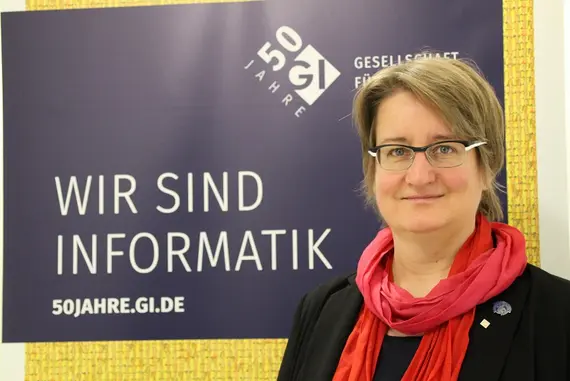
Prof. Dr. Daniela Nicklas is a full professor at the University of Bamberg, Germany, holding the Chair of Mobile Systems within the Faculty of Business Information Systems and Applied Computer Science since 2014. She serves as the degree program representative for B.Sc. Informatik, speaker of the Bamberg Graduate School for Smart City Science (founded November 2024), and ambassador for the Gesellschaft für Informatik. She is also an elected member of the Review Board for Computer Science at the German Research Foundation (DFG). Her research focuses on bridging the gap between physical and digital worlds through data management for sensor-based systems and context-aware applications. Her work emphasizes data stream management technologies applied to smart cities, precision farming, pervasive computing, and situational awareness. She has developed innovative approaches for quality-aware data stream processing, sensor data management, and context modeling. Her research demonstrates how mobile computing systems can transform urban environments and agricultural practices through real-world applications. Her recent publications reveal strong trends in privacy-preserving techniques for mobility data, smart city data quality challenges, anomaly detection in stream data, and IoT device management. These works reflect her ongoing commitment to addressing practical challenges in sensor-based applications while maintaining rigorous academic standards. IBM Exploratory Stream Analytics Innovation Award for 'Data Stream Technology for Future Energy Grid Control' (2009) Prof. Nicklas actively participates in academic service, having chaired numerous conferences including BTW 2025 as General Co-Chair and PerCom 2020 as Program Chair. She serves on the editorial boards of Datenbank-Spektrum and previously for International Journal of Pervasive Computing and Communications. She also serves as a reviewer for multiple funding organizations including DFG, DAAD, and Alexander von Humboldt Foundation. She manages the Smart City Research Lab Bamberg with Professors Marc Redepenning and Astrid Schütz, which serves as a test bed for smart city applications in real-world environments. Her leadership extends to the Living Lab Bamberg infrastructure, which provides a practical environment for exploring smart city research challenges in the wild. She frequently collaborates with international institutions, as evidenced by her invited talks at Osaka University, Nara Institute of Science and Technology, and other international venues in 2024.
Bettina Finzel is a doctoral candidate and Teaching Assistant at the Cognitive Systems Group, Faculty of Information Systems and Applied Computer Sciences, Otto-Friedrich-Universität Bamberg. She specializes in Explainable Artificial Intelligence (XAI) with a focus on human-centered approaches for medical and educational applications.