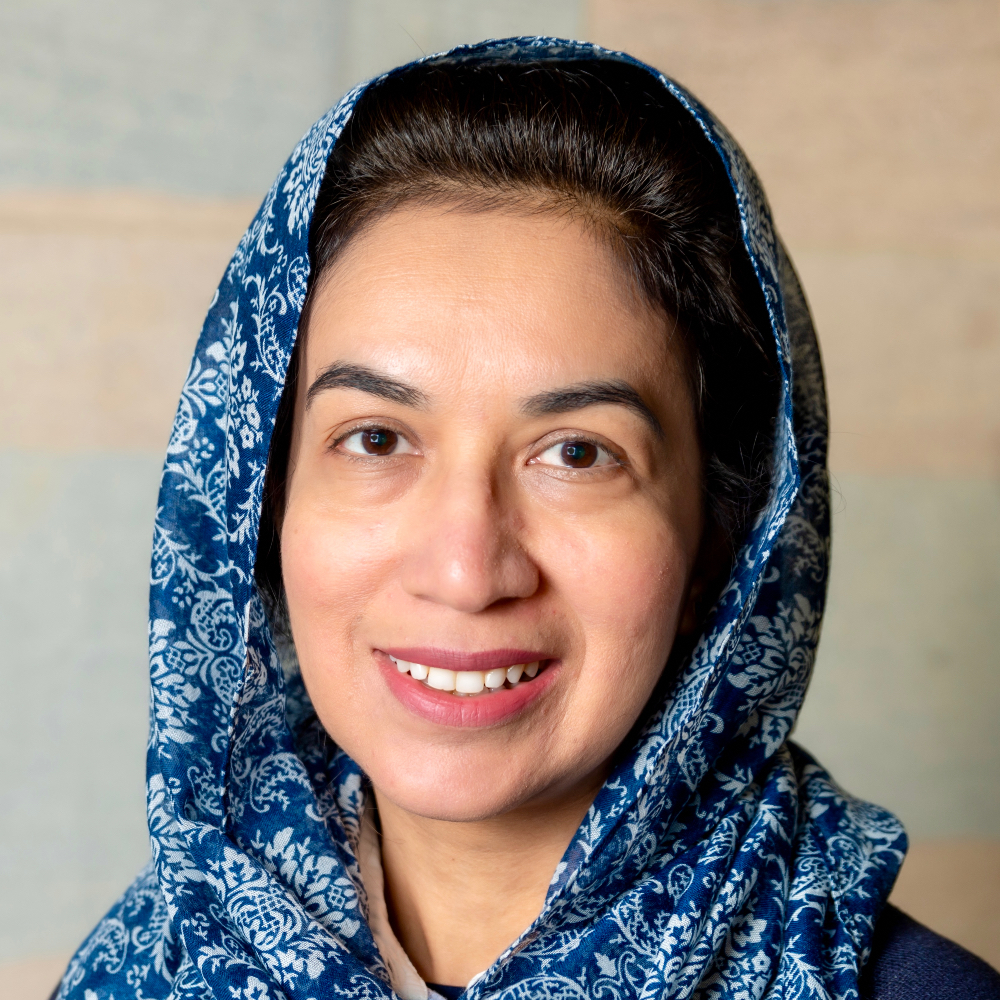
Adrienne Chambon is an Adjunct Professor in the Faculty of Social Work at McMaster University . Her scholarly activity, as documented in McMaster Experts , emphasizes critical and transnational perspectives in social work. Research Interests : Transnational social policy and knowledge circulation Critical reflexivity and methodological innovation Ethnography and narrative analysis Foucault’s theories in social work practice Historical analysis of social work and welfare Otherness, diversity, and inclusion Youth violence prevention and healing Publications highlight trends in transnationalism, critical theory, and qualitative methodologies, with a focus on marginalized communities, refugee support, and interdisciplinary approaches. Her work bridges historical social work practices with contemporary ethical and methodological challenges.
Marilena VECCO is a Full Professor and Arts and Cultural Management Research Axis Coordinator at Burgundy School of Business (BSB), specializing in Humanities and Arts Management within the School of Media, Culture & Communication. With an extensive publication record spanning cultural economics, heritage management, and arts entrepreneurship, she has established herself as a leading scholar in European cultural management. Her research interests focus on cultural entrepreneurship, museum studies, heritage management, cultural economics, gender studies in creative sectors, and GLAM (Galleries, Libraries, Archives, Museums) institutions. She has developed expertise in analyzing gender gaps in art markets, cultural policy impacts, and collaborative practices in cultural institutions. Her work often bridges theoretical frameworks with practical applications in cultural management. Professor VECCO has been actively involved in significant European research projects, most notably the Horizon Europe GLAMMONS Project, which examines commons-oriented approaches to cultural institutions. Her recent publications demonstrate a strong focus on co-curation practices, dark heritage research, and the relationship between cultural heritage and well-being. She frequently presents at international conferences including AIMAC, IECER, and EWACE, and has chaired tracks on cultural entrepreneurship. She has served as a research contributor for European Commission initiatives, including work on gender gaps in cultural and creative sectors. Her international collaborations extend to institutions in China, where she has delivered lectures to PhD students at Peking University on European arts management approaches. Professor VECCO's academic work demonstrates a commitment to advancing understanding of cultural management through rigorous empirical research while maintaining strong connections to practical applications in the field. Her leadership in coordinating research axes and contributing to major European projects positions her at the forefront of contemporary cultural management scholarship.
Farshad Firouzi serves as an Adjunct Assistant Professor in the Department of Electrical and Computer Engineering at Duke University, where he teaches EGR 393: Research Projects in Engineering. His academic work bridges hardware and software domains with a strong emphasis on practical applications in critical systems. His research spans Edge Computing, Internet of Things (IoT), Artificial Intelligence, Machine Learning, Healthcare Systems, Chip Design, and Reliability Engineering. This interdisciplinary focus manifests in projects ranging from Parkinson's disease monitoring using edge devices to LLM-enhanced chip design and security-hardened neural networks. His work consistently addresses real-world challenges in system dependability, particularly in healthcare and biomedical contexts where failure is not an option. Analysis of his 2024-2025 publications reveals three dominant research thrusts: (1) LLM applications in hardware design (ChipMnd, Spiced), (2) Edge-based healthcare monitoring systems (freezing of gait recognition, blood glucose prediction), and (3) Security and reliability in AI/ML systems (gradient inversion defense, silent data corruption mitigation). His work demonstrates a clear trajectory toward integrating cutting-edge AI techniques with hardware-aware solutions for mission-critical applications. No scientific awards were mentioned in the source materials. The absence of student listings or grant information suggests his current role may be primarily research-focused without formal advising responsibilities. Similarly, no dedicated labs or research teams were referenced in the available documentation.
Paul Leonardi is Department Chair and Duca Family Professor of Technology Management at the University of California, Santa Barbara, with additional appointment in the Department of Communication. He holds a PhD from Stanford University and has established himself as a leading expert in digital transformation and organizational change. University of California, Santa Barbara PhD, Stanford University Leonardi's research focuses on how organizations can design networks and implement technologies to effectively create and share knowledge. He examines how data-intensive technologies like simulation and social media enable new information access and sharing methods, how these technologies change work routines and communication partners, and how these shifts alter organizational expertise. His work bridges management, communication, and information systems disciplines with particular emphasis on digital transformation. His publication record shows a clear trend toward examining the intersection of artificial intelligence, organizational communication, and workplace transformation. Recent work explores generative AI, digital twins, remote work dynamics, and the organizational implications of new technologies. His research consistently addresses how technological changes reshape organizational structures, communication patterns, and knowledge management practices. Fellow of the International Communication Association (ICA) Fellow of the Academy of Management Ascendant Scholar Award, Western Academy of Management Young Scholar Award, ICA Early CAREER Award, National Science Foundation Industry Studies Fellow, Alfred P. Sloan Foundation Multiple best paper awards from major academic associations Leonardi has consulted extensively with major corporations including Google, Microsoft, General Motors, Cisco, and YouTube on digital transformation initiatives. He has authored more than 70 scholarly articles across management, communication, and information systems journals, along with four influential books including the award-winning 'Car Crashes Without Cars' and 'Technology Choices,' and his recent work 'The Digital Mindset: What it Really Takes to Thrive in the Age of Data, Algorithms, and AI' co-authored with Tsedal Neeley. He has received two major teaching awards for graduate student mentorship and education, demonstrating his commitment to developing the next generation of scholars and practitioners in his field.
Dr Yang Liu is a Lecturer in Strategy and Innovation at Southampton Business School, University of Southampton. He holds a PhD from the University of Cambridge and previously served as Lecturer in Management at Queen’s University Belfast. Research Interests: Digital platforms and ecosystems Innovation processes in multinational corporations Open innovation and knowledge transfer Global strategy and organizational change Boundary spanning in diversified firms Publication Trends: His research spans digital innovation (generative AI, platform ecosystems), organizational dynamics (boundary work, structural recombination), and global R&D processes (cross-border knowledge transfer, purchasing power gaps). Methodologically focuses on qualitative studies in international business contexts. Teaching: Currently teaches modules on strategy innovation, high-growth business management, and dissertation supervision. Supervision: Actively supervises PhD students in business studies and management.
Joe Bradley is a Teaching Assistant Professor at the Carle Illinois College of Medicine within the University of Illinois at Urbana-Champaign system. He also holds a Clinical Assistant Professor position at the Technology Entrepreneur Center and serves as Director of Engineering Education & Entrepreneurship . His academic roles span multiple departments and schools including the Grainger College of Engineering and Gies College of Business . PhD in Systems Engineering from University of Illinois, Urbana MBA from Gies College of Business, University of Illinois, Urbana MS in Mechanical Engineering (minor Electrical Engineering) from Iowa State University, Ames BS in Aerospace Engineering from University of Michigan, Ann Arbor Bradley's research focuses on engineering education and entrepreneurship with specific expertise in innovation management , technology transfer , and socio-technical systems . He has contributed to curricular innovations in biomedical engineering education through publications like "Enhancing Biomedical Engineering Education Through Curricular Innovation: Developing Industry-Ready Engineers" (2025). His work examines complex engineered systems design and interdisciplinary team dynamics in capstone projects. Key awards include being named Entrepreneurial Mindset Fellow by the Academy for Excellence in Engineering Education (AE3) in 2022. Bradley has taught numerous courses across engineering domains including BADM 551 - Managing Intellectual Property and BIOE 570 - Seminar Series . He maintains active collaborations with institutions like Vanderbilt University 's EDEFI Laboratory and participates in professional societies including the BME Council of Chairs and American Society for Engineering Education (ASEE).
Katherine Grillo is an Associate Professor in the Department of Anthropology at the University of Florida, holding the Colonel Allen R. and Margaret G. Crow Term Professorship (2024-2027). She serves as General Editor for the Journal of African Archaeology and is affiliated with the Center for African Studies. Ph.D. (2012), Washington University in St. Louis M.A. (2006), Washington University in St. Louis B.A. (2002), University of Virginia Her research focuses on the materiality of cattle-based pastoralism in eastern Africa, examining ceramic technologies and mobile pastoralist repertoires through time. Current projects include co-directing NSF-funded studies at Turkana Basin 'pillar sites' and Luxmanda, Tanzania, the largest Pastoral Neolithic settlement site. Her interdisciplinary work on pastoralist foodways revealed evidence for the earliest dairy processing in eastern Africa and its implications for lactase persistence origins. Recent publications demonstrate expertise in climate change resilience, material culture analysis, and geophysical survey techniques. Grillo also leads the African Archaeology Lab at UF, engaging in public archaeology initiatives like Wikipedia outreach. Awards include the Crow Term Professorship recognizing her innovative contributions to African archaeology and anthropology. Colonel Allen R. and Margaret G. Crow Term Professor (2024-2027)
Pietro Evangelista serves as a Research Manager in Logistics and Supply Chain Management at the Institute for Mediterranean Studies (ISMed) of the National Research Council (CNR) in Naples, Italy. He holds adjunct professor positions in 'Green Logistics' at Lappeenranta University of Technology (Finland) and 'Green Strategies and Logistics' at Suor Orsola Benincasa University of Naples. His research focuses on sustainable logistics systems, digital transformation in supply chains, and environmental sustainability in transportation. Key areas include the integration of digital technologies for greener supply chains, carbon footprint reduction strategies, knowledge management in logistics networks, and the development of sustainable business models for logistics service providers. His work bridges theoretical frameworks with practical applications in European logistics systems. Evangelista's publication portfolio demonstrates consistent contributions to sustainability in logistics, with recent work examining pandemic impacts on supply chain resilience, digital transformation opportunities, and environmental alignment between logistics providers and clients. His research shows an evolving trajectory from traditional logistics management toward integrated sustainable and digital supply chain solutions. Best PhD Logistics Dissertation 2009, Chartered Institute of Logistics and Transport UK As Scientific Director of the Sustainable Logistics Laboratory at CNR-ISMed, Evangelista leads research initiatives that combine academic rigor with practical industry applications. The laboratory focuses on three pillars: research into sustainable logistics practices in Italy, business services for decarbonization strategies, and professional training programs. His work with the European Logistics Association and as faculty member for the International Federation of Purchasing and Supply Management demonstrates his commitment to bridging academic research with industry implementation. Evangelista actively collaborates with international institutions including Lappeenranta University of Technology (Finland), Wroclaw University of Economics (Poland), Linköping University (Sweden), and Heriot-Watt University (UK), establishing himself as a key European researcher in sustainable logistics innovation.
Prof. dr. Roland Speklé is a Professor of Management Accounting & Control at Nyenrode Business University , where he contributes to the Faculty Expertisecenter for Accounting, Auditing & Control. Prior to this, he held academic positions at Erasmus University Rotterdam and worked as an auditor and consultant at a major public accounting firm. Education: MSc and PhD (Cum Laude) from Erasmus University Research Focus: Economic aspects of organizational control, design of management control structures, and performance measurement systems His recent work investigates how trust-centric management controls (e.g., clan control, monitoring) enhance knowledge sharing and team performance, particularly in business unit management teams. Key studies include the impact of budgeting on employee stress during crises (e.g., 2022 paper on the Covid-19 pandemic ) and the role of complementary control mechanisms in public sector efficiency. Methodologically, Speklé has advanced survey-based research in management accounting, emphasizing construct validity and empirical rigor. His collaborations with scholars like Sally Widener and Frank Verbeeten span both private and public sector applications, including digital transformation, emergency logistics, and sustainable business practices.
Surya Pathak is an Associate Professor of Operations Management at the University of Washington, Bothell School of Business , with a PhD in Interdisciplinary Management of Technology from Vanderbilt University (2005). His research focuses on supply chain management through the lens of complex adaptive systems and network theory. PhD: Interdisciplinary Management of Technology, Vanderbilt University (2005) MS: Electrical Engineering, Vanderbilt University (2001) BE: Industrial Electronics Engineering, Pune University (1999) His research explores: Supply network dynamics under risk and uncertainty Policy design frameworks for large-scale networks Sustainability implications in networked supply chains Diffusion of lean practices via complexity theory Interfunctional interfaces (marketing-finance-operations) Agent-based simulations and reliability-based design optimization Recent work includes NSF-funded research on technical networks and environmental performance. Publications span Decision Sciences , Journal of Supply Chain Management , and IEEE Transactions on Engineering Management . Awards include multiple MBA Faculty of the Year recognitions and NSF grant contributions. 2017: Nominated for Distinguished Teaching Award with Technology 2016: Inducted as Research Collaborator at IIM Bengaluru 2010: $311,205 NSF grant He teaches courses like Introduction to Operations Management and Quantitative Business Methods , and serves as Area Coordinator for Operations Management and Information Systems.
Professor Philip M. Haygarth is a Professor of Soil and Water Science at Lancaster University's Lancaster Environment Centre (LEC), where he has been based since 2008 after beginning his research career at BBSRC's North Wyke in the early 1990s. He serves as Director of the Lancaster University Graduate School for the Environment since September 2022 and previously directed the National NERC/BBSRC Centre for Doctoral Training in Soil Science from 2015-2024. Haygarth is a biogeochemist specializing in nutrient cycling, particularly phosphorus dynamics in soil-water systems. His research spans from fundamental mechanisms in soils to catchment, national, and global scales. He developed the influential 'Transfer Continuum' model and related 'Cost Curve' and 'Diffuse Pollution Inventory' models that underpin nutrient management frameworks used by UK Government and international bodies. His current research focuses on extreme event impacts on soil-water nutrient biogeochemistry through the UKRI NERC project 'Accelerating Nutrient Cycles at the Riparian Land:Water Interface', examining nitrogen, phosphorus, and carbon release in river systems across England, Scotland, Sweden, and Germany. His publication record includes approximately 260 papers, with five appearing in Nature journals since 2021, plus authored books. Recent work (2025) addresses sustainable phosphorus networks in Africa, legacy phosphorus definitions, and soil phosphorus stocks' implications for global reserves and water quality. His research demonstrates consistent focus on practical applications for environmental management and policy. Haygarth has secured £14.4m in research funding at Lancaster, with £9.8m as lead PI, including leadership of the National Defra Demonstration Test Catchment team in the River Eden (2010-2020). He personally supervised 26 successful PhD students and supported an additional 40 through his Director role with STARS. He provides strategic guidance internationally to planning bodies in the UK, Ireland, and New Zealand. His professional activities include appointments to the Northern Ireland Government's Higher Level Science Advisory Group, the Environmental Markets Board Scientific Advisory Group, and chairing the NERC Global Partnerships Seedcorn Fund panel. He delivers keynotes at major international conferences including ASLO and ISSPA.
Bo Hui is an Assistant Professor of Computer Science at The University of Tulsa's College of Engineering & Computer Science. He received his Ph.D. in Computer Science and Software Engineering from Auburn University in 2023 and earned his B.S. in Computer Science from Xi'an Jiaotong University in 2013. Prior to his Ph.D., he worked as a senior software engineer in the industry. Education: Ph.D., Computer Science and Technology, Auburn University, 2023 B.S., Computer Science and Technology, Xi'an Jiaotong University, 2013 Dr. Hui's research focuses on data mining and machine learning, particularly in designing machine learning methods for complex real-world data while addressing social concerns such as privacy in AI. His work spans multiple application domains including traffic prediction, social recommendation systems, and biological data analysis. He has made significant contributions to graph neural networks, knowledge graph unlearning, and federated learning systems. Dr. Hui's publication record demonstrates a strong focus on machine unlearning (the 'right to be forgotten' in AI models), graph neural networks, and traffic prediction systems. His work bridges theoretical machine learning with practical applications, with a growing emphasis on privacy-preserving AI techniques. He frequently publishes in top-tier venues including ICCV, ICLR, KDD, and AAAI. Awards and Honors: NSF award #2348177 for machine unlearning research AAAI student scholarship award Dr. Hui currently advises two Ph.D. students (Ruimeng Ye and Yang Xiao) who began their studies in Fall 2024. His research is supported by an NSF grant (#2348177) focused on machine unlearning. He has served as a reviewer for major conferences including ICLR, AAAI, KDD, CVPR, ACL, and EMNLP. His teaching includes Data Mining (2024 Spring) and Interaction Design (2023 Fall). His research group appears to focus on data mining and machine learning with applications to real-world problems requiring privacy-aware solutions.
Professor Maura Sheehan is a faculty member at the Business School of Edinburgh Napier University, with significant contributions to Human Resource Development , Talent Management , and Organizational Effectiveness . Her work spans sectors including Hospitality and Tourism , Agricultural Economics , and Sustainability . Research Themes: Training and Organizational Performance Transformational Leadership Sustainable Innovation Agricultural Knowledge Transfer Student Supervision: Co-supervisor for PhD projects on topics like global talent management, sustainability risks, and employee turnover in Guyana Second supervisor for doctoral studies in Business School since 2015 Key Publications: 2021: Meta-analysis of training-organizational performance relationships 2020: Integrated systems model for L&D effectiveness 2018: Talent management in hospitality 2017: Sustainability entrepreneur legitimation Grants: 2025–2027: Advancing Innovation and Sustainability Research funded by British Academy (£29,431) Professional Involvement: 2018: Participation in Ethical Finance & Community Development Forum 2016: Founding member of International Centre for Management and Governance Research
Mumin Abubakre is a Senior Lecturer (Associate Professor) in the Digital Economy Programme and Programme Lead for the Loughborough Full-Time MBA at Loughborough Business School. He holds a BEng from Bauchi, Nigeria, an MSc from the University of Aberdeen, and a PhD in Management Information Systems from Loughborough University. Previously, he was a Senior Lecturer in Information Systems at Nottingham Trent University. His research focuses on digital economy dynamics, digital innovation impacts, ICT for Development (ICT4D), and organizational IT implementation strategies. He actively contributes to peer-reviewed journals like the Information Systems Journal and the European Journal of Information Systems. Abubakre’s work bridges theoretical and practical aspects of technology adoption, particularly in contexts such as South Africa and Tanzania. His research explores how cultural values (e.g., Ubuntu philosophy), social media practices, and organizational controls shape digital entrepreneurship and innovation outcomes. He emphasizes decolonizing digital social innovations and addressing global development challenges through technology. His articles analyze topics ranging from coopetitive affordances in digital entrepreneurship to the role of standardization in process improvement initiatives. Before academia, Abubakre worked in IT roles within Nigerian and UK-based banking and oil/gas sectors. He is a member of the Association of Information Systems and the British Academy of Management. He actively supervises PhD students in digital innovation/entrepreneurship, ICT4D, and organizational IT implementation. No specific grants are highlighted, but his research consistently engages with real-world organizational and societal challenges through a digital lens.
Dr. Aneela Malik is a Lecturer in the Department of Management and Marketing at Essex Business School , University of Essex. She teaches undergraduate and graduate courses in consumer behavior, brand management, and marketing strategy. Research Interests Brand Management Consumer Behavior International/Global Branding Advertising and Marketing Communication Ethical and Green Marketing Current Teaching Introduction to Consumer Behaviour (BE519) Consumer Behaviour (BE555) Independent Study Project: Management/Marketing (BE938) Supervision Yutong Feng (PhD in Management) Amal Hamoud M Aljohani (PhD in Marketing) Her research focuses on international branding and digital marketing, with publications in journals like Psychology & Marketing , Journal of Retailing and Consumer Services , and Electronic Markets . Recent work examines social commerce, omnichannel behavior, and global brand perception. Grants 2025 Innovate to Elevate Project with Emotional First Aid Ltd 2024 International Marketing Strategy Project for Pager Power Contact: a.malik@essex.ac.uk | Office: EBS.3.34, Colchester Campus