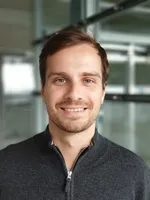
Assoc Prof Kaile Su is an Associate Professor at the School of Information and Communication Technology, Griffith University, with expertise in artificial intelligence, multi-agent systems, and deep learning. They hold an ORCID identifier (0000-0001-6741-9699) and have been affiliated with Griffith University since 2004. PhD in Computer Science from Nanjing University (1995) Postdoctoral work at Changsha Institute of Technology Their research spans combinatorial optimization, temporal logic verification, speech enhancement, and medical imaging applications. Recent work focuses on edge AI, federated learning, and neural network regularization techniques. Key funded projects include ARC Discovery Grants (DP150101618, DP120102489) and an ARC Future Fellowship (FT0991785). Awards include the NSFC Award for Distinguished Young Scholar (2007). Supervised 9 doctoral students at Griffith University Contributions to multi-agent coordination, CT reconstruction, and dialogue systems Active in software verification and sparse graph optimization
Yi Wang is a Professor of Embedded Systems at the Department of Information Technology, Uppsala University , Sweden. He leads research in real-time and embedded systems with a focus on modeling, analysis, and implementation of safety-critical applications. He is affiliated with the Embedded Systems Group and serves as a Principal Investigator (PI) in major research centers such as UPMARC and projects like CUSTOMER (ERC Advanced Grant), CoDeR-MP, and CERTAINTY. Research Interests: Yi Wang’s work centers on Embedded Systems Design, Real-Time Scheduling, Multicore Programming, and Model-Checking of Real-Time Systems . His research addresses fundamental challenges in timing predictability, schedulability analysis, and the verification of complex real-time systems. He has made significant contributions to the digraph real-time task model, mixed-criticality systems, and timing analysis of ROS 2 systems. His work bridges theory and practice, often resulting in deployable tools and formal methods for industrial applications. Recent Research Trends: His most recent publications (2023–2025) focus on optimizing real-time performance in ROS 2, managing parallel task graphs with resource contention, improving GPU-based inference on embedded platforms, and enhancing timing predictability in multithreaded executors. These works reflect a strong trend toward applying formal real-time theory to modern robotics, AI integration, and multicore embedded architectures. Scientific Tools and Leadership: He is a key contributor to foundational tools in real-time systems: UPPAAL – Model checking for timed automata TIMES – Schedulability analysis and code generation CATS – Compositional analysis of timed systems TIMES-Pro – Based on the digraph real-time task model Advising and Research Funding: Yi Wang has supervised numerous PhD students and postdocs. He has led or participated in multiple large-scale funded projects supported by the Swedish Research Council (VR), the Swedish Foundation for Strategic Research (SSF), and the European Commission (FP7, ERC). These include UPMARC (10-year Linnaeus center), CoDeR-MP (with ABB and SAAB), SAVE++ (with VOLVO), and CREDO. Laboratories and Research Groups: He is a core member of the Embedded Systems Group at Uppsala University and leads research within the UPMARC center, which focuses on programming models and analysis techniques for multicore architectures. His lab develops formal methods and tools to ensure correctness and timing guarantees in embedded and cyber-physical systems.
Professor Alice Stuhlmacher serves in the Department of Psychology within DePaul University's College of Science and Health, specializing in Industrial-Organizational Psychology. Her research bridges theoretical frameworks with practical organizational applications through extensive meta-analytic work and experimental studies. Her academic credentials include: BA in Psychology from Bradley University MS in Industrial & Organizational Psychology from Purdue University PhD in Industrial & Organizational Psychology from Purdue University Stuhlmacher's research program centers on negotiation dynamics and workplace equity, with pioneering investigations into gender differences in negotiation outcomes. Her current work expands into organizational sustainability, examining how Environment, Equity, and Economics interconnect to create functional workplaces. Using controlled experiments and field studies, she investigates organizational resource access, leadership structures, and climate change mitigation strategies. Recent projects include validating environmentally-focused psychological scales and compiling comprehensive measurement tools for sustainability researchers. Her publication record demonstrates consistent scholarly impact over two decades, with meta-analyses establishing foundational knowledge in gender negotiation disparities and virtual communication effects. Work since 2010 increasingly integrates sustainability frameworks with traditional organizational psychology. Scientific Awards: No scientific awards documented in source materials As faculty in DePaul's Industrial-Organizational Psychology PhD program, Stuhlmacher mentors graduate researchers through the Work Interaction Group. While specific grant details aren't disclosed, her team actively recruits new members for sustainability-focused projects. She maintains leadership in methodological innovation through scale validation and measurement compilation initiatives. Research Team: She directs the Work Interaction Group which investigates organizational environmental engagement through experimental and meta-analytic approaches. The team maintains an extensive measurement database for organizational sustainability research and welcomes new members through DePaul's research channels.
Henrik Lund is a Professor at Aalborg University in the Department of Sustainability and Planning under the Technical Faculty of IT and Design . He is an ISI Highly Cited researcher and Editor-in-Chief of Elsevier's journal Energy , which receives over 8000 annual submissions.
Jan Winkelmann serves as Junior Professor (Assistant Professor) in the Department of Physics at University of Education Schwäbisch Gmünd, concurrently leading the Center for Science Education (Zentrum für naturwissenschaftliche Bildung). His academic work bridges physics foundations with innovative pedagogical approaches, focusing on digital transformation in science classrooms. Winkelmann's research centers on critical challenges in science education, particularly examining idealizations in scientific models and their pedagogical implications. His work investigates difficulty-generating features in physics instruction from student perspectives, develops inclusive experimentation frameworks, and pioneers Augmented Reality applications for physics phenomena visualization. Recent efforts explore generative AI's emerging role in science teaching methodologies, emphasizing practical implementation in teacher training programs. His publication trajectory since 2018 reveals consistent focus on technology-enhanced physics education, with increasing emphasis on inclusive practices and digital tools. Collaborative patterns show strong partnerships with Freese, Ullrich, Erb, and Römer across multiple projects, particularly in AR implementation and teacher competency development. The 2023-2024 output demonstrates expansion into sustainability education and computational thinking integration. Scientific Awards: No specific awards or fellowships mentioned in source materials Winkelmann actively supervises doctoral candidates including Daniel Römer (focusing on sustainability projects) and Sina Belschner, while collaborating with academic staff like Dr. Corinna Mönch. His research projects, though grant details aren't specified, involve multi-institutional teams addressing practical challenges in science teacher preparation and classroom technology integration. The Center for Science Education under his leadership functions as an innovation hub, developing resources for inclusive experimentation and digital tool implementation. Current initiatives include Zoom-based office hours through September 2025 and ongoing development of AR/VR applications for physics instruction, with strong emphasis on practical classroom applicability.
Gordon S. Novak Jr. is a Professor in the Department of Computer Sciences at the University of Texas at Austin, within the College of Natural Sciences. His academic career spans over five decades with significant contributions to artificial intelligence, particularly in automatic programming, physics problem solving, and software reuse methodologies. Institution: University of Texas at Austin School: College of Natural Sciences Department: Department of Computer Sciences Research Focus: Artificial Intelligence, Automatic Programming, Physics Problem Solving Novak's research interests center around artificial intelligence with particular emphasis on automatic programming systems and physics problem solving. He pioneered the development of the GLISP language and compiler, which enables sophisticated data abstraction and facilitates software reuse through innovative techniques like view-based programming. His work on diagrammatic reasoning has significantly advanced how computers can understand and process visual information alongside text. His research has practical applications in scientific programming, where his VIP (View Interactive Programming) system allows users to specify programs through graphical connections of physical models. Analysis of Novak's publication history reveals a consistent focus on making programming more intuitive and efficient. His early work established foundations in natural language understanding of physics problems, while later research shifted toward developing practical systems for program generation and software reuse. The progression shows increasing sophistication in handling data abstraction, with a strong thread connecting his work on physics problem solving to broader applications in scientific computing. His most recent publications continue this trajectory, applying AI techniques to practical engineering problems. 2003 - Nominated for Academy of Distinguished Teachers by College of Natural Sciences 2003 - Nominated for Chancellor's Council Outstanding Teaching Award 2003 - Nominated for William David Blunk Memorial Professorship 2002 - Finalist for Friars Centennial Teaching Fellowship 1998 - Teaching Excellence Award, College of Natural Sciences 1969 - Hamilton Award for highest-ranked graduating senior in Engineering Novak has made substantial contributions to software engineering education through his research and teaching. His development of the GLISP language and related tools represents a significant contribution to programming methodology. While specific grant information isn't detailed in the provided text, his research has been supported by notable organizations including the U.S. Army Research Office. His work with colleagues like William Bulko, Hyung Joon Kook, and Fredrick Hill demonstrates effective collaboration across research projects. Novak's work continues to influence both academic research and practical software development approaches, particularly in scientific computing domains where his techniques for automatic unit conversion and equation manipulation provide substantial benefits.
Zhong Shao is the Thomas L. Kempner Professor of Computer Science at Yale University. He leads the FLINT research group and is a prominent researcher in programming languages, formal methods, operating systems, and computer security. His work focuses on building certified system software through mechanized proofs to create dependable software systems that can manage increasing complexity in modern computing. Professor Shao's research spans multiple domains including programming language design, OS kernel development, formal semantics, compiler construction, and proof engineering. His work addresses challenging problems in concurrency and distributed computing, with a particular emphasis on creating hacker-resistant systems. He has collaborated with researchers at Princeton, University of Pennsylvania, and MIT on the NSF Expedition project 'The Science of Deep Specification.' Shao's recent publications demonstrate a strong focus on compositional verification techniques for distributed systems and certified compilation. His work on DeepSEA language, CertiKOS operating system, and various verification frameworks shows a consistent trajectory toward building fully verified system software from the ground up. Key themes include linearizability, Byzantine fault tolerance, compositional reasoning, and refinement-based verification approaches across concurrent and distributed systems. As an educator, Professor Shao teaches courses including CS430 Formal Semantics (Spring 2025), CS421 Compilers and Interpreters, CS422 Operating Systems, and CS428 Language-Based Security. He participates in systems seminars on APLAR and SPAM, contributing to the academic community through both research and teaching. Professor Shao leads the FLINT research group at Yale, which focuses on building novel certified system software. The group's work has resulted in breakthroughs such as the CertiKOS operating system, which represents a significant advancement in hacker-resistant concurrent operating systems. The group collaborates with the DeepSpec project, an NSF Expedition focused on deep specifications for trustworthy systems, and has developed frameworks like LiDO, Adore, and AdoB for verifying distributed systems with strong guarantees.
Pascual Julián-Iranzo is an Associate Professor in the Information Technologies and Systems Department at the Higher School of Computer Science, University of Castilla-La Mancha (UCLM), where he has served since April 2003. He is a founding member and current co-director of the DEC-tau research group focused on Declarative Programming and Automatic Program Transformation. His academic career includes over 27 years of university teaching experience across various positions, with significant contributions to curriculum development including the Degree Curriculum in Computer Engineering (2008/09 and 2009/10). Education Background: Doctor in Computer Science (1994-2000) from Universitat Politècnica de València, Department of Computer Systems and Computation His research centers on declarative programming languages with emphasis on fuzzy logic programming, functional-logic paradigm integration, and automatic program transformation. He pioneered work in proximity-based reasoning systems like Bousi-Prolog and FASILL, developing novel approaches for similarity-based unification, thresholded tabulation, and fuzzy deductive databases. His publications demonstrate consistent innovation in fuzzy logic semantics, particularly in handling truth degrees and semantic similarity measures for knowledge representation. Analysis of his 15 most recent publications reveals a strong trajectory in formalizing fuzzy logic programming frameworks, with increasing focus on practical implementations (2018-2023) after establishing theoretical foundations (2015-2017). Key thematic clusters include proximity-based unification algorithms (2018-2021), semantic frameworks for truth degree management (2016-2017), and real-world applications in natural language processing (2021) and security systems (2017). Research Recognition: Positive evaluation by CENAI for three consecutive research periods: [1997-2002], [2003-2008], and [2009-2014] Consistent publication record with 24 scientific journal articles (16 JCR-indexed) As an academic leader, Julián-Iranzo has supervised 2 doctoral theses and chaired the PROLE 2021 Conference Program Committee. His grant portfolio includes significant European funding, notably the MERINET project (2016-2019) supported by ERDF and MINECO. He has served on 12 conference program committees and reviewed for top journals including Journal of Theory and Practice of Logic Programming. His DEC-tau research group maintains active international collaborations, evidenced by coordination of the UCLM node in the ALFA Lernet Project (2005-2009) and partnership with Argentina's National University of San Luis (2009-2013).
Ning Luo is a tenure-track Assistant Professor in the Department of Electrical and Computer Engineering at the University of Illinois Urbana-Champaign. She holds a Ph.D. in Computer Science from Yale University and completed a postdoctoral fellowship at Northwestern University. Education: BS in Mathematics, Shandong University (2017); Ph.D. in Computer Science, Yale University (2022) Her research focuses on combining formal methods , automated reasoning , programming languages , and cryptography to achieve security , verifiability , and confidentiality in complex systems. Recent works include zero-knowledge proofs for SMT theorems, privacy-preserving interdomain verification, and oblivious automata for secure regular expression matching. Her publications span top venues like USENIX Security , CCS , ESORICS , and INFOCOM , with interests in zero-knowledge protocols , formal verification , secure multi-party computation , and privacy-enhancing technologies . She has received multiple awards including the Yale Distinguished Dissertation Award (2023) and CCS Distinguished Paper Award (2022). Ph.D. advisees: Gefei Tan (UIUC), Lenny Liu (UIUC) Former mentees: Haotian Chu (NU), John Kolesar (Yale), Daniel Luick (Yale) She teaches courses on Computer Security , Cryptography , and Deployable Privacy Technologies , emphasizing hands-on implementation of cryptographic frameworks like MP-SPDZ and ObliVM. Her lab (CSL 457) actively seeks students with strong research integrity.
Maciej Dymkowski is a Professor at SWPS University's Faculty of Psychology in Wrocław , where he serves as Head of the Department of Metatheoretical Issues in Psychology . His research bridges psychology and history, focusing on the application of psychological frameworks to historical narratives and the cognitive distortions inherent in historical understanding. Fields of Interest: Historical Psychology, Social Psychology, Meta-theoretical Issues in Social Psychology, Comparative History, Cross-cultural Studies, Self-presentation, Self-knowledge, Historical Cognition Dymkowski has authored over 80 publications, including books like Knowing Yourself (1993) and Introduction to Historical Psychology (2003), which explore self-knowledge, historical illusions, and interdisciplinary methodologies. His recent work Sketches of a Psychologist on History (2016) compiles reflections on historiosophical and political dynamics. He also teaches courses on the universality of social psychology theories at SWPS University.
Dr. Phan Văn Kiền is a senior researcher and Director at the Institute of Journalism and Communication (Vietnam National University). With a PhD in Journalism (2021) and over 15 years of academic experience, he specializes in media sociology , digital communication , and policy journalism . His work bridges theoretical frameworks with practical applications in public sphere dynamics and social criticism. Bachelor's, Master's, and PhD in Journalism from Vietnam National University's University of Social Sciences and Humanities His research focuses on media ethics , visual communication , and policy communication , with particular attention to digital platforms' impact on public discourse. His recent publications analyze AI's challenges to media, social network-driven criticism, and crisis communication strategies. While no formal scientific awards are listed, his leadership in national media projects demonstrates significant institutional trust. Dr. Kiền actively contributes to Vietnamese academic life through his role as Director and participation in major research topics, including National Geography Series compilation (2019-2022) and State-level projects on media culture (2015-2016). He also serves as scientific advisor in university-level initiatives and ministry-commissioned evaluations.
Marit Mjøs serves as Professor of Special Education Pedagogy at NLA University College Bergen, where she actively researches inclusive educational practices and systemic collaboration between schools and psychological counseling services (PPT). Her work bridges academic theory with practical implementation in Norwegian educational contexts. Her educational background spans foundational teacher training to advanced academic specialization: PhD in Special Education, University of Oslo (2007) Middle Management Training, Statskonsult (2000) Master's in Pedagogy, NLA University College (1993) Special Education (2nd division), Bergen University College (1982) Special Education (1st division), Trondheim Municipal Teacher Training College (1977) Teacher Training, Trondheim Municipal Teacher Training College (1973) Mjøs's research centers on special education's transformative potential within inclusive systems. She examines the dynamic relationship between specialized and general education, advocating for innovative models where special education expertise elevates whole-school practices. Her work critically analyzes legislative frameworks for individually adapted education while documenting historical evolution of special education interventions. Analysis of her 15 most recent publications reveals consistent focus on collaborative innovation across educational levels. She documents how municipal governance structures enable or constrain inclusive practices, with particular emphasis on leadership roles in fostering school-PPT partnerships. Methodologically, her work combines qualitative case studies with action research, prioritizing practical implementation in real-world settings over theoretical abstraction. Professor Mjøs supervises master's students at NLA while leading externally funded projects including the NFR-supported SUKIP initiative (2019-2023) and the EU-funded INVESTT project (2012-2015). Her grant portfolio demonstrates sustained success in securing competitive research funding for applied educational innovation. She directs interdisciplinary research teams involving university partners (University of Stavanger), national agencies (Statped), and municipal PPT services. Current work focuses on implementing the SUKIP project's collaborative frameworks across Norwegian educational contexts through structured competence development programs.
Cyril Faucher is an Associate Professor at the University of La Rochelle , associated with both the L3i Laboratory and the IUT of La Rochelle 's Computer Science department. He has served since 2013 as the head of the Integrator Developer (ID) course within the DUT Informatique program. His research focuses on Temporal Knowledge Modeling Model-Driven Engineering Semantic Web Applications Periodic Event Simulation Human Activity Modeling He has contributed to multiple research projects including ANR DéAIS (2014-2016), HOSEN (2013-2016), and Tourinflux (2013-2015). His work has been implemented in the RelaxMultiMedias ANR project (2009-2012) for cultural event modeling. Professor Faucher teaches across various IT domains including Database Systems (Oracle, MySQL) Web Development (PHP, JavaScript, jQueryMobile) Object-Oriented Programming (Java) Enterprise Architecture (UML, TOGAF) Software Project Management (Agility, SCRUM) Model-Driven Engineering He has developed several open-source tools for model engineering including Kermeta, OpenEmbeDD, and MDE Utils.
Michal Töpfer is a PhD student and academic tutor at the Department of Distributed and Reliable Systems within the Faculty of Mathematics and Physics at Charles University in Prague. Holding the RNDr. degree (Doctor of Natural Sciences), he actively contributes to both teaching and research at the university. His academic affiliations include: Department of Distributed and Reliable Systems (D3S) Faculty of Mathematics and Physics Charles University Dr. Töpfer's research centers on integrating machine learning with software architecture, particularly for self-adaptive and component-based systems. His work develops systematic approaches to incorporate ML capabilities into software architectures, enabling systems that can self-optimize and adapt to changing conditions. He has made significant contributions to the DEECo component model through his ML-DEECo extension and has developed visualization components for the IVIS framework used in IoT applications. His publication trajectory shows increasing focus on leveraging large language models for software engineering tasks and optimizing component-based architectures. The research spans theoretical foundations of component models to practical implementations addressing real-world challenges in distributed systems, with applications in smart farming and Industry 4.0. As an educator, he teaches practical sessions for undergraduate courses including Introduction to Algorithms and Programming 1 during winter semesters and Programming 2 during summer semesters. While he supervises student work, specific advisees are not documented in available sources. He actively contributes to the academic community through organizing the Mathematical Correspondence Seminar (PraSe), the Young Mathematicians Camp, and the Kasiopea programming competition. His technical expertise spans web development, software architecture, machine learning integration, and data visualization.
Jan Lauinger serves as a Researcher at the Technical University of Munich (TUM) within the Department of Electrical and Computer Engineering, specifically in the Associate Professorship of Embedded Systems and Internet of Things directed by Prof. Sebastian Steinhorst. Located in Munich, Germany, he actively teaches courses including "System Design for the Internet of Things" and "IoT Security" across multiple academic semesters, and contributes to research in security for IoT and autonomous systems. His research interests center on IoT Security, Decentralized Systems, Privacy-Preserving Computation, Zero-Knowledge Proofs, Data Provenance, and Identity Management. He explores modern identity frameworks, data compliance mechanisms, and verifiable computation techniques, with applications in decentralized environments and the Internet of Vehicles (IoV). His work addresses critical security and privacy challenges in emerging technologies. Recent publications (2020-2024) highlight his focus on cryptographic solutions for decentralized identity and data security, including zero-knowledge proofs for single sign-on, anonymous domain ownership, and blockchain-based trust management. He has developed frameworks for intrusion response in connected vehicles, attack data generation for autonomous systems, and secure publish/subscribe systems, demonstrating a cohesive research trajectory in securing IoT and autonomous infrastructures. No scientific awards, fellowships, or major prizes are documented in the provided materials. Lauinger has supervised over 15 student theses at TUM, including Master's and Bachelor's projects. His advisees have investigated topics such as TLS support evaluation, secure data distribution using ledger technology, decentralized oracles for web data, sensor attack simulation for autonomous vehicles, and policy-based publish/subscribe security. This reflects his active role in mentoring the next generation of security researchers. As part of Prof. Steinhorst's research group, Lauinger contributes to projects including nIoVe (a cybersecurity framework for the Internet-of-Vehicles), Time-Sensitive Networking, and the Web of Things for Industry 4.0. The team operates within TUM's advanced facilities for embedded systems research, focusing on practical security solutions for industrial IoT and autonomous systems.