Ian Horrocks is a Professor of Computer Science at the University of Oxford and a Fellow of Oriel College. His research focuses on knowledge representation, description logics, automated reasoning, and semantic web technologies. He has held academic positions at the University of Manchester (2003–2007) and served as Chief Scientist at Cerebra Inc. (2001–2006). Horrocks earned his BSc (1st class), MSc, and PhD in Computer Science from the University of Manchester (1981–1997). His work includes foundational contributions to ontology languages (e.g., OWL) and reasoning systems such as HermiT and ELK. He has supervised over twenty doctoral students and postdoctoral researchers. His honors include Fellowships from the Royal Society (2011), ECCAI (2009), and the British Computer Society (2005). He serves as Editor-in-Chief of the Transactions on Graph Data and Knowledge and leads initiatives in semantic web standards and knowledge graph applications. Key Roles: Editor-in-Chief (Journal of Web Semantics), Co-Chair (W3C OWL Working Group) Grants: EPSRC Senior Research Fellowship (2005), numerous international collaborations Labs: Oxford Semantic Technologies, involvement in projects like RDFox and PAGOdA
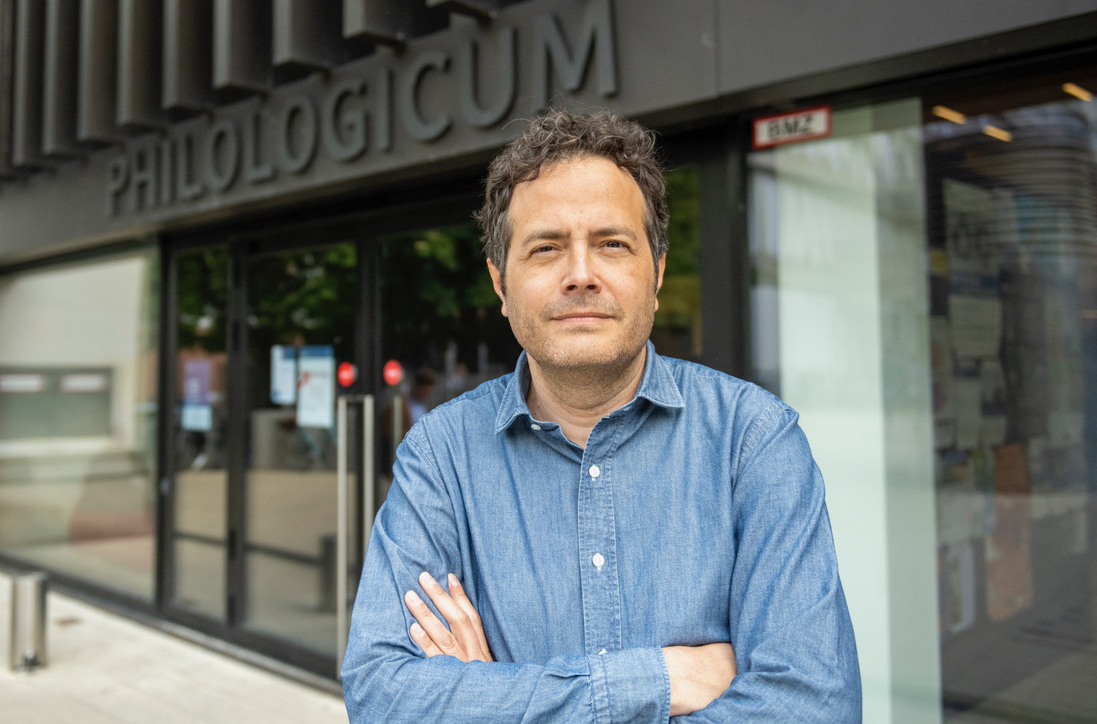
Prof. Dr. Carlos Spoerhase is a leading academic in Modern German Literature, currently holding the Chair of Modern German Literature at the Ludwig Maximilian University of Munich . His research spans literary theory, sociology of literature, and historical methods, focusing on the intersection of aesthetics and social theory. PhD in Modern German Literature (2006, Humboldt University of Berlin) Habilitation in Modern German Literature (2016, Humboldt University of Berlin) Academic guest stays at Princeton, Cologne, and Stanford His research explores scaling phenomena in aesthetics , the social dimensions of literary practices , and the history of philological methods . Recent projects include analyses of the Nobel Prize's role in global literary evaluation and the cultural implications of text compression. Notable awards include the Feodor Lynen Research Fellowship (2014) and Honorary Lifetime Membership at the Goethe Society of North America (2021). He co-edits Deutsche Vierteljahrsschrift für Literaturwissenschaft und Geistesgeschichte and serves on editorial boards for journals like The German Quarterly .
Dr. Ana Echevarria Arsuaga is a leading scholar in Medieval History at Universidad Nacional de Educación a Distancia (UNED), Madrid. She serves as Head of the Department of Medieval History and Paleography since 2020, following academic progression from Assistant Professor (2003-2008) to Tenured Associate Professor (2008-2020). Her international experience includes fellowships at the Ruhr-Universität Bochum (2011) and University of Constance (2015). Current: Full Professor & Department Head at UNED Previous: Academic posts at U. Constance, Ruhr-Universität Education: Degree in Geography and History from Universidad Complutense de Madrid, specializing in Medieval History. PhD in Medieval History from University of Edinburgh on 'The Perception of Muslims in Fifteenth Century Spain' (supervised by Angus MacKay). Postdoctoral research at UNED under José Luis Martín Rodríguez. Research Focus: Specializing in Iberian religious minorities (Mudejars, Moriscos, Mozarabs) and queenship studies. Her work examines legal frameworks for minority communities, interfaith dynamics in medieval Mediterranean, and cross-cultural knowledge transmission. Key projects include EU-funded 'Islamic Legacy' network and Gerda Henkel-funded 'Christian Society under Muslim Rule'. Academic Leadership: Serves on editorial boards of Medieval Encounters , Al-Masaq , and Anales de la Universidad de Alicante . Organized major conferences like the Society for the Medieval Mediterranean (2022) and RELMIN-ERC Advanced Grant Project (2014). Collaborates with leading scholars across Europe and Israel on religious minorities and queenship. Scientific Awards: 2023: Principal Investigator, 'Religious Minorities and Specialized Labour' (Spanish Ministry of Science & Innovation) 2020: Gerda Henkel Stiftung Grant for Canon Collections research 2018: International Recognition for 'Religious Boundaries' publication 2008: Al-Babtain Foundation Award for al-Andalus research Academic Contributions: Supervised 4 completed PhD theses and mentored 9 researchers. Co-organized 7 major international conferences. Peer reviewer for 15+ international journals. Elected member of the Academy of Europe (2023).
Stefan Rass is a Professor at the Institute of Networks and Security within the Faculty of Engineering & Natural Sciences at Johannes Kepler University Linz (JKU), where he leads the LIT Secure and Correct Systems Lab. As Principal Investigator for FFG-funded projects including reSilienz (digital supply chain resilience, 2023–2025) and ITPUK (AI signature verification, 2022–2024), he bridges theoretical game theory with practical cybersecurity solutions for critical infrastructures and robotics systems. His research spans game-theoretic security models (patrolling games, defense-in-depth strategies), quantum cryptography (QKD network architectures), and cyber deception frameworks like Honeyquest for measuring honeypot effectiveness. Recent work addresses robotics security benchmarking (RobotPerf), cryptographic instruction chaining for control flow protection, and risk assessment methodologies for interdependent infrastructures. His mathematical decision-making approach integrates bounded rationality and stochastic modeling to solve real-world security challenges. Professor Rass actively shapes the field through program committee roles (ARES 2023), peer reviews, and invited talks on security transparency. His current projects focus on cost-benefit-aware monitoring for cyber-physical systems and quantum key distribution standardization, reflecting Austria’s strategic priorities in digital resilience. The LIT Secure and Correct Systems Lab under his direction develops foundational theories while deploying tools for industrial applications, particularly in critical infrastructure protection and secure robotics workflows.
Elisabeth Wiedenegger M.Sc. is a researcher at the Institute of Zoology, Department of Ecosystem Management, Climate and Biodiversity at the University of Natural Resources and Life Sciences, Vienna (BOKU). Her research focuses on soil ecology and biodiversity with particular emphasis on earthworm populations and their relationship to agricultural practices. Her research interests include soil ecology, earthworm biology, soil biodiversity assessment, and the impacts of agricultural land use on soil organisms. Dr. Wiedenegger's work bridges the gap between theoretical soil ecology and practical agricultural applications, with a strong focus on conservation biology and sustainable land management practices. Analysis of her recent publications reveals a consistent focus on soil biodiversity monitoring, particularly earthworm populations. Her research examines how different agricultural practices affect soil organisms and how these organisms serve as indicators of soil health. She has been actively involved in developing methodologies for soil biodiversity assessment and red list compilation for soil organisms in Austria. Soil biodiversity monitoring on BINATS and ÖBM areas Earthworm population studies across different agricultural systems Development of red lists for soil organisms Dr. Wiedenegger has been featured in media discussing how earthworms protect soils, highlighting her commitment to knowledge transfer and public engagement with scientific topics. Her work has practical implications for sustainable agriculture and soil conservation policies in Austria.
Alexis de Colnet is a PostDoc Researcher at the Vienna University of Technology , affiliated with the Faculty of Informatics and the Algorithms and Complexity department. Their work focuses on overcoming intractability in knowledge compilation, computational complexity, and model counting. Research Interests: Knowledge Compilation Computational Complexity Artificial Intelligence Model Counting Answer Set Programming Theoretical Computer Science Recent Publications explore trends in proof systems, compilation efficiency, and translations between machine learning models for explainability. These works are deeply rooted in theoretical computer science and AI, addressing challenges in knowledge representation and computational hardness. Projects: Overcoming Intractability in the Knowledge Compilation Map (2022–2025) QBFPC (2022–2025) Funded by the Austrian Science Fund (FWF).
Alireza Furutanpey is a University Assistant (PreDoc Researcher) at TU Wien's Distributed Systems Group within the Institute of Information Systems Engineering, holding a Master's degree with distinction. His academic role combines research in distributed systems with teaching responsibilities for core computer science courses. His educational background includes: Bachelor of Science (BSc) Master of Science (Dipl.-Ing.) with distinction Furutanpey's research centers on Edge Computing and Edge Intelligence, specializing in Distributed Inference, Neural Data Compression, and AI-Systems integration. He pioneers techniques for neural feature compression in satellite/edge environments and develops frameworks for federated learning orchestration under communication constraints. His work bridges theoretical AI with practical system implementation, focusing on resource-constrained scenarios where bandwidth and computational efficiency are critical. Analysis of his 15+ publications reveals dominant trends in neural compression for distributed systems (60%), federated learning optimization (25%), and serverless edge frameworks (15%). Key contributions include solving satellite downlink bottlenecks through feature compression and enabling adaptive inference in heterogeneous edge networks, with methodologies increasingly incorporating generative modeling and robustness against adversarial attacks. Scientific Awards: None documented in available sources. He actively supervises master's theses, guiding students on adversarial machine learning, neural compression, and image retrieval systems. His research is supported through major projects: AloTwin (2023-2025) focusing on edge intelligence, INTEND (2024-2026) on industrial IoT, and TEADAL (2022-2025) on federated learning. He serves as a reviewer for 15+ IEEE/ACM venues including IEEE Transactions on Mobile Computing and ICDCS. Furutanpey operates within TU Wien's Distributed Systems Group, which specializes in edge-cloud continuum research. The team develops tools like faas-sim for serverless edge simulation and explores quantum-classical hybrid architectures, maintaining strong industry collaborations in industrial IoT and satellite communications.
Alice Tarzariol is a Researcher at the Institut für Artificial Intelligence und Cybersecurity within the Faculty of Technical Sciences at Alpen-Adria-Universität Klagenfurt. She specializes in computational logic, optimization algorithms, and their applications in artificial intelligence. Her research focuses on advancing Answer Set Programming (ASP) techniques for complex problem-solving, including production scheduling, symmetry breaking, and constraint learning. She also explores interdisciplinary applications such as cancer data analysis through logic programming frameworks. Her work emphasizes improving algorithmic efficiency and developing tools for combinatorial optimization, formal verification, and bioinformatics. She contributes to projects like the institute’s efforts to strengthen regional knowledge transfer and serves on the Curricularkommission für das Erweiterungscurriculum Gender Studies. Her research spans both theoretical advancements in computational logic and practical implementations in industrial and medical domains. Key themes in her publications include symmetry detection and lifting, constraint satisfaction, and inductive logic programming. Recent work highlights declarative approaches to production scheduling and efficient symmetry-breaking methods. Her research has implications for automated decision-making, systems modeling, and data-driven healthcare solutions.
Michael Affenzeller is a Professor at the University of Applied Sciences Upper Austria, leading the HEAL AIST Center of Excellence for Smart Production with a focus on Digital Transformation. His research spans Genetic Programming, Symbolic Regression, and Evolutionary Algorithms, with applications in optimization, AI, and manufacturing automation. He has authored over 400 publications and led major projects such as HCAI (Human-Centered AI) and HEAL, emphasizing interdisciplinary collaboration. Research interests include developing advanced algorithms for dynamic optimization, prescriptive analytics, and federated learning in industrial contexts. He has contributed to projects like LOISI (Logistics Optimization in Steel Industries) and SimGenOpt2, addressing challenges in production planning and workforce optimization. Key collaborations involve institutions in Austria and beyond, focusing on smart manufacturing, logistics, and AI integration. His work bridges theoretical advancements with real-world applications, driving innovation in energy systems, crane scheduling, and predictive maintenance. Grants and projects include funding from FWF (doc.funds.connect) and Upper Austrian initiatives, emphasizing doctoral training and industry partnerships. He actively participates in conferences such as EUROCAST and PPSN, contributing to algorithmic advancements and computational theory.
Christoph Koch is an Associate Professor at Technische Universität Wien specializing in databases and artificial intelligence. His research spans database theory, complexity theory, and logic in computer science, with a focus on XML processing, query optimization, and parallel data science techniques. Lead projects: KnowledgeGraph (2020–2028), HINT (2012–2017), Weblearn (2005–2008) Developed the Lixto visual extraction system and contributed to DLV knowledge representation framework Supervised T. Lukasser's diploma thesis on XPath query processing
Tobias Schwarzinger is a PreDoc Researcher at the Department of Automation Systems, Technische Universität Wien. His work focuses on advancing Cyber-Physical Systems through semantic event handling, architecture description languages (VADL), and explainable AI frameworks. He is actively involved in the SENSE project (2023–2025), exploring next-generation system architectures and developer tooling. Education: Holds a BSc and Diploma in Engineering (Dipl.-Ing.). His research integrates formal methods with real-time systems, emphasizing practical tool development for industry applications. Publications highlight contributions to semantic event-driven systems, automated specification methods, and architecture modeling. His work bridges theoretical computer science with practical cyber-physical implementations, aiming to improve system explainability and maintainability. He teaches the 2025S Computer Systems course (191.003) and contributes to open-source toolchains via the Vienna Architecture Description Language initiative.
Rene Christian Röpke is an Assistant Professor of Software Engineering at TU Wien, Austria. He serves as Head of the Service Unit eduLAB (E199-04) and leads the LTeD Research Lab . His primary research focuses on Learning Technologies, AI in Education, and Game-based Learning. He teaches courses such as Informatics Didactics, Project in Computer Science, and seminars for doctoral students. His work emphasizes practical tools like Interactive Study Planning Tools , BuddyAnalytics , and WebWriter , which leverage AI and data analytics to improve educational outcomes. He actively contributes to conferences like GALA and DELFI, editing special issues and presenting on topics ranging from serious games to open science practices. Röpke's recent articles (2024-2025) explore digital collaborative learning, process mining for student support, and ethical game design. His publications span journals like Frontiers in Psychology and conferences such as the International Conference on Learning Analytics & Knowledge. He maintains an active role in both educational technology development and pedagogical research methodologies. His research integrates software engineering principles with human-centered design, aiming to create transparent, equitable educational systems. Current projects include AI-driven study planning systems and tools for analyzing student pathways at scale.
Doris Virág is a researcher at the Institute for Social Ecology at the University of Natural Resources and Life Sciences, Vienna (BOKU), where she focuses on material flow analysis, circular economy, and socio-metabolic studies. She earned her PhD in Social and Human Ecology in 2023 and holds a Master of Science in the same field from Alpen-Adria University Klagenfurt, as well as a Master of Arts in Business. Her work is deeply embedded in interdisciplinary environmental research with a strong emphasis on sustainability transitions. Her research interests include: Environmental Research Climate Change Human Ecology Sustainable Agriculture and Business Environmental Economics and Sociology Material Flow Analysis and Circular Economy Urban Mobility and Stock-Flow-Service Nexus Doris Virág's recent publications span topics such as high-resolution mapping of material stocks in buildings and mobility infrastructure, global resource flows, and the interplay between material use and human wellbeing. Her work leverages remote sensing, large-scale databases, and systems modeling to understand long-term socio-ecological trends and inform sustainable policy. Scientific Awards: Best Paper Award, Anniversary Fund of the City of Vienna for BOKU, 2023 She has been actively involved in advising and collaborative research, contributing to major projects on decarbonization and circular economy in Austria and South Africa. Her work includes policy-relevant reports and knowledge transfer through lectures and media engagement. She is also involved in modeling economy-wide material stocks and flows and assessing circular economy strategies. Labs and Research Teams: Doris Virág is a key member of the research team at the Institute for Social Ecology, collaborating closely with Prof. Helmut Haberl, Dr. Dominik Wiedenhofer, and Dr. Willi Haas. She contributes to interdisciplinary projects that integrate ecological, economic, and social dimensions of sustainability.
Thomas Eiter is a Full Professor at the Vienna University of Technology (TU Wien) in the Department of Knowledge-Based Systems, Faculty of Informatics. His research focuses on artificial intelligence, knowledge representation and reasoning, logic programming, computational logic, and neurosymbolic AI integration. He leads projects in declarative problem-solving, intelligent agent systems, and stream reasoning frameworks like LARS. Eiter has contributed to foundational work in answer set programming (ASP), algebraic reasoning, and their applications in scheduling, robotics, and real-time data processing. He has extensive international collaborations, including EU-funded projects like HumanE-AI-Net and the Austrian Science Fund (FWF) initiatives. His work emphasizes bridging symbolic AI with modern machine learning techniques, particularly in visual question answering and neural-symbolic systems. Eiter has supervised numerous PhD students and maintains active roles in academic leadership, including editorial boards of journals like Theory and Practice of Logic Programming . Key contributions include development of the DLVHEX system for hybrid knowledge representation, optimization frameworks for ASP, and methodologies for stream reasoning in dynamic environments. His research also addresses ethical AI through projects like the TAIGER initiative, focusing on training AI agents with ethical rules.
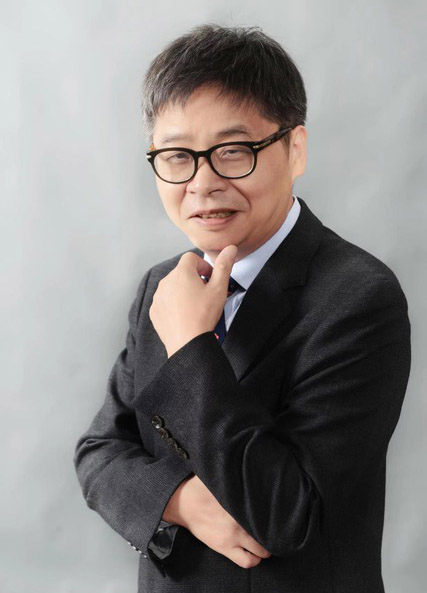
Minyi Guo is a Chair Professor and Head of the Department of Computer Science and Engineering at Shanghai Jiao Tong University (SJTU), China. Previously, he served as Professor and Department Chair at the School of Computer Science and Engineering, University of Aizu, Japan. Dr. Guo received his BSc and ME degrees from Nanjing University, China in 1982 and 1986, and his PhD from University of Tsukuba, Japan in 1998. Dr. Guo's educational background includes: BSc in Computer Science, Nanjing University, China (1982) ME in Computer Science, Nanjing University, China (1986) PhD in Computer Science, University of Tsukuba, Japan (1998) Dr. Guo's research spans multiple areas in computer science, with a primary focus on parallel/distributed computing , compiler optimizations , cloud computing , database systems , and big data . He has published over 400 papers including approximately 150 in major journals and 250 in international conferences, with more than 60 papers in IEEE/ACM transactions and over 100 papers in prestigious conferences. Dr. Guo has also authored 7 books (4 in English, 3 in Chinese) and received 5 best/highlight paper awards from international conferences. Dr. Guo's publication record demonstrates strong contributions across multiple domains of computer systems research. His recent work shows particular emphasis on big data processing, edge computing, graph neural networks, and data center optimization. The publications reveal a consistent trajectory of impactful research in parallel and distributed systems, with increasing focus on AI/ML applications and blockchain technologies in more recent years. Dr. Guo has received numerous prestigious awards and honors: State Technological Invention Award of China (second class award, 2019) Shanghai Technological Invention Award (first class award, 2018) IEEE Technical Committee on Scalable Computing Award for Excellence in Scalable Computing (2018) Ministry of Education Natural Science Award (first class award, 2017) IEEE Fellow (2017) Chief Scientist of National Basic Research Project (973 Program, 2014) Recruitment Program of Global Experts (2010) Excellent Academic Leaders of Shanghai (2010) National Science Fund for Distinguished Young Scholars (2007) As an academic leader, Dr. Guo has served as Department Head for ten years, managing a department with over 100 faculty members and 1000+ students. Under his leadership, the department was promoted to the top tier in China and ranked among the top 40 in the world. He has secured significant research funding, including serving as Chief Scientist of the prestigious 973 Program in 2014 and receiving the National Science Fund for Distinguished Young Scholars in 2007. Dr. Guo has also been selected for the Recruitment Program of Global Experts in China (2010). Dr. Guo actively contributes to the academic community as an associate editor of IEEE Transactions on Parallel and Distributed Systems, IEEE Transactions on Cloud Computing, and Journal of Parallel and Distributed Computing. He has served as General/Program Chair for IEEE conferences and delivered keynote speeches at well-established conferences. His research group has developed practical technologies with industry impact, including 28 licensed patents, some of which have been transferred to companies like Alibaba.