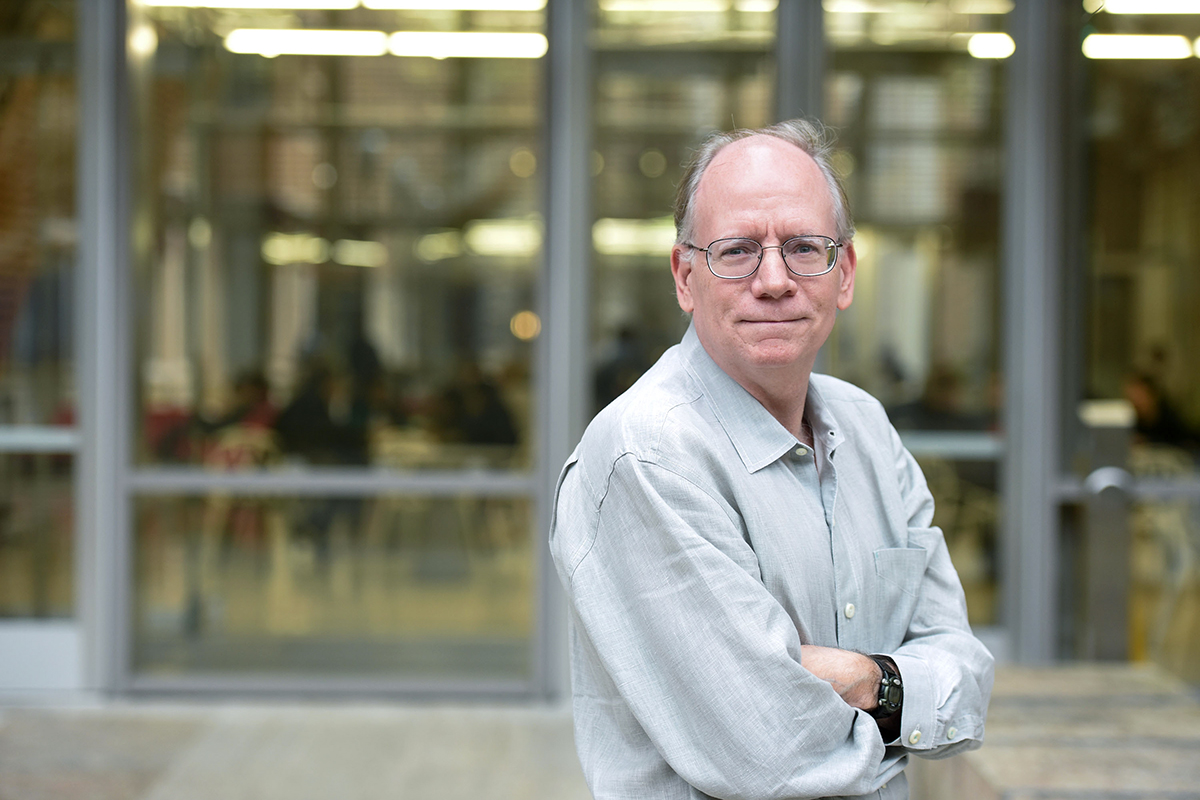
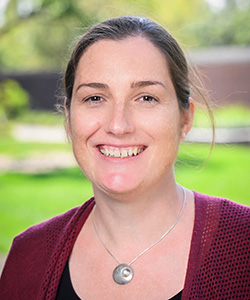
Amanda Berry is a Professor of STEM Education and Deputy Dean (Research & Innovation) in the School of Education at RMIT University, Australia. Her research focuses on science education, teacher education, and methodologies for capturing classroom practices. She leads initiatives to develop tools for representing teachers' pedagogical expertise and has contributed to frameworks like the refined consensus model of pedagogical content knowledge (PCK). Her work emphasizes teacher professional development, particularly for highly accomplished educators, and explores adaptive expertise in interdisciplinary teaching. She actively supervises postgraduate research students and collaborates internationally on projects like the Sharing Knowledge Project in inquiry-based teaching. Key research themes include STEM integration, teacher educator professionalism, and the role of student voice in assessment reform. Her interdisciplinary approaches bridge theory and practice, influencing both policy and classroom strategies in science and mathematics education.
Professor Alexander Koller is a leading academic in Computational Linguistics at Saarland University's Department of Language Science and Technology. He holds a courtesy appointment in Computer Science and contributes to the Saarland Informatics Campus - one of Europe's premier computer science research centers. He leads the Computational Linguistics group and serves as speaker for the DFG-funded Research Training Group 'Neuroexplicit Models of Language, Vision, and Action'. PhD in Computer Science (Saarland University) Former positions: University of Potsdam, Columbia University, University of Edinburgh Sabbatical experiences: Meta AI (Paris), Allen Institute for AI (Seattle) His research focuses on computational modeling of meaning and reasoning in NLP, combining neural and symbolic approaches. Key contributions include semantic parsing systems like the AM parser and Alto, neurosymbolic models, and the GIVE Challenge for NLG evaluation. His recent work explores LLMs' limitations in problem-solving and compositional generalization. Recent publications highlight diverse applications across semantic parsing, dialogue systems, and LLM evaluation. Awards include ACL 2020 Best Theme Paper and multiple Outstanding Paper recognitions at ACL conferences. 2025 - AI Action Summit keynote speaker 2023 - ACL Outstanding Paper Awards 2022 - ELLIS Faculty appointment He maintains the DialogOS system for spoken dialogue development and teaches advanced computational linguistics topics. His group includes multiple postdocs and PhD students working across LLMs, dialogue systems, and semantic modeling.
Raymond J. Mooney is a Professor in the Department of Computer Science at the University of Texas at Austin, where he has been a faculty member since 1987. He is the Director of the UT Artificial Intelligence Laboratory and affiliated with multiple research groups including the Machine Learning Research Group, UT Computational Linguistics Lab, and the UT Center for Computational Biology and Bioinformatics. He holds a B.S., M.S., and Ph.D. in Computer Science from the University of Illinois at Urbana-Champaign, where his thesis was supervised by Gerald DeJong. His research spans diverse areas in artificial intelligence, machine learning, and natural language processing: Natural Language Learning Connecting Language and Perception Statistical Relational Learning Information Extraction Transfer and Active Learning Abductive Reasoning Text Mining and Clustering Recommender Systems Knowledge-Base Refinement Recent publications highlight trends in grounded language processing, human-robot interaction, and multimodal reasoning. He has been recognized with prestigious fellowships including ACL (2014), ACM (2010), and AAAI (2005). Scientific awards: Fellow of the Association for Computational Linguistics (2014) Fellow of the Association for Computing Machinery (2010) Fellow of the American Association for Artificial Intelligence (2005) Classic Paper Award (2019) Best Paper Awards (2007, 2004, 1996) He teaches graduate courses like CS 371R: Information Retrieval and Web Search (Fall 2025) and CS 395T: Grounded Natural Language Processing (Spring 2025). His research labs include: UT Artificial Intelligence Laboratory Machine Learning Research Group UT Computational Linguistics Lab UT Center for Computational Biology and Bioinformatics
Emma Mercier is an Associate Professor and Associate Head & Director of Graduate Programs in the Department of Curriculum & Instruction at the University of Illinois, Urbana-Champaign's College of Education. She also holds a secondary appointment in the Department of Educational Psychology, demonstrating her interdisciplinary approach to educational research. Dr. Mercier's research focuses on the relationship between social interaction and learning, with particular emphasis on collaboration and computer-supported collaborative learning (CSCL) in classroom settings. Her work examines how technology influences group interactions and learning, especially through the use of multi-touch tables in classrooms. She investigates between-group and whole-class interactions, device ecologies, teacher tools, and classroom contexts that shape learning opportunities in technology-enhanced environments. Her research spans K-12 and higher education settings, with significant contributions to engineering education and the design of collaborative learning spaces. Analysis of Dr. Mercier's recent publications reveals a strong focus on orchestration tools that support instructors in facilitating collaborative learning, the role of technology (particularly augmented and virtual reality) in collaborative problem solving, and the design of effective collaborative tasks in engineering education. Her work bridges educational theory with practical classroom applications, often employing design-based implementation research methodologies. A notable trend is her increasing focus on machine learning applications to analyze and support collaborative interactions in real-time classroom settings. Dr. Mercier has been actively involved in mentoring graduate students and teaching courses related to educational research methods, child development and technology, and advanced study of education. Her work has involved significant collaboration with researchers across institutions and disciplines, particularly in the fields of educational technology, learning sciences, and engineering education. Her research has been supported through various projects, including the CSTEPS (Collaborative Support Tools for Engineering Problem Solving) initiative, which has developed and evaluated tools to support collaborative learning in engineering classrooms. This work has involved partnerships with teaching assistants, course assistants, and faculty to implement and refine collaborative learning approaches in undergraduate engineering courses.
Julien Dutant is a Lecturer in Philosophy at King's College London, affiliated with the Department of Philosophy within the Faculty of Arts & Humanities. His research examines epistemological frameworks, including the principles of knowledge, rational belief, and epistemic value. He holds a Ph.D. from the University of Geneva (2010) and has held research positions at the University of Oxford and University of Michigan. Dutant's primary research explores foundational questions in epistemology, formal models of knowledge, and the semantics of propositional attitudes. His work integrates philosophical analysis with formal methods to address epistemic norms and contextual variations in knowledge attribution. His publications demonstrate sustained focus on refining theories of justification, rationality, and epistemic norms. Recent research trends include investigations into practical rationality, epistemic utility, and the interplay between evidence and ignorance. Dr. Dutant teaches undergraduate and postgraduate courses including Introduction to Philosophy, Methodology, Intermediate Logic, and advanced topics in epistemology. He maintains active engagement with philosophical communities through invited talks and editorial roles.
Prof. Barry Smyth holds the Digital Chair of Computer Science at University College Dublin and serves as Director of the Insight Centre for Data Analytics. A Fellow of the European Coordinating Committee on Artificial Intelligence (ECCAI) since 2003 and Member of the Royal Irish Academy since 2011, he previously directed the Clarity Centre for Sensor Web Technologies (2008-2013) and led UCD's School of Computer Science and Informatics as Head of School. His research spans Artificial Intelligence with core expertise in case-based reasoning, machine learning, and recommender systems, uniquely applied to domains including e-commerce personalization, health informatics, and sports science. Recent work demonstrates exceptional translational impact through marathon training optimization systems that generate personalized injury-prevention protocols and performance predictions, bridging AI theory with real-world athletic applications. Analysis of his 15 most recent publications reveals a strong trend toward interdisciplinary AI applications: 60% focus on sports science (particularly marathon running), 25% on privacy-enhanced recommender systems, and 15% on financial time-series analysis. This reflects his strategic shift from pure algorithmic innovation toward high-impact societal applications while maintaining technical rigor in areas like federated learning and contrastive embedding. Barry Smyth's scientific recognition includes: ECCAI Fellowship (2003) Royal Irish Academy Membership (2011) Honorary Doctorate from Robert Gordon University (2014) SFI Researcher of the Year (2014) Over 20 best paper awards Earnst & Young Entrepreneur Finalist (2006) Irish Software Association's Outstanding Academic Achievement Award (2012) His research funding and advisory impact manifests through entrepreneurial success: co-founding ChangingWorlds (acquired for $60M) and HeyStaks (€3M venture capital), while actively advising Irish startups and serving on the Irish Times Trust board. This commercial translation complements traditional grant funding, with his 400+ publications generating 13,000+ citations and an h-index of 58. Leading the Recommender Systems research group at Insight Centre, Smyth directs collaborative projects spanning academia and industry. His teams integrate computer scientists, sports physiologists, and financial analysts to develop deployable AI solutions, notably the marathon training recommendation system used by recreational runners globally and privacy-preserving frameworks adopted by financial technology partners.
Nickolai Zeldovich is the Joan and Irwin M. Jacobs Professor of Electrical Engineering and Computer Science at MIT, and a member of the Computer Science and Artificial Intelligence Laboratory (CSAIL). He received his PhD from Stanford University in 2008 and focuses on building practical secure systems, including encrypted databases, undefined behavior detection tools, formally verified file systems, and cryptocurrency protocols. His work spans both theoretical and applied aspects of computer security and distributed systems. Research interests include: Secure system design Distributed consensus mechanisms Formal verification of software/hardware Cryptographic protocols Privacy-preserving web technologies Publications & Verification Tools Recent work focuses on modular verification of complex systems, including: Shipwright (2025): Byzantine-fault-tolerant distributed system verification PoWER (2025): Crash consistency verification framework K2 Architecture (2023): Trustworthy hardware security modules Grove (2023): Separation-logic-based verification library Tiptoe (2023): Private web search protocols Major Awards Best paper award, ACM SOSP (2011, 2015, 2017) Sloan Research Fellowship (2010) NSF CAREER award (2011) MIT Jamieson Award for Teaching (2024) Active in multiple startup ventures including Algorand (cryptocurrency), MokaFive (virtualization), and PreVeil (end-to-end encryption).
Judith Schoonenboom is a Professor at the University of Vienna and Deputy Head of the Department of Education. She teaches courses in quantitative and interpretive methodologies, research design, and PhD/master's thesis supervision, including seminars like 'Methodology and Research Design' and 'Quantitative Methodologies in Education Science'. Her academic responsibilities reflect a focus on advanced research methodologies in educational contexts. Schoonenboom's research centers on mixed methods and multimethod approaches in education science, emphasizing methodological innovation, data integration, and theoretical development. Key interests include the interplay between qualitative and quantitative research, design patterns in mixed methods, and strategies for enhancing inferential rigor in social science studies. Her work bridges epistemological frameworks with practical research applications. Her scholarly publications demonstrate a consistent focus on advancing mixed methods research, particularly through innovations in design, integration techniques, and theoretical reflection. Recent works explore causal inference in qualitative research, visualization of methodological interactions, and performative approaches, highlighting trends toward interdisciplinary synthesis and practical methodology refinement.
Helen Vidgen is a Professor in Public Health at the School of Public Health, Faculty of Health, Queensland University of Technology (QUT). Her research focuses on food literacy, childhood obesity prevention, and nutrition education, with significant contributions to public health policy and program implementation. She has led projects evaluating school meal programs, childhood obesity management services like PEACH™, and food literacy interventions across diverse populations. Her work emphasizes socio-ecological barriers to nutrition education, policy development, and the translation of evidence-based practices into community settings. Dr. Vidgen has authored over 100 peer-reviewed articles and edited books, including Food Literacy: Key Concepts for Health and Education (2016), which establishes foundational frameworks for food literacy research. She collaborates with government agencies, non-profits, and healthcare professionals to address systemic challenges in obesity prevention and food system reforms. Recent contributions include analyzing the role of school-provided meals in obesity prevention, evaluating father’s roles in family food practices, and advancing measurement tools like the IFLQ-19 food literacy questionnaire. Her research bridges theory and practice, informing policy initiatives on nutrition education, food regulation, and equitable health outcomes.
Bernhard Aichernig is an Associate Professor at the Institute of Software Engineering and Artificial Intelligence. His work bridges formal methods, model-based testing, and artificial intelligence, with a focus on automata learning, digital twins, and AI-assisted programming. Institution: Institute of Software Engineering and Artificial Intelligence Key Research Areas: Model-Based Testing, Automata Learning, AI-Driven Verification His research explores the integration of machine learning into formal verification, enabling scalable testing of complex systems like IoT devices and reinforcement learning agents. Recent projects include AI-Augmented DevOps frameworks (AIDOaRT) and digital twin validation (LearnTwins). Notable scientific awards include multiple best paper recognitions at SEFM (2020, 2021) and the TAYSIR Competition first place (2023). His publications emphasize hybrid approaches combining genetic programming, SMT solving, and neural networks for system modeling. 2025 : AI-assisted programming, timed automata via domain knowledge 2024 : Stochastic environment modeling, Git system learning 2023 : Reinforcement learning under partial observability, digital twins for VPN servers He actively contributes to testing frameworks like AALpy and investigates explainable AI for fault diagnosis in cyber-physical systems.
Zhe Hou is a Senior Lecturer at the School of Information and Communication Technology , Griffith University, Australia. His academic journey includes a PhD in automated reasoning for separation logic from the Australian National University (2015) and prior research roles at Nanyang Technological University, Singapore (2015-2017). He joined Griffith University in 2017 and became permanent faculty in late 2019. Research Interests : Formal methods for software verification Automated reasoning with logical frameworks Blockchain technology and security Quantum computing verification Integration of LLMs with rigorous reasoning Sports analytics via model checking Recent Publications demonstrate expertise in neural-symbolic reasoning, blockchain security, quantum SAT solvers, and runtime verification frameworks. His work combines formal logic with machine learning for applications in cybersecurity and AI trustworthiness. Scientific Awards : ACM SIGSOFT Distinguished Paper Award (2025) Supervision Roles : Principal/Associate Supervisor for 6+ doctoral projects in blockchain security, AI verification, and network security. Professional Activities : Editor for Springer-Nature and Formal Aspects of Computing special issues, conference chair for ICFEM, ICECCS, and ISACE symposia.
Matthew Duvall is a Lecturer at the University of Pennsylvania’s Graduate School of Education. His career spans roles as a computer programmer, high school teacher, instructional designer, and writer. His research focuses on leveraging technology to create inclusive learning experiences, particularly for underserved populations. He specializes in game-based learning, computational thinking, teacher professional development, and corporate training. Dr. Duvall’s work includes directing the Skyscraper Games project at Drexel University’s ExCITe Center, where middle school students designed video games displayed on Philadelphia’s Cira Centre. His dissertation explored using Goodreads to engage high school students in English language arts. He has also designed corporate training programs informed by learning science frameworks. His research trends emphasize bridging educational technology with practical applications, such as evaluating serious games, refining teacher feedback models, and integrating literacy tools like Goodreads into classrooms. His articles reflect a focus on equity, innovative pedagogy, and technology’s role in fostering authentic learning experiences. While no specific awards are listed, Dr. Duvall’s projects highlight impactful contributions to educational equity and technology integration. He collaborates with teams like the ExCITe Center and organizations serving individuals with autism, emphasizing collaborative approaches to educational innovation.
Professor TAN Ah Hwee is a Full-time Faculty member and Lee Kong Chian Professor of Computer Science at the School of Computing and Information Systems (SCIS) at Singapore Management University (SMU). He serves as the Associate Dean (Research) in SCIS and leads research in Artificial Intelligence, Machine Learning, and Health Informatics. His work spans neural networks, multi-agent systems, and healthcare applications such as Mild Cognitive Impairment prediction. He holds a PhD from Boston University (1994). Research Focus: His research integrates adaptive resonance theory, federated learning, and spatial-temporal modeling. Key areas include knowledge graph refinement, episodic memory systems for Activity of Daily Living (ADL) prediction, and explainable AI in multi-agent reinforcement learning. He also develops technologies for aging-in-place support and social media analytics. Recent Contributions: Recent work emphasizes hierarchical multi-agent models (HiSOMA), federated learning frameworks (FedART), and AI-driven health monitoring systems. His publications address challenges in self-organizing neural networks, context-aware reinforcement learning, and medical diagnostics through ambient sensing. Advising & Impact: Advises students like TEH Seng Khoon and Cassandra TAN Hui Ming. His projects include the eHealthPortal for elderly support and Silver Assistants for aging-in-place solutions. Research outputs bridge theoretical advancements in AI with real-world applications in healthcare and smart environments.
Stephen Lee-Urban is a Teaching Associate Professor in the Department of Computer Science & Engineering at Lehigh University, affiliated with the Rossin College of Engineering. He holds a Ph.D., M.S., and B.S. in Computer Science and Engineering from Lehigh University, all completed with summa cum laude distinction. His research focuses on fundamental and applied artificial intelligence, machine learning, game AI, cognitive systems, and automated planning. He has contributed to innovative projects such as HuManIC (human-machine interpretive control), CORA (cognitive systems framework), and crowdsourced narrative generation systems. His academic career includes significant work in cybersecurity through intelligent agent modeling of malware, as well as contributions to game AI for strategy games and military training simulations. Notable awards include summa cum laude honors for all three of his university degrees. Lee-Urban's scholarly output spans over 20 publications since 2000, with recent emphasis on AI applications in collaborative storytelling, adaptive planning systems, and human-computer interaction. His research integrates machine learning techniques with sociocultural analysis, crowd-powered content creation, and hierarchical task networks. Current work explores autonomous systems capable of leveraging crowd intelligence for generating interactive narratives and optimizing military training scenarios. While no specific grants or advising roles are listed, his interdisciplinary approach bridges computer science with game design, cybersecurity, and cognitive modeling.
Professor Tova Milo is the Chair for Information Management at the School of Computer Science, Tel Aviv University, leading the prominent Databases Lab (DB Group). Her research spans databases, big data management, crowd-based data sourcing, and business process querying, with significant contributions to data integration and semi-structured data systems. Her research interests focus on innovative approaches to data management challenges through machine learning integration, crowd computing, and business process analysis. Key projects include Business Process Querying (BPQ) for analyzing BPEL specifications, MoDaS for crowd-based data management, and PROX for data provenance summarization. Her work bridges theoretical foundations with practical applications in fraud detection, recommendation systems, and data cleaning. Analysis of her recent publications reveals strong trends in human-in-the-loop data management systems, with growing emphasis on crowd integration for data cleaning and knowledge acquisition. Her research increasingly combines traditional database theory with machine learning techniques for scalable big data processing, while maintaining focus on business process modeling and provenance tracking. ACM PODS Alberto O. Mendelzon Test-of-Time Award (2010) ERC Advanced Investigators grant MoDaS (2011) The Weizmann Prize for Exact Sciences (2017) VLDB Women in Database Research award (2017) IEEE TCDE Impact award (2022) ISF Breakthrough Research Grant (2022) Doctorate Honoris Causa, University of Zurich (2023) ACM Fellow Member of Academia Europaea Professor Milo has advised over 30 graduate students including PhD candidates like Yael Amsterdamer and Ohad Greenshpan, and numerous MSc students working on projects including MoDaS, BPQ, and EDOS. Her research has been supported by major grants including the ERC Advanced Investigators grant and ISF Breakthrough Research Grant. She actively collaborates with industry partners including IBM and Microsoft, particularly in business process management standards. She directs Tel Aviv University's Databases Lab, which maintains the DB Group with multiple research streams including business process querying (BPQ), crowd-based data management (MoDaS), and self-adaptive data dissemination (EDOS/COLT). The lab operates from the Schreiber Building (M-20) and maintains strong international collaborations, particularly with European institutions through the ERC-funded MoDaS project.