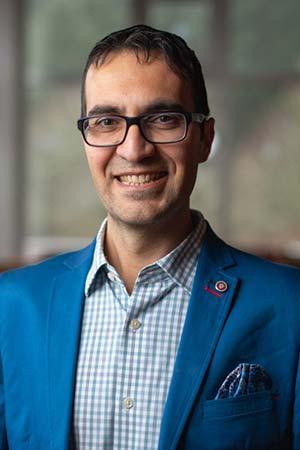
Dr. Stefano Modafferi is a Principal Enterprise Fellow and Project Manager at the University of Southampton's Digital Health and Biomedical Engineering (DHBE) and IT Innovation Centre. He holds a PhD in Information Engineering from Politecnico di Milano and has extensive experience in research projects and industry collaboration since 2012. His expertise spans Process Management, Service Oriented Architecture, and Software Architecture. He coordinates and leads major EU-funded initiatives, including the GRAVITATE, ZDMP, and EFPF projects. Modafferi has over 20 scientific publications and is a Prince2 certified project manager. Education: PhD in Information Engineering, Politecnico di Milano Research Interests: Risk Modelling, Data-driven Business Models, Enterprise Architectures, Knowledge Management, and SME/Startup outreach. His work focuses on cybersecurity, digital manufacturing, and data-driven innovation. Active Projects: DS2 (Data Lifecycle Risks), FAITH (AI Trustworthiness), and DataPACT (Compliance in Data/AI Operations). Completed projects include EFPF, ZDMP, and Spyderisk. Grants & Funding: Involved in Horizon 2020 and EU-funded projects, emphasizing collaborative research in Industry 4.0 and digital transformation. Labs/Teams: Member of the DHBE Centre, IT Innovation, and the Centre for Internet of Things and Pervasive Systems.
Dr. Rebecca Mercieca-Bebber is an NHMRC Early Career Fellow at the NHMRC Clinical Trials Centre, University of Sydney, and associated with Sydney Medical School. She holds a PhD in methodological issues related to patient-reported outcomes (PROs) in clinical trials and focuses on optimizing their design, implementation, and reporting. Her work addresses challenges like missing data and patient preferences, with contributions to international guidelines such as the SPIRIT-PRO extension. She has led over 20 clinical trials and was past chair of the ISOQOL Australia and New Zealand Special Interest Group. Education: Completed her PhD supported by the Sydney Catalyst full scholarship (2014–2017). She also holds coursework awards and has been involved in developing educational initiatives for PRO integration in clinical research. Research interests include PRO methodology, missing data strategies, patient preferences, and ethical considerations in PRO use. She advocates for equity in PRO assessment for culturally diverse and Indigenous populations. Recent work explores survivorship care plans, PRO reporting standards, and ethical frameworks for patient involvement. Scientific awards include the NHMRC Early Career Fellowship (2018), Cancer Research Network 10th Anniversary Award (2016), and multiple travel grants and scholarships. She has secured grants for projects like HyNOVA and the development of PRO ethics guidelines. Her advising contributions include mentoring future PhD students on PRO-related topics like cancer survivorship and PRO implementation. Grants highlight her focus on PRO integration in diverse healthcare settings and improving trial design through education. Labs/Teams: Active in the NHMRC Clinical Trials Centre, ISOQOL, and the PROMIS International Collaboration. Collaborates with multidisciplinary teams on PRO-related studies and guideline development.
Sean Burkholder is an Associate Professor of Landscape Architecture at the University of Pennsylvania’s Weitzman School of Design. He co-founded the Environmental Modeling Lab (EMLab) and the research/design practice Proof Projects, focusing on coastal landscapes and lake-based geographies. His work integrates adaptive management, environmental monitoring, and speculative design to address sediment dynamics and infrastructure challenges in dynamic coastal systems. Key projects include the Healthy Port Futures initiative and Tidelands (Natural Infrastructure Innovation Project), emphasizing sediment reclamation and climate-resilient strategies. He has authored Five Bay Landscapes: Curious Explorations of the Great Lakes Region (2022) and is completing Lakemaker: Surveys, Stories, and Speculations of Held Water . His research explores the intersection of temporal experimentation, curiosity-driven methodologies, and collaborative environmental stewardship. Teaching responsibilities include coordinating the first-semester design studio and delivering seminars on environmental modeling, counterfactual speculation, and coastal infrastructure. His work with the Dredge Research Collaborative highlights sediment as a unifying element in coastal management. Burkholder’s projects often bridge academic research, professional practice, and community engagement to foster innovative landscape solutions.
Krista Johansen, M.D., is an Assistant Professor of Medical Education at the School of Medicine, Tufts University . She holds joint appointments in Anatomic and Clinical Pathology and Immunology. Her academic career spans roles in medical curriculum design, clinical anatomy instruction, and health professions education innovation. Dr. Johansen earned a Bachelor of Arts from Wesleyan University (1995) and a Doctor of Medicine from the University of Massachusetts (2003) . She completed a Surgery Internship at Tufts-New England Medical Center (2003-2004) and a Pathology Residency at University of Massachusetts Medical School (2004-2007). Her research focuses on technology-enhanced medical education , including radiological anatomy workshops, dissection-based learning strategies, and integrating clinical cases into basic science instruction. She emphasizes social constructivist methodologies and self-directed learning frameworks , advocating for curricula responsive to underserved communities. Her teaching portfolio includes courses like Clinical Anatomy I , Gastrointestinal System , and Medical Histology . In professional activities, Dr. Johansen collaborates with the American Association of Clinical Anatomists and participates in curriculum reform initiatives aligned with the Carnegie Report (2010). She actively promotes global health service learning and interprofessional education.
Na Hong is an Instructor of Biomedical Informatics and Data Science at Yale School of Medicine. She holds a PhD in Information Science from the Chinese Academy of Sciences (2010) and completed postdoctoral training in Medical Informatics at Mayo Clinic (2018). Her research focuses on clinical data standards (OHDSI, FHIR, i2b2), data normalization/harmonization, and applications in electronic health records (EHRs). She has contributed to grants and co-authored over 80 peer-reviewed publications. Education: PhD in Information Science, Chinese Academy of Sciences, 2010 Postdoctoral Training in Medical Informatics, Mayo Clinic, 2018 Research Interests: Her work emphasizes interoperability of clinical data through standards like FHIR and OHDSI, with applications in predictive modeling for diseases such as lung cancer and sepsis. She develops tools for clinical decision support systems and integrates unstructured EHR data using NLP. Recent projects include risk prediction models for venous thromboembolism and sepsis outcomes, leveraging machine learning. Publications: Her 15 most recent articles span machine learning in ICU decision-making, FHIR-based data normalization, and pharmacovigilance platforms. These reflect her focus on bridging data standards with clinical practice. Grants & Contributions: Co-investigator/key researcher in multiple grants Developed frameworks for EHR phenotyping and cohort retrieval systems Labs/Teams: Active in Biomedical Informatics & Data Science initiatives at Yale, contributing to projects like the NIH-funded Mental Health Research using AI.
Professor Ian Maidment is a Professor in Clinical Pharmacy at Aston University, where he joined the Pharmacy School in February 2012. He serves as Director of Research for Pharmaceutics and Clinical Pharmacy at Aston and holds the position of Joint Community Trust Specialty Lead for the West Midlands Clinical Research Network. His work focuses on medication management, particularly for older people with complex medication regimens and those with dementia and mental health conditions. Professor Maidment has an extensive educational background in pharmacy and health services research: Postgraduate Certificate in Higher Education (distinction), Aston University, 2015 PhD in Medication-related adverse events in older people with dementia; causes and possible solutions, Aston University, 2013 MA in Health Service Research with Merit, University of Kent, 2010 Diploma Management Studies (distinction), Christchurch University, Canterbury, 2004 Diploma Psychiatric Pharmacy, De Montfort University, Leicester, 1996 BPharm (2:1), University of Bath, 1986 With over 25 years of practical pharmacy experience before joining academia, Professor Maidment's research primarily focuses on medication optimization in older people on complex regimens, medication errors in mental health and dementia, and pharmacological interventions for agitation in dementia. His work often employs innovative research methods such as realism, as demonstrated in his MEMORABLE project. He has made significant contributions to understanding anti-cholinergic burden (ACB) and its impact on cognition and mortality, with one study receiving widespread international publicity. Professor Maidment is actively involved in multi-disciplinary international research teams and has expertise in strategic planning, knowledge management, and team development from both public sector and commercial environments. His recent publications demonstrate a strong focus on dementia care, medication management, and mental health pharmacy, with several 2025 publications examining community pharmacy's role in Long COVID, healthcare preferences for people with dementia, and prescribing practices in borderline personality disorder. These works reflect his ongoing commitment to addressing medication-related challenges across various healthcare settings and patient populations. Professor Maidment has received notable recognition for his research contributions: Memantine for Agitation in Alzheimer's Dementia - Poster Award (2011) Award for poster prize (2009) As an educator and mentor, Professor Maidment has supervised three PhD students to completion, currently supervises two PharmD students, and has guided 10 research masters students and approximately 35 undergraduate research projects. His research program is well-funded, with major grants including the NIHR-funded MEDIATE project investigating medication optimization in severe mental illness, RESOLVE studying non-pharmacological management of anti-psychotic weight gain, and the UKRI-funded PERISCOPE project examining community pharmacy's role in the public health agenda during COVID-19. He has also secured funding from Alzheimer's Society, Pharmacy Research UK, and other organizations for studies on dementia care and medication management. Professor Maidment leads the Pharmaceutical & Clinical Pharmacy Research Group (PCPRG) within the Aston Pharmacy School and is affiliated with the Aston Research Centre for Health in Ageing and the Research Centre for the Humanities. He collaborates extensively with the Dementia and Neurogenerative Diseases (DeNDRoN) network and serves on various advisory panels including the Alzheimer's Research UK Clinical Advisory panel and the Ireland Clinical Guideline Group on the Management of the Behavioural Symptoms of Dementia.
Jacob Bjerre Toft Mikkelsen is an Assistant Professor in the Department of Architecture, Design and Media Technology at Aalborg University, under The Technical Faculty of IT and Design. His work is centered in the Section for Architecture and Urban Design, where he contributes to research and education in urban design, spatial experience, and the relationship between land and water. His research interests include urban design, public space, waterfront regeneration, bodily engagement with environments, and the transformation of post-industrial sites. These themes are reflected in his publications and design-based research, which often explore the experiential and cultural dimensions of urban landscapes. He emphasizes narrative, relational, and performative aspects of space, particularly in coastal and liminal zones. The trends in his recent publications reveal a strong focus on urban waterfronts, temporary design interventions, and the adaptive reuse of industrial structures such as oil rigs. His work integrates design practice with academic research, contributing to the epistemology of architectural and urban design. He frequently collaborates with other scholars and engages in interdisciplinary projects that bridge theory and practice. Mikkelsen completed his PhD in 2017 with a thesis on places between land and water in the Limfjord region, which has been widely covered in the media and academic circles. He has been actively involved in public lectures, workshops, and exhibitions, demonstrating a commitment to knowledge dissemination and public engagement. His research has received attention in Danish media, particularly around projects involving cultural tourism and urban transformation along the Limfjord. Mikkelsen has participated in numerous academic and public activities, including conference presentations, workshop facilitation, and membership in research networks. While specific grant information is not detailed, his sustained research output and media engagement suggest active involvement in funded or institutionally supported projects. He has contributed to edited volumes and collaborative research, often in partnership with colleagues at Aalborg University. His work is closely tied to real-world urban challenges in Denmark, especially in Aalborg and the Limfjord region. Through design research and public engagement, he explores how urban spaces can be reimagined for greater social, cultural, and environmental vitality. His projects often serve as experimental platforms for testing new forms of public interaction and spatial innovation.
Karine Millaire is an Assistant Professor at the Faculty of Law, Université de Montréal, specializing in constitutional law, human rights, and Indigenous law. Originally from the Huronne-Wendat Nation, she has developed significant expertise in areas including cultural safety, collective autonomy, and constitutional protections for Indigenous peoples. She created the mandatory course 'Droit des Premiers Peuples' for law students, responding to Call to Action 28 of the Truth and Reconciliation Commission. Her educational background includes a doctoral degree in constitutional law from the University of Ottawa (completed as a Vanier Scholar), a summa cum laude diploma from the Institute of Federalism at the University of Fribourg in Switzerland, and both a master's with honors and a law degree from Université Laval. Since 2015, she has taught public and constitutional law at both the University of Ottawa and Université de Montréal. Professor Millaire's research focuses on personal and collective autonomy, consent of Indigenous peoples, and the protection of fundamental rights in contexts of cultural, normative, and constitutional pluralism. Her work emphasizes knowledge mobilization to shape public policies, decolonize institutional practices, and support the respect and implementation of rights and freedoms, particularly regarding cultural safety. She is a member of the Interdisciplinary Research Center on Intersectional Justice, Decolonization and Equity (CRI-JaDE). Her scholarly output demonstrates consistent engagement with constitutional interpretation, particularly regarding Indigenous rights, medical assistance in dying, and federalism. Her recent publications show increasing focus on practical applications of constitutional principles to contemporary issues of reconciliation, cultural safety, and Indigenous self-determination. The trajectory of her work reveals a deepening commitment to bridging theoretical constitutional analysis with concrete policy recommendations. Professor Millaire has significant practical legal experience, having practiced litigation with the Quebec Attorney General's office for five years (2008-2013) and later serving as legal advisor to the First Nations Health and Social Services Commission of Quebec-Labrador. She currently serves as a volunteer board member and secretary for Projets Autochtones du Québec and the McCord Stewart Museum. Her current research projects include the Qanittaq Clean Arctic Shipping Initiative (2023-2030), a study on reconciliation with public institutions five years after Joyce (2025-2027), and multiple projects related to cultural safety rights for Indigenous peoples in Quebec healthcare systems (2024-2026). These projects are funded by major Canadian research agencies including the Social Sciences and Humanities Research Council (SSHRC) and the Natural Sciences and Engineering Research Council (NSERC).
Martin Graham is a Researcher at Edinburgh Napier University, affiliated with the School of Computing Engineering and the Built Environment and the Centre for Algorithms, Visualisation and Evolving Systems. With a PhD completed between 1998-2002 under Prof Jessie Kennedy, his career spans over two decades of research in information visualization. His research interests focus on information visualization with specialization in taxonomic visualization, genomic data representation, cybersecurity visualization, and techniques for visualizing multiple overlapping classification hierarchies. Graham has consistently applied visualization techniques to help domain experts explore complex data across biology, genomics, and security domains. His work bridges theoretical visualization concepts with practical applications through numerous Knowledge Transfer Partnership projects. Graham's publication record shows an evolution from foundational work on taxonomic visualization to diverse applications in genomics (VIPER, Helium), cybersecurity (Pianola, Security Visualisation), and biodiversity (Vesper). His recent work continues to advance visualization techniques for complex data analysis problems, with his latest publication in 2021 focusing on insider threat detection systems. As a supervisor, he has mentored PhD students including Alan Melville for the project 'An investigation into visual graph comparison' (2007-2014), serving as Second Supervisor. His research has been supported by significant funding including Innovate UK (£184,993 for Security Visualisation 2018-2022), Biotechnology and Biological Sciences Research Council (£104,072 for VESpeR 2012-2014), and Scottish Funding Council projects totaling over £20,000. Graham has collaborated extensively with Prof Jessie Kennedy throughout his career, co-authoring numerous publications and projects. His work demonstrates a consistent thread of developing practical visualization tools that address real-world data exploration challenges across multiple scientific domains.
Lise Lillebrygfjeld Halse is a Professor in Innovation and Technology at Molde University College, Faculty of Business Administration and Social Sciences. She is actively involved in teaching and research, with a strong emphasis on innovation, supply chain management, sustainability, and digital transformation in industrial contexts. Her educational background includes an MSc in Electronics from the Norwegian University of Science and Technology (NTNU), and further degrees in economics, administration, and social change from Molde University College. She completed her PhD in 2014 with a thesis on the globalization of the maritime cluster in Northwest Norway. Her research interests span innovation, sustainability, global production networks, backshoring, Industry 4.0, and digitalization. She contributes to several research groups such as Digitalization for Sustainability and Marketing, Innovation, International Business & Strategy (MIIBS). She also serves on the doctoral committee in logistics at her institution. The recent scholarly articles highlight a consistent focus on sustainability in manufacturing and backshoring, digital technologies in industrial transformation, and the role of context and institutions in industrial clusters. Her work combines empirical studies with conceptual frameworks, often based on Norwegian case studies. She regularly publishes opinion pieces in Panorama , the university’s online newspaper, addressing topics such as academic integrity, AI in education, bureaucracy, and research ethics. She teaches courses at the master’s level, including Innovation (ADM815), Green Growth (ADM805), and previously taught a range of courses in organization, ethics, globalization, and logistics. She is a member of the doctoral committee in logistics at Molde University College. Her collaborative research involves frequent co-authorship with scholars such as Ove Bjarnar, Olena Klymenko, and Bjørn Jæger, reflecting strong interdisciplinary and team-based research practices.
Annica Lövenmark is an Associate Professor in Health Sciences and Senior Lecturer at Mälardalen University's School of Health, Care and Social Welfare, within the Division of Caring Sciences and Health Care Pedagogics. She holds a PhD in Education/Didactics and is a registered nurse. Her work focuses on qualitative research methodologies applied to sustainable working environments, pedagogical practices in healthcare education, and the interplay between knowledge acquisition and daily life experiences of individuals. Education: PhD in Education/Didactics Registered Nurse Qualification Research Interests: Annica's research emphasizes discourse analysis within healthcare contexts, exploring how organizational structures impact professional learning environments. She investigates how sustainable practices can be integrated into healthcare systems through evidence-based educational frameworks. Her work often connects theoretical models of knowledge transfer with practical applications in clinical and community settings. Publications/Projects: Active researcher with completed projects in healthcare pedagogics, though specific articles aren't detailed here. Focus areas include workplace learning dynamics and patient-centered care methodologies. Professional Activities: Engaged in curriculum development for healthcare programs and contributes to interdisciplinary collaborations between Mälardalen University and regional healthcare providers.
Anne-Mari Järvenpää is a Research Lecturer (tenure track) at HAMK Tech, part of Häme University of Applied Sciences. Her work focuses on advancing circular economy and sustainable development through digitalization, particularly in SMEs. She coordinates regional industrial symbiosis initiatives, such as the Finnish Industrial Symbiosis Systems (FISS), and supports businesses via platforms like Materialitorit. Her research emphasizes data analytics, eco-innovation, and university-industry collaboration. Education: Specializes in Information and Communication Technology and Circular Economy. She leads projects like KOTILO (consumer-driven waste separation) and DAVE (data-driven circular economy systems). Completed projects include OPTIMA (logistics optimization) and SYMBI (regional industrial symbiosis). Her research interests span circular economy implementation, digitalization challenges in SMEs, and collaborative innovation. Projects highlight data analytics for material flows, barriers to technology adoption, and policy frameworks. She actively promotes student-industry partnerships through Design Factory initiatives, emphasizing practical skill development and real-world problem-solving. Key contributions include advancing industrial symbiosis through information systems analysis and fostering regional economic growth through sustainable practices. Her work bridges academic research, industry needs, and community engagement for a resource-efficient future.
Yvonne Joyce is a Professor in Accounting at the University of Glasgow's Adam Smith Business School. She holds a PhD from the same institution (2021) and a first-class Honours degree in Accounting and Economics from the University of Strathclyde. Her career includes roles as a Chartered Accountant at Arthur Andersen, professional lecturer at ICAS, and academic positions at Strathclyde University before joining Glasgow in 2011. Research Focus: Yvonne is part of the Accounting research cluster, specializing in corporate insolvency, financial distress, and the accountancy profession's dynamics. Her work explores topics like gender essentialism, class-based barriers in accounting firms, and ED&I policies. She has published extensively in journals like Accounting, Organizations and Society and presented at conferences like the Insolvency Service Forward Thinking Conference. Professional Roles: She currently serves as PGR Convenor for the Accounting Cluster, ICAS Academic Panel member, BAFA Scotland Chair, and ED&I Steering Group member at the Insolvency Service/R3. Past roles include Accounting Cluster Leader (2019–2022) and ICAS Insolvency Committee member (2014–2022). Teaching: Yvonne teaches across undergraduate and postgraduate levels, including BAcc, Honours options (Corporate Insolvency, Accounting Theories), and MAcc's Advanced International Corporate Reporting. Grants & Supervision: She secured an ICAS seedcorn grant (£806) on administration market competition. Currently supervising PhD students researching Saudi accountancy gender equity and Chinese tax avoidance. Completed student Christopher Flanagan studied social mobility in UK accountancy.
Sarah Clement is an Associate Professor in Environmental Policy at the Fenner School of Environment & Society , part of the ANU College of Science. She holds affiliations with the University of Western Australia (Adjunct Associate Professor) and the University of Liverpool (Honorary Senior Research Fellow). Her research focuses on governance and policy responses to environmental challenges, including biodiversity conservation, climate change, and urban sustainability. She has extensive experience in interdisciplinary research, spanning academia, government, and private sectors. Education : BSc and PhD in Environmental Science and Policy. She is part of the 2025 Superstars of STEM programme. Research Themes : Governance and the Anthropocene : Examines transformative governance for biodiversity, wildfires, and climate change. Projects include 'Fire and Transformation: Building capacity to manage Australian Bushfires' (ARC DECRA) and public perception studies on prescribed burning. Nature-Based Solutions (NBS) : Focuses on urban green infrastructure, equitable access to greenspaces, and health outcomes. She co-led the Urban GreenUP project (EU Horizon2020) and contributed to the IUCN NBS standards. Publications & Engagement : Over 40 peer-reviewed articles and book chapters, including her 2021 monograph Governing the Anthropocene . Her work bridges science-policy interfaces, emphasizing participatory approaches and equity. Grants & Projects : ANU Futures Scheme 2023–2028: $1.5M for wildfire governance research. Australian Research Council DECRA (2021–2025): $450K for bushfire policy analysis. Students & Collaborations : Supervised over 70 students, including 8 HDR completions. Active in initiatives like GroundsWell (urban health equity) and the Global Biodiversity Framework reforms. Awards : 2025 Superstars of STEM (Science and Technology Australia).
George Veletsianos is Professor of Learning Technologies and Bonnie Westby Huebner Chair in Education and Technology at the University of Minnesota's College of Education and Human Development, Department of Curriculum & Instruction. Previously, he served as Canada Research Chair in Innovative Learning and Technology (2013–2023) and Commonwealth of Learning Chair in Flexible Education (2019–2022) in British Columbia, and held professorial positions in the UK and Texas. Dr. Veletsianos earned his PhD in Learning Technologies from the University of Minnesota, the same institution where he now holds a professorship. His academic journey has taken him across continents, with previous appointments in the United Kingdom, Texas, and British Columbia. Dr. Veletsianos pursues a socially responsible and critical research agenda focused on complex education problems in online and blended contexts. His primary research interests include learner and educator experiences with educational technology, education futures, emerging trends & innovation in higher education, online, blended, and distance learning, networked participatory scholarship & open education resources (OER) for knowledge sharing, and AI in Education. He coined the concept of Networked Participatory Scholarship and has published extensively on these topics, including six books and over 100 peer-reviewed articles. His recent publications reveal a strong focus on education futures, particularly examining how faculty and students imagine and experience teaching and learning in digital environments. There's a noticeable trend toward studying online harassment in academic contexts, speculative futures for education, and the integration of AI in educational settings. His work increasingly addresses issues of equity, justice, and mental health in digital learning spaces. Dr. Veletsianos has received numerous accolades for his scholarly contributions, including: Editor Award for Best Article of 2020 from the Canadian Journal of Learning Technology Honorary appointment as Research Fellow at AI-ALOE, National AI Institute for Adult Learning and Online Education (2024) Top downloaded article during its first 12 months of publication (March, 2023) Top Ten "Good Reads" for 2022 recognition from the National Institute for Digital Learning Canada Research Chair in Innovative Learning and Technology (2013–2023) Commonwealth of Learning Chair in Flexible Education (2019–2022) Dr. Veletsianos is deeply committed to mentoring students, providing them with experiential learning opportunities through research collaboration. His students have been involved in developing research proposals, designing online learning experiences, co-authoring publications, presenting at conferences, and developing educational software. His research has attracted more than $4 million in competitive funding from agencies including the National Science Foundation, Canadian Institutes for Health Research, and the Social Sciences and Humanities Research Council. As a founding member of the Open/Tech in Education, Society, & Scholarship Association (OTESSA) in Canada and the Center for Open Education Research at Oldenburg University in Germany, Dr. Veletsianos has helped establish communities focused on open and ethical approaches to educational technology. His work continues to shape conversations about responsible innovation in digital learning environments.