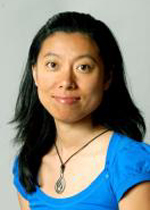
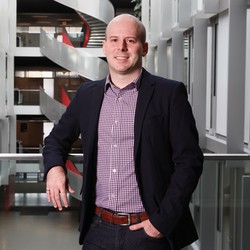
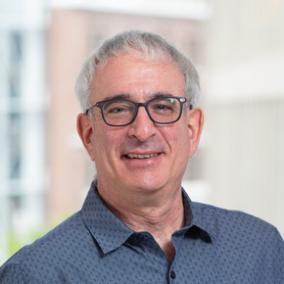
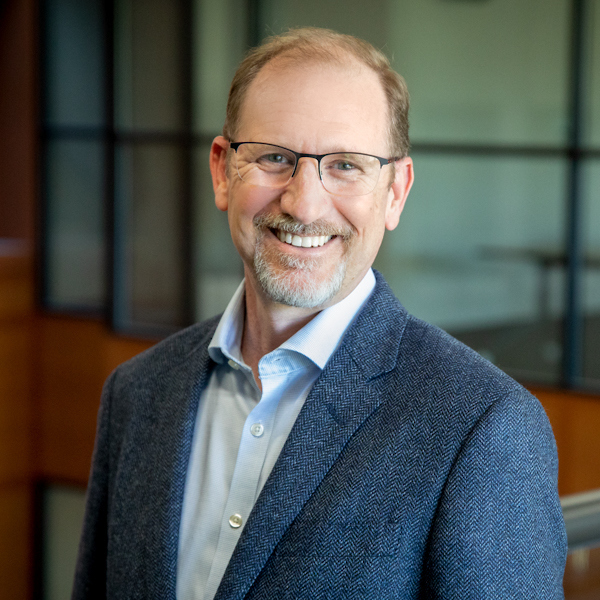
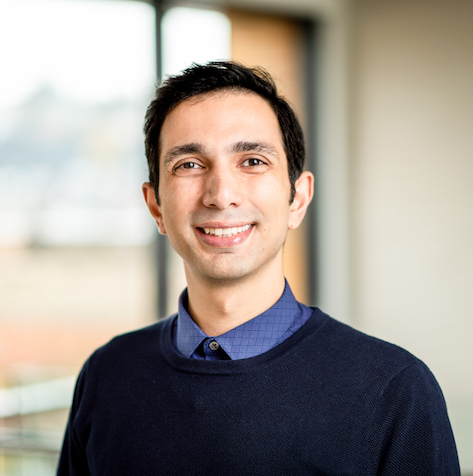
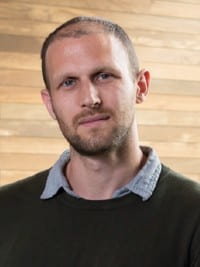
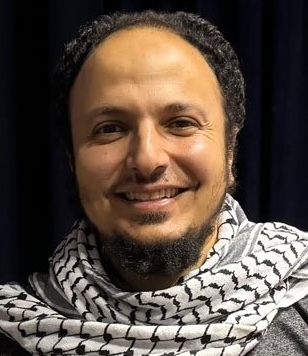
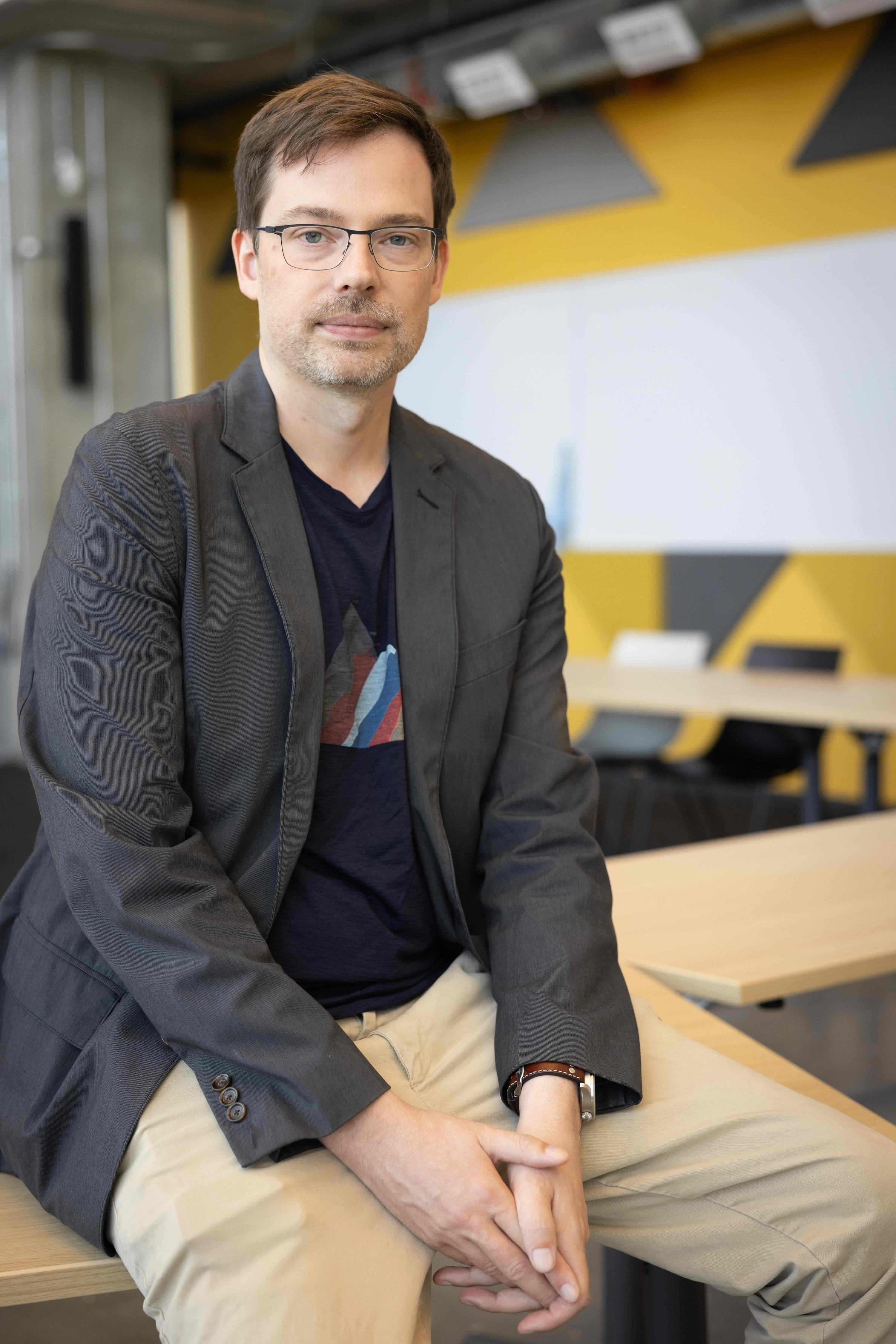
Dr. Corey T. Callaghan is an Assistant Professor in the Department of Wildlife Ecology and Conservation at the University of Florida . Based at the Fort Lauderdale Research and Education Center , his research focuses on global change ecology using big data from citizen science platforms like eBird and iNaturalist, combined with geospatial analyses and macroecological theory . Ph.D. (2019) from UNSW Sydney M.S. (2015) from Florida Atlantic University B.S. + B.S. (2013) from Canisius College His work examines urban ecology , including how species traits influence urban tolerance across birds, amphibians, and butterflies. He develops adaptive sampling frameworks to optimize citizen science data collection while addressing biases. Current projects analyze human-nature interactions through citizen science participation, secondary data in photographs, and machine learning for biodiversity monitoring. He actively contributes to conservation strategies for urban biodiversity and data-driven restoration efforts . Recent publications highlight his expertise in cross-taxa comparisons , continental-scale analyses , and ecosystem service quantification . He leads the Global Ecology Research Group at the University of Florida, emphasizing collaborative science and open-source methodologies .
Dawn Song is a Professor in the Department of Electrical Engineering and Computer Science at the University of California, Berkeley, affiliated with multiple research centers including the Berkeley Artificial Intelligence Research Lab (BAIR) and the Berkeley Center for Responsible, Decentralized Intelligence (RDI). She holds leadership roles in AI safety, cybersecurity, and blockchain research. Her work bridges machine learning, security, and distributed systems, with notable contributions to formal verification, privacy-preserving technologies, and AI governance. Education: Ph.D. (2002) and M.S. (1999) in Computer Science from UC Berkeley and Carnegie Mellon University, respectively. She previously served as an Assistant Professor at Carnegie Mellon University before joining UC Berkeley in 2007. Research Interests: Dawn's work focuses on AI safety, cybersecurity, and the ethical implications of frontier AI. She explores topics such as large language model vulnerabilities, zero-knowledge proofs, blockchain security, and policy frameworks for AI governance. Her research combines theoretical rigor with practical applications, addressing challenges in secure systems, adversarial machine learning, and privacy-preserving computation. Publications: Her recent work includes groundbreaking studies on LLM memorization, smart contract decompilation, and AI agent cybersecurity evaluation. She also leads initiatives like the Singapore Consensus and California Report on AI safety priorities, emphasizing global collaboration in risk mitigation. Notable Awards: MacArthur Fellowship (2010), ACM Fellow (2019), IEEE Fellow (2019) Advising & Grants: She advises projects on AI policy and cybersecurity, securing grants from NSF, DARPA, and industry collaborations. Her lab develops tools like CyberGym for evaluating AI agents and zkPyTorch for secure machine learning. Labs & Teams: Her research groups at UC Berkeley focus on cutting-edge projects in AI safety, blockchain, and cybersecurity, collaborating with industry leaders and policymakers to advance both technical and ethical standards.
Antoine Bosselut is a Tenure Track Assistant Professor at École Polytechnique Fédérale de Lausanne (EPFL) in the School of Computer and Communication Sciences, where he leads the EPFL NLP group. His research focuses on developing AI reasoning agents that can model, represent, and reason about human and world knowledge, with applications in health, education, and global fairness. His research interests span multiple critical areas in modern AI: LLM Representations of Knowledge: Understanding what language models know and how they represent that knowledge internally Reasoning Algorithms: Developing methods to improve LLMs' reasoning capabilities through symbolic systems, neuroscience, and cognitive science Large-scale AI Development: Creating open-source foundation models with multilingual capabilities AI Democratization: Ensuring equitable access to AI technologies across different cultural and regulatory contexts His recent publications reveal a strong focus on the intersection of language models and cognitive science, with multiple studies examining how LLMs align with human cognition. He's also deeply engaged in practical applications of NLP technology, particularly in education and multilingual settings, as evidenced by his work on evaluating AI's impact on higher education and developing culturally-aware language models. His scientific achievements have been recognized with several prestigious awards: Outstanding Paper Award at NAACL 2025 ELLIS Scholar designation in 2024 Outstanding Paper Award at ACL 2023 Inclusion in Forbes 30 Under 30 list for Science & Healthcare in 2021 Bosselut actively mentors numerous PhD students across diverse NLP research areas and has secured significant recognition for his work in both academic and media circles. His lab has been featured in major publications including Communications of the ACM, The Atlantic, and Quanta Magazine, highlighting the societal impact of his research on commonsense reasoning and AI capabilities.
Joshua D. Angrist is the Ford Professor of Economics at the Massachusetts Institute of Technology, where he has been a faculty member since 1996. He is also a co-founder and director of MIT's Blueprint Labs and a Research Associate at the National Bureau of Economic Research. Angrist shares the 2021 Nobel Prize in Economic Sciences with David Card and Guido Imbens for their methodological contributions to the analysis of causal relationships. Angrist received his B.A. from Oberlin College in 1982 and completed his Ph.D. in Economics at Princeton University in 1989. Prior to joining MIT, he taught at Harvard University and the Hebrew University of Jerusalem. His academic journey began somewhat unconventionally, as he left high school early after 11th grade, worked for over a year, and only later discovered his passion for economics through an inspiring teacher at Oberlin. Angrist's research focuses on developing and applying innovative econometric methods to answer important economic questions using natural experiments. His work spans labor economics, education economics, and causal inference methodology. He is particularly known for his contributions to instrumental variables methods and the Local Average Treatment Effect (LATE) framework developed with Guido Imbens. His research explores the economics of education and school reform, the impact of social programs on labor markets, and the effects of immigration and regulation. His recent publications reveal a continued focus on causal inference methods applied to education policy questions, labor market issues, and health economics. The trend shows increasing sophistication in research design, with particular attention to addressing selection bias and developing methods for external validity. His work spans theoretical econometric contributions alongside empirical applications in education, labor markets, and health. Sveriges Riksbank Prize in Economic Sciences in Memory of Alfred Nobel (2021) Fama Prize for Graduate Education (2018) Fellow of the American Academy of Arts and Sciences Fellow of the Econometric Society Angrist is deeply committed to teaching and mentoring. He has developed influential econometrics textbooks including 'Mostly Harmless Econometrics' and 'Mastering Metrics' with Jörn-Steffen Pischke. At MIT, he teaches courses including Labor Economics I (14.661), Econometric Data Science (14.32), and Labor Economics and Public Policy (14.64). He emphasizes selecting UROP students who have mastered foundational economics through courses like 14.64 and 14.32. Beyond MIT, Angrist co-founded Avela, a software startup using cutting-edge research to help schools improve enrollment and operations. Angrist co-founded and directs MIT's Blueprint Labs, which brings together researchers from economics, computer science, and education to develop innovative solutions for educational challenges. Through Blueprint Labs and Avela, his work bridges academic research with practical applications in education policy and technology.
Chua Tat Seng is a Professor at the School of Computing, National University of Singapore (NUS), holding the KITHCT Chair Professorship since 2009. He serves as co-Director of the NExT++ Center, a joint research center between NUS and Tsinghua University focused on Extreme Search. His academic career spans over three decades at NUS, where he has held various leadership positions including Acting Dean of the School of Computing (1998-2000) and Acting Head of the Department of Information Systems & Computer Science (1996-1998). Professor Chua's research spans unstructured data analytics , multimedia information retrieval , recommendation and conversation systems , and emerging applications in e-commerce and fintech . He established the Lab for Media Search (LMS) at the School of Computing and has been instrumental in advancing multimodal learning and search technologies. His work bridges theoretical foundations with practical applications, particularly in developing trustable AI systems for real-world deployment. His recent publications demonstrate a strong focus on large language models for recommendation systems , multimodal learning , and generative AI applications . The research trends show increasing emphasis on LLM-based recommendation, multimodal understanding, and addressing fundamental challenges in AI reliability, fairness, and efficiency. His work spans theoretical advancements in representation learning to practical applications in e-commerce, finance, and healthcare domains. ACM SIGMM Technical Achievement Award 2015 Multiple Best Paper Awards across ACM Multimedia, IEEE Transactions, and MMM conferences (2007-2020) Professor Chua has supervised 37 PhD students since 2004, establishing himself as a dedicated mentor in the academic community. His research has been supported by substantial grants including NExT++ ($12 million), Base Metals Price Forecasting ($200,000), and Multilingual Multimodal Knowledge Graph ($500,000). He maintains active collaborations with Tsinghua University, University of Southampton, and industry partners like Four Elements Capital and Singapore Press Holdings. As co-Director of the NExT++ Center, he leads a major research initiative focused on Web Intelligence and User Empowerment. His visiting professorships at Tsinghua University (2017-present) and Zhejiang University (2021-present) reflect his international impact in the field of multimedia and AI research.
Herman Barkema is a Professor in Epidemiology of Infectious Diseases at the Faculty of Veterinary Medicine, University of Calgary, with a joint appointment in the Department of Community Health Sciences, Cumming School of Medicine. His research focuses on preventing infectious diseases in cattle herds (e.g., mastitis, Johne’s disease) and antimicrobial resistance, integrating animal and public health perspectives under the One Health framework. He founded the Department of Production Animal Health and leads the AMR – One Health Consortium and CAN-AMR-Net. DVM, Veterinary Medicine, Utrecht University (1988) PhD, Veterinary Science, Utrecht University (1998) His work spans clinical veterinary epidemiology, antimicrobial resistance mechanisms, and zoonotic disease control. He has over 425 publications and collaborates globally, including as a Foreign Expert at China Agricultural University. Recent research trends highlight his focus on multi-omics approaches, ceRNA networks, and antimicrobial stewardship in dairy systems, with significant contributions to Johne’s disease diagnostics and mastitis prevention. Roger Morris ISVEE Award (2024) Plowright Prize (2022) Killam Annual Professorship (2019) Multiple Journal of Dairy Science Most Cited Awards (2011–2024) Fellow, Canadian Academy of Health Sciences (2014) Dr. Barkema supervises graduate students and postdoctoral fellows, emphasizing interdisciplinary mentorship. He co-developed the Veterinary DialogueTrainer for clinical communication training and participates in public engagement initiatives like Breakfast on the Farm. He leads the AMR – One Health Consortium and CAN-AMR-Net, integrating stakeholders across Canada and internationally. His affiliations include the Snyder Institute for Chronic Diseases and strategic initiatives on Infectious Diseases and One Health (2015–2025).
David Williamson Shaffer is the Sears Bascom Professor of Learning Analytics and Vilas Distinguished Achievement Professor of Learning Sciences at the University of Wisconsin-Madison's Department of Educational Psychology. He is also a Data Philosopher at the Wisconsin Center for Education Research. His work focuses on merging statistical and qualitative methods to model complex human collaboration. Shaffer holds an AB in History and East Asian Studies from Harvard University (1987), and MS/PhD in Media Arts and Sciences from MIT (1996/1998). Before academia, he was a teacher, curriculum developer, and game designer. His research emphasizes Quantitative Ethnography —a methodology combining big data analysis with cultural interpretation. Key contributions include Epistemic Network Analysis (ENA) and over 250 publications, including influential books like How Computer Games Help Children Learn (2006) and Quantitative Ethnography (2017). Awardees of the EU Marie Curie Fellowship (2008) and Spencer Foundation Fellowship (2003), Shaffer's work has been presented globally at conferences like Learning Analytics & Knowledge and Computer Supported Collaborative Learning. His interdisciplinary approach bridges education, data science, and humanities, addressing challenges in authentic STEM experiences, collaborative learning analytics, and culturally responsive pedagogy.
Elaine Francis is a Professor of English and Linguistics at Purdue University's College of Liberal Arts, where she serves as Associate Head of the Department of English and directs the Experimental Linguistics Lab. She holds additional affiliations as an Affiliate Faculty Member in the Department of Linguistics and a Courtesy Faculty Member in the Department of Speech, Language, and Hearing Sciences. Ph.D. in Linguistics, University of Chicago (1999) B.A. in Linguistics, College of William and Mary (1993) MA in Linguistics, University of Chicago (1995) Former Assistant Professor at the University of Hong Kong (1999-2002) Professor Francis's research focuses on syntax and its interfaces with semantics, discourse information structure, and language processing in production and comprehension. She employs experimental methods to investigate syntactic, semantic, discourse-pragmatic, and cognitive factors underlying complex sentence structures. Her primary research areas include word order alternations, filler-gap dependencies, resumptive pronouns, and grammatical acceptability. She examines how various factors contribute to grammatical alternations in language use and explores how processing pressures in production and comprehension contribute to grammatical conventions. Her recent publication record shows consistent output across multiple linguistic subfields, with a strong emphasis on experimental syntax and psycholinguistics. Her 2022 book, Gradient Acceptability and Linguistic Theory , represents a significant contribution to understanding acceptability judgment tasks in relation to syntactic theory. Her work spans theoretical syntax, experimental linguistics, second language acquisition, and cross-linguistic comparison, often bridging the gap between theoretical frameworks and empirical evidence. Regularly teaches short courses at Linguistic Society of America Linguistic Institutes Member of Linguistic Society of America Ethics Committee Editorial board member of Glossa Psycholinguistics Co-editor of Polymorphous Linguistics: Jim McCawley's Legacy (2005) Co-editor of Mismatch: Form-Function Incongruity and the Architecture of Grammar (2003) Professor Francis actively supervises graduate students in linguistics, though she has indicated she will be unable to take on new graduate students for the 2025-2026 academic year. She has received research support for her experimental work, particularly for investigating syntactic phenomena through controlled experiments and corpus analysis. Her collaborative work extends across multiple institutions and disciplines, including collaborations with researchers in computational linguistics, cognitive science, and clinical linguistics. She directs the Experimental Linguistics Lab at Purdue University, which conducts research on syntactic processing using various experimental methodologies. The lab investigates how speakers produce and comprehend complex sentence structures, with particular attention to how grammatical knowledge interacts with processing constraints. Current projects include research on relative clauses, syntactic islands, and acceptability gradient phenomena across multiple languages.
Prof. Luke Zettlemoyer is an Adjunct Professor of Computer Science and Engineering at the University of Washington, with affiliations to the Department of Linguistics. He focuses on machine learning, natural language processing, and multimodal systems, contributing to advancements in large language models, ethical AI, and scalable architectures. His research addresses challenges in model alignment, generalization, and cross-domain integration. Key research interests include multimodal reward models, efficient tokenization strategies, and model optimization techniques. He has explored topics such as neural trajectories for robot learning, content-adaptive image processing, and ethical mitigation of verbatim data reproduction. His publications span 2023–2025, emphasizing practical applications of AI in robotics, vision-language systems, and scalable retrieval-based models. While no formal awards are listed, his work reflects significant contributions to foundational AI research.
Arman Cohan is an Assistant Professor in the Department of Computer Science at Yale University, where he leads the Yale NLP Lab since its founding in January 2023. His research spans natural language processing and machine learning with emphasis on language modeling, representation learning, retrieval systems, and specialized domain applications including scientific discovery and AI for science. His primary research interests include: Natural Language Processing Machine Learning Large Language Models Information Retrieval AI for Science Scientific Problem-Solving Recent publications (2025) demonstrate intense focus on evaluating and advancing LLM capabilities across multimodal reasoning, scientific claim verification, financial domain applications, and biological modeling. The lab consistently produces high-impact work accepted at top-tier conferences including ACL, EMNLP, and ICLR, with 11 papers at ACL 2025 alone. Scientific awards include: Best Paper Award at AI4Research Workshop (IJCAI 2024) Outstanding Paper Award at EACL 2023 Best Paper Award at ACL 2024 for Olmo language model research Professor Cohan actively advises PhD students including Kaili Liu, Jacob Dunefsky, Alan Li, Yilun Zhao, and has graduated researchers such as Linyong Nan (now at Zoom) and Ansong Ni (now at Meta). The lab maintains strong industry partnerships and receives substantial research funding as evidenced by its prolific output and conference presence. The Yale NLP Lab hosts the annual New England NLP Workshop and regularly features speakers from leading institutions including Meta AI, Allen Institute for AI, and DeepMind, fostering a collaborative environment for advancing NLP research.
Samuel J. Gershman is a Professor of Psychology at Harvard University, affiliated with both the Department of Psychology and the Center for Brain Science. He directs the Computational Cognitive Neuroscience Lab (CCNLab), where he investigates how the brain acquires richly structured knowledge about the environment and uses this knowledge to guide adaptive behavior. Gershman received his B.A. in Neuroscience and Behavior from Columbia University in 2007 and his Ph.D. in Psychology and Neuroscience from Princeton University in 2013, followed by postdoctoral training in the Department of Brain and Cognitive Sciences at MIT (2013-2015). His research spans computational neuroscience, cognitive psychology, and machine learning. His primary research interests include learning, memory, decision making, and computational neuroscience. Gershman's work integrates behavioral, neuroimaging, and computational techniques to understand cognitive processes. He has made significant contributions to understanding memory systems, reinforcement learning, and the computational principles underlying human cognition. Analysis of Gershman's recent publications reveals a strong focus on computational approaches to understanding cognitive processes, with particular emphasis on memory systems, decision-making mechanisms, and the intersection of artificial intelligence with cognitive neuroscience. His work often bridges theoretical computational models with empirical neuroscience data, exploring how the brain implements efficient cognitive algorithms. Gershman actively mentors graduate students and postdoctoral researchers, with current advisees working on diverse projects spanning computational modeling, neuroimaging, and behavioral experiments. His lab investigates topics ranging from dopamine signaling to social cognition using a combination of theoretical and experimental approaches. The CCNLab, which Gershman directs, brings together researchers from psychology, neuroscience, computer science, and related fields to explore the computational principles of cognition. The lab utilizes a range of methodologies including behavioral experiments, neuroimaging, computational modeling, and theoretical analysis to address fundamental questions about how the mind works.
Walid Magdy is a Professor at the School of Informatics, The University of Edinburgh, where he is a faculty member at the Institute for Language, Cognition and Computation (ILCC). He holds a PhD from Dublin City University's School of Computing and has been a faculty fellow at The Alan Turing Institute. With substantial industry experience, he has worked for Qatar Computing Research Institute (QCRI), Microsoft, and IBM, where he filed nine patents. His research spans computational social science and natural language processing. In computational social science, he focuses on social content analysis, political bias detection, polarization, and users' behavior analysis/prediction, with particular attention to understudied communities. His natural language processing work centers on social applications including sentiment analysis, sarcasm detection, and hate-speech identification, with specialized expertise in Arabic and its dialects as well as Persian. Professor Magdy's recent publications demonstrate a consistent focus on Arabic language processing and social media analysis, with growing attention to cultural factors in NLP systems. His work bridges computational methods with social science questions, particularly regarding misinformation, cultural differences in online behavior, and the impact of platform policies on diverse linguistic communities. He has expanded his research to include Persian language processing and continues to explore social dynamics across different cultural contexts. His significant contributions have been recognized with multiple awards: Best Demo Award for TwiXplorer at CSCW 2024 Outstanding Paper Award at ACL 2024 Best Paper Award Runner-up at SocInfo 2022 Best Paper Award at WANLP-EMNLP 2022 Best Paper Award at AIRS 2015 Best Dataset Award at ICWSM 2013 Professor Magdy serves as an editor for Springer's Social Network Analysis and Mining journal and has held leadership roles in major conferences including ACL 2023, ArabicNLP 2023, ICWSM 2022, and ASONAM 2022. He has co-organized numerous shared tasks focused on Arabic language processing and social media analysis, contributing significantly to community resources and benchmarks. He founded and directs the Social Media Analysis and Support for Humanity (SMASH) research group at the University of Edinburgh, which has organized the Summer School in Computational Social Science (SICSS-Edinburgh) in 2022, 2023, and 2025, training researchers in computational social science methodologies.
Alan Ritter is an Associate Professor at the School of Interactive Computing , Georgia Institute of Technology, with additional affiliation to the Machine Learning Center . His research focuses on Natural Language Processing , particularly robust models across domains/languages with fewer labels and efficient resource use, plus data-driven dialogue agents for open-topic conversations. Research Interests : Robust NLP models, cross-lingual transfer, resource-efficient learning, dialogue systems, cultural bias measurement, and privacy-aware language models Students : Mentors Ph.D. students in Georgia Tech's ML and CS programs, including Junmo Kang, Yang Chen, and Duong Minh Le. Alumni include Fan Bai (Ph.D. 2023), Yang Chen (Ph.D. 2024), and Andrew Li (M.S. 2024). Awards : NSF CAREER Award, Amazon Research Award, ACL 2024 Best Social Impact Paper, IUI 2009 Best Student Paper. Recent Work : Studies training budget allocation between supervised and preference-based finetuning, cross-lingual information extraction, cultural bias in LLMs, and privacy risk mitigation in social media disclosures. Service : Served as Program Chair for NAACL 2025, Area Chair for multiple top-tier conferences (COLM, EMNLP, ACL, EACL, AAAI). Email : alan.ritter@cc.gatech.edu
Greg Durrett is an Associate Professor in the Department of Computer Science at University of Texas at Austin, leading the TAUR Lab (Text Analysis, Understanding, and Reasoning ). His research focuses on advancing Large Language Models (LLMs) for knowledge-intensive tasks in medical information processing scientific discovery legal reasoning . He received his B.S. in Computer Science and Mathematics from MIT (2010) and Ph.D. in Computer Science from UC Berkeley (2016). His work develops techniques to train LLMs with new capabilities augment models for reliability assess model outputs improve reasoning frameworks . His 15 most recent publications (2021-2025) span knowledge propagation in LLMs chain-of-thought reasoning code generation benchmarks multi-modal reasoning fact verification discourse analysis . Scientific honors include NSF CAREER Award (2024) NSF grants (2018, 2024) Bloomberg Data Science Grant (2017) Facebook Fellowship (2014) Best Paper Finalist (EMNLP 2013) . Teaching: CS388: Natural Language Processing (graduate) CS371N: NLP (undergraduate) High school NLP module .
Steven Jackson is a Professor of Information Science and Science and Technology Studies at Cornell University's Bowers College of Computing and Information Science, with additional graduate field appointments in Communication and Public Affairs. Since July 2023, he has served as Vice-Provost for Academic Innovation at Cornell, and previously held leadership positions as Chair of Information Science and Dean of William Keeton House. His work bridges academic research with significant institutional leadership in higher education innovation. Dr. Jackson's research focuses on critical intersections of technology, society, and the environment, with three primary strands: technology ethics, law and policy; maintenance, repair and sustainability; and technology, inequality and global development. His work draws from American pragmatism, political economy, and science and technology studies, integrating methods from sociology, anthropology, philosophy, and media studies. He is particularly interested in how computing practices meet social and material worlds, with implications for infrastructure, collaboration, sustainability, and cultural practice. His recent publications reveal a strong emphasis on repair as both theoretical concept and practical methodology, exploring 'ordinary hope' as a framework for technological engagement and examining unmaking as a necessary counterpart to design. The research spans diverse geographical contexts from the global North to South, addressing caste dynamics in computing, digital authoritarianism, and infrastructure challenges in developing contexts. Dr. Jackson has received significant recognition including an NSF CAREER award and more than twenty paper awards at leading computing and information science venues. His research has been supported by major organizations including the U.S. National Science Foundation, Social Science Research Council, Ford Foundation, Sloan Foundation, World Bank, Intel Research, Atkinson Center for Sustainability, and the Canadian Social Science and Humanities Research Council. As an advisor, Dr. Jackson has mentored numerous graduate students who have gone on to prominent positions at institutions worldwide. He currently advises Jen Liu, Amy Cheatle, Daniel Mwesigwa, Johan Michalove, and Ritik Batra, while his former students include Palashi Vaghela (Assistant Professor at Simon Fraser University), Samir Passi (Responsible AI Researcher at Microsoft), Maggie Jack (Assistant Professor at NYU), and Ranjit Singh (Senior Researcher at Data and Society). Dr. Jackson convenes the Computing On Earth Lab, an experimental collaboration bringing together social scientists, humanists, artists, and engineers to rethink the material and planetary foundations of computing. The lab reflects his commitment to interdisciplinary approaches that address computing's environmental impacts and sustainability challenges.