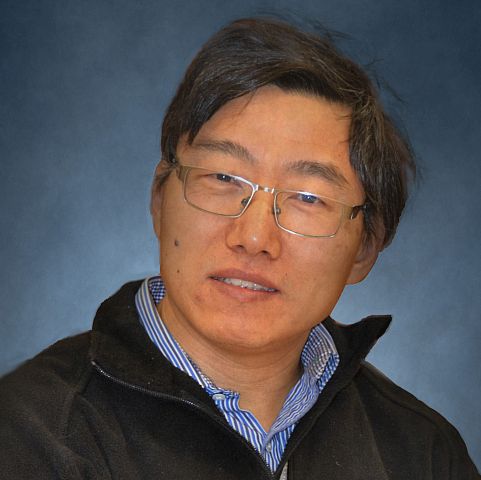
Qingguo Li is a Professor and Associate Head at the Department of Mechanical and Materials Engineering , Queen's University , and a member of the Ingenuity Labs Research Institute . He specializes in biomechanical system design, energy harvesting, wearable sensors, gait analysis, and load carriage systems. His research integrates robotics, biomedical engineering, and sensor technology to develop human-centric devices and mobility aids. Current Roles : Professor, Associate Head, Queen's University Research Institute : Ingenuity Labs Research Institute Lab : Bio-Mechatronics and Robotics Laboratory His work focuses on biomechanical energy harvesting , IMU-based motion analysis , and assistive device development . Key applications include stroke rehabilitation, gait monitoring, and wearable power generation systems. Articles span cable-driven robots , smart walkers , and 3D printing mechanisms , emphasizing human-robot interaction and dynamic modeling . The lab explores sensor calibration , adaptive control algorithms , and human movement optimization . Areas of impact include rehabilitation engineering , load carriage stability , wearable sensor accuracy , and assistive robotics . His team develops solutions for gait asymmetry detection , post-stroke mobility , and low-cost energy systems , leveraging machine learning and kinetic modeling .
Dr. Kevin J. Deluzio is an Associate Professor in the Department of Mechanical and Materials Engineering at Queen's University and serves as Dean of Smith Engineering. He holds a cross-appointment in the Centre for Health Innovation and is affiliated with the Canadian Orthopaedic Research Society and multiple biomechanics societies. His research focuses on musculoskeletal health, biomechanics of human locomotion, and knee osteoarthritis treatment evaluation. Dr. Deluzio earned his BSc (1988), MSc (1990), and PhD (1997) from Queen's University, followed by postdoctoral training at Harvard University. He previously held a faculty position at Dalhousie University, establishing the Dynamics of Human Motion Laboratory. Education: Bachelor of Science (Honours) in Mathematics and Engineering, Queen's University (1988) Master's of Science in Mechanical Engineering, Queen's University (1990) Doctor of Philosophy in Mechanical Engineering, Queen's University (1997) Post-doctorate in Orthopaedic Biomechanics, Harvard University (1999) Research Interests: Dr. Deluzio investigates biomechanical factors of musculoskeletal diseases (e.g., knee osteoarthritis), non-invasive therapies, and surgical treatments like total knee replacement. His work involves markerless motion capture systems and collaborations between engineering and medicine through the Human Mobility Research Centre at Kingston General Hospital. Grants & Awards: While no specific awards are listed, his research has been supported through academic appointments and institutional affiliations. Labs & Teams: Directs the Dynamics of Human Motion Laboratory and collaborates at the Human Mobility Research Centre, integrating engineering and medical expertise to advance musculoskeletal health solutions.
Dr. Emily J. McWalter is an Associate Professor in the Department of Mechanical Engineering at the University of Saskatchewan, affiliated with the Division of Biomedical Engineering. She holds a BSc from Queen’s University (2002), M.A.Sc. and PhD from the University of British Columbia (2004/2010). Previously, she worked at Stanford University as a Post-doctoral Fellow and Research Associate in Radiology (2010–2015). Her research focuses on applying quantitative MRI techniques to study knee joint and soft tissue function in degenerative diseases like osteoarthritis. Education: B.Sc. Mechanical Engineering, Queen’s University (2002) M.A.Sc. Mechanical Engineering, University of British Columbia (2004) Ph.D. Mechanical Engineering, University of British Columbia (2010) Research Interests: Dr. McWalter’s work integrates biomechanical principles with medical imaging to understand musculoskeletal disorders. Her key areas include developing novel MRI methodologies to assess tissue degradation mechanisms in osteoarthritis, with implications for diagnostic and therapeutic advancements. Affiliations: Department of Mechanical Engineering, College of Engineering, University of Saskatchewan. Active in research groups: Applied Mechanics and Machine Design, Biomedical Engineering.
Monica Maly is a Part-Time Associate Professor in Rehabilitation Science within the Faculty of Health Sciences at McMaster University. Her academic profile demonstrates extensive expertise in biomechanics and rehabilitation, with particular focus on knee osteoarthritis research. She maintains an active research program with numerous recent publications spanning rheumatology, biomechanics, and rehabilitation science. Dr. Maly's research interests center on understanding the biomechanical and physiological factors contributing to knee osteoarthritis progression and developing effective interventions. Her work examines knee joint mechanics, muscle strength and capacity, gait analysis, pain management strategies, and the impact of exercise interventions on OA symptoms. She has conducted significant research on sex differences in OA, racial disparities in pain experiences, and the relationship between obesity, inflammation, and joint function. Her methodological approaches include biomechanical analysis, clinical trials, systematic reviews, and innovative technologies like soft robotics for knee bracing. Analysis of her recent publications (2023-2025) reveals a strong focus on understanding knee osteoarthritis mechanisms through biomechanical and physiological lenses, with increasing attention to social determinants of health and health disparities. Her work spans multiple disciplines including rheumatology, biomechanics, rehabilitation science, and public health, demonstrating interdisciplinary collaboration. Key trends include examining racial disparities in pain experiences, developing novel interventions like soft robotic knee braces, and investigating the complex relationships between joint loading, biomarkers, and cartilage changes. Dr. Maly has collaborated extensively with researchers across multiple institutions, as evidenced by her numerous publications in high-impact journals such as Osteoarthritis and Cartilage, Arthritis & Rheumatology, and Clinical Biomechanics. Her work often utilizes data from large longitudinal studies including the Osteoarthritis Initiative and the Canadian Longitudinal Study on Aging. While specific grant information isn't detailed in the provided text, her extensive publication record suggests successful funding of multiple research projects.
Lindsey Westover, PhD, PEng, serves as an Associate Professor in the Department of Mechanical Engineering and Associate Dean in the Faculty of Engineering at the University of Alberta. Her research and teaching activities are centered in the Biomedical Engineering program, with her laboratory located in the Donadeo Innovation Centre for Engineering (13-224, 9211 116 St, Edmonton, AB T6G 2H5). She maintains an active research profile while contributing to academic leadership through her deanship. Her educational background includes: 2018: Postdoctoral Fellowship in Rehabilitation Medicine, University of Alberta 2016: Ph.D. in Mechanical Engineering, University of Alberta 2011: M.Sc. in Mechanical Engineering, University of Calgary 2007: B.Sc. in Mechanical Engineering, University of Calgary Dr. Westover's research program spans biomechanics and biomedical engineering with emphasis on noninvasive assessment of biological structures, vibration analysis for percutaneous implants, joint biomechanics (ligaments and cartilage), spinal deformity analysis through asymmetry metrics, mechanical testing of biological tissues, and computational modeling of biological systems. Her work integrates laboratory experiments, computational methods, and in vivo studies to develop innovative diagnostic and therapeutic approaches. Analysis of her 15 most recent publications (2018-2020) reveals consistent focus on bone mechanics, implant stability, and symmetry analysis across orthopedics, audiology, and dentistry. Key themes include osseointegration evaluation using ASIST technology, pelvic/spinal deformity quantification, and computational modeling of biological structures. Her work appears in high-impact journals spanning engineering and clinical disciplines, demonstrating strong interdisciplinary collaboration. Scientific recognition includes: Nomination for Ear and Hearing 2018 Editor's Award for bone conduction device research Dr. Westover mentors graduate students through co-authorship on numerous publications and teaches core mechanical engineering courses including MEC E 451 (Vibrations and Sound), MEC E 390 (Numerical Methods), and MEC E 200 (Introduction to Mechanical Engineering). Her research is supported by collaborative grants with clinical partners and engineering colleagues. She leads biomechanics research within the Department of Mechanical Engineering, collaborating extensively with the Faculty of Rehabilitation Medicine and surgical departments. Her laboratory develops advanced testing systems like ASIST for implant stability evaluation across hearing devices and dental applications, while her computational work informs clinical approaches to scoliosis management and fracture reconstruction.
Dr. Kati Pasanen is an Associate Professor in the Faculty of Kinesiology at the University of Calgary, and holds affiliations with the McCaig Institute for Bone and Joint Health and Alberta Children's Hospital Research Institute. She specializes in sport injury prevention, particularly focusing on ACL injury mechanisms in female athletes and biomechanical risk factors. Pasanen directs the Clinical Biomechanics Lab and co-leads the Integrative Neuromuscular Sport Performance Lab, conducting research on training interventions, wearable technology applications, and injury epidemiology. Education: PhD in Injury Prevention (University of Tampere, 2009) MSc in Physiotherapy/Health Sciences (University of Jyväskylä, 2005) BSc in Physiotherapy (Karelia University of Applied Sciences, 1999) Research Interests: Her work integrates clinical, biomechanical, and epidemiological approaches to prevent sport injuries in team sports. Key areas include neuromuscular training programs, movement biomechanics, and the application of wearable technology for injury risk assessment. She has pioneered studies on hip/core strengthening interventions for novice runners and examines psychosocial factors influencing athlete injury susceptibility. Awards: Physiotherapist of the Year (Finnish Association of Physiotherapists, 2017) Sports Medicine Research Award (Finnish Society of Sport Sciences, 2008) Advising & Grants: While specific grant details are not listed, her research has been supported by large-scale trials (e.g., Run RCT) and international collaborations. She advises on evidence-based injury prevention strategies and mentors through directed studies in wearable tech and motion capture. Labs & Teams: Leads the Clinical Biomechanics Lab and collaborates with the Integrative Neuromuscular Sport Performance Lab to advance translational research in injury prevention and athlete performance optimization.
Dr. Garrick Forman serves as a Senior Lecturer in the Department of Kinesiology within Brock University's Faculty of Applied Health Sciences, where he conducts pioneering research in esports biomechanics and ergonomics. Holding a PhD in Neuromechanics and Ergonomics from Brock, he focuses on optimizing gamer performance while mitigating injury risks through industry partnerships with GM Canada, NotionMedical, and Waterloo Regional Police. His educational background includes: PhD in Neuromechanics and Ergonomics, Brock University Forman's research centers on esports biomechanics, neuromuscular control of the distal upper limb, and fatigue-induced motor performance degradation. His work integrates advanced biomechanical analysis with practical ergonomic solutions, particularly addressing repetitive strain in gaming contexts. Recent studies employ robotics for precise movement quantification and examine sex-specific responses to physical demands, reflecting a multidisciplinary approach to human performance optimization. Analysis of his 15 most recent publications (2025-2020) reveals a dominant focus on upper extremity biomechanics in gaming and occupational settings, with emerging trends in corticospinal excitability assessment and robotic movement analysis. His research consistently bridges laboratory findings with real-world applications through industry collaborations, emphasizing injury prevention and performance enhancement in both esports and traditional athletic domains. Dr. Forman's scholarly contributions have earned significant recognition: ISEK John V. Basmajian Memorial Award NSERC Canada Graduate Scholarship – Doctoral CIHR Banting & Best Scholarship In academic service, he teaches Clinical Biomechanics, Motor Control, Motor Learning, and Balance and Gait courses. While specific grant funding details aren't publicized, his industry partnerships indicate applied research support. His mentorship extends to laboratory instruction though formal graduate student supervision isn't documented. Current research leverages wrist robotics and electromyography to develop evidence-based ergonomic guidelines for gamers and professionals. His laboratory work operates at the intersection of sports science and human-computer interaction, utilizing motion capture and robotic systems to translate biomechanical insights into practical interventions for pain reduction and performance optimization in high-demand motor tasks.
Dr. Emily Rogers-Bradley serves as an Assistant Professor at the University of Calgary's Schulich School of Engineering with dual appointments in the Department of Mechanical and Manufacturing Engineering and Department of Biomedical Engineering. She is also a Full Member of the McCaig Institute for Bone and Joint Health and a Child Health & Wellness Researcher at the Alberta Children's Hospital Research Institute. As director of the Adaptive Bionics Lab, Dr. Rogers-Bradley leads innovative research at the intersection of precision machine design, biomechanics, and robotics for medical applications. Her educational foundation includes: PhD in Mechanical Engineering from Massachusetts Institute of Technology (2023) SM in Mechanical Engineering from Massachusetts Institute of Technology (2019) SB in Biomedical Engineering from Harvard University (2015) Dr. Rogers-Bradley's research program focuses on three interconnected domains: Prosthesis Innovation: Developing robotic prosthetic devices with variable-stiffness mechanisms that adapt to walking speeds and terrains for people with lower limb amputations, significantly improving biomechanical outcomes Exoskeleton Development: Creating wearable orthotic devices that correct gait abnormalities and enhance performance for specialized activities including rock climbing and downhill walking Biomechanical Analysis: Conducting detailed studies of human gait to optimize device functionality and assess real-world impact on users Her publication trajectory reveals a strategic focus on adaptive wearable robotics, with recent work emphasizing variable-stiffness prostheses that improve walking biomechanics across speeds. Her research spans fundamental biomechanics to practical rehabilitation applications, with notable contributions to EMG-controlled prosthetics and specialized devices for extreme activities. She has also pioneered pediatric applications through wearable technologies for developmentally delayed infants. Dr. Rogers-Bradley's scholarly excellence is recognized through multiple prestigious awards: Best Paper Award Finalist, IEEE/ASME Transactions on Mechatronics (2025) Evolve to Innovate - Best Roadmap and Financial Plans, Hunter Hub for Entrepreneurial Thinking (2025) Early Career Research Excellence and Undergraduate Teaching Excellence, Schulich Excellence Awards (2024) National Science Foundation Graduate Research Fellowship (2017) As an academic leader, Dr. Rogers-Bradley serves as Associate Editor for IEEE Transactions on Neural Systems and Rehabilitation Engineering and the IEEE RAS/EMBS International Conference on Biomedical Robotics. She teaches Biomedical Engineering Foundations (BMEN 600) and Machine Component Design (ENME 493), while her research is supported through university strategic initiatives in Child Health and Wellness (2020-2025) and One Health (2020-2025). The Adaptive Bionics Lab, located in MEB223, operates as a multidisciplinary hub where mechanical engineers, computer scientists, and clinicians collaborate to develop next-generation assistive technologies. The lab's work integrates advanced materials, control systems, and biomechanical analysis to create devices that adapt to real-world environments, with ongoing projects spanning from adult mobility restoration to pediatric developmental support.
Cameron Mitchell is an Associate Professor at the School of Kinesiology , University of British Columbia , specializing in aging, muscle physiology, and physical performance. His research focuses on protein metabolism, sarcopenia, and resistance training adaptations. Email: cameron.mitchell@ubc.ca Office: Chan Gunn Pavilion, Room 221C Labs: Lower Mall Research Station (LMRS), Room 328 Research Interests: Dr. Mitchell investigates molecular mechanisms of muscle hypertrophy, nutritional impacts on protein synthesis, and recovery from traumatic knee injuries. His work bridges kinesiology , molecular biology , and clinical rehabilitation . Publication Trends: Recent papers emphasize ACL injury recovery , microRNA regulation , and mitochondrial dynamics in muscle remodeling. Subfields include exercise-induced proteostasis , collagen turnover , and age-related muscle decline . Graduate Supervision: He supervises Max Abercrombie (MSc in Kinesiology) , exploring upper limb skeletal muscle properties in cervical spinal cord injury.
Dr. Brenda Brouwer is a Professor at Queen's University, holding joint appointments in the School of Rehabilitation Therapy, School of Kinesiology and Health Studies, and the Centre for Neuroscience Studies. She serves as Interim Dean of Smith School of Business and previously held roles as Vice-Provost and Dean of the School of Graduate Studies. Her research focuses on biomechanical, neuromuscular, and metabolic demands of mobility in healthy aging and stroke survivors. Key contributions include studies on stair negotiation biomechanics and stroke rehabilitation strategies. Education: Ph.D., Institute of Medical Science, University of Toronto (1990) M.Sc., School of Physical and Occupational Therapy, McGill University (1986) B.Sc., Department of Kinesiology, University of Waterloo (1980) Research Interests: Biomechanical engineering, cerebrovascular sciences, clinical medicine, rehabilitation medicine, and health sciences. Awards: Ontario Rehabilitation Research Leadership Award (2010), Faculty of Health Sciences Education Award (2007). Grants: Over $3M in funding from Heart and Stroke Foundation, CIHR, and industry partners for projects on stroke rehabilitation, musculoskeletal health, and AI partnerships. Her academic leadership includes roles on Queen's Provost’s Advisory Committee and national councils like the Canadian Association for Graduate Studies. She has authored over 100 peer-reviewed publications and pioneered programs integrating AI and online education.
Allyson Jones is a Professor in the Department of Physical Therapy within the Faculty of Rehabilitation Medicine at the University of Alberta, holding a cross appointment in the School of Public Health. Her expertise bridges clinical physical therapy practice with epidemiological research on aging populations and musculoskeletal health. Education: PhD in Epidemiology, University of Alberta MSc in Physical Therapy, University of Alberta BA in Administrative Studies, University of Winnipeg BSc in Physical Therapy, University of Saskatchewan Dr. Jones' research program investigates health outcomes and health-related quality of life (HRQL) in elderly patients with chronic musculoskeletal conditions. Using mixed-methods approaches including patient surveys, clinical evaluations, performance metrics, and administrative databases, she examines functional recovery, HRQL determinants, and health services utilization for total joint arthroplasties, osteoarthritis, and hip fractures. Her work emphasizes vulnerable populations including rural communities and Indigenous peoples, with strong methodological foundations in longitudinal and population-based epidemiology. Recent publications demonstrate consistent focus on geriatric musculoskeletal health, with evolving emphasis from surgical outcomes to broader social determinants including geographic disparities in care access and Indigenous health equity. Her work increasingly integrates qualitative methodologies with quantitative population health data. Scientific Awards: New Investigator Award from the American Geriatrics Society New Investigator Award from CIHR (2006-2011) AHFMR Population Health Investigator establishment grant (2007-2014) Dr. Jones actively mentors graduate students in Rehabilitation Science and Public Health epidemiology programs, prioritizing candidates interested in administrative data analysis of chronic conditions in aging populations. Her research is funded by Alberta Heritage Foundation for Medical Research, Canadian Institutes of Health Research, and University of Alberta grants, supporting projects on joint arthroplasty outcomes, community mobility, and hip fracture recovery. She maintains active clinical practice as a physical therapist while leading multiple collaborative initiatives. She co-leads research through Collaborative Orthopaedic Research (CORe), contributes to Arthritis Research Canada and Canadian Rheumatology Association initiatives, and participates in the International Network for Aging Research and Injury Prevention Centre, focusing on translating evidence into rehabilitation practice.
Pouya Amiri is an Assistant Professor in Biomechanics and Neuromechanics at Queen's University. He holds a PhD from McGill University and post-doctoral training at Imperial College London. His research focuses on musculoskeletal biomechanics, particularly in impairments like lower limb amputation and knee osteoarthritis. He combines computational models with medical imaging and functional experiments to develop personalized interventions and rehabilitation technologies. Education: PhD in Biomedical Engineering, McGill University Post-Doctoral Fellowship, Imperial College London MASc in Mechanical Engineering, Dalhousie University MSc/BSc in Mechanical Engineering, Isfahan University of Technology Research Interests: Biomechanical adaptations in amputees Knee osteoarthritis mechanics Human balance control Functional electrical stimulation Prediction of joint forces via musculoskeletal models Biofeedback training for gait optimization His recent work explores predictive musculoskeletal models for amputees, VR-based balance control identification, and reducing knee joint loading in osteoarthritis patients. He emphasizes subject-specific approaches for clinical applications. Advising & Funding: Actively recruiting motivated students through scholarships like Ontario Graduate Scholarship and NSERC. Internal funding opportunities are also available.
Jacob Jaremko is a Professor in the Faculty of Medicine & Dentistry at the University of Alberta, specializing in Radiology & Diagnostic Imaging. As a pediatric musculoskeletal radiologist and Canada CIFAR AI Chair, he holds cross-appointments in Computer Science. His clinical practice is with Medical Imaging Consultants, Canada's largest radiology partnership. He co-founded MEDO.ai (now part of Exo Imaging) and the Collaborative for Ultrasound Deep Learning (CUDL). His research integrates deep learning with medical imaging, focusing on pediatric musculoskeletal development, arthritis quantification, and AI automation for ultrasound and MRI analysis. Key areas include hip dysplasia screening using 3D ultrasound, arthritis scoring systems (HIMRISS/KIMRISS), and ethical AI implementation in radiology. He has received significant recognition including the Canada CIFAR AI Chair (2021-2026) and Alberta Health Services Endowed Chair in Diagnostic Imaging (2011-2021). His work bridges engineering and medicine, developing AI tools for point-of-care ultrasound that expand diagnostic access globally. Dr. Jaremko mentors graduate students in radiology, biomedical engineering, and computer science. His lab focuses on translating AI research into clinical practice, particularly in resource-limited settings. Current projects include implementing hip dysplasia screening AI in primary care and developing quantitative MRI biomarkers for arthritis progression.
Dr. Dean Charles Hay serves as Director of the School of Physical and Health Education within the Faculty of Education and Professional Studies at Nipissing University. He holds a Professor position in the Schulich School of Education's Physical and Health Education department and is actively involved as Graduate Program Faculty and in academic administration. Dr. Hay earned his BSc from the University of Toronto and completed his PhD at the University of Tokyo. His academic journey has positioned him as a leading researcher in biomechanics with expertise spanning multiple sophisticated analytical techniques. Dr. Hay's primary research interests focus on biomechanics with specialized expertise in artificial neural networks, wavelet transforms, bilateral asymmetry, and energy expenditure modeling. His work explores how humans maintain balance and execute movements efficiently, developing applied modeling tools to better understand human movement in both controlled and free-living environments. He has pioneered the use of Artificial Neural Networks to model energy expenditure and classify movements from EMG, accelerometry, and heart rate data, while also advancing the application of Continuous Wavelet Transform techniques for analyzing transient postural events. His publication record demonstrates consistent output in high-impact biomechanics and biomedical engineering journals, with research trending toward increasingly sophisticated signal processing techniques applied to movement analysis. Recent work shows expansion into practical applications across sports performance, rehabilitation, and ergonomics, with growing emphasis on translating biomechanical research into real-world settings. Dr. Hay actively mentors graduate students through the MScKin program, supervising multiple successful thesis defenses on topics ranging from computer mouse ergonomics to age-related changes in gait biomechanics. His students regularly present at major biomechanics conferences including the Canadian Society for Biomechanics and Ontario Biomechanics Conference. The Biomechanics and Ergonomics Lab, which Dr. Hay leads, maintains a comprehensive research facility equipped with electromyography systems, cycle ergometers with metabolic measurement capabilities, and motion capture systems for 3D body movement analysis. The lab actively engages with the North Bay community through events like Nipissing University's Research Month and the An Evening at Nipissing University event, demonstrating research equipment and findings to the public.
Yosra Cherni is an Assistant Professor at the School of Kinesiology and Physical Activity Sciences, Faculty of Medicine, University of Montreal, and a researcher at the CHU Sainte-Justine Research Center. Her research focuses on biomechanics and neurophysiology to improve mobility in populations with neuromotor disorders. She holds a PhD in Kinesiology from the University of Montreal and completed postdoctoral training in neurophysiology of locomotion at Université Laval. Her expertise includes robotic technologies for pediatric rehabilitation, gait analysis, and corticospinal excitability assessment. Key affiliations include the Azrieli Research Center at CHU Sainte-Justine, the Provincial Adaptation-Rehabilitation Research Network (REPAR), and the Interdisciplinary Center for Brain and Learning Research (CIRCA). She is actively involved in supervising doctoral and master’s students and has led several research projects funded by agencies like CRSNG and FRQS, focusing on topics such as robotic gait training, 3D-printed orthoses, and neurorehabilitation strategies. Her research contributions emphasize optimizing rehabilitation technologies and clinical decision-making for children with neuromotor disorders. Recent work includes studies on gait adaptations to uneven surfaces, corticospinal excitability during complex tasks, and the efficacy of robotic interventions. She has also contributed to special journal issues and received awards for her innovative approaches in biomechanical and neurophysiological research.