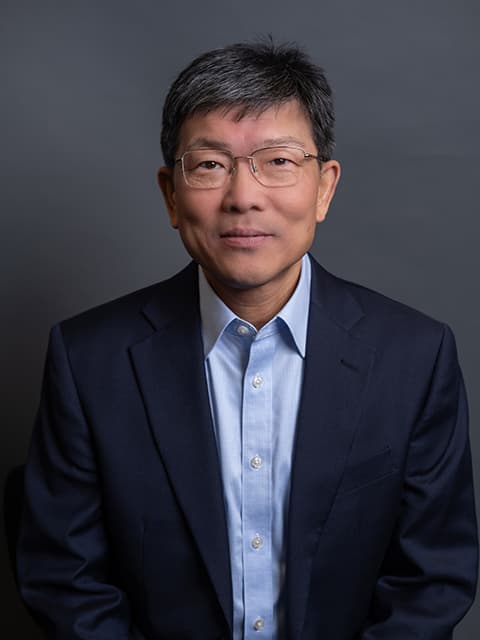
M. Sohel Rahman is a Professor in the Department of Computer Science and Engineering (CSE) at Bangladesh University of Engineering and Technology (BUET). He has held visiting positions at King’s College London (2008-2011, 2014-15) and is a Senior Member of IEEE and ACM. His affiliations include the American Mathematical Society (AMS) and London Mathematical Society (LMS), and he serves as a Peer-review Associate College Member of EPSRC, UK. Education: Not explicitly detailed in the text. His research spans high-dimensional Knapsack problems, sequence alignment, data structures, string combinatorics, Hamiltonianicity, Machine Learning applications in Bioinformatics, and metaheuristics solutions for hard computational problems. He has led projects funded by the British Council, UGC-World Bank, ICT Division of Bangladesh Government, and BUET, and has published 86 peer-reviewed journal papers. Scientific awards include the Bangladesh Academy of Sciences Gold Medal, UGC Award, Commonwealth Scholarship/Fellowship, and ACU Titular Fellowship. He contributes as an Academic Editor for PLOS One , Associate Editor for BMC Research Notes , and has guest-edited special issues in journals like Theoretical Computer Science . He also serves on program committees for international conferences and writes reviews for Mathematical Review and ACM Computing Review.
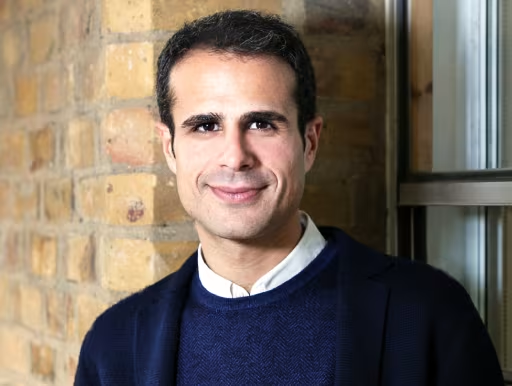
Ramon Piedra de la Cuadra is an Assistant Professor in the Integrated Sciences Department at the College of Engineering, Universidad de Huelva. His research focuses on operations research, transportation planning, and sustainable waste management, applying advanced optimization techniques to urban mobility and environmental logistics. Research Interests: Transportation network optimization Bilevel programming for infrastructure deployment Time-dependent routing algorithms Mathematical modeling for sustainability Heuristic and matheuristic methods Publication Trends: Recent works emphasize electric vehicle charging station placement, eco-tourism route design, and multi-compartment waste collection models. Earlier research explores rail transit strategies, entropic analysis for sprawled cities, and mathematical education challenges.
Giorgio Stefano Gnecco is a Full Professor in Mathematical Methods of Economics and of Actuarial and Financial Sciences at IMT School for Advanced Studies Lucca, where he works within the Analysis of compleX Economic Systems (AXES) research unit. His academic career spans multiple disciplines including optimization, machine learning, game theory, and their applications in economics, finance, and engineering. His research interests focus on optimization applied to actuarial sciences, economics, finance, and engineering; game theory; statistics; machine learning theory and applications; causal inference for economic policy evaluation; and environmental economics. His work demonstrates interdisciplinary connections between mathematical theory and practical applications across diverse fields, with particular emphasis on developing computational methods for complex economic systems. His publication record shows consistent output across multiple domains, with recent work spanning machine learning algorithms, image processing techniques, economic modeling, and applications in music performance analysis. The breadth of his research indicates strong methodological foundations in mathematical optimization and statistical learning, applied to problems ranging from flood hazard assessment to Parkinson's disease classification. Among his notable achievements are five Italian National Scientific Qualifications for professorial positions in various fields, demonstrating his recognized expertise across multiple academic disciplines. He serves as Associate Editor for IEEE Transactions on Neural Networks and Learning Systems, Action Editor for Neural Networks, and Associate Editor for Neurocomputing. Professor Gnecco leads numerous research projects including the "PRIN PNRR 2022" project "MOTUS - Automated Analysis and Prediction of Human Movement Qualities," the "INdAM-GNAMPA 2023" project on machine learning methods for Shapley Value estimation, and the "ROBOFARM" project on edge computing for precision agriculture. He has coordinated multiple international research collaborations between Italy and France through the Galileo program. His research unit (AXES) focuses on complex economic systems analysis, with applications spanning environmental economics, financial systems, and human movement analysis. The collaborative nature of his work is evident through his extensive network of domestic and international collaborators across multiple universities and research institutions.
Andrea Celli is an Assistant Professor in the Department of Computing Sciences at Bocconi University, where he is a member of the theory group and the Bocconi Institute for Data Science and Analytics. He previously spent one year as a postdoctoral researcher with the Core Data Science team at Meta (London). He obtained his Ph.D. in Computer Science from Politecnico di Milano, where he was advised by Nicola Gatti, and was a Visiting Researcher at Carnegie Mellon University working with Tuomas Sandholm. His educational background includes: Ph.D. in Computer Science from Politecnico di Milano, advised by Nicola Gatti Visiting Researcher at Carnegie Mellon University with Tuomas Sandholm Postdoctoral researcher with the Core Data Science team at Meta (London) Andrea Celli's research focuses on problems at the intersection of computer science, machine learning, and economics, with particular interest in computational problems arising from strategic interactions in online settings where learning processes and incentives are fundamentally intertwined. His work spans machine learning theory, online learning algorithms, computational game theory, and algorithmic economics. His research has been published in top venues including NeurIPS, ICML, STOC, and EC, with a best paper award at NeurIPS 2020. Analysis of his recent publications shows a strong focus on online learning algorithms with constraints, bandit problems, game-theoretic aspects of machine learning, and algorithmic game theory. His work often bridges theoretical foundations with practical applications in economics and decision-making systems. Key themes include no-regret learning, Bayesian persuasion, knapsack problems in online settings, and equilibrium computation in extensive-form games. His scientific achievements include: Best paper award at NeurIPS 2020 ERC Starting Grant (2024) for the project PLA-STEER MUR-PRIN grant (2022) Andrea Celli actively mentors students and postdocs, currently supervising Riccardo Poiani, Sarah Sachs, and Martino Bernasconi as postdocs, and Annalisa Barbara, Emanuele Coccia, Davide Drago (now at Bending Spoons), and Antonio Preiti (now at Amazon) as MSc students. His research is supported by competitive grants including an ERC Starting Grant and a MUR-PRIN grant, indicating strong recognition of his work's potential impact. He is also a member of the ELLIS Society, connecting him to a broader European network of excellence in AI research. He is affiliated with the theory group and the Bocconi Institute for Data Science and Analytics at Bocconi University, contributing to a vibrant research environment focused on theoretical foundations of data science and their applications.
Jiarui Gan is a Lecturer in the Department of Computer Science at the University of Oxford, where they conduct research at the intersection of computational game theory, multi-agent systems, and artificial intelligence. Their work focuses on understanding and shaping interactions among intelligent agents in complex real-world scenarios, with applications spanning transportation systems, digital platforms, and societal ecosystems. Dr. Gan's academic journey includes: PhD in Computer Science from the University of Oxford, supervised by Edith Elkind and Michael Wooldridge Postdoctoral research at the Max Planck Institute for Software Systems (MPI-SWS) with Rupak Majumdar Dr. Gan's research program centers on computational approaches to game theory and multi-agent systems. They investigate how to design incentive mechanisms that effectively coordinate autonomous agents toward organizational objectives, while addressing critical issues of fairness, security, and sustainability. Their work spans several interconnected themes: Principal-agency problems and dynamic mechanism design Stackelberg games and robust equilibrium concepts Fair resource allocation and envy-freeness in multi-agent settings Bayesian persuasion and information design Applications to security, transportation, and societal challenges Analysis of Dr. Gan's publication record reveals a consistent pattern of bridging theoretical insights with practical applications. Their work demonstrates sophisticated mathematical modeling combined with algorithmic innovations, resulting in computationally tractable solutions for complex multi-agent problems. The research shows particular strength in developing frameworks that unify previously disparate problem domains, such as their generalized principal-agency model that encompasses contract design, information design, and Bayesian Stackelberg games. Dr. Gan is actively involved in the academic community, mentoring students and collaborating with researchers across institutions. They are currently seeking motivated PhD students interested in computational game theory and multi-agent systems, with opportunities to work on both theoretical foundations and practical applications that address societal challenges.
Adam Teodor Polak serves as an Assistant Professor in the Department of Computing Sciences at Bocconi University, where his research centers on theoretical algorithms with dual emphases on fine-grained complexity and learning-augmented algorithms. His work investigates fundamental questions about computational hardness while developing prediction-enhanced algorithms that maintain worst-case guarantees. Polak earned his PhD from Jagiellonian University in 2019 under Paweł Idziak, including a research visit at MIT with Virginia Vassilevska Williams. He subsequently held postdoctoral positions at the Max Planck Institute for Informatics and EPFL before joining Bocconi. His research program addresses why computational problems resist efficient solutions and how imperfect predictions can robustly improve algorithmic performance. This manifests in two interconnected streams: establishing conditional lower bounds for problems like 3SUM and Orthogonal Vectors, and designing learning-augmented frameworks for dynamic graph problems, caching, and optimization that blend theoretical rigor with practical machine learning insights. Recent publications reveal accelerating momentum in algorithms with predictions, with over half of his 2023-2025 output appearing in top ML venues (ICML, NeurIPS, ICLR) alongside traditional theory conferences (STOC, SODA). This cross-pollination demonstrates how worst-case theoretical guarantees can coexist with data-driven performance gains across graph algorithms, scheduling, and combinatorial optimization. Scientific recognition includes: Best Paper Award at ESA 2024 for knapsack algorithm breakthroughs Bronze Medal at ACM ICPC World Finals (2011) 2nd Place in PACE 2018 Challenge for Steiner tree algorithms Polak actively shapes the field through program committee service (ESA, ICALP, SOSA) and community building, notably co-organizing the 2022 Workshop on Algorithms with Predictions (ALPS) and decade-long high-school algorithmics workshops. His industry collaborations with Teroplan and Google demonstrate real-world impact in route planning and distributed systems. Current teaching includes graduate Algorithms courses at Bocconi, while his experimental work on GPU-accelerated graph algorithms and medical computer vision continues to bridge theoretical insights with practical implementation challenges.
Rosario Scatamacchia serves as an Associate Professor in the Department of Management and Production Engineering (DIGEP) at the Polytechnic University of Turin, where he is also a member of the Interdepartmental Center Ec-L - Energy Center Lab. His academic profile includes teaching courses such as Operations Research and Graphs and Combinatorial Optimization across undergraduate, Master's, and PhD programs in Management Engineering, Data Science, and related fields. Contact details include email rosario.scatamacchia@polito.it and phone +39 0110907261. His research centers on Operations Research with core expertise in: Combinatorial Optimization and Exact Algorithms Game Theory and Algorithmic Game Theory Discrete Mathematics applications Knapsack and NP-hard problem solving Work spans industrial and societal contexts including transportation logistics, network security, and environmental management systems. Recent publications (2021-2025) reveal consistent innovation in exact solution methods for combinatorial problems: Transportation and baggage handling optimization Critical infrastructure network analysis Game-theoretic equilibrium computation Wildfire prevention scheduling under constraints This body of work demonstrates strong interdisciplinary collaboration bridging theoretical computer science and practical engineering applications. No scientific awards were documented in the source materials. While teaching responsibilities are extensively detailed, the provided information does not specify graduate student advising relationships or research grant acquisitions. Professor Scatamacchia maintains active involvement in the Interdepartmental Center Ec-L - Energy Center Lab, contributing optimization expertise to energy systems research initiatives at the Polytechnic University of Turin.
Professor Jiyin Liu is a Professor of Operations Management and Director of Undergraduate Studies at Loughborough Business School. He holds a BEng (1982) and MEng (1985) in Industrial Automation and Systems Engineering from Northeastern University, China, and a PhD (1993) in Manufacturing Engineering and Operations Management from the University of Nottingham. His career includes roles as an Assistant Professor at Hong Kong University of Science and Technology (HKUST), where he contributed to logistics management program development and received teaching awards. He joined Loughborough in 2003, became a Professor in 2005, and served as Head of the MIDO Group (2008–2013). His expertise focuses on operations planning, scheduling, and supply chain/logistics optimization, blending academic rigor with industry relevance. Education: BEng in Industrial Automation, Northeastern University of China (1982) MEng in Systems Engineering, Northeastern University of China (1985) PhD in Manufacturing Engineering and Operations Management, University of Nottingham (1993) Research Interests: Professor Liu’s work addresses complex optimization challenges in logistics, manufacturing, and service systems. His research bridges theoretical models and practical applications, with a focus on scheduling algorithms, risk-aware decision-making, and sustainable operations. Key areas include steel production optimization, vehicle routing, crane scheduling in ports, and dynamic pricing strategies. His methodologies often involve metaheuristics (e.g., genetic algorithms, differential evolution) and machine learning approaches. Recent Research Trends: His publications (2020–2023) emphasize logistics and manufacturing optimization, with notable contributions to steel industry operations, green vehicle routing, and risk-aware scheduling. He also explores decision support systems for bundling shipments and optimizing resource allocation in dynamic environments. Awards: Teaching Excellence Appreciation award (twice, Hong Kong University of Science and Technology) Collaborations & Impact: He collaborates with global firms such as Hongkong International Terminals, Baosteel, and Philips Electronics. His work on Baosteel’s operations optimization and container terminal logistics has demonstrated real-world impact. He also contributed to developing decision support systems for field service scheduling and emergency resource allocation post-disasters. Labs/Teams: Leads research initiatives in operations management, focusing on industrial applications through partnerships with industry stakeholders. His team specializes in mathematical modeling (MILP, heuristic algorithms) and data-driven solutions for complex operational problems.
Ali Aouad is an Assistant Professor at MIT Sloan School of Management (Department of Management Science and Operations) and holds an Associate Professor title (on leave) at London Business School . He earned a PhD in Operations Research from MIT and MS/BS in Applied Mathematics from École Polytechnique (Paris). His research focuses on algorithms and decision processes at the intersection of operations, computer science, and economics, with applications to supply/demand management, market design, public sector operations (e.g., food security), and online platforms. Education: BSc & MSc (École Polytechnique), PhD (MIT) Work Experience: Applied Scientist at Uber Technologies (2017-2018), consultant at Boston Consulting Group (Paris/Casablanca), and collaborations with tech firms. His research interests span algorithmic market design, stochastic optimization, approximation algorithms, and digital platform mechanisms . Recent work explores layout optimization for cultural institutions, food subsidy efficacy in underserved communities, and dynamic pricing in matching systems. He co-advises PhD students at MIT and collaborates internationally. Awards: Multiple student paper competitions (POMS, INFORMS, IBM), Nicholson Prize finalist, and JFIG Paper Competition winner. Grants & Labs: Collaborates with industry partners (e.g., Uber) and leads research teams in public sector operations and matching systems design.
Natalie Cherbaka is a Collegiate Professor and Undergraduate Program Director in the Department of Industrial and Systems Engineering at Virginia Tech's College of Engineering. She holds a Ph.D. in Industrial & Systems Engineering from Virginia Tech, an M.S. from North Carolina State University, and a B.S. in Mathematics from Taylor University. Her professional experience includes roles as an Independent Consultant and IBM Fulfillment Manager and Production Planner. Dr. Cherbaka's research focuses on operations research, supply chain optimization, manufacturing systems, and engineering management. She has contributed to solving complex sourcing decisions using multidimensional knapsack models, explored the application of 5G technology in warehousing, and investigated post-COVID office space design through interdisciplinary case studies. Her work emphasizes real-time data visualization to reduce lead times and improve resource allocation strategies in industrial settings. She has been recognized with the Best Paper Award in the Engineering Management Division (2009) for her work on proposing an engineering management program at NC State University and was named a 2015-2016 ISE Outstanding Faculty and GTAs Award Winner at Virginia Tech. Dr. Cherbaka serves as a Senior Design Project advisor and has volunteered at Harding Avenue Elementary School. Her industry experience and academic contributions highlight her commitment to bridging theoretical research and practical applications in industrial systems.
Robert Hildebrand is an Assistant Professor in the Grado Department of Industrial and Systems Engineering at Virginia Tech. He holds a Ph.D. in Applied Mathematics from the University of California, Davis (2013). His research focuses on Mixed-Integer Nonlinear Programming, Integer Programming, Complexity Theory, and Redistricting Analytics, with applications in Operations Research and Discrete Geometry. He has received grants from the Air Force Office of Scientific Research and the Office of Naval Research, and the 2019 Sporn Teaching Award. Education: Ph.D., Applied Mathematics (UC Davis, 2013); B.Sc., Mathematics (University of Puget Sound, 2008). Professional history includes postdoctoral roles at ETH Zurich (2013–2015), IBM Watson Research (2015–2017), and a Simons Institute Fellowship (2017). Current roles include Associate Editor for Discrete Optimization and service on INFORMS committees. Research interests emphasize theoretical and computational aspects of optimization, with recent work on gerrymandering analysis, robotic assembly optimization, and algorithmic complexity bounds. Notable publications include advancements in integer programming formulations and scheduling algorithms for autonomous systems. Grants include Virginia Tech's Whole Health Consortium (2024) for veterans' healthcare optimization and an ICTAS Seed Grant for autonomous fleet algorithms (2023). He advises students on topics like rectangle packing and robotic trajectory planning, with former students advancing to doctoral and industry roles. Labs/Teams: Active in Virginia Tech's FASER Lab (robotics optimization) and collaborates with interdisciplinary groups on redistricting analytics and space exploration technologies.
Yonatan Mintz is an Assistant Professor in the Department of Industrial and Systems Engineering at the University of Wisconsin-Madison. His research focuses on applying machine learning and automated decision-making to healthcare and sociotechnical systems, emphasizing fairness, precision interventions, and optimization. Prior to UW-Madison, he was a postdoctoral research fellow at Georgia Tech, and earned his BS from Georgia Tech (2012) and PhD from UC Berkeley (2018). He has industry experience at Caterpillar and Google. Education: PhD 2018, University of California, Berkeley in Industrial Engineering and Operations Research B.S. 2012, Georgia Institute of Technology in Industrial and Systems Engineering Research interests include reinforcement learning, precision healthcare (e.g., personalized drug dosing, neurodegenerative monitoring), fairness in AI, and optimization methodologies. He explores applications in healthcare analytics, behavioral interventions, and ethical AI frameworks. Key research trends in his articles include: Integration of machine learning with healthcare decision-making Development of adaptive control systems for personalized treatments Analysis of non-stationary environments in bandit algorithms Ethical considerations in human-AI collaboration Awards: 2019 NeurIPS Best Poster Award for AI for Social Good 2017 Grassi Fellowship (Doctoral) 2012 ISyE Senior Design Winner (Undergraduate) Teaching focuses on dynamic programming, reinforcement learning, and optimization, with courses like COMP SCI 723 - Dynamic Programming and I SY E 604 - Special Topics in Manufacturing .
Ozgur Kabadurmus is an Assistant Professor in the Department of Marketing and Supply Chain Management at the University of Wisconsin-Eau Claire, within the College of Business. His research focuses on sustainable supply chain design, operations optimization, and the application of data-driven methodologies in logistics systems. Dr. Kabadurmus holds a Ph.D. in Industrial and Systems Engineering from Auburn University, along with multiple advanced degrees from Istanbul Technical University. Education: Ph.D., Industrial and Systems Engineering, Auburn University M.S., Industrial and Systems Engineering, Auburn University M.S., Industrial Engineering, Istanbul Technical University B.S., Industrial Engineering, Istanbul Technical University Research Interests: His work spans lean manufacturing systems, green logistics optimization, big data analytics for supply chain decision-making, and circular economy models. He has published extensively in journals like Socio-Economic Planning Sciences, Journal of Combinatorial Optimization, and Annals of Operations Research. Key Research Trends: Recent publications emphasize pandemic-resilient supply chains, disruptive technologies in last-mile delivery, and multi-objective optimization for carbon footprint reduction. His methodologies often integrate machine learning and simulation tools for predictive analytics. Grants & Advising: While specific grants are not listed, his collaborative work with industry partners (e.g., logistics firms) indicates applied research funding. No advisee information is included in the provided text. Labs/Teams: Affiliated with the College of Business research initiatives in supply chain innovation and sustainable operations.
Paolo Detti is a Full Professor of Operations Research at the Department of Information Engineering and Mathematical Sciences at the University of Siena. He currently teaches Operations Research and Production and Supply Chain Management - Logistics courses for both Bachelor's and Master's degree programs in Engineering Management. Professor Detti chairs the Management Engineering Degree Committee and maintains an active research program focused on complex optimization problems across multiple domains. Professor Detti's research spans several key areas of operations research with a strong emphasis on combinatorial optimization and scheduling. His work addresses real-world challenges in resource allocation for mobile telecommunications systems, electrical load scheduling for energy consumption minimization, healthcare planning and transportation problems, and sustainable crop planning in agriculture. His approach combines theoretical mathematical modeling with practical applications, often developing novel optimization algorithms and metaheuristics to solve complex problems. Analysis of Professor Detti's recent publications reveals a clear research trajectory focused on applying operations research methodologies to sustainability challenges. His work in agricultural optimization has grown significantly, with multiple 2025 publications on sustainable crop planning and rotation. The healthcare logistics domain remains consistently strong in his portfolio, particularly in biological sample transportation. Parallel machine scheduling with unreliable elements forms another persistent research thread, with multiple publications across different years addressing variations of this fundamental problem. Professor Detti maintains active teaching responsibilities across multiple academic levels. He currently teaches Operations Research to second-year Bachelor's students in Management Engineering and Production and Supply Chain Management - Logistics to first-year Master's students in Engineering Management for the 2025/2026 academic year. As chair of the Management Engineering Degree Committee, he plays a significant administrative role in academic governance. His educational background includes a PhD in Operations Research from Sapienza University of Rome, establishing his strong theoretical foundation in the field.
Bala Krishnamoorthy is a Professor of Mathematics and Statistics at Washington State University (WSU) Vancouver, where he has been since 2014. Previously, he held positions at WSU Pullman (2004–2014). He earned his B.Tech from IIT Madras (1995) and a PhD in Operations Research from UNC Chapel Hill (2004). His research spans applied algebraic topology, geometric measure theory, optimization, and computational biology, with applications in 3D printing, biomedical analysis, and data science. He has secured grants from the NSF, Department of Energy, and WA State Attorney General’s Office, among others. Key research interests include topological data analysis (TDA), algorithmic optimization, and interdisciplinary collaborations with fields like surgery, chemistry, and criminology. Notable awards include the 2019 WSUV Chancellor’s Research Excellence Award, 2022 Yang Liu Teaching Award, and 2023 College of Arts and Sciences Excellence in Teaching Award. His work emphasizes practical applications, such as toolpath optimization in 3D printing, robust feasibility in optimization, and analyzing complex datasets like cancer gene expression. He advises numerous PhD students, many of whom have secured roles in academia, industry, and government. Current projects include steering committees for NSF-funded initiatives like DELTA and collaborations with institutions like Tohoku University and UC Davis. Teaching responsibilities include advanced courses on algebraic topology, optimization, and computational methods. His seminars and workshops foster interdisciplinary dialogue, such as the WSU Vancouver Math/Stats Seminar series and topological data analysis workshops at ACM-BCB and PSB conferences.