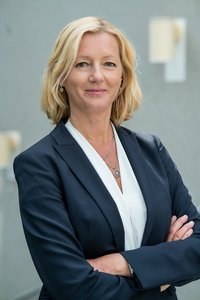
Prof. Dr. Michael Greiner is a faculty member at the Weihenstephan-Triesdorf University of Applied Sciences (HSWT) , specifically within the Faculty of Agriculture, Food and Nutrition . His work focuses on system catering , technology in the household , and physics with an emphasis on supply management. He has supervised numerous student theses since 2018, addressing topics such as Kitchen 4.0 , sustainable food drying , online internships in household technology , and optimization of catering processes . Research Interests : His expertise spans Sustainable food systems Automation in commercial kitchens Climate-controlled food storage solutions Product development for healthy catering Energy efficiency in food service operations These align closely with HSWT's research priorities in nutrition, health, and environmental protection . Contact : Email: michael.greiner@hswt.de Office: C.003, Steingruberstraße 1a, 91746 Weidenbach Phone: +49 9826 654-227
Melody Steinbart is an Assistant Professor in the Department of Music within the College of Arts and Sciences at Maranatha Baptist University (MBU), where she has been a faculty member since 2017. She teaches private string lessons, group classes, and academic courses, and serves as the Director of the MBU Orchestra. Her background includes prior teaching experience in MBU’s String Prep program and as a Suzuki Outreach Teacher at another university. Education: MM in Performance/String Pedagogy, East Carolina University BA in String Pedagogy, Maranatha Baptist University Melody Steinbart is deeply engaged in music pedagogy, particularly through the Suzuki method. Her expertise spans violin and cello instruction, with formal training in Suzuki Violin Books 1–20 under Joanne Bath and Kimberly Meier-Sims, and Suzuki Cello Book 1 with Heather Hadley. Her teaching philosophy emphasizes personal growth and skill development in students, both individually and in group settings. She is actively involved in professional and community music education. She is a member of the Suzuki Association of the Americas and the American String Teachers Association, and serves as Director and Teacher of Lake Country Strings in the community. Scientific Awards: No awards listed Melody mentors students through private instruction and ensemble leadership, though no formal graduate advisees are listed. She contributes to academic governance as a member of the Academic Committee (2023–24) and leads small groups on campus. She also coordinates music ministry at her church, plays for congregational hymns, and assists in church kitchen operations. Labs, Teams, and Programs: She directs the MBU Orchestra and is a key leader in the Maranatha String Prep Program, fostering early music education and community engagement in string performance.
Gregory Zifchak serves as an Associate Professor in Culinary Arts with extensive international professional experience across premier hospitality institutions. His career spans executive chef roles at Zincs Brasserie/Restaurant and Ciel Bleu Restaurant at The Mayfair Regent Hotel in Chicago, sous chef positions at The Ritz-Carlton Hotel in Chicago and The Woodlands Inn and Country Club, and specialized stations including entremetier at The Petroleum Club of Houston and etager at prestigious establishments in Paris, Lyon, and London. His expertise focuses on Culinary Arts with deep specialization in French Cuisine and Restaurant Management, cultivated through hands-on leadership in Michelin-starred environments across the United States, France, and England. This global perspective informs his pedagogy in Hotel Culinary Operations and Professional Kitchen Techniques, emphasizing classical French methods adapted for modern hospitality enterprises. Zifchak maintains active industry engagement as a member of the American Institute of Wine and Food, bridging academic instruction with contemporary culinary trends through real-world operational insights from his decades-long career in five-star hotel kitchens and fine dining establishments worldwide.
Karin Schwaiger serves as Professor and Head of the Department of Food Hygiene and Technology at the University of Veterinary Medicine Vienna's Faculty of Veterinary Medicine. With her leadership position and extensive research portfolio, she represents a prominent figure in veterinary public health and food safety sciences within Austria's premier veterinary institution. Professor Schwaiger's research program focuses on critical intersections between animal health, food safety, and public health. Her work examines pathogenic and antibiotic-resistant bacteria throughout the food chain from farm to fork, employing both phenotypic and genotypic approaches. She investigates zoonotic diseases of economic significance, develops diagnostic and prevention strategies, and analyzes microbial communities impacting animal health. Her department reconstructs microbiological quality in processed foods and establishes science-based animal welfare parameters, with particular interest in symbiotic grazing systems. Analysis of her recent publication record reveals consistent focus on foodborne pathogens, particularly cold-tolerant Clostridium species causing meat spoilage, Campylobacter contamination routes, and novel decontamination methods like cold atmospheric plasma. Her work spans analytical methodology development, microbial ecology studies, and practical interventions for improving food safety throughout production chains. This research demonstrates strong translational potential for both industry applications and public health protection. As department head, Professor Schwaiger oversees research initiatives and educational programs within Food Hygiene and Technology. Her leadership role encompasses strategic direction for the department's scientific activities, resource allocation, and representation within the university's administrative structure. While specific grant details aren't provided in available materials, her extensive publication record suggests successful acquisition of competitive research funding. The Department of Food Hygiene and Technology operates within the University of Veterinary Medicine Vienna's infrastructure, conducting laboratory-based research on food safety issues with particular relevance to veterinary public health. The department maintains connections with Austrian agricultural sectors, food industry stakeholders, and public health authorities to address contemporary food safety challenges.
Assoc. Prof. FİLİZ ARSLAN is an active faculty member at Akdeniz University , serving since 2016 as Associate Professor at the Göynük Cuisine Arts Vocational School, Department of Hotel, Restaurant and Catering . She concurrently holds administrative duties as Assistant Director of the Vocational School (2021–present) and is a member of its Board. Education PhD (2014–2019) – Business Administration, Zonguldak Bülent Ecevit University, Graduate School of Social Sciences Master (2005–2007) – Tourism and Hotel Management, Akdeniz University Bachelor (2001–2005) – Tourism Management & Hotel Management (Accommodation Management), Akdeniz University Research Interests Her scholarship lies at the intersection of hospitality management , gastronomy tourism and organisational behaviour . Using quantitative and mixed-methods approaches, she explores how transformational leadership fosters innovative work behaviour among food-and-beverage employees, examines the role of psychological empowerment, and investigates consumer perceptions of geographically indicated culinary products. Additional interests include cost-control systems, café culture, gender issues in professional kitchens, and gastronomic innovation technologies such as 3-D coffee printing. Publication Trends Since 2006 she has published 50 WoS-indexed works. Recent output (2019-2024) emphasises gender dynamics in hospitality , gastronomy tourism leveraging local products , and leadership-employee creativity links , reflecting a shift toward sustainability, innovation and sociocultural impacts. Scientific Awards Seyahat ve Otel İşletmeciliği Dergisi (SOİD) Research Award, International Tourism Congress, November 2006 Grants & Projects She has taken part in 46 funded projects. Among the latest: “Minik Ellerden Yaratıcı Lezzetler” (2024) – creativity-driven gastronomy workshops for children “Öğretmenim Kültürünü Tadımla!” (2024) – teacher-oriented cultural taste education programme Labs & Professional Networks While no dedicated laboratory is mentioned, she actively participates in the Tourism Summit (Turizm Zirvesi) research network and contributes to editorial boards and peer-review processes for national journals, reinforcing a vibrant academic community around gastronomy and hospitality studies.
Dr. Ali Osman ER serves as an Assistant Professor in the Department of Mechanical Engineering at Kırıkkale University's Faculty of Engineering and Natural Sciences, specializing in advanced machining technologies and hard-to-machine materials. His academic journey began with third-place graduation from Kırıkkale University's Mechanical Engineering Department in 1999, followed by research assistantship and subsequent academic promotions. His educational background includes: B.S. in Mechanical Engineering (1999), Kırıkkale University (3rd rank) M.S. in Mechanical Engineering (2003), Kırıkkale University Ph.D. in Mechanical Engineering (2008), Kırıkkale University Postdoctoral Research (2014-2015), Purdue University Dr. ER's research focuses on cutting-edge manufacturing processes including laser-assisted turning of titanium composites, high-speed machining of hardened materials, and sustainable manufacturing techniques. His work bridges theoretical innovation with industrial applications, particularly in domestic manufacturing development. Current research trends show increasing emphasis on machine learning applications for machining optimization, hybrid composite material processing, and environmentally conscious manufacturing methods like Minimum Quantity Lubrication. His scientific recognition includes: TÜBİTAK Postdoctoral Research Scholarship (2014) As an academic leader, Dr. ER has served as Deputy Department Head (2012), Director of Kırıkkale University Hacılar Hüseyin Aytemiz Vocational School (2019-2024), and University Senator. He actively contributes to national manufacturing initiatives through consultancy for İmalET Community, technical expertise for Vocational Qualifications Authority, and evaluation roles for TÜBİTAK and Ministry of Industry. His science communication efforts include TÜBİTAK-organized school talks on National Technology Move. Dr. ER maintains active engagement with student communities through Mechanical Engineering Club and previously co-founded Kırıkkale University Mountaineering Club. His patent applications in Smart Kitchen Systems and Toy Production demonstrate practical technology transfer.
Serkan ÇALIŞKAN is an Associate Professor in the Department of Gastronomy and Culinary Arts at Kastamonu University's Faculty of Tourism. He has held his faculty position since 2022 and has also taken on several significant administrative roles including Vice Dean (2022-2024 and 2025-), Education Coordinator (2024-), Quality Committee Member (2024-), and Research Application Center Director (2024-). His academic journey includes a PhD in Tourism Management from Balıkesir University (2016-2021), a Master's in Tourism Management Education from Gazi University (2006-2009), and a Bachelor's in Tourism Management Education from Gazi University (1999-2003). Dr. ÇALIŞKAN's research focuses primarily on gastronomy, culinary arts, and their intersection with tourism management. His work spans culinary education, geographical indications of gastronomic products, sustainable tourism practices, and the cultural aspects of food. He has published extensively in these areas, with numerous journal articles, conference papers, and authored books including several published by the Ministry of National Education on culinary techniques and gastronomy tourism. His recent publications demonstrate a strong focus on sustainable practices in culinary operations, the educational aspects of gastronomy, and the relationship between regional culinary traditions and tourism development. He has particularly emphasized the importance of geographical indications in protecting and promoting local gastronomic products, as well as examining sustainable approaches to food waste reduction and green kitchen practices. Dr. ÇALIŞKAN has served as the primary advisor for at least one master's student (Birengül Şalkamoğlu) on research related to geographically indicated gastronomic products. He has also been involved in significant research projects including a TÜBİTAK project on Turkey's gastronomic geographical indication products education and international projects supported by the United Nations, World Bank, UNESCO, European Union, and Council of Europe focused on sustainable rural development through homestay tourism and creating a digital Eurasian local recipe book. In addition to his research activities, Dr. ÇALIŞKAN teaches a wide range of courses at both undergraduate and graduate levels including Turkish Cuisine Culture and Gastronomic Diplomacy, Management and Leadership in Food and Beverage Operations, Kitchen Applications series, and specialized courses on cold kitchen techniques and food decoration art. His teaching portfolio reflects his comprehensive expertise across culinary arts, food service management, and tourism applications of gastronomy.
Mary Julie Espiritu Madarang is a full-time Instructor in the Culinary Arts program within the Professional Arts and Technology Division at the University of Hawaii - Leeward Community College. She serves multiple leadership roles including Culinary Advisory Board Chair, Culinary Student Assembly Coordinator, and oversees all Culinary Social Media/Marketing initiatives while participating in key industry events like the HCEF Golf Tournament and Ko Olina Outreach. Her academic credentials include: Associate in Applied Science (AAS) in Culinary Certificate of Achievement (CA) in Culinary CTE Certification for Career and Technical Education HTSB Standard License for food service management The Culinary Arts program focuses on practical, industry-aligned training where students develop professional cooking techniques, food safety expertise, and hospitality management skills through hands-on kitchen laboratories. The curriculum emphasizes real-world applications through community outreach events and industry partnerships across Hawaii's culinary landscape, preparing students for immediate workforce entry. No scientific awards are documented in her professional profile. Mary Julie actively mentors students through the Culinary Student Assembly she coordinates, connecting classroom learning with practical industry experiences at events like the HCEF Golf Tournament. While the program operates without research grants, it maintains strong industry funding partnerships through the Advisory Board she chairs, ensuring students access to professional equipment and networking opportunities. Her teaching approach integrates social media marketing skills with culinary arts to prepare students for modern hospitality careers. The program utilizes professional kitchen facilities as teaching laboratories where students practice commercial food production under industry-standard conditions. Through the Advisory Board and outreach initiatives, the program maintains collaborative relationships with Hawaii's resort industry, culinary associations, and community organizations to provide students with internship pathways and career placement opportunities.
Kirta Nieminen serves as a Lecturer at Seinäjoki University of Applied Sciences (SEAMK), specializing in food industry education and professional kitchen systems. Her expertise bridges academic instruction with practical industry applications in culinary environments. Her educational qualifications include: Bachelor of Science in Restaurant Management (BA) Bachelor of Science in Restaurant Management (YAMK) Her research and teaching focus centers on critical food industry domains, particularly food hygiene protocols and in-house control systems that ensure safety compliance. She investigates sustainable development frameworks for professional kitchens, integrating spatial planning methodologies to optimize workflow efficiency. Her work extends to food production process innovation and the implementation of specialized IT systems within culinary operations, addressing both technical and environmental challenges in modern food service. No scientific awards were documented in the source material. While no formal student advising records or research grants were specified, her industry-focused expertise suggests active engagement with professional kitchen operations and food safety training programs. Her practical industry knowledge appears directed toward real-world implementation rather than traditional academic supervision. Her professional activities emphasize direct industry collaboration through SEAMK's working life cooperation initiatives, though no dedicated research laboratories or specialized teams were referenced.
Ben Huff is an Associate Professor and co-head of the Post-Production track in the Department of Cinematic Arts at California State University, Long Beach, specializing in audio production and design instruction. His academic credentials include: MFA in Film/Video from California Institute of the Arts (documentary film, post-production, sound design) BFA from Alfred University (experimental electronic arts) Huff's research integrates documentary filmmaking with social justice activism, focusing on California-based civil rights issues including police brutality and systemic inequality. His technical expertise spans analog-to-digital transition eras in time-based media, with dual specialization in film audio engineering and musical composition. As a practitioner-scholar, he bridges experimental video art traditions with contemporary documentary practices. His creative output reveals consistent thematic commitment to progressive social issues, exemplified by the 2014 Ferguson protests documentary 'No Justice No Peace' and Emmy-winning sound design for socially conscious series like 'Migrant Kitchen and City Rising'. Technical innovations in 5.1 surround mixing and analog-digital hybrid workflows characterize his audio contributions to festival-circulated works. Professional recognition includes: Huffington Post Top Film Selection (2014) for 'No Justice No Peace' Emmy Award for 'Migrant Kitchen and City Rising' series sound design With over a decade of undergraduate teaching experience preceding his CSULB appointment, Huff mentors students in post-production techniques while maintaining active industry collaborations. His festival-screened projects (Sundance, Berlinale, Venice) demonstrate sustained external funding and professional impact. Current work continues his dual trajectory in social justice documentation and advanced audio engineering. Huff leads the department's Post-Production track alongside Susan Bloom, directing technical curriculum development and studio operations from CINE 220. His team integrates historical media preservation practices with emerging surround-sound technologies in service of documentary storytelling.
Dr. David Johnson serves as an Assistant Professor in the Department of Dietetics and Human Nutrition at the Martin-Gatton College of Agriculture, Food and Environment, University of Kentucky, where he joined in 2025. His educational credentials include: PhD in Hospitality Management from Iowa State University MDA in Dietetics Administration from Utah State University BS in Dietetics from Eastern Kentucky University (with Business minor) AAS in Culinary Arts from Ashland Community and Technical College Dr. Johnson's research centers on culinary nutrition, food access, and sustainable food systems, with emphasis on how cooking knowledge and food system design influence dietary behaviors and public health outcomes. His interdisciplinary approach integrates nutrition science, culinary arts, and environmental sustainability to address food system challenges. Prior to his Kentucky appointment, he held an Assistant Professor position at The University of Alabama in the Department of Human Nutrition, Hospitality, and Sport Management. His professional background spans clinical dietetics at Hazard ARH Regional Medical Center, culinary roles in diverse foodservice operations, and nutrition consulting. Outside academia, he pursues kitchen experimentation, gardening, kayaking, and time with his two dogs.
TUĞBA ÜNAL serves as a Lecturer in the Department of Cooking at Istanbul Gedik University's Pendik Campus, actively contributing to culinary education and academic programs. Her position places her within the university's teaching faculty structure. Her professional focus centers on practical and theoretical aspects of culinary disciplines, with key interests including: Culinary Arts as the foundational creative practice Food Preparation methodologies and safety protocols Cooking Techniques across diverse culinary traditions Culinary Education pedagogy and curriculum development Food Science applications in professional kitchens Hospitality Management integration with culinary operations Direct communication is facilitated through her institutional email address, providing accessibility for academic inquiries and student coordination.
Professor Laura Sloan Patterson serves in the Department of English within the College of Liberal Arts at Seton Hill University, holding the rank of Professor. Her academic journey began with a Princeton University B.A. (1996), followed by Vanderbilt University M.A. (1997) and Ph.D. (2001) in English Literature, where she later served as Lecturer and Writing Program Administrator. Her research centers on southern women's literature, domesticity, and material culture, with significant contributions to feminist theory and composition pedagogy. Patterson's scholarship uniquely examines kitchens and domestic objects as sites of cultural negotiation in southern writing, analyzing authors like Eudora Welty through intersectional gender frameworks. She pioneers techno-feminist pedagogy, integrating digital tools like podcasting into literary studies to enhance critical thinking. Patterson's recent publications reveal sustained engagement with southern literary archives and innovative teaching methods, including a 2019 Elizabeth Bishop archival study and 2018 pedagogical research on Welty. Her creative output as a poet complements scholarly work, with publications in Rust and Moth and North Carolina Literary Review , where her 'Delaware River' was a James Applewhite prize finalist. Openness Award, Seton Hill University (2008) Susan Ford Wiltshire Prize for Women's Studies (2000) James Applewhite poetry prize finalist (2017) Vanderbilt Dissertation Year Fellowship (2000-2001) Yale University Faculty Seminar participant (2009) As an educator, Patterson has directed writing programs, developed digital pedagogy workshops, and presented nationally on composition theory. Her leadership extends to founding the Pittsburgh Area Composition Directors group and organizing NEMLA panels. Current projects explore digital humanities applications in southern studies and feminist technology integration in composition classrooms. Her research lab operates through the Department of English, focusing on collaborative student projects in literary archives and digital storytelling. Patterson maintains active memberships in the Modern Language Association, College Composition and Communication, and Society for the Study of Southern Literature, regularly presenting at their conferences.
Dr. Özkan SÜZER serves as a Lecturer at Karabük University's Safranbolu Faculty of Tourism in the Department of Gastronomy and Culinary Arts. With a full-time academic appointment since 2023 (previously serving as a Research Assistant from 2017-2023), he has established himself as a dedicated educator and researcher in culinary sciences. His academic journey includes a PhD in Gastronomy and Culinary Arts from Balıkesir University (2018-2022), a Master's degree from Gaziantep University (2016-2018), and undergraduate studies at the same institution (2012-2016). Dr. Süzer's research interests span sustainable gastronomy, culinary arts, local food systems, neurogastronomy, and the intersection of technology with food practices. His scholarly work demonstrates a consistent focus on both theoretical and practical aspects of gastronomy, with particular attention to sustainability issues in food systems and tourism contexts. Analysis of his recent publications reveals a strong emphasis on contemporary challenges in the culinary field, including digital transformation in restaurants, sustainable food consumption behaviors, and the application of emerging technologies like 3D printing in culinary contexts. His work frequently examines the relationship between local food experiences and tourism, contributing valuable insights to the rapidly growing field of gastronomic tourism. Active researcher with 49 total publications accordingli to institutional metrics Current researcher on the internationally supported 'Master Chef Simulator: Sustainable Gastronomy Training Through VR' project (2024-2026) Supervises master's students on topics related to sustainability in Michelin restaurants and local food experiences Teaches comprehensive curriculum spanning foundational and specialized topics in gastronomy Dr. Süzer's academic contributions reflect his commitment to advancing knowledge in gastronomy through rigorous research, innovative teaching methods, and international collaboration. His work bridges traditional culinary practices with contemporary technological and sustainability challenges, positioning him as a relevant voice in modern gastronomic scholarship.
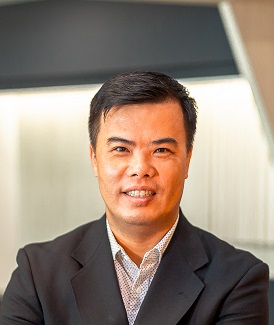
Dr. Wong Ngie Hing serves as Senior Lecturer at Swinburne University of Technology Sarawak Campus within the Faculty of Engineering, Computing and Science. He leads the Master of Construction Management program and conducts research in Environmental Engineering with 20 years of combined academic and industrial experience across USA, Singapore, and Malaysia. His research focuses on critical environmental challenges including Food Waste Processing through anaerobic co-digestion systems, Kitchen Wastewater Treatment involving FOG modeling, and Solid Waste Management for construction material upcycling. Current projects examine municipal food waste co-digestion in Kuching and mechanistic modeling of grease trap deposits. Dr. Wong has secured significant research funding including SRDC Catalyst Grant (MYR200,000) and MOHE FRGS Grant (MYR179,940). His work demonstrates strong industry engagement recognized through multiple Vice-Chancellor's Awards. Vice-Chancellor’s Industry Engagement Award (2019) Vice-Chancellor’s Teaching Excellence (2019) Top 3 Most Innovative Project Awards (2015) Sembcorp Marine Green Wave Commendation (2015) Most Appreciated Student Mentor (2013, 2014) As a Chartered Engineer (CEng, IET UK) and Board of Engineers Malaysia (BEM) member, he maintains strong professional connections while leading international community projects across Southeast Asia, Taiwan, and North America. His Problem-Based Learning approach in graduate education has earned recognition as Best Certified PBL Facilitator (2011).