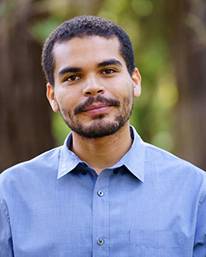
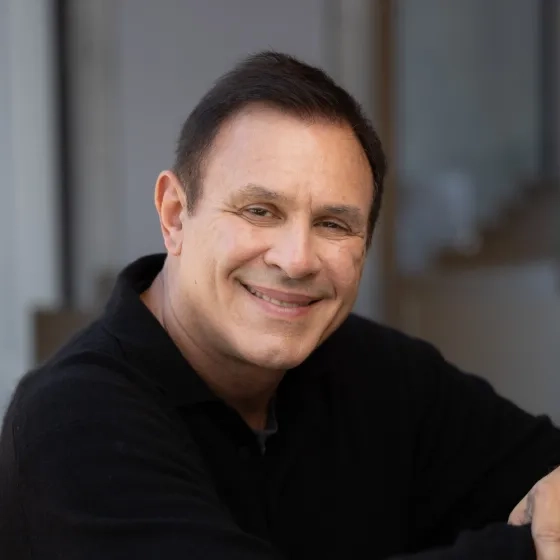
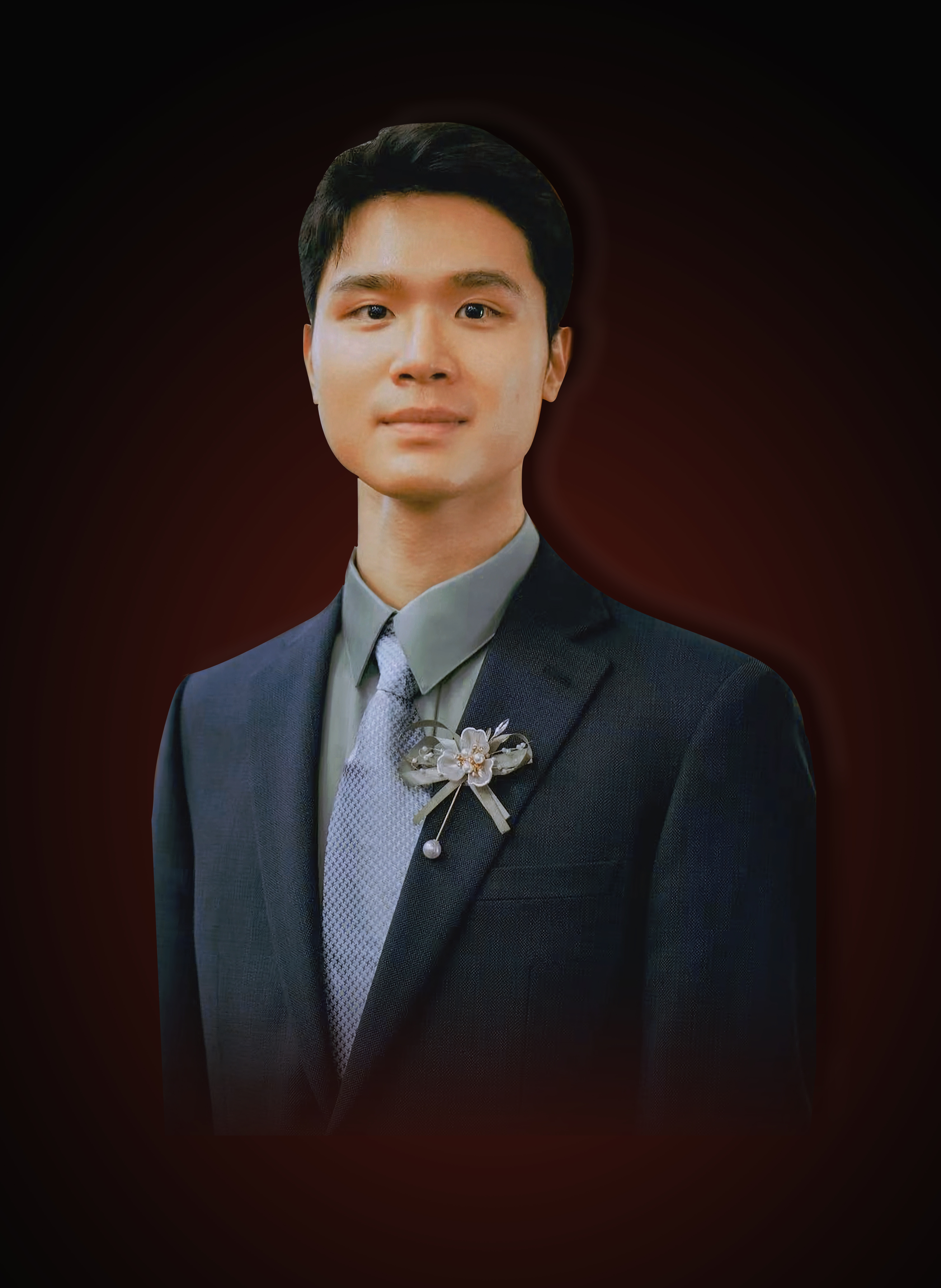
Christopher Castro serves as an Assistant Professor of Composition at Chapman University's College of Performing Arts. A composer and double bassist from Brooklyn, New York, he combines academic rigor with avant-garde experimentation. Ph.D. in Composition and Theory from University of California, Davis Bachelor of Music from Juilliard School (Double Bass & Composition) His research bridges Western Art Music traditions with contemporary innovations , creating works that merge: Johannes Ockeghem's polyphonic complexity John Coltrane's spiritual intensity Modernist structural experimentation Historical reconstruction techniques Jazz-classical hybrid forms Interdisciplinary performance formats Recent compositions demonstrate trends in flexible instrumentation , text-music relationships , and genre synthesis . His output spans chamber works, orchestral pieces, and vocal compositions with equal mastery. Scientific recognition includes: 2023 Fromm Music Foundation Commission (Harvard University) Chamber Music America's 2021 Classical Commissioning Award As a new music advocate , Castro collaborates with ensembles like: Left Coast Chamber Ensemble (artistic advisory board) New Mexico Contemporary Ensemble Los Angeles Philharmonic's Upbeat Live series Lyris Quartet and Sharon Harms
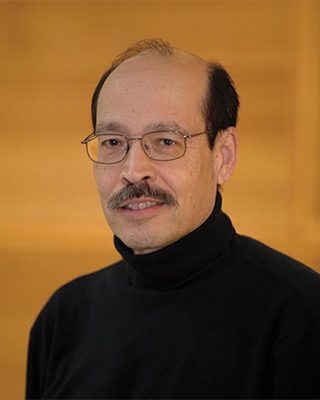
Steve Tanimoto is a Professor at the Paul G. Allen School of Computer Science & Engineering at the University of Washington, with an adjunct appointment in the Department of Electrical & Computer Engineering. His work focuses on human-centered computing, particularly in educational technology and collaborative problem-solving environments. He has made significant contributions to the understanding of liveness in programming environments and their application to education, including a keynote at the International Conference on Live Coding (2015) that traced historical influences leading to widespread use of liveness in modern software environments. Dr. Tanimoto's research spans several interconnected domains: Novice programming environments and educational technology Collaborative problem-solving environments and tools Technology for educational assessment, particularly using pattern-recognition methods for teaching written language on tablets Liveness in programming environments and its applications Image processing from interdisciplinary perspectives (as detailed in his MIT Press book "An Interdisciplinary Introduction to Image Processing: Pixels, Numbers, and Programs") His recent publications demonstrate a consistent focus on the intersection of computing education, human-computer interaction, and collaborative problem-solving. A notable trend is the exploration of "liveness" in programming environments and how this concept can enhance educational experiences. His work increasingly integrates AI technologies with educational applications, particularly in the areas of writing instruction and collaborative problem-solving, with significant NIH funding support (P50 HD071764 and U54 HD083091). His notable recognition includes: VL/HCC Best Showpiece Award in 2015 for "Solving Problems by Drawing Solution Paths" Dr. Tanimoto has advised several graduate students through to completion, including Robert Thompson (2019), Sandra Fan (2013), and Tyler Robison (2012). He currently advises Emilia Gan (co-advised with B. Mako Hill) and Edward Misback. His research has been supported by NIH grants for work on computerized writing and reading instruction for students with learning disabilities. His CoSolve research group has developed experimental facilities for collaborative problem-solving, exploring tools that support problem formulation, visualization of problem spaces, and team collaboration dynamics, with applications in education, design, and various problem-solving domains.
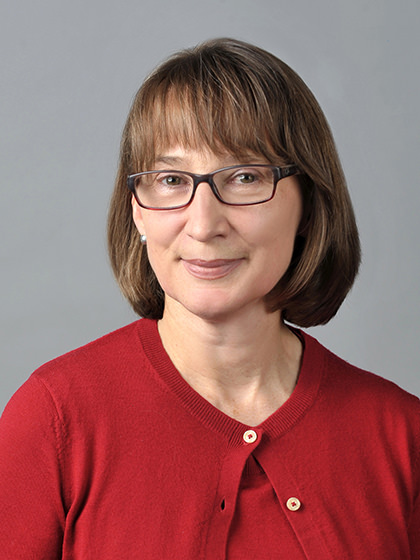
Danuta Mirka is a Professor at Northwestern University's Bienen School of Music in the Department of Music Theory and Cognition. She holds the Harry N. and Ruth F. Wyatt Chair in Music Theory and has been recognized with major awards for her scholarship. PhD in Musicology from University of Helsinki Senior Fulbright Fellow at Indiana University Humboldt Fellow and DFG Research Fellow at University of Freiburg Leverhulme Trust Research Fellow at University of Southampton Her research synthesizes historical music theory with contemporary cognitive approaches, focusing on metric manipulations in Haydn/Mozart, sonoristic structuralism in Penderecki, and topic theory in eighteenth-century music. She has developed analytical frameworks for textural and timbral systems in avant-garde compositions. Key trends across her publications include: cross-disciplinary application of semiotics and fuzzy logic to music analysis; systematic studies of cadential structures in Classical-era works; and innovative methodologies for analyzing non-traditional instrumental techniques. Her article on Penderecki's sonoristic style introduced groundbreaking concepts of six-dimensional textural analysis. Society for Music Theory Citation of Special Merit (2015) Wallace Berry Award (2011) Marjorie Weston Emerson Award (2023) Roland Jackson Award (2017) Mirka has edited major reference works and served on editorial boards of leading journals. Her scholarship bridges Polish avant-garde traditions with Western analytical methodologies.
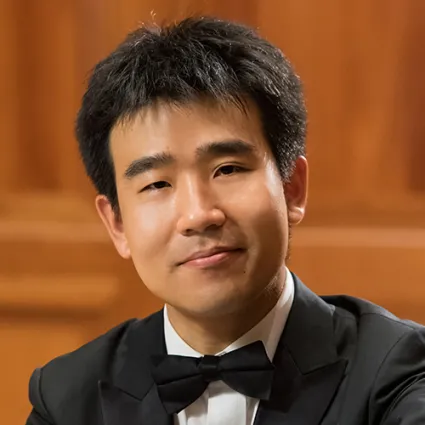
Jiayan Sun serves as Assistant Professor of Music and Associate Chair for Performance Activities at Smith College. A highly acclaimed pianist, he has performed with prestigious orchestras including the Cleveland Orchestra, the Hallé Orchestra, and the Chinese National Symphony Orchestra. His research interests focus on classical music performance, particularly piano repertoire from the Classical and Romantic periods. Sun specializes in the works of Beethoven, Chopin, and Schubert, as evidenced by his extensive performance series including 'A Beethoven Cycle,' 'Schubertiade,' and 'The Timeless Genius of Chopin.' His approach integrates historical performance practice with modern interpretive techniques, particularly in his exploration of early keyboard instruments. Sun's performance catalog reveals a strong focus on complete cycles of major composers' works, demonstrating both technical mastery and deep musical understanding. His repertoire spans from Baroque to contemporary works, with particular emphasis on German and Austrian classical traditions as well as Romantic-era compositions. Third prize at Leeds International Piano Competition Second prize at Dublin International Piano Competition Fourth prize and audience prize at Cleveland International Piano Competition First prize at CCC Toronto International Piano Competition Sun maintains an active performance schedule both as a soloist and chamber musician, frequently collaborating with other faculty members. His work extends beyond performance to include educational initiatives, such as his presentation of Beethoven's complete piano sonatas in chronological order at Smith College. He has also demonstrated commitment to community engagement through benefit concerts, including one supporting people fighting the coronavirus in Hubei Province, China.
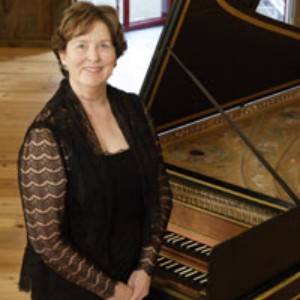
Karen Flint serves as an Adjunct Professor of Harpsichord at the University of Delaware’s School of Music, part of the College of Arts & Sciences. She is the founder and artistic director of Brandywine Baroque, Delaware’s leading early music ensemble, and established the Dumont Concerts—a festival showcasing harpsichord performances on antique instruments. Flint also created the recording label Plectra Music, which focuses on Baroque repertoire performed on period instruments. Her work includes acclaimed series like Le Clavecin Français and notable albums such as Les Pièces de Clavessin and Corelli Violin Sonatas . Her professional engagements include performances with the Delaware Symphony Orchestra, Baltimore Chamber Orchestra, and UD Chamber Orchestra. Brandywine Baroque’s annual concert series spans locations in Pennsylvania and Delaware, with guest appearances at major venues like the Boston Early Music Festival and Winterthur Museum. Flint’s recordings frequently highlight French Baroque composers and explore underappreciated works, demonstrating her commitment to historical performance practices. Flint’s contributions extend beyond performance to include educational outreach through the University of Delaware and community programs such as the Delaware Youth Wind Ensemble. Her discography reflects a dedication to preserving and revitalizing early music traditions, with projects ranging from Handel’s duets to Telemann’s lesser-known works. She remains an influential figure in the revival of 17th- and 18th-century music through both performance and scholarship.
Pamela Palmer Jones is a Professor (Lecturer) at the University of Utah, School of Music , where she specializes in Historical Performance Practice , Music Theory , and Harpsichord . Her teaching includes courses like Doctoral Performance Practice Seminars, Form & Analysis, and Early Music Ensemble, alongside extensive experience in musicianship and class piano instruction. DMA - University of Utah MFA - University of California, Los Angeles BM - University of Utah ARCM - Royal College of Music, London Dr. Jones’ research focuses on historical keyboard performance practices , baroque music pedagogy , and the reincorporation of lost teaching methods into 21st-century keyboard education. She has conducted original research on the Fitzwilliam Virginal Book, Pietro Castrucci’s Op. 1 Sonatas, Beethoven’s piano sonatas, and Carl Czerny’s pedagogical works, often using historical instruments in her creative projects. Her scholarly activities include a world-premier recording of Castrucci’s Op. 1 Sonatas (Centaur Records CRC 3932/3933) and pedagogical video production funded by University Teaching and Research Grants. She has collaborated with artists like Gerald Elias and Noriko Kishi on historically informed performances. College of Fine Arts Faculty Excellence in Teaching Award (2016-17) Dr. Jones has taught at institutions including Salt Lake Community College , Harper College , and College of Lake County before joining the University of Utah. She has also served as Coordinator for Musicianship and Class Piano and continues to perform extensively with ensembles such as the Beethoven Park City International Chamber Music Festival and Utah Flute Association .
Roger Moseley is an Associate Professor in the Department of Music at Cornell University, where he also serves as director of the Cornell Center for Historical Keyboards. His work bridges keyboard music, digital games, and theories of play through research, teaching, and performance. His research investigates intersections of materiality, media archaeology, and 19th-century music via historical instruments like the 1799 Broadwood and 1878 Blüthner. He co-founded the field of ludomusicology and received critical acclaim for his 2016 book Keys to Play . Focus areas: Keyboard interface design Media archaeology applications Historically informed performance Gameplay mechanics in music His Keys to Play monograph (UC Press) analyzes Mozart, Beethoven, and Nintendo systems together. Recent projects include the Romantic Artifacts book examining 1799-1878 keyboard instruments. 2023 Individual Innovation Award (Cornell) 2017-24 Media Studies Fellow (Cornell) 2008 Jerome Roche Prize (Royal Musical Association) As performer, he plays fortepiano on historical instruments at Cornell’s Salon Project and Chamber Music Collective. His 2016 Mozart concerto performance with Cornell Chamber Orchestra is publicly archived.
Laurie San Martin is a Professor of Music at the University of California, Davis, serving as department chair and undergraduate advisor for music majors with last names N-Z. She holds a PhD in Theory and Composition from Brandeis University and a B.A. in Music from UC Davis (1991). Her primary roles include teaching composition, music theory, and recital preparation, while maintaining active involvement in compositional research and performance activities. Research & Creative Work: San Martin specializes in contemporary concert music for chamber ensembles, orchestra, and chorus. Her compositions explore intersections of texture and line, often incorporating experimental techniques and cross-cultural influences. Notable works include Witches (2018), a chamber-choral piece with lyrics by Lucy Corin; Night Owls (2024), a Barlow Endowment-commissioned work for Ensemble Ari; and Elective Affinities (2013), blending Korean gayageum with string quartet. She frequently collaborates with ensembles like Earplay, Left Coast Chamber Ensemble, and Volti. Performed internationally in Europe, South America, and Asia Recipient of prestigious awards including the Guggenheim Fellowship (2016), Andrew Imbrie Award (2018), and Barlow Endowment commissions Teaching & Mentorship: As an advisor, she supports music majors while mentoring emerging composers through programs like the Pacific Chamber Orchestra's Dream American workshop. Her pedagogical focus includes fostering creativity and technical mastery in composition students. Recent Activities: In 2023, she served as guest faculty at the Cortona Sessions in Italy, where her works Octurnal , Miniatures , and Conveyer Belt Dreaming were performed. Ongoing projects include a 2025 residency at the São Paulo Contemporary Composers Festival and a new work for the Empyrean Ensemble. Awards & Recognition: Her accolades reflect her impact on contemporary music, including the League of Composers-ISCM Fellowship and ASCAP Morton Gould Young Composer Awards. She has held residencies at prestigious institutions like the MacDowell Colony and Yaddo.
Karan Ahuja is the Lisa Wissner-Slivka & Benjamin Slivka Assistant Professor in Computer Science at Northwestern University, where he directs the Sensing, Perception, Interactive Computing & Experiences (SPICE) Lab. He will begin this position in September 2024, transitioning from his role as a Visiting Research Scientist at Google where he led Augmented Reality initiatives. Education: Ph.D. in Human-Computer Interaction from Carnegie Mellon University (2023) B.Tech. in Computer Science (2017) His research creates cutting-edge technologies that sense, track, and understand humans to augment daily interactions. The SPICE Lab tackles high-impact problems in: Mobile health sensing : Developing unobtrusive monitoring systems Extended reality : Creating immersive AR/VR experiences Embodied perception : Advancing full-body motion capture Natural interfaces : Designing intuitive interaction paradigms The lab leverages expertise in novel sensors, embedded systems, computer vision, and on-device machine learning to deploy real-world solutions. Ahuja's publications demonstrate strong focus on human sensing technologies, particularly in motion capture (full-body and hand pose estimation), eye/gaze tracking, and multimodal interaction systems. Recent work shows increasing emphasis on practical applications of extended reality and wearable computing. Awards and honors: Forbes 30 Under 30 - Asia, Healthcare & Science (2024) MIT 35 Innovators Under 35 Asia Pacific ACM SIGCHI Special Recognition ACM SIGCHI Outstanding Dissertation Award He actively recruits post-docs, PhD students, and researchers for the SPICE Lab. His industry experience includes research positions at Apple, Microsoft Research, Meta Reality Labs, and IBM Research, with technologies shipped to over 100 million users.
Jeffrey O. Snyder is the Director of Electronic Music and Director of PLOrk (Princeton Laptop Orchestra) at Princeton University's Department of Music within the School of Arts and Sciences. He teaches courses in computer and electronic music, composition, and the intersection of engineering and the arts. His educational background includes a B.A. in Music Composition from University of Wisconsin-Madison and a Doctor of Musical Arts (with distinction) in Music Composition from Columbia University (2011). Snyder's research focuses on new instrument design , alternate tunings , composition , robotics , and networked performance practices . As founder of Snyderphonics, he designs and builds innovative electronic musical instruments including the Manta (used by over 150 musicians worldwide), the JD-1 Keyboard/Sequencer, and custom analog modular synthesizers. His work explores the intersection of arts and engineering, creating new perspectives in music creation and experience. Snyder has received numerous awards and grants including multiple Princeton University Barr Ferree Publication Grants, David A Gardner Magic Project Grants, and New Jersey State Council for the Arts Fellowships. He co-founded Carrier Records in 2009, an experimental music label, and performs in multiple ensembles including exclusiveOr, The Federico Ughi Quartet, The Mizries, and Sideband. He also fronts Owen Lake and the Tragic Loves as his electro-country alter-ego. New Jersey State Council for the Arts Individual Artist Fellowship Finalist (2023) New Jersey Transit Temporary Art Program Commission (2019) Multiple Princeton University research and publication grants (2015-2018) Vermont Studio Center Fellowship for Kinetic and Sound Art (2015) Computer Music Magazine Innovation and Performance Award (2009) Beyond his academic work, Snyder is an active performer and composer who creates alternate-reality Early Music for ensembles of his invented instruments. He also has interests in playing pedal steel guitar, singing electro-country music, building things, and robotics. His courses include Computer and Electronic Music through Programming, Performance, and Composition (MUS 314), Contexts of Composition: Idiosyncratic Instruments (MUS 545), and Transformations in Engineering and the Arts (MUS/STC 209).
Dr. Soohyun Yun is an Associate Professor of Music and Director of Keyboard Studies at Charleston Southern University. She holds a Doctor of Musical Arts in Piano Performance and Literature (with a minor in Theory) and dual Master's degrees in Piano Pedagogy and Performance from the University of Illinois at Urbana-Champaign. Her Bachelor of Music was earned at Yonsei University in Seoul, Korea. Her research focuses on piano performance pedagogy , historical performance practices , and contemporary repertoire analysis , with specialized work on composers like Benjamin Lees and Ravel. She has presented at over 40 international conferences, including the World Piano Conference and MTNA National Conference. Dr. Yun's publications emphasize practical pedagogy, technical analysis of piano literature, and reviews of educational resources. Her scholarly output reflects consistent exploration of piano technique evolution and cross-cultural teaching methodologies. Major performance awards include: Piano Texas International Concerto Competition Winner (2019) IBLA Grand Prize's Most Distinguished Musician Award (2016) First Prize at Bradshaw & Buono International Competition (2016) American Protégé International First Prize (2009) She directs keyboard programs at CSU, coordinates student ensembles, and holds leadership roles in the South Carolina Music Teachers Association (Commissioned Composer Chair) and Charleston Music Teachers Association (Vice President of Programs).
David Conte is Professor of Composition and Chair of the Composition Department at the San Francisco Conservatory of Music (SFCM), where he has taught since 1985. He is also affiliated with the European American Musical Alliance in Paris, where he served on the composition faculty from 2011-2022. In 2014, he was named Composer in Residence for Cappella SF, a professional chamber choir in San Francisco. His educational background includes: Doctor of Musical Arts (DMA) from Cornell University Master of Fine Arts (MFA) from Cornell University Bachelor of Music (BM) from Bowling Green State University David Conte's research and creative interests focus on contemporary classical composition, particularly in the areas of opera, choral music, and chamber music. His work demonstrates a deep engagement with American musical traditions while incorporating diverse influences from European classical music. He has developed a distinctive compositional voice that bridges traditional techniques with contemporary expression, particularly evident in his vocal and choral works. Conte's approach to composition pedagogy emphasizes the importance of musical memory, keyboard skills, and deep engagement with the music one loves. Analysis of Conte's compositional output reveals a consistent focus on vocal and choral music, with significant contributions to American opera through works like 'The Gift of the Magi.' His chamber music demonstrates sophisticated understanding of instrumental capabilities across various ensembles. More recently, his orchestral works like the 'Sinfonietta for Classical Orchestra' show a refined neoclassical approach. Conte's compositions often explore literary and historical themes, reflecting his broader interests in film, history, politics, and religion. His notable awards and distinctions include: Fulbright Scholarship (1976) Ralph Vaughan Williams Fellowship (1989) Aspen Music Festival Conducting Fellowship (1984) National Association of Teachers of Singing Composition Award (2016) American Guild of Organists Distinguished Composer (2024) Raymond Brock commission from the American Choral Directors Association First Prize in the NATS Composition Competition for 'American Death Ballads' (2016) As an educator, Conte has mentored over 100 composition students since 1985 at SFCM. His teaching philosophy, heavily influenced by his studies with Nadia Boulanger, emphasizes the importance of musical memory, keyboard proficiency for composers, and gradual skill development. He has secured numerous commissions from prestigious organizations including the San Francisco, Oakland, Stockton, and Dayton Symphonies, Chanticleer, and the American Guild of Organists. Conte's work has been supported by institutions like the Fulbright Program and the National Endowment for the Arts. Conte maintains active collaborations with various musical organizations, including Cappella SF where he serves as Composer in Residence. His work with librettists like Nicholas Giardini and collaborators like Todd Boekelheide demonstrates his commitment to interdisciplinary artistic projects. He continues to be an influential figure in American contemporary music through his compositions, teaching, and advocacy for new music.
Qifan Wu is a Teaching Professor in Piano Performance at the College of Music and Media , Loyola University New Orleans , with a focus on instrumental studies. He holds a Doctor of Musical Arts and a Master of Music degree from the University of North Texas and the Peabody Institute of The Johns Hopkins University, respectively. Education: Doctor of Musical Arts in Piano Performance (University of North Texas), Master of Music in Piano Performance (Peabody Institute), Bachelor of Music in Piano Performance (University of Colorado Boulder) His research interests center on piano performance, classical music adaptations, and pedagogical techniques. His recent scholarly work explores Brazilian modifications of Baroque and Classical elements in Alberto Nepomuceno's Piano Sonata in F Minor, Opus 9, alongside pedagogical presentations on refining pianistic techniques. Wu's articles highlight his expertise in musicology, classical piano, and cross-cultural compositions. Scientific Awards : Artistic Excellence Award Scott McBurney Memorial Scholarship Doris Pridonoff Lehnert Piano Scholarship Global International Music Competition top prize International Chinese Piano Competition in Singapore top prize KAWAI Asia Piano Competition top prize As an educator, Wu mentors musicians through collaborative concerts, serves as Vice President of the New Orleans Music Teachers Association, and contributes to professional societies like the American Liszt Society and Phi Pi Kappa Lambda. He also coordinates competitions and provides translation services for international events.
Alla Voskoboynikova is an Associate Teaching Professor of Music and Director of Keyboard Studies at the University of Missouri-St. Louis (UMSL). She holds a Bachelor’s in Piano Performance from Voronezh Music College (Russia) and a Master’s from Moscow’s Gnessins Academy of Music. Her career includes solo performances at Carnegie Hall and collaborative work with the St. Louis Symphony Orchestra and Union Avenue Opera Company. She has organized cultural exchange concerts in Russia and directs UMSL’s Summer Keyboard Camp. Education: Voronezh Music College (BA, 199?), Gnessins Academy (MA, 1996) Research focuses on piano pedagogy, chamber music collaboration, and Russian/Ukrainian musical heritage. Notable projects include Shostakovich’s 100th-anniversary recitals and Mendelssohn bicentennial performances. She actively mentors students in competitions and international tours. Recent performances include collaborations with Arianna String Quartet, Stella Markou, and Christine Brewer. Her pedagogical approach emphasizes cultural exchange and interdisciplinary artistry, with students performing at major St. Louis venues like Touhill Performing Arts Center.
David Riley is a Professor and Director of Piano Accompanying and Chamber Music at the University of Oregon School of Music and Dance since 2004. He specializes in Keyboard Performance , Piano Accompanying , and Chamber Music collaboration. Education: Doctorate (DMA) from Eastman School of Music Master's from Cleveland Institute of Music Bachelor's from Ithaca College His research and performance focus includes: Contemporary Collaborative Techniques Historical Chamber Repertoire Keyboard-Pedagogy Innovation Performance highlights: Merkin Hall with New York Philharmonic Chamber Players Carnegie Hall recitals Oregon Bach Festival collaborations International tours in Germany, Canada, and France Award recognitions: 2008 Canadian Independent Music Awards 'Favorite Classical CD' 2007 Silver Wave Film Festival 'Best Music' 2004 East Coast Music Award 'Best Classical Recording' He actively mentors graduate students in Collaborative Piano and provides graduate assistantships in studio accompanying and opera. The Eugene location offers unique access to coastal environments, hiking, and skiing alongside academic pursuits.