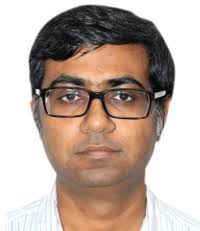
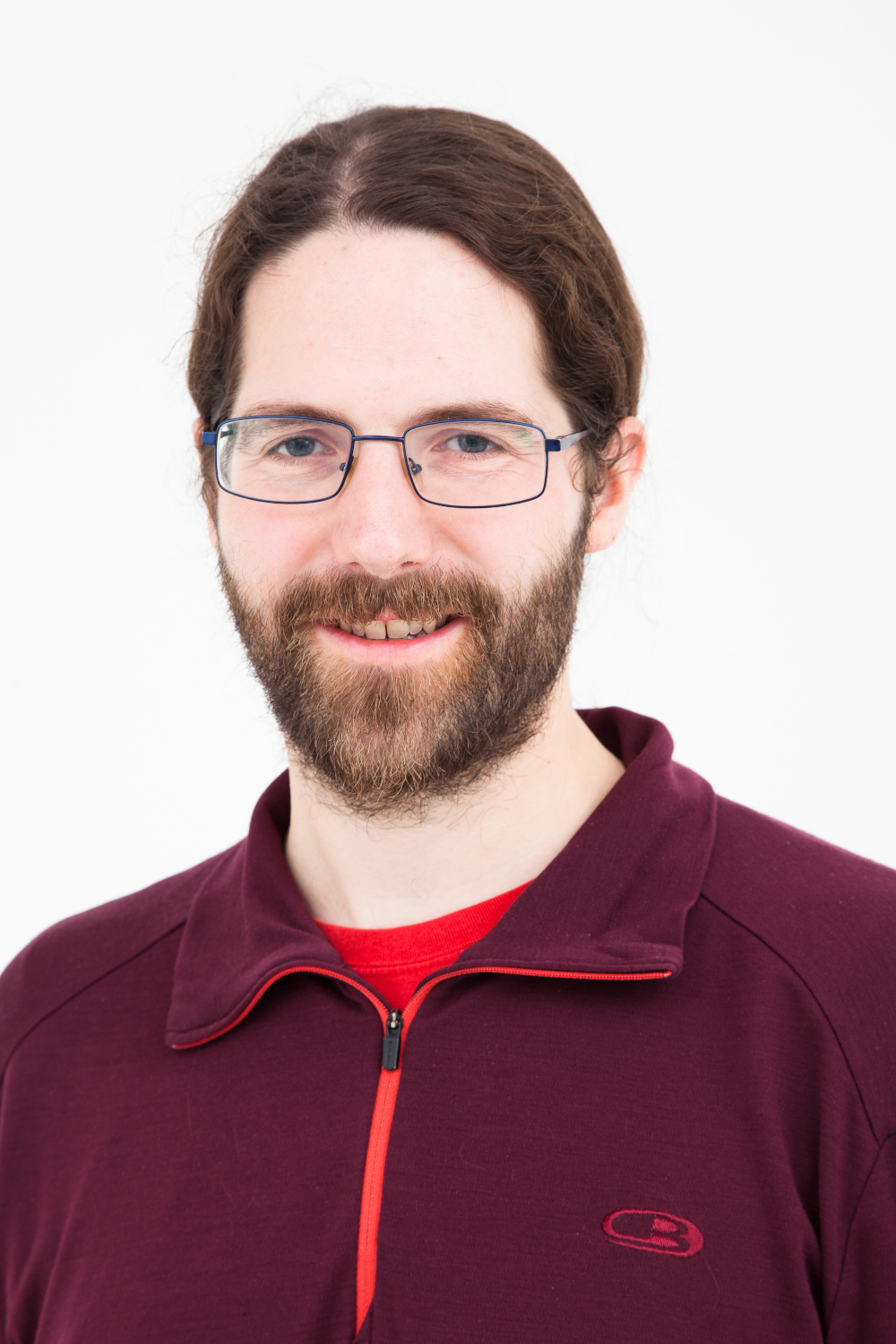
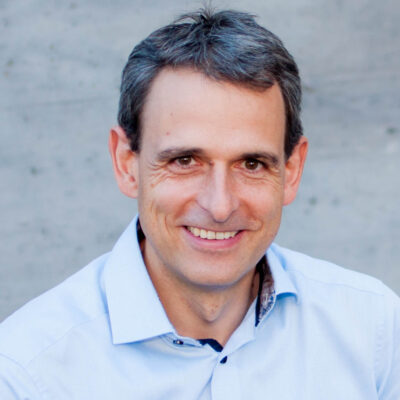
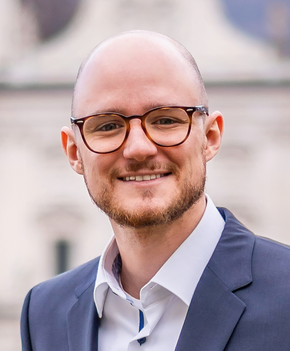
Prof. Matthias Harders is a Professor at the Department of Computer Science, University of Innsbruck. His work focuses on medical imaging, haptic systems, virtual reality, and data-driven simulation. He leads research in interactive visualization tools, medical device development, and machine learning applications in healthcare and environmental engineering. Research areas include haptic augmented reality for surgical training, deformable medical image registration, and synthetic data generation for retinal imaging. Notable projects include SPBView for eye movement analysis and the PoRi device for post-stroke rehabilitation. His work bridges computer science with biomedical applications, emphasizing real-world impact in healthcare technology. Publications span medical simulation, machine learning for biogas prediction, and perceptual interfaces. He collaborates on EU-funded projects involving VR/AR systems and has contributed to open-source tools for point cloud analysis and surgical planning.
Philip Walther is a Professor at the University of Vienna's Faculty of Physics, specializing in Quantum Optics, Quantum Nanophysics, and Quantum Information. He leads cutting-edge research in quantum computing, cryptography, and photonic processing. University of Vienna – Faculty of Physics Harvard University (Postdoctoral Researcher, 2006–2008) University of Latvia (Visiting Researcher, 2024) His research encompasses quantum superposition, indefinite causal order, and secure quantum networks. Key projects include GRAVITES (gravitational interferometry) and Quantum Secure Networks Partnership. Publications span quantum machine learning, entanglement distribution, and photonic processors. Recent collaborations focus on quantum cryptography and European research networks. He holds a 2020 Fellowship from the Optical Society of America and distinctions for quantum logic gates and secure protocols. Quantum-enhanced photonic processors Secure metropolitan fiber networks Gravitational interferometry with entangled states Walther actively participates in academic events like the EPIQUE Annual Meeting and contributes to public engagement through media appearances, including Scientia Global and IEEE publications.
Dr. Emma Izquierdo-Verdiguier is a Researcher at the Institute of Geomatics within the University of Natural Resources and Life Sciences, Vienna (BOKU) . She specializes in machine learning algorithms for remote sensing data analysis , with particular focus on land surface phenology and cloud computing environments like Google Earth Engine. Her research spans two decades, including postdoctoral work at the University of Valencia (2017-2018) and University of Twente (2014-2017). She has developed Matlab toolboxes for nonlinear feature extraction and transitioned to JavaScript/Python-based cloud computing solutions for high-resolution image classification. Key methodologies involve kernel methods , multispectral image analysis , and data cube clustering . Recent publications focus on climate change impact assessment (2025), carbon flux modeling (2023), and soil organic carbon monitoring (2025), demonstrating her expertise in Earth Observation and machine learning integration . Her work frequently employs Google Earth Engine for continental-scale analyses. Scientific Awards: 2018 Travel Award sponsored by Remote Sensing 2017 Best Youth Oral Paper Award (X. Wu), ISPRS 2012 2nd Best Paper Award, IEEE IGARSS Student Competition
Saurabh Saket is a Professor in Algorithms at the Department of Informatics, University of Bergen, Norway (since 2013), and concurrently a Professor at the Institute of Mathematical Sciences, India (since 2009). Previously, he was a Postdoctoral Fellow at the Department of Informatics, University of Bergen (2007–2009). His research focuses on parameterized algorithms, kernelization, exact algorithms, matroid algorithms, algorithmic graph minors, treewidth, and approximation algorithms. He has made breakthrough contributions to complexity theory, kernelization preprocessing, and exact exponential-time algorithms, with key results published in top venues like Journal of the ACM, SODA, FOCS, and STOC. Awards and Grants 2020: Fellow of Indian Academy of Sciences 2019: Outstanding Young Researcher Meltzer Award (Norway) 2017–2018: Swarnajayanti Fellowship (India) 2019–2024: ERC Consolidator Grant 'LOPRE' 2013–2017: ERC Starting Grant 'PARAPPROX' His work bridges parameterized complexity with approximation algorithms and has led to foundational results in algorithmic lower bounds, combinatorial optimization, and logic applications.
Fabian Klute is a Research Fellow at Universitat Politècnica de Catalunya, specializing in discrete and computational geometry. His research focuses on graph drawing, automated cartography, map labeling, and geometric computing, with emphasis on theoretical foundations and algorithm development. Klute's publications demonstrate consistent focus on geometric complexity, graph visualization, and combinatorial optimization. Recent works establish hardness results for segment folding and edge insertion problems, develop algorithms for geometric set diversity, and advance boundary labeling techniques. A significant research thread explores parameterized complexity in graph modification problems. His contributions in graph drawing include innovations in confluent drawings, book embeddings, and 1-planar extensions. Cartography-related research advances automated labeling and spatial representation for complex curve arrangements.
Stefan Mangard is a Professor at the Institute of Information Security at Technische Universität Graz (TU Graz). His primary research focuses on hardware security, cryptographic countermeasures, and mitigating vulnerabilities in computer systems. He specializes in side-channel attacks, fault attacks, and secure processor architectures. Current work includes defending against kernel exploits, memory safety mechanisms, and cryptographic protocol implementations. His research interests span topics such as kernel data structure protection, memory tagging systems, and scalable isolation techniques. He has pioneered defenses against cache attacks, fault-induced control-flow hijacking, and side-channel vulnerabilities in embedded systems. Notable projects include KernelSnitch for kernel data structure analysis and TME-Box for Intel-based memory encryption. Recent work emphasizes practical exploitation of defenses (e.g., TLB side-channels), RISC-V enclave architectures (SPEAR-V), and cross-cache attacks in Linux kernels. His contributions bridge hardware-software co-design for robust security mechanisms, with a focus on real-world exploit scenarios and commodity hardware compatibility.
Marianna Giancaterino is a postdoctoral research associate at the Institute of Food Technology, University of Natural Resources and Life Sciences, Vienna (BOKU). Her work focuses on integrating innovative non-thermal technologies like Pulsed Electric Fields (PEF) and Ohmic Heating into traditional food processing workflows to enhance efficiency and product quality. Institution: BOKU Vienna Department: Institute of Food Technology Research Period: 2018–Present Research Interests: Giancaterino's research combines non-thermal technologies with fruit and vegetable processing to modify plant material structures. Key areas include: Cellular permeabilization via PEF for improved drying/extraction Ohmic heating for rapid, uniform thermal processing Freeze-drying optimization with pre-treatment strategies Energy consumption reduction in food manufacturing Tailored process development for quality preservation Waste minimization through process intensification Scientific Contributions: Her work demonstrates how PEF alters cellular structures to enhance mass transfer during processing, with applications in peeling, cooking, and drying. She explores synergies between PEF and ohmic heating for vegetable processing. 2024: 4 major conference presentations 2023: 5 conference posters and talks 2022: 4 presentations at international events Education: 2016–2019 M.Sc. in Food Science and Technology, University of Teramo (Italy) 2013–2016 B.Sc. in Food Science and Technology, University of Teramo
Michael Pfarrhofer is an Assistant Professor at WU Vienna University of Economics and Business, Department of Economics, specializing in econometrics and macroeconomics. He previously held positions at the Universities of Vienna and Salzburg and contributes to the European Commission’s Joint Research Centre (JRC) in Ispra. His research focuses on Bayesian econometrics, time series analysis, forecasting, and empirical macroeconomics, with applications to business cycles and policy evaluation. Current Role: Tenure-track Assistant Professor Primary Affiliation: WU Vienna University of Economics and Business Collaborations: JRC (European Commission) Research interests include macroeconomic forecasting using advanced Bayesian methods, nonlinear time series analysis, and the impact of climate shocks on financial markets. His work bridges econometric theory and empirical applications, often involving large datasets and machine learning techniques. Publications span topics like tail-risk prediction, international financial spillovers, and nowcasting methodologies. He teaches courses such as Econometrics II and Economic Modeling, emphasizing practical applications of econometric tools. While no specific scientific awards are listed, his contributions to leading journals (e.g., Journal of Econometrics , Journal of Applied Econometrics ) highlight his scholarly impact. Advising and grant activities are not detailed in the provided texts, though his research often involves collaborative projects with institutions like the JRC.
Andreas Hauser is an Associate Professor at the Institute for Experimental Physics , Graz University of Technology. His research bridges theoretical molecular physics and quantum chemistry with practical applications in nanotechnology, catalysis, and machine learning-driven computational methods. He leads a dynamic group integrating theory with experimental collaborations, focusing on metallic cluster physics, molecular spectroscopy, and quantum technologies. Current projects include nuclear spin control, vibrational magnetism, and AI-enhanced material design. Recent publications highlight his work in: Quantum spin manipulation via laser pulses (2024) Machine learning for molecular energy surfaces (2023-2024) Non-adiabatic coupling in confined systems (2022) CO2 activation and nanomaterial stability (2019-2023) Helium droplet electron dynamics (2017) His team employs methods like Gaussian Process Regression, density functional theory, and custom Python toolkits while mentoring numerous PhD and Master's students in high-impact research areas.
Gregory Gutin is a Professor of Computer Science at Royal Holloway, University of London, UK. He has held academic positions at Brunel University (Lecturer in Mathematics, 1996), Odense University (Visiting Lecturer in Computer Science, 1995; Postdoctoral Researcher, 1993), and was a PhD student at Tel Aviv University's School of Mathematics (1991). His career spans roles as a School Teacher in Gomel (Byelorussia, 1979), Researcher in Byelorussian institutions (1982-1987), and academic staff in the UK, Denmark, and Israel. He earned a PhD in Mathematics from Tel Aviv University, with prior research roles in Byelorussia (geology, oil, mathematics). His work bridges theoretical and applied computer science, focusing on combinatorial optimization, parameterized algorithms, and information security. Dr. Gutin's research centers on combinatorial optimization and parameterized algorithms , with applications in graph theory , constraint satisfaction , and access control in information security. His publications address arc routing problems, workflow satisfiability, and probabilistic methods for parameterized complexity, contributing both to foundational theory and practical implementations. His selected publications highlight a focus on fixed-parameter tractable algorithms for constraint satisfaction, arc routing in operations research, and access control mechanisms. These works solved open problems in algorithm design and influenced subsequent research in parameterized complexity and security systems. Best Paper Award at ACM SACMAT 2016 Best Paper Award at ACM SACMAT 2015 Royal Society Wolfson Research Merit Award 2014 Kirkman Medal 1996 Wolf Prize for PhD Students 1992 Dr. Gutin has collaborated extensively with researchers like Magnus Wahlstrom, Anders Yeo, and David Karapetyan. His work on workflow satisfiability introduced novel constraint classes used in access control systems, and he co-authored the influential textbook Digraphs: Theory, Algorithms and Applications (2009). The Royal Society award in 2014 recognized his sustained contributions to algorithmic research.
Enes Bajrovic is a researcher affiliated with the Faculty of Computer Science, focusing on high-performance computing (HPC), big data processing, and performance portability. His work spans task-based parallelism, runtime systems, and optimization frameworks for heterogeneous architectures. He has contributed to major European projects like PEPPHER and AutoTune, which aim to advance HPC software tools and autotuning methodologies. His research emphasizes practical applications of parallel computing in domains such as mobile networks and scientific simulations. Education: Dipl.-Ing. Dr.techn., BSc in Computer Science His research interests include developing frameworks for compute- and data-intensive applications, leveraging technologies like Kubernetes, OpenCL, and Intel Xeon Phi coprocessors. He has authored numerous peer-reviewed publications on topics such as pipeline patterns, autotuning algorithms, and hybrid execution models. His work bridges theoretical advancements in parallel computing with real-world software engineering challenges. Bajrovic has collaborated on projects funded by the European Commission’s FP7 program, contributing to deliverables like runtime systems, tuning frameworks, and benchmarking tools. His research also addresses the integration of big data processing with HPC, particularly in telecommunications and distributed computing environments.
Stefan Huber is Professor and Head of Research at the Department for Information Technologies and Digitalisation at Salzburg University of Applied Sciences. He also serves as Research Group Leader and Head of the Josef Ressel Center for Intelligent and Secure Industrial Automation, a €2.5M research center established in 2022 focusing on digital assistants for industrial machines with research fields in system architectures, artificial intelligence, and cybersecurity for operational technology. His research spans multiple domains including Machine Learning , Industrial Automation , Cyber Security , Computational Geometry , and Algorithm Theory . Huber's work has evolved chronologically from theoretical computational geometry to practical applications in industrial automation systems. His current research focuses on AI applications in industrial settings, particularly in Industry 4.0 contexts, with significant contributions to OPC UA security, reinforcement learning for control systems, and time series forecasting for industrial processes. Analysis of his recent publications (2023-2025) reveals a strong focus on practical AI applications in industrial automation, with particular emphasis on security aspects of operational technology, predictive modeling for manufacturing processes, and integration of machine learning techniques into industrial control systems. His work bridges theoretical computer science with real-world industrial applications. Excellence rating for Josef Ressel Centre evaluation (2024) Recognition for successful high-tech research (2024) Huber leads multiple significant research projects including AI4GREEN (Data Science for Sustainability, 2024-2027), JRZ ISIA (Josef Ressel Centre for Intelligent Industry Automation, 2022-2027), and IAI (Industrial Artificial Intelligence, 2023-2024). His research group at the Josef Ressel Centre comprises numerous researchers working on system architectures, AI, and cybersecurity for industrial automation. The center has received positive evaluations and media coverage for its high-tech research contributions to the field.
Lukas Exl is a Senior Lecturer at the University of Vienna and a Research Director at the Wolfgang Pauli Institute (WPI), where he leads the Mathematical AI/ML Research Division. He holds a habilitation (venia docendi) in Computational Science from the University of Vienna, the first in this interdisciplinary field. Research Platform MMM Mathematics-Magnetism-Materials Wolfgang Pauli Institute (WPI), Vienna His research integrates Applied Mathematics, Computational Physics, and Scientific Machine Learning, focusing on numerical methods for PDE-based simulations, data-driven modeling, and reduced-order approaches. Key applications include computational micromagnetism for green energy materials and developing physics-informed neural networks (PINNs) with interpretable architectures. Recent publications emphasize machine learning techniques for magnetic material optimization, stray field computation, and trustworthy AI (TAI/XAI). He supervises students in Computational Science, Applied Mathematics, and Physics, with a focus on Extreme Learning Machines (ELMs), PINNs, and tensor decomposition methods. Data-driven Reduced Order Approaches for Micromagnetism (FWF Project, €484k, 2024-2028) Design of Nanocomposite Magnets by Machine Learning (FWF Project, €254k, 2022-2027) Reduced Order Approaches for Micromagnetics (FWF Project, €402k, 2018-2024) His team includes researchers like Dr. Sebastian Schaffer (PhD graduate), Kein Gjordeni, and Caroline Maitz. Collaborations span Danube University Krems and Technical University of Denmark's Energy Conversion and Storage department.
Blaž Gasparini is an Assistant Professor (Universitätsassistent) at the University of Vienna , Faculty of Earth Sciences, Geography and Astronomy, based in the Department of Meteorology and Geophysics and affiliated with the Environment and Climate Research Hub . He leads an active research programme on cloud-climate interactions and teaches four courses each academic year. Education & early career: MSc ETH (Swiss Federal Institute of Technology) – atmospheric / climate science PhD studies (University of Vienna) focusing on cirrus-cloud geo-engineering with global climate-model simulations Post-doc/assistant professor appointment at University of Vienna since 2020 Research interests sit at the intersection of cloud microphysics and climate dynamics . Using high-resolution models, satellite observations and theory he investigates how high clouds (especially tropical anvil and cirrus) form, evolve and interact with radiation, and how these processes may change as the planet warms. A second strand explores deliberate climate intervention (cirrus thinning, stratospheric aerosols) and associated physical and ethical uncertainties. His recent publications (2024-2025) reveal three dominant themes: (i) lifecycle and radiative impacts of tropical anvil clouds, (ii) turbulence and microphysical controls on cirrus ice formation, and (iii) critical evaluation of geo-engineering proposals. Collectively the work advances understanding of cloud-radiative feedbacks that govern climate sensitivity and the hydrological cycle. Teaching & outreach: Each semester Dr Gasparini coordinates 2–3 courses including Modelling and Data Analysis , Thermodynamics of the Atmosphere and the Paper Club seminar. He frequently appears on Austrian/Slovenian radio and podcasts explaining climate science and geo-engineering, co-authored the youth brochure "WTF is Climate Change?!" (EN/SL/HU), and maintains an educational blog on high-performance computing for climate modelling. Grants & projects: He is principal investigator on Austrian Science Fund (FWF) and EU-funded projects examining cloud-radiative heating, cirrus microphysics and aerosol-cloud interactions, and participates in international model inter-comparison activities (RCEMIP, CMIP6 analyses). No doctoral students or major scientific prizes are listed in the supplied material.
Dr. Nils Morten Kriege is an Associate Professor at the Faculty of Computer Science, University of Vienna, where he leads the Data Mining and Machine Learning research group. Previously, he served as Assistant Professor (2020-2023) at the same institution and held positions at TU Dortmund including Interim Professor (2019/2020) and Postdoctoral Researcher (2015-2020). His research focuses on graph-based machine learning methods with applications in cheminformatics and drug discovery. His educational background includes a Doctorate in Computer Science (2015) and Diploma in Computer Science (2009), both from TU Dortmund. He has also been a Visiting Researcher at the University of York, UK. Dr. Kriege's research centers on graph algorithms and machine learning with graphs, particularly focusing on graph neural networks, graph kernels, and their applications in cheminformatics and drug discovery. His work bridges theoretical computer science with practical applications, developing novel methods for graph similarity, graph classification, and network analysis. He has made significant contributions to understanding the expressivity and robustness of graph neural networks, as well as developing efficient algorithms for graph similarity search and molecular analysis. His recent publications (2023-2025) demonstrate a strong focus on graph neural networks, with particular attention to their expressivity, robustness against attacks, and practical applications in drug discovery. His work spans theoretical foundations (Weisfeiler-Leman hierarchy, graph isomorphism testing), practical implementations (efficient quantization, defense frameworks), and domain-specific applications (cheminformatics, drug discovery). Vienna Research Groups for Young Investigators (2019) - €1,466k funding for "Algorithmic Data Science for Computational Drug Discovery" Member of the Global Young Faculty V, Stiftung Mercator (2017) Dr. Kriege leads an independent research group funded through the Vienna Research Groups for Young Investigators program, focusing on computational drug discovery. He has served on program committees for major conferences including NeurIPS, ICML, IJCAI, AAAI, ICLR, and ICDM, and has reviewed for prestigious journals such as Transactions on Pattern Analysis and Machine Intelligence. His teaching portfolio includes courses on Data Mining, Graph Learning, and Introduction to Machine Learning. He leads the Machine Learning with Graphs work group within the Data Mining and Machine Learning Research Group at the University of Vienna, collaborating with researchers like Wilfried Gansterer and Petra Mutzel on graph-based methods for drug design and molecular analysis.