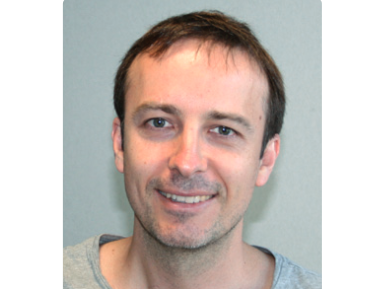
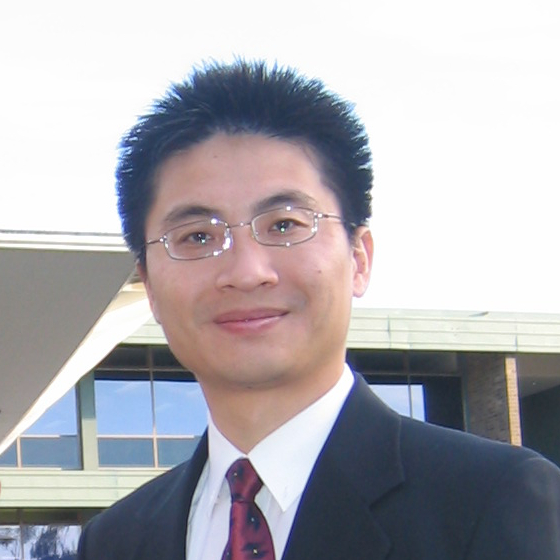
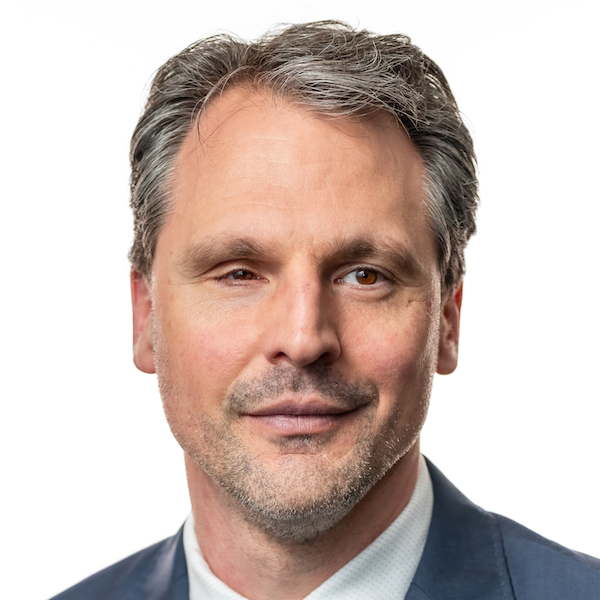
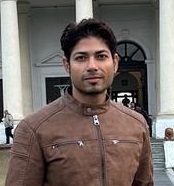
Professor Zhifeng Bao is a faculty member at RMIT University's School of Computing Technologies. His research focuses on enhancing data usability across heterogeneous domains, including structured, unstructured, and spatial-temporal data. His work spans database management, keyword search optimization, social network analysis, and spatio-textual data processing. He coordinates the course COSC1169: Intranet and Internet Data Engineering and supervises PhD/Masters students in projects such as trajectory data processing, data asset valuation, and edge computing optimization. Research interests emphasize improving data accessibility and efficiency through methodologies like query relaxation, visual analytics, and provenance tracking. His recent projects include cost-effective edge node placement, traffic accident risk prediction, and differentially private federated learning. Teaching and supervision activities highlight a commitment to bridging theory and practical data engineering challenges.
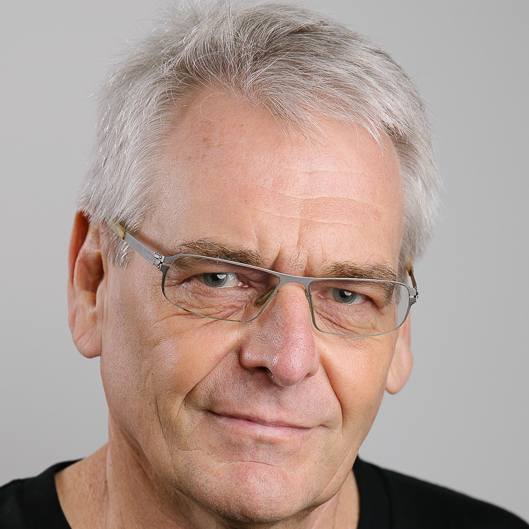
Associate Professor Pierre Lafaye de Micheaux is a statistician based at the School of Mathematics and Statistics, University of New South Wales , where he has worked since 2020. He previously held academic roles at Université Paul Valéry (2020, Associate Professor), ENSAI (2015–2017, Professor), Université de Montréal (2011–2016, Associate Professor), and Grenoble Alps University (2003–present, Assistant Professor). His research spans theoretical and applied statistics , focusing on complex random vectors , neuroimaging genetics , and data science for IoT . Education: PhD in Statistics (2003, Université de Montréal & Montpellier) MSc in Biostatistics (1998, Montpellier) BSc in Mathematics and Physics (1996, Montpellier) MSc in Cognitive Neuroscience (2007, Grenoble Institute of Technology) Research interests include: Dependence Measures : Leveraging complex analysis for big data dependence testing under 3V's (Volume, Variety, Velocity). Neuroimaging Genetics : Developing statistical tools for fMRI/EEG/DTI phenotyping of genetic variation with institutions like CHeBA and INSERM. IoT Data Science : Creating Raspberry Pi-based statistical computing tools for real-time sensor data streams. Complex-Valued Inference : Building a unified framework for complex random vectors in neuroimaging and nuclear engineering. Recent publications demonstrate expertise in circular data analysis , nonparametric testing , and central limit theorem counterexamples , with applications in medical imaging and finance. He has supervised numerous PhD, MSc, and honors students on topics ranging from deep learning to stochastic processes. Scientific achievements include: Université de Montréal Provost Honor List (2003) Editor of the Journal of Statistical Software (2017–present) Co-leader of three research groups: Dependence Measures , Neuroimaging Genetics , and Data Science & IoT He has secured grants from UNSW Research Infrastructure Scheme and NSERC , with industry collaborations including BNP Paribas (credit risk) and Olea Medical (stroke treatment analytics). Current teaching includes Statistical Inference (ZZSC5905) and Data Science (DATA3001) at UNSW.
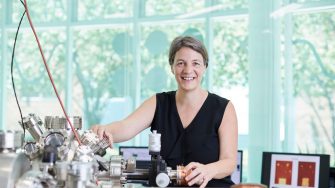
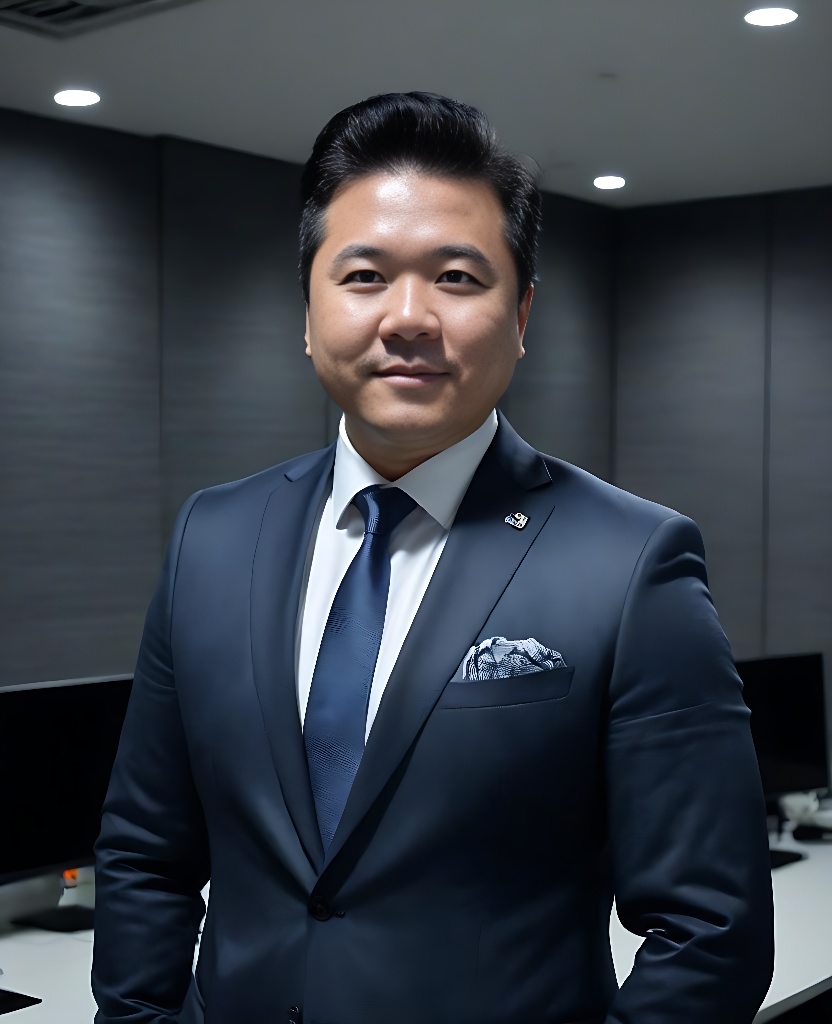
Professor Michelle Simmons is the Director of the ARC Centre of Excellence in Quantum Computation and Communication Technology at the University of New South Wales (UNSW Sydney). Her work focuses on advancing silicon-based quantum computing through atomic precision engineering, including projects on 2-qubit gates and logical qubit architectures. Involves cryogenic measurement and microwave spin control Collaborates with Silicon Quantum Computing Pty. Ltd. Her research spans fundamental quantum mechanics, device fabrication in CMOS cleanrooms, and error correction for scalable quantum systems. Recent publications highlight trends in quantum dot arrays, spin readout sensitivity, and interdisciplinary applications of quantum technologies. Professor Simmons received the Esther Hoffman Beller Lectureship (2022) for her contributions to qubit manufacturing. She leads a dedicated team at UNSW, working toward the development of high-fidelity quantum processors and exploring the intersection of quantum materials and computational innovation.
Dr. Xiongcai Cai is an Adjunct Associate Professor at the School of Computer Science and Engineering, University of New South Wales (UNSW). With expertise in Artificial Intelligence , Machine Learning , and Computer Vision , he contributes to advancing Recommender Systems , Natural Language Processing , and Health Informatics . His work bridges theoretical and applied research in technology for human-centric applications. Current roles: Adjunct Associate Professor, UNSW School of Computer Science and Engineering Key research areas: Machine Learning, Recommender Systems, Computer Vision, Generative AI Dr. Cai's research portfolio demonstrates a consistent focus on recommender systems and machine learning over the past decade. His technical contributions span graph convolutional networks , temporal bilinear models , and embedding techniques for collaborative filtering. Recent work in 2025 addresses knowledge distillation for GCNs-based recommenders, while earlier studies tackled cold-start transitions and matrix factorisation boosting. His publication history (2 book chapters, 7 journal articles, and 36 conference papers) reveals a strong emphasis on real-time applications in domains like gait recognition (2020), health data analytics (2016), and social network recommendation (2010-2015). The research applies mathematical rigor to practical challenges in online dating platforms , medical decision support , and object tracking systems . Contact details: Email: x.cai@unsw.edu.au Phone: +61 2 9385 8858
Dan Steinberg is a senior research scientist and team leader of the Decisions & Statistical Learning team at CSIRO Data61 in Canberra, Australia. His expertise lies in probabilistic machine learning, variational inference, Bayesian deep learning, causal inference, and their application to domains spanning synthetic biology, geospatial analytics, and algorithmic fairness. Education PhD in Computer Vision / Machine Learning (2013) – University of Sydney, Australian Centre for Field Robotics Bachelor of Engineering (Mechatronics, First-Class Honours) – University of Sydney (2008) Bachelor of Commerce (Finance) – University of Sydney (2008) Research Interests Steinberg’s core research agenda revolves around building scalable probabilistic models that can learn efficiently from limited or noisy data and provide principled uncertainty estimates. Key themes include: Variational Inference & Bayesian Deep Learning: developing lightweight yet powerful algorithms for approximate posterior inference in complex models (e.g., Aboleth, Revrand). Active Learning & Experimental Design: creating methods that decide which experiments or measurements will maximise information gain, with recent focus on in-silico protein engineering via Variational Search Distributions (VSD). Causal Inference: leveraging machine-learning tools to perform robust observational causal studies for evidence-based policy, including work on youth well-being and academic outcomes. Algorithmic Fairness: translating normative notions of equity into quantifiable objectives for regression-based decision systems. Large-scale Spatial Analytics: Landshark—an open-source TensorFlow toolkit for supervised learning on massive geospatial raster datasets. Notable Software & Tools Aboleth: A minimal-overhead TensorFlow framework for Bayesian deep learning. Landshark: Command-line tools for large-scale spatial inference. Revrand: Scalable Bayesian generalised linear models with non-conjugate likelihoods. libcluster: Extensible C++ library for hierarchical Bayesian clustering. Scientific Awards Oral Presentation Award – ICML 2025 Workshop on Scaling up Intervention Models (SIMS) Oral Presentation Award – NeurIPS 2024 Workshop on Bayesian Decision-making and Uncertainty (BDU) Oral Presentation Award – NeurIPS 2023 Workshop on Adaptive Experimental Design and Active Learning Spotlight Paper Award – NeurIPS 2014 (Extended and Unscented Gaussian Processes) Research Team & Collaborations As Team Leader – Decisions & Statistical Learning at CSIRO Data61, Steinberg directs a multi-disciplinary group that partners with government agencies (e.g., Jobs and Skills Australia, Australian Institute of Health and Welfare) and industry to deploy machine-learning solutions at scale. He has previously held roles as Principal Researcher at Gradient Institute (2019-2023), Senior Research Engineer at CSIRO Data61 (2016-2019), Researcher at NICTA (2013-2016), and Research Associate at the University of Sydney (2012-2013).
Dr. Sara Khalifa is an Adjunct Lecturer at the School of Electrical Engineering & Computer Science, University of Queensland. She specializes in interdisciplinary research at the intersection of IoT, energy harvesting, and machine learning. Her work focuses on human activity recognition, speech emotion analysis, and sustainable energy systems. She can be contacted at s.khalifa@uq.edu.au . Her research explores innovative applications of energy harvesting in IoT devices, leveraging solar and kinetic energy for self-sustaining systems. She also develops advanced machine learning techniques for speech emotion recognition, emphasizing deep learning and representation learning. Recent projects include FusedAR (2023), which integrates multiple energy sources for activity recognition, and surveys on IoT task scheduling (2021). Publications span IEEE Transactions and conferences like BMVA 2022 and PerCom 2021, demonstrating cross-domain contributions to embedded systems, sensor networks, and neural network analysis. While no specific grants or awards are listed, her collaborative work with industry partners like Marius Portmann and Raja Jurdak highlights active research engagement.
Hassan Doosti is a Senior Lecturer at the School of Mathematical and Physical Sciences, Macquarie University. His research focuses on statistical methodologies, particularly in flexible modeling techniques for complex datasets, with applications in medical studies and business analytics. He has authored or edited books such as Flexible Nonparametric Curve Estimation and Ethics in Statistics: Opportunities and Challenges . Research Interests Nonparametric estimation including wavelet methods and density estimation Statistical modeling of health-related data (e.g., colorectal cancer, stroke) Development of novel statistical algorithms (e.g., censored regression, numerical dependency analysis) Ethical considerations in data analysis for medical sciences Recent Projects Outside Studies Program (2025) APRIntern: Disease Risk Modelling (2019) Key Contributions His work bridges theoretical statistics with practical applications, including: Development of adaptive wavelet quantile density estimation techniques Statistical analysis of neurological and oncological data Advancing methods for handling censored and zero-inflated datasets Awards Recipient of the Faculty of Science and Engineering Award for Inter-School Collaboration (2023) for collaborative research excellence. Professional Activities Editor of multiple peer-reviewed books and active contributor to interdisciplinary projects involving healthcare, data science, and biostatistics.
Toby Murray is a Professor in the School of Computing and Information Systems at the University of Melbourne, where he serves as Director of the Defence Science Institute and Co-Lead of the Computer Science Research Group. His work bridges formal methods, cybersecurity, and practical system security, with significant contributions to verified security and vulnerability detection. Murray's research focuses on building highly secure computing systems cost-effectively, with expertise in formal verification, information flow security, and vulnerability detection. His current research projects include Verisimilar (Verified, Secure Machine Learning), EDEFuzz (Detecting excessive data exposure in web applications), COVERN (Proving information flow security of concurrent programs), and Time Protection (Proving timing channel freedom for seL4). His work combines theoretical rigor with practical implementation, resulting in multiple open-source tools including SecC, Legion, and Underflow. Murray's recent publications demonstrate a consistent focus on verified security properties across diverse domains, from neural networks to concurrent systems. His work often bridges the gap between formal methods and practical security concerns, with increasing attention to machine learning security and policy implications of technical security measures. His publications span top venues in security, formal methods, and software engineering. Distinguished Paper Award at ICSE 2024 for EDEFuzz work on detecting excessive data exposure in web applications Extensive media commentary on cybersecurity issues including CrowdStrike outage analysis and social media regulation Regular contributions to The Conversation and Pursuit on cybersecurity policy matters Murray has advised numerous PhD students to completion, including Lianglu Pan (EDEFuzz), Zhiyuan Zhang, Mo Zhang, and Renlord Yang. He currently supervises multiple PhD students working on security verification, machine learning security, and web application security. His service includes being Program Chair for CSF'25, Associate Editor for IEEE Security & Privacy and ACM TOPS, and membership in IFIP's WG 1.7 and WG 2.3. His research group has developed multiple significant software tools including SecC (Verified Security for Concurrent C Programs), Legion (Principled Automatic Test Case Generation), and Underflow (Compositional Vulnerability Detection for C Programs), all available under open source licenses. Murray's work often involves discovering and reporting bugs in security analysis tools during his research, demonstrating the practical impact of his verification approaches.
Scientia Professor Gernot Heiser is a leading researcher in trustworthy computing systems at the University of New South Wales, where he holds the John Lions Chair of Operating Systems. He is the founder and leader of the Trustworthy Systems Research Group, recognized globally for applying formal methods to ensure security and safety of real-world computing systems. His work spans operating systems, cybersecurity, and dependable systems. Professor Heiser completed his academic qualifications with a BSc in Physics from Freiburg in 1982, an MSc in Physics from Brock in 1984, and a PhD in Computer Engineering from ETH Zurich in 1991. He has been an academic at UNSW since completing his PhD and became a full professor in 2002. He was awarded the title of Scientia Professor in 2011, UNSW's highest academic honor. His research focuses on fundamental solutions to cybersecurity challenges through trustworthy systems. Key areas include microkernels and microkernel-based systems, highly-secure and dependable systems, high-assurance systems, analysis and prevention of cyber threats, real-time systems, virtualization, embedded and cyberphysical systems, and architectural support for operating systems. Professor Heiser's work has resulted in practical applications, most notably the seL4 microkernel, which is the world's first operating-system kernel with a proof of implementation correctness and security enforcement. Notable awards include: Fellow, Engineers Australia (2022) Member of the German Academy of Sciences Leopoldina (2022) ACM Software System Award (2022) ACM SIGOPS Hall of Fame Award (2019) Fellow of the IEEE (2016) Fellow of the ACM (2014) Professor Heiser actively supervises honours, MPhil, and PhD students in his research areas, with projects typically requiring strong backgrounds in operating-system internals or formal methods. He has co-founded Open Kernel Labs in 2006, leading to the L4-embedded microkernel being deployed on billions of mobile devices, including the secure enclave of iOS devices. His research group, the Trustworthy Systems group, was created in 2003 at NICTA and has been wholly at UNSW since 2021.
Wei Liu is an Associate Professor in Machine Learning and Director of the Future Intelligence Research Lab at the University of Technology Sydney's School of Computer Science. He holds a PhD in Machine Learning from the University of Sydney and maintains active roles as a senior IEEE member and area chair for top AI conferences including KDD, AAAI, and ICDM. Education: PhD in Machine Learning, University of Sydney His research focuses on adversarial machine learning, generative AI, cybersecurity, and multimodal learning, with particular emphasis on AI security, robustness of algorithms, and model fairness. Liu's work addresses critical challenges in developing next-generation AI systems that can withstand cyber attacks while maintaining performance with multi-modal data and balanced outcomes despite data imbalances. Analysis of his recent publications reveals a strong trend toward securing large language models against novel attack vectors while advancing multimodal learning techniques. His work spans both theoretical contributions in adversarial frameworks and practical applications in cybersecurity, transportation, and industrial systems. Scientific Awards: 3 Best Paper Awards Most Influential Paper Award at PAKDD Nominee for NSW Premier's Prizes for Early Career Researcher (2017) Liu actively supervises numerous PhD students working on adversarial attacks, robust AI models, and agricultural applications. He has secured substantial funding including ARC Discovery Projects, government grants, and industry partnerships with organizations including Agriwebb, CSIRO Data61, and AVEVA. His Future Intelligence Research Lab specifically targets three emerging challenges: AI security against cyber attacks, robustness with multi-modal data, and model fairness with imbalanced datasets. The Future Intelligence Research Lab produces next-generation AI algorithms addressing AI security vulnerabilities, multi-modal robustness challenges, and fairness issues in real-world deployment scenarios, with multiple representative papers demonstrating practical applications in each domain.
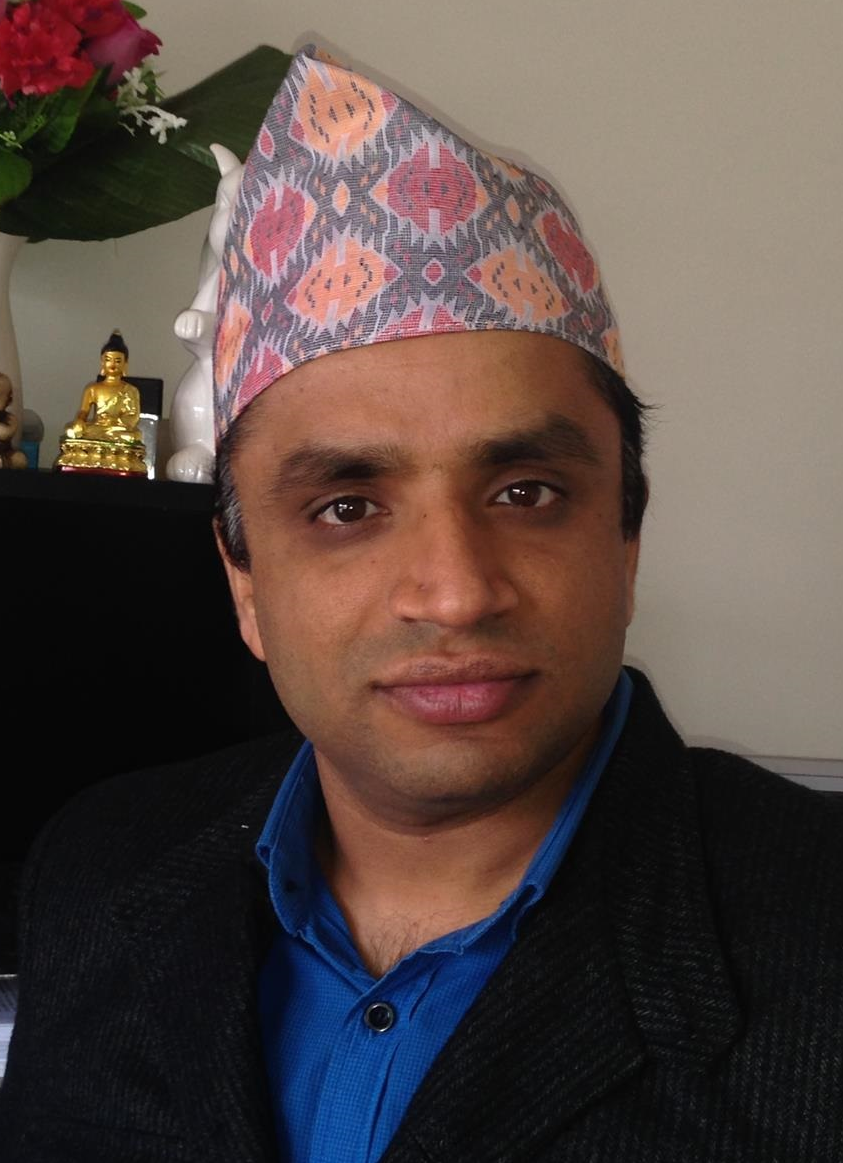
Sunil Aryal is an Associate Professor of Data Science at the School of Information Technology, Faculty of Science Engineering and Built Environment, Deakin University, Australia. He received his PhD and Master by Research degrees from Monash University Australia and has published over 70 papers in top-tier international venues in Artificial Intelligence, Machine Learning and Data Mining. Dr. Aryal's educational background includes: Graduate Certificate of Higher Education Learning and Teaching, Deakin University (2020) PhD in Computer Science, Monash University (2017) Master of Information Technology (Research), Monash University (2012) Master of Information Technology (Coursework), University of Southern Queensland (2008) Bachelor of Information Technology, Purbanchal University, Nepal (2005) His primary research interests focus on making Machine Learning and Data Mining algorithms robust and flexible to handle heterogeneous, noisy and uncertain data in real-world problems. His work spans across several specific areas including anomaly detection, clustering, kernel/similarity-based learning, ensemble methods, learning from limited data, reinforcement learning, natural language processing, and computer vision. Dr. Aryal is particularly interested in applying these techniques to solve challenges in Defence, National Intelligence, Engineering, Manufacturing, Healthcare and Education. Dr. Aryal co-leads the Machine Learning for Decision Support (MLDS) Research Group at Deakin University and has secured over AUD 4.5 million in external research funding. His research is supported by diverse organizations including US and Australia Defence Agencies, the Australian Office of National Intelligence, Worksafe Victoria, the Victorian State Department of Education and Training, the Technology Innovation Institute (TII) UAE, and Table Tennis Australia (TTA). His notable awards include multiple Deakin University research and teaching awards, the Australian Postgraduate Award for his PhD studies, and several student travel awards during his doctoral candidature. Dr. Aryal actively supervises numerous PhD and Master's students and has contributed significantly to teaching in various courses at Deakin University and previously at Federation University. He serves on several university committees and contributes to the research community as a reviewer, program committee member, and editor for various journals and conferences.
Trung Le is a Lecturer in the Department of Data Science & AI at Monash University. His research focuses on deep generative models, kernel methods, optimization in machine learning, and Bayesian inference, with applications to supervised learning, adversarial learning, and cyber security. He holds a PhD in Computer Science from the University of Canberra (2013). Key projects include the Australian Research Council-funded initiatives such as 'Can Machines Unlearn? Toward Next-Generation Safe Artificial Intelligence' (2025–2029) and 'Trustworthy Generative AI: Towards Safe and Aligned Foundation Models' (2024–2026). His work contributes to UN SDG 4 (Quality Education) through advancements in AI ethics and safety. Education: PhD in Computer Science, University of Canberra (2013) Research Areas: Continual Learning, Diffusion Models, Domain Adaptation, Adversarial Machine Learning Awards: KDD 2023 Best Student Paper Award, Imagine Cup 2010 Australia First Prize Trung has published extensively in top-tier venues like NIPS, ICLR, and JMLR, with over 100 outputs since 2009. His recent work emphasizes robustness in AI systems, including projects on adversarial defense and ethical concept erasure in generative models.
Dr. Suman Rakshit is a Senior Lecturer at Curtin University's School of Electrical Engineering, Computing and Mathematical Sciences, with a dual role as a Research Fellow at SAGI-West. His primary research focuses on statistical methodologies for agricultural trials, including spatial variogram modeling and linear mixed models. He has also contributed to genome-wide association studies and developed an R-package for analyzing point patterns on linear networks. Dr. Rakshit holds a PhD in Statistics from Monash University and a Master's from IIT Kanpur. His professional experience includes roles as a Data Scientist at Horizon Power and Prima Consulting. His teaching spans multiple disciplines including Science and Engineering, and he is affiliated with the Office of the Provost. Research interests emphasize spatial statistics, experimental design for on-farm trials, and computational methods. Recent work explores team playing styles in Australian Football using clustering frameworks and addresses spatial dependency in plant pathogens. His publications span agricultural, ecological, and computational topics, with a focus on methodological advancements in spatial analysis.
Kwok-Kun Kwong is a UOW CERL Fellow at the University of Wollongong, specializing in differential geometry, Riemannian and Lorentzian geometries, and mathematical relativity. His research focuses on integral formulas, curvature flows, isoperimetric inequalities, and quasi-local mass problems. He holds a PhD (2011) and M.Phil. (2008) from The Chinese University of Hong Kong, supervised by Prof. Luen-Fai Tam, along with a B.Sc. (2006). Research interests include geometric inequalities involving scalar curvature, eigenvalue estimates on manifolds, and rigidity theorems in warped product manifolds. Recent work explores Alexandrov-Fenchel inequalities, optimal transport applications, and geometric flows in spacetime contexts. He secured grants such as the Innovative Applications of Optimal Transport (2024) and Early Mid-Career Researcher Enabling Grant (2024). Current supervisions involve PhD topics like derivative pricing for geological risks and nonlinear PDE applications. Active in publishing high-impact geometric analysis papers, he contributes to foundational theories in geometric analysis and mathematical physics.
Professor Jingbo Wang is a faculty member at The University of Western Australia (UWA), serving as Head of the Physics Department and Director of QUISA (Research Hub for Quantum Information, Simulation, and Algorithms). She leads research in quantum walks, quantum simulation, and quantum algorithms. Her affiliations include the Australian Institute of Physics (Chair of WA Branch) and the ARC College of Experts. She holds a PhD from the University of Adelaide. Education: PhD in Physics and Mathematical Physics from the University of Adelaide. Previous affiliations include Murdoch University and UWA. Research focuses on quantum walks, quantum algorithms for optimization, machine learning, and network analysis. Key contributions include quantum compilers, efficient quantum circuits, and applications in complex systems. Her work bridges theory and experimental implementation, with collaborations in photonic quantum processors and quantum machine learning. Recent articles explore quantum computing applications in finance, biology, and physics. Awards include the Vice-Chancellor’s Research Mentorship Award (2022) and Australian Institute of Physics Fellowship (2021). Advising and grants involve leadership in quantum computing initiatives, including the UWA-Pawsey Educational Quantum Computing Centre. Her team develops algorithms for real-world problems like portfolio optimization and metabolic pathway analysis. She co-authored books on computational quantum mechanics and quantum walks. Labs/teams: QUISA Research Hub, UPQCC, and collaborations with institutions like CSIRO and Pawsey Supercomputing Centre.