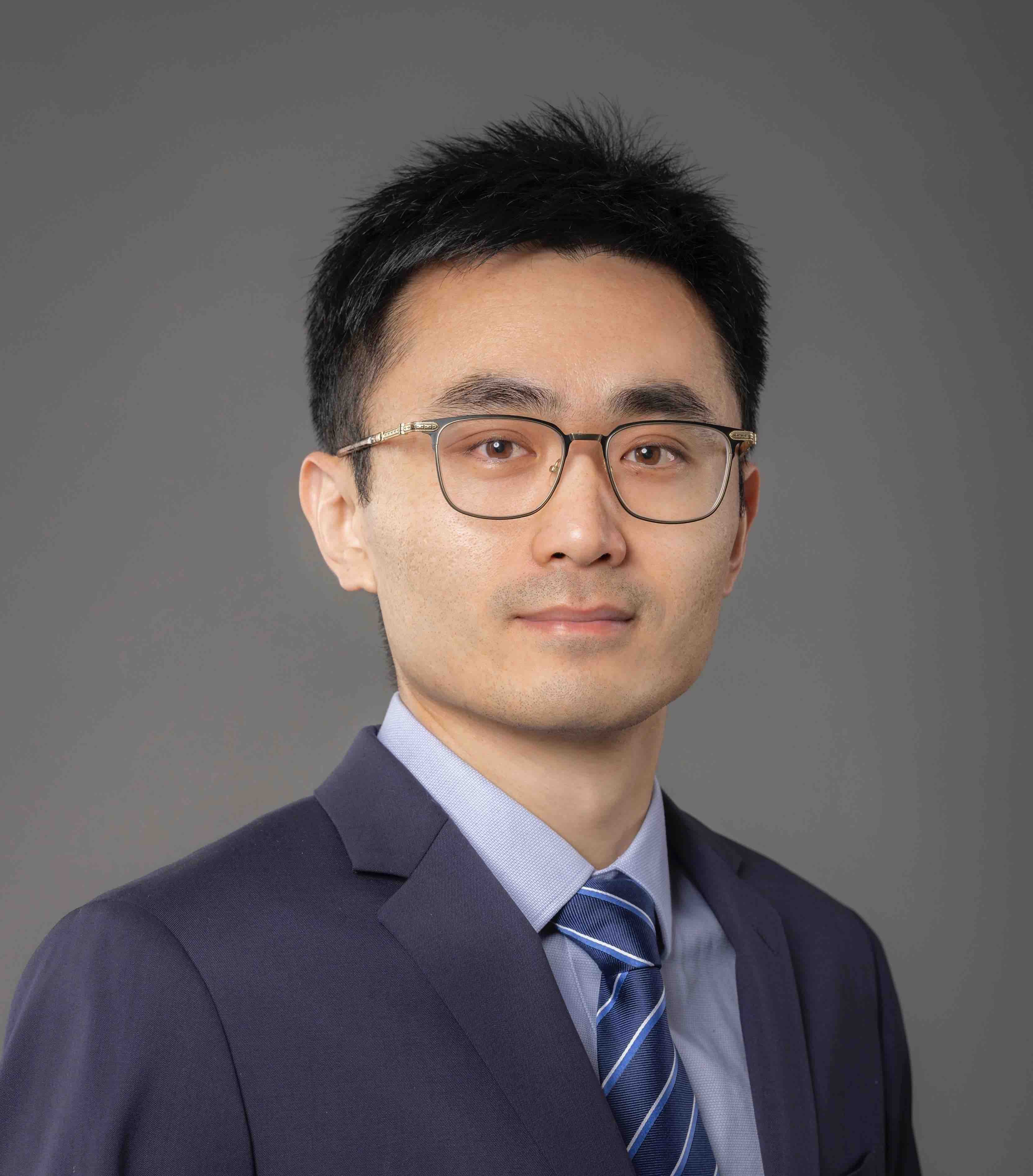
Yan Huang is an Associate Professor in the Department of Software Engineering and Game Development at Kennesaw State University (KSU). His work bridges Federated Learning (FL) and Cybersecurity Education , with a focus on personalization and privacy in distributed systems. Research spans Machine Learning , Extended Reality (XR) , and Data Privacy . He has served as Editor of WCMC and Program Co-Chair for CyberSciTech 2020-2024. Research Trends: Recent publications emphasize Federated Learning for non-IID data, VR-based Cybersecurity Education , and Privacy-Preserving Algorithms in IoT and social media analytics. Key subfields include personalized learning architectures, graph learning, and game-theoretic privacy frameworks. Scientific Awards: Excellent Paper Award (Tsinghua Science and Technology, 2021) Best Paper Award (Future Generation Computer Systems, 2019) Best Paper Awards at IEEE SmartWorld 2021, COCOA 2019, and WASA 2019 Grants: Led over $600,000 in NSF and NSA-funded projects, including VR cybersecurity education for K-12 and XR engineering curricula. His lab recruits VR/AR Research Assistants via industry partnerships.
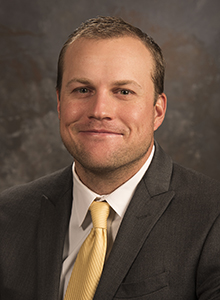
Kelly L. Simonton is an Associate Professor in the Division of Kinesiology and Health, College of Health Sciences, University of Wyoming. His expertise lies in physical education teaching and research on motivation and emotions. His educational background includes: Ph.D. in Kinesiology (Pedagogical and Psychological Science) - Louisiana State University M.S. in Kinesiology (Pedagogical and Psychological Science) - Louisiana State University B.S. in Kinesiology (Physical Education Teaching) - University of Wyoming Dr. Simonton's research centers on achievement motivation and emotions in physical education, examining their impact on student and teacher outcomes, and extending to curriculum development and teacher training with a focus on social-emotional aspects. His work investigates emotional antecedents, teacher effectiveness, and behavioral outcomes in educational settings. His recent publications (2021-2025) analyze emotional experiences in physical education, develop assessment tools like DEPES and YPAAS, and evaluate interventions, particularly in post-pandemic recovery contexts and social-emotional learning programs for K-12 students. He has secured significant grants including a $235,143 award from the Wyoming Department of Education for the Physical Activity and Social-Emotional Learning (PASEL) Program, alongside funding from the Wyoming Department of Health and Wyoming Community Foundation for teacher training and afterschool initiatives targeting student health development. Dr. Simonton directs the Pedagogical Sciences Research Lab and leads major initiatives such as the Healthy Pokes Afterschool Program and PASEL Program, which address youth physical activity, social-emotional learning, and teacher resilience across Wyoming schools.
Susanne Narciss is a Professor at the Psychology of Learning and Instruction department of Technische Universität Dresden, leading the Center of Tactile Internet with Human in the Loop (CeTI). Her research focuses on error processing in educational contexts, with 15 recent publications analyzing error climates, feedback strategies, and motivational frameworks. Key Research Areas : Learning from errors/failure, instructional feedback design, affective-motivational responses, error-related metacognition. Methodological Scope : Combines longitudinal studies, experimental designs, and qualitative analyses across K-12, university, and informal learning settings (museums, home contexts). Her work emphasizes context-specific interventions for educators, parents, and students, including error-competency training programs and metacognitive scaffolding tools. Current projects examine vibrotactile feedback systems for motor learning and cultural responsiveness in psychology education. Collaborative Networks : Works with international teams on the International Competences for Undergraduate Psychology model and cyber-physical system pedagogy. Recent Trends : 2025 articles focus on collaborative error processing, scenario-based human-machine interaction, and generative learning tasks in digital environments.
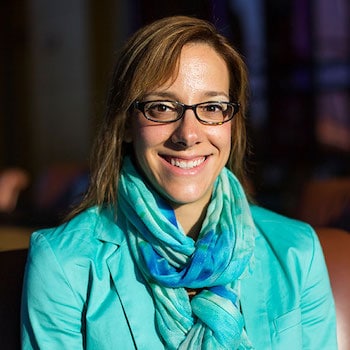
Susan T. Lepri is a Professor in the Department of Climate and Space Sciences and Engineering at the University of Michigan's College of Engineering, where she serves as Director of the Space Physics Research Laboratory. Her work focuses on heliospheric physics, utilizing spacecraft data from missions like ACE, WIND, and Solar Orbiter to investigate solar wind origins and coronal mass ejections. Her educational background includes: Ph.D. in Atmospheric and Space Sciences, University of Michigan M.S. in Atmospheric and Space Sciences, University of Michigan B.S. in Physics, Astronomy and Astrophysics, University of Michigan Lepri's research centers on tracing charged particles in the heliosphere using heavy ion measurements to study solar wind sources, coronal mass ejection physics, and particle acceleration mechanisms. She develops space-based ion mass spectrometers for missions including the European Space Agency's Solar Orbiter (Heavy Ion Sensor) and the Interstellar Mapping and Acceleration Probe. Her work integrates statistical analysis of solar wind composition with magnetohydrodynamic model validation to unravel plasma behavior in space environments. Analysis of her 15 most recent publications (2015-2017) reveals consistent focus on solar wind composition dynamics, particularly charge state evolution and elemental fractionation. Key themes include magnetic reconnection signatures in slow solar wind formation, anomalous composition in depleted interplanetary coronal mass ejections, and solar wind charge exchange contributions to X-ray backgrounds. Her instrumentation work bridges observational gaps in inner heliospheric measurements. Major recognitions include: 2018 Claudia Joan Alexander Trailblazer Award (University of Michigan) 2012-2013 Kenneth M. Reese Outstanding Research Scientist Award 2008 JGR-Space Physics Excellence in Refereeing Citation NASA Graduate Fellowship (2001-2003) Lepri actively mentors through outreach programs including K-12 initiatives with the Michigan Space Grant Consortium and Detroit Area Pre-College Engineering Program. She has coordinated Rochester Adams High School STEAM fairs and elementary science outreach while developing educational content like MConnex videos. Her research is supported by NASA grants enabling instrument development for Solar Orbiter and IMAP missions, with collaborations spanning international space agencies and academic institutions. As Director of the Space Physics Research Laboratory, she leads teams developing next-generation space instrumentation, particularly ion mass spectrometers for heliospheric exploration. Current projects include the Heavy Ion Sensor for Solar Orbiter (measuring inner heliospheric composition) and innovative sensors for IMAP, advancing capabilities to trace solar wind sources and particle acceleration mechanisms.
Scott Price is a Continuing Lecturer and Undergraduate Faculty Advisor (Sophomores/Juniors) in the Department of Chemistry & Biochemistry at the University of California, Santa Barbara. He holds a B.A. in Chemistry from Northwestern University and a Ph.D. in Physical Chemistry from UCSB. His research focuses on chemical education, physical chemistry, nanofabrication, surface science, catalysis, and energy storage. He teaches general chemistry courses and coordinates the 5th Grade Chemistry Outreach Program. Notably, he received the Academic Senate Distinguished Teaching Award in 2018. Education Background: B.A. in Chemistry, Northwestern University Ph.D. in Physical Chemistry, UCSB Research & Teaching: Price's research spans nanocluster catalysis on surfaces and energy storage materials. He actively engages in chemical education initiatives, including outreach programs for K-12 students. His teaching responsibilities include the full general chemistry series (Chemistry 1A, 1B, 1C). Awards & Recognition: Academic Senate Distinguished Teaching Award (2018) Grants & Labs: No specific grants or lab details listed, but his work is supported through departmental and outreach programs.
Pedro Antonio Garcia Tudela is a researcher at Universidad de Murcia specializing in Educational Technology, with a focus on Smart Learning Environments and Digital Entrepreneurship. He completed his PhD in 2023 with a thesis on intelligent learning environments supervised by Dr. María Paz Prendes Espinosa and Dr. Isabel María Solano Fernández. His educational background centers on advanced educational technology studies at Universidad de Murcia, culminating in his 2023 doctoral dissertation that established foundational frameworks for smart learning environments. This research positioned him at the forefront of educational innovation in Spanish-speaking contexts. Garcia Tudela's research explores the intersection of digital tools and pedagogical innovation, with emphasis on gamification, computational thinking development through Arduino, and digital entrepreneurship education. His work addresses critical gaps in teacher training for future classrooms and develops practical models like EmDigital for fostering entrepreneurial competencies in digital contexts. He investigates how educational escape rooms, flipped learning, and gender-inclusive technology integration transform learning experiences across K-12 and higher education. Analysis of his 15 most recent publications reveals a clear trajectory toward practical applications of educational technology: 40% focus on digital entrepreneurship frameworks, 30% on smart learning environment design, and 30% on gamification and computational thinking implementation. His research increasingly addresses cross-cultural applications, with comparative studies of future classrooms in Spain and Portugal. As an active thesis supervisor within the Educational Technology research group, Garcia Tudela mentors students in developing innovative educational methodologies. His work demonstrates strong industry-academia connections through practical frameworks for professional development and employability. The Educational Technology research group serves as his primary collaborative environment, driving projects that translate theoretical models into classroom applications while addressing contemporary challenges in digital education transformation.
Marcelo Worsley is the Karr Family Associate Professor in Computer Science and Learning Sciences at Northwestern University's School of Education and Social Policy (SESP). His research focuses on promoting STEM education for underserved populations through hands-on, project-based learning. He holds a PhD and MS in Learning Sciences and Computer Science from Stanford University, along with dual bachelor's degrees in Chemical Engineering and Portuguese. His work emphasizes inclusive learning technologies, multimodal learning analytics, and fostering agency in students to address real-world challenges. Research Interests: Worsley’s research spans four core areas: (1) designing meaningful hands-on learning experiences; (2) extracting and analyzing multimodal data; (3) developing naturalistic interfaces for education; and (4) bridging engineering education with conceptual change. His Technological Innovations for Inclusive Learning and Teaching (tiilt) Lab aims to address inequities in education by co-designing tools with teachers and learners. Grants & Projects: Worsley has led initiatives such as Multimodal Learning Analytics (funded by NSF EAGER) and PE++ , integrating computer science with physical education. His projects often involve intergenerational making, refugee youth engagement, and culturally responsive computing. Publications: His work appears in journals like Journal of Learning Analytics and conferences such as ICLS and EDM. Recent themes include AI in education, embodied learning in games like Minecraft, and leveraging sports for computational thinking.
Elizabeth Yankovsky is an Assistant Professor in the Yale Department of Earth and Planetary Sciences, affiliated with the Atmosphere, Oceans, Climate Dynamics Group. She holds a PhD from Princeton University and conducted postdoctoral research at New York University's Courant Institute. Her research focuses on physical oceanography, climate modeling, and the role of ocean turbulence in shaping large-scale ocean dynamics and climate. She collaborates with [C]Worthy on marine Carbon Dioxide Removal (mCDR) projects, particularly studying ocean alkalinity enhancement and regional ocean modeling. Her work emphasizes understanding mesoscale and submesoscale eddies, dense water formation in the Arctic, and improving climate models through parameterization of unresolved processes. Key contributions include developing parameterizations for symmetric instability in abyssal flows and analyzing eddy vertical structure using high-resolution models. She has also explored river plume dynamics and estuarine processes using nonhydrostatic simulations. Dr. Yankovsky teaches courses on ocean physics and climate dynamics, integrating pedagogical strategies learned through Princeton's Teaching Transcript Program. Her outreach activities include STEM education initiatives for K-12 students, such as workshops on Arctic oceanography and climate science.
Dr. Katherine Mason Cramer is a Professor and Program Chair for Middle/Secondary English Education at Wichita State University's School of Education. Her work focuses on affirming LGBTQ+ identities, inclusive pedagogy, and leveraging Young Adult Literature (YAL) to address gender diversity and intersectional identities in educational settings. She leads initiatives to disrupt heteronormative school cultures and develop queer-inclusive curricula. Education background: Holds a Ph.D., with expertise in English education and teacher preparation. Professional roles include program leadership, curriculum development, and fostering collaboration between university and K-12 educators. Research emphasizes LGBTQ+ representation in literature, teacher training for inclusive practices, and leveraging YA narratives to address societal issues. Key themes include queer youth visibility, intersectional identities, and creating safe educational spaces. Publications consistently address LGBTQ+ topics across education and literature, with recent work exploring transgender identities in middle grades texts and queer narratives in sports contexts. Her 2023-2024 articles highlight professional development strategies and curriculum integration of inclusive materials. No awards listed in available materials. Active in service roles related to teacher education program coordination and K-12/university partnerships. Operates from Hubbard Hall on Wichita State's main campus, coordinating initiatives that bridge theory and practice in English education. Engages in continuous program improvement through reflective pedagogical frameworks and digital tool integration.
Konstantinos Alexakos is a Professor and Program Coordinator for General Science (GSCI) and Science Education (covering biology, chemistry, physics and earth science for grades K-12) at the School of Education, Brooklyn College, City University of New York (CUNY). He also holds a professorship in The Ph.D. Program in Urban Education at the Graduate Center, CUNY. His academic work focuses on science education, teacher development, and the integration of mindfulness practices in educational settings. His educational background includes: B.S. in Physics from The City College of New York - CUNY (1989) M.A. in Education in Physics and General Science from New York University (2000) M.Phil. in Science Education from Columbia University (2004) Ph.D. in Science Education from Teachers College, Columbia University (2005) Alexakos's research interests span multiple interconnected domains within science education. He has made significant contributions to understanding mindfulness and wellness in educational contexts , particularly how contemplative practices can enhance teaching and learning environments. His work explores emotional dimensions of science education , examining how teachers and students navigate emotional landscapes in classrooms. He has pioneered research on cogenerative dialogue and coteaching as mechanisms for improving educational practice. His scholarship also addresses diversity, equity, and inclusion in science education, with particular attention to race, gender, and cultural considerations. Alexakos investigates teacher identity formation and the challenges science educators face in urban settings, while also developing frameworks for authentic inquiry that empower teachers as researchers. His recent work increasingly focuses on holistic approaches to education that integrate physical, emotional, and intellectual dimensions of learning. Analysis of his recent publications (2017-2022) reveals a clear trajectory toward integrating contemplative practices with science education. His scholarship demonstrates a consistent focus on teacher development through authentic inquiry, with increasing emphasis on wellness, mindfulness, and emotional dimensions of teaching and learning. The publications show a progression from theoretical frameworks to practical applications of heuristics and contemplative practices in educational settings. His collaborative work with Kenneth Tobin forms a substantial portion of his output, indicating a productive research partnership focused on transforming educational practices. The publications span multiple formats including books, book chapters, and journal articles, demonstrating versatility in scholarly communication. His scientific awards and recognitions include: Brooklyn College Student Technology Fee Award for "Science Lab Probes" ($12,000) PSC-CUNY Research Award (PSCREG-38-335) for "Self and Science Teacher Attrition" ($6,000; 2007-08) PSC-CUNY Research Award (PSCOOC-37-30) for "The Science Teacher, Subjective Constructs of Science Teaching, and the 'Organic Link'" ($5,990; 2006-07) Alexakos has been actively involved in mentoring students through various teaching practicums and research activities. His courses include Natural Science for Early Childhood & Childhood Education, General Science for Child & Elementary School, Physical Science for Childhood Teachers, and multiple student teaching practicum courses. He has developed the master of arts in teaching (MAT) in science education program at Brooklyn College that infuses research and practice in science teaching in urban settings. His grant activities include research projects on teacher attrition, the science teacher as the organic link, and wellness practices in educational contexts. He has also secured funding for technology implementation in science education through the Student Technology Fee Award. While not explicitly mentioned as leading a specific laboratory, Alexakos is deeply involved with the Urban Science Education Research Seminar at the CUNY Graduate Center, where he has presented and organized numerous sessions. He has collaborated extensively with colleagues including Kenneth Tobin, Maria Powietrzynska, and Leah Pride on research related to emotions, mindfulness, and wellness in educational settings. His work with the Association of Greek American Professional Women (AGAPW) on "Inspiring Women in Science, Technology, Engineering, and Mathematics (STEM)" demonstrates his commitment to supporting underrepresented groups in STEM fields.
Dr. Michelle Zhu is a Professor and Associate Director for Faculty and Academic Affairs at the School of Computing, Montclair State University. She previously held roles as Associate Professor and Director of Undergraduate Programs at Southern Illinois University Carbondale. Dr. Zhu holds a Ph.D. in Computer Science from Louisiana State University and a B.S. in Biomedical Engineering from Zhejiang University. Her research focuses on parallel/distributed computing, big data analytics, and high-performance networking, supported by grants from NSF, DOE, and NVIDIA. She has authored over 150 peer-reviewed publications. Education: Ph.D., Computer Science, Louisiana State University (2005) M.Sc., Computer Science, Louisiana State University (2002) B.S., Biomedical Engineering, Zhejiang University (1996) Her research interests span parallel computing architectures, cloud workflow scheduling, and cybersecurity. She has led initiatives integrating computational thinking into STEM education and developed robotics-based learning tools. Her work has been funded through NSF grants such as the $1.1M "Assimilating Computational and Mathematical Thinking into Earth and Environmental Science" project (2017–2022). Dr. Zhu’s articles explore topics like blockchain-based cloud security, GPU-accelerated Gibbs sampling, and edge computing deployment strategies. She actively contributes to academic governance, serving on Montclair State’s Middle States accreditation committee and the University Academic Assessment Council. Key Grants: NSF MRI: Multimodal Collaborative Robot System (MCROS), $321,737 (2021–2024) DOE: Scalable Application Support Platform for E-Sciences, $389,398 (2009–2013) Service Roles: Curriculum Committee Chair, Computer Science Department Blue Ribbon Task Force for Gen Ed Redesign (2019–2020) She collaborates on robotics projects like MCROS and leads outreach efforts to engage pre-university communities in AI and robotics education.
Tristan Wallhead is a Professor in the Division of Kinesiology and Health within the College of Health Sciences at the University of Wyoming, specializing in Physical Education Teacher Education (PETE). Originally from England, he joined the university after completing his PhD at The Ohio State University in 2004 and was promoted to Professor in 2017. He currently serves as Vice President of the international AIESEP organization and leads the Pedagogical Sciences Research Lab. His educational credentials include: Ph.D. in Sport and Exercise Education from The Ohio State University (2004) M.S. from Leeds Metropolitan University (2000) B.S. (Hons) from Loughborough University (1997) Wallhead's research centers on sport pedagogy , particularly the impact of instructional models like Sport Education on student motivation and physical activity participation. His work investigates physical literacy development , teacher occupational socialization, and innovative pedagogical approaches across K-12 and university settings. He examines how emotional experiences, cognitive achievement, and physical outcomes intersect in physical education environments. Analysis of his 2022-2023 publications reveals consistent focus on Sport Education implementation, teacher professional development, and physical literacy assessment. His research frequently involves international collaborations (notably in Hong Kong) and addresses practical applications through multi-institutional studies examining student outcomes, teacher dispositions, and program effectiveness. His distinguished awards include: SHAPE Research Fellow (2013) Central District SHAPE Scholar Award (2016) Multiple Outstanding Reviewer recognitions (2014-2018) CHS Meritorious Service Award (2021) Wallhead mentors Master's students in PETE and has secured substantial research funding, including a $125,719 Outride Foundation grant on Riding for Focus in Physical Education (2020-2023) and two Hong Kong-based projects totaling over $122,000 investigating Sport Education's impact on physical literacy. His grant work emphasizes community partnerships and cross-cultural applications of pedagogical models. He directs the Pedagogical Sciences Research Lab, which develops evidence-based physical education practices through empirical research on instructional models, teacher development, and student engagement metrics across diverse educational contexts.
Morgane Chevalier is an Associate Professor at Vaud Teacher Training College (HEP Vaud) working within the Media, Digital Uses and Computer Science Teaching unit (UER MI). She specializes in multimedia pedagogical engineering, combining project management with e-learning scripting. Her work bridges educational theory and practical implementation of digital technologies in classroom settings, with particular focus on primary education. With prior experience teaching in primary schools in Seine-Saint-Denis (France), working in human resources in Montreal (Canada), and teaching in the Canton of Vaud, Chevalier brings diverse perspectives to her academic work. She holds a Master's degree in e-learning from IPM, Lille 1 and is currently pursuing a MAS in 'Theories, practices and training devices for teachers' to refine her understanding of institutional and social contexts of teacher training in French-speaking Switzerland. Her research interests focus on three complementary areas: online homework implementation in blended learning environments and fostering teacher communities of practice; how e-learning supports teacher professionalization; and robotics as a medium for knowledge, specifically examining how classroom robot integration impacts student learning and teaching practices. She is particularly interested in emerging communities of practice around educational technology. Analysis of her recent publications reveals a strong emphasis on educational robotics as a vehicle for developing computational thinking in primary education. Her work consistently explores scaffolded learning approaches, intervention methods, and teacher perspectives on implementing robotics in classrooms. A recurring theme is the development of models to help teachers identify relevant computational thinking concepts during different phases of educational robotics activities. Chevalier serves in several organizational roles including as an Associate HEP Professor, delegate of the intermediate body to the HEP Council, delegate of the Specialized Pedagogy Study Commission, and scientific collaborator at EPFL's LSRO. She is also a member of the educanet2 Community. Her teaching spans Bachelor primary programs, MASPE education, and continuing education courses covering image creation and processing, media education, Thymio II robotics, and flipped classroom methodologies. She collaborates extensively with EPFL researchers, particularly on projects involving the Thymio educational robot, and has developed frameworks for creative computational problem solving through robotics. Her work demonstrates a commitment to translating research into practical classroom applications while supporting teacher development in the digital age.
Margaret Floress is a Professor at Eastern Illinois University , actively contributing to the Department of Psychology . As the Psychology Program Coordinator , she leads research initiatives focused on behavioral education , teacher training , and classroom management . Education Ph.D., Indiana State University (2007) M.A., Indiana State University (2004) B.S., Central Michigan University (2003) Her research emphasizes low-cost behavior management strategies to improve teacher retention and student outcomes. Key areas include praise delivery systems , preschool interventions , and applied behavioral analysis . She mentors students in hands-on research activities like data collection and academic writing. Recent publications focus on behavioral education trends , classroom observation tools , and technology integration for special education applications. Her work addresses teacher-student dynamics , social-emotional learning , and behavioral intervention systems . Contact: mfloress@eiu.edu | Office: 1437 Physical Sciences
Ronald Dorn is a Professor of Geography at Arizona State University (ASU) since 1988, previously at Texas Tech University. He co-coordinates the Arizona Geographic Alliance, promoting K-12 geographic education. His academic affiliations include the School of Geographical Sciences and Urban Planning and the Water Institute at ASU. Education: Ph.D. (1985), M.A. (1982), and B.A. (1980) in Geography from UCLA and UC Berkeley. Active in research, teaching, and professional service, Dorn has held roles in curriculum development, grant leadership, and academic governance. Research interests span geomorphology, rock art conservation, mineral weathering, and geographic education. His work bridges physical and human geography, with a focus on arid environments and cultural heritage preservation. Recent articles emphasize erosion dynamics, rock coatings, and pedagogical innovations in geography education. Over 70 scientific awards and fellowships highlight his contributions, including the Guggenheim Fellowship (1996) and Wiley Award (1993). He has mentored 20+ graduate students, many advancing to academic or applied roles. Teaching includes courses on physical geography, Arizona landscapes, and urban studies. His research labs and teams focus on field-based studies, integrating geospatial technologies and interdisciplinary approaches.