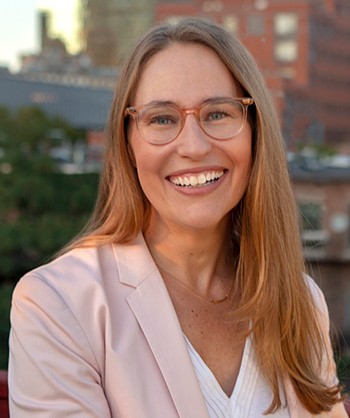
Ken Koedinger is a University Professor at Carnegie Mellon University (CMU), holding appointments in the School of Computer Science (Human-Computer Interaction Institute) and the Dietrich College of Humanities and Social Sciences (Department of Psychology). He is the co-founder of Carnegie Learning, Inc., and directs the LearnLab, now the scientific arm of CMU’s Simon Initiative. His research focuses on cognitive modeling, intelligent tutoring systems, and the science of learning. Dr. Koedinger has over 250 peer-reviewed publications and has been awarded prestigious titles such as the Hillman Professorship of Computer Science and Fellow of the Cognitive Science Society. Education: Ph.D. in Cognitive Psychology (CMU, 1990), M.S. in Computer Science (University of Wisconsin, 1986). Prior to academia, he taught in an urban high school, informing his interdisciplinary approach to education research. Research Interests: Cognitive modeling, educational technology, learning analytics, and the integration of AI into learning systems. Key projects include Cognitive Tutors, LearnLab, and the Pittsburgh Science of Learning Center. Awards: Over 30 grants from NSF, Department of Education, and private foundations, including major contributions to K-12 math education and AI-driven personalized learning. Advising: Supervised over 30 graduate students, many now leading roles in academia and industry. Current students focus on AI ethics, scalable education, and mixed-reality learning.
Paulo Blikstein is an Associate Professor of Communication, Media, and Learning Technologies Design at Teachers College, Columbia University. He holds affiliations with the Mathematics, Science & Technology department and the Communication, Media, and Learning Technologies Design program. His expertise spans curriculum design, digital innovation, science education, and educational technology. Dr. Blikstein earned a Ph.D. in Learning Sciences from Northwestern University (2009), M.Sc. in Media Arts & Sciences from MIT Media Lab (2002), and degrees in Engineering from the University of São Paulo (Brazil). His research focuses on leveraging technology to enhance learning through computational modeling, maker education, and tangible interfaces. He leads the Transformative Learning Technologies Lab and the FabLearn Program, which develop innovative tools like MoDa and PlayData, integrating computational thinking with real-world science experiments. His work emphasizes equitable access to technology-driven education, particularly in the Global South. Recent projects include deploying cloud labs for biology education, analyzing disinformation dynamics via agent-based models, and exploring how social media influences political radicalization. He critiques commercial education technology discourse through a critical pedagogy lens, advocating for culturally responsive, hands-on learning. Blikstein’s research bridges theory and practice, addressing systemic challenges in science education through participatory design with teachers and communities. His labs create sustainable educational technologies, such as DIY liquid handling robots and haptic feedback systems, to democratize STEM access. He also investigates computational identity formation in K-12 students and the role of making in fostering gender equity in STEM.
Victor R. Lee serves as an Associate Professor at Stanford University's Graduate School of Education, with his office located at CERAS Building (520 Galvez Mall, Suite 531) in Stanford, California. He is actively affiliated with the Center for Studies in Education and Technology (CSET), where he conducts interdisciplinary research at the intersection of technology and learning. Dr. Lee holds a Ph.D. in Learning Sciences from Northwestern University and earned dual Bachelor's degrees in Cognitive Science and Mathematics from the University of California, San Diego. His academic trajectory bridges technical disciplines with educational research, establishing a foundation for his work in data-intensive learning environments. His research program centers on two interconnected domains: data literacy development in K-12 contexts and STEM education innovation across diverse learning spaces. He investigates how individuals make meaning from data during inquiry-based learning, with particular emphasis on self-collected student data and the epistemological challenges of data sense-making. Concurrently, his STEM education work spans traditional classrooms, makerspaces, computer labs, and school libraries, examining engaged learning practices and conceptual change in mathematics and science. Current projects focus on identifying the specialized knowledge teachers require to effectively scaffold student interactions with complex real-world datasets. Recent publications (2023-2024) reveal a strategic pivot toward artificial intelligence education, examining both teacher preparation and student understanding of AI systems. His work demonstrates consistent methodological rigor through design-based research, classroom implementations, and analysis of student reasoning patterns, particularly regarding how learners conceptualize algorithmic processes in platforms like YouTube. As a core faculty member within CSET, Dr. Lee collaborates with multidisciplinary teams to develop and evaluate educational interventions that bridge theoretical learning sciences with practical classroom applications, with recent emphasis on AI literacy tools and data-enabled pedagogical approaches.
James Lawler is a Professor in the Seidenberg School of Computer Science and Information Systems at Pace University, focusing on Information Technology. He has dedicated his career to advancing Disability Studies and STEM technologies for individuals with developmental and intellectual disabilities (IDD), while also contributing to e-Business strategies and social entrepreneurship. His work bridges technology and inclusivity, with a strong emphasis on community engagement and equity. Education: DPS, School of Computer Science and Information Systems, Pace University (2002) MBA, Graduate School of Business, Pace University (1974) BBA, Business Administration, Saint Francis College (1971) APC in Computer Applications (Audited), New York University (1979) Research Focus: Professor Lawler's research spans Customer Relationship Management (CRM) technologies, service-oriented architecture, and web services. He has pioneered initiatives for neurodiverse students in STEM, developed multisensory environments using virtual reality, and created programs like the Disability Film Festival to promote inclusion. His work often involves partnerships with AHRC New York City and other organizations. Awards: National Jefferson Award for Community Service (2024) Pace University Golden Graduates Reunion 50th Year of Service (2024) SEINFORMS Certificate of Recognition (2021) ISECON Meritorious Paper Award (2013) Grants & Professional Contributions: He has secured multiple grants for projects like the Disability Film Festival, robotics for elderly people with disabilities, and mobile app development for food waste reduction. His professional service includes roles with AHRC NYC, IEEE Education Society, and editorial boards for academic journals. He also teaches courses on design thinking, information systems, and e-commerce strategies.
Eddie C. Red is an Associate Professor of Mathematics and Computational Sciences at Morehouse College , where he currently serves as the Interim Dean of the Science, Technology, Engineering, and Mathematics (STEM) Division. He earned his B.S. from Morehouse College (class of 2000) , followed by his M.S. and Ph.D. from Florida Agricultural and Mechanical University . Dr. Red also completed post-doctoral education at Lawrence Berkeley National Laboratory . Interim Dean, STEM Division Former Chair, Mathematics and Computational Science Division Former Chair, Physics & Dual-Degree Engineering Department Dr. Red’s research interests bridge atomic physics, quantum mechanics, and computational modeling , with a focus on: Photoionization cross-sections Bound states in the continuum Velocity map imaging techniques Mathematical formulations for quantum operators His work has resulted in publications in Physical Review A, Communications Physics, and the Journal of Physics B , alongside numerous conference presentations. Dr. Red has led the NuMaSS (Nuclear, Materials, and Space Science) Summer Enrichment Program for K-12 students and directed the Research Experience with Diversification Laboratory , emphasizing student training and research. Scientific awards include: Principal Investigator for Department of Energy National Nuclear Security Administration awards Dr. Red has served on multiple faculty governance committees, including the Admissions Committee , Faculty Grievance Committee , and Faculty Research Committee .
Lingyang Chu is an Assistant Professor at McMaster University's Department of Computing and Software, previously serving as a postdoc fellow at Simon Fraser University under Jian Pei. He earned his Ph.D. in Computer Science from the University of Chinese Academy of Sciences. Research interests span data mining , machine learning , and statistics , with focus on trustworthy AI (privacy, interpretability, security, robustness, fairness), federated learning , and graph-based machine learning . His work includes scalable data mining on large graphs and deploying systems like personalized federated learning on Huawei Cloud's Harmony OS devices. Publications emphasize adversarial attacks, medical AI, graph robustness, and federated learning frameworks. His advising record includes 28 mentees across Ph.D., M.Sc., and internship levels. Scientific achievements include Best paper candidate at ICME'13 Best demo award at ICMR'13 Academic service roles include: Program Committee: NeurIPS, SIGKDD, CVPR, ICML, and 12+ other top-tier conferences Journal Reviewer: IEEE TKDE, ACM Transactions on KDD, and 8+ journals Editorial Board: ACM Transactions on KDD (Associate Editor) Grant Reviewer: Hong Kong RGC Labs/teams: Maintained open-source ALID algorithm (VLDB'15) for dominant cluster detection, demonstrating technical leadership in scalable graph mining
Dr. Victoria C. P. Chen is a Professor in the Industrial, Manufacturing, and Systems Engineering (IMSE) department at The University of Texas at Arlington (UTA), where she has served since 2002. She previously held positions at the Georgia Institute of Technology from 1993-2001. Dr. Chen has held several leadership roles at UTA, including Interim Department Chair (2012-2014), Director of the Center on Stochastic Modeling, Optimization, & Statistics (COSMOS) (2008-2012, and again from 2017-present), and Director of Doctoral Studies (2019-present). She was also the George & Elizabeth Pickett Professor from 2015-2017 and was inducted into the UT Arlington Academy of Distinguished Teachers in 2019. Dr. Chen is actively involved with INFORMS (Institute for Operations Research and the Management Science), where she currently serves as Secretary on the Executive Board. Dr. Chen earned her B.S. in Mathematical Sciences from The Johns Hopkins University, and her M.S. and Ph.D. in Operations Research and Industrial Engineering from Cornell University. Her academic journey includes visiting professorships at the University of Genoa, Italy, and Iowa State University. Dr. Chen's research utilizes statistical perspectives to create new methodologies for operations research problems appearing in engineering and science. Her expertise includes the design of experiments, statistical modeling, and data mining, particularly for computer experiments and stochastic optimization. Through her statistics-based approach, she has developed computationally-tractable decision-making methods for many high-dimensional complex systems. Her work spans multiple domains including sustainability, energy, water management, healthcare, and law enforcement. Specific application areas include inventory forecasting, airline optimization, water reservoir networks, wastewater treatment, air quality monitoring, green building design, nurse assignment systems, and pain management programs. Her recent publications demonstrate continued innovation in mixed integer programming for electric vehicle charging stations, vacuum ultraviolet spectroscopy prediction, and sustainable building education. Senior Member, Institute for Operations Research and the Management Sciences (INFORMS) (2024) Data Mining Prize (Lifetime Achievement Award), INFORMS Society on Data Mining (2023) College of Engineering Teaching Award, UT Arlington (2021) Third Place Award, C3.ai COVID-19 Grand Challenge (2020) Academy of Distinguished Teachers, University of Texas at Arlington (2019) George & Elizabeth Pickett Professorship (2015-2017) As an educator and mentor, Dr. Chen has advised over 25 doctoral students across diverse research topics in operations research and systems engineering. She has secured substantial research funding from multiple sources including the National Science Foundation (over $1.5 million in active projects), Environmental Protection Agency, National Institute of Justice, and industry partners like Luminant and Dallas-Fort Worth International Airport. Her current research projects focus on decision analytics for sustainable urban environments, optimization for Texas water management, and statistical methods for pain management programs. She has served as Principal Investigator or Co-PI on more than 20 externally funded research projects totaling over $3 million in funding. Dr. Chen co-founded the Center on Stochastic Modeling, Optimization, & Statistics (COSMOS) at UTA with Dr. H. W. Corley. This research center brings together faculty and students from multiple disciplines to address complex problems through advanced statistical and optimization methods. She also leads interdisciplinary research teams working on projects related to sustainable infrastructure, energy systems, and healthcare optimization, frequently collaborating with researchers from civil engineering, environmental science, and medical fields.
Dr. Steven Manson is a Professor in the Department of Geography, Environment, and Society at the University of Minnesota's College of Liberal Arts, where he also served as Associate Dean for Research and Graduate Programs. He directs the Human-Environment Geographic Information Science (HEGIS) laboratory and leads major data science initiatives like the National Historical Geographic Information System (NHGIS) and IPUMS Terra. PhD in Geography, Clark University (2002) BA Honours in Geography, University of Victoria (1995) His research focuses on geographic information science and human-environment systems , using agent-based modeling and big data to analyze land use change, urban dynamics, and sustainability challenges. Recent work explores spatiotemporal data harmonization and geospatial cyberinfrastructure . The articles reveal trends in GIScience methodology , urbanization analysis , and data-intensive sustainability research . Key contributions include self-organizing map applications for health data and hybrid statistical-GIS techniques for environmental policy. Scientific accolades include: Ecological Society of America Sustainability Science Award NASA Earth System Science Fellow McKnight Land Grant Professorship As Principal Investigator for NHGIS and IPUMS Terra, he secured over $40M in NSF, NIH, and DOJ grants for spatiotemporal data infrastructure. Outreach initiatives include developing open geospatial textbooks adopted globally and collaborating with Twin Cities K-12 programs.
Angela Boatman is an Associate Professor in the Department of Educational Leadership & Higher Education at Boston College specializing in higher education policy evaluation, with emphasis on improving access and success for underrepresented student populations through evidence-based interventions. Her educational credentials include: Ed.D. in Higher Education from Harvard University M.P.P. and M.A. in Higher Education from the University of Michigan B.A. from the University of Minnesota Dr. Boatman's research program systematically examines college access barriers and success pathways, focusing on remedial education reform (particularly mathematics), financial aid design, community college transfer policies, and behavioral interventions to reduce loan aversion. She employs rigorous quasi-experimental and experimental methodologies to evaluate policy impacts on student outcomes, with particular attention to equity implications for traditionally marginalized groups. Her work bridges academic research and practical policy implementation through sustained engagement with federal and state education agencies. Analysis of her recent publications (2019-2025) reveals consistent thematic focus on remediation models (corequisite vs. traditional, high school vs. college timing), behavioral economics applications in financial aid, and cross-institutional transfer policies. Her research spans diverse contexts including U.S. community colleges, technical institutions in Chile, and rural-serving universities, demonstrating methodological versatility through large-scale administrative data analysis, randomized trials, and comparative international studies. Dr. Boatman has secured substantial external research funding from the Institute for Education Sciences, Bill & Melinda Gates Foundation, Lumina Foundation, and Peabody College. She actively contributes to national discourse as a faculty affiliate of the Center for the Analysis of Postsecondary Readiness (CAPR) and the Center for Education Policy Research (CEPR) at Harvard University, frequently presenting findings to policymakers and practitioners through congressional briefings, Federal Reserve conferences, and national education forums.
Tessa H.S. Eysink is a Full Professor in Instructional Technology, affiliated with the Digital Society Institute. Her research focuses on educational technology, inquiry-based learning, and technology-enhanced STEM education for children. 2024 Research Highlights : Investigated physiological and gaze metrics for learner emotions in Frontiers in Psychology Studied hypothesis generation in simulation-based learning in the Journal of Research in Science Teaching Co-developed the gamified Science Chaser app for STEM engagement at the ACM Interaction Design and Children Conference Her work bridges psychology, computer science, and education, emphasizing multimedia learning and cognitive modeling. No scientific awards or student supervision details were explicitly mentioned in the provided texts.
Brian Magerko is Professor of Digital Media in the School of Literature, Media, and Communication at Georgia Institute of Technology , where he also serves as Director of Graduate Studies for the Digital Media program and holds an adjunct appointment in the School of Interactive Computing . He directs the Expressive Machinery Lab and has led over $20 million in federally funded research at the intersection of cognition, computation, and creativity. Education Ph.D. Computer Science and Engineering, University of Michigan (2006) M.S. Computer Science and Engineering, University of Michigan (2001) B.S. Cognitive Science (minor Computer Science & Jazz Performance), Carnegie Mellon University (1999) Research Interests Dr. Magerko’s scholarship integrates cognitive science , AI , and computational media to investigate three core themes: (1) social and creative collaboration between humans and AI; (2) design of interactive narrative, music, and arts-based computational experiences; and (3) inclusive STEAM education that leverages personal expression—most notably through the widely-adopted EarSketch platform, which engages learners in computer science via music remixing and coding. Publication Trends Recent publications (2022-2025) reveal a surge in work on generative and co-creative AI systems , AI literacy frameworks , and accessible computing education . Studies span dance improvisation agents (LuminAI), inclusive design for blind and visually-impaired learners, and large-scale evaluations of creativity and learning outcomes in EarSketch classrooms across the United States. Awards & Honors Methods Paper Recognition, ACM CSCW 2022 Best Paper Award, ACM Creativity & Cognition 2021 & 2017 Ivan Allen College Researcher of the Year 2018 NCWIT Engagement Excellence Award 2017 Multiple Best Student Paper Awards (AIED 2021, ICCCI 2021) CETL Thank-a-Teacher Award 2008 Grants & Advising Dr. Magerko has served as PI or Co-PI on numerous NSF, NEA, and private foundation grants totaling more than $20 million. His projects fund interdisciplinary teams of graduate and undergraduate students, post-docs, and external collaborators, producing open-source software, museum installations, and K-12 curricula. Labs & Teams As head of the Expressive Machinery Lab , he mentors researchers creating AI partners for dance, drawing, music, and storytelling. The lab’s artifacts have been exhibited at the Smithsonian, ArtScience Museum Singapore, MoogFest, and other international venues.
Pradeep Lall is the MacFarlane Endowed Distinguished Professor and Alumni Professor in the Department of Mechanical Engineering at Auburn University’s Samuel Ginn College of Engineering. He serves as Director of the Auburn University Electronics Packaging Research Institute (EPRI) and holds a joint courtesy appointment in the Department of Electrical and Computer Engineering. A leader in flexible hybrid electronics and harsh environment systems, Dr. Lall has built a world-renowned research program focused on additive manufacturing, electronics reliability, and sustainable materials. Ph.D. in Mechanical Engineering, University of Maryland M.B.A. in Finance and Strategy, Northwestern University M.S. in Mechanical Engineering, University of Maryland B.E. in Mechanical Engineering, Delhi College of Engineering Dr. Lall’s research centers on Flexible Hybrid Electronics (FHE) , Harsh Environment Electronics , Semiconductor Packaging , and Prognostics Health Management . His work leverages additive manufacturing techniques such as Aerosol-Jet, InkJet, and screen printing to develop conformal, robust, and sustainable electronic systems. His innovations include the Flexible Biometric Band for monitoring workers in hazardous environments and additively printed antennas for aerospace applications. His recent focus includes eliminating PFAS from electronics and developing water-based inks for eco-friendly manufacturing. The 15 most recent publications reflect a strong trend toward sustainability , additive manufacturing , and real-world applications in defense, aerospace, automotive, and healthcare. His work bridges fundamental research with industrial realization, particularly through partnerships with NextFlex and federal agencies. Themes include reliability under shock and vibration, sensor development for extreme environments, and workforce training in advanced manufacturing. Dr. Lall has received numerous scientific honors, including: SMTA Founder’s Award (2024) SEMI FlexTech R&D Achievements Award (2023) ASME Avram Bar-Cohen Memorial Medal (2022) IEEE Biedenbach Outstanding Engineering Educator Award (2020) IEEE Sustained Technical Contributions Award (2018) NSF Alex Schwarzkopf Prize (2016) Fellow of ASME, IEEE, NextFlex, and Alabama Academy of Science Dr. Lall has secured over $2 million in annual research funding from SRC, NSF, and NextFlex, leading large-scale projects on sustainable electronics and workforce development. He mentors numerous graduate and undergraduate students and leads the NSF-CAVE3 Center. As founding faculty advisor of the SMTA student chapter, he promotes student engagement in electronics manufacturing. His lab, EPRI, features a full prototyping line for additive electronics and collaborates with industry and government to advance domestic manufacturing capabilities. EPRI, under Dr. Lall’s leadership, partners with the Auburn University Research and Technology Park, the Office of Economic Development, and multiple colleges to drive technology commercialization and workforce education in electronic packaging. The institute is at the forefront of the national effort to reestablish U.S. leadership in semiconductor packaging and advanced electronics manufacturing.
Julia Cramer is an Assistant Professor in the Department of Science Communication and Society at the Institute of Biology Leiden (IBL), Leiden University, with a joint affiliation at the Leiden Institute of Physics (LION). Her research focuses on the intersection of quantum science and technology with society, particularly through the lens of science communication, public engagement, and societal readiness. She leads the Quantum and Society research group and is actively involved in national and European initiatives on the Ethical, Legal, and Societal Aspects (ELSA) of quantum technology. PhD in Applied Physics, Delft University of Technology Member of the Dutch Physics Association (NNV) Co-founder of Women in Quantum Development (WIQD) Chair of the Young Academy Leiden (from 2023) Former member of the CBS communicatie-adviesraad Member of the Physics Scientific Advisory Board of the Lorentz Center Julia Cramer's research interests lie at the intersection of quantum technology and society. She investigates how quantum science is communicated to the public, how societal groups perceive quantum technologies, and how to foster inclusive and responsible innovation. Her work emphasizes broadening youth participation in STEM and enhancing diversity in quantum fields. She is passionate about making quantum accessible to non-expert audiences and ensuring that technological development aligns with societal values. Her recent publications reflect a strong trend in science communication, public perception, and societal integration of quantum technologies. Themes include measuring public attitudes, designing effective outreach interventions, promoting diversity, and addressing ethical implications. The research combines qualitative and quantitative methods to assess communication strategies and societal impacts. Casimir Prize (during PhD) Recognized as one of the Faces of Science by KNAW Julia Cramer supervises several PhD candidates and is involved in mentoring early-career researchers. She has led initiatives such as the Women in Quantum Development (WIQD) and contributes to national science policy through advisory roles. Her research is supported by collaborations with Quantum Delta NL and other European networks focused on responsible quantum innovation. She leads the Quantum and Society research group, which focuses on content analysis of quantum communication, developing attitude measurement tools, and evaluating the impact of public engagement interventions. The group collaborates with physicists, social scientists, educators, and policymakers to ensure a multidisciplinary approach to quantum-society integration.
Full Professor at the School of Informatics, Aristotle University of Thessaloniki (AUTh), Greece. Previously served as Associate Professor (2015-2020), Assistant Professor (2008-2015), and Lecturer (2002-2008) at the same institution. Also worked as an Informatics Teacher in Greek Secondary Education from 1989-2002. His research focuses on Learning Technologies with emphasis on Conversational Agents in Education, Learning Analytics, Computer-Supported Collaborative Learning, Computational Thinking, Teaching Machine Learning at School, and Massive Open Online Courses (MOOCs). His recent work heavily investigates the application of AI, particularly conversational agents and large language models, in educational contexts. His publications show a strong trend toward AI applications in education, particularly focusing on conversational agents, learning analytics, and automated grading systems. The research spans multiple educational contexts from K-12 to higher education, with particular attention to student self-regulation, collaborative learning, and ethical considerations in AI implementation. 3 Best paper awards at international conferences Interview by Educational Technology Magazine (2013) Cubes Coding project - Winners of Open Education Challenge 2014 Cubes Coding project - Winners of NUMA Competition 2014 Has supervised 5 completed PhD theses, 4 ongoing PhD theses, over 60 Master's theses, and over 120 undergraduate theses. Led the colMOOC project (2018-2020), a €999,000 EU-funded project on integrating conversational agents and Learning Analytics in MOOCs. Also coordinated the T4E project (2020-2022) on Teachers' Fast-paced Distance Training on Tele-education and a MOOC in Greek on Introduction to Programming with Python. Previously served as Director of the Software and Interactive Technologies Laboratory (SWITCH Lab) until 2020, Member of AUTH Educational Policy Committee until 2020, and Chair of the Scientific Supervisory Board of the 2nd Experimental Junior High School in Thessaloniki until 2020.
Luisa Wellert is a Research Associate at the Innovative Educational Technologies Department within the Tübingen Center for Digital Education (TüCeDE) at the University of Tübingen since September 2023. She is also a PhD student at TüCeDE since October 2022. Education: Master of Arts in Intermedia and General Educational Science (2020-2022) from University of Cologne Bachelor of Arts in Media Studies and Educational Science (2016-2019) from University of Tübingen Research Focus: Her work centers on media pedagogy , media didactics , and adaptive learning systems , with particular emphasis on AI integration in educational contexts. Recent projects examine automated qualitative coding of AI tutoring dialogues using large language models and effectiveness of self-developed adaptive systems in schools. Publications: Recent work analyzes assessment methodologies in adaptive learning systems, compares performance-based and cognitive load-based evaluation approaches, and explores implementation challenges of DIY adaptive technologies. She actively contributes to open-source AI tutoring initiatives through the OSATI project. Presentations: Luisa presents her research at major conferences including EARLI, LEAD Research Meeting, and GEBF Conference, focusing on practical implementations of AI-based educational tools and their cognitive impacts. Professional Activity: Prior to her current role, she served as Project Manager for Educational Research at TüCeDE (2022-2023) and worked as a Research Assistant at mmb Institut GmbH (2021-2022) and mecodia GmbH (2018-2020). She also has experience in media education and empirical media research.