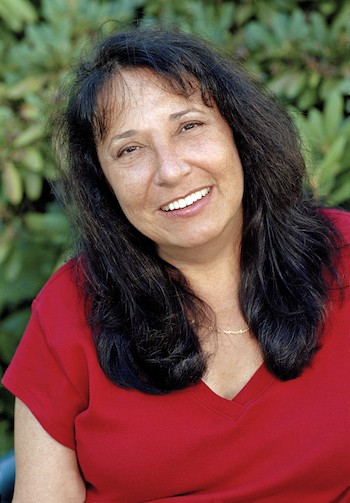
Teo Chung Piaw is the Stephen Riady Professor and Executive Director of the Institute of Operations Research and Analytics (IORA) at the National University of Singapore (NUS). He holds a PhD in Operations Research from MIT (1996) and has held academic positions including Head of Department and Acting Deputy Dean at NUS Business School. His research focuses on optimization under uncertainty, supply chain management, and combinatorial optimization. He serves as a department editor for Management Science and has led strategic initiatives in Singapore's Smart Nation Program. Teo's educational journey includes a Bachelor of Science (Honors) in Mathematics from NUS (1990). His corporate experience spans roles at Unilever, Hewlett Packard, and PSA International. He has received prestigious awards including the NUS Faculty Outstanding Researcher Award (2003, 2006) and has been a Fellow of the Singapore-MIT Alliance Program. His research addresses operational challenges in smart cities, healthcare scheduling, and supply chain resilience. Notable contributions include work on appointment scheduling under patient no-show behavior, disruption risk mitigation in supply chains, and flexible production network design. He has authored over 100 publications and serves on editorial boards of leading journals like Operations Research and Management Science .
Professor Gabriel Brostow is a faculty member in the Department of Computer Science at University College London (UCL), where he leads research in Computer Vision and Human-Computer Interaction. He also serves as Chief Research Scientist and Senior Director of the R&D Team at Niantic, the company behind Pokémon GO. His work bridges academic research and industry applications, focusing on developing AI systems that enhance human capabilities through what he terms 'Human in the Loop AI'—now commonly referred to as Human-Centered AI. Brostow completed his BS in Electrical Engineering at UT Austin, followed by a PhD with Irfan Essa at Georgia Tech. He then pursued postdoctoral research with Roberto Cipolla's Computer Vision & Robotics Group at Cambridge University as a Marshall Sherfield Fellow, and with Marc Pollefeys in ETH Zurich's CVG Group. His research explores how AI, particularly Computer Vision, can serve as 'super-tools' for professionals across various domains including filmmaking, architecture, robotics, and scientific research. Specific interests include assistive technology for everyday life, authoring systems that maximize user effort, 3D reconstruction, depth estimation, and vision-language models. His work often involves creating systems that are validated through real-world human interaction to ensure practical utility. Analysis of his recent publications reveals a strong focus on practical applications of Computer Vision that directly interact with humans. His research spans 3D scene understanding, depth estimation, sketch-based interfaces, and multimodal AI systems. There's a clear emphasis on creating benchmarks and tools that facilitate human-AI collaboration, with applications in assistive technology, urban planning, filmmaking, and biodiversity monitoring. His work frequently appears at top conferences including CVPR, NeurIPS, ECCV, and CHI. Marshall Sherfield Fellowship Brostow actively mentors PhD students, with current advisees including Ross Murphy, Skanda Koppula, Gizem Unlu, Omiros Pantazis, and Jamie Watson. His alumni include numerous PhD graduates and MSc students who have gone on to successful careers in academia and industry. He emphasizes selecting students based on passion and potential rather than just academic credentials, valuing traits like helpfulness, drive, and hunger to learn. His research is supported through collaborations with major institutions and companies including DeepMind, MIT, and the University of Edinburgh. He leads a research group at UCL that collaborates closely with Niantic's R&D team, creating a unique bridge between academic research and industry application. His team's work frequently involves developing novel Computer Vision techniques that are validated through real-world human interaction, ensuring practical utility alongside technical innovation. The group explores blue-sky research problems with applications ranging from assistive technology to professional tools for filmmakers, architects, and scientists studying diverse environments.
Emily Grubert serves as Associate Professor of Sustainable Energy Policy at the Keough School of Global Affairs and Concurrent Associate Professor in Civil and Environmental Engineering and Earth Sciences at the University of Notre Dame. Her interdisciplinary work integrates civil engineering and environmental sociology to advance justice-centered decarbonization of the US energy system through life cycle socioenvironmental impact assessment and multicriteria decision support. Education Ph.D. in Environment and Resources, Stanford University (2017) M.S. in Environmental and Water Resources Engineering, University of Texas at Austin (2011) M.A. in Energy and Earth Resources, University of Texas at Austin (2010) B.S. in Mathematics and Atmosphere/Energy Engineering, Stanford University (2009) Research Focus Professor Grubert's research centers on decarbonization, just transition, life cycle assessment, and macro-energy systems. She employs scenario analysis, life cycle assessment, survey and interview research, and text mining to evaluate socioenvironmental impacts of energy infrastructure decisions. Her work emphasizes incorporating community and societal priorities into policy and project decisions, particularly during the mid-transition phase of energy system transformation where embodied impacts dominate and design-oriented decision support becomes critical. Publication Trends Her recent publications reveal concentrated efforts on medium-term US decarbonization challenges, including fossil electricity retirement deadlines, emissions projections through 2050, and paradigm shifts in environmental assessment. A dominant theme addresses the emerging dominance of embodied impacts in decarbonizing systems, coupled with development of justice-centered decision support tools that integrate socioenvironmental considerations across energy-water-carbon domains. Professional Engagement Grubert is a core faculty affiliate of the Keough School's Pulte Institute for Global Development. Prior to Notre Dame, she served as assistant professor at Georgia Tech and deputy assistant secretary for carbon management at the US Department of Energy. Her research has received extensive media coverage in major outlets including The New York Times, MIT Technology Review, and Bloomberg, demonstrating significant policy impact and societal relevance.
Olivia Di Matteo serves as an Assistant Professor in the Department of Electrical and Computer Engineering within UBC's Faculty of Applied Science, leading the Quantum Software and Algorithms Research (QSAR) group since her January 2022 appointment. Her academic foundation includes a BSc from Lakehead University and MSc/PhD in Physics (Quantum Information) from the University of Waterloo, completed in 2019. Dr. Di Matteo's research centers on quantum software engineering , with pioneering work in quantum compilation , circuit optimization , and debugging tools . She champions open-source quantum frameworks and develops accessible educational resources to democratize quantum computing. Analysis of her 15 most recent publications (2021-2025) reveals dominant trends in quantum programming infrastructure, particularly circuit analysis (33%), bug classification (20%), and qubit network optimization (15%), with strong emphasis on practical software tooling over theoretical physics. No scientific awards were documented in the source materials. She advises graduate students in the QSAR group while contributing to open-source quantum ecosystems through projects like PennyLane and The Ionizer transpiler, and teaches courses including CPEN 400Q (Gate-model quantum computing) and ELEC 221 (Signals and Systems). The QSAR group operates at the intersection of quantum software development and education, focusing on making quantum programming accessible through visual tools, real-time debugging environments, and hardware-agnostic compilation techniques.
Dr. Hakan Karaosman is an Associate Professor at Cardiff Business School, Cardiff University, and a globally recognized expert in supply chain sustainability, particularly in fashion and textiles. He serves as Chief Scientist at FReSCH (Fashion's Responsible Supply Chain Hub), a UN-recognized, EU-awarded action research project hosted by University College Dublin, and holds visiting positions at University College Dublin and Politecnico di Milano. He is Chair of the Union of Concerned Researchers in Fashion (UCRF) and an advisory board member for Remake and other sustainability initiatives. His research focuses on just transition, decarbonization, social equity, and sustainable operations in fashion supply chains. He has authored numerous influential publications in top journals such as the International Journal of Operations & Production Management , and his 2025 paper 'For the many not the few: Introducing just transition for supply chain management' was among the most downloaded in its journal. His work emphasizes systemic change, stakeholder inclusion, and action research, bridging academia and industry. Hakan’s recent publications reflect a strong thematic focus on justice, equity, and systemic transformation in fashion. Key trends include critiquing greenwashing, advocating for supplier inclusion in climate action, analyzing the social dimensions of decarbonization, and promoting just transition frameworks. His research consistently addresses power imbalances, labor rights, and the need for inclusive, people-centered sustainability strategies. His scientific honors include the Financial Times Responsible Business Education Award (2025), the Cardiff University Celebrating Excellence Award for Sustainability (2023), and being named a Sustainability Thought Leader in the Vogue Business 100 Innovators (2023). He also received a prestigious Marie Skłodowska-Curie Individual Fellowship from the European Union. He is actively involved in postgraduate supervision and has delivered teaching on supply chain management and sustainability. His academic service includes roles as Area Editor for Operations Management Journals and editorial board member for several leading journals. He frequently collaborates with international organizations, including the UN, NGOs, and fashion companies, and is a sought-after keynote speaker at global events such as the Financial Times, TEDx, and the Global Fashion Summit. Hakan leads FReSCH, an international research hub focused on responsible fashion supply chains. He is also a founder and key organizer of initiatives like the Next Generation Assembly and A New Awareness, fostering collaboration among researchers, students, and industry stakeholders to drive systemic change in the fashion industry.
Dr Awol Allo serves as a Senior Lecturer in Law at the University of Sheffield's School of Law, with prior academic appointments at the London School of Economics, University of Glasgow, University of Addis Ababa, and University of Keele. He held visiting positions at Princeton University (2020-2021, 2023), Amherst College (2012), and the University of Chicago (2018). His research critically examines legal norms, discourses, and institutions through postcolonial and decolonial methodologies and Third World Approaches to International Law (TWAIL), focusing on how legal systems construct dominant beliefs and exploring resistance, protest, and epistemic justice. Current work includes the book project "Africa as Method: Decolonizing Knowledge Production and the Quest for Epistemic Justice". Scientific recognition: Fung Global Fellow at Princeton University (2020-2021) Research funding secured: "Africa as Method: Decolonizing Knowledge Production and the Quest for Epistemic Justice" (Princeton University, £90,000, September 2020 - June 2021) "More Than Just Words": The Transformative Promise of Medemer and Solidarity in Ethiopia’s Political Transition" (AHRC/GRNPP, £29,700, 2019-2020) Post-war State-building, Wartime Governance, and Dynamics of Violence in Self-determination Struggles in Ethiopia (Keele University, £12,500, June 2023 - June 2024) He contributes to research groups in International Law, Human Rights, Socio-legal Studies, Law and Social Movements, and Post-war governance with Horn of Africa focus, while regularly publishing in media outlets including New York Times, BBC, and Al Jazeera.
Dr. Yujie (Julie) Chen is an Associate Professor (on leave) at the University of Toronto's Faculty of Information, affiliated with the Department of Communication, Culture, Information & Technology (CCIT). Her work focuses on digital media's political economy, platform capitalism, and digital labour studies. She authored Super-Sticky WeChat and Chinese Society , analyzing WeChat's societal integration and platform power dynamics in China. Her research critiques how labour is marginalized in datafication discourse, particularly in platform-mediated sectors like ride-hailing (DiDi) and food delivery. Key themes include algorithmic control, worker resistance, and the interplay between technology, state policies, and labour conditions in China. Dr. Chen’s work bridges sociotechnical systems analysis with critical political economy frameworks. Her recent studies explore temporal exploitation in platform labour (e.g., food delivery workers’ time management), gamification of work processes, and the 'digital utility' concept deployed by platforms to justify market dominance. She frequently presents at conferences like AoIR and ICA, emphasizing global platform capitalism’s socio-economic impacts. Dr. Chen is completing a book manuscript examining labour’s erasure in datafication narratives and advocating for analytical frameworks that foreground embodied labour experiences. Her research also intersects with global South labour comparisons, notably between China and the Philippines in platform economies.
Professor Daniel Oron is affiliated with the University of Sydney, where he joined in 2004 after completing his PhD in Operations Research at the Hebrew University of Jerusalem. His research focuses on Combinatorial Optimization, particularly Scheduling Theory, addressing challenges like batch scheduling with setups, customer delivery models, and scheduling under deteriorating conditions. He teaches courses such as Quantitative Business Analysis, Management Science, and Business Analytics Honours. His editorial role includes serving on the board of the Journal of Industrial & Management Optimization . Recent research contributions span multi-agent scheduling, energy recharging in scheduling, and coupled task optimization. He advises two current PhD students: Johnson (Two-agent scheduling problems) and Renjie Yu (Multi-agent scheduling with parallel batching). Publications highlight advancements in scheduling algorithms, resource allocation, and optimization under constraints. Notable works include minimizing late jobs with step-learning models and analyzing parameterized complexity in single-machine scheduling.
Keunhyun (Keun) Park is an Assistant Professor of Urban Forestry at the University of British Columbia (UBC), affiliated with the Department of Forest Resources Management . He also holds an Adjunct Professor position at Utah State University in the Department of Landscape Architecture and Environmental Planning. Education: BSc and MSc in Landscape Architecture from Seoul National University; PhD in Urban Planning and Design from the University of Utah Research Lab: Faculty lead of the Urban Nature Design Research Lab ( under_lab ) His research focuses on designing healthy, just, and resilient cities through urban nature , with particular emphasis on: Environmental justice and equitable access to urban green spaces Human behavior in public spaces using drone/sensor/VR technology Smart growth urban design impacts on public health and ecological systems Recent publications demonstrate expertise in GIS applications , pedestrian behavior analysis , and urban planning across 20+ studies from 2013-2025. Collaborations include the Vancouver Park Board , Metro Vancouver , and Wasatch Front Regional Council .
Anthony TUNG Kum Hoe is a Professor in the Department of Computer Science at the National University of Singapore (NUS), where he has established himself as a leading researcher in database systems and data mining. He is also affiliated with the NUS Graduate School for Integrative Sciences and Engineering and serves as a SINGA supervisor. His educational background includes a Ph.D. in Computer Science from Simon Fraser University (2001), an M.Sc. in Information Systems & Computer Science from NUS (1998), and a B.Sc. with 2nd Class Upper Honours in Information Systems & Computer Science from NUS (1997). Professor Tung's research spans several interconnected areas within database systems and data mining. His primary focus is on developing efficient methods for indexing and searching complex data structures including time series, trajectories, trees, graphs, and high-dimensional objects. He has pioneered work in visual query processing, keyword search, and ranking systems. His GENIE (Generic Inverted Index) and LAMP (semi-Lazy Mining Paradigm) projects represent significant contributions to big data analytics, particularly in handling the 'variety' aspect of big data by providing unified frameworks for processing diverse data structures while preserving semantic meaning. His research bridges theoretical database concepts with practical applications in visual data mining, collaborative analytics, and just-in-time model construction. His recent publications reveal a clear evolution from traditional database research toward more complex analytics on diverse data types. While maintaining his core expertise in database indexing and query processing, his work has expanded to incorporate machine learning techniques, particularly in areas like nearest neighbor search, anomaly detection, and predictive analytics. There's a noticeable trend toward interdisciplinary applications, with publications spanning computer vision, natural language processing, transportation systems, and social computing. His research group consistently publishes in top-tier venues including SIGMOD, VLDB, ICDE, and KDD, demonstrating both theoretical rigor and practical relevance. 2005 Best Paper Award for 'Indexing DNA Sequences Using q-grams' 2007 Invited panel speaker on 'Advice for a successful database researcher career in Asia' at SIGMOD 2010 Guest Lecturer for VLDB Database School 2012 VLDB 2012 Research PC Co-chairs 2015 10 Years Best Paper Award, DASFAA 2015 Invited to SIGMOD 2008 and SIGKDD 2008 Program Committees Professor Tung has supervised numerous PhD students and research associates throughout his career, including notable researchers like Zhang Zhenjie (recipient of the 2007 President Graduate Fellowship) and Wang Nan (published in SIGMOD'08). His research group has been consistently productive, with students publishing in top conferences including SIGMOD, ICDE, and VLDB. His professional service is extensive, having served as PC Chair for COMAD'06, Research PC Co-chair for VLDB 2012, and on program committees for virtually all major database and data mining conferences over the past two decades. His research has been supported by various grants that have enabled significant contributions to database technology. His GENIE and LAMP projects represent a cohesive research direction focused on developing systematic approaches to big data analytics. GENIE provides a unified platform for storage and retrieval of big data with various structures, while LAMP introduces a novel paradigm for predictive analytics that combines the strengths of lazy and eager learning approaches. These projects have evolved to incorporate GPU acceleration and parallel processing capabilities, reflecting his commitment to addressing real-world scalability challenges in data-intensive applications.
Dr. Elisabeth Bürgi Bonanomi is a Senior Lecturer in Law & Sustainability at the University of Bern's Law Faculty and Head of the Sustainability Governance Impact Area at the Centre for Development and Environment (CDE). She is affiliated with the Institute of Public Law, University of Bern; the Institute of Federalism, University of Fribourg; and the World Trade Institute (WTI). Her research spans sustainability governance, sustainable trade regulation, food systems, commodity trade, and agrobiodiversity, with a focus on aligning trade policies with UN Sustainable Development Goals. She contributes to policy coherence for sustainable development, national action plans on business and human rights, and critiques global trade agreements like EFTA–Mercosur and Switzerland–Indonesia. Her 2025 articles address EU Deforestation Regulation (EUDR) implementation, Swiss gold supply chains, food security, and EFTA-Mercosur biodiversity risks. Themes include environmental law, trade compliance, and social equity in commodity sectors. She emphasizes practical solutions for sustainable finance and policy coherence. Network affiliations include the ETO-Consortium, Bread for All (board), International Law Association (ILA), and Women in Development Europe (WIDE). She provides expert commentary on trade sanctions, food sovereignty, and climate litigation in outlets like The New York Times , Die Republik , and CNN Money Switzerland . Her 2014 book Sustainable Development in International Law Making and Trade was lauded for addressing gaps in legal literature on trade-law intersections with sustainability.
Costa Samaras is the Trustee Professor of Civil and Environmental Engineering and Director of the Scott Institute for Energy Innovation at Carnegie Mellon University . He is also affiliated with the Department of Engineering and Public Policy and Heinz College of Information Systems and Public Policy . From 2021–2024, he served in the White House Office of Science and Technology Policy as Chief Advisor for the Clean Energy Transition. Education: Joint Ph.D. in Civil and Environmental Engineering and Engineering and Public Policy (Carnegie Mellon University), MPA (New York University), BS (Bucknell University) His research bridges engineering, systems analysis, and public policy to address climate change mitigation, electric and automated transportation, energy system decarbonization, and national security . He focuses on climate-resilient infrastructure, AI ethics, and policy frameworks for equitable energy transitions. Recent work with his students explores drone delivery systems, hydropower in Africa, and grid emissions tracking . The 15 most recent articles span decarbonization of transportation , climate-resilient infrastructure , AI applications in adaptation , home electrification equity , and power sector emissions . These appear in journals like Nature , Nature Climate Change , Environmental Research Letters , and Patterns . Scientific leadership includes founding the Center for Engineering and Resilience for Climate Adaptation and the Power Sector Carbon Index . His team has been recognized with dissertation awards at Carnegie Mellon University. He regularly advises federal agencies, utilities, automotive companies, and technology firms , and has been featured in The New York Times , NPR , PBS , and WIRED .
James R. Perkins is an Associate Professor in the Department of Manufacturing Engineering at Boston University's College of Engineering. His primary affiliations span the Mechanical Engineering, Product Design & Manufacturing, and Systems Engineering departments as both primary and affiliated faculty within the university's academic structure. Education: B.A. in Engineering Science from Harvard University (June 1986) M.S. in Electrical Engineering from University of Illinois at Urbana-Champaign (January 1990) Ph.D. in Electrical Engineering from University of Illinois at Urbana-Champaign (October 1993) Professor Perkins' research focuses on systems engineering with emphases on control, decision analysis, and scheduling theory. As a member of the Boston University Operations Research and Manufacturing Systems group, his work spans real-time scheduling and control of manufacturing systems, supply chain management, resource pricing and congestion control in communications networks, and scheduling human resources in transportation systems and product development. Current projects include synchronization and scheduling of manufacturing systems, data mining and clustering in genetic networks, and analytical solutions of controlled queueing networks. His manufacturing-related research is performed in the Production Control of Manufacturing Systems (PCMS) Laboratory at Boston University. Analysis of Professor Perkins' publication record reveals strong trends in manufacturing systems optimization, with particular emphasis on scheduling algorithms, production control, and resource allocation. His work bridges theoretical operations research with practical applications across manufacturing, communications networks, and product development. Over the past two decades, his research has evolved from fundamental control theory in manufacturing systems to more complex applications involving wireless networks, supply chain management, and new product development, demonstrating remarkable adaptability and interdisciplinary reach. Scientific Awards: NSF Research Initiation Award (1994-1998) IBM Manufacturing Research Graduate Fellowship (1989-1991) John Harvard Scholarship (1985-1986) Harvard College Scholarship (1984-1985) Professor Perkins has served as Principal Investigator for several significant research projects, including "Efficient Control of Manufacturing Systems with Buffer Costs" (NSF Research Initiation Award, 1994-1998) and "Managing the New Product Development Portfolio and Pipeline: An Integrated Approach" (NSF, 1999-2001). He was also Principal Director of a Graduate Assistance in Areas of National Need (GAANN) Award from the Department of Education (1997-2000) and Co-Principal Investigator on projects with Nokia Research Center and NSF. His teaching portfolio includes advanced courses in scheduling models, engineering mathematics, production systems analysis, and statistics and quality engineering, where he has developed new curriculum for specialized topics. Professor Perkins conducts his manufacturing-related research in the Production Control of Manufacturing Systems (PCMS) Laboratory at Boston University. His work often involves collaboration with colleagues such as Professor R. Srikant and Professor P. R. Kumar from the University of Illinois. His research group focuses on developing theoretical frameworks and practical solutions for complex scheduling and control problems across various domains including manufacturing, communications, and transportation systems, with an emphasis on mathematical rigor and real-world applicability.
Eve Spangler is an Associate Professor in the Department of Sociology at Boston College. She holds a Ph.D. from the University of Massachusetts, Amherst. Her research focuses on inequality, classical sociological theory, health and human rights in the Israeli-Palestinian conflict, and workplace safety in global economies. She teaches courses including 'Making History in a Changing World,' 'Inequality in America,' and 'Human Rights and Social Justice in Israel & Palestine.' Spangler's work bridges public sociology and activism, emphasizing social justice through scholarly analysis. Notable contributions include her 2015 book Understanding Israel/Palestine: Race, Nation, and Human Rights in the Conflict , examining the intersections of race, nationalism, and human rights. She critiques systemic inequalities in labor contexts and explores how Islamophobia complicates U.S. engagement with Palestinian-Israeli peace efforts. Her community involvement includes roles as a board member for the Human and Civil Rights Organizations of America, co-founder of American Jews for a Just Peace, and educator for Jewish Voices for Peace. She evaluates applied sociology programs, including the Center for Women and Politics and the Program in Applied Sociology at St. Cloud State University. Recent publications focus on Palestinian solidarity, critiques of white nationalist discourse, and queer theory applications. Her work appears in journals like Counterpunch and academic volumes such as the Cambridge International Handbook of Lean Production .
Jomy Joseph is an Assistant Professor at the Department of Design, Oslo School of Architecture and Design (AHO). His work bridges design practice with critical futures thinking, focusing on sustainability, decolonial approaches, and climate action. Joseph's research interests center around futures studies in design , with particular emphasis on: Decolonial approaches to design practice and theory Climate action through design interventions Speculative and critical design methodologies Rehumanizing design processes for sustainable futures Virtual reality as a tool for long-term sustainability thinking Eco-design and soil futures An analysis of Joseph's publications from 2019-2024 reveals a consistent focus on design's role in shaping sustainable and just futures . His work increasingly incorporates decolonial perspectives, as seen in his 2024 publication "In Another Life Another Being: On Design and the Wages of Decoloniality." The concept of "ReFuturing" appears as a central theme across multiple publications, representing his framework for reimagining design's relationship with time, ecology, and social justice. His research demonstrates a progression from practical design tools (like VR for sustainability) toward more philosophical and systemic approaches to design futures.